

Motorcycle Transmission Control Unit Market Size 2024-2028
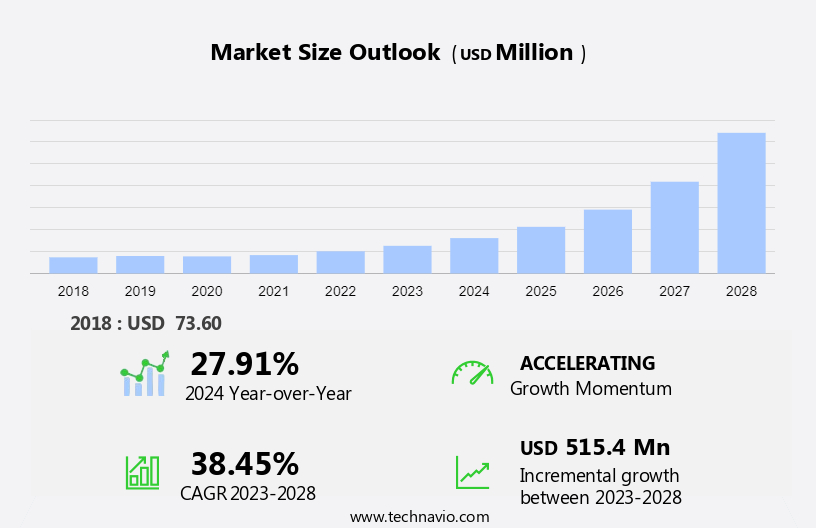
The motorcycle transmission control unit market size is forecast to increase by USD 515.4 million at a CAGR of 38.45% between 2023 and 2028.
- The Motorcycle Transmission Control Unit (TCU) market is experiencing significant growth due to several key trends. One of the primary drivers is the increasing demand for fuel-efficient motorcycles. As consumers become more environmentally conscious, motorcycle manufacturers are focusing on producing motorcycles with better fuel economy. This has led to the widespread adoption of advanced TCUs that optimize engine performance and improve fuel efficiency. Another trend influencing the market is the availability of affordable Electronic Control Modules (ECMs) or Engine Management Systems (EMS). These transmissions are prevalent in Internal Combustion Engine (ICE) motorcycles, offering riders smoother gear shifts and improved acceleration. These systems, which include TCUs, have become more affordable, making it possible for motorcycle manufacturers to offer fuel-efficient models at competitive prices.
- Moreover, the increasing complexity of TCUs used in motorcycles is also driving market growth. Advanced TCUs offer features such as ride-by-wire systems, traction control, and engine braking, which enhance the overall riding experience. However, the complexity of these systems also presents challenges, such as increased development costs and the need for specialized skills to design and manufacture them. In summary, the Motorcycle TCU market is expected to grow significantly due to the increasing demand for fuel-efficient motorcycles, the availability of affordable EMS, and the increasing complexity of TCUs. These trends offer opportunities for market participants to innovate and differentiate their offerings, while also presenting challenges that must be addressed to remain competitive.
What will be the Size of the Motorcycle Transmission Control Unit Market During the Forecast Period?
- The market is experiencing significant growth due to the increasing adoption of electronic control systems in motorcycles. Automated manual transmissions, including single-clutch and dual-clutch systems, are gaining popularity for their ability to improve fuel efficiency and reduce emissions, aligning with the global push towards sustainable transportation solutions. OEM manufacturers and aftermarket companies are investing heavily in motorcycle technology, offering upgrades for new motorcycles and parts for older models. The integration of cutting-edge technology, such as safety features and reliable riding experiences, is a key trend driving market growth. High-performance motorcycles continue to dominate the market, with a focus on power delivery, acceleration, and a well-oiled machine feel. The integration of electric motorcycles into the market is also expected to significantly impact production plans and parts supply chains In the coming years.
How is this Motorcycle Transmission Control Unit Industry segmented and which is the largest segment?
The motorcycle transmission control unit industry research report provides comprehensive data (region-wise segment analysis), with forecasts and estimates in "USD million" for the period 2024-2028, as well as historical data from 2018-2022 for the following segments.
- Application
- Single clutch transmission
- Dual clutch transmission
- End-user
- Mid-premium motorcycles
- Commuter motorcycles
- Premium motorcycles
- Geography
- Europe
- Germany
- France
- Italy
- North America
- US
- APAC
- Japan
- Middle East and Africa
- South America
- Europe
By Application Insights
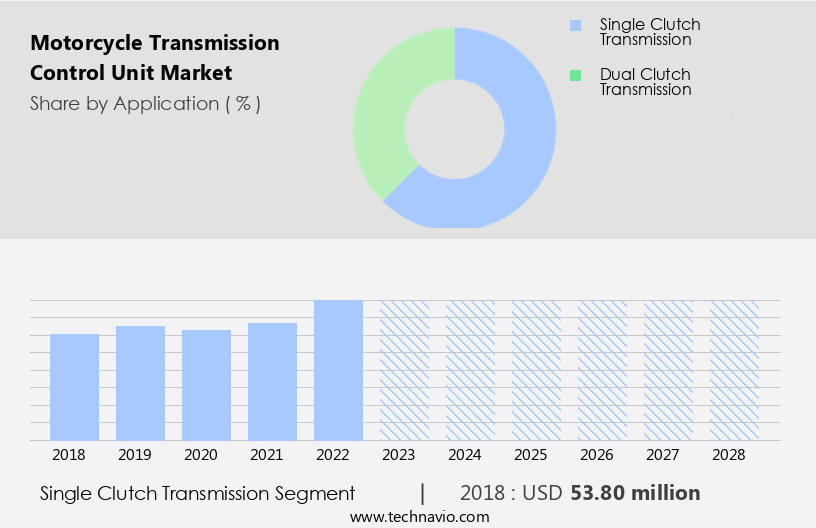
- The single clutch transmission segment is estimated to witness significant growth during the forecast period.
The market encompasses advanced electronic systems that regulate power delivery and optimize engine responsiveness in single-clutch and dual-clutch transmissions. BMW Motorrad introduced the single-clutch semi-automatic transmission system in 2013, featuring centrifugal clutches and handlebar-mounted gear shifting switches. This technology, also known as clutch-less transmission, eliminates the need for a clutch lever and provides a reliable riding experience. OEM manufacturers like BMW have adopted this technology in various models, including the S 1000RR, K 1300S, R1200RT, and R1200GS. Aftermarket companies have also embraced this technology, offering upgrades for older models.
The market is driven by performance enhancement initiatives, fuel efficiency, and emissions reduction, aligning with sustainable transportation solutions. Electric motorcycles are another segment that benefits from advanced transmission control units, ensuring optimal power delivery and acceleration. The market is expected to grow as rider safety and connectivity options become increasingly important, with transmission modes, shift patterns, and connectivity options becoming essential features. Production plans from parts suppliers and high-performance motorcycle brands indicate a strong demand for reliable and efficient transmission control units. The market is further fueled by effective marketing campaigns, educational initiatives, and digital platforms, solidifying brand loyalty among consumers.
Get a glance at the Motorcycle Transmission Control Unit Industry report of share of various segments Request Free Sample
The single clutch transmission segment was valued at USD 53.80 million in 2018 and showed a gradual increase during the forecast period.
Regional Analysis
- Europe is estimated to contribute 36% to the growth of the global market during the forecast period.
Technavio's analysts have elaborately explained the regional trends and drivers that shape the market during the forecast period.

For more insights on the market share of various regions, Request Free Sample
The European motorcycle transmission control unit (TCU) market is experiencing substantial expansion due to urbanization, economic stability, and the integration of advanced technologies. Premium motorcycle manufacturers, including BMW AG and Honda Motor Co. Ltd., hold a significant market share in Europe. The rising preference for high-performance motorcycles is a primary growth driver. Moreover, the Euro 5 regulations aim to minimize air pollutants from motorcycles, leading to increased demand for fuel-efficient and emission-reducing TCUs. Motorcycle TCUs enhance power delivery, acceleration, and optimize engine responsiveness, providing a reliable riding experience. Aftermarket companies also offer upgrades for older models, ensuring sustainability and performance enhancement initiatives.
The market is further boosted by effective marketing campaigns, educational initiatives, and digital platforms, including retailers, industry associations, and brand loyalty programs. Transmission modes, shift patterns, and connectivity options offer customizable riding experiences. Key motorcycle TCU types include single-clutch and dual-clutch transmissions, with electric motorcycles gaining popularity due to their environmental sustainability and fuel consumption benefits.
Market Dynamics
Our researchers analyzed the data with 2023 as the base year, along with the key drivers, trends, and challenges. A holistic analysis of drivers will help companies refine their marketing strategies to gain a competitive advantage.
What are the key market drivers leading to the rise In the adoption of Motorcycle Transmission Control Unit Industry?
Increasing demand for fuel-efficient motorcycles is the key driver of the market.
- Motorcycle transmission control units have emerged as a crucial component In the motorcycle industry, driving advancements in electronic control systems, automated manual transmissions, and sustainable transportation solutions. Motorcycle technology has evolved beyond engine power, with consumers prioritizing fuel efficiency and emissions reduction. Original Equipment Manufacturers (OEMs) and aftermarket companies are investing in cutting-edge technology, such as Single-clutch Transmission (SCT) and Dual-clutch Transmission (DCT), to deliver a reliable riding experience with optimized power delivery, acceleration, and smoother gear shifts. Electric motorcycles represent a significant growth area, with OEMs and aftermarket companies focusing on performance enhancement initiatives, effective marketing campaigns, and educational initiatives to promote their adoption.
- Rider safety is a top priority, with transmission modes, shift patterns, connectivity options, and digital platforms becoming essential features for both new and older motorcycles. Parts suppliers are also playing a critical role In the production plans of OEMs, ensuring the availability of high-quality transmission components for a well-oiled machine. Fuel consumption remains a significant concern for motorcycle consumers, with electronic fuel injection (EFI) systems and cruise control improving fuel efficiency by up to 30% compared to carburetors. OEMs and aftermarket companies are continually exploring ways to optimize engine responsiveness and reduce emissions, ensuring motorcycles remain a viable and sustainable transportation solution for the US market.
What are the market trends shaping the Motorcycle Transmission Control Unit Industry?
The availability of affordable EMS is the upcoming market trend.
- The market is witnessing significant growth due to the integration of advanced electronic control systems in motorcycles. Motorcycle OEM manufacturers and aftermarket companies are focusing on automated manual transmissions, such as Single-clutch Transmission (SCT) and Dual-clutch Transmission (DCT), to enhance fuel efficiency, reduce emissions, and provide sustainable transportation solutions. These transmissions offer smoother gear shifts, optimized engine responsiveness, and improved power delivery, leading to better acceleration and a reliable riding experience. Moreover, the implementation of safety features like Anti-lock Braking System (ABS) and Engine Management System (EMS) as a single unit is gaining popularity, particularly in emerging markets like India, Thailand, and Indonesia.
- Although these packages increase the overall cost of the motorcycle, experts believe that around one-third of accidents could be avoided by using ABS, and the use of EMS results in more fuel efficiency and low emissions. The slight hike in price is often overshadowed by the benefits, attracting more customers. Furthermore, the trend towards electric motorcycles is driving innovation in motorcycle technology. Electric motorcycles offer superior performance, environmental sustainability, and reduced fuel consumption. Performance enhancement initiatives, such as transmission modes, shift patterns, connectivity options, and digital platforms, are also gaining traction In the market. Retailers, industry associations, and educational initiatives are playing a crucial role in promoting brand loyalty and increasing awareness about the benefits of these advanced transmission systems. As the market continues to evolve, parts suppliers and high-performance motorcycle manufacturers will need to adapt to meet the growing demand for cutting-edge technology and safety features.
What challenges does the Motorcycle Transmission Control Unit Industry face during its growth?
The increasing complexity of TCUs used in motorcycles is a key challenge affecting the industry's growth.
- The Motorcycle Transmission Control Unit (TCU) market is witnessing significant growth due to the increasing adoption of electronic control systems in motorcycles. Automated manual transmissions, such as Single-clutch Transmission (SCT) and Dual-clutch Transmission (DCT), are gaining popularity for their fuel efficiency and emissions benefits. OEM manufacturers and aftermarket companies are investing in motorcycle technology to offer riders safety features and a reliable riding experience. Fuel efficiency and emissions are key considerations for sustainable transportation solutions, driving the demand for advanced transmission systems. Electric motorcycles are also contributing to the market growth as they require sophisticated transmission control units for optimal power delivery and acceleration.
- The complexity of installing TCUs in motorcycles is a challenge due to space constraints and ideal location requirements. The ideal location for the TCU is as far from the engine as possible to minimize electrical noise and protect the computer chip. Production plans of OEM manufacturers and parts suppliers are essential for the aftermarket companies to offer upgrades and transmission modes with shift patterns and connectivity options. Effective marketing campaigns, educational initiatives, and digital platforms are essential for brands to build brand loyalty and reach retailers and industry associations. Performance enhancement initiatives, such as smoother gear shifts and optimized engine responsiveness, are crucial for riders seeking a well-oiled machine riding experience.
- In summary, the market is driven by the increasing demand for fuel efficiency, emissions reduction, and advanced riding features. The complexity of installation and ideal location requirements pose challenges for OEM manufacturers and aftermarket companies. Effective marketing and educational initiatives are essential for brands to build brand loyalty and reach retailers and industry associations.
Exclusive Customer Landscape
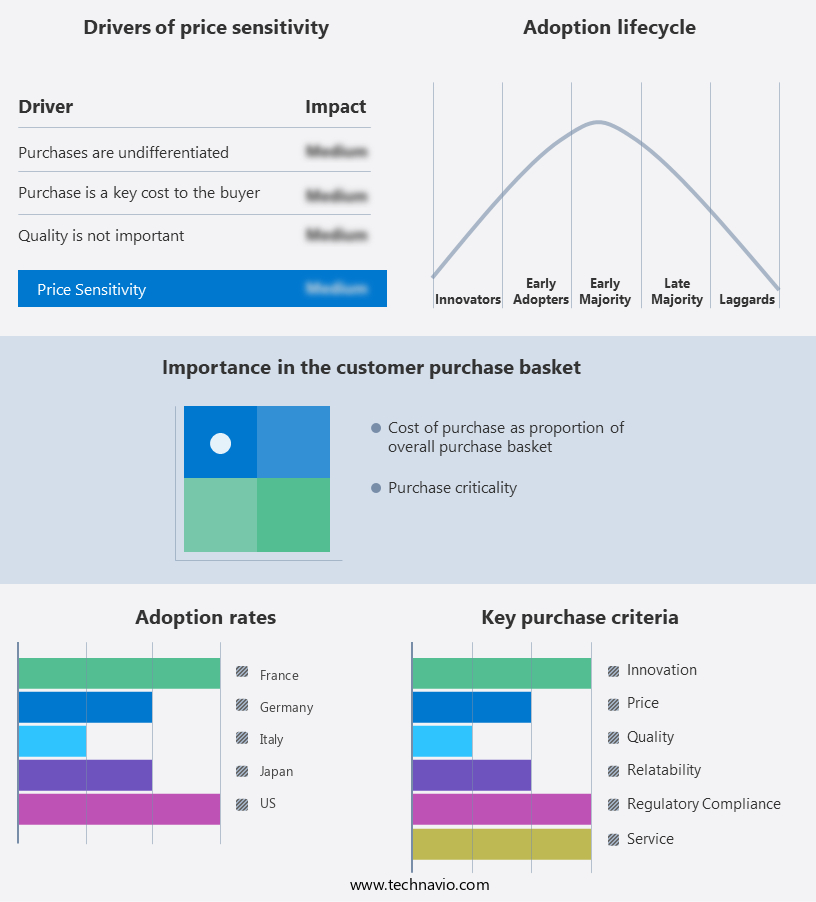
The motorcycle transmission control unit market forecasting report includes the adoption lifecycle of the market, market growth and forecasting, covering from the innovator's stage to the laggard's stage. It focuses on adoption rates in different regions based on penetration. Furthermore, the motorcycle transmission control unit market report also includes key purchase criteria and drivers of price sensitivity to help companies evaluate and develop their market growth analysis strategies.
Customer Landscape
Key Companies & Market Insights
Companies are implementing various strategies, such as strategic alliances, motorcycle transmission control unit market forecast, partnerships, mergers and acquisitions, geographical expansion, and product/service launches, to enhance their presence In the industry.
The industry research and growth report includes detailed analyses of the competitive landscape of the market and information about key companies, including:
- ABB Ltd.
- Biperformance Development Corp.
- BMW AG
- Continental AG
- Endurance Technologies Ltd.
- Hitachi Ltd.
- Honda Motor Co. Ltd.
- Infineon Technologies AG
- Kalyani Group
- Microchip Technology Inc.
- Mitsuba Corp.
- Mitsubishi Electric Corp.
- Napino Auto and Electronics Ltd.
- NXP Semiconductors NV
- Ricardo Plc
- Robert Bosch GmbH
- SEDEMAC Mechatronics Pvt. Ltd.
- Toyota Motor Corp.
- Vitesco Technologies Group AG
- ZF Friedrichshafen AG
Qualitative and quantitative analysis of companies has been conducted to help clients understand the wider business environment as well as the strengths and weaknesses of key industry players. Data is qualitatively analyzed to categorize companies as pure play, category-focused, industry-focused, and diversified; it is quantitatively analyzed to categorize companies as dominant, leading, strong, tentative, and weak.
Research Analyst Overview
The motorcycle industry continues to evolve, with electronic control systems playing a significant role in enhancing the riding experience. Automated manual transmissions, specifically single-clutch and dual-clutch systems, have gained popularity due to their ability to improve fuel efficiency and reduce emissions. These transmissions offer smoother gear shifts and optimized engine responsiveness, making them desirable for both OEM manufacturers and aftermarket companies. Fuel efficiency and emissions reduction are key priorities In the motorcycle market. As sustainability becomes increasingly important, motorcycle technology continues to focus on these areas. Automated manual transmissions contribute to these goals by reducing the need for manual gear shifting, which can lead to inefficiencies and increased emissions. Rider safety is another critical factor driving the adoption of advanced transmission systems. OEM manufacturers and aftermarket companies are continually working to enhance safety features in motorcycles, and automated manual transmissions can help improve the overall riding experience. These transmissions offer reliable power delivery and acceleration, ensuring a well-oiled machine for riders. The market for motorcycle transmissions is diverse, with a range of products catering to various needs and preferences.
Moreover, new motorcycles with cutting-edge technology and safety features are constantly being introduced, while older models may undergo upgrades to incorporate these advancements. Production plans for new motorcycles often include transmission modes, shift patterns, and connectivity options to meet the demands of modern riders. Parts suppliers play a crucial role In the motorcycle transmission market, providing essential components for both OEM and aftermarket applications. High-performance motorcycles require specialized transmissions to deliver optimal power and acceleration, making the demand for reliable parts a constant concern. Effective marketing campaigns and educational initiatives are essential for motorcycle companies to differentiate themselves In the market. Digital platforms and social media have become essential tools for reaching potential customers and building brand loyalty. Industry associations also play a role in promoting the benefits of motorcycle technology and safety features to the public. In summary, the motorcycle transmission market is a dynamic and evolving industry, driven by a focus on fuel efficiency, emissions reduction, and rider safety. Automated manual transmissions, specifically single-clutch and dual-clutch systems, are gaining popularity due to their ability to meet these priorities while enhancing the overall riding experience. OEM manufacturers, aftermarket companies, parts suppliers, and industry associations all contribute to the growth and development of this market.
|
Market Scope |
|
|
Report Coverage |
Details |
|
Page number |
182 |
|
Base year |
2023 |
|
Historic period |
2018-2022 |
|
Forecast period |
2024-2028 |
|
Growth momentum & CAGR |
Accelerate at a CAGR of 38.45% |
|
Market growth 2024-2028 |
USD 515.4 million |
|
Market structure |
Fragmented |
|
YoY growth 2023-2024(%) |
27.91 |
|
Key countries |
Japan, US, Germany, Italy, and France |
|
Competitive landscape |
Leading Companies, Market Positioning of Companies, Competitive Strategies, and Industry Risks |
What are the Key Data Covered in this Motorcycle Transmission Control Unit Market Research and Growth Report?
- CAGR of the Motorcycle Transmission Control Unit industry during the forecast period
- Detailed information on factors that will drive the growth and forecasting between 2024 and 2028
- Precise estimation of the size of the market and its contribution of the industry in focus to the parent market
- Accurate predictions about upcoming growth and trends and changes in consumer behaviour
- Growth of the market across Europe, North America, APAC, Middle East and Africa, and South America
- Thorough analysis of the market's competitive landscape and detailed information about companies
- Comprehensive analysis of factors that will challenge the motorcycle transmission control unit market growth of industry companies
We can help! Our analysts can customize this motorcycle transmission control unit market research report to meet your requirements.
 RIA -
RIA -