



Music Streaming Market Size 2026-2030
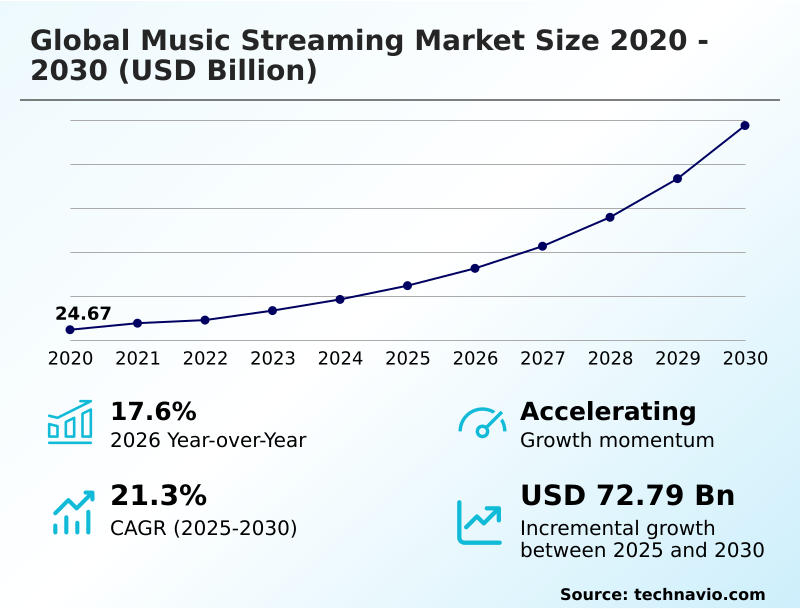
The music streaming market size is valued to increase by USD 72.79 billion, at a CAGR of 21.3% from 2025 to 2030. Increasing preference for music streaming services will drive the music streaming market.
Major Market Trends & Insights
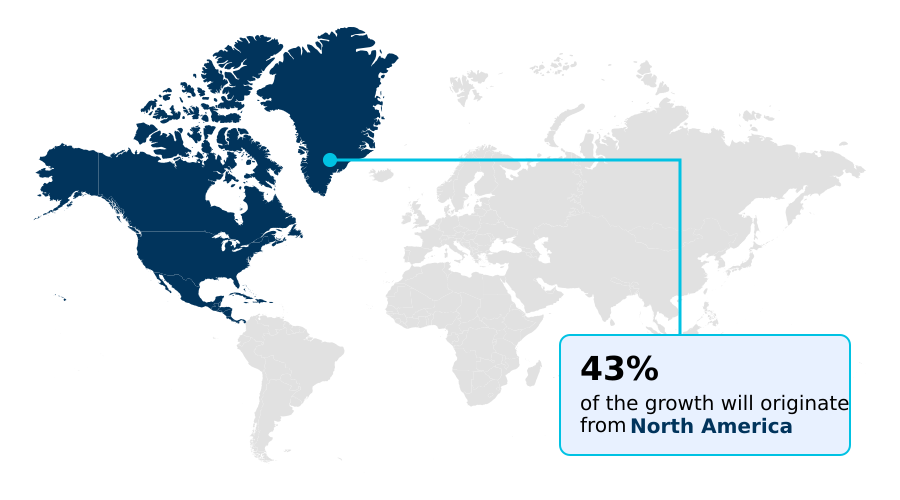
- North America dominated the market and accounted for a 42.7% growth during the forecast period.
- By Type - Free segment was valued at USD 25.46 billion in 2024
- By End-user - Individual users segment accounted for the largest market revenue share in 2024
Market Size & Forecast
- Market Opportunities: USD 92.83 billion
- Market Future Opportunities: USD 72.79 billion
- CAGR from 2025 to 2030 : 21.3%
Market Summary
- The Music Streaming Market is undergoing a significant transformation, driven by the widespread adoption of subscription-based services and sophisticated ad-supported models. This shift is underpinned by technological advancements in machine learning algorithms, which enable unprecedented hyper-personalization through dynamic playlist generation and algorithm-based recommendations.
- Platforms are evolving from simple audio libraries into comprehensive entertainment hubs, incorporating podcast integration and other non-music content to increase user engagement metrics. A key business application involves leveraging behavioral analytics to refine content curation and artist discovery algorithms, which directly impacts user retention.
- For instance, a platform can analyze listening patterns to optimize its freemium business model, using targeted in-app advertising to guide users toward premium tiers that offer high-fidelity audio and ad-free listening. However, the industry grapples with complex music licensing agreements and the need for robust royalty distribution frameworks.
- The integration of digital rights management and advanced content identification technology is crucial for navigating copyright complexities and ensuring fair compensation, especially with the rise of user-generated content.
What will be the Size of the Music Streaming Market during the forecast period?
Get Key Insights on Market Forecast (PDF) Get Free Sample
How is the Music Streaming Market Segmented?
The music streaming industry research report provides comprehensive data (region-wise segment analysis), with forecasts and estimates in "USD million" for the period 2026-2030, as well as historical data from 2020-2024 for the following segments.
- Type
- Free
- Paid
- End-user
- Individual users
- Commercial users
- Platform
- Apps
- Browsers
- Geography
- North America
- US
- Canada
- Mexico
- Europe
- Germany
- UK
- France
- APAC
- China
- India
- Japan
- South America
- Brazil
- Argentina
- Middle East and Africa
- Saudi Arabia
- Turkey
- UAE
- Rest of World (ROW)
- North America
By Type Insights
The free segment is estimated to witness significant growth during the forecast period.
The ad-supported segment serves as a critical entry point into the music streaming ecosystem, leveraging data-driven content creation and sophisticated artist discovery algorithms to drive engagement.
This tier balances access with monetization through tools like brand-sponsored playlists and promotes social music discovery.
While premium tiers offer superior audio streaming quality, including lossless audio streaming and immersive audio formats, the free model acts as a powerful conversion funnel.
Analytics confirm its efficacy, revealing that approximately 45% of premium subscribers originate from the free tier, validating its role in the digital content delivery pipeline.
Platforms utilize dynamic playlist generation and content curation to maintain user interest, making it an indispensable component of the market despite functional limitations compared to paid services.
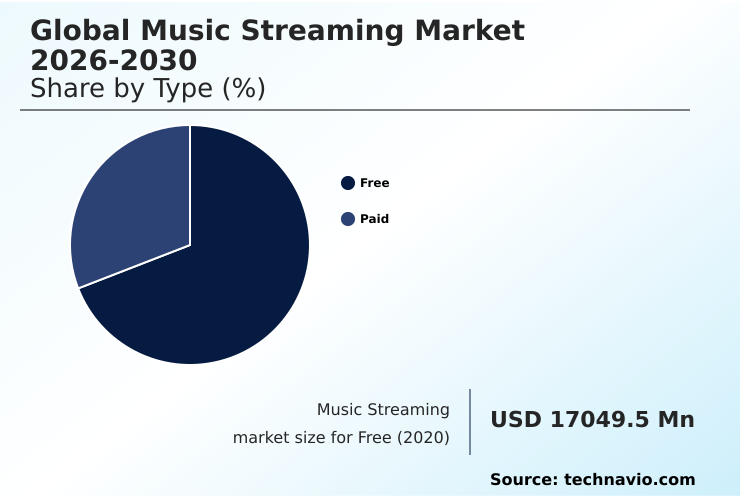
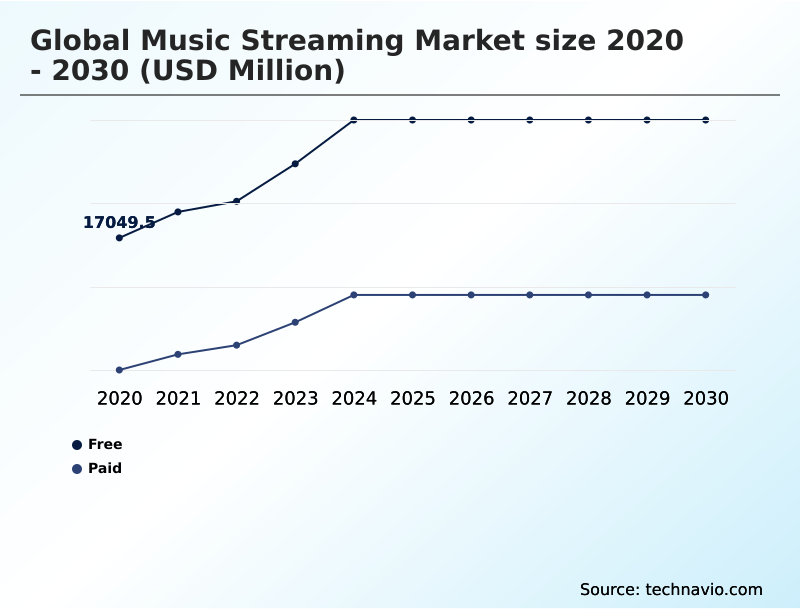
The Free segment was valued at USD 25.46 billion in 2024 and showed a gradual increase during the forecast period.
Regional Analysis
North America is estimated to contribute 42.7% to the growth of the global market during the forecast period.Technavio’s analysts have elaborately explained the regional trends and drivers that shape the market during the forecast period.
See How Music Streaming Market Demand is Rising in North America Get Free Sample
The geographic landscape of the market reveals a tale of two distinct growth patterns. In mature regions like North America, which commands 42.7% of the market's incremental growth, the focus is on optimizing subscription-based services to enhance customer lifetime value.
Here, advanced machine learning algorithms power personalized discovery tools and context-aware recommendations to retain a highly engaged user base.
Conversely, high-growth regions like APAC and South America are centered on acquiring new users by adapting to unique consumer listening habits and promoting a diverse regional music repertoire.
Technologies such as adaptive bitrate selection are critical for delivering a consistent experience despite varied internet infrastructure. Across all regions, the strategic use of algorithm-based recommendations is essential for both emerging artist promotion and catering to established commercial streaming solutions.
Market Dynamics
Our researchers analyzed the data with 2025 as the base year, along with the key drivers, trends, and challenges. A holistic analysis of drivers will help companies refine their marketing strategies to gain a competitive advantage.
- The music streaming market is navigating a complex evolution, where the impact of AI on music discovery has become a central pillar of platform strategy. As providers refine personalization algorithms in music streaming, they simultaneously confront significant data privacy concerns in music streaming. The future of live-streamed virtual concerts offers a new frontier for fan engagement, moving beyond traditional playback.
- Concurrently, the evolution of podcast streaming platforms and the integration of audiobooks in streaming apps are reshaping content ecosystems. A primary operational focus is the effectiveness of freemium to premium conversion, which underpins the financial health of many services. This is directly linked to the monetization of ad-supported streaming tiers and developing robust user retention strategies for subscription models.
- Operationally, navigating global music licensing complexity remains a persistent challenge, alongside the technical intricacies of AI's role in detecting fraudulent streams. For example, platforms that have streamlined their royalty payment systems for indie artists report a 15% faster payout cycle compared to those using legacy systems.
- This highlights the importance of efficient infrastructure in managing the challenges in music copyright enforcement. The role of spatial audio in listener experience and rising high-fidelity audio adoption rates are pushing technical boundaries. Meanwhile, trends in social music sharing features, improving smart speaker voice command accuracy, and bundling strategies with telecom providers are redefining user interaction and market access.
- Optimizing playlists for user engagement and expanding commercial licensing for business environments represent key growth avenues.
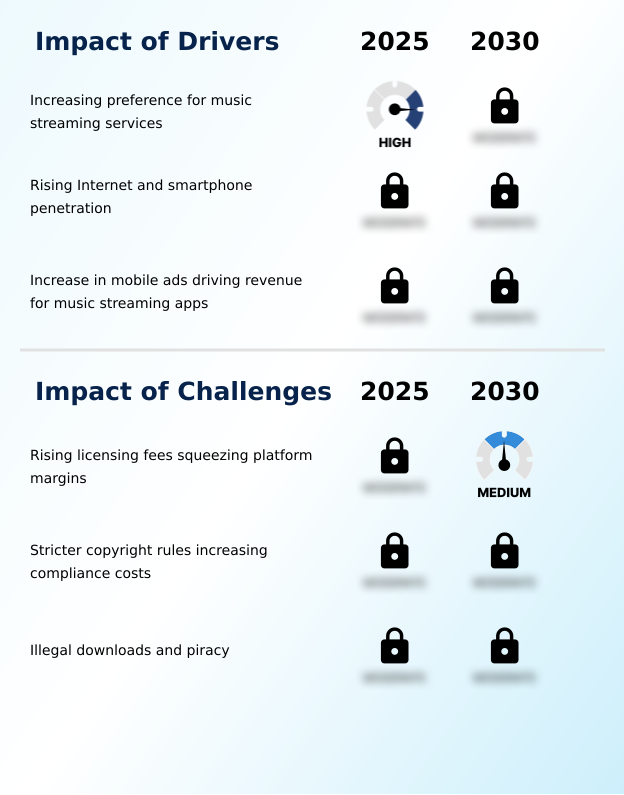
What are the key market drivers leading to the rise in the adoption of Music Streaming Industry?
- The increasing global preference for music streaming services is a key driver propelling market growth and platform adoption.
- Market growth is fundamentally driven by enhanced accessibility and sophisticated monetization strategies.
- The ubiquity of mobile-first consumption provides on-demand audio access to a massive global audience, supported by features like offline playback functionality and seamless cross-device synchronization for cloud-based music playback.
- A primary user acquisition strategy involves ad-supported models, which leverage targeted in-app advertising to achieve a paid subscriber conversion rate of approximately 45%. This freemium approach is complemented by streaming service bundling with telecommunications providers, further lowering entry barriers.
- The integration of streaming into smart speaker integration and in-car infotainment systems embeds services into daily routines, increasing reliance and engagement.
- As consumer expectations rise, the availability of high-fidelity audio is becoming a key differentiator, solidifying the value proposition of premium tiers.
What are the market trends shaping the Music Streaming Industry?
- A primary market trend is the rising consumer preference for music streaming services. This movement indicates a structural change in music consumption, favoring on-demand access over traditional ownership models.
- Key market trends are redefining listener experiences through technological integration and content diversification. The push for hyper-personalization is driving the adoption of spatial audio technology and other forms of interactive audio entertainment, transforming passive listening into an immersive activity.
- Platforms are evolving into comprehensive entertainment hubs by expanding beyond music to include podcast integration and audiobook integration, which cater to a wider range of user interests. This diversification helps foster robust fan engagement platforms and capitalize on viral content trends. Social sharing features are now integral to discovery, amplified by the rise of user-generated content.
- In some mature markets, this focus on a premium, ad-free listening experience has resulted in paid subscriptions accounting for over 57% of total revenue, while in regions like Latin America, the appeal of live digital broadcasts has contributed to revenue growth of over 22%.
What challenges does the Music Streaming Industry face during its growth?
- Rising licensing fees that place significant pressure on platform margins represent a key challenge impacting the industry's profitability and growth trajectory.
- The market faces significant operational and financial challenges centered on content licensing and monetization. Complex music licensing agreements and diverse local content mandates create a difficult landscape for managing global music catalogs and ensuring fair creator compensation models.
- The freemium business model, while effective for user acquisition, complicates audio content monetization and requires sophisticated behavioral analytics to balance ad revenue with user experience. Furthermore, rising compliance costs associated with digital rights management and public performance licensing are straining profitability.
- Platforms must invest in advanced content identification technology and digital watermarking to manage royalty distribution frameworks and address AI-generated music detection, with these compliance measures increasing operational overhead by up to 15% for some operators.
Exclusive Technavio Analysis on Customer Landscape
The music streaming market forecasting report includes the adoption lifecycle of the market, covering from the innovator’s stage to the laggard’s stage. It focuses on adoption rates in different regions based on penetration. Furthermore, the music streaming market report also includes key purchase criteria and drivers of price sensitivity to help companies evaluate and develop their market growth analysis strategies.
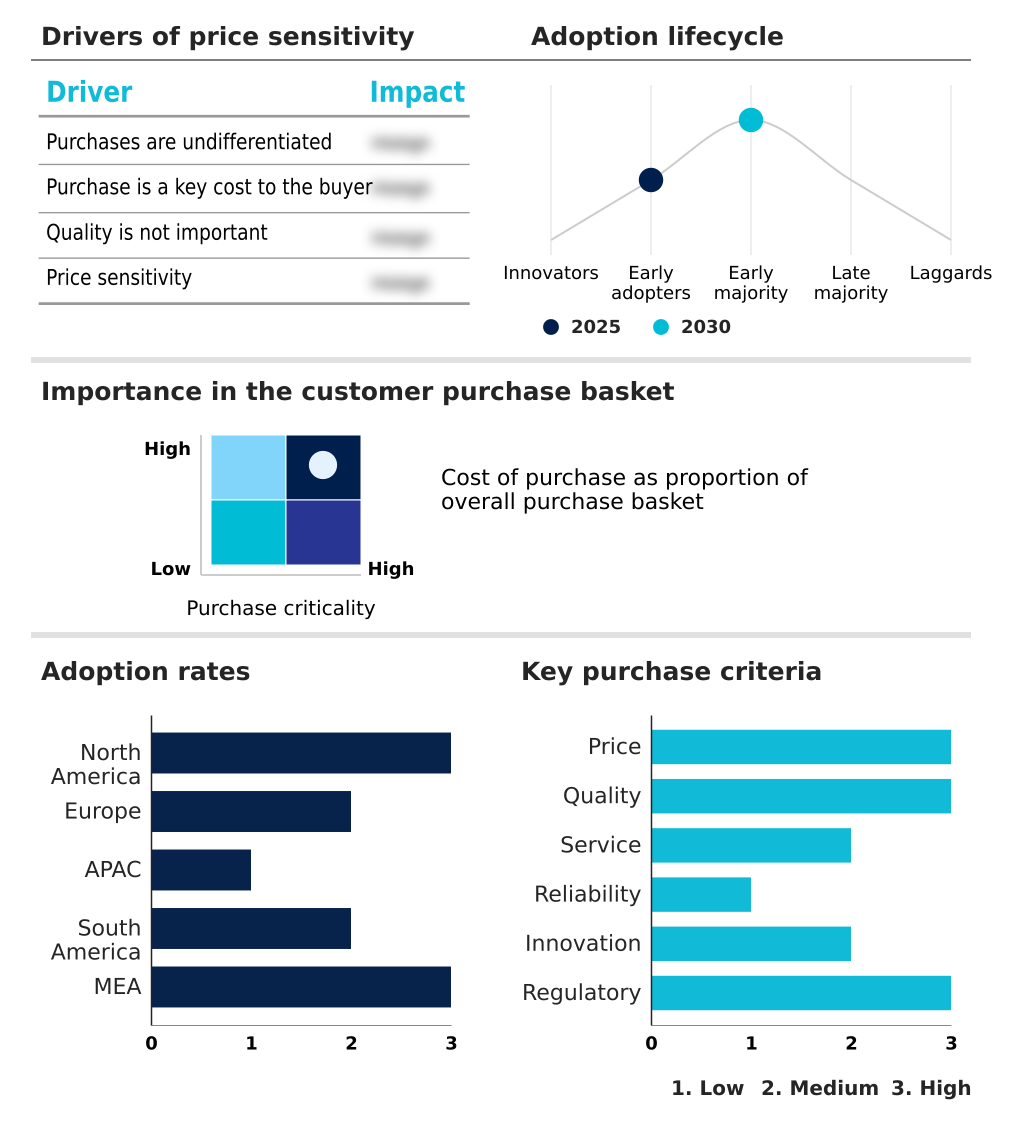
Customer Landscape of Music Streaming Industry
Competitive Landscape
Companies are implementing various strategies, such as strategic alliances, music streaming market forecast, partnerships, mergers and acquisitions, geographical expansion, and product/service launches, to enhance their presence in the industry.
Amazon.com Inc. - Delivering expansive music and audio catalogs through advanced, personalized streaming services featuring high-fidelity and immersive formats to enhance the global listener experience.
The industry research and growth report includes detailed analyses of the competitive landscape of the market and information about key companies, including:
- Amazon.com Inc.
- Anghami
- Apple Inc.
- Audiomack
- Boomplay
- Deezer SA
- Entertainment Network India Ltd
- Google LLC
- JioSaavn
- KKBOX
- Mixcloud Ltd.
- NetEase Inc.
- Pandora Media Inc.
- Rakuten Group Inc.
- SoundCloud Global Ltd. and Co.
- Spotify Technology SA
- Tencent Music Entertainment
- TIDAL Music AS
- XANDRIE SA
- Yandex NV
Qualitative and quantitative analysis of companies has been conducted to help clients understand the wider business environment as well as the strengths and weaknesses of key industry players. Data is qualitatively analyzed to categorize companies as pure play, category-focused, industry-focused, and diversified; it is quantitatively analyzed to categorize companies as dominant, leading, strong, tentative, and weak.
Recent Development and News in Music streaming market
- In April 2025, Anghami Inc. enhanced its market position through an integration with OSN+, combining its extensive music catalog with a premium video content library to increase its paid subscriber base.
- In February 2025, Apple Inc. launched a beta version of its 'Playlist Playground' tool, using proprietary AI models to allow users to generate customized playlists via natural language prompts.
- In May 2025, Google LLC updated its YouTube Music service with generative AI capabilities, including a 'Musical Passport' to visualize listener habits and tools for creating personalized lyric-based visuals.
- In March 2025, The International Federation of the Phonographic Industry (IFPI) reported that the Middle East and North Africa region saw a combined revenue increase of nearly 23%, driven primarily by a surge in paid streaming subscriptions.
Dive into Technavio’s robust research methodology, blending expert interviews, extensive data synthesis, and validated models for unparalleled Music Streaming Market insights. See full methodology.
| Market Scope | |
|---|---|
| Page number | 283 |
| Base year | 2025 |
| Historic period | 2020-2024 |
| Forecast period | 2026-2030 |
| Growth momentum & CAGR | Accelerate at a CAGR of 21.3% |
| Market growth 2026-2030 | USD 72793.1 million |
| Market structure | Fragmented |
| YoY growth 2025-2026(%) | 17.6% |
| Key countries | US, Canada, Mexico, Germany, UK, France, Italy, Spain, The Netherlands, China, India, Japan, South Korea, Australia, Indonesia, Brazil, Argentina, Chile, Saudi Arabia, Turkey, UAE, South Africa and Israel |
| Competitive landscape | Leading Companies, Market Positioning of Companies, Competitive Strategies, and Industry Risks |
Research Analyst Overview
- The music streaming market's evolution is defined by a strategic pivot toward hyper-personalization and advanced content management. At the core of this transition are machine learning algorithms that power everything from artist discovery algorithms and dynamic playlist generation to voice-driven personalization via smart speaker integration.
- Platforms are leveraging behavioral analytics and user engagement metrics to refine subscription-based services and ad-supported models, with a key boardroom focus on balancing the costs of music licensing agreements against investments in these technologies.
- The industry standard is shifting to include high-fidelity audio, lossless audio streaming, and immersive audio formats like spatial audio technology, requiring robust cloud-based music playback and cross-device synchronization. For instance, the successful implementation of a freemium business model, which converts 45% of users to paid tiers, demonstrates a highly efficient user acquisition funnel.
- This is supported by features like offline playback functionality and ad-free listening. Operationally, managing digital rights management through content identification technology and digital watermarking is critical for fair royalty distribution frameworks. The integration of non-music content, such as podcasts, and enabling user-generated content while managing compliance, are central to modern platform strategies.
What are the Key Data Covered in this Music Streaming Market Research and Growth Report?
-
What is the expected growth of the Music Streaming Market between 2026 and 2030?
-
USD 72.79 billion, at a CAGR of 21.3%
-
-
What segmentation does the market report cover?
-
The report is segmented by Type (Free, and Paid), End-user (Individual users, and Commercial users), Platform (Apps, and Browsers) and Geography (North America, Europe, APAC, South America, Middle East and Africa)
-
-
Which regions are analyzed in the report?
-
North America, Europe, APAC, South America and Middle East and Africa
-
-
What are the key growth drivers and market challenges?
-
Increasing preference for music streaming services, Rising licensing fees squeezing platform margins
-
-
Who are the major players in the Music Streaming Market?
-
Amazon.com Inc., Anghami, Apple Inc., Audiomack, Boomplay, Deezer SA, Entertainment Network India Ltd, Google LLC, JioSaavn, KKBOX, Mixcloud Ltd., NetEase Inc., Pandora Media Inc., Rakuten Group Inc., SoundCloud Global Ltd. and Co., Spotify Technology SA, Tencent Music Entertainment, TIDAL Music AS, XANDRIE SA and Yandex NV
-
Market Research Insights
- The market's dynamics are increasingly shaped by strategies aimed at maximizing paid subscriber conversion and customer lifetime value. Platforms are leveraging sophisticated user acquisition strategies, with data indicating that ad-supported tiers successfully convert approximately 45% of their user base to premium plans. This mobile-first consumption trend is reinforced by streaming service bundling with telecom providers, which broadens access.
- In mature markets, paid subscription services now account for over 57% of total revenue, highlighting a definitive shift in consumer listening habits toward premium, on-demand audio access. This evolution is compelling providers to focus on creating curated audio environments and enhancing fan engagement platforms to differentiate their offerings and secure long-term loyalty in a competitive landscape.
We can help! Our analysts can customize this music streaming market research report to meet your requirements.
 RIA -
RIA - 
