
North America Poultry Feed Market by Product and Type - Forecast and Analysis 2024-2028

North America Poultry Feed Market by Product and Type - Forecast and Analysis 2024-2028

Published: Mar 2024 141 Pages SKU: IRTNTR77692

Market Overview at a Glance

$12.39 B
Market Opportunity
4.58%
CAGR
4.3
YoY growth 2023-2024(%)

North America Poultry Feed Market Size 2024-2028 

The North America poultry feed market size is forecast to increase by USD 12.39 billion at a CAGR of 4.58% between 2023 and 2028.

  • The market is driven by several key factors. The increasing demand for high-performance feed, particularly in intensive production systems, is a significant growth factor. Protein-rich diets are essential for optimal bird growth and egg production, leading to a greater focus on nutrient-dense feed formulations. Soybean meal and wheat remain popular choices for their high protein content, while barley is favored for its fiber and energy benefits. Advanced technologies and data analytics are employed to consider factors such as genetics, age, and environmental conditions, leading to personalized and efficient nutritional profiles. These birds are raised primarily for meat and egg production, necessitating a well-balanced diet rich in essential nutrients such as minerals, vitamins, carbohydrates, proteins, and amino acids. Commercial feed production companies are continually innovating to improve nutrient digestibility and reduce feed waste. Alternative protein sources, such as plant-based proteins and insect meal, are also gaining traction as sustainable and cost-effective options. However, fluctuations in the prices of these key feed ingredients pose  challenges for feed manufacturers and farmers alike. Boiler chickens require a balanced diet to thrive, and ensuring the nutritional content of feed remains consistent is crucial for maintaining profitability and productivity in the poultry industry.

What will be the Size of the Market During the Forecast Period?
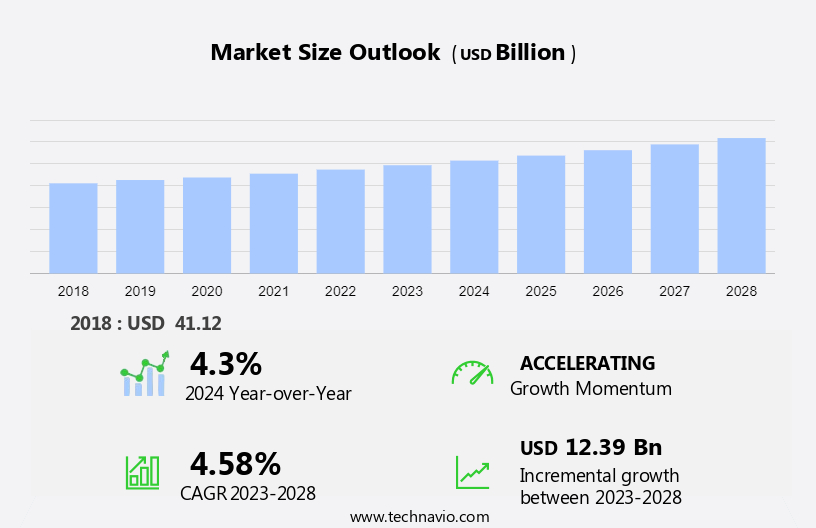
Poultry Feed Market in North America Size

 Request Free Sample

  • The market is a significant sector within the modern animal production industry, catering to the nutritional needs of various poultry species, including ducks, turkeys, hens, and geese. Poultry feed plays a crucial role in ensuring optimal growth and productivity. Corn, an abundant energy source in North America, often serves as the primary ingredient in poultry feed. However, high-value animal protein sources like soybean meal, wheat, and barley are also integral components, contributing to the nutritional content of the feed.
  • The composition of poultry feed varies depending on the specific requirements of each species. For instance, boiler chickens typically require protein-rich diets, with protein content ranging from 18% to 24%, to support their rapid growth. On the other hand, layers require a slightly lower protein content (16%-18%) to maintain egg production. Nutritional supplements, including vitamins and minerals, are essential additives to poultry feed. These supplements ensure that birds receive a complete and balanced diet, contributing to their overall health and productivity. Amino acids, the building blocks of proteins, are also essential components, as birds cannot produce them naturally.
  • Feed conversion ratio, a critical performance indicator, is a significant factor in the commercial production of poultry feed. This ratio measures the amount of feed required to produce a unit of weight gain or egg production. Improving feed conversion ratio is a primary focus for feed manufacturers, as it directly impacts profitability and sustainability in the poultry industry. In conclusion, the market is a vital sector that supports the production of meat and eggs. Producers rely on a well-balanced and nutrient-dense diet, consisting of energy sources like corn and protein-rich ingredients such as soybean meal, wheat, and barley. The industry's focus on optimizing feed conversion ratio and providing complete and balanced diets ensures the continued growth and productivity of North American poultry operations.

How is this market segmented and which is the largest segment?

The market research report provides comprehensive data (region-wise segment analysis), with forecasts and estimates in "USD billion" for the period 2024-2028, as well as historical data from 2018-2022 for the following segments.

  • Product
    • Complete feed
    • Concentrates
    • Premix
  • Type
    • Conventional
    • Organic
  • Geography
    • North America
      • Canada
      • Mexico
      • US

By Product Insights

  • The complete feed segment is estimated to witness significant growth during the forecast period.

In the market, complete feed is a widely adopted solution due to its nutritional completeness and convenience. This feed type offers a balanced diet for poultry, containing essential proteins, energy sources, and necessary vitamins and minerals. By choosing complete feed, poultry farmers eliminate the need for additional supplements and simplify their feeding procedures. Complete feed's pre-formulated nutrition ensures optimal development and performance for the birds, making it an increasingly popular choice among chicken breeders. Small and medium-sized farms, in particular, appreciate the time and cost savings associated with complete feed. While energy sources and proteins are crucial components, it's equally important to consider anti-nutritional elements and animal health in poultry feed.

Feed additives play a significant role in addressing these concerns, enhancing overall feed efficiency and supporting animal well-being. Furthermore, environmental considerations and the growing demand for organic meat are shaping the market trends, with premium chicken feed gaining traction.
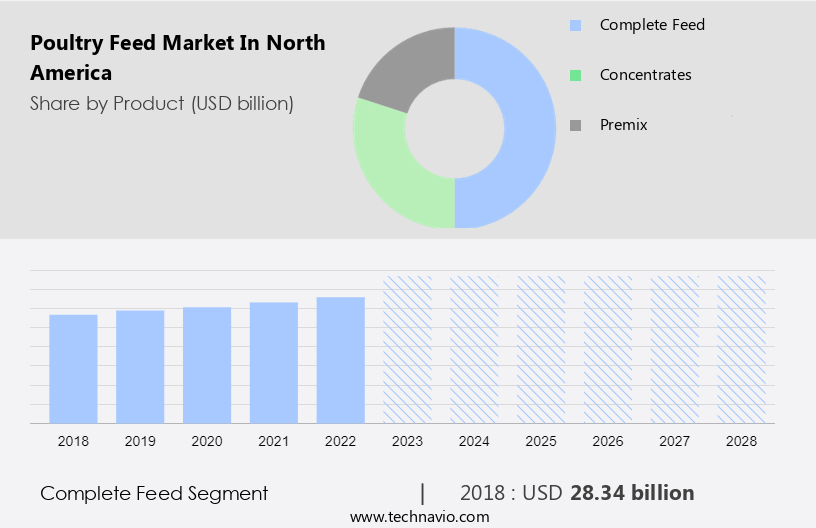
Poultry Feed Market in North America Size

Get a glance at the market share of various segments Request Free Sample

The complete feed segment was valued at  USD 28.34 billion in 2018 and showed a gradual increase during the forecast period.

Market Dynamics

Our researchers analyzed the data with 2023 as the base year, along with the key drivers, trends, and challenges. A holistic analysis of drivers will help companies refine their marketing strategies to gain a competitive advantage.

What are the key market drivers leading to the rise in adoption of North America Poultry Feed Market ?

Rising adoption of precision nutrition and innovative formulations is the key driver of the market.

  • In North America, the market is witnessing significant advancements due to the adoption of precision nutrition and innovative formulations. This approach to poultry health and performance involves tailoring feed compositions to meet the unique nutritional needs of individual birds, thereby enhancing their growth, reproductive capabilities, and overall well-being. Innovative feed formulations go beyond traditional compositions, incorporating novel chemicals and additives that enhance nutrient absorption, immunological function, and feed conversion ratios. For example, the addition of probiotics and prebiotics to poultry feed promotes gut health, nutrient utilization, and disease resistance.
  • The fast food industry and meat sectors in the US continue to drive the demand for poultry feed, as consumers increasingly seek affordable and high-quality sources of protein. Poultry feed mills are at the forefront of this trend, producing customized feed formulations that cater to the specific needs of various poultry breeds and production systems. Effective disease management is another critical aspect of the market. Feed ingredients play a crucial role in maintaining bird health and preventing the spread of diseases. For instance, the inclusion of antioxidants, vitamins, and minerals in poultry feed helps strengthen the birds' immune systems and protect them from illness.

What are the market trends shaping the North America Poultry Feed Market?

Growing exploration and utilization of alternative protein sources in poultry feed is the upcoming trend in the market.

  • The North American market is witnessing a significant transformation as farmers explore the use of alternative protein sources in their feeding regimens. This shift is being driven by a growing focus on sustainability and the quest for more efficient protein solutions. With increasing awareness of environmental responsibility, research into novel protein ingredients such as insect protein, plant-based proteins, and single-cell proteins is gaining traction. These alternative protein sources offer several advantages, including lower environmental impact and improved nutritional value. For instance, insects are highly efficient at converting feed into protein and can be raised with minimal environmental impact.
  • Moreover, plant-based proteins derived from legumes and oilseeds help reduce reliance on meat and bone meal, which are resource-intensive. As a result, the poultry farming industry in North America is embracing these innovative feed solutions to meet the evolving demands of consumers and stakeholders.

What challenges does North America Poultry Feed Market face during the growth?

Fluctuations in prices of key feed ingredients is a key challenge affecting the market growth.

  • The market faces significant challenges due to the volatility of key feed ingredients' prices. The industry relies heavily on grains, soybean meal, and other protein sources for formulating nutrient-dense diets for poultry in intensive systems. However, the pricing of these components is subject to external influences, such as weather conditions, geopolitical events, and global supply and demand dynamics. For instance, extreme weather events, like droughts, can limit grain production, causing prices to increase. Similarly, geopolitical tensions can disrupt supply chains, leading to increased input costs for feed producers. These unforeseen price increases can significantly impact production costs for poultry feed manufacturers, affecting the overall profitability of the industry.
  • Furthermore, to mitigate these risks, commercial feed producers prioritize nutrient digestibility and focus on using high-quality, consistent ingredients in their formulations. By doing so, they can maintain optimal bird performance and ensure the nutritional content of their feed remains consistent, despite market fluctuations.

Exclusive North America Poultry Feed Market Customer Landscape

The market forecasting report includes the adoption lifecycle of the market, covering from the innovator's stage to the laggard's stage. It focuses on adoption rates in different regions based on penetration. Furthermore, the report also includes key purchase criteria and drivers of price sensitivity to help companies evaluate and develop their market growth analysis strategies.
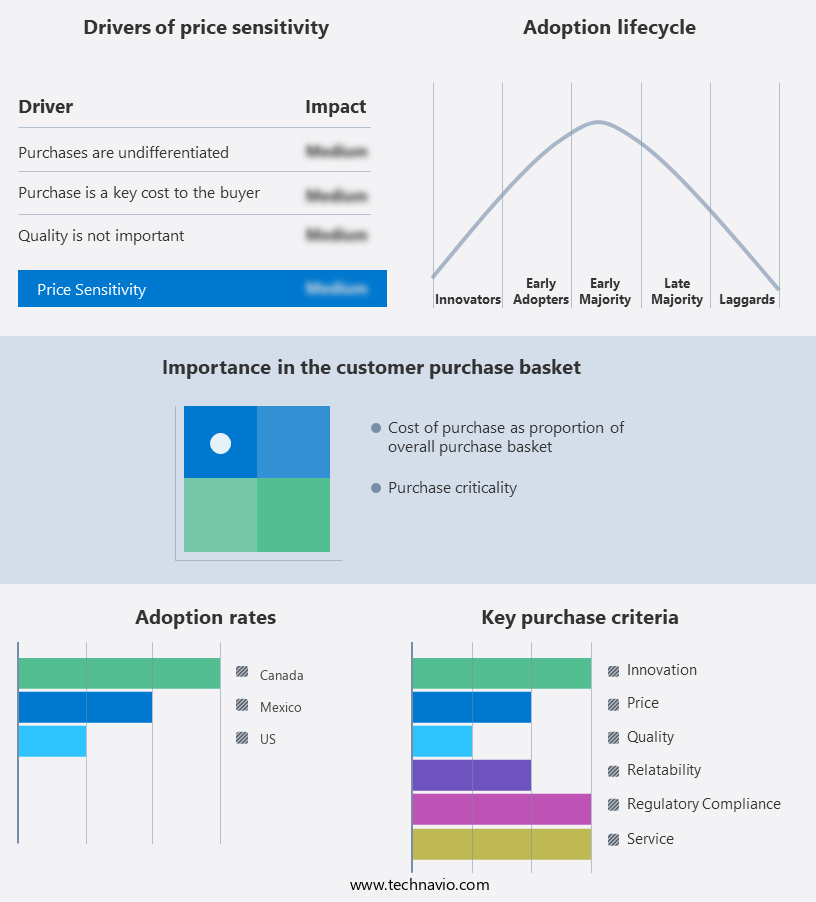
Poultry Feed Market in North America Share by Geography

 Customer Landscape

Key Companies & Market Insights

Companies are implementing various strategies, such as strategic alliances, market forecast partnerships, mergers and acquisitions, geographical expansion, and product/service launches, to enhance their presence in the market.

The market research and growth report includes detailed analyses of the competitive landscape of the market and information about key companies, including:

  • Adisseo Co.
  • Alltech Inc.
  • Archer Daniels Midland Co.
  • BASF SE
  • Cargill Inc.
  • Evonik Industries AG
  • Kalmbach Feeds
  • Kemin Industries Inc.
  • Kent Corp.
  • Koninklijke DSM NV
  • Land O Lakes Inc.
  • MFA Inc.
  • New Country Organics Inc.
  • Novus International Inc.
  • Nutreco NV
  • Parrish and Heimbecker Ltd.
  • Perdue Farms Inc.
  • The Fertrell Co.
  • Tyson Foods Inc.
  • Zeigler Bros. Inc

Qualitative and quantitative analysis of companies has been conducted to help clients understand the wider business environment as well as the strengths and weaknesses of key market players. Data is qualitatively analyzed to categorize companies as pure play, category-focused, industry-focused, and diversified; it is quantitatively analyzed to categorize companies as dominant, leading, strong, tentative, and weak.

Research Analyst Overview

The market is a significant sector within the animal husbandry industry, catering to the nutritional needs of various poultry species such as ducks, turkeys, hens, and geese. These birds are raised primarily for meat and eggs production. Poultry feed comprises essential minerals, vitamins, carbohydrates, proteins, and energy sources to maintain optimal animal health and productivity. Modern animal production relies on concentrated feed, premix feed, and complete feed, which include functional varieties with added disease resistance and nutrient management benefits. Feed additives, such as amino acids and protein, are integral to enhancing the nutritional content of poultry feed. Major feed ingredients include corn, soybean meal, wheat, and barley, while animal health considerations necessitate the inclusion of anti-nutritional elements mitigation and disease management strategies.

Moreover, environmental effects on poultry farming practices are also essential, with organic meat and ecommerce platforms playing a growing role in the industry. The fast food industry and meat sectors drive the demand for poultry meat, leading to an increasing focus on high-value animal protein and premium chicken feed. Nutritional supplements and feeding regimens are crucial aspects of poultry nutrition management, with commercial feed production adhering to strict feed specification guidelines. Intensive systems and nutrient digestibility are essential factors in optimizing poultry farming efficiency.

Market Scope

Report Coverage

Details

Page number

141

Base year

2023

Historic period

2018-2022

Forecast period

2024-2028

Growth momentum & CAGR

Accelerate at a CAGR of 4.58%

Market growth 2024-2028

USD 12.39 billion

Market structure

Fragmented

YoY growth 2023-2024(%)

4.3

Competitive landscape

Leading Companies, Market Positioning of Companies, Competitive Strategies, and Industry Risks

Request Free Sample

What are the Key Data Covered in this Market Research Report?

  • CAGR of the market during the forecast period
  • Detailed information on factors that will drive the market growth and forecasting between 2024 and 2028
  • Precise estimation of the size of the market  and its contribution of the market in focus to the parent market
  • Accurate predictions about upcoming market growth and trends and changes in consumer behaviour
  • Growth of the market across North America
  • Thorough analysis of the market's competitive landscape and detailed information about companies
  • Comprehensive analysis of factors that will challenge the growth of market companies

We can help! Our analysts can customize this market research report to meet your requirements Get in touch

1 Executive Summary

  • 1.1 Market overview
    • Exhibit 01: Executive Summary – Chart on Market Overview
    • Exhibit 02: Executive Summary – Data Table on Market Overview
    • Exhibit 03: Executive Summary – Chart on Country Market Characteristics
    • Exhibit 04: Executive Summary – Chart on Market by Geography
    • Exhibit 05: Executive Summary – Chart on Market Segmentation by Product
    • Exhibit 06: Executive Summary – Chart on Market Segmentation by Type
    • Exhibit 07: Executive Summary – Chart on Incremental Growth
    • Exhibit 08: Executive Summary – Data Table on Incremental Growth
    • Exhibit 09: Executive Summary – Chart on Vendor Market Positioning

2 Market Landscape

  • 2.1 Market ecosystem
    • Exhibit 10: Parent market
    • Exhibit 11: Market Characteristics

3 Market Sizing

  • 3.1 Market definition
    • Exhibit 12: Offerings of vendors included in the market definition
  • 3.2 Market segment analysis
    • Exhibit 13: Market segments
  • 3.3 Market size 2023
    • 3.4 Market outlook: Forecast for 2023-2028
      • Exhibit 14: Chart on North America - Market size and forecast 2023-2028 ($ billion)
      • Exhibit 15: Data Table on Regional - Market size and forecast 2023-2028 ($ billion)
      • Exhibit 16: Chart on North America: Year-over-year growth 2023-2028 (%)
      • Exhibit 17: Data Table on Regional - Market size and forecast 2023-2028 ($ billion)

    4 Historic Market Size

    • 4.1 Poultry feed market in North America 2018 - 2022
      • Exhibit 18: Historic Market Size – Data Table on poultry feed market in north America 2018 - 2022 ($ billion)
    • 4.2 Product Segment Analysis 2018 - 2022
      • Exhibit 19: Historic Market Size – Product Segment 2018 - 2022 ($ billion)
    • 4.3 Type Segment Analysis 2018 - 2022
      • Exhibit 20: Historic Market Size – Type Segment 2018 - 2022 ($ billion)
    • 4.4 Country Segment Analysis 2018 - 2022
      • Exhibit 21: Historic Market Size – Country Segment 2018 - 2022 ($ billion)

    5 Five Forces Analysis

    • 5.1 Five forces summary
      • Exhibit 22: Five forces analysis - Comparison between 2023 and 2028
    • 5.2 Bargaining power of buyers
      • Exhibit 23: Chart on Bargaining power of buyers – Impact of key factors 2023 and 2028
    • 5.3 Bargaining power of suppliers
      • Exhibit 24: Bargaining power of suppliers – Impact of key factors in 2023 and 2028
    • 5.4 Threat of new entrants
      • Exhibit 25: Threat of new entrants – Impact of key factors in 2023 and 2028
    • 5.5 Threat of substitutes
      • Exhibit 26: Threat of substitutes – Impact of key factors in 2023 and 2028
    • 5.6 Threat of rivalry
      • Exhibit 27: Threat of rivalry – Impact of key factors in 2023 and 2028
    • 5.7 Market condition
      • Exhibit 28: Chart on Market condition - Five forces 2023 and 2028

    6 Market Segmentation by Product

    • 6.1 Market segments
      • Exhibit 29: Chart on Product - Market share 2023-2028 (%)
      • Exhibit 30: Data Table on Product - Market share 2023-2028 (%)
    • 6.2 Comparison by Product
      • Exhibit 31: Chart on Comparison by Product
      • Exhibit 32: Data Table on Comparison by Product
    • 6.3 Complete feed - Market size and forecast 2023-2028
      • Exhibit 33: Chart on Complete feed - Market size and forecast 2023-2028 ($ billion)
      • Exhibit 34: Data Table on Complete feed - Market size and forecast 2023-2028 ($ billion)
      • Exhibit 35: Chart on Complete feed - Year-over-year growth 2023-2028 (%)
      • Exhibit 36: Data Table on Complete feed - Year-over-year growth 2023-2028 (%)
    • 6.4 Concentrates - Market size and forecast 2023-2028
      • Exhibit 37: Chart on Concentrates - Market size and forecast 2023-2028 ($ billion)
      • Exhibit 38: Data Table on Concentrates - Market size and forecast 2023-2028 ($ billion)
      • Exhibit 39: Chart on Concentrates - Year-over-year growth 2023-2028 (%)
      • Exhibit 40: Data Table on Concentrates - Year-over-year growth 2023-2028 (%)
    • 6.5 Premix - Market size and forecast 2023-2028
      • Exhibit 41: Chart on Premix - Market size and forecast 2023-2028 ($ billion)
      • Exhibit 42: Data Table on Premix - Market size and forecast 2023-2028 ($ billion)
      • Exhibit 43: Chart on Premix - Year-over-year growth 2023-2028 (%)
      • Exhibit 44: Data Table on Premix - Year-over-year growth 2023-2028 (%)
    • 6.6 Market opportunity by Product
      • Exhibit 45: Market opportunity by Product ($ billion)
      • Exhibit 46: Data Table on Market opportunity by Product ($ billion)

    7 Market Segmentation by Type

    • 7.1 Market segments
      • Exhibit 47: Chart on Type - Market share 2023-2028 (%)
      • Exhibit 48: Data Table on Type - Market share 2023-2028 (%)
    • 7.2 Comparison by Type
      • Exhibit 49: Chart on Comparison by Type
      • Exhibit 50: Data Table on Comparison by Type
    • 7.3 Conventional - Market size and forecast 2023-2028
      • Exhibit 51: Chart on Conventional - Market size and forecast 2023-2028 ($ billion)
      • Exhibit 52: Data Table on Conventional - Market size and forecast 2023-2028 ($ billion)
      • Exhibit 53: Chart on Conventional - Year-over-year growth 2023-2028 (%)
      • Exhibit 54: Data Table on Conventional - Year-over-year growth 2023-2028 (%)
    • 7.4 Organic - Market size and forecast 2023-2028
      • Exhibit 55: Chart on Organic - Market size and forecast 2023-2028 ($ billion)
      • Exhibit 56: Data Table on Organic - Market size and forecast 2023-2028 ($ billion)
      • Exhibit 57: Chart on Organic - Year-over-year growth 2023-2028 (%)
      • Exhibit 58: Data Table on Organic - Year-over-year growth 2023-2028 (%)
    • 7.5 Market opportunity by Type
      • Exhibit 59: Market opportunity by Type ($ billion)
      • Exhibit 60: Data Table on Market opportunity by Type ($ billion)

    8 Customer Landscape

    • 8.1 Customer landscape overview
      • Exhibit 61: Analysis of price sensitivity, lifecycle, customer purchase basket, adoption rates, and purchase criteria

    9 Geographic Landscape

    • 9.1 Geographic segmentation
      • Exhibit 62: Chart on Market share by geography - 2023-2028 (%)
      • Exhibit 63: Data Table on Market share by geography - 2023-2028 (%)
    • 9.2 Geographic comparison
      • Exhibit 64: Chart on Geographic comparison
      • Exhibit 65: Data Table on Geographic comparison
    • 9.3 US - Market size and forecast 2023-2028
      • Exhibit 66: Chart on US - Market size and forecast 2023-2028 ($ billion)
      • Exhibit 67: Data Table on US - Market size and forecast 2023-2028 ($ billion)
      • Exhibit 68: Chart on US - Year-over-year growth 2023-2028 (%)
      • Exhibit 69: Data Table on US - Year-over-year growth 2023-2028 (%)
    • 9.4 Canada - Market size and forecast 2023-2028
      • Exhibit 70: Chart on Canada - Market size and forecast 2023-2028 ($ billion)
      • Exhibit 71: Data Table on Canada - Market size and forecast 2023-2028 ($ billion)
      • Exhibit 72: Chart on Canada - Year-over-year growth 2023-2028 (%)
      • Exhibit 73: Data Table on Canada - Year-over-year growth 2023-2028 (%)
    • 9.5 Mexico - Market size and forecast 2023-2028
      • Exhibit 74: Chart on Mexico - Market size and forecast 2023-2028 ($ billion)
      • Exhibit 75: Data Table on Mexico - Market size and forecast 2023-2028 ($ billion)
      • Exhibit 76: Chart on Mexico - Year-over-year growth 2023-2028 (%)
      • Exhibit 77: Data Table on Mexico - Year-over-year growth 2023-2028 (%)
    • 9.6 Market opportunity by geography
      • Exhibit 78: Market opportunity by geography ($ billion)
      • Exhibit 79: Data Table on Market opportunity by geography ($ billion)

    10 Drivers, Challenges, and Trends

    • 10.1 Market drivers
      • 10.2 Market challenges
        • 10.3 Impact of drivers and challenges
          • Exhibit 80: Impact of drivers and challenges in 2023 and 2028
        • 10.4 Market trends

          11 Vendor Landscape

          • 11.1 Overview
            • 11.2 Vendor landscape
              • Exhibit 81: Overview on Criticality of inputs and Factors of differentiation
            • 11.3 Landscape disruption
              • Exhibit 82: Overview on factors of disruption
            • 11.4 Industry risks
              • Exhibit 83: Impact of key risks on business

            12 Vendor Analysis

            • 12.1 Vendors covered
              • Exhibit 84: Vendors covered
            • 12.2 Market positioning of vendors
              • Exhibit 85: Matrix on vendor position and classification
            • 12.3 Adisseo Co.
              • Exhibit 86: Adisseo Co. - Overview
              • Exhibit 87: Adisseo Co. - Product / Service
              • Exhibit 88: Adisseo Co. - Key offerings
            • 12.4 Alltech Inc.
              • Exhibit 89: Alltech Inc. - Overview
              • Exhibit 90: Alltech Inc. - Product / Service
              • Exhibit 91: Alltech Inc. - Key offerings
            • 12.5 Archer Daniels Midland Co.
              • Exhibit 92: Archer Daniels Midland Co. - Overview
              • Exhibit 93: Archer Daniels Midland Co. - Business segments
              • Exhibit 94: Archer Daniels Midland Co. - Key news
              • Exhibit 95: Archer Daniels Midland Co. - Key offerings
              • Exhibit 96: Archer Daniels Midland Co. - Segment focus
            • 12.6 BASF SE
              • Exhibit 97: BASF SE - Overview
              • Exhibit 98: BASF SE - Business segments
              • Exhibit 99: BASF SE - Key news
              • Exhibit 100: BASF SE - Key offerings
              • Exhibit 101: BASF SE - Segment focus
            • 12.7 Cargill Inc.
              • Exhibit 102: Cargill Inc. - Overview
              • Exhibit 103: Cargill Inc. - Product / Service
              • Exhibit 104: Cargill Inc. - Key news
              • Exhibit 105: Cargill Inc. - Key offerings
            • 12.8 Evonik Industries AG
              • Exhibit 106: Evonik Industries AG - Overview
              • Exhibit 107: Evonik Industries AG - Business segments
              • Exhibit 108: Evonik Industries AG - Key news
              • Exhibit 109: Evonik Industries AG - Key offerings
              • Exhibit 110: Evonik Industries AG - Segment focus
            • 12.9 Kalmbach Feeds
              • Exhibit 111: Kalmbach Feeds - Overview
              • Exhibit 112: Kalmbach Feeds - Product / Service
              • Exhibit 113: Kalmbach Feeds - Key offerings
            • 12.10 Kemin Industries Inc.
              • Exhibit 114: Kemin Industries Inc. - Overview
              • Exhibit 115: Kemin Industries Inc. - Product / Service
              • Exhibit 116: Kemin Industries Inc. - Key offerings
            • 12.11 Kent Corp.
              • Exhibit 117: Kent Corp. - Overview
              • Exhibit 118: Kent Corp. - Product / Service
              • Exhibit 119: Kent Corp. - Key offerings
            • 12.12 Koninklijke DSM NV
              • Exhibit 120: Koninklijke DSM NV - Overview
              • Exhibit 121: Koninklijke DSM NV - Business segments
              • Exhibit 122: Koninklijke DSM NV - Key news
              • Exhibit 123: Koninklijke DSM NV - Key offerings
              • Exhibit 124: Koninklijke DSM NV - Segment focus
            • 12.13 Land O Lakes Inc.
              • Exhibit 125: Land O Lakes Inc. - Overview
              • Exhibit 126: Land O Lakes Inc. - Product / Service
              • Exhibit 127: Land O Lakes Inc. - Key offerings
            • 12.14 MFA Inc.
              • Exhibit 128: MFA Inc. - Overview
              • Exhibit 129: MFA Inc. - Product / Service
              • Exhibit 130: MFA Inc. - Key offerings
            • 12.15 Novus International Inc.
              • Exhibit 131: Novus International Inc. - Overview
              • Exhibit 132: Novus International Inc. - Product / Service
              • Exhibit 133: Novus International Inc. - Key offerings
            • 12.16 Nutreco NV
              • Exhibit 134: Nutreco NV - Overview
              • Exhibit 135: Nutreco NV - Product / Service
              • Exhibit 136: Nutreco NV - Key news
              • Exhibit 137: Nutreco NV - Key offerings
            • 12.17 Perdue Farms Inc.
              • Exhibit 138: Perdue Farms Inc. - Overview
              • Exhibit 139: Perdue Farms Inc. - Product / Service
              • Exhibit 140: Perdue Farms Inc. - Key offerings

            13 Appendix

            • 13.1 Scope of the report
              • 13.2 Inclusions and exclusions checklist
                • Exhibit 141: Inclusions checklist
                • Exhibit 142: Exclusions checklist
              • 13.3 Currency conversion rates for US$
                • Exhibit 143: Currency conversion rates for US$
              • 13.4 Research methodology
                • Exhibit 144: Research methodology
                • Exhibit 145: Validation techniques employed for market sizing
                • Exhibit 146: Information sources
              • 13.5 List of abbreviations
                • Exhibit 147: List of abbreviations

              Research Methodology

              Technavio presents a detailed picture of the market by way of study, synthesis, and summation of data from multiple sources. The analysts have presented the various facets of the market with a particular focus on identifying the key industry influencers. The data thus presented is comprehensive, reliable, and the result of extensive research, both primary and secondary.

              INFORMATION SOURCES

              Primary sources

              • Manufacturers and suppliers
              • Channel partners
              • Industry experts
              • Strategic decision makers

              Secondary sources

              • Industry journals and periodicals
              • Government data
              • Financial reports of key industry players
              • Historical data
              • Press releases

              DATA ANALYSIS

              Data Synthesis

              • Collation of data
              • Estimation of key figures
              • Analysis of derived insights

              Data Validation

              • Triangulation with data models
              • Reference against proprietary databases
              • Corroboration with industry experts

              REPORT WRITING

              Qualitative

              • Market drivers
              • Market challenges
              • Market trends
              • Five forces analysis

              Quantitative

              • Market size and forecast
              • Market segmentation
              • Geographical insights
              • Competitive landscape

              Interested in this report?

              Get your sample now to see our research methodology and insights!

              Download Now

              Frequently Asked Questions

              Poultry Feedin North America market growth will increase by $ 12.39 bn during 2024-2028.

              The Poultry Feedin North America market is expected to grow at a CAGR of 4.58% during 2024-2028.

              Poultry Feedin North America market is segmented by Product( Complete feed, Concentrates, Premix) Type( Conventional, Organic)

              Adisseo Co., Alltech Inc., Archer Daniels Midland Co., BASF SE, Cargill Inc., Evonik Industries AG, Kalmbach Feeds, Kemin Industries Inc., Kent Corp., Koninklijke DSM NV, Land O Lakes Inc., MFA Inc., New Country Organics Inc., Novus International Inc., Nutreco NV, Parrish and Heimbecker Ltd., Perdue Farms Inc., The Fertrell Co., Tyson Foods Inc., Zeigler Bros. Inc are a few of the key vendors in the Poultry Feedin North America market.

              North America will register the highest growth rate of 100% among the other regions. Therefore, the Poultry Feedin North America market in North America is expected to garner significant business opportunities for the vendors during the forecast period.

              US, Canada, Mexico

              • Rising adoption of precision nutrition and innovative formulationsPrecision nutrition and novel formulations are key drivers in the poultry feed market in North America is the driving factor this market.
              • transforming the approach to poultry health and performance. Precision nutrition entails customizing feed formulations to fit the nutritional requirements of each poultry is the driving factor this market.
              • thus enhancing their development is the driving factor this market.
              • reproductive capacities is the driving factor this market.
              • and overall well-being. This method employs advanced technologies and data analytics to examine aspects like genetics is the driving factor this market.
              • age is the driving factor this market.
              • and environmental circumstances is the driving factor this market.
              • resulting in a customized and efficient nutritional profile. Innovative formulations transcend conventional feed compositions is the driving factor this market.
              • including innovative chemicals and additives that boost nutrient absorption is the driving factor this market.
              • immunological function is the driving factor this market.
              • and feed conversion ratios. For instance is the driving factor this market.
              • including probiotics and prebiotics in poultry feed improves gut health is the driving factor this market.
              • nutritional utilization is the driving factor this market.
              • and disease resistance. Furthermore is the driving factor this market.
              • the use of essential oils or plant extracts not only promotes natural growth but also improves the flocks overall health. The addition of particular additives is the driving factor this market.
              • such as enzymes is the driving factor this market.
              • helps to break down complex nutrients is the driving factor this market.
              • boosting their bioavailability for easier digestion. These novel formulations satisfy changing consumer demands is the driving factor this market.
              • such as the need for antibiotic-free or organic poultry products is the driving factor this market.
              • while still meeting severe regulatory requirements. The poultry feed market in North America is seeing a paradigm change toward precision nutrition and new formulations is the driving factor this market.
              • indicating a regional commitment to sustainable is the driving factor this market.
              • efficient is the driving factor this market.
              • and science-driven poultry farming practices. Hence is the driving factor this market.
              • such factors will drive the growth of the poultry feed market in North America during the forecast period. is the driving factor this market.

              The Poultry Feedin North America market vendors should focus on grabbing business opportunities from the Complete feed segment as it accounted for the largest market share in the base year.