


Oil Field Bio-solvents Market Analysis, Size, and Forecast 2026-2030: North America (US, Canada, and Mexico), Europe (Germany, UK, and France), APAC (China, India, and Japan), Middle East and Africa (Saudi Arabia, UAE, and South Africa), South America (Brazil and Argentina), and Rest of World (ROW)

Oil Field Bio-solvents Market Analysis, Size, and Forecast 2026-2030:
North America (US, Canada, and Mexico), Europe (Germany, UK, and France), APAC (China, India, and Japan), Middle East and Africa (Saudi Arabia, UAE, and South Africa), South America (Brazil and Argentina), and Rest of World (ROW)

Published: May 2026 337 Pages SKU: IRTNTR70193

Market Overview at a Glance

$40.95 Mn
Market Opportunity
4%
CAGR 2025 - 2030
42.1%
North America Growth
$130.08 Mn
Hydrocarbons segment 2024

Oil Field Bio-solvents Market Size 2026-2030

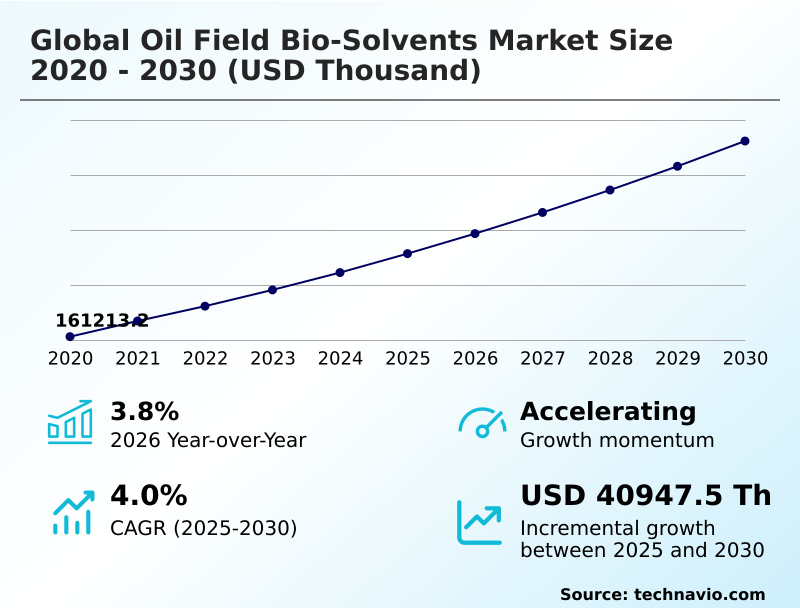
The oil field bio-solvents market size is valued to increase by USD 40.95 million, at a CAGR of 4% from 2025 to 2030. Rising global regulatory pressure and environmental compliance mandates will drive the oil field bio-solvents market.

Major Market Trends & Insights

  • North America dominated the market and accounted for a 42.1% growth during the forecast period.
  • By Type - Hydrocarbons segment was valued at USD 130.08 million in 2024
  • By Application - Oil and gas segment accounted for the largest market revenue share in 2024

Market Size & Forecast

  • Market Opportunities:
  • Market Future Opportunities: USD 40.95 million
  • CAGR from 2025 to 2030 : 4%

Market Summary

  • The oil field bio-solvents market is shaped by a decisive shift toward green chemistry principles, driven by stringent environmental regulations and corporate ESG mandates. Energy producers are increasingly compelled to adopt low-toxicity solvent systems and biodegradable drilling fluids to mitigate ecological damage and avoid financial penalties associated with non-compliance.
  • This transition involves replacing traditional synthetic chemicals with renewable hydrocarbon alternatives derived from vegetable oil-based esters and microbial fermentation products. A key trend is the development of multi-functional bio-formulations that combine cleaning, lubrication, and corrosion protection, streamlining rig safety chemical solutions.
  • For instance, an operator in a sensitive marine environment might deploy a single, plant-based emulsifier that both stabilizes drilling mud and meets strict biodegradability requirements, reducing chemical inventory and simplifying waste management. However, adoption faces challenges from renewable feedstock price volatility and the need for bio-solvent thermal stability in high-pressure, high-temperature wells.
  • Technical advancements in bio-refining technologies and advanced molecular synthesis are crucial for overcoming these performance hurdles and improving the economic viability of sustainable oilfield chemicals, supporting a broader circular economy in energy.

What will be the Size of the Oil Field Bio-solvents Market during the forecast period?
Get Key Insights on Market Forecast (PDF) Get Free Sample

How is the Oil Field Bio-solvents Market Segmented?

The oil field bio-solvents industry research report provides comprehensive data (region-wise segment analysis), with forecasts and estimates in "USD thousand" for the period 2026-2030, as well as historical data from 2020-2024 for the following segments.

  • Type
    • Hydrocarbons
    • Alcohols
    • Glycols
    • Others
  • Application
    • Oil and gas
    • Transportation
    • Others
  • Product type
    • Surfactants
    • Emulsifying agents
    • Viscosity modifiers
    • Solubilizing agents
  • Grade type
    • Industrial grade
    • Technical grade
    • High purity grade
    • Food grade
  • Geography
    • North America
      • US
      • Canada
      • Mexico
    • Europe
      • Germany
      • UK
      • France
    • APAC
      • China
      • India
      • Japan
    • Middle East and Africa
      • Saudi Arabia
      • UAE
      • South Africa
    • South America
      • Brazil
      • Argentina
    • Rest of World (ROW)

By Type Insights

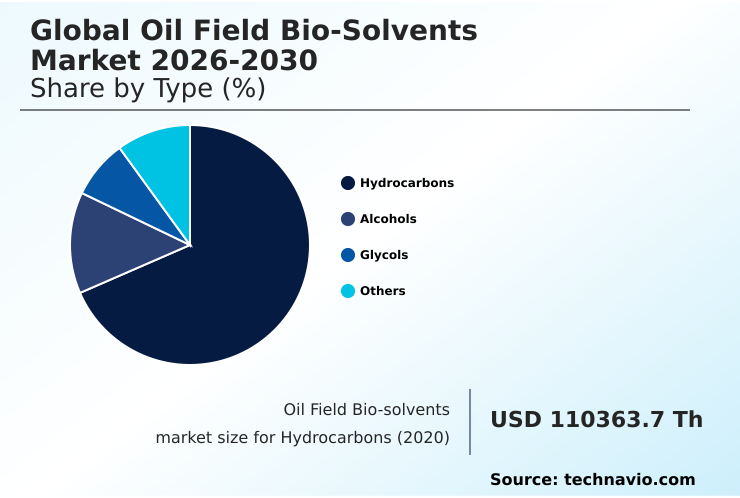
The hydrocarbons segment is estimated to witness significant growth during the forecast period.

The hydrocarbons segment is shifting toward renewable chemical feedstock solutions, such as citrus-derived terpenes and bio-paraffins produced via advanced molecular synthesis.

These eco-friendly degreasing agents offer a critical advantage by lacking the aromatic compounds found in mineral oil alternatives, significantly reducing environmental and health risks in offshore operations.

Bio-based hydrocarbons possess high flash point solvents, ensuring safety in high-temperature environments, and provide superior solvency for asphaltene dissolution agents and paraffin wax inhibitors.

This technical performance, often matching or exceeding synthetic counterparts, allows operators to maintain high productivity while complying with environmental mandates.

Formulations based on oleochemical derivatives have demonstrated a 15% increase in cleaning efficiency, underscoring the performance parity achieved by these renewable hydrocarbon alternatives in demanding oilfield applications.
Get Free Sample

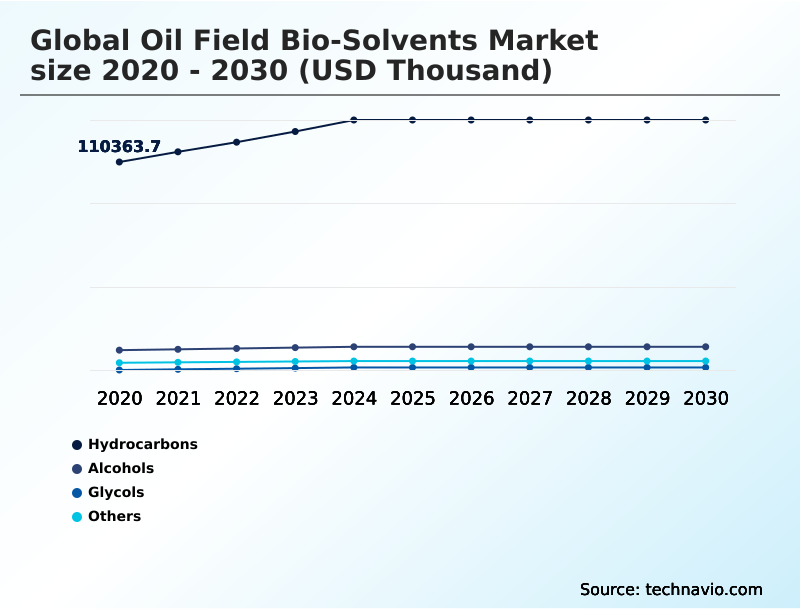
The Hydrocarbons segment was valued at USD 130.08 million in 2024 and showed a gradual increase during the forecast period.
Get Free Sample

Regional Analysis

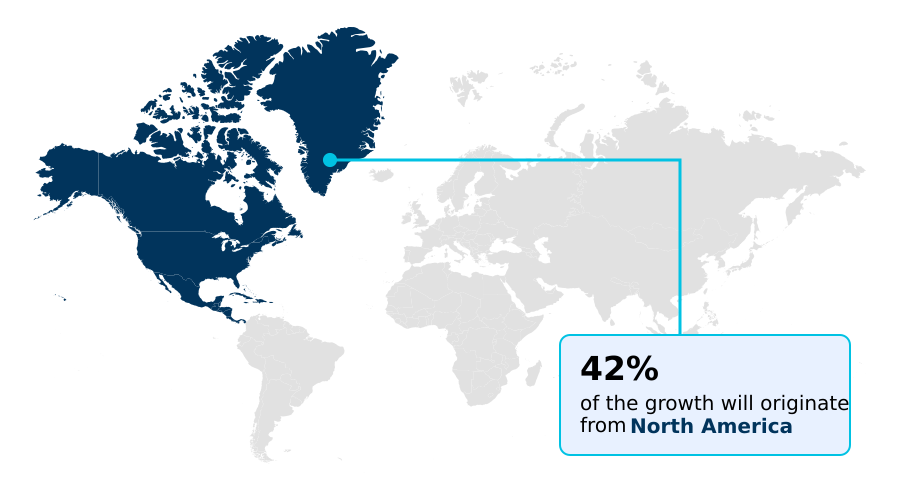
North America is estimated to contribute 42.1% to the growth of the global market during the forecast period.Technavio’s analysts have elaborately explained the regional trends and drivers that shape the market during the forecast period.
See How Oil Field Bio-solvents Market Demand is Rising in North America Get Free Sample

The geographic landscape of the market is led by North America, which is projected to account for 42.1% of the market's incremental growth and expand at a rate of 4.7%.

This region's dominance is driven by stringent environmental regulations and a focus on green extraction technologies. Europe follows with a 4.1% growth rate, prioritizing a circular economy in energy and sustainable surfactant technology for its mature offshore fields.

In APAC, the focus is on leveraging abundant agricultural resources for plant-based emulsifiers and eco-friendly stimulation fluids.

The global adoption of bio-solvent lifecycle assessment methodologies is influencing procurement decisions, with a growing emphasis on subsea pipeline maintenance solutions that minimize ecological impact.

This regional differentiation highlights how local regulations and resource availability shape the implementation of sustainable oilfield chemicals worldwide.

Market Dynamics

Our researchers analyzed the data with 2025 as the base year, along with the key drivers, trends, and challenges. A holistic analysis of drivers will help companies refine their marketing strategies to gain a competitive advantage.

  • The strategic implementation of advanced chemistries is reshaping oilfield operations, with a specific focus on performance and sustainability. The use of bio-solvents for heavy crude oil removal is becoming critical in mature fields, where these agents improve recovery rates without the harsh environmental impact of traditional solvents.
  • Similarly, the deployment of plant-derived solvents for well stimulation helps operators enhance reservoir permeability in a more eco-compliant manner. A comprehensive cost-benefit analysis of green oilfield chemicals often reveals long-term savings, with some operators reporting lower environmental compliance expenditures compared to those using legacy systems.
  • The evaluation of bio-based solvent performance in deepwater drilling is a key area of research, as these environments demand exceptional thermal stability and material compatibility. Furthermore, the regulatory impact on bio-solvent market adoption continues to be the primary catalyst, pushing the industry toward greener alternatives.
  • As companies navigate these complexities, the ability to balance technical efficacy with environmental stewardship defines market leadership and operational resilience in a rapidly evolving energy landscape.
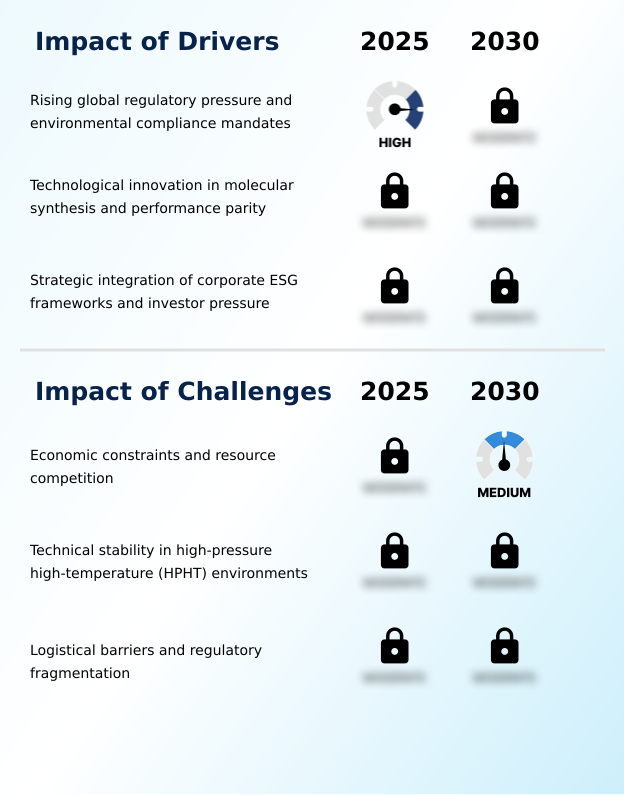
What are the key market drivers leading to the rise in the adoption of Oil Field Bio-solvents Industry?

  • Rising global regulatory pressure and environmental compliance mandates are a key driver for the market.

  • The primary driver for market expansion is the global push for environmental compliance and sustainable operations. A stringent regulatory framework for biosolvents, including mandates for chemicals to exceed 90% biodegradability in offshore environments, compels the adoption of biodegradable drilling fluids.
  • This shift is part of a broader move toward a green chemistry supply chain and sustainable chemical procurement strategies that prioritize low-toxicity solvent systems.
  • Technological advancements allow these green chemistry principles to deliver tangible benefits, such as a 15% increase in cleaning efficiency.
  • These innovations not only meet compliance demands but also enhance rig safety chemical solutions by reducing volatile organic compound reduction, proving that environmental responsibility can align with operational excellence.

What are the market trends shaping the Oil Field Bio-solvents Industry?

  • A key market trend is the emergence of multi-functional bio-solvent formulations. These are designed to perform several tasks, such as cleaning and lubrication, simultaneously.

  • Key market trends are centered on innovation in chemical design and application optimization. The development of multi-functional bio-formulations allows single products to deliver both cleaning and corrosion protection, streamlining operations. This is complemented by a move toward second-generation feedstock sourcing, which leverages agricultural residue valorization and waste-to-solvent conversion techniques to improve sustainability.
  • These advanced materials are used to formulate green completion fluids and enhanced oil recovery chemicals. Furthermore, digital solvent management platforms enable data-driven chemical optimization, ensuring precise application and reducing waste.
  • Innovations in this space have led to formulations demonstrating up to a 15% increase in cleaning efficiency in deepwater wellbore maintenance, while new AI-powered systems aim to optimize injection rates to extend asset life.

What challenges does the Oil Field Bio-solvents Industry face during its growth?

  • Economic constraints and resource competition represent a key challenge affecting industry growth.

  • Significant market challenges stem from economic and technical hurdles. The renewable feedstock price volatility creates financial uncertainty, with shifts in agricultural priorities causing procurement costs for bio-based esters to increase by as much as 15%. This economic pressure complicates the cost-benefit analysis for operators.
  • On a technical level, ensuring bio-solvent thermal stability in high-pressure, high-temperature environments remains a persistent issue, as many plant-derived molecules can degrade above 220 degrees Celsius. This limits the replacement of synthetic alternatives in demanding deepwater projects.
  • Additionally, industrial bio-solvent logistics and the need for specialized storage add complexity and cost, while the lack of standardized regulations for non-food biomass utilization creates compliance fragmentation across different regions, hindering streamlined global deployment.

Exclusive Technavio Analysis on Customer Landscape

The oil field bio-solvents market forecasting report includes the adoption lifecycle of the market, covering from the innovator’s stage to the laggard’s stage. It focuses on adoption rates in different regions based on penetration. Furthermore, the oil field bio-solvents market report also includes key purchase criteria and drivers of price sensitivity to help companies evaluate and develop their market growth analysis strategies.
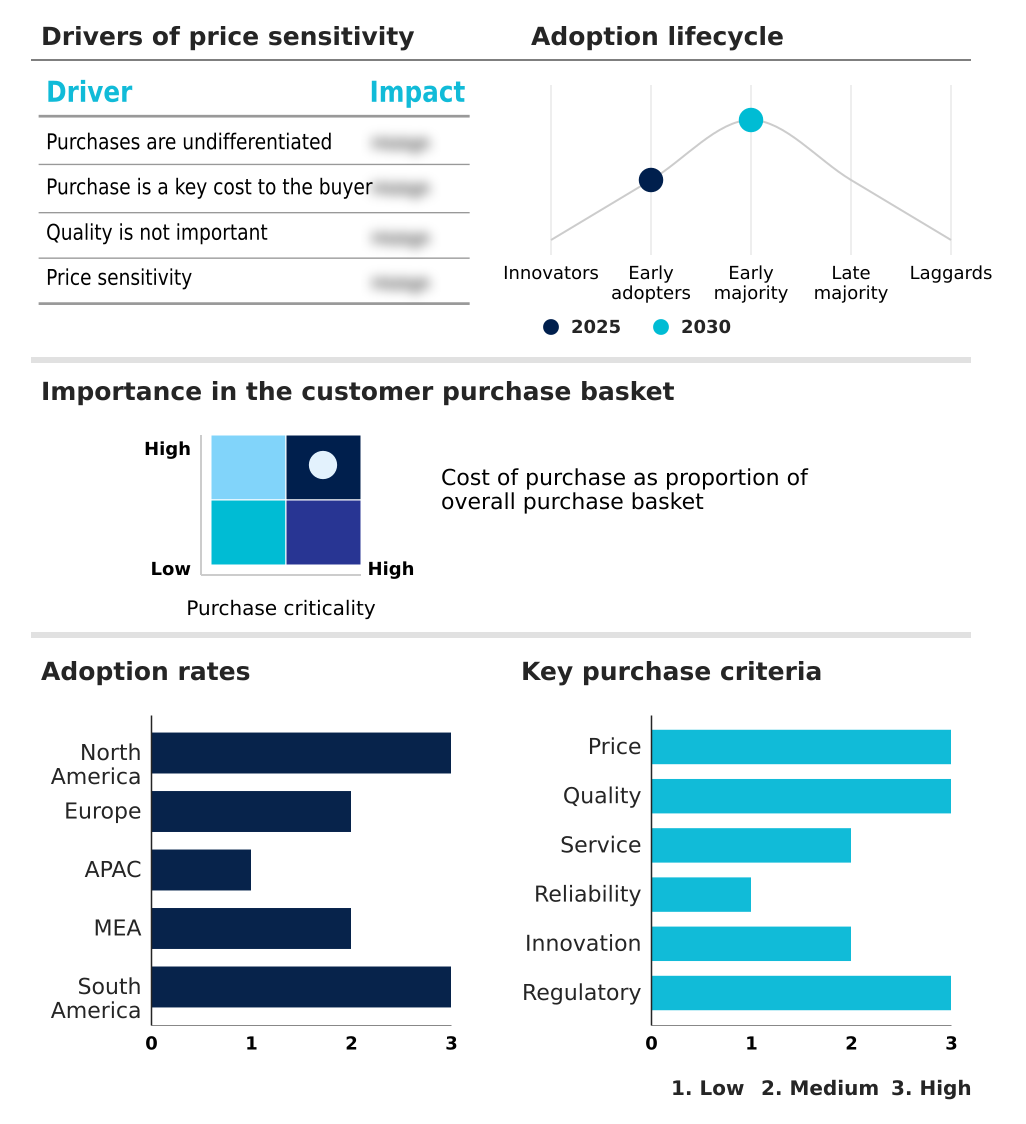
Customer Landscape of Oil Field Bio-solvents Industry

Competitive Landscape

Companies are implementing various strategies, such as strategic alliances, oil field bio-solvents market forecast, partnerships, mergers and acquisitions, geographical expansion, and product/service launches, to enhance their presence in the industry.

Arkema Group - Key offerings include advanced bio-based solvents, biodegradable surfactants, and specialty esters, designed to enhance performance and environmental compliance in global oilfield operations.

The industry research and growth report includes detailed analyses of the competitive landscape of the market and information about key companies, including:

  • Arkema Group
  • Ashland Inc.
  • Baker Hughes Co.
  • BASF SE
  • Cargill Inc.
  • Clariant International Ltd.
  • Colonial Chemical Inc.
  • Croda International Plc
  • Dow Chemical Co.
  • Eastman Chemical Co.
  • Emery Oleochemicals
  • Evonik Industries AG
  • GEO Specialty Chemicals Inc.
  • Halliburton Co.
  • Huntsman International LLC
  • Kemira Oyj
  • Sasol Ltd.
  • Schlumberger Ltd.
  • Solvay SA
  • Stepan Co.

Qualitative and quantitative analysis of companies has been conducted to help clients understand the wider business environment as well as the strengths and weaknesses of key industry players. Data is qualitatively analyzed to categorize companies as pure play, category-focused, industry-focused, and diversified; it is quantitatively analyzed to categorize companies as dominant, leading, strong, tentative, and weak.

Recent Development and News in Oil field bio-solvents market

  • In May, 2025, Croda International PLC introduced a novel bio-solvent range specifically engineered to provide both asphaltene dissolution and long-term corrosion protection in high-salinity subsea pipelines.
  • In June, 2025, Clariant AG introduced a new series of high-performance bio-solvents derived from sustainable rice bran oil that demonstrated a 15% increase in cleaning efficiency for deepwater wellbore maintenance.
  • In September, 2025, Shell PLC announced a joint venture to build a specialized facility dedicated to the conversion of agricultural waste into high-purity bio-solvents for use in sensitive offshore drilling environments in the North Sea.
  • In November, 2025, International Business Machines Corporation launched an artificial intelligence platform designed to optimize the injection rates of specialty bio-chemicals in mature oil fields to extend asset life while minimizing environmental exposure.

Dive into Technavio’s robust research methodology, blending expert interviews, extensive data synthesis, and validated models for unparalleled Oil Field Bio-solvents Market insights. See full methodology.

Market Scope
Page number 337
Base year 2025
Historic period 2020-2024
Forecast period 2026-2030
Growth momentum & CAGR Accelerate at a CAGR of 4%
Market growth 2026-2030 USD 40947.5 thousand
Market structure Fragmented
YoY growth 2025-2026(%) 3.8%
Key countries US, Canada, Mexico, Germany, UK, France, Italy, Spain, The Netherlands, China, India, Japan, Australia, South Korea, Indonesia, Saudi Arabia, UAE, South Africa, Turkey, Israel, Brazil, Argentina and Chile
Competitive landscape Leading Companies, Market Positioning of Companies, Competitive Strategies, and Industry Risks

Request Free Sample

Research Analyst Overview

  • The market is undergoing a significant transformation centered on the adoption of sustainable wellbore cleaning and green completion fluids. This shift is driven by the need for low-toxicity solvent systems that comply with stringent environmental regulations while delivering high performance.
  • Key technologies include vegetable oil-based esters, citrus-derived terpenes, and microbial fermentation products, which serve as effective asphaltene dissolution agents and paraffin wax inhibitors. The application of these eco-friendly degreasing agents and non-toxic drilling muds is critical for subsea pipeline maintenance and enhanced oil recovery chemicals.
  • A notable boardroom-level consideration is the strategic advantage gained from using high flash point solvents, which improve rig safety and align with corporate ESG goals. Formulations utilizing oleochemical derivatives have demonstrated a 15% increase in cleaning efficiency, validating the performance of renewable hydrocarbon alternatives.
  • The integration of bio-refining technologies for agricultural residue valorization and sustainable surfactant technology underpins this industrial evolution toward green chemistry principles.

What are the Key Data Covered in this Oil Field Bio-solvents Market Research and Growth Report?

  • What is the expected growth of the Oil Field Bio-solvents Market between 2026 and 2030?

    • USD 40.95 million, at a CAGR of 4%

  • What segmentation does the market report cover?

    • The report is segmented by Type (Hydrocarbons, Alcohols, Glycols, and Others), Application (Oil and gas, Transportation, and Others), Product Type (Surfactants, Emulsifying agents, Viscosity modifiers, and Solubilizing agents), Grade Type (Industrial grade, Technical grade, High purity grade, and Food grade) and Geography (North America, Europe, APAC, Middle East and Africa, South America)

  • Which regions are analyzed in the report?

    • North America, Europe, APAC, Middle East and Africa and South America

  • What are the key growth drivers and market challenges?

    • Rising global regulatory pressure and environmental compliance mandates, Economic constraints and resource competition

  • Who are the major players in the Oil Field Bio-solvents Market?

    • Arkema Group, Ashland Inc., Baker Hughes Co., BASF SE, Cargill Inc., Clariant International Ltd., Colonial Chemical Inc., Croda International Plc, Dow Chemical Co., Eastman Chemical Co., Emery Oleochemicals, Evonik Industries AG, GEO Specialty Chemicals Inc., Halliburton Co., Huntsman International LLC, Kemira Oyj, Sasol Ltd., Schlumberger Ltd., Solvay SA and Stepan Co.

Market Research Insights

  • Market dynamics are influenced by a strategic focus on sustainable chemical procurement, where operators prioritize eco-friendly stimulation fluids to align with stringent environmental compliance. This shift is substantiated by mandates requiring chemicals to achieve a biodegradability rate exceeding 90% within 28 days in all offshore interventions.
  • The adoption of advanced bio-based formulations has yielded tangible performance gains, with some high-performance bio-solvents demonstrating a 15% increase in cleaning efficiency for wellbore maintenance compared to conventional options. This data-driven chemical optimization not only enhances operational effectiveness but also supports corporate sustainability goals, reinforcing the business case for transitioning away from traditional chemistries.
  • The development of multi-functional bio-formulations and waste-to-solvent conversion technologies further exemplifies the industry's commitment to innovation and resource efficiency.

We can help! Our analysts can customize this oil field bio-solvents market research report to meet your requirements.

Get in touch

1. Executive Summary

1.1 Market overview

Executive Summary - Chart on Market Overview
Executive Summary - Data Table on Market Overview
Executive Summary - Chart on Global Market Characteristics
Executive Summary - Chart on Market by Geography
Executive Summary - Chart on Market Segmentation by Type
Executive Summary - Chart on Market Segmentation by Application
Executive Summary - Chart on Market Segmentation by Product Type
Executive Summary - Chart on Market Segmentation by Grade Type
Executive Summary - Chart on Incremental Growth
Executive Summary - Data Table on Incremental Growth
Executive Summary - Chart on Company Market Positioning

2. Technavio Analysis

2.1 Analysis of price sensitivity, lifecycle, customer purchase basket, adoption rates, and purchase criteria

2.2 Criticality of inputs and Factors of differentiation

Chart on Overview on criticality of inputs and factors of differentiation

2.3 Factors of disruption

Chart on Overview on factors of disruption

2.4 Impact of drivers and challenges

Chart on Impact of drivers and challenges in 2025 and 2030

3. Market Landscape

3.1 Market ecosystem

Chart on Parent Market
Data Table on - Parent Market

3.2 Market characteristics

Chart on Market characteristics analysis

3.3 Value chain analysis

Chart on Value chain analysis

4. Market Sizing

4.1 Market definition

Data Table on Offerings of companies included in the market definition

4.2 Market segment analysis

Market segments

4.3 Market size 2025

4.4 Market outlook: Forecast for 2025-2030

Chart on Global - Market size and forecast 2025-2030 ($ thousand)
Data Table on Global - Market size and forecast 2025-2030 ($ thousand)
Chart on Global Market: Year-over-year growth 2025-2030 (%)
Data Table on Global Market: Year-over-year growth 2025-2030 (%)

5. Historic Market Size

5.1 Global Oil Field Bio-Solvents Market 2020 - 2024

Historic Market Size - Data Table on Global Oil Field Bio-Solvents Market 2020 - 2024 ($ thousand)

5.2 Type segment analysis 2020 - 2024

Historic Market Size - Type Segment 2020 - 2024 ($ thousand)

5.3 Application segment analysis 2020 - 2024

Historic Market Size - Application Segment 2020 - 2024 ($ thousand)

5.4 Product Type segment analysis 2020 - 2024

Historic Market Size - Product Type Segment 2020 - 2024 ($ thousand)

5.5 Grade Type segment analysis 2020 - 2024

Historic Market Size - Grade Type Segment 2020 - 2024 ($ thousand)

5.6 Geography segment analysis 2020 - 2024

Historic Market Size - Geography Segment 2020 - 2024 ($ thousand)

5.7 Country segment analysis 2020 - 2024

Historic Market Size - Country Segment 2020 - 2024 ($ thousand)

6. Qualitative Analysis

6.1 Impact of AI on Global Oil Field Bio-solvents Market

6.2 Impact of Geopolitical Conflicts on Global Oil Field Bio-solvents Market

7. Five Forces Analysis

7.1 Five forces summary

Five forces analysis - Comparison between 2025 and 2030

7.2 Bargaining power of buyers

Bargaining power of buyers - Impact of key factors 2025 and 2030

7.3 Bargaining power of suppliers

Bargaining power of suppliers - Impact of key factors in 2025 and 2030

7.4 Threat of new entrants

Threat of new entrants - Impact of key factors in 2025 and 2030

7.5 Threat of substitutes

Threat of substitutes - Impact of key factors in 2025 and 2030

7.6 Threat of rivalry

Threat of rivalry - Impact of key factors in 2025 and 2030

7.7 Market condition

Chart on Market condition - Five forces 2025 and 2030

8. Market Segmentation by Type

8.1 Market segments

Chart on Type - Market share 2025-2030 (%)
Data Table on Type - Market share 2025-2030 (%)

8.2 Comparison by Type

Chart on Comparison by Type
Data Table on Comparison by Type

8.3 Hydrocarbons - Market size and forecast 2025-2030

Chart on Hydrocarbons - Market size and forecast 2025-2030 ($ thousand)
Data Table on Hydrocarbons - Market size and forecast 2025-2030 ($ thousand)
Chart on Hydrocarbons - Year-over-year growth 2025-2030 (%)
Data Table on Hydrocarbons - Year-over-year growth 2025-2030 (%)

8.4 Alcohols - Market size and forecast 2025-2030

Chart on Alcohols - Market size and forecast 2025-2030 ($ thousand)
Data Table on Alcohols - Market size and forecast 2025-2030 ($ thousand)
Chart on Alcohols - Year-over-year growth 2025-2030 (%)
Data Table on Alcohols - Year-over-year growth 2025-2030 (%)

8.5 Glycols - Market size and forecast 2025-2030

Chart on Glycols - Market size and forecast 2025-2030 ($ thousand)
Data Table on Glycols - Market size and forecast 2025-2030 ($ thousand)
Chart on Glycols - Year-over-year growth 2025-2030 (%)
Data Table on Glycols - Year-over-year growth 2025-2030 (%)

8.6 Others - Market size and forecast 2025-2030

Chart on Others - Market size and forecast 2025-2030 ($ thousand)
Data Table on Others - Market size and forecast 2025-2030 ($ thousand)
Chart on Others - Year-over-year growth 2025-2030 (%)
Data Table on Others - Year-over-year growth 2025-2030 (%)

8.7 Market opportunity by Type

Market opportunity by Type ($ thousand)
Data Table on Market opportunity by Type ($ thousand)

9. Market Segmentation by Application

9.1 Market segments

Chart on Application - Market share 2025-2030 (%)
Data Table on Application - Market share 2025-2030 (%)

9.2 Comparison by Application

Chart on Comparison by Application
Data Table on Comparison by Application

9.3 Oil and gas - Market size and forecast 2025-2030

Chart on Oil and gas - Market size and forecast 2025-2030 ($ thousand)
Data Table on Oil and gas - Market size and forecast 2025-2030 ($ thousand)
Chart on Oil and gas - Year-over-year growth 2025-2030 (%)
Data Table on Oil and gas - Year-over-year growth 2025-2030 (%)

9.4 Transportation - Market size and forecast 2025-2030

Chart on Transportation - Market size and forecast 2025-2030 ($ thousand)
Data Table on Transportation - Market size and forecast 2025-2030 ($ thousand)
Chart on Transportation - Year-over-year growth 2025-2030 (%)
Data Table on Transportation - Year-over-year growth 2025-2030 (%)

9.5 Others - Market size and forecast 2025-2030

Chart on Others - Market size and forecast 2025-2030 ($ thousand)
Data Table on Others - Market size and forecast 2025-2030 ($ thousand)
Chart on Others - Year-over-year growth 2025-2030 (%)
Data Table on Others - Year-over-year growth 2025-2030 (%)

9.6 Market opportunity by Application

Market opportunity by Application ($ thousand)
Data Table on Market opportunity by Application ($ thousand)

10. Market Segmentation by Product Type

10.1 Market segments

Chart on Product Type - Market share 2025-2030 (%)
Data Table on Product Type - Market share 2025-2030 (%)

10.2 Comparison by Product Type

Chart on Comparison by Product Type
Data Table on Comparison by Product Type

10.3 Surfactants - Market size and forecast 2025-2030

Chart on Surfactants - Market size and forecast 2025-2030 ($ thousand)
Data Table on Surfactants - Market size and forecast 2025-2030 ($ thousand)
Chart on Surfactants - Year-over-year growth 2025-2030 (%)
Data Table on Surfactants - Year-over-year growth 2025-2030 (%)

10.4 Emulsifying agents - Market size and forecast 2025-2030

Chart on Emulsifying agents - Market size and forecast 2025-2030 ($ thousand)
Data Table on Emulsifying agents - Market size and forecast 2025-2030 ($ thousand)
Chart on Emulsifying agents - Year-over-year growth 2025-2030 (%)
Data Table on Emulsifying agents - Year-over-year growth 2025-2030 (%)

10.5 Viscosity modifiers - Market size and forecast 2025-2030

Chart on Viscosity modifiers - Market size and forecast 2025-2030 ($ thousand)
Data Table on Viscosity modifiers - Market size and forecast 2025-2030 ($ thousand)
Chart on Viscosity modifiers - Year-over-year growth 2025-2030 (%)
Data Table on Viscosity modifiers - Year-over-year growth 2025-2030 (%)

10.6 Solubilizing agents - Market size and forecast 2025-2030

Chart on Solubilizing agents - Market size and forecast 2025-2030 ($ thousand)
Data Table on Solubilizing agents - Market size and forecast 2025-2030 ($ thousand)
Chart on Solubilizing agents - Year-over-year growth 2025-2030 (%)
Data Table on Solubilizing agents - Year-over-year growth 2025-2030 (%)

10.7 Market opportunity by Product Type

Market opportunity by Product Type ($ thousand)
Data Table on Market opportunity by Product Type ($ thousand)

11. Market Segmentation by Grade Type

11.1 Market segments

Chart on Grade Type - Market share 2025-2030 (%)
Data Table on Grade Type - Market share 2025-2030 (%)

11.2 Comparison by Grade Type

Chart on Comparison by Grade Type
Data Table on Comparison by Grade Type

11.3 Industrial grade - Market size and forecast 2025-2030

Chart on Industrial grade - Market size and forecast 2025-2030 ($ thousand)
Data Table on Industrial grade - Market size and forecast 2025-2030 ($ thousand)
Chart on Industrial grade - Year-over-year growth 2025-2030 (%)
Data Table on Industrial grade - Year-over-year growth 2025-2030 (%)

11.4 Technical grade - Market size and forecast 2025-2030

Chart on Technical grade - Market size and forecast 2025-2030 ($ thousand)
Data Table on Technical grade - Market size and forecast 2025-2030 ($ thousand)
Chart on Technical grade - Year-over-year growth 2025-2030 (%)
Data Table on Technical grade - Year-over-year growth 2025-2030 (%)

11.5 High purity grade - Market size and forecast 2025-2030

Chart on High purity grade - Market size and forecast 2025-2030 ($ thousand)
Data Table on High purity grade - Market size and forecast 2025-2030 ($ thousand)
Chart on High purity grade - Year-over-year growth 2025-2030 (%)
Data Table on High purity grade - Year-over-year growth 2025-2030 (%)

11.6 Food grade - Market size and forecast 2025-2030

Chart on Food grade - Market size and forecast 2025-2030 ($ thousand)
Data Table on Food grade - Market size and forecast 2025-2030 ($ thousand)
Chart on Food grade - Year-over-year growth 2025-2030 (%)
Data Table on Food grade - Year-over-year growth 2025-2030 (%)

11.7 Market opportunity by Grade Type

Market opportunity by Grade Type ($ thousand)
Data Table on Market opportunity by Grade Type ($ thousand)

12. Customer Landscape

12.1 Customer landscape overview

Analysis of price sensitivity, lifecycle, customer purchase basket, adoption rates, and purchase criteria

13. Geographic Landscape

13.1 Geographic segmentation

Chart on Market share by geography 2025-2030 (%)
Data Table on Market share by geography 2025-2030 (%)

13.2 Geographic comparison

Chart on Geographic comparison
Data Table on Geographic comparison

13.3 North America - Market size and forecast 2025-2030

Chart on North America - Market size and forecast 2025-2030 ($ thousand)
Data Table on North America - Market size and forecast 2025-2030 ($ thousand)
Chart on North America - Year-over-year growth 2025-2030 (%)
Data Table on North America - Year-over-year growth 2025-2030 (%)
Chart on Regional Comparison - North America
Data Table on Regional Comparison - North America

13.3.1 US - Market size and forecast 2025-2030

Chart on US - Market size and forecast 2025-2030 ($ thousand)
Data Table on US - Market size and forecast 2025-2030 ($ thousand)
Chart on US - Year-over-year growth 2025-2030 (%)
Data Table on US - Year-over-year growth 2025-2030 (%)

13.3.2 Canada - Market size and forecast 2025-2030

Chart on Canada - Market size and forecast 2025-2030 ($ thousand)
Data Table on Canada - Market size and forecast 2025-2030 ($ thousand)
Chart on Canada - Year-over-year growth 2025-2030 (%)
Data Table on Canada - Year-over-year growth 2025-2030 (%)

13.3.3 Mexico - Market size and forecast 2025-2030

Chart on Mexico - Market size and forecast 2025-2030 ($ thousand)
Data Table on Mexico - Market size and forecast 2025-2030 ($ thousand)
Chart on Mexico - Year-over-year growth 2025-2030 (%)
Data Table on Mexico - Year-over-year growth 2025-2030 (%)

13.4 Europe - Market size and forecast 2025-2030

Chart on Europe - Market size and forecast 2025-2030 ($ thousand)
Data Table on Europe - Market size and forecast 2025-2030 ($ thousand)
Chart on Europe - Year-over-year growth 2025-2030 (%)
Data Table on Europe - Year-over-year growth 2025-2030 (%)
Chart on Regional Comparison - Europe
Data Table on Regional Comparison - Europe

13.4.1 Germany - Market size and forecast 2025-2030

Chart on Germany - Market size and forecast 2025-2030 ($ thousand)
Data Table on Germany - Market size and forecast 2025-2030 ($ thousand)
Chart on Germany - Year-over-year growth 2025-2030 (%)
Data Table on Germany - Year-over-year growth 2025-2030 (%)

13.4.2 UK - Market size and forecast 2025-2030

Chart on UK - Market size and forecast 2025-2030 ($ thousand)
Data Table on UK - Market size and forecast 2025-2030 ($ thousand)
Chart on UK - Year-over-year growth 2025-2030 (%)
Data Table on UK - Year-over-year growth 2025-2030 (%)

13.4.3 France - Market size and forecast 2025-2030

Chart on France - Market size and forecast 2025-2030 ($ thousand)
Data Table on France - Market size and forecast 2025-2030 ($ thousand)
Chart on France - Year-over-year growth 2025-2030 (%)
Data Table on France - Year-over-year growth 2025-2030 (%)

13.4.4 Italy - Market size and forecast 2025-2030

Chart on Italy - Market size and forecast 2025-2030 ($ thousand)
Data Table on Italy - Market size and forecast 2025-2030 ($ thousand)
Chart on Italy - Year-over-year growth 2025-2030 (%)
Data Table on Italy - Year-over-year growth 2025-2030 (%)

13.4.5 Spain - Market size and forecast 2025-2030

Chart on Spain - Market size and forecast 2025-2030 ($ thousand)
Data Table on Spain - Market size and forecast 2025-2030 ($ thousand)
Chart on Spain - Year-over-year growth 2025-2030 (%)
Data Table on Spain - Year-over-year growth 2025-2030 (%)

13.4.6 The Netherlands - Market size and forecast 2025-2030

Chart on The Netherlands - Market size and forecast 2025-2030 ($ thousand)
Data Table on The Netherlands - Market size and forecast 2025-2030 ($ thousand)
Chart on The Netherlands - Year-over-year growth 2025-2030 (%)
Data Table on The Netherlands - Year-over-year growth 2025-2030 (%)

13.5 APAC - Market size and forecast 2025-2030

Chart on APAC - Market size and forecast 2025-2030 ($ thousand)
Data Table on APAC - Market size and forecast 2025-2030 ($ thousand)
Chart on APAC - Year-over-year growth 2025-2030 (%)
Data Table on APAC - Year-over-year growth 2025-2030 (%)
Chart on Regional Comparison - APAC
Data Table on Regional Comparison - APAC

13.5.1 China - Market size and forecast 2025-2030

Chart on China - Market size and forecast 2025-2030 ($ thousand)
Data Table on China - Market size and forecast 2025-2030 ($ thousand)
Chart on China - Year-over-year growth 2025-2030 (%)
Data Table on China - Year-over-year growth 2025-2030 (%)

13.5.2 India - Market size and forecast 2025-2030

Chart on India - Market size and forecast 2025-2030 ($ thousand)
Data Table on India - Market size and forecast 2025-2030 ($ thousand)
Chart on India - Year-over-year growth 2025-2030 (%)
Data Table on India - Year-over-year growth 2025-2030 (%)

13.5.3 Japan - Market size and forecast 2025-2030

Chart on Japan - Market size and forecast 2025-2030 ($ thousand)
Data Table on Japan - Market size and forecast 2025-2030 ($ thousand)
Chart on Japan - Year-over-year growth 2025-2030 (%)
Data Table on Japan - Year-over-year growth 2025-2030 (%)

13.5.4 Australia - Market size and forecast 2025-2030

Chart on Australia - Market size and forecast 2025-2030 ($ thousand)
Data Table on Australia - Market size and forecast 2025-2030 ($ thousand)
Chart on Australia - Year-over-year growth 2025-2030 (%)
Data Table on Australia - Year-over-year growth 2025-2030 (%)

13.5.5 South Korea - Market size and forecast 2025-2030

Chart on South Korea - Market size and forecast 2025-2030 ($ thousand)
Data Table on South Korea - Market size and forecast 2025-2030 ($ thousand)
Chart on South Korea - Year-over-year growth 2025-2030 (%)
Data Table on South Korea - Year-over-year growth 2025-2030 (%)

13.5.6 Indonesia - Market size and forecast 2025-2030

Chart on Indonesia - Market size and forecast 2025-2030 ($ thousand)
Data Table on Indonesia - Market size and forecast 2025-2030 ($ thousand)
Chart on Indonesia - Year-over-year growth 2025-2030 (%)
Data Table on Indonesia - Year-over-year growth 2025-2030 (%)

13.6 Middle East and Africa - Market size and forecast 2025-2030

Chart on Middle East and Africa - Market size and forecast 2025-2030 ($ thousand)
Data Table on Middle East and Africa - Market size and forecast 2025-2030 ($ thousand)
Chart on Middle East and Africa - Year-over-year growth 2025-2030 (%)
Data Table on Middle East and Africa - Year-over-year growth 2025-2030 (%)
Chart on Regional Comparison - Middle East and Africa
Data Table on Regional Comparison - Middle East and Africa

13.6.1 Saudi Arabia - Market size and forecast 2025-2030

Chart on Saudi Arabia - Market size and forecast 2025-2030 ($ thousand)
Data Table on Saudi Arabia - Market size and forecast 2025-2030 ($ thousand)
Chart on Saudi Arabia - Year-over-year growth 2025-2030 (%)
Data Table on Saudi Arabia - Year-over-year growth 2025-2030 (%)

13.6.2 UAE - Market size and forecast 2025-2030

Chart on UAE - Market size and forecast 2025-2030 ($ thousand)
Data Table on UAE - Market size and forecast 2025-2030 ($ thousand)
Chart on UAE - Year-over-year growth 2025-2030 (%)
Data Table on UAE - Year-over-year growth 2025-2030 (%)

13.6.3 South Africa - Market size and forecast 2025-2030

Chart on South Africa - Market size and forecast 2025-2030 ($ thousand)
Data Table on South Africa - Market size and forecast 2025-2030 ($ thousand)
Chart on South Africa - Year-over-year growth 2025-2030 (%)
Data Table on South Africa - Year-over-year growth 2025-2030 (%)

13.6.4 Turkey - Market size and forecast 2025-2030

Chart on Turkey - Market size and forecast 2025-2030 ($ thousand)
Data Table on Turkey - Market size and forecast 2025-2030 ($ thousand)
Chart on Turkey - Year-over-year growth 2025-2030 (%)
Data Table on Turkey - Year-over-year growth 2025-2030 (%)

13.6.5 Israel - Market size and forecast 2025-2030

Chart on Israel - Market size and forecast 2025-2030 ($ thousand)
Data Table on Israel - Market size and forecast 2025-2030 ($ thousand)
Chart on Israel - Year-over-year growth 2025-2030 (%)
Data Table on Israel - Year-over-year growth 2025-2030 (%)

13.7 South America - Market size and forecast 2025-2030

Chart on South America - Market size and forecast 2025-2030 ($ thousand)
Data Table on South America - Market size and forecast 2025-2030 ($ thousand)
Chart on South America - Year-over-year growth 2025-2030 (%)
Data Table on South America - Year-over-year growth 2025-2030 (%)
Chart on Regional Comparison - South America
Data Table on Regional Comparison - South America

13.7.1 Brazil - Market size and forecast 2025-2030

Chart on Brazil - Market size and forecast 2025-2030 ($ thousand)
Data Table on Brazil - Market size and forecast 2025-2030 ($ thousand)
Chart on Brazil - Year-over-year growth 2025-2030 (%)
Data Table on Brazil - Year-over-year growth 2025-2030 (%)

13.7.2 Argentina - Market size and forecast 2025-2030

Chart on Argentina - Market size and forecast 2025-2030 ($ thousand)
Data Table on Argentina - Market size and forecast 2025-2030 ($ thousand)
Chart on Argentina - Year-over-year growth 2025-2030 (%)
Data Table on Argentina - Year-over-year growth 2025-2030 (%)

13.7.3 Chile - Market size and forecast 2025-2030

Chart on Chile - Market size and forecast 2025-2030 ($ thousand)
Data Table on Chile - Market size and forecast 2025-2030 ($ thousand)
Chart on Chile - Year-over-year growth 2025-2030 (%)
Data Table on Chile - Year-over-year growth 2025-2030 (%)

13.8 Market opportunity by geography

Market opportunity by geography ($ thousand)
Data Tables on Market opportunity by geography ($ thousand)

14. Drivers, Challenges, and Opportunity

14.1 Market drivers

Rising global regulatory pressure and environmental compliance mandates
Technological innovation in molecular synthesis and performance parity
Strategic integration of corporate ESG frameworks and investor pressure

14.2 Market challenges

Economic constraints and resource competition
Technical stability in high-pressure high-temperature (HPHT) environments
Logistical barriers and regulatory fragmentation

14.3 Impact of drivers and challenges

Impact of drivers and challenges in 2025 and 2030

14.4 Market opportunities

Emergence of multi-functional bio-solvent formulations
Transition toward second-generation feedstocks and waste valorization
Digital integration and data-driven optimization of bio-solvent application

15. Competitive Landscape

15.1 Overview

15.2

Overview on criticality of inputs and factors of differentiation

15.3 Landscape disruption

Overview on factors of disruption

15.4 Industry risks

Impact of key risks on business

16. Competitive Analysis

16.1 Companies profiled

Companies covered

16.2 Company ranking index

16.3 Market positioning of companies

Matrix on companies position and classification

16.4 Arkema Group

Arkema Group - Overview
Arkema Group - Business segments
Arkema Group - Key offerings
Arkema Group - Segment focus
SWOT

16.5 Ashland Inc.

Ashland Inc. - Overview
Ashland Inc. - Business segments
Ashland Inc. - Key news
Ashland Inc. - Key offerings
Ashland Inc. - Segment focus
SWOT

16.6 Baker Hughes Co.

Baker Hughes Co. - Overview
Baker Hughes Co. - Business segments
Baker Hughes Co. - Key offerings
Baker Hughes Co. - Segment focus
SWOT

16.7 BASF SE

BASF SE - Overview
BASF SE - Business segments
BASF SE - Key news
BASF SE - Key offerings
BASF SE - Segment focus
SWOT

16.8 Clariant International Ltd.

Clariant International Ltd. - Overview
Clariant International Ltd. - Business segments
Clariant International Ltd. - Key offerings
Clariant International Ltd. - Segment focus
SWOT

16.9 Croda International Plc

Croda International Plc - Overview
Croda International Plc - Business segments
Croda International Plc - Key offerings
Croda International Plc - Segment focus
SWOT

16.10 Dow Chemical Co.

Dow Chemical Co. - Overview
Dow Chemical Co. - Business segments
Dow Chemical Co. - Key offerings
Dow Chemical Co. - Segment focus
SWOT

16.11 Eastman Chemical Co.

Eastman Chemical Co. - Overview
Eastman Chemical Co. - Business segments
Eastman Chemical Co. - Key offerings
Eastman Chemical Co. - Segment focus
SWOT

16.12 Evonik Industries AG

Evonik Industries AG - Overview
Evonik Industries AG - Business segments
Evonik Industries AG - Key offerings
Evonik Industries AG - Segment focus
SWOT

16.13 GEO Specialty Chemicals Inc.

GEO Specialty Chemicals Inc. - Overview
GEO Specialty Chemicals Inc. - Product / Service
GEO Specialty Chemicals Inc. - Key offerings
SWOT

16.14 Halliburton Co.

Halliburton Co. - Overview
Halliburton Co. - Business segments
Halliburton Co. - Key news
Halliburton Co. - Key offerings
Halliburton Co. - Segment focus
SWOT

16.15 Huntsman International LLC

Huntsman International LLC - Overview
Huntsman International LLC - Business segments
Huntsman International LLC - Key offerings
Huntsman International LLC - Segment focus
SWOT

16.16 Schlumberger Ltd.

Schlumberger Ltd. - Overview
Schlumberger Ltd. - Business segments
Schlumberger Ltd. - Key news
Schlumberger Ltd. - Key offerings
Schlumberger Ltd. - Segment focus
SWOT

16.17 Solvay SA

Solvay SA - Overview
Solvay SA - Business segments
Solvay SA - Key offerings
Solvay SA - Segment focus
SWOT

16.18 Stepan Co.

Stepan Co. - Overview
Stepan Co. - Business segments
Stepan Co. - Key offerings
Stepan Co. - Segment focus
SWOT

17. Appendix

17.1 Scope of the report

Market definition
Objectives
Notes and caveats

17.2 Inclusions and exclusions checklist

Inclusions checklist
Exclusions checklist

17.3 Currency conversion rates for US$

17.4 Research methodology

17.5 Data procurement

Information sources

17.6 Data validation

17.7 Validation techniques employed for market sizing

17.8 Data synthesis

17.9 360 degree market analysis

17.10 List of abbreviations

Research Methodology

Technavio presents a detailed picture of the market by way of study, synthesis, and summation of data from multiple sources. The analysts have presented the various facets of the market with a particular focus on identifying the key industry influencers. The data thus presented is comprehensive, reliable, and the result of extensive research, both primary and secondary.

INFORMATION SOURCES

Primary sources

  • Manufacturers and suppliers
  • Channel partners
  • Industry experts
  • Strategic decision makers

Secondary sources

  • Industry journals and periodicals
  • Government data
  • Financial reports of key industry players
  • Historical data
  • Press releases

DATA ANALYSIS

Data Synthesis

  • Collation of data
  • Estimation of key figures
  • Analysis of derived insights

Data Validation

  • Triangulation with data models
  • Reference against proprietary databases
  • Corroboration with industry experts

REPORT WRITING

Qualitative

  • Market drivers
  • Market challenges
  • Market trends
  • Five forces analysis

Quantitative

  • Market size and forecast
  • Market segmentation
  • Geographical insights
  • Competitive landscape

Interested in this report?

Get your sample now to see our research methodology and insights!

Download Now

Frequently Asked Questions

Oil Field Bio-solvents market growth will increase by USD 40947.5 thousand thousand during 2026-2030.

The Oil Field Bio-solvents market is expected to grow at a CAGR of 4% during 2026-2030.

Oil Field Bio-solvents market is segmented by Type (Hydrocarbons, Alcohols, Glycols, Others) Application (Oil and gas, Transportation, Others) Product type (Surfactants, Emulsifying agents, Viscosity modifiers, Solubilizing agents) Grade type (Industrial grade, Technical grade, High purity grade, Food grade)

Arkema Group, Ashland Inc., Baker Hughes Co., BASF SE, Cargill Inc., Clariant International Ltd., Colonial Chemical Inc., Croda International Plc, Dow Chemical Co., Eastman Chemical Co., Emery Oleochemicals, Evonik Industries AG, GEO Specialty Chemicals Inc., Halliburton Co., Huntsman International LLC, Kemira Oyj, Sasol Ltd., Schlumberger Ltd., Solvay SA, Stepan Co. are a few of the key vendors in the Oil Field Bio-solvents market.

North America will register the highest growth rate of 42.1% among the other regions. Therefore, the Oil Field Bio-solvents market in North America is expected to garner significant business opportunities for the vendors during the forecast period.

US, Canada, Mexico, Germany, UK, France, Italy, Spain, The Netherlands, China, India, Japan, Australia, South Korea, Indonesia, Saudi Arabia, UAE, South Africa, Turkey, Israel, Brazil, Argentina, Chile

  • Rising global regulatory pressure and environmental compliance mandates is the driving factor this market.

The Oil Field Bio-solvents market vendors should focus on grabbing business opportunities from the Type segment as it accounted for the largest market share in the base year.
RIA - Research AI Assistant
Ask RIA
