


Organic Honey Market Size 2024-2028
The organic honey market size is forecast to increase by USD 519.7 million at a CAGR of 7.9% between 2023 and 2028.
- The market is experiencing significant growth due to several key trends. One notable trend is the increasing usage of organic honey in skincare products, as consumers become more health-conscious and seek natural alternatives. Honey's antibacterial properties are attributed to its plant chemicals and enzymes. Another trend is the rise In the number of private-label organic honey offerings, as retailers look to capitalize on this growing demand. Additionally, the presence of stringent regulations In the market ensures product quality and consumer safety, further driving market growth. These factors are expected to shape the future of the market In the coming years.
What will be the Size of the Organic Honey Market During the Forecast Period?

- The market is experiencing strong growth due to increasing consumer awareness and demand for natural, health-promoting foods. Honey, in its raw and unpasteurized form, is prized for its nutritional benefits, including essential vitamins, minerals, and antioxidants. These nutrients contribute to the honey's antimicrobial properties, making it an effective remedy for various ailments. However, the risk of botulism in honey intended for infants necessitates pasteurization to ensure safety. Honey's antioxidant properties, derived from plant chemicals and free radical scavengers like polyphenols, play a crucial role in combating oxidative stress and chronic diseases, including cancer and heart disease. Additionally, honey's anti-inflammatory properties, along with bee pollen and bee propolis, support the respiratory, gastrointestinal, cardiovascular, and nervous systems.
How is this Organic Honey Industry segmented and which is the largest segment?
The organic honey industry research report provides comprehensive data (region-wise segment analysis), with forecasts and estimates in "USD million" for the period 2024-2028, as well as historical data from 2018-2022 for the following segments.
- End-user
- Offline
- Online
- Geography
- Europe
- Germany
- UK
- France
- North America
- US
- APAC
- China
- South America
- Middle East and Africa
- Europe
By End-user Insights
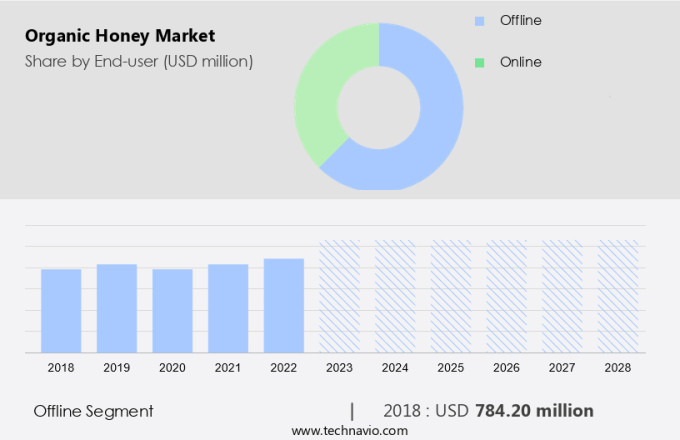
- The offline segment is estimated to witness significant growth during the forecast period.
Organic honey is a popular natural sweetener, available in its raw or pasteurized forms, with the latter undergoing heating to eliminate bacteria and extend shelf-life. Raw honey retains beneficial elements like nutrients, antioxidants, and antibacterial properties, while pasteurized honey may lose some of these elements. Nutrients include vitamins and minerals like calcium, magnesium, manganese, niacin, pantothenic acid, phosphorus, potassium, riboflavin, zinc, and amino acids. Unpasteurized honey may contain traces of bacteria, such as Clostridium botulinum, posing a risk to infants due to the potential for botulism. Antioxidants, anticancer properties, and anti-inflammatory effects are linked to honey's polyphenols and antioxidant-rich composition.
Furthermore, honey benefits various systems, including the respiratory, gastrointestinal, cardiovascular, and nervous systems. Organic honey is available in retail stores, such as hypermarkets, supermarkets, and grocery and convenience stores, allowing consumers to choose based on price and quality.
Get a glance at the Organic Honey Industry report of share of various segments Request Free Sample
The offline segment was valued at USD 784.20 million in 2018 and showed a gradual increase during the forecast period.
Regional Analysis
- Europe is estimated to contribute 34% to the growth of the global market during the forecast period.
Technavio's analysts have elaborately explained the regional trends and drivers that shape the market during the forecast period.

For more insights on the market share of various regions, Request Free Sample
The European market holds a significant share of the global organic honey industry due to the growing consumer preference for health-conscious and convenient food options. Key market drivers include innovative product launches, such as flavored organic honey offerings from companies, including Pure Bee Honey, Black Forest Honey, White Honey, and Wildflower Honey. Companies are also investing in marketing and advertising initiatives to boost brand recognition and consumer awareness of organic honey's health benefits. Organic honey is rich in essential nutrients, including vitamins, minerals, amino acids, enzymes, and antioxidants derived from the nectar of flowers. It exhibits antibacterial properties, making it beneficial for wound healing and aiding In the prevention of chronic diseases like cancer and heart disease.
Furthermore, its antioxidant properties help combat free radicals and oxidative stress, contributing to overall health and wellness. Organic honey's chemical composition includes beneficial elements like polyphenols, bee pollen, and bee propolis, which offer anti-inflammatory effects for the respiratory, gastrointestinal, cardiovascular, and nervous systems.
Market Dynamics
Our organic honey market researchers analyzed the data with 2023 as the base year, along with the key drivers, trends, and challenges. A holistic analysis of drivers will help companies refine their marketing strategies to gain a competitive advantage.
What are the key market drivers leading to the rise In the adoption of Organic Honey Industry?
Increasing usage of organic honey in skincare products is the key driver of the market.
- Organic honey, a natural sweetener derived from bees, is gaining popularity In the health and wellness industry due to its rich nutritional value and beneficial elements. Unlike pasteurized honey, raw honey retains its nutrients, including vitamins, minerals, antioxidants, and plant chemicals, which provide numerous health benefits. These nutrients offer antibacterial properties that help combat bacteria, such as Clostridium botulinum, which can cause infant botulism. The antioxidants in honey neutralize free radicals, reducing oxidative stress, and contributing to the prevention and management of chronic diseases, including cancer and heart disease. Honey contains polyphenols, which have anti-inflammatory effects, making it beneficial for the respiratory, gastrointestinal, cardiovascular, and nervous systems.
- Additionally, bee pollen and bee propolis, found in honey, offer additional health benefits. Honey's sticky substance and glue-like properties have been used historically for wound-healing effects and as a natural sweetener. Despite its benefits, honey should be consumed in moderation due to its high sugar content. Organic honey's chemical composition comes from the nectar of flowers, making it a natural source of essential amino acids, enzymes, and minerals such as calcium, magnesium, manganese, niacin, pantothenic acid, phosphorous, potassium, riboflavin, zinc, and more. The processing of honey, including pasteurization, filtration, and the removal of beeswax, can impact its nutritional value and taste, affecting its shelf-life and transparency.
What are the market trends shaping the Organic Honey Industry?
An increase in several private-label products of organic honey is the upcoming market trend.
- The market caters to the demand for raw, unpasteurized honey, which retains its beneficial nutrients, antibacterial properties, and antioxidants. Unlike pasteurized honey, raw honey contains beneficial elements such as pollen, propolis, and beeswax, which may be filtered out during pasteurization. These elements offer various health benefits, including wound-healing effects, anti-inflammatory properties, and anticancer effects. Organic honey's chemical composition includes essential vitamins and minerals like calcium, magnesium, manganese, niacin, pantothenic acid, phosphorus, potassium, riboflavin, zinc, and amino acids. It also contains enzymes that aid in digestion and nutrient absorption. Private label manufacturers In the market can benefit from partnerships with large companies, that offer value-added services such as in-house laboratory and design services, deep industry knowledge, recipe blending, packaging and label design, and quick delivery through centrally operated locations and company-owned fleets.
- This collaboration enables private label manufacturers to offer a variety of pack sizes and styles to cater to diverse consumer preferences. The nutritional benefits of organic honey extend to various systems In the body, including the respiratory, gastrointestinal, cardiovascular, and nervous systems. Its antioxidant properties help combat free radicals and oxidative stress, reducing the risk of chronic diseases such as cancer and heart disease. With its sticky substance and sweet taste, organic honey is a popular choice for an antioxidant-rich diet. Historical evidence suggests honey's antibacterial action, making it an effective natural remedy for various ailments. Its transparency and long shelf-life make it a preferred choice for consumers seeking natural, healthy alternatives to processed foods.
What challenges does the Organic Honey Industry face during its growth?
The presence of stringent regulations in the global organic honey market is a key challenge affecting the industry's growth.
- Organic honey is a natural sweetener that offers numerous health benefits due to its nutrient-rich composition and antibacterial properties. Raw, unpasteurized honey contains beneficial elements such as antioxidants, plant chemicals, and enzymes that help combat free radicals and oxidative stress, contributing to the prevention and management of chronic diseases like cancer and heart disease. Honey's antibacterial action makes it effective in wound healing and boosting the immune system. The chemical composition of organic honey includes vitamins, minerals, amino acids, and various nutrients like calcium, magnesium, manganese, niacin, pantothenic acid, phosphorous, potassium, riboflavin, zinc, and more. Honey's sticky substance and glue-like properties have been used historically for various purposes, including dietary antioxidants and anti-inflammatory effects on the respiratory, gastrointestinal, cardiovascular, and nervous systems.
- Organic honey production follows strict regulations and guidelines to ensure its purity and quality. These guidelines include the location of the organic apiary, usage of natural materials for beehives, feed for organic honeybees, organic honey labeling, and others. Companies must adhere to these standards to maintain the integrity of organic honey and provide consumers with a high-quality product. The antibacterial action and wound-healing effects of organic honey have been scientifically proven, making it a popular choice for those seeking natural remedies.
Exclusive Customer Landscape
The market forecasting report includes the adoption lifecycle of the market, covering from the innovator's stage to the laggard's stage. It focuses on adoption rates in different regions based on penetration. Furthermore, the market report also includes key purchase criteria and drivers of price sensitivity to help companies evaluate and develop their market growth analysis strategies.

Customer Landscape
Key Companies & Market Insights
Companies are implementing various strategies, such as strategic alliances, organic honey market forecast, partnerships, mergers and acquisitions, geographical expansion, and product/service launches, to enhance their presence In the industry.
The industry research and growth report includes detailed analyses of the competitive landscape of the market and information about key companies, including:
- Absolute Organic
- Allied Natural Product
- Apis India Limited
- Barkman Honey LLC
- Beechworth Honey
- Beehive Farms Pvt Ltd.
- Citadelle producers cooperative
- Dabur India Ltd.
- Dewars Honey
- Fairfield Organics LLC
- FEWSTERS FARM
- HoneyTree Inc.
- Indigenous Honey
- Madhava Ltd.
- Marico Ltd.
- Mehrotra Consumer Products Pvt. Ltd.
- Nature Nates
- Patanjali Ayurved Ltd.
- Riaan Wellness Pvt. Ltd.
- Wholesome Sweeteners Inc.
Qualitative and quantitative analysis of companies has been conducted to help clients understand the wider business environment as well as the strengths and weaknesses of key industry players. Data is qualitatively analyzed to categorize companies as pure play, category-focused, industry-focused, and diversified; it is quantitatively analyzed to categorize companies as dominant, leading, strong, tentative, and weak.
Research Analyst Overview
Organic honey is a natural sweetener derived from the nectar of flowers collected by bees. It is known for its distinctive taste and various health benefits, making it a popular choice among consumers seeking natural and nutritious alternatives to refined sugars. The market is driven by several factors, including the increasing awareness of the health benefits associated with consuming raw, unprocessed honey. This type of honey retains all the beneficial elements, including vitamins, minerals, antioxidants, and enzymes, that are naturally present In the nectar. Raw honey's antibacterial properties make it an effective remedy for various ailments, such as sore throats and coughs.
Moreover, its antioxidant effects help combat free radicals, reducing oxidative stress that contributes to chronic diseases like cancer and heart disease. Additionally, its anti-inflammatory effects benefit the respiratory, gastrointestinal, cardiovascular, and nervous systems. Bee pollen and bee propolis, which are often found in organic honey, contribute to its nutritional value. Bee pollen is a rich source of vitamins, minerals, amino acids, and antioxidants, while bee propolis is known for its antimicrobial and anti-inflammatory properties. Organic honey's chemical composition varies depending on the type of flowers from which it is derived. Each type of honey has its unique taste and nutritional profile, making it an exciting and diverse product for consumers.
However, despite its numerous benefits, organic honey undergoes some processing to ensure its quality and safety. While pasteurization is a common practice In the honey industry, it can affect the honey's nutritional value and taste. Filtered honey, on the other hand, is clearer and has a longer shelf-life but may lose some of its beneficial elements. Transparent labeling and certification are essential for consumers to ensure they are purchasing authentic organic honey. Historical evidence suggests that honey has been used for medicinal purposes for thousands of years, making it a trusted natural remedy for various health conditions.
|
Organic Honey Market Scope |
|
|
Report Coverage |
Details |
|
Page number |
140 |
|
Base year |
2023 |
|
Historic period |
2018-2022 |
|
Forecast period |
2024-2028 |
|
Growth momentum & CAGR |
Accelerate at a CAGR of 7.9% |
|
Market growth 2024-2028 |
USD 519.7 million |
|
Market structure |
Fragmented |
|
YoY growth 2023-2024(%) |
7.2 |
|
Key countries |
US, Germany, China, UK, and France |
|
Competitive landscape |
Leading Companies, Market Positioning of Companies, Competitive Strategies, and Industry Risks |
What are the Key Data Covered in this Organic Honey Market Research and Growth Report?
- CAGR of the Organic Honey industry during the forecast period
- Detailed information on factors that will drive the Organic Honey market growth and forecasting between 2024 and 2028
- Precise estimation of the size of the market and its contribution of the industry in focus to the parent market
- Accurate predictions about upcoming growth and trends and changes in consumer behaviour
- Growth of the market across Europe, North America, APAC, South America, and Middle East and Africa
- Thorough analysis of the market's competitive landscape and detailed information about companies
- Comprehensive analysis of factors that will challenge the organic honey market growth of industry companies
We can help! Our analysts can customize this organic honey market research report to meet your requirements.