

Performance Fabric Market Analysis North America, APAC, Europe, South America, Middle East and Africa - US, China, Germany, France, UK - Size and Forecast 2024-2028

Performance Fabric Market Analysis North America, APAC, Europe, South America, Middle East and Africa - US, China, Germany, France, UK - Size and Forecast 2024-2028

Published: Aug 2024 179 Pages SKU: IRTNTR71162

Market Overview at a Glance

$17.34 B
Market Opportunity
4.36%
CAGR
4.11
YoY growth 2023-2024(%)

Performance Fabric Market Size 2024-2028

The performance fabric market size is estimated to increase by USD 17.34 billion, at a CAGR of 4.36% between 2023 and 2028. Market expansion hinges on numerous factors, including burgeoning government regulations, surging demand for functional apparel, and strides in textile technology. Challenges abound, with the steep expenses associated with research and development (R&D) standing out, alongside escalating raw material costs and the prevalence of counterfeit goods. These hurdles necessitate innovative approaches to remain competitive in the industry. Despite the obstacles, the market's trajectory is buoyed by the growing awareness of consumers regarding the benefits of performance fabrics and their applications across various sectors. As textile technology continues to evolve, companies are compelled to invest in R&D to stay ahead of the curve, ensuring the development of high-quality products that meet stringent regulatory standards and fulfill the demands of discerning consumers.

What will be the Size of the Market During the Forecast Period?
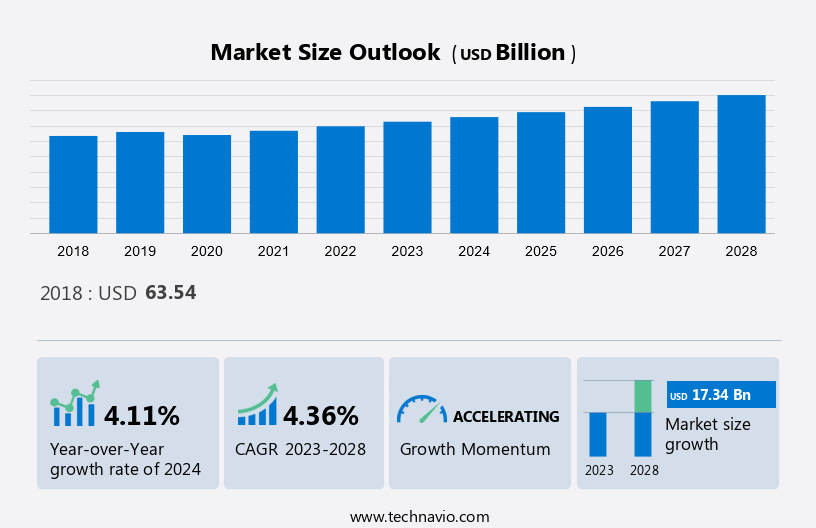
Performance Fabric Market Size

To learn more about this report, View Report Sample

Market Dynamics and Customer Landscape

The global market is witnessing remarkable growth, driven by a multitude of applications and the increasing emphasis on personal safety and hygiene. Performance fabrics, with their innovative features such as anti microbial segment, waterproofing, odor deflection, stain protection, and flame resistance, cater to diverse sectors including healthcare, defense, mining, and oil and gas industries. These fabrics play a pivotal role in ensuring worker safety, enhancing Personal hygienic practices, and addressing labor conditions. From protective clothing in the oil and gas sector to firefighting gear for public safety, performance fabrics are indispensable. Moreover, their ability to regulate body temperature and support physical fitness activities further expands their relevance in today's dynamic market landscape. The market is driven by cutting edge technologies and growing apparel demand, particularly through e-commerce platforms. Innovations like needle punch and wet laid processes enhance fabric durability, while new regulations around asbestos ensure safer, high-performance materials for diverse applications.

Key Market Driver

Increasing demand for functional apparel is the key factor driving the growth of the market. Consumers are becoming increasingly aware of the benefits of performance clothing, especially in terms of comfort and performance. High-performance materials are an important part of sportswear, providing comfort and functionality. Global interest in sports and fitness activities has increased significantly. Performance fabrics play a key role in achieving these goals by providing properties such as moisture management and breathability.

Additionally, the focus on health and wellness has led to increased participation in activities such as yoga, running, and cycling. People are investing in sportswear made with high-performance materials that enhance their workout experience. Therefore, factors such as comfort and moisture management are expected to increase the demand for high-performance fabrics and drive the growth of the market during the forecast period.

Significant Market Trends

The emergence of smart textiles is the primary trend shaping the growth of the market. Smart textiles integrate technologies such as sensors, conductive yarns, microcontrollers, and wireless communication systems directly into the fabric. Smart textiles are increasingly being used in health and fitness wearables. Smart textiles can connect to smartphones and other devices via Bluetooth or other wireless technologies. This connection allows users to receive notifications, control their devices, and access data directly from their clothing.

Additionally, smart textiles are being used in therapeutic and medical applications, such as smart compression garments that adjust pressure according to the wearer's needs, and textiles with integrated sensors for remote patient monitoring. Thus, the emergence of smart textiles will drive the growth of the market during the forecast period.

Major Market Challenge

The high cost of research and development (R&D) is a challenge that affects the growth of the market. High-performance fabrics are not new. These were developed after many years of scientific analysis. As a result, the textile industry has developed into one of the most important economic sectors in the world, with numerous new technologies and innovative developments. To develop new products, manufacturers invest heavily in research and development.

However, excessive R&D expenses can lead to higher costs (market risk), especially if the product concept is unsellable. The issue of R&D productivity is also very important. Research and development departments do not produce tangible products and are not intended to generate immediate cash. Therefore, the high capital investment required for research and development impedes the growth of the market during the forecast period.

Market Customer Landscape

The market research report includes the adoption lifecycle of the market, covering from the innovator stage to the laggard’s stage. It focuses on adoption rates in different regions based on penetration. Furthermore, the report also includes key purchase criteria and drivers of price sensitivity to help companies evaluate and develop their growth strategies.
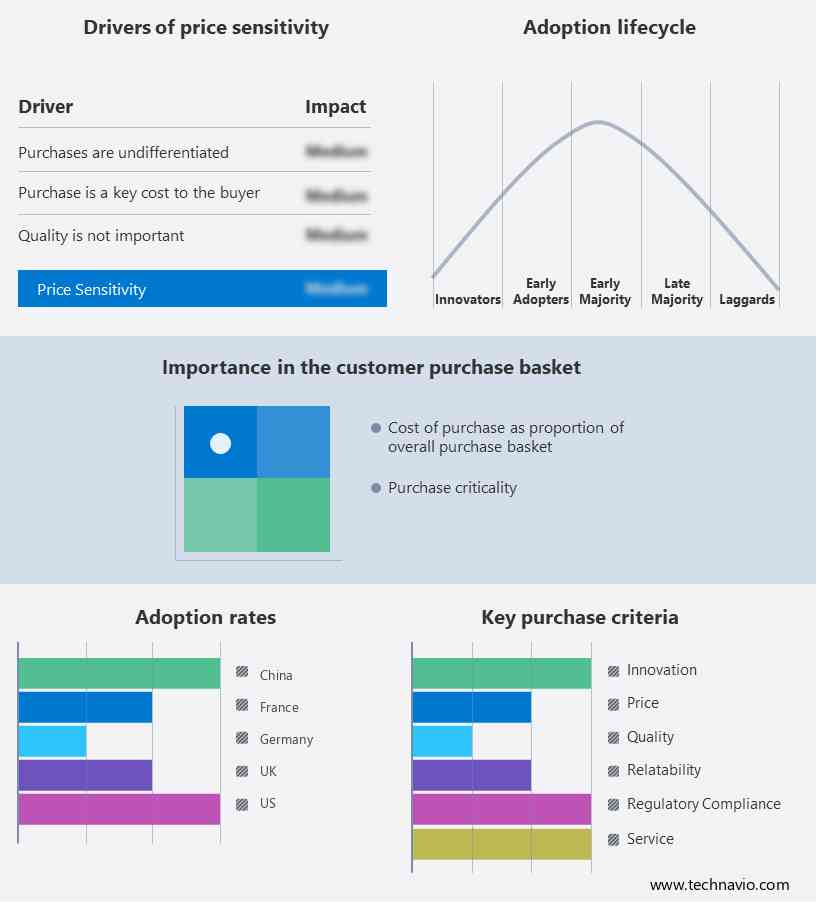
Performance fabric Market Share by Geography

Market Customer Landscape

Who are the Major Market Companies?

Companies are implementing various strategies, such as strategic alliances, partnerships, mergers and acquisitions, geographical expansion, and product/service launches, to enhance their presence in the market.

  • Spradling Holdings Inc.: The company offers a wide range of performance fabrics for industries such as hospitality, healthcare, corporate among others.

The research report also includes detailed analyses of the competitive landscape of the market and information about 20 market companies, including:

  • Arville Textiles Ltd.
  • Crypton LLC
  • DuPont de Nemours Inc.
  • Hexcel Corp.
  • JCT Ltd.
  • Koch Industries Inc.
  • Milliken and Co.
  • OMNOVA Solutions Inc.
  • Performance Textiles
  • Schoeller Textil AG
  • Sigmatex UK Ltd.
  • Synthomer Plc
  • Taekwang Group
  • Teijin Ltd.
  • TenCate Fabrics EU
  • Topweaving New Material Tech Co. Ltd.
  • Toray Industries Inc.
  • Ventile Fabrics
  • W. L. Gore and Associates Inc.

Qualitative and quantitative analysis of companies has been conducted to help clients understand the wider business environment as well as the strengths and weaknesses of key market players. Data is qualitatively analyzed to categorize companies as pure play, category-focused, industry-focused, and diversified; it is quantitatively analyzed to categorize companies as dominant, leading, strong, tentative, and weak.

Market Segmentation

The fire fighting segment is estimated to witness significant growth during the forecast period. In the event of an explosion, direct fire, or arc flash, extinguishing materials are used as a protective barrier. These fabrics are made to withstand heat without melting. In addition, firefighting fabrics are fibers designed to have increased fire resistance compared to traditional materials by using fire-resistant fibers or chemical treatments. When the fibers are exposed to flame, they expand and thicken, forming a protective barrier between the fire source and the skin.
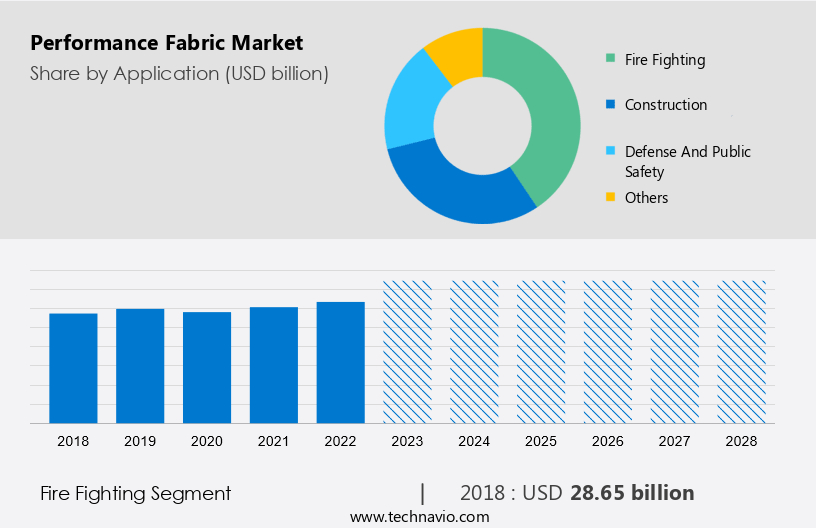
Performance Fabric Market Size

Get a glance at the market contribution of various segments View the PDF Sample

The fire fighting segment was the largest segment and was valued at USD 28.65 billion in 2018. In industries such as chemical, oil and gas, and electrical, where exposure to fire and the risk of fire mishaps are significant, firefighting materials are critical. These factors have contributed to the market for firefighting fabrics expanding at a steady pace. Furthermore, the increasing demand from end-use industries such as chemicals, construction, and oil and gas is driving the growth of the fire fighting fabrics market segment, in turn boosting the growth of the market during the forecast period.

Key Regions
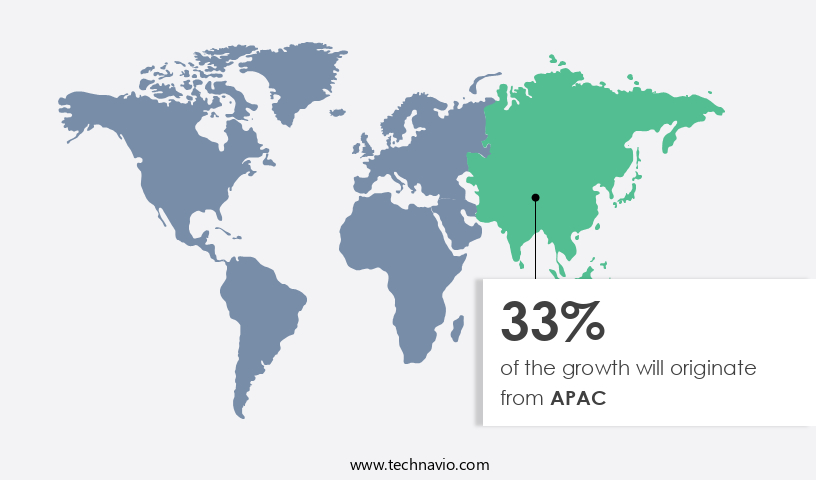
Performance Fabric Market Share by Geography

For more insights on the market share of various regions Download PDF Sample now!

North America is estimated to contribute 33% to the growth of the global market during the forecast period. Technavio’s analysts have elaborately explained the regional trends and drivers that shape the market during the forecast period. In 2023, the US became the largest contributor to the North American market, mainly due to continued firefighting and construction activities across the country. Moreover, major construction projects that are expected to help the market's growth are the California High-Speed Railway, Hudson's Development in Detroit, One Vanderbilt in New York, and Alaskan Way Viaduct Replacement in Seattle. These projects are expected to generate a high demand for construction performance fabrics which will boost the demand during the forecast period. 

Segment Overview

The market research report provides comprehensive data (region-wise segment analysis), with forecasts and estimates in "USD Billion " for the period 2024-2028, as well as historical data from 2018-2022 for the following segments.

  • Application Outlook 
    • Fire fighting
    • Construction
    • Defense and public safety
    • Others
  • Type Outlook 
    • Coated fabric
    • Polyamide
    • Polyester
    • Others
  • Region Outlook
    • North America
      • The U.S.
      • Canada
    • Europe
      • The U.K.
      • Germany
      • France
      • Rest of Europe
    • APAC
      • China
      • India
    • South America
      • Chile 
      • Brazil
      • Argentina
    • Middle East & Africa
      • Saudi Arabia
      • South Africa
      • Rest of the Middle East & Africa

You may also interested in below market reports:

  • Fire-Resistant Fabrics Market Analysis Europe, APAC, North America, South America, Middle East and Africa - Germany, US, China, France, India - Size and Forecast
  • Neoprene Fabric Market Analysis APAC, Europe, North America, South America, Middle East and Africa - US, China, Germany, Japan, UK - Size and Forecast
  • Construction Fabrics Market Analysis APAC, Europe, North America, Middle East and Africa, South America - China, US, India, Japan, UK - Size and Forecast

Market Analyst Overview

The market is thriving across various sectors due to its multifaceted benefits. From personal hygiene to homeland security, performance fabrics offer anti-microbial properties, waterproofing, odor deflection, stain protection, and flame resistance. Particularly in the defense sector and mining industries, these fabrics provide essential worker protection, incorporating aramids for enhanced safety. Furthermore, in aerospace and sports apparel, performance fabrics ensure comfort and durability, meeting rigorous demands. With the rise of e-commerce platforms, the demand for innovative designs using flexible materials, yarn, knitting, crocheting, and weaving is escalating. These fabrics find applications in protective clothing, enhancing worker's safety and personal hygiene practices. As the industry embraces sustainable practices, natural fibers like cotton and wool, alongside synthetic materials such as nylon, Polyethylene (PE), and Polypropylene (PP), drive the evolution of performance fabrics, shaping the future of the clothing industry.

Moreover, the market is experiencing a surge in demand driven by a convergence of factors. Innovations in coated fabrics and antimicrobial segments cater to personal hygiene practices, ensuring comfort and cleanliness. These fabrics, incorporating cutting-edge technologies, provide body temperature heating for optimal physical fitness during various activities. Enhanced safety measures for workers, particularly in labor-intensive sectors like petrochemicals, underscore the importance of performance fabrics in improving labor conditions. The burgeoning demand for apparel, especially through e-commerce platforms, is fueling advancements in fabric designing and production techniques like spinning, weaving, and knitting. Additionally, performance fabrics extend beyond apparel to bedding, offering innovative solutions like spun bond, melt blown, and air laid fabrics for enhanced comfort and hygiene. As the industry evolves, materials like silk, glass fibers, polyethylene, polypropylene, and aramid continue to drive innovation, shaping the future of performance fabrics.

Industry  Scope

Report Coverage

Details

Page number

179

Base year

2023

Historic period

2018-2022

Forecast period

2024-2028

Growth momentum & CAGR

Accelerate at a CAGR of 4.36%

Market growth 2024-2028

USD 17.34 billion

Market structure

Fragmented

YoY growth 2023-2024(%)

4.11

Regional analysis

North America, APAC, Europe, South America, and Middle East and Africa

Performing market contribution

APAC at 33%

Key countries

US, China, Germany, France, and UK

Competitive landscape

Leading Companies, Market Positioning of Companies, Competitive Strategies, and Industry Risks

Key companies profiled

Arville Textiles Ltd., Crypton LLC, DuPont de Nemours Inc., Hexcel Corp., JCT Ltd, Koch Industries Inc., Milliken and Co., OMNOVA Solutions Inc., Performance Textiles, Schoeller Textil AG, Sigmatex UK Ltd., Spradling Holdings Inc., Synthomer Plc, Taekwang Group, Teijin Ltd., TenCate Fabrics EU, Topweaving New Material Tech Co. Ltd., Toray Industries Inc., Ventile Fabrics, and W. L. Gore and Associates Inc.

Market dynamics

Parent market analysis, Market growth inducers and obstacles, Fast-growing and slow-growing segment analysis, Market growth and Forecasting, COVID 19 impact and recovery analysis and future consumer dynamics, Market condition analysis for the market forecast period

Customization purview

If our market report has not included the data that you are looking for, you can reach out to our analysts and get segments customized.

View PDF Sample

What are the Key Data Covered in this Market Forecasting Report?

  • CAGR of the market during the forecast period
  • Detailed information on factors that will drive the market growth and forecasting of the market between 2023 and 2027
  • Precise estimation of the size of the market size and its contribution to the parent market
  • Accurate predictions about upcoming market trends and analysis and changes in consumer behavior
  • Growth of the market industry across Europe, North America, APAC, South America, and Middle East and Africa
  • Thorough market growth analysis of the market’s competitive landscape and detailed information about vendors
  • Comprehensive market analysis and report on the factors that will challenge the market research and growth of market companies

We can help! Our analysts can customize this market research report to meet your requirements. 

Get in touch

1 Executive Summary

  • 1.1 Market overview
    • Executive Summary - Chart on Market Overview
    • Executive Summary - Data Table on Market Overview
    • Executive Summary - Chart on Global Market Characteristics
    • Executive Summary - Chart on Market by Geography
    • Executive Summary - Chart on Market Segmentation by Application
    • Executive Summary - Chart on Market Segmentation by Type
    • Executive Summary - Chart on Incremental Growth
    • Executive Summary - Data Table on Incremental Growth
    • Executive Summary - Chart on Company Market Positioning

2 Market Landscape

  • 2.1 Market ecosystem
    • Parent Market
    • Data Table on - Parent Market
  • 2.2 Market characteristics
    • Market characteristics analysis
  • 2.3 Value chain analysis
    • Value Chain Analysis

3 Market Sizing

  • 3.1 Market definition
    • Offerings of companies included in the market definition
  • 3.2 Market segment analysis
    • Market segments
  • 3.3 Market size 2023
    • 3.4 Market outlook: Forecast for 2023-2028
      • Chart on Global - Market size and forecast 2023-2028 ($ billion)
      • Data Table on Global - Market size and forecast 2023-2028 ($ billion)
      • Chart on Global Market: Year-over-year growth 2023-2028 (%)
      • Data Table on Global Market: Year-over-year growth 2023-2028 (%)

    4 Historic Market Size

    • 4.1 Global Performance Fabric Market 2018 - 2022
      • Historic Market Size - Data Table on Global Performance Fabric Market 2018 - 2022 ($ billion)
    • 4.2 Application segment analysis 2018 - 2022
      • Historic Market Size - Application Segment 2018 - 2022 ($ billion)
    • 4.3 Type segment analysis 2018 - 2022
      • Historic Market Size - Type Segment 2018 - 2022 ($ billion)
    • 4.4 Geography segment analysis 2018 - 2022
      • Historic Market Size - Geography Segment 2018 - 2022 ($ billion)
    • 4.5 Country segment analysis 2018 - 2022
      • Historic Market Size - Country Segment 2018 - 2022 ($ billion)

    5 Five Forces Analysis

    • 5.1 Five forces summary
      • Five forces analysis - Comparison between 2023 and 2028
    • 5.2 Bargaining power of buyers
      • Bargaining power of buyers - Impact of key factors 2023 and 2028
    • 5.3 Bargaining power of suppliers
      • Bargaining power of suppliers - Impact of key factors in 2023 and 2028
    • 5.4 Threat of new entrants
      • Threat of new entrants - Impact of key factors in 2023 and 2028
    • 5.5 Threat of substitutes
      • Threat of substitutes - Impact of key factors in 2023 and 2028
    • 5.6 Threat of rivalry
      • Threat of rivalry - Impact of key factors in 2023 and 2028
    • 5.7 Market condition
      • Chart on Market condition - Five forces 2023 and 2028

    6 Market Segmentation by Application

    • 6.1 Market segments
      • Chart on Application - Market share 2023-2028 (%)
      • Data Table on Application - Market share 2023-2028 (%)
    • 6.2 Comparison by Application
      • Chart on Comparison by Application
      • Data Table on Comparison by Application
    • 6.3 Fire fighting - Market size and forecast 2023-2028
      • Chart on Fire fighting - Market size and forecast 2023-2028 ($ billion)
      • Data Table on Fire fighting - Market size and forecast 2023-2028 ($ billion)
      • Chart on Fire fighting - Year-over-year growth 2023-2028 (%)
      • Data Table on Fire fighting - Year-over-year growth 2023-2028 (%)
    • 6.4 Construction - Market size and forecast 2023-2028
      • Chart on Construction - Market size and forecast 2023-2028 ($ billion)
      • Data Table on Construction - Market size and forecast 2023-2028 ($ billion)
      • Chart on Construction - Year-over-year growth 2023-2028 (%)
      • Data Table on Construction - Year-over-year growth 2023-2028 (%)
    • 6.5 Defense and public safety - Market size and forecast 2023-2028
      • Chart on Defense and public safety - Market size and forecast 2023-2028 ($ billion)
      • Data Table on Defense and public safety - Market size and forecast 2023-2028 ($ billion)
      • Chart on Defense and public safety - Year-over-year growth 2023-2028 (%)
      • Data Table on Defense and public safety - Year-over-year growth 2023-2028 (%)
    • 6.6 Others - Market size and forecast 2023-2028
      • Chart on Others - Market size and forecast 2023-2028 ($ billion)
      • Data Table on Others - Market size and forecast 2023-2028 ($ billion)
      • Chart on Others - Year-over-year growth 2023-2028 (%)
      • Data Table on Others - Year-over-year growth 2023-2028 (%)
    • 6.7 Market opportunity by Application
      • Market opportunity by Application ($ billion)
      • Data Table on Market opportunity by Application ($ billion)

    7 Market Segmentation by Type

    • 7.1 Market segments
      • Chart on Type - Market share 2023-2028 (%)
      • Data Table on Type - Market share 2023-2028 (%)
    • 7.2 Comparison by Type
      • Chart on Comparison by Type
      • Data Table on Comparison by Type
    • 7.3 Coated fabric - Market size and forecast 2023-2028
      • Chart on Coated fabric - Market size and forecast 2023-2028 ($ billion)
      • Data Table on Coated fabric - Market size and forecast 2023-2028 ($ billion)
      • Chart on Coated fabric - Year-over-year growth 2023-2028 (%)
      • Data Table on Coated fabric - Year-over-year growth 2023-2028 (%)
    • 7.4 Polyamide - Market size and forecast 2023-2028
      • Chart on Polyamide - Market size and forecast 2023-2028 ($ billion)
      • Data Table on Polyamide - Market size and forecast 2023-2028 ($ billion)
      • Chart on Polyamide - Year-over-year growth 2023-2028 (%)
      • Data Table on Polyamide - Year-over-year growth 2023-2028 (%)
    • 7.5 Polyester - Market size and forecast 2023-2028
      • Chart on Polyester - Market size and forecast 2023-2028 ($ billion)
      • Data Table on Polyester - Market size and forecast 2023-2028 ($ billion)
      • Chart on Polyester - Year-over-year growth 2023-2028 (%)
      • Data Table on Polyester - Year-over-year growth 2023-2028 (%)
    • 7.6 Others - Market size and forecast 2023-2028
      • Chart on Others - Market size and forecast 2023-2028 ($ billion)
      • Data Table on Others - Market size and forecast 2023-2028 ($ billion)
      • Chart on Others - Year-over-year growth 2023-2028 (%)
      • Data Table on Others - Year-over-year growth 2023-2028 (%)
    • 7.7 Market opportunity by Type
      • Market opportunity by Type ($ billion)
      • Data Table on Market opportunity by Type ($ billion)

    8 Customer Landscape

    • 8.1 Customer landscape overview
      • Analysis of price sensitivity, lifecycle, customer purchase basket, adoption rates, and purchase criteria

    9 Geographic Landscape

    • 9.1 Geographic segmentation
      • Chart on Market share by geography 2023-2028 (%)
      • Data Table on Market share by geography 2023-2028 (%)
    • 9.2 Geographic comparison
      • Chart on Geographic comparison
      • Data Table on Geographic comparison
    • 9.3 North America - Market size and forecast 2023-2028
      • Chart on North America - Market size and forecast 2023-2028 ($ billion)
      • Data Table on North America - Market size and forecast 2023-2028 ($ billion)
      • Chart on North America - Year-over-year growth 2023-2028 (%)
      • Data Table on North America - Year-over-year growth 2023-2028 (%)
    • 9.4 APAC - Market size and forecast 2023-2028
      • Chart on APAC - Market size and forecast 2023-2028 ($ billion)
      • Data Table on APAC - Market size and forecast 2023-2028 ($ billion)
      • Chart on APAC - Year-over-year growth 2023-2028 (%)
      • Data Table on APAC - Year-over-year growth 2023-2028 (%)
    • 9.5 Europe - Market size and forecast 2023-2028
      • Chart on Europe - Market size and forecast 2023-2028 ($ billion)
      • Data Table on Europe - Market size and forecast 2023-2028 ($ billion)
      • Chart on Europe - Year-over-year growth 2023-2028 (%)
      • Data Table on Europe - Year-over-year growth 2023-2028 (%)
    • 9.6 South America - Market size and forecast 2023-2028
      • Chart on South America - Market size and forecast 2023-2028 ($ billion)
      • Data Table on South America - Market size and forecast 2023-2028 ($ billion)
      • Chart on South America - Year-over-year growth 2023-2028 (%)
      • Data Table on South America - Year-over-year growth 2023-2028 (%)
    • 9.7 Middle East and Africa - Market size and forecast 2023-2028
      • Chart on Middle East and Africa - Market size and forecast 2023-2028 ($ billion)
      • Data Table on Middle East and Africa - Market size and forecast 2023-2028 ($ billion)
      • Chart on Middle East and Africa - Year-over-year growth 2023-2028 (%)
      • Data Table on Middle East and Africa - Year-over-year growth 2023-2028 (%)
    • 9.8 US - Market size and forecast 2023-2028
      • Chart on US - Market size and forecast 2023-2028 ($ billion)
      • Data Table on US - Market size and forecast 2023-2028 ($ billion)
      • Chart on US - Year-over-year growth 2023-2028 (%)
      • Data Table on US - Year-over-year growth 2023-2028 (%)
    • 9.9 China - Market size and forecast 2023-2028
      • Chart on China - Market size and forecast 2023-2028 ($ billion)
      • Data Table on China - Market size and forecast 2023-2028 ($ billion)
      • Chart on China - Year-over-year growth 2023-2028 (%)
      • Data Table on China - Year-over-year growth 2023-2028 (%)
    • 9.10 Germany - Market size and forecast 2023-2028
      • Chart on Germany - Market size and forecast 2023-2028 ($ billion)
      • Data Table on Germany - Market size and forecast 2023-2028 ($ billion)
      • Chart on Germany - Year-over-year growth 2023-2028 (%)
      • Data Table on Germany - Year-over-year growth 2023-2028 (%)
    • 9.11 France - Market size and forecast 2023-2028
      • Chart on France - Market size and forecast 2023-2028 ($ billion)
      • Data Table on France - Market size and forecast 2023-2028 ($ billion)
      • Chart on France - Year-over-year growth 2023-2028 (%)
      • Data Table on France - Year-over-year growth 2023-2028 (%)
    • 9.12 UK - Market size and forecast 2023-2028
      • Chart on UK - Market size and forecast 2023-2028 ($ billion)
      • Data Table on UK - Market size and forecast 2023-2028 ($ billion)
      • Chart on UK - Year-over-year growth 2023-2028 (%)
      • Data Table on UK - Year-over-year growth 2023-2028 (%)
    • 9.13 Market opportunity by geography
      • Market opportunity by geography ($ billion)
      • Data Tables on Market opportunity by geography ($ billion)

    10 Drivers, Challenges, and Opportunity/Restraints

    • 10.1 Market drivers
      • 10.2 Market challenges
        • 10.3 Impact of drivers and challenges
          • Impact of drivers and challenges in 2023 and 2028
        • 10.4 Market opportunities/restraints

          11 Competitive Landscape

          • 11.1 Overview
            • 11.2 Competitive Landscape
              • Overview on criticality of inputs and factors of differentiation
            • 11.3 Landscape disruption
              • Overview on factors of disruption
            • 11.4 Industry risks
              • Impact of key risks on business

            12 Competitive Analysis

            • 12.1 Companies profiled
              • Companies covered
            • 12.2 Market positioning of companies
              • Matrix on companies position and classification
            • 12.3 DuPont de Nemours Inc.
              • DuPont de Nemours Inc. - Overview
              • DuPont de Nemours Inc. - Business segments
              • DuPont de Nemours Inc. - Key news
              • DuPont de Nemours Inc. - Key offerings
              • DuPont de Nemours Inc. - Segment focus
            • 12.4 Hexcel Corp.
              • Hexcel Corp. - Overview
              • Hexcel Corp. - Business segments
              • Hexcel Corp. - Key news
              • Hexcel Corp. - Key offerings
              • Hexcel Corp. - Segment focus
            • 12.5 JCT Ltd
              • JCT Ltd - Overview
              • JCT Ltd - Product / Service
              • JCT Ltd - Key offerings
            • 12.6 Koch Industries Inc.
              • Koch Industries Inc. - Overview
              • Koch Industries Inc. - Product / Service
              • Koch Industries Inc. - Key offerings
            • 12.7 Milliken and Co.
              • Milliken and Co. - Overview
              • Milliken and Co. - Product / Service
              • Milliken and Co. - Key offerings
            • 12.8 Schoeller Textil AG
              • Schoeller Textil AG - Overview
              • Schoeller Textil AG - Product / Service
              • Schoeller Textil AG - Key offerings
            • 12.9 Sigmatex UK Ltd.
              • Sigmatex UK Ltd. - Overview
              • Sigmatex UK Ltd. - Product / Service
              • Sigmatex UK Ltd. - Key offerings
            • 12.10 Spradling Holdings Inc.
              • Spradling Holdings Inc. - Overview
              • Spradling Holdings Inc. - Product / Service
              • Spradling Holdings Inc. - Key offerings
            • 12.11 Synthomer Plc
              • Synthomer Plc - Overview
              • Synthomer Plc - Business segments
              • Synthomer Plc - Key offerings
              • Synthomer Plc - Segment focus
            • 12.12 Teijin Ltd.
              • Teijin Ltd. - Overview
              • Teijin Ltd. - Business segments
              • Teijin Ltd. - Key news
              • Teijin Ltd. - Key offerings
              • Teijin Ltd. - Segment focus
            • 12.13 TenCate Fabrics EU
              • TenCate Fabrics EU - Overview
              • TenCate Fabrics EU - Product / Service
              • TenCate Fabrics EU - Key offerings
            • 12.14 Topweaving New Material Tech Co. Ltd.
              • Topweaving New Material Tech Co. Ltd. - Overview
              • Topweaving New Material Tech Co. Ltd. - Product / Service
              • Topweaving New Material Tech Co. Ltd. - Key offerings
            • 12.15 Toray Industries Inc.
              • Toray Industries Inc. - Overview
              • Toray Industries Inc. - Business segments
              • Toray Industries Inc. - Key news
              • Toray Industries Inc. - Key offerings
              • Toray Industries Inc. - Segment focus
            • 12.16 Ventile Fabrics
              • Ventile Fabrics - Overview
              • Ventile Fabrics - Product / Service
              • Ventile Fabrics - Key offerings
            • 12.17 W. L. Gore and Associates Inc.
              • W. L. Gore and Associates Inc. - Overview
              • W. L. Gore and Associates Inc. - Product / Service
              • W. L. Gore and Associates Inc. - Key news
              • W. L. Gore and Associates Inc. - Key offerings

            13 Appendix

            • 13.1 Scope of the report
              • 13.2 Inclusions and exclusions checklist
                • Inclusions checklist
                • Exclusions checklist
              • 13.3 Currency conversion rates for US$
                • Currency conversion rates for US$
              • 13.4 Research methodology
                • Research methodology
              • 13.5 Data procurement
                • Information sources
              • 13.6 Data validation
                • Data validation
              • 13.7 Validation techniques employed for market sizing
                • Validation techniques employed for market sizing
              • 13.8 Data synthesis
                • Data synthesis
              • 13.9 360 degree market analysis
                • 360 degree market analysis
              • 13.10 List of abbreviations
                • List of abbreviations

              Research Methodology

              Technavio presents a detailed picture of the market by way of study, synthesis, and summation of data from multiple sources. The analysts have presented the various facets of the market with a particular focus on identifying the key industry influencers. The data thus presented is comprehensive, reliable, and the result of extensive research, both primary and secondary.

              INFORMATION SOURCES

              Primary sources

              • Manufacturers and suppliers
              • Channel partners
              • Industry experts
              • Strategic decision makers

              Secondary sources

              • Industry journals and periodicals
              • Government data
              • Financial reports of key industry players
              • Historical data
              • Press releases

              DATA ANALYSIS

              Data Synthesis

              • Collation of data
              • Estimation of key figures
              • Analysis of derived insights

              Data Validation

              • Triangulation with data models
              • Reference against proprietary databases
              • Corroboration with industry experts

              REPORT WRITING

              Qualitative

              • Market drivers
              • Market challenges
              • Market trends
              • Five forces analysis

              Quantitative

              • Market size and forecast
              • Market segmentation
              • Geographical insights
              • Competitive landscape

              Interested in this report?

              Get your sample now to see our research methodology and insights!

              Download Now

              Frequently Asked Questions

              Performance Fabric market growth will increase by $ 17.34 bn during 2024-2028.

              The Performance Fabric market is expected to grow at a CAGR of 4.36% during 2024-2028.

              Performance Fabric market is segmented by Application( Fire fighting, Construction, Defense and public safety, Others) Type( Coated fabric, Polyamide, Polyester, Others, MEA)

              Arville Textiles Ltd., Crypton LLC, DuPont de Nemours Inc., Hexcel Corp., JCT Ltd, Koch Industries Inc., Milliken and Co., OMNOVA Solutions Inc., Performance Textiles, Schoeller Textil AG, Sigmatex UK Ltd., Spradling Holdings Inc., Synthomer Plc, Taekwang Group, Teijin Ltd., TenCate Fabrics EU, Topweaving New Material Tech Co. Ltd., Toray Industries Inc., Ventile Fabrics, W. L. Gore and Associates Inc. are a few of the key vendors in the Performance Fabric market.

              APAC will register the highest growth rate of 33% among the other regions. Therefore, the Performance Fabric market in APAC is expected to garner significant business opportunities for the vendors during the forecast period.

              US, China, Germany, France, UK

              • Increasing number of government regulationsOwing to the rising incidences of impact-related injuries is the driving factor this market.
              • several government agencies are implementing standards mandating the use of protective clothing in hazardous environments. The need to comply with these standards drives the demand for performance fabric. For instance is the driving factor this market.
              • OSHA sets safety work standards for various industries. According to one such standard is the driving factor this market.
              • employers must select and mandate employees to use appropriate protective gear when they are exposed to harmful chemicals is the driving factor this market.
              • gas is the driving factor this market.
              • vapor or air is the driving factor this market.
              • and biohazards. Employers must also select appropriate protection gear based on the tasks to be performed is the driving factor this market.
              • duration of use is the driving factor this market.
              • conditions present is the driving factor this market.
              • and the hazards and potential hazards identified. The development of standards to compare the performance of protective clothing has significantly improved the ability of safety managers to select appropriate performance fabrics. These standards encourage manufacturers to produce performance fabrics in compliance with the standards and help employers comply with the established standards while choosing the required product. The International Safety Equipment Association is an American National Standards Institute (ANSI)-accredited standard-developing organization that develops standards for performance fabrics and technologies for people working in hazardous environments. For instance is the driving factor this market.
              • the association works closely with manufacturers is the driving factor this market.
              • test labs is the driving factor this market.
              • subject-matter experts is the driving factor this market.
              • end-users is the driving factor this market.
              • and government agencies. For instance is the driving factor this market.
              • ANSI/ISEA 101-2014 is the American National Standard for Limited-Use and Disposable Coveralls - Size and Labeling Requirements. The update to this standard includes an expansion of the sizing chart to accommodate most of the working population that wears these garments daily in a variety of workplace uses is the driving factor this market.
              • including grain and milling operations is the driving factor this market.
              • automotive repair is the driving factor this market.
              • painting and dry chemical applications is the driving factor this market.
              • food processing is the driving factor this market.
              • abrasive blasting is the driving factor this market.
              • and construction work. Such standards can assist manufacturers in producing appropriate performance fabric in compliance with the given standard. Employers complying with these standards can select the material according to their needs and minimize the risk of hazards at workplaces. Thus is the driving factor this market.
              • stringent occupational safety regulations pertaining to worker protection will drive the demand for performance fabrics during the forecast period. is the driving factor this market.

              The Performance Fabric market vendors should focus on grabbing business opportunities from the Fire fighting segment as it accounted for the largest market share in the base year.