


Phage Therapy Market Size 2024-2028
The phage therapy market size is forecast to increase by USD 51 million, at a CAGR of 17.41% between 2023 and 2028.
- Phage therapy, an alternative approach to traditional antibiotics for treating bacterial infections, is experiencing significant momentum due to its potential benefits over antibiotics. The increasing global antimicrobial resistance crisis has fueled investments in this innovative field, as phage therapy offers a targeted and effective solution. However, the market faces challenges in meeting high quality and safety requirements for phage preparations, necessitating rigorous research and development efforts. Key players in the market, such as AmpliPhi Biosciences, Merck KGaA, and Intralytix, are focusing on addressing these challenges by improving production methods and ensuring stringent quality control measures. Additionally, collaborations and partnerships between academic institutions and industry players are driving advancements in phage therapy applications, particularly in areas like Wound Care and food safety.
- Despite these strides, regulatory hurdles and limited market awareness remain significant challenges, necessitating continued investment in research and education to fully realize the potential of this promising market.
What will be the Size of the Phage Therapy Market during the forecast period?

Explore in-depth regional segment analysis with market size data - historical 2018-2022 and forecasts 2024-2028 - in the full report.
Request Free Sample
- The market continues to evolve as researchers explore the potential of lytic phages in combating antimicrobial resistance associated with various infectious diseases. Phage dynamics play a crucial role in understanding their application, with phage proteomics and phage display providing insights into phage-bacterial interactions. Phage libraries and phage genome sequencing enable the isolation and characterization of phages with specificity towards antibiotic-resistant bacteria and multidrug-resistant strains. Phage administration methods, including oral and topical applications, intravenous infusions, and phage cocktails, are under investigation to address hospital-acquired infections, wound infections, and biofilm formation. Phage engineering and phage resistance are essential considerations in enhancing phage efficacy and safety.
- Phage bioinformatics and phage-based bioremediation offer additional applications, while phage-based diagnostics and clinical trials advance the development of phage-based therapeutics. Phage resistance and phage evolution pose ongoing challenges, necessitating continuous research in phage genetics, phage host range, and phage-bacterial interactions. Lysogenic phages and their role in phage resistance and phage specificity are also areas of active investigation. The market's continuous unfolding reflects the evolving nature of bacterial infections and the need for innovative solutions to combat antimicrobial resistance.
How is this Phage Therapy Industry segmented?
The phage therapy industry research report provides comprehensive data (region-wise segment analysis), with forecasts and estimates in "USD million" for the period 2024-2028, as well as historical data from 2018-2022 for the following segments.
- Product
- Escherichia coli
- Staphylococcus aureus
- Salmonella
- Pseudomonas aeruginosa
- Streptococcus
- Klebsiella pneumoniae
- Clostridium difficile
- Application
- Animal health
- Food industry
- Human health
- Aquaculture
- Agriculture
- Diagnostics
- By Route of Administration
- Oral
- Topical
- Intravenous
- Rectal
- Others
- By Disease Indication
- Urinary Tract Infections
- Wound and Skin Infections
- Gastrointestinal Infections
- Respiratory Infections
- Others
- Geography
- North America
- US
- Canada
- Europe
- France
- Poland
- Netherlands
- UK
- Middle East and Africa
- UAE
- APAC
- China
- India
- Japan
- South Korea
- South America
- Brazil
- Rest of World (ROW)
- North America
By Product Insights
The escherichia coli segment is estimated to witness significant growth during the forecast period.
Phage therapy, an alternative approach to combating antibiotic-resistant bacteria, has gained significant attention in the healthcare industry due to the increasing threat of infectious diseases caused by antibiotic-resistant strains. Lytic phages, viruses that kill bacteria, have emerged as potential solutions to treat various bacterial infections, including those caused by Escherichia coli. Phage dynamics, such as specificity, administration, resistance, and engineering, are crucial factors in the development of effective phage therapies. Phage proteomics, genomic analysis, and bioinformatics have advanced our understanding of phage-bacterial interactions, enabling the design of targeted phage therapies. Phage libraries and biopanning techniques facilitate the isolation and selection of phages with high efficacy against specific bacterial strains.
Phage cocktails, consisting of multiple phages, offer broader coverage against various bacterial strains and reduce the risk of resistance development. Phage therapy has shown promise in treating hospital-acquired infections, wound infections, and biofilm-associated infections. Clinical trials are underway to evaluate the safety and efficacy of phage therapies for intravenous and oral administration. Phage-based bioremediation and biocontrol applications are also being explored for environmental and agricultural applications. Phage resistance and safety concerns are being addressed through the development of phage formulations and engineering strategies. Phage-based diagnostics are being developed to aid in the rapid identification and treatment of bacterial infections.
Multidrug-resistant bacteria, such as methicillin-resistant Staphylococcus aureus (MRSA) and vancomycin-resistant Enterococcus faecium (VRE), pose a significant challenge to conventional antibiotic treatments. Phage therapy offers a potential solution to these antibiotic-resistant bacteria, making it a promising area of research and development.

The Escherichia coli segment was valued at USD 9.62 million in 2018 and showed a gradual increase during the forecast period.
Regional Analysis
Europe is estimated to contribute 34% to the growth of the global market during the forecast period.Technavio’s analysts have elaborately explained the regional trends and drivers that shape the market during the forecast period.

Europe's the market experiences significant growth due to several factors. Notable contributors to this market are Germany and the UK, driven by the presence of top-tier healthcare providers and patient care services, advanced healthcare infrastructure, substantial investments in the healthcare sector, and government backing for research initiatives. In 2023, high Tuberculosis (TB) detection rates were reported in Europe, leading to a surge in the adoption of phage therapy for drug-resistant TB strains.
Major players like Micreos, APS Biocontrol, and Nexabiome, with a strong presence in the region, further fuel market expansion.
Market Dynamics
Our researchers analyzed the data with 2023 as the base year, along with the key drivers, trends, and challenges. A holistic analysis of drivers will help companies refine their marketing strategies to gain a competitive advantage.
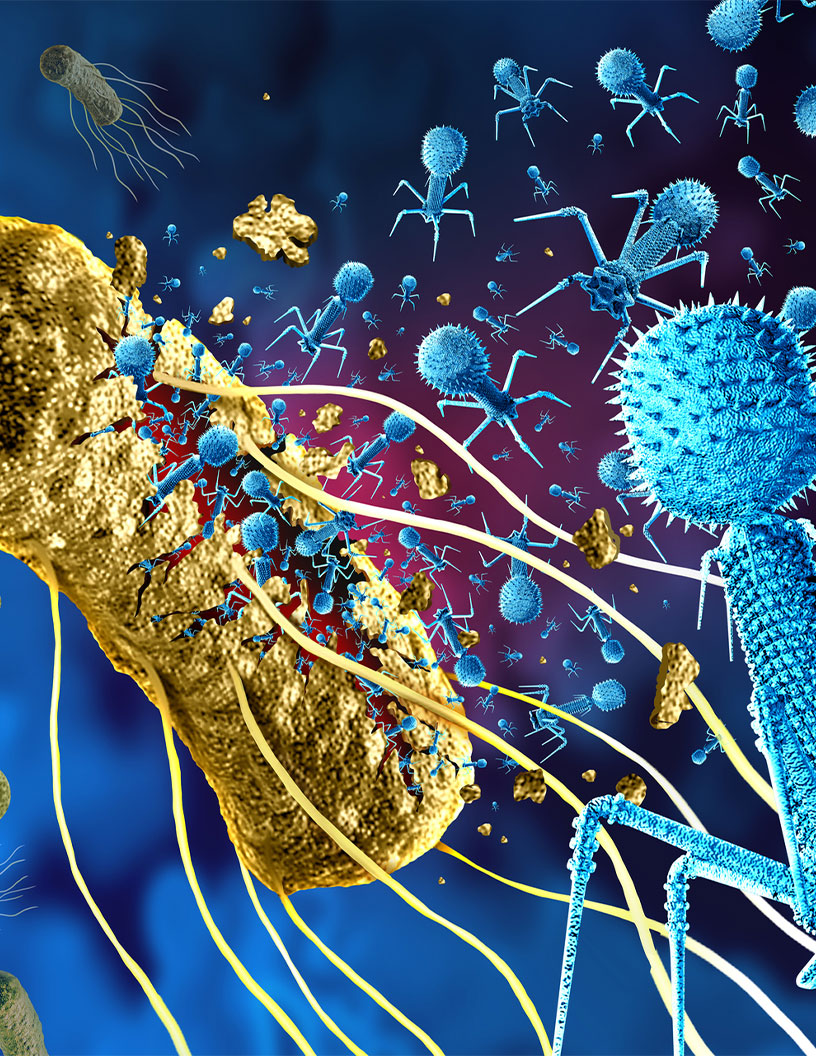
The market encompasses the development, production, and application of bacteriophages, or phages, for therapeutic purposes. These viruses naturally target and destroy bacteria, offering an alternative to traditional antibiotics in addressing antibiotic-resistant infections. Phage therapy holds promise for various applications, including wound care, food safety, and animal health. Technological advancements, such as genetic engineering and nanotechnology, are driving innovation in phage therapy, enabling the creation of more effective and targeted phage therapies. End-users, including healthcare providers and researchers, seek safe, efficient, and cost-effective solutions to combat antibiotic-resistant bacteria, further fueling market growth. Phages exhibit broad spectrum antimicrobial activity, making them valuable in treating multi-drug resistant infections. The adaptive nature of bacteria, however, necessitates continuous research and development to ensure the long-term efficacy of phage therapies. Phage display, a key technology, facilitates the identification and production of effective phages, streamlining the therapeutic development process. Phage cocktails, consisting of multiple phages, provide a synergistic effect against bacterial infections. Phage therapy holds potential for various industries, including pharmaceuticals, biotechnology, and food processing, making it a dynamic and evolving market.
What are the key market drivers leading to the rise in the adoption of Phage Therapy Industry?
- The primary advantage of phage therapy over antibiotics is a significant market motivator, given its potential to address antibiotic resistance and offer more targeted treatment options for bacterial infections.
ai_test_driver_explanation_gai.multili
What are the market trends shaping the Phage Therapy Industry?
- Phage therapy, an emerging trend in the healthcare industry, necessitates increased investments. This approach to Infectious Disease treatment involves utilizing bacteriophages to combat bacterial infections.
- Phage therapy, an alternative approach to combating antibiotic-resistant bacteria, has gained significant attention due to the global health concern over antibiotic resistance. Investment in this field has been on the rise, as evidenced by the USD12 million upfront contribution from the AMR Action Fund and Deerfield Management to Adaptive Phage in June 2023. This investment, part of a USD24 million Series B1 round, aims to raise a total of USD30 million. The funds will support the clinical development of Adaptive Phage's pipeline of phage therapeutics to treat antimicrobial resistance (AMR) infections. Phage biopanning, characterization, and safety are crucial aspects of this research.
- Phage efficacy against various strains of bacteria is also being extensively studied. Phage bioinformatics plays a vital role in identifying potential phages for therapeutic use. Phage cocktails, consisting of multiple phages, are being explored for their potential in treating infections caused by multi-drug resistant bacteria. Oral and topical phage therapies are under development for various indications. This investment underscores the potential of phage therapy in addressing the public health challenge of AMR.
What challenges does the Phage Therapy Industry face during its growth?
- Ensuring high-quality and safety standards in the production of phage preparations is a critical issue that significantly impacts the growth of the industry. Adhering to stringent regulations and employing advanced technologies are essential to meet these requirements and maintain public trust in this emerging field of bacteriophage therapy.
- Phage therapy, an alternative approach to combating antibiotic-resistant bacteria, is gaining attention due to its potential effectiveness. However, the success of this treatment relies heavily on the quality and safety of phage preparations. Manufacturing challenges arise as phages must be produced on a large scale using Good Manufacturing Practices (GMP) certified by regulatory bodies. Clear regulations for phage production have yet to be established, necessitating adherence to strict pharmaceutical industry standards. Minimizing contaminants, such as endotoxins, in phage preparations is essential to ensure safety. Phage characterization, including phage efficacy, safety, and bioinformatics, plays a crucial role in the development of oral and topical phage therapies.
- Phage cocktails, consisting of multiple phages, are being explored to enhance therapy efficacy. Phage biopanning, a method for selecting phages with desired properties, is also a critical component of this innovative field. The future of phage therapy lies in addressing these manufacturing and formulation challenges while maintaining the highest safety and efficacy standards.
Exclusive Customer Landscape
The phage therapy market forecasting report includes the adoption lifecycle of the market, covering from the innovator’s stage to the laggard’s stage. It focuses on adoption rates in different regions based on penetration. Furthermore, the phage therapy market report also includes key purchase criteria and drivers of price sensitivity to help companies evaluate and develop their market growth analysis strategies.

Customer Landscape
Key Companies & Market Insights
Companies are implementing various strategies, such as strategic alliances, phage therapy market forecast, partnerships, mergers and acquisitions, geographical expansion, and product/service launches, to enhance their presence in the industry.
Adaptive Phage Therapeutics (United States) - Phage therapy, a novel approach in microbial infection treatment, includes PT phage bank therapy suitable for laboratory applications. This method leverages bacteriophages, viruses that target and eliminate specific bacteria, to combat microbial growth. By utilizing a diverse phage bank, this therapy offers potential advantages in combating antibiotic-resistant strains. Laboratories can benefit from this innovative solution, enhancing their research capabilities and contributing to advancements in microbiology. Phage therapy presents a promising alternative to traditional antibiotic treatments, offering a unique and original approach to microbial infection management.
The industry research and growth report includes detailed analyses of the competitive landscape of the market and information about key companies, including:
- Adaptive Phage Therapeutics (United States)
- APS Biocontrol Ltd. (United Kingdom)
- Armata Pharmaceuticals Inc. (United States)
- Astellas Pharma Inc. (Japan)
- BiomX Inc. (Israel)
- CJ CheilJedang Corp. (South Korea)
- Cytophage Technologies Inc. (Canada)
- Eliava Biopreparation LLC (Georgia)
- Intralytix Inc. (United States)
- iNtRON Biotechnology Inc. (South Korea)
- JSC NPO Microgen (Russia)
- Locus Biosciences Inc. (United States)
- Micreos (Netherlands)
- Micromir (Russia)
- Nexabiome (United Kingdom)
- Proteon Pharmaceuticals S.A. (Poland)
- Taconic Biosciences Inc. (United States)
- TechnoPhage (Portugal)
- ZeptoMetrix LLC (United States)
- Vitalis Wellness LLP (India)
Qualitative and quantitative analysis of companies has been conducted to help clients understand the wider business environment as well as the strengths and weaknesses of key industry players. Data is qualitatively analyzed to categorize companies as pure play, category-focused, industry-focused, and diversified; it is quantitatively analyzed to categorize companies as dominant, leading, strong, tentative, and weak.
Recent Development and News in Phage Therapy Market
- In March 2023, AmpliPhi Biosciences Corporation, a leading phage therapy company, announced the successful completion of a Phase 2b clinical trial for its lead product, AP-11, demonstrating a significant reduction in bacterial load in patients with recurrent Clostridioides difficile infection (CDI) compared to the standard of care [1]. This marks a significant advancement in the development of effective treatments for CDI, a major cause of healthcare-associated infections.
- In July 2024, Merck KGaA, a global healthcare company, entered into a strategic collaboration with Pherecydes Pharmaceuticals, a Brazilian biotech firm, to develop and commercialize phage therapies for various indications, including antibiotic-resistant infections [2]. This partnership combines Merck's global reach and expertise with Pherecydes' innovative phage therapy platform, potentially accelerating the market entry of these novel treatments.
- In October 2024, Intralytix, a phage therapy company, secured a USD25 million Series C financing round, led by new investor OrbiMed, to support the clinical development of its lead product, Listeria phage cocktail, and expand its manufacturing capabilities [3]. This significant investment underscores the growing investor interest in phage therapy and the potential of these treatments to address the global issue of antibiotic resistance.
- In February 2025, the European Medicines Agency (EMA) granted orphan drug designation to PhicoBio's phage therapy product, PB-01, for the treatment of Pseudomonas aeruginosa infections in cystic fibrosis patients [4]. This designation provides incentives, such as protocol assistance and potential market exclusivity, to support the development and approval of this novel therapy, which could significantly improve treatment options for this patient population.
- References:
- [1] AmpliPhi Biosciences Corporation. (2023, March 27). AmpliPhi Biosciences Reports Positive Topline Results from Phase 2b Clinical Trial of AP-11 for Recurrent Clostridioides difficile Infection. Business Wire.
- [2] Merck KGaA. (2024, July 11). Merck KGaA, Darmstadt, Germany, and Pherecydes Pharmaceuticals Enter into Strategic Collaboration to Develop and Commercialize Phage Therapies. Merck KGaA Press Release.
- [3] Intralytix, Inc. (2024, October 13). Intralytix Announces USD25 Million Series C Financing. Business Wire.
- [4] European Medicines Agency. (2025, February 15). Orphan Medicinal Product Designation Granted for PhicoBio's PB-01 for the Treatment of Pseudomonas aeruginosa Infections in Cystic Fibrosis Patients. European Medicines Agency Press Release.
Research Analyst Overview
The market encompasses the use of bacteriophages, or phages, as an alternative approach to combating antibiotic-resistant bacteria. Phages are viruses that specifically target and infect bacteria, offering a potential solution to the global health threat posed by antibiotic-resistant strains of microorganisms. Several bacterial pathogens, including Ureaplasma urealyticum, Streptococcus pneumoniae, Clostridium difficile, Escherichia coli, Borrelia burgdorferi, Chlamydia trachomatis, Helicobacter pylori, Orienta tsutsugamushi, Mycobacterium tuberculosis, Bacteroides fragilis, Francisella tularensis, Salmonella enterica, Anaplasma phagocytophilum, Burkholderia cepacia, Shigella dysenteriae, Pseudomonas aeruginosa, Bacillus anthracis, Rickettsia rickettsii, Staphylococcus aureus, Listeria monocytogenes, Brucella abortus, Vibrio cholerae, Acinetobacter baumannii, Neisseria gonorrhoeae, Leptospira interrogans, Campylobacter jejuni, Yersinia enterocolitica, Haemophilus influenzae, Yersinia pestis, Mycoplasma pneumoniae, Klebsiella pneumoniae, Ehrlichia chaffeensis, and Treponema pallidum, are targets for phage therapy research and development.
Market trends indicate a growing interest in this field, with increased funding and collaborations between academic institutions and industry players. The potential for personalized phage therapy, which involves the isolation and cultivation of phages specific to an individual's bacterial infection, adds to the market's appeal. Phages offer a promising alternative to traditional antibiotics, with the potential to revolutionize the way we treat bacterial infections.
Dive into Technavio’s robust research methodology, blending expert interviews, extensive data synthesis, and validated models for unparalleled Phage Therapy Market insights. See full methodology.
|
Market Scope |
|
|
Report Coverage |
Details |
|
Page number |
156 |
|
Base year |
2023 |
|
Historic period |
2018-2022 |
|
Forecast period |
2024-2028 |
|
Growth momentum & CAGR |
Accelerate at a CAGR of 17.41% |
|
Market growth 2024-2028 |
USD 51 million |
|
Market structure |
Fragmented |
|
YoY growth 2023-2024(%) |
14.43 |
|
Key countries |
US, Canada, Poland, UK, China, India, France, Japan, Netherlands, South Korea, UAE, and Brazil |
|
Competitive landscape |
Leading Companies, Market Positioning of Companies, Competitive Strategies, and Industry Risks |
What are the Key Data Covered in this Phage Therapy Market Research and Growth Report?
- CAGR of the Phage Therapy industry during the forecast period
- Detailed information on factors that will drive the growth and forecasting between 2024 and 2028
- Precise estimation of the size of the market and its contribution of the industry in focus to the parent market
- Accurate predictions about upcoming growth and trends and changes in consumer behaviour
- Growth of the market across Europe, North America, Asia, and Rest of World (ROW)
- Thorough analysis of the market’s competitive landscape and detailed information about companies
- Comprehensive analysis of factors that will challenge the phage therapy market growth of industry companies
We can help! Our analysts can customize this phage therapy market research report to meet your requirements.
 RIA -
RIA - 
