


Pharmaceutical Contract Manufacturing Market Analysis, Size, and Forecast 2026-2030: North America (US, Canada, and Mexico), APAC (China, India, and Japan), Europe (Germany, UK, and France), South America (Brazil), Middle East and Africa (Saudi Arabia, UAE, and South Africa), Asia, Rest of World (ROW)

Pharmaceutical Contract Manufacturing Market Analysis, Size, and Forecast 2026-2030:
North America (US, Canada, and Mexico), APAC (China, India, and Japan), Europe (Germany, UK, and France), South America (Brazil), Middle East and Africa (Saudi Arabia, UAE, and South Africa), Asia, Rest of World (ROW)

Published: May 2026 296 Pages SKU: IRTNTR75122

Market Overview at a Glance

$76.40 B
Market Opportunity
8.2%
CAGR 2025 - 2030
36.6%
Asia Growth
$85.61 B
Big pharmaceutical companies segment 2024

Pharmaceutical Contract Manufacturing Market Size 2026-2030

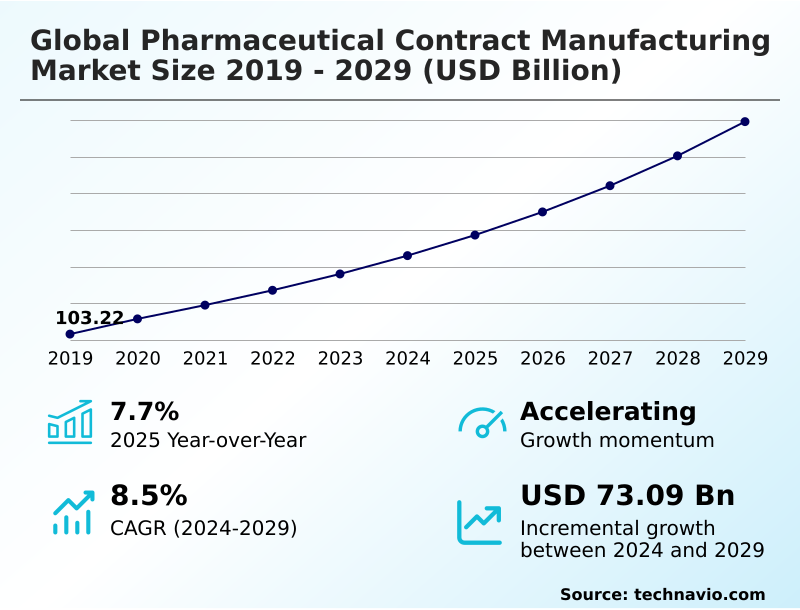
The Pharmaceutical Contract Manufacturing Market size was valued at USD 157.23 billion in 2025, growing at a CAGR of 8.2% during the forecast period 2026-2030.

Major Market Trends & Insights

  • Asia dominated the market and accounted for a 36.6% growth during the forecast period.
  • By End-user - Big pharmaceutical companies segment was valued at USD 85.61 billion in 2024
  • By Service - API and bulk drug manufacturing segment accounted for the largest market revenue share in 2024

Market Size & Forecast

  • Historic Market Opportunities 2020-2024: USD 122.11 billion
  • Market Future Opportunities 2025-2030: USD 76.40 billion
  • CAGR from 2025 to 2030 : 8.2%

Market Summary

  • The pharmaceutical contract manufacturing market is characterized by deep specialization, with over 60% of emerging biopharma firms relying entirely on external partners for development and manufacturing. The drive for operational efficiency is paramount; a 10% reduction in production cycle times through effective technology transfer can substantially accelerate market entry for a new therapeutic.
  • A primary driver is the escalating R&D complexity, especially for biologics like monoclonal antibodies, which requires specialized bioprocessing capabilities that are often too costly for companies to build in-house.
  • For instance, a small biotech firm will outsource sterile fill-finish operations to a specialized contract development and manufacturing organization to de-risk its supply chain and avoid the multimillion-dollar capital outlay for an aseptic facility.
  • However, the industry faces the challenge of heightened regulatory scrutiny, where navigating divergent international GMP compliance standards adds significant cost and complexity, potentially delaying drug product batch release and market launch.

What will be the Size of the Pharmaceutical Contract Manufacturing Market during the forecast period?
Get Key Insights on Market Forecast (PDF) Request Free Sample

How is the Pharmaceutical Contract Manufacturing Market Segmented?

The pharmaceutical contract manufacturing industry research report provides comprehensive data (region-wise segment analysis), with forecasts and analysis for the period 2026-2030, as well as historical data from 2020-2024 for the following segments.

  • End-user
    • Big pharmaceutical companies
    • Small and medium-sized pharmaceutical companies
    • Generic pharmaceutical companies
  • Service
    • API and bulk drug manufacturing
    • Final dosage form
    • Secondary packaging
  • Application
    • Infectious diseases
    • Cardiovascular diseases
    • Oncology
  • Geography
    • North America
      • US
      • Canada
      • Mexico
    • Asia
    • Europe
      • Germany
      • UK
      • France
    • Rest of World (ROW)

How is the Pharmaceutical Contract Manufacturing Market Segmented by End-user?

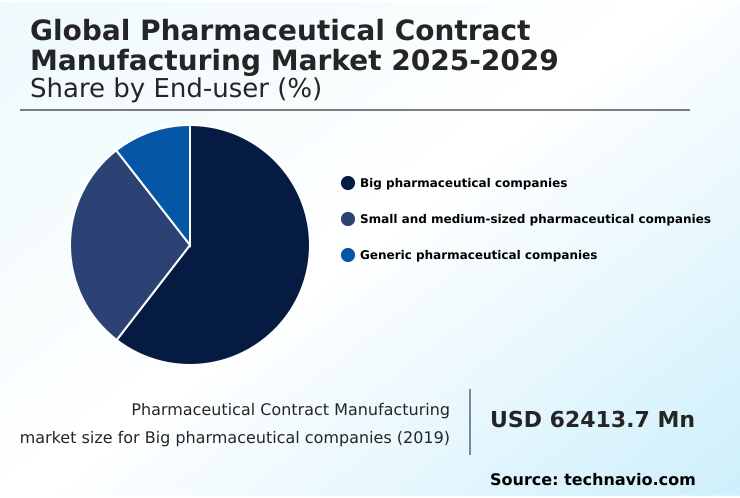
The big pharmaceutical companies segment is estimated to witness significant growth during the forecast period.

Big pharmaceutical companies represent over 58% of the outsourcing expenditure in the pharmaceutical contract manufacturing market, prioritizing strategic partnerships with a contract development and manufacturing organization to manage complex global supply chains.

These enterprises leverage outsourcing for commercial scale-up and to mitigate risks tied to large-volume production, focusing less on short-term cost savings and more on long-term reliability and GMP compliance.

Engagements often involve multi-year master service agreements where a 5% improvement in production yield directly impacts revenue.

Unlike smaller firms, their selection criteria emphasize a partner's global footprint, regulatory history, and technological capabilities in areas like continuous manufacturing implementation, ensuring consistent pharmaceutical supply chain logistics and product quality across diverse international markets.
Request Free Sample

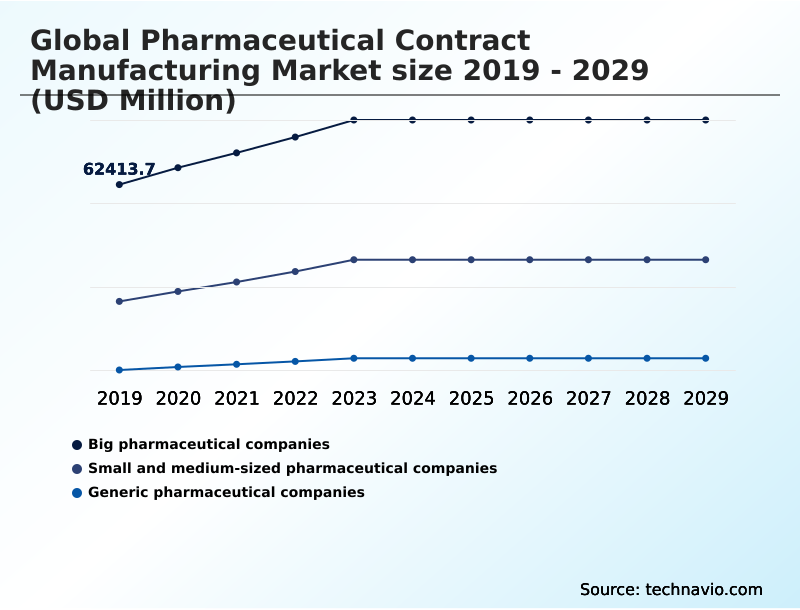
The Big pharmaceutical companies segment was valued at USD 85.61 billion in 2024 and showed a gradual increase during the forecast period.
Request Free Sample

How demand for the Pharmaceutical Contract Manufacturing market is rising in the leading region?

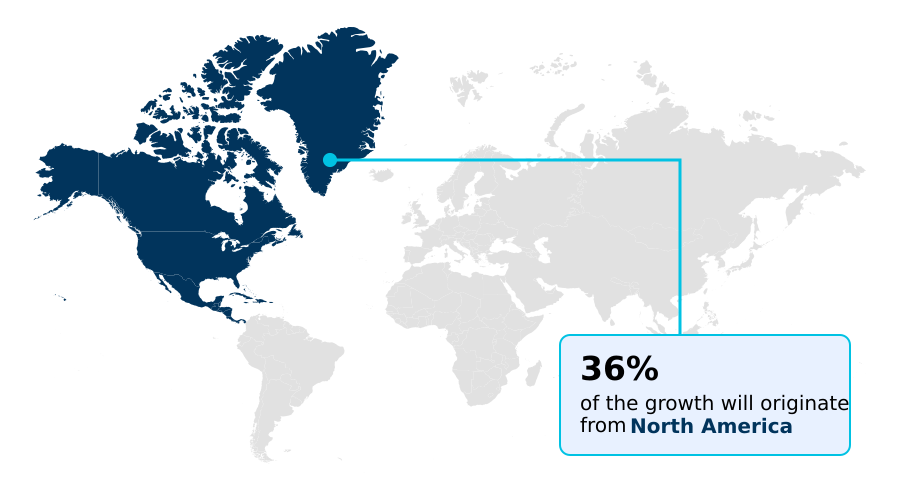
Asia is estimated to contribute 36.6% to the growth of the global market during the forecast period.Technavio’s analysts have elaborately explained the regional trends and drivers that shape the market during the forecast period.
See How Pharmaceutical Contract Manufacturing Market demand is rising in Asia Request Free Sample

The geographic landscape of pharmaceutical contract manufacturing is distinctly divided, with North America leading in market value at nearly 35% share due to its focus on high-value biopharmaceutical processing and complex sterile injectables.

In contrast, Asia is the fastest-growing region, outpacing North America by approximately 1.5 percentage points annually, driven by cost-effective active pharmaceutical ingredient synthesis in India and China.

Within North America, the US commands over 75% of the market, serving as a hub for innovation and advanced regulatory affairs support.

This regional divergence requires tailored business strategies; companies partnering in Asia often focus on cost optimization and process scale-up strategy, while partnerships in North America prioritize advanced technology access and robust cold chain management to ensure quality.

This dynamic reflects a global push for operational excellence in pharma, balanced between cost containment and specialized capabilities.

What are the key Drivers, Trends, and Challenges in the Pharmaceutical Contract Manufacturing Market?

Our researchers analyzed the data with 2025 as the base year, along with the key drivers, trends, and challenges. A holistic analysis of drivers will help companies refine their marketing strategies to gain a competitive advantage.

  • Over 70% of new biologic drugs in development pipelines utilize outsourced manufacturing, underscoring the critical role of specialized partners. The evaluation of the total cost of pharmaceutical contract manufacturing has evolved, shifting from simple price-per-batch comparisons to a more holistic assessment of a partner's ability to mitigate risks and accelerate timelines.
  • For instance, selecting an experienced partner for sterile injectable contract manufacturing services can reduce the risk of batch failure by up to 15%, a crucial factor when dealing with high-value drug products. This highlights why robust CDMO selection criteria for pharma now weigh regulatory track record and technical expertise as heavily as pricing.
  • While small molecule API contract manufacturing remains a significant market segment driven by cost competition, the technical demands of pharmaceutical contract manufacturing for biologics are reshaping partnerships. The complexity of handling monoclonal antibodies or cell therapies requires advanced aseptic processing and quality control, making a provider's scientific expertise and infrastructure non-negotiable.
  • Consequently, sponsors are adopting more strategic, long-term relationships, integrating their partners into the development lifecycle to ensure a seamless transition from clinical trials to commercial launch, a stark contrast to the more transactional relationships common a decade ago.
What are the key market drivers leading to the rise in the adoption of Pharmaceutical Contract Manufacturing Industry?

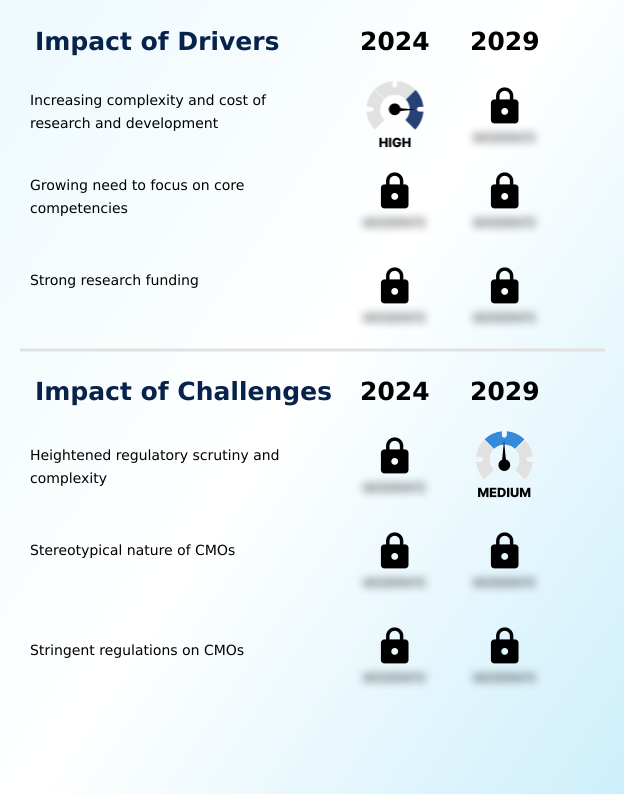
  • The primary driver is the increasing complexity and cost associated with pharmaceutical research and development, which compels companies to outsource manufacturing.

  • A key driver is the growing complexity of drug pipelines, with biologics now comprising over 40% of all assets in development, up from 25% a decade prior.
  • This surge in complex modalities, including cell and gene therapy manufacturing, requires specialized expertise and facilities that increase capital costs by over 50% compared to small-molecule plants.
  • As a result, many pharmaceutical companies, particularly those without established infrastructure, outsource biologics drug substance manufacturing to access necessary technologies and de-risk their investments. This allows them to focus on core R&D activities and clinical trial material supply.
  • This outsourcing strategy is critical during pre-formulation studies and for developing an effective process scale-up strategy, converting high upfront capital expenditures into more manageable operational costs.

What are the market trends shaping the Pharmaceutical Contract Manufacturing Industry?

  • A definitive trend is the strategic shift toward onshoring and enhancing supply chain resilience, particularly within North America and Europe, to mitigate geopolitical risks.

  • A primary trend reshaping the market is the strategic regionalization of supply chains to enhance security and reduce geopolitical risk, which has increased capital investment in North American and European facilities by over 30%. This shift, driven by recent global disruptions, prioritizes supply chain risk management over pure cost savings.
  • As a result, companies are actively engaged in manufacturing capacity planning to build resilient, dual-sourcing networks, often reducing cross-continental logistics lead times by up to 25%. This trend directly impacts drug product lifecycle management, as sponsors now favor regional partners who can ensure manufacturing continuity and withstand a stringent regulatory compliance audit.
  • For sterile products, this also means local partners must demonstrate impeccable aseptic technique validation to win high-value contracts.

What challenges does the Pharmaceutical Contract Manufacturing Industry face during its growth?

  • A key challenge affecting industry growth is the heightened regulatory scrutiny and increasing compliance complexity across global jurisdictions.

  • A significant challenge is heightened regulatory scrutiny, with inspections increasing by nearly 20% and data integrity failures causing over 50% of all GMP compliance-related citations. This intensified oversight from agencies like the FDA and EMA forces contract manufacturers to make substantial investments in advanced quality systems and personnel training to avoid costly production delays.
  • Navigating divergent international standards requires deep expertise in regulatory affairs support and meticulous quality control testing. This complexity raises operational costs and barriers to entry, particularly for smaller players. For manufacturers of sterile and high-potency products, the pressure is even greater, demanding flawless cross-contamination control protocols and state-of-the-art cleanroom facility design to meet evolving expectations.

Exclusive Technavio Analysis on Customer Landscape

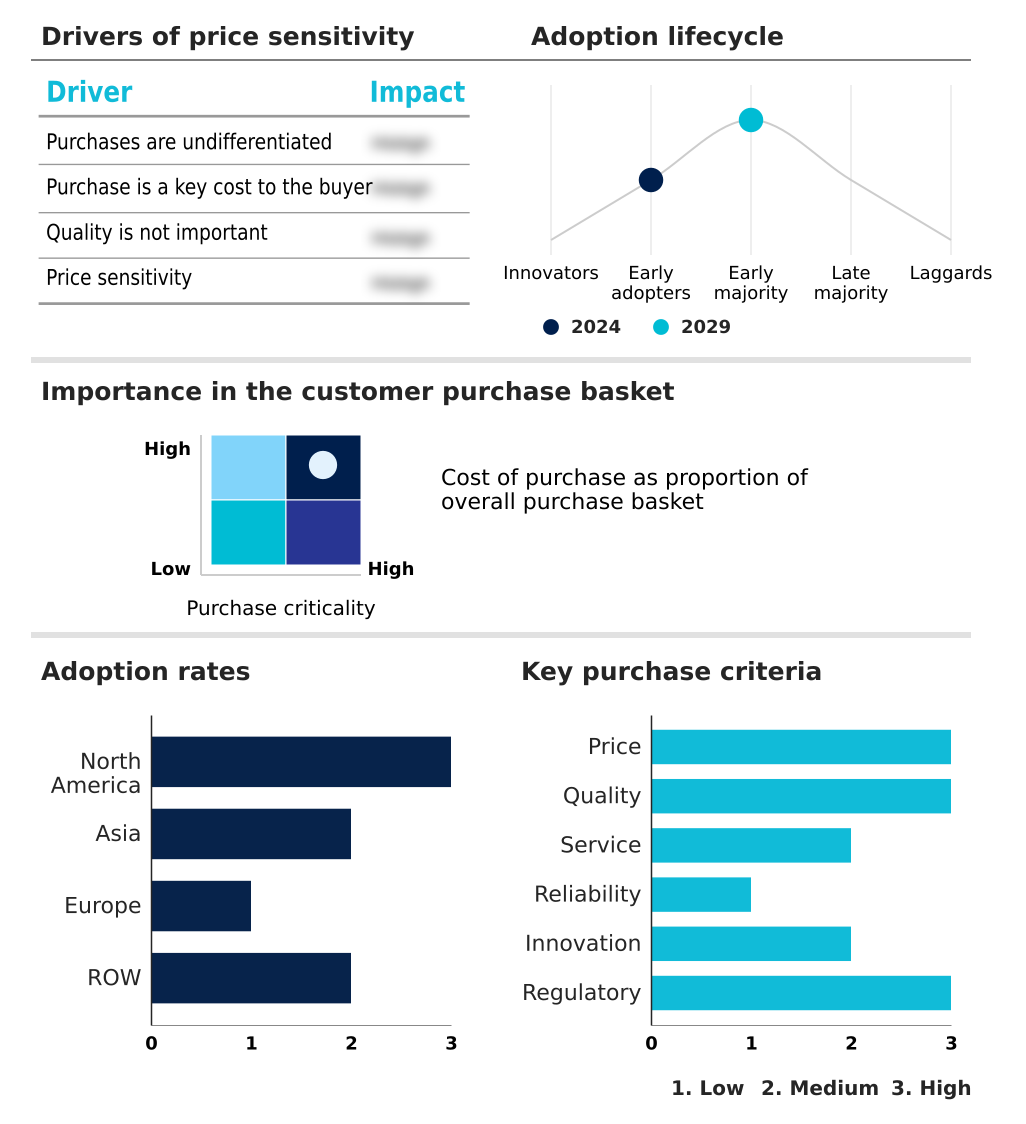
The pharmaceutical contract manufacturing market forecasting report includes the adoption lifecycle of the market, covering from the innovator’s stage to the laggard’s stage. It focuses on adoption rates in different regions based on penetration. Furthermore, the pharmaceutical contract manufacturing market report also includes key purchase criteria and drivers of price sensitivity to help companies evaluate and develop their market growth analysis strategies.
Customer Landscape of Pharmaceutical Contract Manufacturing Industry

Competitive Landscape

Companies are implementing various strategies, such as strategic alliances, pharmaceutical contract manufacturing market forecast, partnerships, mergers and acquisitions, geographical expansion, and product/service launches, to enhance their presence in the industry.

AbbVie Inc. - Providers deliver integrated services from active pharmaceutical ingredient synthesis and biologics drug substance manufacturing to final dosage form production, supporting the entire drug product lifecycle.

The industry research and growth report includes detailed analyses of the competitive landscape of the market and information about key companies, including:

  • AbbVie Inc.
  • Aenova Holding GmbH
  • Ajinomoto Co. Inc.
  • Almac Group Ltd.
  • Boehringer Ingelheim GmbH
  • Cadila Pharmaceuticals Ltd.
  • Cambrex Corp.
  • Catalent Inc.
  • Charles River Laboratories
  • Cmic Holdings Co. Ltd.
  • Corden Pharma Intl. GmbH
  • Dr. Reddys Laboratories Ltd.
  • Evonik Industries AG
  • Lonza Group Ltd.
  • PCI Pharma Services
  • Recipharm AB
  • Samsung Biologics Co. Ltd.
  • Siegfried Holding AG
  • Thermo Fisher Scientific Inc.
  • WuXi Biologics Cayman Inc.

Qualitative and quantitative analysis of companies has been conducted to help clients understand the wider business environment as well as the strengths and weaknesses of key industry players. Data is qualitatively analyzed to categorize companies as pure play, category-focused, industry-focused, and diversified; it is quantitatively analyzed to categorize companies as dominant, leading, strong, tentative, and weak.

Market Intelligence Radar: High-Impact Developments & Growth Signals

  • In the Health Care Equipment industry, the adoption of digital manufacturing platforms and IoT-enabled devices has set new standards for process control and data integrity, directly compelling the pharmaceutical contract manufacturing market to invest in similar process analytical technology and quality management system frameworks to ensure GMP compliance and operational excellence in pharma.
  • Stringent unique device identification (UDI) and serialization and track-and-trace regulations for medical devices are creating a precedent for end-to-end traceability, increasing pressure on contract manufacturers to implement robust systems for drug product batch release and pharmaceutical supply chain logistics.
  • Heightened focus on supply chain risk management, driven by geopolitical shifts, has accelerated nearshoring and regionalization strategies for critical medical components, influencing CDMO selection criteria toward partners who demonstrate supply chain resilience and localized sourcing capabilities.
  • Increased regulatory and investor pressure for sustainable operations has led to the integration of energy-efficient designs and waste-reduction protocols in medical device production, a trend now shaping master service agreement negotiation in pharmaceutical contract manufacturing to include sustainability metrics and circular economy principles.

Dive into Technavio’s robust research methodology, blending expert interviews, extensive data synthesis, and validated models for unparalleled Pharmaceutical Contract Manufacturing Market insights. See full methodology.

Market Scope
Page number 296
Base year 2025
Historic period 2020-2024
Forecast period 2026-2030
Growth momentum & CAGR Accelerate at a CAGR of 8.2%
Market growth 2026-2030 USD 76396.2 million
Market structure Fragmented
YoY growth 2025-2026(%) 7.9%
Key countries US, Canada, Mexico, China, India, Japan, South Korea, Singapore, Indonesia, Thailand, Germany, UK, France, The Netherlands, Italy, Spain, Switzerland, Brazil, Australia, Saudi Arabia, UAE, South Africa and Turkey
Competitive landscape Leading Companies, Market Positioning of Companies, Competitive Strategies, and Industry Risks

Request Free Sample

Research Analyst Overview

  • The market ecosystem is an integrated network where contract manufacturers produce over 40% of all final dosage form pharmaceuticals, relying on a global base of raw material suppliers for excipients and APIs. Regulatory bodies like the FDA and EMA heavily influence operations; adherence to GMP standards is mandatory, and a single deviation can halt production for up to 6 months.
  • CDMOs provide end-to-end CDMO services, from process development incorporating quality by design principles to commercial-scale parenteral drug manufacturing. Logistics partners specializing in cold chain management are essential for distributing temperature-sensitive biologics. The end-users—pharmaceutical and biotech companies—drive demand based on their R&D pipelines.
  • This intricate value chain is focused on ensuring product integrity, as evidenced by the critical importance of processes like container closure integrity testing for sterile products.

What are the Key Data Covered in this Pharmaceutical Contract Manufacturing Market Research and Growth Report?

  • What is the expected growth of the Pharmaceutical Contract Manufacturing Market between 2026 and 2030?

    • The Pharmaceutical Contract Manufacturing Market is expected to grow by USD 76.40 billion during 2026-2030, registering a CAGR of 8.2%. Year-over-year growth in 2026 is estimated at 7.9%%. This acceleration is shaped by increasing complexity and cost of research and development, which is intensifying demand across multiple end-use verticals covered in the report.

  • What segmentation does the market report cover?

    • The report is segmented by End-user (Big pharmaceutical companies, Small and medium-sized pharmaceutical companies, and Generic pharmaceutical companies), Service (API and bulk drug manufacturing, Final dosage form, and Secondary packaging), Application (Infectious diseases, Cardiovascular diseases, and Oncology) and Geography (North America, Asia, Europe, Rest of World (ROW)). Among these, the Big pharmaceutical companies segment is estimated to witness significant growth during the forecast period, driven by rising adoption across key application areas. Each segment includes detailed qualitative and quantitative analysis, along with historical data from 2020-2024 and forecasts through 2030 with year-over-year growth rates.

  • Which regions are analyzed in the report?

    • The report covers North America, Asia, Europe and Rest of World (ROW). Asia is estimated to contribute 36.6% to market growth during the forecast period. Country-level analysis includes US, Canada, Mexico, China, India, Japan, South Korea, Singapore, Indonesia, Thailand, Germany, UK, France, The Netherlands, Italy, Spain, Switzerland, Brazil, Australia, Saudi Arabia, UAE, South Africa and Turkey, with dedicated market size tables and year-over-year growth for each.

  • What are the key growth drivers and market challenges?

    • The primary driver is increasing complexity and cost of research and development, which is accelerating investment and industry demand. The main challenge is heightened regulatory scrutiny and complexity, creating operational barriers for key market participants. The report quantifies the impact of each driver and challenge across 2026 and 2030 with comparative analysis.

  • Who are the major players in the Pharmaceutical Contract Manufacturing Market?

    • Key vendors include AbbVie Inc., Aenova Holding GmbH, Ajinomoto Co. Inc., Almac Group Ltd., Boehringer Ingelheim GmbH, Cadila Pharmaceuticals Ltd., Cambrex Corp., Catalent Inc., Charles River Laboratories, Cmic Holdings Co. Ltd., Corden Pharma Intl. GmbH, Dr. Reddys Laboratories Ltd., Evonik Industries AG, Lonza Group Ltd., PCI Pharma Services, Recipharm AB, Samsung Biologics Co. Ltd., Siegfried Holding AG, Thermo Fisher Scientific Inc. and WuXi Biologics Cayman Inc.. The report provides qualitative and quantitative analysis categorizing companies as dominant, leading, strong, tentative, and weak based on their market positioning. Company profiles include business segment analysis, SWOT assessment, key offerings, and recent strategic developments.

Market Research Insights

  • The competitive landscape is shaped by ongoing consolidation, with the top ten contract development and manufacturing organizations now accounting for over 35% of the market through strategic capacity acquisitions.
  • Key players like Catalent and Lonza are aggressively expanding their capabilities in advanced modalities; for example, recent investments have expanded gene therapy manufacturing capacity by more than 40% to address a critical industry bottleneck. These expansions are a direct response to the robust pipeline of biologics and cell and gene therapies from both large pharma and emerging biotech companies.
  • Such strategic moves enable end-to-end CDMO services, from early-phase development to commercial supply. However, the industry still grapples with significant capacity constraints, especially for viral vector production and sterile fill-finish services, which continues to drive M&A activity and premium pricing for specialized assets.

We can help! Our analysts can customize this pharmaceutical contract manufacturing market research report to meet your requirements.

Get in touch

1. Executive Summary

1.1 Market overview

Executive Summary - Chart on Market Overview
Executive Summary - Data Table on Market Overview
Executive Summary - Chart on Global Market Characteristics
Executive Summary - Chart on Market by Geography
Executive Summary - Chart on Market Segmentation by End-user
Executive Summary - Chart on Market Segmentation by Service
Executive Summary - Chart on Market Segmentation by Application
Executive Summary - Chart on Incremental Growth
Executive Summary - Data Table on Incremental Growth
Executive Summary - Chart on Company Market Positioning

2. Technavio Analysis

2.1 Analysis of price sensitivity, lifecycle, customer purchase basket, adoption rates, and purchase criteria

2.2 Criticality of inputs and Factors of differentiation

Chart on Overview on criticality of inputs and factors of differentiation

2.3 Factors of disruption

Chart on Overview on factors of disruption

2.4 Impact of drivers and challenges

Chart on Impact of drivers and challenges in 2025 and 2030

3. Market Landscape

3.1 Market ecosystem

Chart on Parent Market
Data Table on - Parent Market

3.2 Market characteristics

Chart on Market characteristics analysis

3.3 Value chain analysis

Chart on Value chain analysis

4. Market Sizing

4.1 Market definition

Data Table on Offerings of companies included in the market definition

4.2 Market segment analysis

Market segments

4.3 Market size 2025

4.4 Market outlook: Forecast for 2025-2030

Chart on Global - Market size and forecast 2025-2030 ($ million)
Data Table on Global - Market size and forecast 2025-2030 ($ million)
Chart on Global Market: Year-over-year growth 2025-2030 (%)
Data Table on Global Market: Year-over-year growth 2025-2030 (%)

5. Historic Market Size

5.1 Global Pharmaceutical Contract Manufacturing Market 2020 - 2024

Historic Market Size - Data Table on Global Pharmaceutical Contract Manufacturing Market 2020 - 2024 ($ million)

5.2 End-user segment analysis 2020 - 2024

Historic Market Size - End-user Segment 2020 - 2024 ($ million)

5.3 Service segment analysis 2020 - 2024

Historic Market Size - Service Segment 2020 - 2024 ($ million)

5.4 Application segment analysis 2020 - 2024

Historic Market Size - Application Segment 2020 - 2024 ($ million)

5.5 Geography segment analysis 2020 - 2024

Historic Market Size - Geography Segment 2020 - 2024 ($ million)

5.6 Country segment analysis 2020 - 2024

Historic Market Size - Country Segment 2020 - 2024 ($ million)

6. Qualitative Analysis

6.1 Impact of AI in Global Pharmaceutical Contract Manufacturing Market

7. Five Forces Analysis

7.1 Five forces summary

Five forces analysis - Comparison between 2025 and 2030

7.2 Bargaining power of buyers

Bargaining power of buyers - Impact of key factors 2025 and 2030

7.3 Bargaining power of suppliers

Bargaining power of suppliers - Impact of key factors in 2025 and 2030

7.4 Threat of new entrants

Threat of new entrants - Impact of key factors in 2025 and 2030

7.5 Threat of substitutes

Threat of substitutes - Impact of key factors in 2025 and 2030

7.6 Threat of rivalry

Threat of rivalry - Impact of key factors in 2025 and 2030

7.7 Market condition

Chart on Market condition - Five forces 2025 and 2030

8. Market Segmentation by End-user

8.1 Market segments

Chart on End-user - Market share 2025-2030 (%)
Data Table on End-user - Market share 2025-2030 (%)

8.2 Comparison by End-user

Chart on Comparison by End-user
Data Table on Comparison by End-user

8.3 Big pharmaceutical companies - Market size and forecast 2025-2030

Chart on Big pharmaceutical companies - Market size and forecast 2025-2030 ($ million)
Data Table on Big pharmaceutical companies - Market size and forecast 2025-2030 ($ million)
Chart on Big pharmaceutical companies - Year-over-year growth 2025-2030 (%)
Data Table on Big pharmaceutical companies - Year-over-year growth 2025-2030 (%)

8.4 Small and medium-sized pharmaceutical companies - Market size and forecast 2025-2030

Chart on Small and medium-sized pharmaceutical companies - Market size and forecast 2025-2030 ($ million)
Data Table on Small and medium-sized pharmaceutical companies - Market size and forecast 2025-2030 ($ million)
Chart on Small and medium-sized pharmaceutical companies - Year-over-year growth 2025-2030 (%)
Data Table on Small and medium-sized pharmaceutical companies - Year-over-year growth 2025-2030 (%)

8.5 Generic pharmaceutical companies - Market size and forecast 2025-2030

Chart on Generic pharmaceutical companies - Market size and forecast 2025-2030 ($ million)
Data Table on Generic pharmaceutical companies - Market size and forecast 2025-2030 ($ million)
Chart on Generic pharmaceutical companies - Year-over-year growth 2025-2030 (%)
Data Table on Generic pharmaceutical companies - Year-over-year growth 2025-2030 (%)

8.6 Market opportunity by End-user

Market opportunity by End-user ($ million)
Data Table on Market opportunity by End-user ($ million)

9. Market Segmentation by Service

9.1 Market segments

Chart on Service - Market share 2025-2030 (%)
Data Table on Service - Market share 2025-2030 (%)

9.2 Comparison by Service

Chart on Comparison by Service
Data Table on Comparison by Service

9.3 API and bulk drug manufacturing - Market size and forecast 2025-2030

Chart on API and bulk drug manufacturing - Market size and forecast 2025-2030 ($ million)
Data Table on API and bulk drug manufacturing - Market size and forecast 2025-2030 ($ million)
Chart on API and bulk drug manufacturing - Year-over-year growth 2025-2030 (%)
Data Table on API and bulk drug manufacturing - Year-over-year growth 2025-2030 (%)

9.4 Final dosage form - Market size and forecast 2025-2030

Chart on Final dosage form - Market size and forecast 2025-2030 ($ million)
Data Table on Final dosage form - Market size and forecast 2025-2030 ($ million)
Chart on Final dosage form - Year-over-year growth 2025-2030 (%)
Data Table on Final dosage form - Year-over-year growth 2025-2030 (%)

9.5 Secondary packaging - Market size and forecast 2025-2030

Chart on Secondary packaging - Market size and forecast 2025-2030 ($ million)
Data Table on Secondary packaging - Market size and forecast 2025-2030 ($ million)
Chart on Secondary packaging - Year-over-year growth 2025-2030 (%)
Data Table on Secondary packaging - Year-over-year growth 2025-2030 (%)

9.6 Market opportunity by Service

Market opportunity by Service ($ million)
Data Table on Market opportunity by Service ($ million)

10. Market Segmentation by Application

10.1 Market segments

Chart on Application - Market share 2025-2030 (%)
Data Table on Application - Market share 2025-2030 (%)

10.2 Comparison by Application

Chart on Comparison by Application
Data Table on Comparison by Application

10.3 Infectious diseases - Market size and forecast 2025-2030

Chart on Infectious diseases - Market size and forecast 2025-2030 ($ million)
Data Table on Infectious diseases - Market size and forecast 2025-2030 ($ million)
Chart on Infectious diseases - Year-over-year growth 2025-2030 (%)
Data Table on Infectious diseases - Year-over-year growth 2025-2030 (%)

10.4 Cardiovascular diseases - Market size and forecast 2025-2030

Chart on Cardiovascular diseases - Market size and forecast 2025-2030 ($ million)
Data Table on Cardiovascular diseases - Market size and forecast 2025-2030 ($ million)
Chart on Cardiovascular diseases - Year-over-year growth 2025-2030 (%)
Data Table on Cardiovascular diseases - Year-over-year growth 2025-2030 (%)

10.5 Oncology - Market size and forecast 2025-2030

Chart on Oncology - Market size and forecast 2025-2030 ($ million)
Data Table on Oncology - Market size and forecast 2025-2030 ($ million)
Chart on Oncology - Year-over-year growth 2025-2030 (%)
Data Table on Oncology - Year-over-year growth 2025-2030 (%)

10.6 Market opportunity by Application

Market opportunity by Application ($ million)
Data Table on Market opportunity by Application ($ million)

11. Customer Landscape

11.1 Customer landscape overview

Analysis of price sensitivity, lifecycle, customer purchase basket, adoption rates, and purchase criteria

12. Geographic Landscape

12.1 Geographic segmentation

Chart on Market share by geography 2025-2030 (%)
Data Table on Market share by geography 2025-2030 (%)

12.2 Geographic comparison

Chart on Geographic comparison
Data Table on Geographic comparison

12.3 North America - Market size and forecast 2025-2030

Chart on North America - Market size and forecast 2025-2030 ($ million)
Data Table on North America - Market size and forecast 2025-2030 ($ million)
Chart on North America - Year-over-year growth 2025-2030 (%)
Data Table on North America - Year-over-year growth 2025-2030 (%)
Chart on Regional Comparison - North America
Data Table on Regional Comparison - North America

12.3.1 US - Market size and forecast 2025-2030

Chart on US - Market size and forecast 2025-2030 ($ million)
Data Table on US - Market size and forecast 2025-2030 ($ million)
Chart on US - Year-over-year growth 2025-2030 (%)
Data Table on US - Year-over-year growth 2025-2030 (%)

12.3.2 Canada - Market size and forecast 2025-2030

Chart on Canada - Market size and forecast 2025-2030 ($ million)
Data Table on Canada - Market size and forecast 2025-2030 ($ million)
Chart on Canada - Year-over-year growth 2025-2030 (%)
Data Table on Canada - Year-over-year growth 2025-2030 (%)

12.3.3 Mexico - Market size and forecast 2025-2030

Chart on Mexico - Market size and forecast 2025-2030 ($ million)
Data Table on Mexico - Market size and forecast 2025-2030 ($ million)
Chart on Mexico - Year-over-year growth 2025-2030 (%)
Data Table on Mexico - Year-over-year growth 2025-2030 (%)

12.4 Asia - Market size and forecast 2025-2030

Chart on Asia - Market size and forecast 2025-2030 ($ million)
Data Table on Asia - Market size and forecast 2025-2030 ($ million)
Chart on Asia - Year-over-year growth 2025-2030 (%)
Data Table on Asia - Year-over-year growth 2025-2030 (%)
Chart on Regional Comparison - Asia
Data Table on Regional Comparison - Asia

12.4.1 China - Market size and forecast 2025-2030

Chart on China - Market size and forecast 2025-2030 ($ million)
Data Table on China - Market size and forecast 2025-2030 ($ million)
Chart on China - Year-over-year growth 2025-2030 (%)
Data Table on China - Year-over-year growth 2025-2030 (%)

12.4.2 India - Market size and forecast 2025-2030

Chart on India - Market size and forecast 2025-2030 ($ million)
Data Table on India - Market size and forecast 2025-2030 ($ million)
Chart on India - Year-over-year growth 2025-2030 (%)
Data Table on India - Year-over-year growth 2025-2030 (%)

12.4.3 Japan - Market size and forecast 2025-2030

Chart on Japan - Market size and forecast 2025-2030 ($ million)
Data Table on Japan - Market size and forecast 2025-2030 ($ million)
Chart on Japan - Year-over-year growth 2025-2030 (%)
Data Table on Japan - Year-over-year growth 2025-2030 (%)

12.4.4 South Korea - Market size and forecast 2025-2030

Chart on South Korea - Market size and forecast 2025-2030 ($ million)
Data Table on South Korea - Market size and forecast 2025-2030 ($ million)
Chart on South Korea - Year-over-year growth 2025-2030 (%)
Data Table on South Korea - Year-over-year growth 2025-2030 (%)

12.4.5 Singapore - Market size and forecast 2025-2030

Chart on Singapore - Market size and forecast 2025-2030 ($ million)
Data Table on Singapore - Market size and forecast 2025-2030 ($ million)
Chart on Singapore - Year-over-year growth 2025-2030 (%)
Data Table on Singapore - Year-over-year growth 2025-2030 (%)

12.4.6 Indonesia - Market size and forecast 2025-2030

Chart on Indonesia - Market size and forecast 2025-2030 ($ million)
Data Table on Indonesia - Market size and forecast 2025-2030 ($ million)
Chart on Indonesia - Year-over-year growth 2025-2030 (%)
Data Table on Indonesia - Year-over-year growth 2025-2030 (%)

12.4.7 Thailand - Market size and forecast 2025-2030

Chart on Thailand - Market size and forecast 2025-2030 ($ million)
Data Table on Thailand - Market size and forecast 2025-2030 ($ million)
Chart on Thailand - Year-over-year growth 2025-2030 (%)
Data Table on Thailand - Year-over-year growth 2025-2030 (%)

12.5 Europe - Market size and forecast 2025-2030

Chart on Europe - Market size and forecast 2025-2030 ($ million)
Data Table on Europe - Market size and forecast 2025-2030 ($ million)
Chart on Europe - Year-over-year growth 2025-2030 (%)
Data Table on Europe - Year-over-year growth 2025-2030 (%)
Chart on Regional Comparison - Europe
Data Table on Regional Comparison - Europe

12.5.1 Germany - Market size and forecast 2025-2030

Chart on Germany - Market size and forecast 2025-2030 ($ million)
Data Table on Germany - Market size and forecast 2025-2030 ($ million)
Chart on Germany - Year-over-year growth 2025-2030 (%)
Data Table on Germany - Year-over-year growth 2025-2030 (%)

12.5.2 UK - Market size and forecast 2025-2030

Chart on UK - Market size and forecast 2025-2030 ($ million)
Data Table on UK - Market size and forecast 2025-2030 ($ million)
Chart on UK - Year-over-year growth 2025-2030 (%)
Data Table on UK - Year-over-year growth 2025-2030 (%)

12.5.3 France - Market size and forecast 2025-2030

Chart on France - Market size and forecast 2025-2030 ($ million)
Data Table on France - Market size and forecast 2025-2030 ($ million)
Chart on France - Year-over-year growth 2025-2030 (%)
Data Table on France - Year-over-year growth 2025-2030 (%)

12.5.4 The Netherlands - Market size and forecast 2025-2030

Chart on The Netherlands - Market size and forecast 2025-2030 ($ million)
Data Table on The Netherlands - Market size and forecast 2025-2030 ($ million)
Chart on The Netherlands - Year-over-year growth 2025-2030 (%)
Data Table on The Netherlands - Year-over-year growth 2025-2030 (%)

12.5.5 Italy - Market size and forecast 2025-2030

Chart on Italy - Market size and forecast 2025-2030 ($ million)
Data Table on Italy - Market size and forecast 2025-2030 ($ million)
Chart on Italy - Year-over-year growth 2025-2030 (%)
Data Table on Italy - Year-over-year growth 2025-2030 (%)

12.5.6 Spain - Market size and forecast 2025-2030

Chart on Spain - Market size and forecast 2025-2030 ($ million)
Data Table on Spain - Market size and forecast 2025-2030 ($ million)
Chart on Spain - Year-over-year growth 2025-2030 (%)
Data Table on Spain - Year-over-year growth 2025-2030 (%)

12.5.7 Switzerland - Market size and forecast 2025-2030

Chart on Switzerland - Market size and forecast 2025-2030 ($ million)
Data Table on Switzerland - Market size and forecast 2025-2030 ($ million)
Chart on Switzerland - Year-over-year growth 2025-2030 (%)
Data Table on Switzerland - Year-over-year growth 2025-2030 (%)

12.6 Rest of World (ROW) - Market size and forecast 2025-2030

Chart on Rest of World (ROW) - Market size and forecast 2025-2030 ($ million)
Data Table on Rest of World (ROW) - Market size and forecast 2025-2030 ($ million)
Chart on Rest of World (ROW) - Year-over-year growth 2025-2030 (%)
Data Table on Rest of World (ROW) - Year-over-year growth 2025-2030 (%)
Chart on Regional Comparison - Rest of World (ROW)
Data Table on Regional Comparison - Rest of World (ROW)

12.6.1 Brazil - Market size and forecast 2025-2030

Chart on Brazil - Market size and forecast 2025-2030 ($ million)
Data Table on Brazil - Market size and forecast 2025-2030 ($ million)
Chart on Brazil - Year-over-year growth 2025-2030 (%)
Data Table on Brazil - Year-over-year growth 2025-2030 (%)

12.6.2 Australia - Market size and forecast 2025-2030

Chart on Australia - Market size and forecast 2025-2030 ($ million)
Data Table on Australia - Market size and forecast 2025-2030 ($ million)
Chart on Australia - Year-over-year growth 2025-2030 (%)
Data Table on Australia - Year-over-year growth 2025-2030 (%)

12.6.3 Saudi Arabia - Market size and forecast 2025-2030

Chart on Saudi Arabia - Market size and forecast 2025-2030 ($ million)
Data Table on Saudi Arabia - Market size and forecast 2025-2030 ($ million)
Chart on Saudi Arabia - Year-over-year growth 2025-2030 (%)
Data Table on Saudi Arabia - Year-over-year growth 2025-2030 (%)

12.6.4 UAE - Market size and forecast 2025-2030

Chart on UAE - Market size and forecast 2025-2030 ($ million)
Data Table on UAE - Market size and forecast 2025-2030 ($ million)
Chart on UAE - Year-over-year growth 2025-2030 (%)
Data Table on UAE - Year-over-year growth 2025-2030 (%)

12.6.5 South Africa - Market size and forecast 2025-2030

Chart on South Africa - Market size and forecast 2025-2030 ($ million)
Data Table on South Africa - Market size and forecast 2025-2030 ($ million)
Chart on South Africa - Year-over-year growth 2025-2030 (%)
Data Table on South Africa - Year-over-year growth 2025-2030 (%)

12.6.6 Turkey - Market size and forecast 2025-2030

Chart on Turkey - Market size and forecast 2025-2030 ($ million)
Data Table on Turkey - Market size and forecast 2025-2030 ($ million)
Chart on Turkey - Year-over-year growth 2025-2030 (%)
Data Table on Turkey - Year-over-year growth 2025-2030 (%)

12.7 Market opportunity by geography

Market opportunity by geography ($ million)
Data Tables on Market opportunity by geography ($ million)

13. Drivers, Challenges, and Opportunity

13.1 Market drivers

Increasing complexity and cost of research and development
Growing need to focus on core competencies
Surging demand for advanced therapeutic modalities

13.2 Market challenges

Heightened regulatory scrutiny and complexity
Stereotypical nature of contract manufacturing organizations
Stringent regulations on contract manufacturing organizations

13.3 Impact of drivers and challenges

Impact of drivers and challenges in 2025 and 2030

13.4 Market opportunities

Strategic onshoring and supply chain resilience in North America and Europe
Rising demand for biological therapies
Intensifying cost-containment pressures and pursuit of operational efficiency

14. Competitive Landscape

14.1 Overview

14.2

Overview on criticality of inputs and factors of differentiation

14.3 Landscape disruption

Overview on factors of disruption

14.4 Industry risks

Impact of key risks on business

15. Competitive Analysis

15.1 Companies profiled

Companies covered

15.2 Company ranking index

15.3 Market positioning of companies

Matrix on companies position and classification

15.4 AbbVie Inc.

AbbVie Inc. - Overview
AbbVie Inc. - Product / Service
AbbVie Inc. - Key news
AbbVie Inc. - Key offerings
SWOT

15.5 Aenova Holding GmbH

Aenova Holding GmbH - Overview
Aenova Holding GmbH - Product / Service
Aenova Holding GmbH - Key offerings
SWOT

15.6 Ajinomoto Co. Inc.

Ajinomoto Co. Inc. - Overview
Ajinomoto Co. Inc. - Business segments
Ajinomoto Co. Inc. - Key news
Ajinomoto Co. Inc. - Key offerings
Ajinomoto Co. Inc. - Segment focus
SWOT

15.7 Almac Group Ltd.

Almac Group Ltd. - Overview
Almac Group Ltd. - Product / Service
Almac Group Ltd. - Key offerings
SWOT

15.8 Boehringer Ingelheim GmbH

Boehringer Ingelheim GmbH - Overview
Boehringer Ingelheim GmbH - Product / Service
Boehringer Ingelheim GmbH - Key news
Boehringer Ingelheim GmbH - Key offerings
SWOT

15.9 Cadila Pharmaceuticals Ltd.

Cadila Pharmaceuticals Ltd. - Overview
Cadila Pharmaceuticals Ltd. - Product / Service
Cadila Pharmaceuticals Ltd. - Key offerings
SWOT

15.10 Cambrex Corp.

Cambrex Corp. - Overview
Cambrex Corp. - Product / Service
Cambrex Corp. - Key offerings
SWOT

15.11 Catalent Inc.

Catalent Inc. - Overview
Catalent Inc. - Business segments
Catalent Inc. - Key offerings
Catalent Inc. - Segment focus
SWOT

15.12 Charles River Laboratories

Charles River Laboratories - Overview
Charles River Laboratories - Business segments
Charles River Laboratories - Key offerings
Charles River Laboratories - Segment focus
SWOT

15.13 Dr. Reddys Laboratories Ltd.

Dr. Reddys Laboratories Ltd. - Overview
Dr. Reddys Laboratories Ltd. - Business segments
Dr. Reddys Laboratories Ltd. - Key news
Dr. Reddys Laboratories Ltd. - Key offerings
Dr. Reddys Laboratories Ltd. - Segment focus
SWOT

15.14 Evonik Industries AG

Evonik Industries AG - Overview
Evonik Industries AG - Business segments
Evonik Industries AG - Key news
Evonik Industries AG - Key offerings
Evonik Industries AG - Segment focus
SWOT

15.15 Lonza Group Ltd.

Lonza Group Ltd. - Overview
Lonza Group Ltd. - Business segments
Lonza Group Ltd. - Key news
Lonza Group Ltd. - Key offerings
Lonza Group Ltd. - Segment focus
SWOT

15.16 PCI Pharma Services

PCI Pharma Services - Overview
PCI Pharma Services - Product / Service
PCI Pharma Services - Key offerings
SWOT

15.17 Recipharm AB

Recipharm AB - Overview
Recipharm AB - Business segments
Recipharm AB - Key offerings
Recipharm AB - Segment focus
SWOT

15.18 Thermo Fisher Scientific Inc.

Thermo Fisher Scientific Inc. - Overview
Thermo Fisher Scientific Inc. - Business segments
Thermo Fisher Scientific Inc. - Key news
Thermo Fisher Scientific Inc. - Key offerings
Thermo Fisher Scientific Inc. - Segment focus
SWOT

16. Appendix

16.1 Scope of the report

Market definition
Objectives
Notes and caveats

16.2 Inclusions and exclusions checklist

Inclusions checklist
Exclusions checklist

16.3 Currency conversion rates for US$

16.4 Research methodology

16.5 Data procurement

Information sources

16.6 Data validation

16.7 Validation techniques employed for market sizing

16.8 Data synthesis

16.9 360 degree market analysis

16.10 List of abbreviations

Research Methodology

Technavio presents a detailed picture of the market by way of study, synthesis, and summation of data from multiple sources. The analysts have presented the various facets of the market with a particular focus on identifying the key industry influencers. The data thus presented is comprehensive, reliable, and the result of extensive research, both primary and secondary.

INFORMATION SOURCES

Primary sources

  • Manufacturers and suppliers
  • Channel partners
  • Industry experts
  • Strategic decision makers

Secondary sources

  • Industry journals and periodicals
  • Government data
  • Financial reports of key industry players
  • Historical data
  • Press releases

DATA ANALYSIS

Data Synthesis

  • Collation of data
  • Estimation of key figures
  • Analysis of derived insights

Data Validation

  • Triangulation with data models
  • Reference against proprietary databases
  • Corroboration with industry experts

REPORT WRITING

Qualitative

  • Market drivers
  • Market challenges
  • Market trends
  • Five forces analysis

Quantitative

  • Market size and forecast
  • Market segmentation
  • Geographical insights
  • Competitive landscape

Interested in this report?

Get your sample now to see our research methodology and insights!

Download Now

Frequently Asked Questions

Pharmaceutical Contract Manufacturing market growth will increase by USD 76396.2 million during 2026-2030.

The Pharmaceutical Contract Manufacturing market is expected to grow at a CAGR of 8.2% during 2026-2030.

Pharmaceutical Contract Manufacturing market is segmented by End-user (Big pharmaceutical companies, Small and medium-sized pharmaceutical companies, Generic pharmaceutical companies) Service (API and bulk drug manufacturing, Final dosage form, Secondary packaging) Application (Infectious diseases, Cardiovascular diseases, Oncology)

AbbVie Inc., Aenova Holding GmbH, Ajinomoto Co. Inc., Almac Group Ltd., Boehringer Ingelheim GmbH, Cadila Pharmaceuticals Ltd., Cambrex Corp., Catalent Inc., Charles River Laboratories, Cmic Holdings Co. Ltd., Corden Pharma Intl. GmbH, Dr. Reddys Laboratories Ltd., Evonik Industries AG, Lonza Group Ltd., PCI Pharma Services, Recipharm AB, Samsung Biologics Co. Ltd., Siegfried Holding AG, Thermo Fisher Scientific Inc., WuXi Biologics Cayman Inc. are a few of the key vendors in the Pharmaceutical Contract Manufacturing market.

Asia will register the highest growth rate of 36.6% among the other regions. Therefore, the Pharmaceutical Contract Manufacturing market in Asia is expected to garner significant business opportunities for the vendors during the forecast period.

US, Canada, Mexico, China, India, Japan, South Korea, Singapore, Indonesia, Thailand, Germany, UK, France, The Netherlands, Italy, Spain, Switzerland, Brazil, Australia, Saudi Arabia, UAE, South Africa, Turkey

  • Increasing complexity and cost of research and development is the driving factor this market.

The Pharmaceutical Contract Manufacturing market vendors should focus on grabbing business opportunities from the End-user segment as it accounted for the largest market share in the base year.
RIA - Research AI Assistant
Ask RIA
