
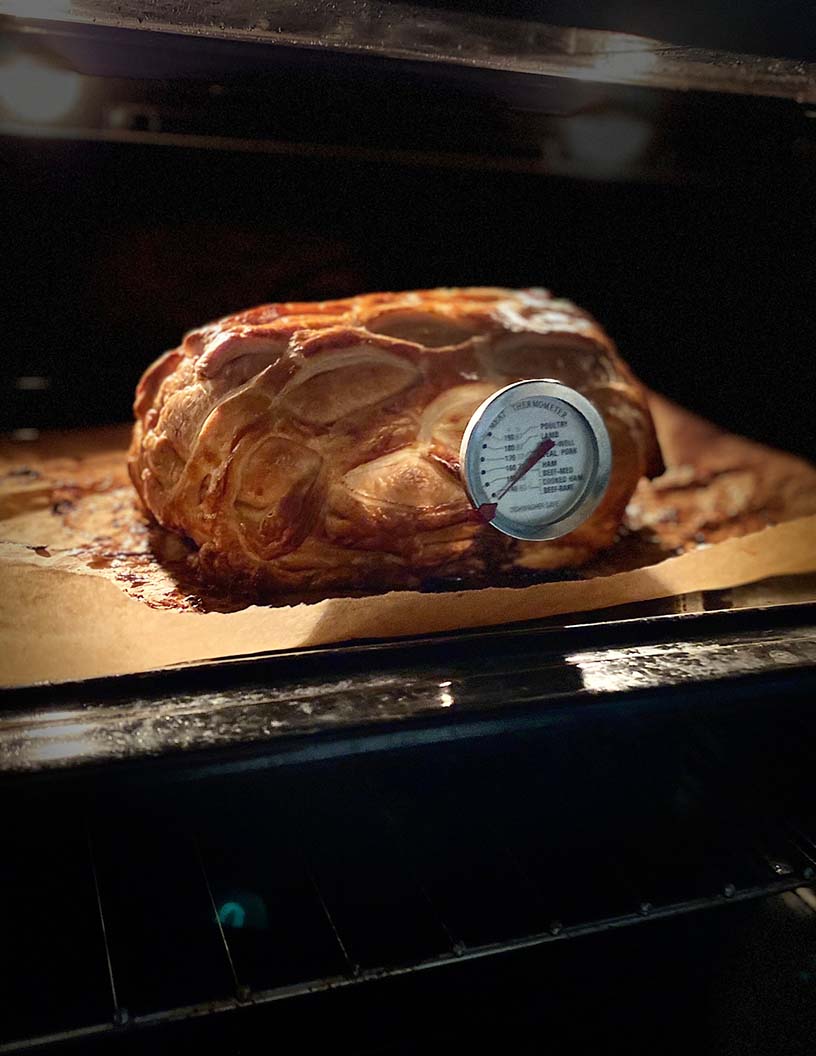


Precision Food Thermometers Market Size 2024-2028
The precision food thermometers market size is forecast to increase by USD 132.71 million, at a CAGR of 8.69% between 2023 and 2028.
- The market is driven by the growing demand for food safety and quality, as consumers increasingly prioritize health and wellness. The importance of cooking at the right temperature to ensure food safety and maintain desirable textures and flavors is a significant factor fueling market growth. However, low awareness about food thermometers poses a challenge for market expansion. Despite this obstacle, opportunities exist for companies to capitalize on the increasing consumer focus on food safety and the potential for innovation in thermometer technology to enhance cooking experiences.
- By addressing consumer education and developing user-friendly, technologically advanced precision food thermometers, market participants can effectively navigate this competitive landscape and meet the evolving needs of health-conscious consumers.
What will be the Size of the Precision Food Thermometers Market during the forecast period?
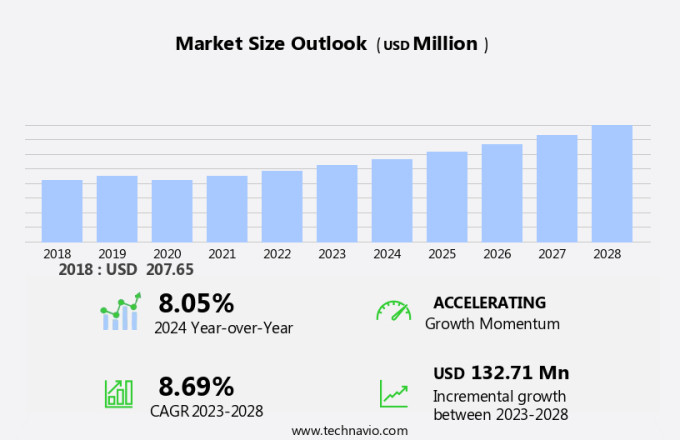
Explore in-depth regional segment analysis with market size data - historical 2018-2022 and forecasts 2024-2028 - in the full report.
Request Free Sample
The market continues to evolve, driven by the need for accurate temperature measurement in various sectors. Food storage temperature is a critical factor in maintaining product quality and ensuring food safety. Candy making requires precise temperature control for optimal results. Temperature probe accuracy is essential for hygiene protocols compliance and foodborne illness prevention. High-accuracy temperature measurement is crucial in food processing sanitation and industrial food processing. Thermocouple response time is a significant consideration for temperature data acquisition in commercial food service and restaurant kitchen equipment. Digital thermometer resolution offers enhanced precision for culinary applications. Instant-read thermometers provide features for product quality assurance, while data logging thermometers enable remote temperature display and industrial food processing efficiency.
Baking temperature precision is vital for consistent results in commercial kitchens, and high-accuracy temperature measurement is crucial for meeting kitchen safety standards and food safety regulations. Oven temperature control and pasteurization temperature range are essential for food processing, ensuring the destruction of harmful bacteria and maintaining product quality. Continuous innovation in temperature measurement technology drives the market, with applications extending beyond food processing to include sterilization temperature monitoring and hygiene protocols compliance. The market's dynamism reflects the ongoing importance of temperature control in food production and food safety.
How is this Precision Food Thermometers Industry segmented?
The precision food thermometers industry research report provides comprehensive data (region-wise segment analysis), with forecasts and estimates in "USD million" for the period 2024-2028, as well as historical data from 2018-2022 for the following segments.
- Distribution Channel
- Offline
- Online
- Application
- Industrial
- Household
- Geography
- North America
- US
- Canada
- Europe
- France
- Germany
- APAC
- China
- Rest of World (ROW)
- North America
By Distribution Channel Insights
The offline segment is estimated to witness significant growth during the forecast period.
In the realm of food preparation and safety, precision food thermometers have become indispensable tools for both commercial food service and home kitchens. These instruments ensure accurate temperature measurements for various applications, including refrigerator temperature control, sterilization temperature monitoring, oven temperature control, pasteurization temperature range, and food processing sanitation. HACCP compliance thermometers are essential for maintaining food safety regulations and preventing foodborne illnesses. Infrared thermometers undergo rigorous calibration and thermal accuracy testing to ensure high-accuracy temperature measurement. Digital thermometers, with their instant-read features and data logging capabilities, offer enhanced product quality assurance. Culinary thermometers cater to specific applications, such as candy making, while wireless food thermometers enable remote temperature display for industrial food processing and commercial kitchens.
Food storage temperature monitoring is crucial for maintaining food quality, and precision food thermometers play a significant role in this process. Thermocouple response time is a critical factor in temperature measurement, and manufacturers prioritize quick response times to ensure accurate readings. Hygiene protocols compliance is another essential aspect, with precision food thermometers ensuring adherence to kitchen safety standards and food safety regulations. In the market, offline distribution channels hold the largest share, with department stores, hypermarkets, and kitchen specialty stores being popular choices for consumers. These retailers offer a wide range of precision food thermometers from various brands, allowing consumers to evaluate products closely and receive expert support and information.
Consumers value the convenience of purchasing these essential tools from these retailers, ensuring food safety and quality in their food preparation processes.

The Offline segment was valued at USD 167.47 million in 2018 and showed a gradual increase during the forecast period.
Regional Analysis
North America is estimated to contribute 37% to the growth of the global market during the forecast period. Technavio's analysts have elaborately explained the regional trends and drivers that shape the market during the forecast period.

The market in North America is currently leading the global market, driven by the region's high standard of living and increased disposable income. According to the Food Safety and Inspection Service (FSIS) of the US Department of Agriculture (USDA), approximately 55% of individuals in the US utilize food thermometers to ensure food safety, as opposed to relying on color, hardness, or time as indicators. Hygiene protocols compliance and foodborne illness prevention are crucial in both residential and commercial food processing settings. In the food industry, high-accuracy temperature measurement is essential for refrigerator temperature control, sterilization temperature monitoring, oven temperature control, pasteurization temperature range, and baking temperature precision.
Thermal accuracy testing and infrared thermometer calibration are vital for maintaining food processing sanitation and food storage temperature. Culinary thermometer applications, such as candy making, require precise temperature control. Digital thermometers offer instant-read features, data logging capabilities, and meat doneness indicators. Wireless food thermometers provide remote temperature display, enhancing kitchen safety and efficiency in commercial food service and industrial food processing. Food safety regulations mandate adherence to strict kitchen safety standards, making temperature measurement a priority for product quality assurance.
Market Dynamics
Our researchers analyzed the data with 2023 as the base year, along with the key drivers, trends, and challenges. A holistic analysis of drivers will help companies refine their marketing strategies to gain a competitive advantage.
What are the key market drivers leading to the rise in the adoption of Precision Food Thermometers Industry?
- The increasing importance of food safety and quality is the primary factor fueling market growth. (Maintaining a professional tone, ensuring grammatical correctness, and adhering to the 100-word limit.)
- Precision food thermometers play a crucial role in the food industry for ensuring food safety and regulatory compliance. These specialized gadgets are essential for monitoring the internal temperature of various food items, such as poultry, during cooking or chilling processes. The food processing industries, commercial kitchens, and professional chefs rely on these thermometers to maintain accurate temperatures, reducing the risk of foodborne illnesses and ensuring regulatory requirements are met. The market for precision food thermometers is experiencing significant growth, driven by increasing consumer awareness and demand for high-quality, safe food. Thermal accuracy testing and infrared thermometer calibration are essential for maintaining the reliability and precision of these thermometers.
- In food processing, refrigerator temperature control, sterilization temperature monitoring, oven temperature control, and pasteurization temperature range are critical applications for precision food thermometers. Food processing sanitation is also a significant factor in the market's growth, as maintaining proper temperatures is essential for food safety and hygiene. The market's expansion is expected to continue during the forecast period, making it an attractive investment opportunity for businesses in the food industry.
What are the market trends shaping the Precision Food Thermometers Industry?
- The growing importance of cooking at the correct temperature is a notable market trend. This emphasis on temperature control in culinary practices reflects a heightened focus on food quality and consistency.
- In today's food industry, maintaining the correct temperature is crucial for food safety and storage. Foodborne illnesses can be prevented by ensuring perishable items are held at appropriate cold temperatures or cooked to high temperatures that kill harmful microorganisms. A precision food thermometer is an essential tool for achieving these temperature requirements. These devices provide accurate temperature readings, enabling food handlers to monitor food storage temperature and ensure compliance with hygiene protocols. During candy making or cooking, a candy making thermometer comes in handy for precise temperature data acquisition.
- High-accuracy temperature measurement is essential for food safety and quality, and thermocouple response time is a critical factor in ensuring prompt and reliable readings. By using a precision food thermometer, food establishments can prioritize foodborne illness prevention and maintain the trust of their customers.
What challenges does the Precision Food Thermometers Industry face during its growth?
- The lack of awareness regarding the utilization and importance of food thermometers poses a significant challenge to the growth of the industry.
- The market faces hindrances due to the traditional cooking methods of household consumers and the lack of awareness in certain regions. Many individuals rely on the color of food items to determine doneness, which can be inaccurate and may hinder the adoption of precision food thermometers. Furthermore, some consumers infrequently use food thermometers, relying instead on visual cues. In developing countries, the use of food thermometers is not widespread, which negatively impacts market demand. Despite these challenges, the market offers advanced technologies such as wireless, digital, instant-read, data logging, and meat doneness indicators.
- These features enhance product quality assurance, particularly in commercial kitchens, including restaurants. Precision food thermometers ensure consistent and accurate food temperature readings, ensuring food safety and reducing the risk of foodborne illnesses.
Exclusive Customer Landscape
The precision food thermometers market forecasting report includes the adoption lifecycle of the market, covering from the innovator's stage to the laggard's stage. It focuses on adoption rates in different regions based on penetration. Furthermore, the precision food thermometers market report also includes key purchase criteria and drivers of price sensitivity to help companies evaluate and develop their market growth analysis strategies.
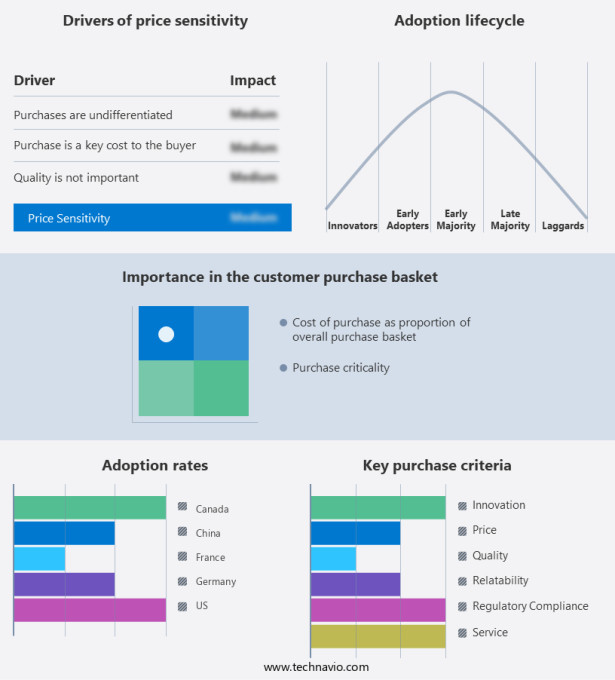
Customer Landscape
Key Companies & Market Insights
Companies are implementing various strategies, such as strategic alliances, precision food thermometers market forecast, partnerships, mergers and acquisitions, geographical expansion, and product/service launches, to enhance their presence in the industry.
Antylia Scientific - The company introduces a range of high-precision food thermometers under the brand name Traceable. Notable models include the 2 Second-Temp Food Traceable Thermometer, Robo Traceable Thermometer, and Platinum Ultra-Accurate Digital Traceable Thermometer, delivering reliable temperature readings for food safety and quality assurance.
The industry research and growth report includes detailed analyses of the competitive landscape of the market and information about key companies, including:
- Antylia Scientific
- B B Thermo Technik GmbH
- CHINO Corp.
- Digitron Italia Srl
- Endress Hauser Group Services AG
- Fortive Corp.
- Gunther GmbH Temperaturmesstechnik
- Hanna Instruments Inc.
- Lavatools LLC
- Lifetime Brands Inc.
- Maverick Industries Inc.
- S. L. TECHNOLOGIES
- Shiv Dial Sud and Son
- Tel Tru Manufacturing Co.
- Testo SE and Co. KGaA
- ThermoWorks
- Xylem Inc.
Qualitative and quantitative analysis of companies has been conducted to help clients understand the wider business environment as well as the strengths and weaknesses of key industry players. Data is qualitatively analyzed to categorize companies as pure play, category-focused, industry-focused, and diversified; it is quantitatively analyzed to categorize companies as dominant, leading, strong, tentative, and weak.
Recent Development and News in Precision Food Thermometers Market
- In January 2024, Thermo Fisher Scientific, a leading life sciences solutions provider, launched the "Thermo Scientific StarFish Precision Food Thermometer," which offers real-time temperature monitoring and data logging capabilities. This innovation was announced in a company press release (Thermo Fisher Scientific, 2024).
- In March 2024, Hanna Instruments, a global manufacturer of process analytical instruments, entered into a strategic partnership with ChefSteps, a leading culinary technology company. The collaboration aimed to integrate Hanna's precision temperature sensors into ChefSteps' Joule Sous Vide machine, enhancing its temperature control capabilities (Hanna Instruments, 2024).
- In May 2025, iDevices LLC, a smart home technology company, completed a Series C funding round, securing USD 30 million in investments. The funds will be used to expand their product line, including their iDevices Precision Sous Vide and Cook+ Smart Thermometer (iDevices LLC, 2025).
- In the same month, the European Union's Food Safety Authority (EFSA) approved the use of Bluetooth Low Energy (BLE) technology for temperature monitoring in food establishments. This approval marked a significant shift towards digital food safety solutions, including precision food thermometers (EFSA, 2025).
Research Analyst Overview
- The precision food thermometer market is characterized by a focus on calibration frequency and user training materials to ensure accurate temperature readings. Readability and ergonomics, software compatibility, and thermal drift compensation are essential features that cater to the evolving needs of businesses in the food industry. Data storage capacity, safety certifications, and data transfer protocols are crucial considerations for seamless integration into existing systems. Signal interference mitigation and signal transmission range are essential for uninterrupted temperature monitoring in industrial settings. Sensor technology types, response time variation, waterproof and dustproof designs, probe material compatibility, power source options, durability and longevity, cost-effectiveness analysis, material sourcing, cleaning and maintenance, user interface design, manufacturing processes, and environmental impact are all critical factors shaping the market.
- Battery life expectancy, shock resistance testing, temperature compensation, hygiene guidelines adherence, and sensor life cycle are essential aspects that influence the total cost of ownership and overall value proposition for businesses.
Dive into Technavio's robust research methodology, blending expert interviews, extensive data synthesis, and validated models for unparalleled Precision Food Thermometers Market insights. See full methodology.
|
Market Scope |
|
|
Report Coverage |
Details |
|
Page number |
150 |
|
Base year |
2023 |
|
Historic period |
2018-2022 |
|
Forecast period |
2024-2028 |
|
Growth momentum & CAGR |
Accelerate at a CAGR of 8.69% |
|
Market growth 2024-2028 |
USD 132.71 million |
|
Market structure |
Fragmented |
|
YoY growth 2023-2024(%) |
8.05 |
|
Key countries |
US, Canada, Germany, France, and China |
|
Competitive landscape |
Leading Companies, Market Positioning of Companies, Competitive Strategies, and Industry Risks |
What are the Key Data Covered in this Precision Food Thermometers Market Research and Growth Report?
- CAGR of the Precision Food Thermometers industry during the forecast period
- Detailed information on factors that will drive the growth and forecasting between 2024 and 2028
- Precise estimation of the size of the market and its contribution of the industry in focus to the parent market
- Accurate predictions about upcoming growth and trends and changes in consumer behaviour
- Growth of the market across North America, Europe, Asia, and Rest of World (ROW)
- Thorough analysis of the market's competitive landscape and detailed information about companies
- Comprehensive analysis of factors that will challenge the precision food thermometers market growth of industry companies
We can help! Our analysts can customize this precision food thermometers market research report to meet your requirements.