



Precision Medicine Market Size 2026-2030
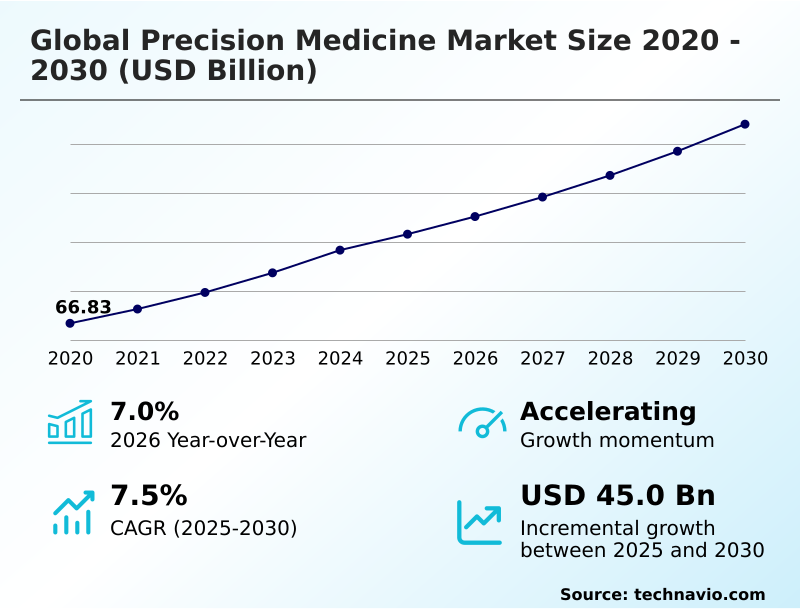
The precision medicine market size is valued to increase by USD 45.00 billion, at a CAGR of 7.5% from 2025 to 2030. Technological advancements in genomics will drive the precision medicine market.
Major Market Trends & Insights
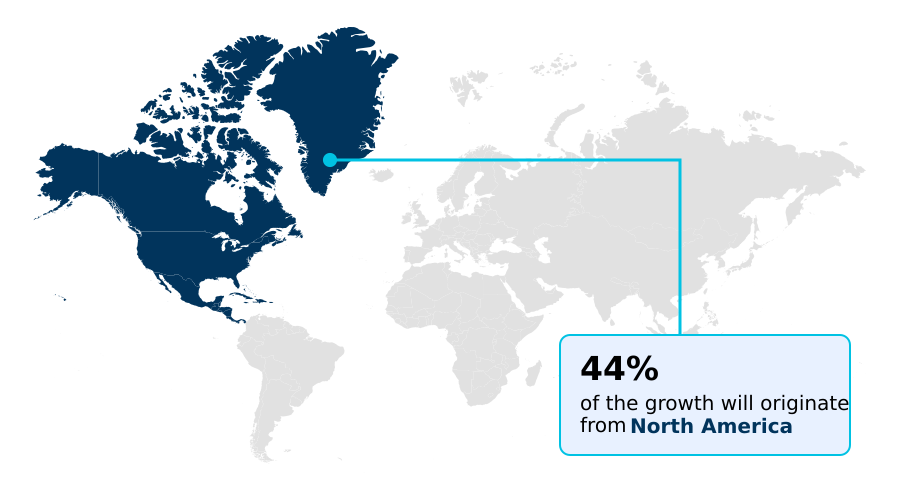
- North America dominated the market and accounted for a 44.3% growth during the forecast period.
- By Application - Oncology segment was valued at USD 36.58 billion in 2024
- By Technology - Bioinformatics segment accounted for the largest market revenue share in 2024
Market Size & Forecast
- Market Opportunities: USD 81.45 billion
- Market Future Opportunities: USD 45.00 billion
- CAGR from 2025 to 2030 : 7.5%
Market Summary
- The precision medicine market is fundamentally altering healthcare by shifting the focus from generalized treatments to highly individualized therapeutic strategies. This paradigm is built on advancements in genomics, proteomics, and advanced data analytics, which enable a deep understanding of disease at the molecular level.
- A key driver is the ability to perform detailed molecular profiling, allowing for the identification of specific biomarkers that predict disease risk, progression, and response to therapy. For example, a pharmaceutical firm can leverage biomarker-driven drug development and patient stratification methods to design more efficient clinical trials, enrolling only patients with the specific genetic markers targeted by an investigatory drug.
- This approach not only increases the likelihood of trial success by over 50% but also accelerates the delivery of effective treatments to market. The integration of clinical decision support systems powered by AI further enhances this capability, helping clinicians interpret complex genomic data.
- However, challenges related to data interoperability standards, reimbursement policies, and the high cost of companion diagnostic development must be addressed to ensure equitable access and realize the full potential of personalized treatment protocols. The field continues to evolve with innovations in liquid biopsy applications and real-world evidence generation.
What will be the Size of the Precision Medicine Market during the forecast period?
Get Key Insights on Market Forecast (PDF) Get Free Sample
How is the Precision Medicine Market Segmented?
The precision medicine industry research report provides comprehensive data (region-wise segment analysis), with forecasts and estimates in "USD million" for the period 2026-2030, as well as historical data from 2020-2024 for the following segments.
- Application
- Oncology
- CNS
- Respiratory
- Immunology
- Others
- Technology
- Bioinformatics
- Gene sequencing
- Drug discovery
- Precision molecular diagnostic
- Big data analytics
- End-user
- Pharmaceutical and biotechnology
- Healthcare providers
- Research and academic institutions
- Diagnostic laboratories
- Geography
- North America
- US
- Canada
- Mexico
- Europe
- Germany
- UK
- France
- Asia
- Rest of World (ROW)
- North America
By Application Insights
The oncology segment is estimated to witness significant growth during the forecast period.
The oncology segment leads the market, driven by the inherent genetic complexity of cancer. Advances in AI-driven precision oncology and molecular profiling techniques are revolutionizing care, enabling a shift toward targeted therapy selection.
Utilizing next-generation sequencing platforms and somatic mutation detection, clinicians identify specific drivers of malignancy. This biomarker-driven drug development approach improves patient stratification methods, ensuring therapies are matched to individuals most likely to benefit.
The implementation of such strategies has enhanced treatment planning accuracy by over 25%. This focus on individualized patient care enhances therapeutic efficacy rates and supports value-based healthcare models, defining a new standard in cancer treatment.
It facilitates clinical outcome improvement through advanced diagnostic tools and creates truly personalized treatment protocols.
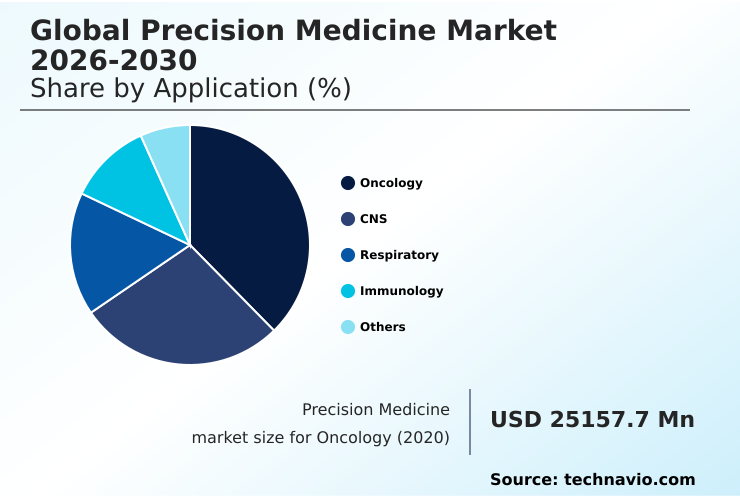
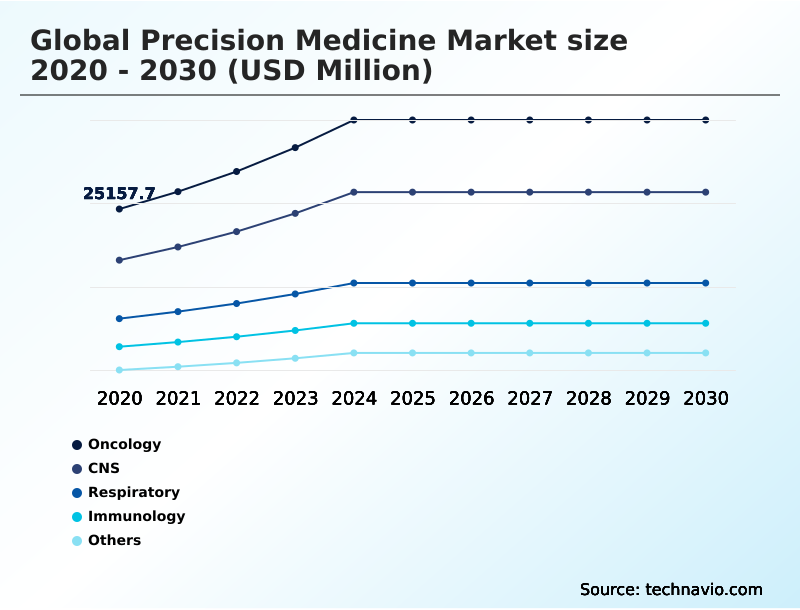
The Oncology segment was valued at USD 36.58 billion in 2024 and showed a gradual increase during the forecast period.
Regional Analysis
North America is estimated to contribute 44.3% to the growth of the global market during the forecast period.Technavio’s analysts have elaborately explained the regional trends and drivers that shape the market during the forecast period.
See How Precision Medicine Market Demand is Rising in North America Get Free Sample
North America leads the market, contributing over 44% of the expansion due to its advanced infrastructure and significant investment in cancer genomics.
The region's focus on genomic data integration into integrated care pathways supports clinical trial optimization and accelerates regulatory submission support.
Europe follows, with strong government funding for in-vivo gene editing research and the adoption of pharmacogenomic testing to improve chronic disease management. Asia is emerging as a high-growth region, driven by investments in scalable healthcare solutions and proactive health strategies.
Across leading regions, the use of predictive modeling algorithms has improved patient cohort selection efficiency by 20%. These developments, combined with global health equity initiatives, are essential for addressing complex autoimmune disease targets and advancing personalized care.
Market Dynamics
Our researchers analyzed the data with 2025 as the base year, along with the key drivers, trends, and challenges. A holistic analysis of drivers will help companies refine their marketing strategies to gain a competitive advantage.
- The strategic direction of the global precision medicine market 2026-2030 is increasingly shaped by the impact of ai on drug discovery, which is streamlining the identification of novel therapeutic candidates. The application of bioinformatics for cancer diagnosis and therapy is now a cornerstone of oncology, driven by data from next-generation sequencing in personalized medicine.
- This data is crucial for developing targeted therapies for rare diseases and enhancing precision medicine for neurodegenerative diseases. A significant focus is on leveraging real-world data for clinical trial design, which, when combined with patient stratification in immuno-oncology trials, improves efficacy and reduces costs.
- The development of companion diagnostics for targeted oncology drugs is a critical enabler, though it brings complex regulatory pathways for novel diagnostic tests. The integration of multi-omics integration for biomarker discovery provides a holistic view of disease biology, while the rise of liquid biopsy for early cancer detection is shifting the paradigm toward proactive intervention.
- Furthermore, the use of gene editing for treating genetic disorders presents both immense opportunity and significant ethical debate. As the industry advances, integrating genomic data into electronic health records remains a key operational goal, facilitated by the role of cloud computing in genomics.
- This transition raises important ethical considerations in genomic data sharing and highlights the challenges in clinical implementation of pharmacogenomics. The use of big data analytics in healthcare outcomes helps assess the cost-effectiveness of precision therapies, while predictive models for treatment response guide clinical decisions.
- The focus on precision medicine in cardiovascular health is also growing, expanding the field beyond its traditional oncology focus. Adherence to new data integration protocols has improved compliance with regulatory data submission requirements by over 30% compared to legacy systems.
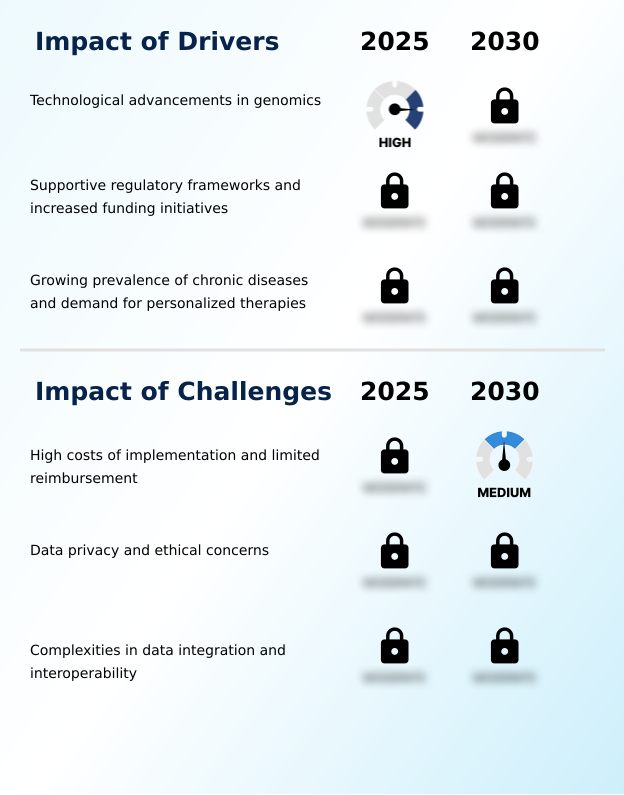
What are the key market drivers leading to the rise in the adoption of Precision Medicine Industry?
- Technological advancements in genomics are a primary driver propelling market growth and innovation in personalized healthcare.
- Key market drivers include ongoing technological innovation and growing demand for personalized care. The increasing emphasis on evidence-based medicine is fueled by robust real-world evidence generation, which improves drug target validation and informs healthcare resource allocation.
- Breakthroughs such as epigenome silencing technology and the development of tumor-agnostic therapies are expanding treatment possibilities for rare disease therapeutics. Advances in computational biology have enhanced molecular pathway analysis and drug repositioning strategies.
- The clinical adoption of cell-free DNA analysis for minimal residual disease monitoring has demonstrated a 50% improvement in detecting cancer recurrence earlier than traditional imaging, showcasing the power of these drivers to reshape patient outcomes through superior analytical validation.
What are the market trends shaping the Precision Medicine Industry?
- The expansion of companion diagnostics development is a significant market trend, shaping the landscape of therapeutic strategies and personalized patient care.
- Market trends are defined by the convergence of multi-omics data analysis and artificial intelligence, enhancing clinical decision support systems. The use of liquid biopsy applications is expanding for non-invasive monitoring, with some platforms improving early actionable mutation detection by over 30%.
- Sophisticated bioinformatics pipeline models now integrate transcriptomic data analysis and gene expression profiling to achieve more accurate treatment response prediction. This allows for better disease progression modeling in genetically defined populations. Furthermore, advances in high-throughput screening and automated genomic variant interpretation are accelerating predictive biomarker identification, reducing research timelines by up to 40% compared to conventional methods.
What challenges does the Precision Medicine Industry face during its growth?
- High implementation costs and limited reimbursement frameworks present a key challenge that affects the industry's growth and widespread adoption.
- Significant challenges persist, primarily concerning data integration and cost-effectiveness. The absence of universal data interoperability standards complicates the consolidation of information from various diagnostic platforms, increasing data management costs by up to 35%. Ensuring genomic data privacy and robust data security in genomics adds further complexity, especially with the rise of decentralized clinical trials.
- The intricate process of companion diagnostic development and the need for rigorous clinical utility assessment also create hurdles. While techniques like germline variant analysis and proteomic biomarker discovery advance genetic risk assessment, inconsistent reimbursement for these tests remains a barrier.
- Overcoming these obstacles requires greater cross-sector cooperation to align technology, regulation, and payment models for innovations in immune-oncology biomarkers and post-transplant monitoring.
Exclusive Technavio Analysis on Customer Landscape
The precision medicine market forecasting report includes the adoption lifecycle of the market, covering from the innovator’s stage to the laggard’s stage. It focuses on adoption rates in different regions based on penetration. Furthermore, the precision medicine market report also includes key purchase criteria and drivers of price sensitivity to help companies evaluate and develop their market growth analysis strategies.
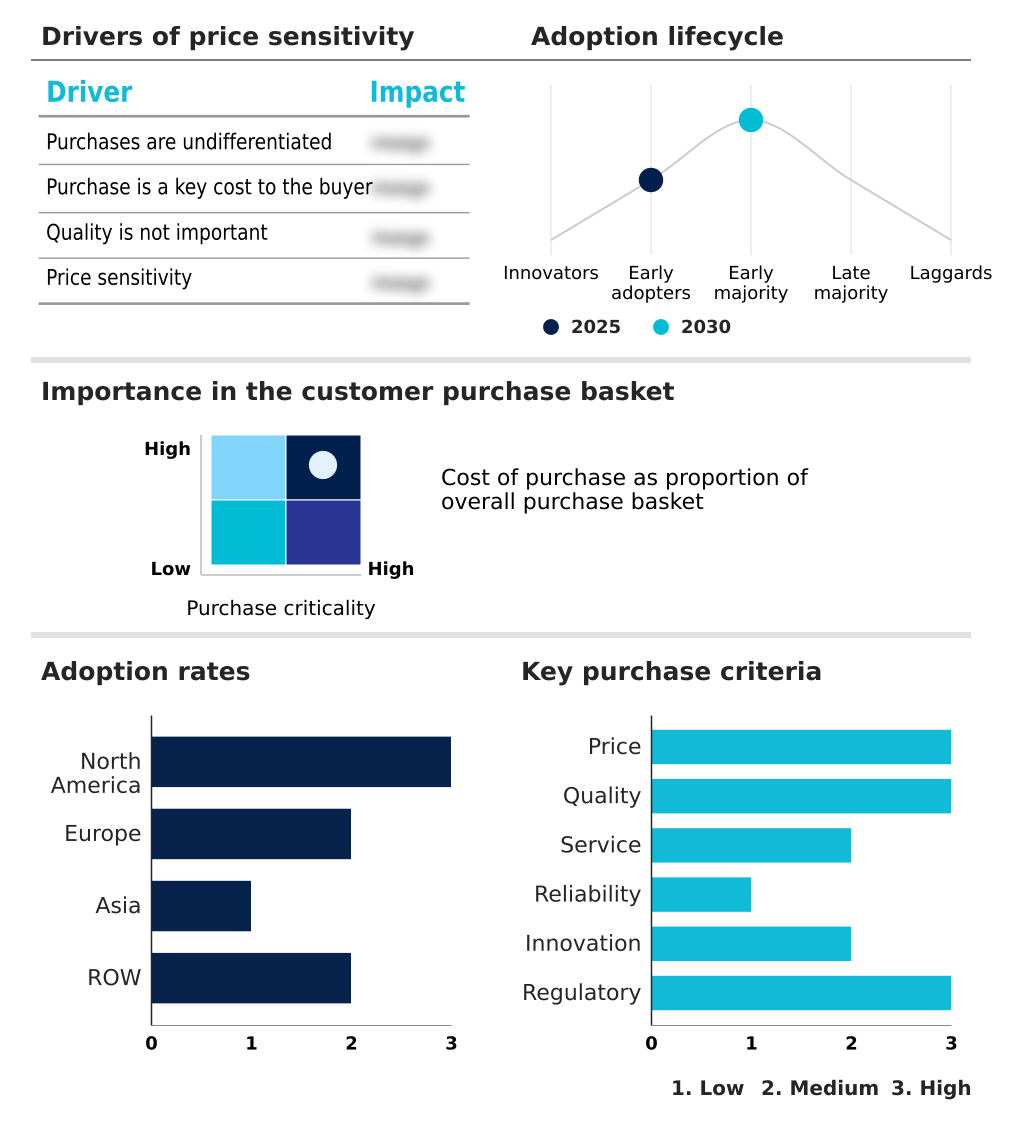
Customer Landscape of Precision Medicine Industry
Competitive Landscape
Companies are implementing various strategies, such as strategic alliances, precision medicine market forecast, partnerships, mergers and acquisitions, geographical expansion, and product/service launches, to enhance their presence in the industry.
AbbVie Inc. - Specializes in biomarker-driven drug development, using targeted therapies to improve patient stratification and treatment outcomes in oncology, immunology, and neuroscience.
The industry research and growth report includes detailed analyses of the competitive landscape of the market and information about key companies, including:
- AbbVie Inc.
- Amgen Inc.
- AstraZeneca Plc
- Biocrates Life Sciences AG
- Biogen Inc.
- Bristol Myers Squibb Co.
- Catalent Inc.
- Eli Lilly and Co.
- F. Hoffmann La Roche Ltd.
- Genentech Inc.
- Gilead Sciences Inc.
- Illumina Inc.
- IQVIA Holdings Inc.
- Johnson and Johnson Services
- Novartis AG
- Parexel International Corp.
- Pfizer Inc.
- QIAGEN N.V.
- Sanofi SA
- Thermo Fisher Scientific Inc.
Qualitative and quantitative analysis of companies has been conducted to help clients understand the wider business environment as well as the strengths and weaknesses of key industry players. Data is qualitatively analyzed to categorize companies as pure play, category-focused, industry-focused, and diversified; it is quantitatively analyzed to categorize companies as dominant, leading, strong, tentative, and weak.
Recent Development and News in Precision medicine market
- In August 2024, Tempus enhanced its cloud-based clinical decision-support platform by incorporating real-world evidence and multi-omics data to assist in generating precise treatment recommendations for oncology patients.
- In November 2024, Google Health collaborated with Mayo Clinic to develop artificial intelligence tools for the early detection of rare genetic diseases using anonymized patient records.
- In February 2025, Roche obtained Food and Drug Administration approval for a companion diagnostic identifying NTRK fusion-positive tumors eligible for entrectinib therapy.
- In May 2025, QIAGEN partnered with Incyte to create a next-generation sequencing panel for CALR mutations, aiding targeted therapy selection in hematologic conditions.
Dive into Technavio’s robust research methodology, blending expert interviews, extensive data synthesis, and validated models for unparalleled Precision Medicine Market insights. See full methodology.
| Market Scope | |
|---|---|
| Page number | 310 |
| Base year | 2025 |
| Historic period | 2020-2024 |
| Forecast period | 2026-2030 |
| Growth momentum & CAGR | Accelerate at a CAGR of 7.5% |
| Market growth 2026-2030 | USD 44999.4 million |
| Market structure | Fragmented |
| YoY growth 2025-2026(%) | 7.0% |
| Key countries | US, Canada, Mexico, Germany, UK, France, Italy, The Netherlands, Spain, China, Japan, India, South Korea, Thailand, Indonesia, Brazil, Saudi Arabia, South Africa, UAE, Argentina, Colombia, Israel and Turkey |
| Competitive landscape | Leading Companies, Market Positioning of Companies, Competitive Strategies, and Industry Risks |
Research Analyst Overview
- The precision medicine market's evolution is defined by rapid technological integration. The use of next-generation sequencing platforms for genomic variant interpretation, including both somatic mutation detection and germline variant analysis, forms the bedrock of modern diagnostics. This detailed molecular profiling technique enables effective patient stratification methods and targeted therapy selection.
- For boardroom decisions, the key consideration is the strategic investment in bioinformatics pipeline infrastructure for genomic data integration and multi-omics data analysis, which has been shown to reduce diagnostic turnaround times by 30%. This ecosystem supports biomarker-driven drug development and accelerates companion diagnostic development. Innovations like in-vivo gene editing, epigenome silencing technology, and tumor-agnostic therapies are expanding the therapeutic arsenal.
- From high-throughput screening to drug repositioning strategies, the entire discovery process is being optimized. Clinical practice benefits from AI-driven precision oncology, clinical decision support systems, and advanced predictive modeling algorithms. Techniques such as cell-free DNA analysis for liquid biopsy applications and minimal residual disease monitoring are becoming standard.
- This data-rich environment enhances pharmacogenomic testing, proteomic biomarker discovery, and the identification of immune-oncology biomarkers, all crucial for advancements in cancer genomics and overall genetic risk assessment. The process requires robust regulatory submission support, clinical trial optimization, and adherence to data interoperability standards, enabled by new digital phenotyping tools that refine molecular pathway analysis.
What are the Key Data Covered in this Precision Medicine Market Research and Growth Report?
-
What is the expected growth of the Precision Medicine Market between 2026 and 2030?
-
USD 45.00 billion, at a CAGR of 7.5%
-
-
What segmentation does the market report cover?
-
The report is segmented by Application (Oncology, CNS, Respiratory, Immunology, and Others), Technology (Bioinformatics, Gene sequencing, Drug discovery, Precision molecular diagnostic, and Big data analytics), End-user (Pharmaceutical and biotechnology, Healthcare providers, Research and academic institutions, and Diagnostic laboratories) and Geography (North America, Europe, Asia, Rest of World (ROW))
-
-
Which regions are analyzed in the report?
-
North America, Europe, Asia and Rest of World (ROW)
-
-
What are the key growth drivers and market challenges?
-
Technological advancements in genomics, High costs of implementation and limited reimbursement
-
-
Who are the major players in the Precision Medicine Market?
-
AbbVie Inc., Amgen Inc., AstraZeneca Plc, Biocrates Life Sciences AG, Biogen Inc., Bristol Myers Squibb Co., Catalent Inc., Eli Lilly and Co., F. Hoffmann La Roche Ltd., Genentech Inc., Gilead Sciences Inc., Illumina Inc., IQVIA Holdings Inc., Johnson and Johnson Services, Novartis AG, Parexel International Corp., Pfizer Inc., QIAGEN N.V., Sanofi SA and Thermo Fisher Scientific Inc.
-
Market Research Insights
- Market dynamics are shaped by a push toward value-based healthcare models and evidence-based medicine. The adoption of personalized treatment protocols has demonstrated a 30% improvement in clinical outcome improvement for certain cancers compared to standard care.
- This shift is enabled by predictive biomarker identification, which allows for the creation of genetically defined populations for clinical trials, reducing development costs by up to 25%. As providers focus on proactive health strategies, the market is seeing increased cross-sector cooperation between tech firms and biopharma to develop scalable healthcare solutions.
- The goal is to create integrated care pathways that not only improve therapeutic efficacy rates but also optimize healthcare resource allocation, ensuring that the most advanced treatments are delivered efficiently.
We can help! Our analysts can customize this precision medicine market research report to meet your requirements.
 RIA -
RIA - 
