



Professional Development Market Size 2026-2030
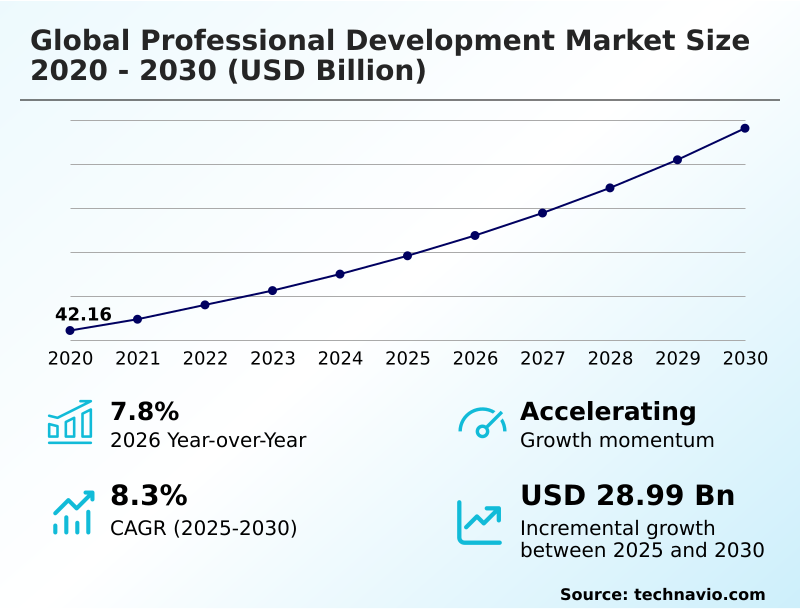
The professional development market size is valued to increase by USD 28.99 billion, at a CAGR of 8.3% from 2025 to 2030. Rapid generative AI workplace disruption will drive the professional development market.
Major Market Trends & Insights
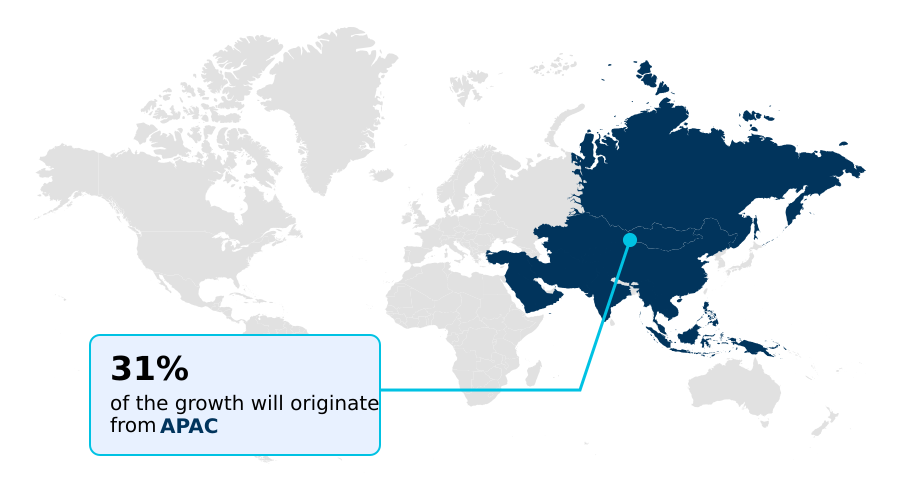
- APAC dominated the market and accounted for a 30.6% growth during the forecast period.
- By Type - Online segment was valued at USD 43.73 billion in 2024
- By End-user - K-12 segment accounted for the largest market revenue share in 2024
Market Size & Forecast
- Market Opportunities: USD 45.97 billion
- Market Future Opportunities: USD 28.99 billion
- CAGR from 2025 to 2030 : 8.3%
Market Summary
- The professional development market encompasses a dynamic range of educational services and digital tools designed to enhance workforce competencies. It moves beyond traditional corporate training initiatives, embracing continuous learning models that are essential for career advancement and organizational agility in a rapidly evolving economic landscape.
- A key driver is the integration of technologies like AI, which necessitates widespread digital literacy programs and technical skills acquisition. For instance, a manufacturing firm transitioning to a smart factory model leverages specialized professional development to upskill its technicians.
- Through targeted on-the-job training modules and competency-based training in data analytics and IoT systems, the company ensures its workforce can manage automated production lines and make data-driven decisions. This strategic investment not only improves operational efficiency but also fosters a culture of innovation and future of work readiness, making talent attraction and retention a significant competitive advantage.
- The market is increasingly characterized by a demand for measurable outcomes, personalized learning paths, and flexible delivery formats that cater to a diverse and globally distributed workforce.
What will be the Size of the Professional Development Market during the forecast period?
Get Key Insights on Market Forecast (PDF) Get Free Sample
How is the Professional Development Market Segmented?
The professional development industry research report provides comprehensive data (region-wise segment analysis), with forecasts and estimates in "USD million" for the period 2026-2030, as well as historical data from 2020-2024 for the following segments.
- Type
- Online
- Offline
- End-user
- K-12
- Higher education
- Pre K-12
- Component
- Services
- Software
- Geography
- North America
- US
- Canada
- Mexico
- Europe
- Germany
- UK
- France
- APAC
- China
- Japan
- India
- South America
- Brazil
- Argentina
- Middle East and Africa
- Saudi Arabia
- UAE
- South Africa
- Rest of World (ROW)
- North America
By Type Insights
The online segment is estimated to witness significant growth during the forecast period.
The online segment is defined by the delivery of continuing education courses via digital channels. The widespread adoption of high-speed internet enables mobile learning consumption and asynchronous learning models, offering flexibility for professionals.
These corporate training solutions utilize cloud-based learning management and talent management software for scalability and accessibility. Many organizations now leverage skill gap analysis and create personalized learning paths, which enhances user experience.
The integration of gamification in learning and digital badges on employee engagement platforms further boosts motivation and provides verifiable proof of skill mastery, improving completion rates by over 25%.
This shift toward blended learning approaches is critical for achieving future of work readiness.
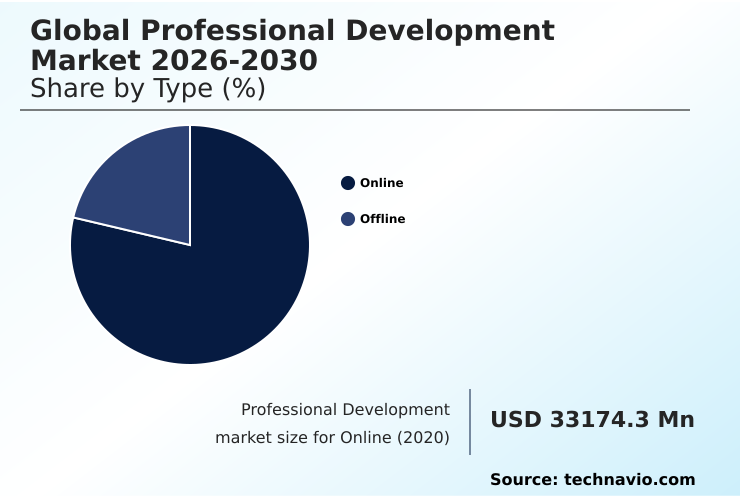
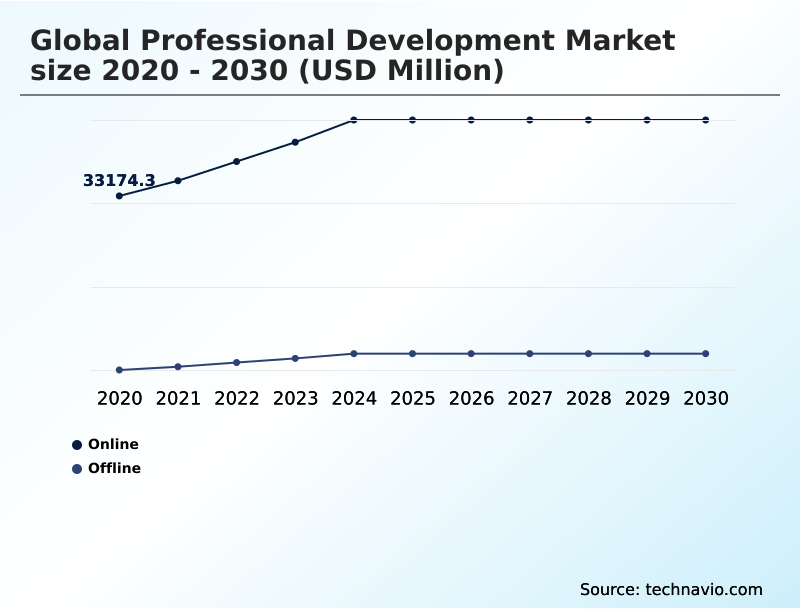
The Online segment was valued at USD 43.73 billion in 2024 and showed a gradual increase during the forecast period.
Regional Analysis
APAC is estimated to contribute 30.6% to the growth of the global market during the forecast period.Technavio’s analysts have elaborately explained the regional trends and drivers that shape the market during the forecast period.
See How Professional Development Market Demand is Rising in APAC Get Free Sample
The market exhibits distinct regional dynamics, with North America representing a mature landscape focused on talent attraction and retention through advanced corporate training initiatives. The region's investment in adaptive learning technology and executive coaching services is substantial.
In contrast, the APAC region is projected to be the fastest-growing, contributing over 30% of the market's incremental growth as developing economies prioritize digital literacy programs and vocational certifications to achieve workforce excellence.
European markets emphasize government-supported lifelong learning and cross-cultural communication training.
Across all regions, a focus on measurable outcomes drives demand for data-driven consulting to ensure training investments in areas like social emotional learning and synchronous learning models deliver tangible results and prepare the workforce for the future.
Market Dynamics
Our researchers analyzed the data with 2025 as the base year, along with the key drivers, trends, and challenges. A holistic analysis of drivers will help companies refine their marketing strategies to gain a competitive advantage.
- Strategic decision-making in the professional development market requires a nuanced understanding of evolving educational paradigms. The debate over online versus offline professional development continues, though blended models are gaining traction to accommodate diverse learning preferences. A primary catalyst for change is the profound impact of AI on workforce skills, which compels organizations to rethink their training frameworks.
- Forward-thinking companies are exploring the benefits of microlearning in corporate training to deliver timely, digestible content. Simultaneously, they are integrating AR and VR in education to create immersive learning experiences. However, these initiatives are not without challenges. Measuring ROI of leadership development remains complex, and many organizations grapple with the high cost of employee upskilling programs.
- The challenges in digital learning adoption must be carefully managed. The role of AI in personalized learning is pivotal, enabling adaptive educational journeys. A key focus is on developing soft skills for remote teams. Successful strategies depend on data-driven skills taxonomy mapping and using analytics to track learner progress, which have been shown to improve training effectiveness.
- Firms are also exploring blockchain for verifying academic credentials to ensure the integrity of the future of professional certifications, all while managing cognitive load in continuous learning.
- Gamification strategies for employee engagement, corporate ESG and diversity training, and adhering to best practices for virtual instructor-led training are essential for building a resilient and adaptable workforce and creating a culture of lifelong learning to master upskilling for digital transformation.
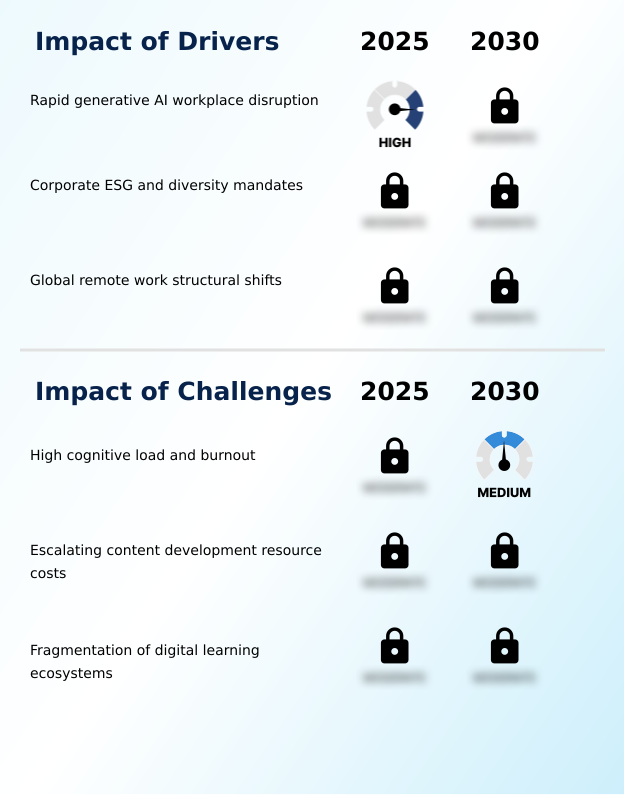
What are the key market drivers leading to the rise in the adoption of Professional Development Industry?
- The rapid disruption of the workplace by generative AI is a key driver for the market, creating an urgent need for large-scale workforce reskilling and upskilling.
- The unprecedented disruption from generative AI is fueling extensive workforce reskilling initiatives. With approximately 40% of work hours impacted, organizations are prioritizing generative AI training and digital transformation training to maintain competitiveness.
- This requires a shift to continuous learning models focused on technical skills acquisition. Companies are implementing competency-based training and digital literacy programs to ensure employees can leverage new tools for a potential 30% gain in operational efficiency.
- Effective human capital management and strategic workforce planning now rely on workforce analytics to guide investments in IT skills training programs. Many firms partner with providers of managed learning services to deploy AI-powered coaching at scale.
What are the market trends shaping the Professional Development Industry?
- The integration of microlearning and nano-credentialing is emerging as a significant market trend. This approach addresses the demand for efficient, just-in-time skill acquisition in fast-paced professional environments.
- A significant shift is occurring toward microlearning and nano credentialing as core employee upskilling strategies. Organizations are allocating their learning and development (L&D) budget to build digital learning ecosystems that deliver content in short, manageable formats. This approach, supported by effective instructional design, improves knowledge retention by up to 20%.
- Learning experience platforms are central to this trend, offering custom curriculum design for targeted soft skills development. Furthermore, the use of extended reality simulation and augmented reality training creates immersive environments for practical skill acquisition. These dynamic career advancement pathways are often secured with blockchain credential verification, ensuring a tamper-proof record of achievement.
What challenges does the Professional Development Industry face during its growth?
- A key challenge affecting industry growth is the high cognitive load and employee burnout resulting from the relentless pressure to upskill in response to rapid technological change.
- The constant pressure to upskill presents a significant challenge, leading to high cognitive load and burnout. This state of digital exhaustion can reduce information retention by over 30%, undermining the return on training investment. Organizations struggle to balance on-the-job training modules and formal talent development solutions with employee well-being.
- A fragmented ecosystem complicates organizational development, making it difficult to integrate team collaboration tools with leadership development content or sales effectiveness programs. While compliance training automation and virtual instructor-led training offer efficiency, their overuse can contribute to disengagement.
- Addressing this requires a holistic strategy that incorporates peer-to-peer mentoring and effective change management training alongside structured performance improvement workshops and executive leadership programs.
Exclusive Technavio Analysis on Customer Landscape
The professional development market forecasting report includes the adoption lifecycle of the market, covering from the innovator’s stage to the laggard’s stage. It focuses on adoption rates in different regions based on penetration. Furthermore, the professional development market report also includes key purchase criteria and drivers of price sensitivity to help companies evaluate and develop their market growth analysis strategies.
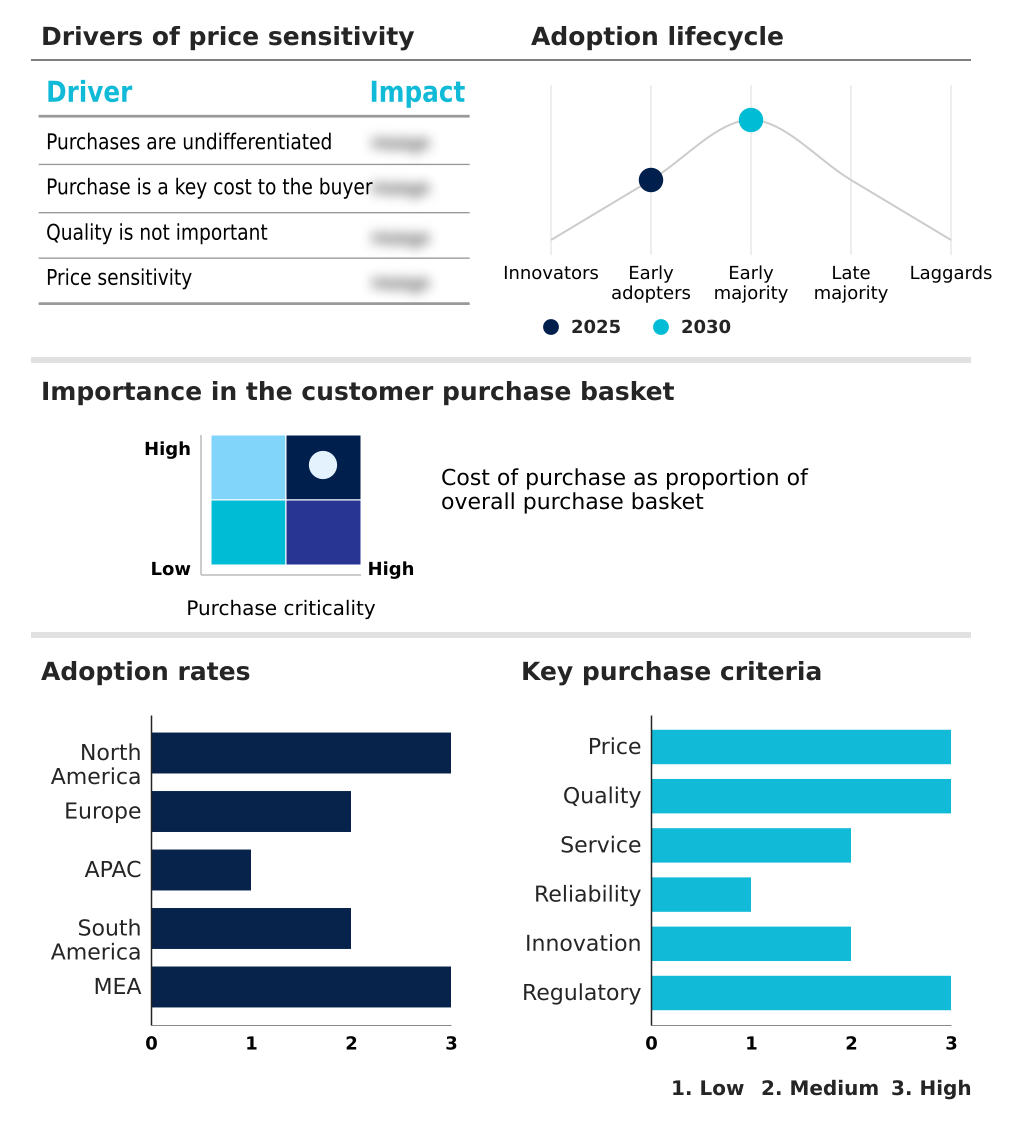
Customer Landscape of Professional Development Industry
Competitive Landscape
Companies are implementing various strategies, such as strategic alliances, professional development market forecast, partnerships, mergers and acquisitions, geographical expansion, and product/service launches, to enhance their presence in the industry.
Center for Creative Leadership - Provides on-demand access to university-partnered certificate programs and subscription-based learning for career advancement and skill acquisition.
The industry research and growth report includes detailed analyses of the competitive landscape of the market and information about key companies, including:
- Center for Creative Leadership
- Cornerstone OnDemand Inc.
- Coursera Inc.
- Cross Knowledge
- D2L Corp.
- Dale Carnegie and Associates
- Franklin Covey Co.
- General Assembly Space Inc.
- GP Strategies Corp.
- Harvard Business Publishing
- Imparta Ltd.
- Microsoft Corp.
- NIIT Ltd.
- Pearson Plc
- Pluralsight LLC
- Simplilearn Solutions Pvt. Ltd.
- Skillsoft Corp.
- Udacity Inc.
- Udemy Inc.
- Wilson Learning Worldwide Inc.
Qualitative and quantitative analysis of companies has been conducted to help clients understand the wider business environment as well as the strengths and weaknesses of key industry players. Data is qualitatively analyzed to categorize companies as pure play, category-focused, industry-focused, and diversified; it is quantitatively analyzed to categorize companies as dominant, leading, strong, tentative, and weak.
Recent Development and News in Professional development market
- In October, 2024, Skillsoft Corp. introduced its new artificial intelligence based coaching tool to enhance leadership development and provide personalized guidance to professionals across global enterprises.
- In November, 2024, Cornerstone OnDemand Inc. announced a strategic partnership with a leading data analytics firm to integrate advanced skills taxonomy mapping into its talent management platform, enabling predictive career pathing for employees.
- In January, 2025, Udemy Inc. completed the acquisition of a virtual reality training startup, signaling a major investment in immersive extended reality simulation training for technical and soft skills.
- In April, 2025, Franklin Covey Co. launched a new suite of professional development courses focused on corporate ESG and diversity mandates, designed to help organizations meet their sustainability and inclusion goals.
Dive into Technavio’s robust research methodology, blending expert interviews, extensive data synthesis, and validated models for unparalleled Professional Development Market insights. See full methodology.
| Market Scope | |
|---|---|
| Page number | 279 |
| Base year | 2025 |
| Historic period | 2020-2024 |
| Forecast period | 2026-2030 |
| Growth momentum & CAGR | Accelerate at a CAGR of 8.3% |
| Market growth 2026-2030 | USD 28988.9 million |
| Market structure | Fragmented |
| YoY growth 2025-2026(%) | 7.8% |
| Key countries | US, Canada, Mexico, Germany, UK, France, Italy, Spain, The Netherlands, China, Japan, India, South Korea, Australia, Indonesia, Brazil, Argentina, Chile, Saudi Arabia, UAE, South Africa, Israel and Turkey |
| Competitive landscape | Leading Companies, Market Positioning of Companies, Competitive Strategies, and Industry Risks |
Research Analyst Overview
- The market is pivoting from episodic corporate training initiatives to continuous learning models built on adaptive learning technology. Boardroom strategy is now shaped by the productivity gains from generative AI training, as AI tools can automate up to 50% of routine tasks, compelling investment in digital transformation training.
- This shift is operationalized through cloud-based learning management systems and dynamic learning experience platforms. Modern instructional design leverages workforce analytics for skills taxonomy mapping, creating personalized learning paths. Delivery combines asynchronous learning models with synchronous learning models like virtual instructor-led training.
- Microlearning and nano credentialing, often secured with blockchain credential verification and issued as digital badges, enable rapid technical skills acquisition. Immersive extended reality simulation, gamification in learning, and AI-powered coaching are becoming standard. Talent development solutions now integrate peer-to-peer mentoring with leadership development content, while compliance training automation ensures efficiency.
What are the Key Data Covered in this Professional Development Market Research and Growth Report?
-
What is the expected growth of the Professional Development Market between 2026 and 2030?
-
USD 28.99 billion, at a CAGR of 8.3%
-
-
What segmentation does the market report cover?
-
The report is segmented by Type (Online, and Offline), End-user (K-12, Higher education, and Pre K-12), Component (Services, and Software) and Geography (North America, Europe, APAC, South America, Middle East and Africa)
-
-
Which regions are analyzed in the report?
-
North America, Europe, APAC, South America and Middle East and Africa
-
-
What are the key growth drivers and market challenges?
-
Rapid generative AI workplace disruption, High cognitive load and burnout
-
-
Who are the major players in the Professional Development Market?
-
Center for Creative Leadership, Cornerstone OnDemand Inc., Coursera Inc., Cross Knowledge, D2L Corp., Dale Carnegie and Associates, Franklin Covey Co., General Assembly Space Inc., GP Strategies Corp., Harvard Business Publishing, Imparta Ltd., Microsoft Corp., NIIT Ltd., Pearson Plc, Pluralsight LLC, Simplilearn Solutions Pvt. Ltd., Skillsoft Corp., Udacity Inc., Udemy Inc. and Wilson Learning Worldwide Inc.
-
Market Research Insights
- The market is shaped by a strategic shift toward data-driven employee upskilling strategies and integrated digital learning ecosystems. Organizations are moving beyond conventional leadership development programs to adopt continuous learning models that foster workforce excellence.
- This pivot is fueled by measurable business outcomes; for example, microlearning approaches have been shown to improve knowledge retention by up to 20%, directly impacting return on training investment.
- Furthermore, the drive to adopt AI tools is motivated by the potential for a 30% increase in operational efficiency, a gain only achievable through effective workforce reskilling initiatives and change management training. These dynamics underscore the critical role of strategic workforce planning in achieving and sustaining a competitive advantage.
We can help! Our analysts can customize this professional development market research report to meet your requirements.
 RIA -
RIA - 
