


Radio Frequency Identification (RFID) Market Size 2026-2030
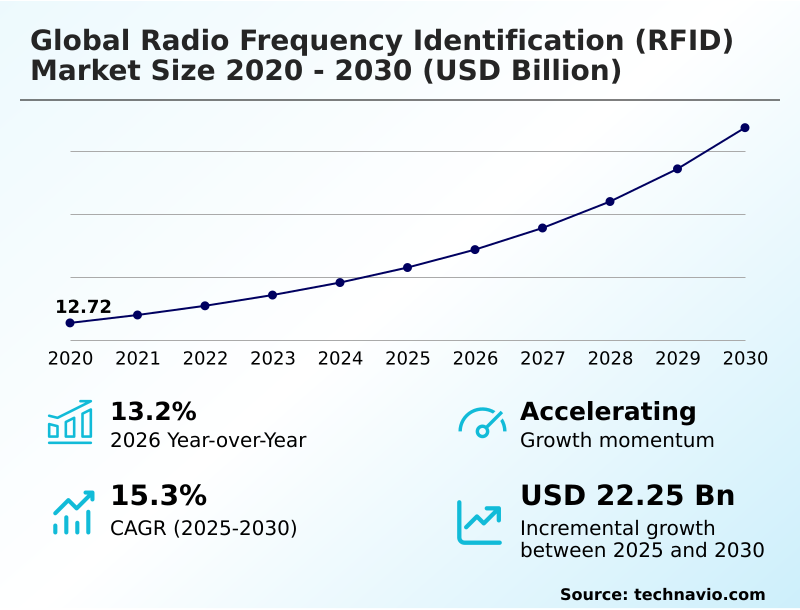
The radio frequency identification (rfid) market size is valued to increase by USD 22.25 billion, at a CAGR of 15.3% from 2025 to 2030. Increasing demand for supply chain visibility and inventory management efficiency will drive the radio frequency identification (rfid) market.
Major Market Trends & Insights
- North America dominated the market and accounted for a 41.6% growth during the forecast period.
- By Product - RFID tags segment was valued at USD 7.43 billion in 2024
- By End-user - Industrial segment accounted for the largest market revenue share in 2024
Market Size & Forecast
- Market Opportunities: USD 31.06 billion
- Market Future Opportunities: USD 22.25 billion
- CAGR from 2025 to 2030 : 15.3%
Market Summary
- The radio frequency identification (RFID) market is undergoing significant growth, driven by the escalating need for operational efficiency and data accuracy across industries. This technology, encompassing components like rfid tags and rfid readers, moves beyond simple barcode functionality by enabling automated, non-line-of-sight data capture technology.
- Key drivers include the push for enhanced supply chain visibility, the rise of Industry 4.0, and the demands of omnichannel retail. For instance, a logistics firm can automate its warehouse management by using active rfid systems on forklifts and passive uhf rfid on pallets, achieving a 99% reduction in shipping errors and optimizing workflows in real-time.
- Trends focus on the convergence with IoT and analytics, unlocking predictive insights from the vast data streams. However, the market is not without challenges; high implementation costs, system integration hurdles, and data security concerns can slow adoption. As organizations prioritize digital transformation, the strategic value of rfid in creating resilient and intelligent operations continues to solidify its importance.
- The technology's role in everything from asset tracking to enhancing customer engagement positions it as a cornerstone of modern business.
What will be the Size of the Radio Frequency Identification (RFID) Market during the forecast period?
Get Key Insights on Market Forecast (PDF) Get Free Sample
How is the Radio Frequency Identification (RFID) Market Segmented?
The radio frequency identification (rfid) industry research report provides comprehensive data (region-wise segment analysis), with forecasts and estimates in "USD million" for the period 2026-2030, as well as historical data from 2020-2024 for the following segments.
- Product
- RFID tags
- Middleware
- Passive RFID systems
- Active RFID systems
- End-user
- Industrial
- Retail
- BFSI
- Logistics
- Others
- Frequency range
- High frequency
- Ultra-high frequency
- Low frequency
- Microwave frequency
- Geography
- North America
- US
- Canada
- Mexico
- APAC
- China
- Japan
- India
- Europe
- Germany
- UK
- France
- South America
- Brazil
- Argentina
- Middle East and Africa
- Saudi Arabia
- UAE
- South Africa
- Rest of World (ROW)
- North America
By Product Insights
The rfid tags segment is estimated to witness significant growth during the forecast period.
The market is segmented by its foundational data-carrying components, primarily RFID tags. These devices, consisting of an integrated circuit and antenna, are essential for identification and tracking.
This segment includes passive UHF RFID, which dominates high-volume applications due to low cost and versatility, making it ideal for item-level tagging.
Active tags, with their internal power source, offer extended range for high-value asset monitoring, while semi-passive tags provide a hybrid solution. Innovations focus on miniaturization, enhanced memory, and integrated sensors, expanding applications.
The global radio frequency identification (RFID) market 2026-2030 is witnessing a surge in demand, driven by retail's need for 99% inventory accuracy to support omnichannel fulfillment and enhance operational efficiency.
This precision reduces instances of stockouts by over 20%, directly improving customer engagement and loss prevention.
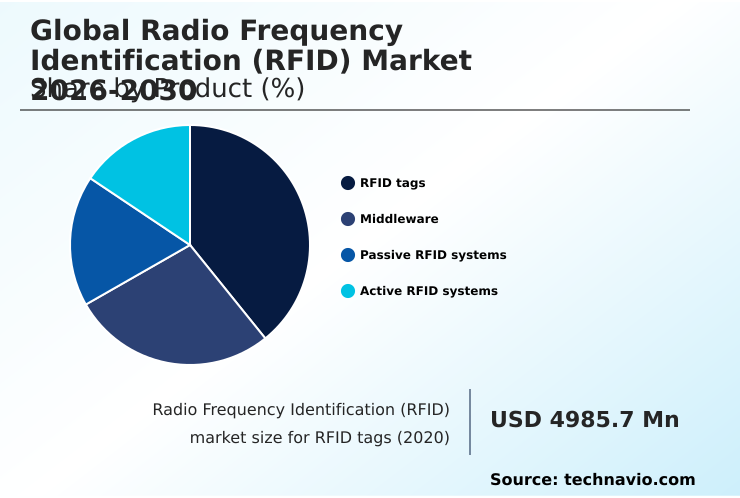
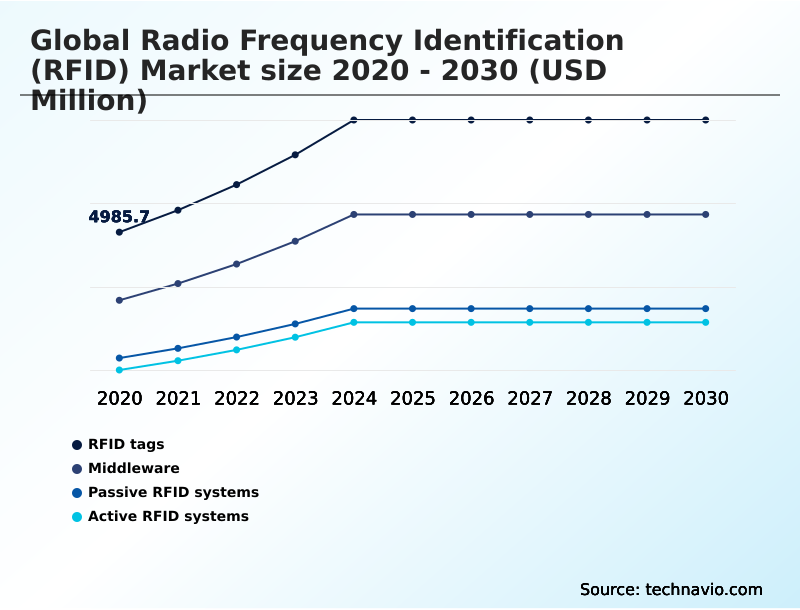
The RFID tags segment was valued at USD 7.43 billion in 2024 and showed a gradual increase during the forecast period.
Regional Analysis
North America is estimated to contribute 41.6% to the growth of the global market during the forecast period.Technavio’s analysts have elaborately explained the regional trends and drivers that shape the market during the forecast period.
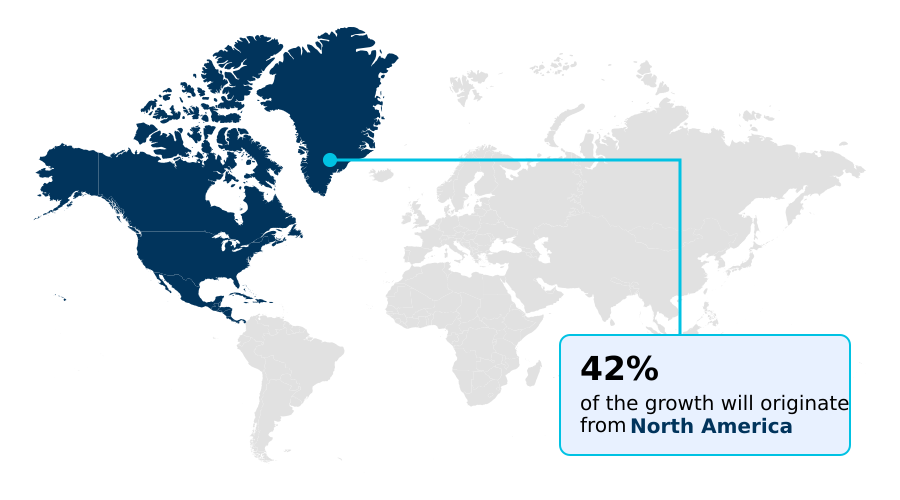
See How Radio Frequency Identification (RFID) Market Demand is Rising in North America Get Free Sample
The global radio frequency identification (RFID) market 2026-2030 exhibits distinct regional dynamics, with North America leading in adoption, accounting for over 41% of the incremental growth. This maturity is driven by large-scale deployments in retail and logistics.
In contrast, APAC is the fastest-growing region, where manufacturing and logistics sectors are leveraging automated data capture to improve efficiency by up to 25%. In Europe, adoption is often spurred by regulatory compliance and sustainability initiatives.
Key applications vary geographically, with livestock management being a significant driver in regions like Australia and South America. Meanwhile, access control systems and electronic toll collection are becoming standard applications globally.
The market for active rfid systems is expanding for high-value asset tracking, while rfid antennas and other hardware components see widespread demand.
Market Dynamics
Our researchers analyzed the data with 2025 as the base year, along with the key drivers, trends, and challenges. A holistic analysis of drivers will help companies refine their marketing strategies to gain a competitive advantage.
- A strategic analysis of rfid for retail inventory accuracy demonstrates its critical role in modern commerce, directly influencing how companies approach rfid for omnichannel retail strategies. The successful application of rfid technology in supply chain operations is now a benchmark for achieving excellence, compelling businesses to explore the full benefits of rfid in logistics.
- This push extends to industrial automation with rfid systems, where the focus is on optimizing warehouse operations with rfid. While many discussions center on a passive vs active rfid comparison, the true value emerges from improving efficiency with rfid middleware and resolving rfid implementation challenges and solutions.
- The scope of rfid applications in healthcare sector is broadening, driven by the need for better tracking and security. Similarly, the use of uhf rfid for asset tracking has become standard for high-value items. This has elevated the conversation around rfid data security and privacy.
- For instance, systems designed for pharmaceutical supply chain security with rfid have shown a reduction in counterfeit incidents that is more than double the effectiveness of legacy methods. This success in combating counterfeits with rfid authentication highlights the technology's security capabilities.
- The expanding role of rfid in industry 4.0 is also evident in how real-time location systems using rfid are integrated. Furthermore, the integration with iot platforms and the use of rfid solutions for tool tracking and livestock traceability using rfid tags are creating new efficiencies. Finally, automating access control with rfid is becoming a foundational security measure.
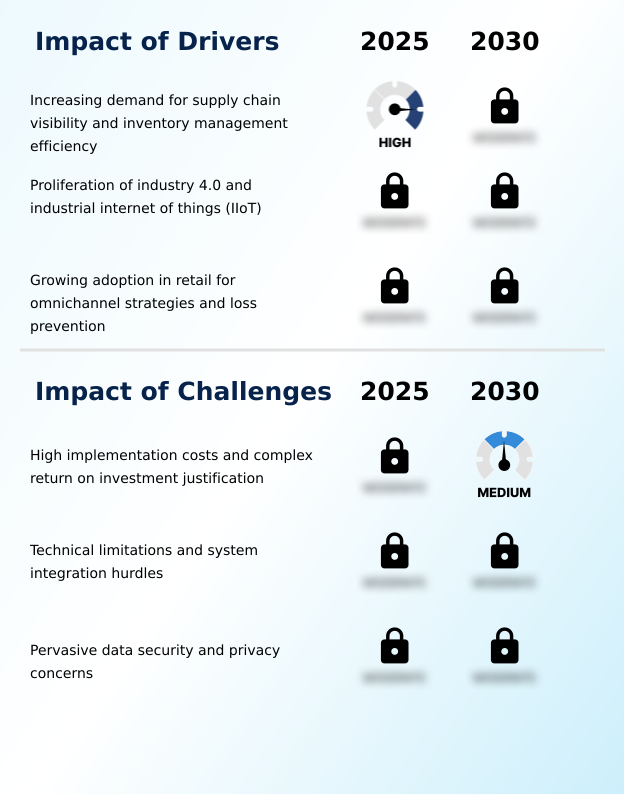
What are the key market drivers leading to the rise in the adoption of Radio Frequency Identification (RFID) Industry?
- The increasing demand for enhanced visibility across the supply chain and greater efficiency in inventory management serves as a key driver for the market.
- Market growth is fundamentally driven by the imperative for enhanced supply chain visibility and operational excellence.
- The proliferation of the industrial internet of things and smart factory automation concepts has made rfid readers and associated technologies essential for modern inventory management.
- In manufacturing, real-time work-in-progress tracking allows for dynamic supply chain optimization, with some firms seeing a 20% improvement in overall equipment effectiveness.
- In logistics, comprehensive warehouse management and yard management systems powered by asset tracking technology can improve shipping accuracy by over 50%.
- These drivers underscore the technology's role not just as a tracking tool, but as a foundational component for building resilient, efficient, and intelligent enterprise operations.
What are the market trends shaping the Radio Frequency Identification (RFID) Industry?
- The convergence of RFID with the Internet of Things and advanced analytics is an upcoming market trend. This integration is transforming RFID from a simple identification tool into a key enabler of intelligent, data-driven environments.
- Key market trends are centered on the convergence of radio frequency identification with advanced digital platforms. The integration with the Internet of Things is enabling sophisticated real-time location systems, crucial for predictive maintenance in industrial settings. In retail, high frequency rfid and near field communication are revolutionizing the customer experience through frictionless checkout and interactive smart fitting rooms.
- Deployments in healthcare have been shown to reduce time spent searching for critical equipment by 30%, directly improving patient care workflows. This contactless communication technology is also pivotal for pharmaceutical traceability and ensuring cold chain logistics integrity. The adoption of rain rfid solutions is expanding, allowing businesses to transform operational data into actionable intelligence and strategic advantages across various sectors.
What challenges does the Radio Frequency Identification (RFID) Industry face during its growth?
- High implementation costs and the complexity of justifying the return on investment represent key challenges affecting the industry's growth.
- Despite its benefits, the market faces significant challenges related to system integration and security. The complexity of rfid middleware required to process data from various data capture technology sources and integrate it into legacy systems remains a primary hurdle. A lack of robust brand protection and counterfeit prevention measures can expose vulnerabilities.
- For instance, without secure identification protocols and advanced rfid chipsets, systems are susceptible to cloning and unauthorized access, undermining their value in applications like document tracking and asset lifecycle management. The costs associated with deploying specialized low frequency rfid for certain environments can be prohibitive, with total ownership costs sometimes 3-5 times the initial hardware expense.
- Furthermore, ensuring the privacy and security of personnel tracking data requires careful design to build trust and meet regulatory standards.
Exclusive Technavio Analysis on Customer Landscape
The radio frequency identification (rfid) market forecasting report includes the adoption lifecycle of the market, covering from the innovator’s stage to the laggard’s stage. It focuses on adoption rates in different regions based on penetration. Furthermore, the radio frequency identification (rfid) market report also includes key purchase criteria and drivers of price sensitivity to help companies evaluate and develop their market growth analysis strategies.
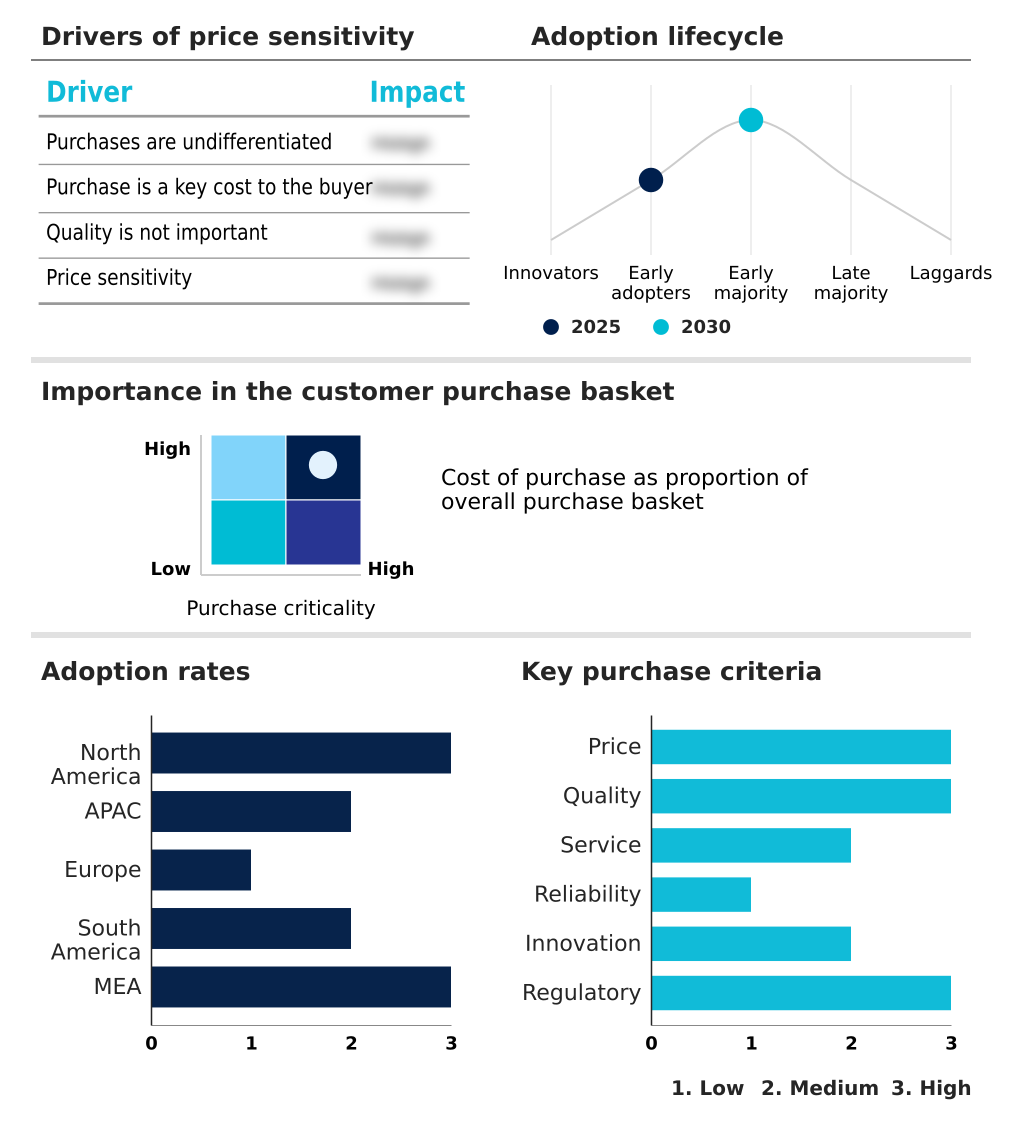
Customer Landscape of Radio Frequency Identification (RFID) Industry
Competitive Landscape
Companies are implementing various strategies, such as strategic alliances, radio frequency identification (rfid) market forecast, partnerships, mergers and acquisitions, geographical expansion, and product/service launches, to enhance their presence in the industry.
Alien Technology LLC - Analysts highlight the delivery of integrated radio frequency identification (RFID) solutions engineered for high-speed data capture and item-level tracking across diverse industries.
The industry research and growth report includes detailed analyses of the competitive landscape of the market and information about key companies, including:
- Alien Technology LLC
- ASSA ABLOY AB
- Avery Dennison Corp.
- CipherLab Co. Ltd.
- CoreRFID Ltd.
- CYBRA Corp.
- Datalogic SpA
- FEIG ELECTRONIC GmbH
- Fujitsu Ltd.
- HID Global Corp.
- Honeywell International Inc.
- Identiv Inc.
- Impinj Inc.
- Mojix Inc.
- Nedap NV
- NXP Semiconductors NV
- SATO Holdings Corp.
- Siemens AG
- SML Group Ltd.
- TIBCO Software Inc.
- Unitech Electronics Co. Ltd.
- Zebra Technologies Corp.
Qualitative and quantitative analysis of companies has been conducted to help clients understand the wider business environment as well as the strengths and weaknesses of key industry players. Data is qualitatively analyzed to categorize companies as pure play, category-focused, industry-focused, and diversified; it is quantitatively analyzed to categorize companies as dominant, leading, strong, tentative, and weak.
Recent Development and News in Radio frequency identification (rfid) market
- In August 2025, Salasa, a Riyadh-based logistics firm, secured $30 million in funding to scale its AI-driven fulfillment infrastructure, which heavily relies on technologies like RFID for smart inventory management.
- In August 2025, Beontag showcased its expanded ECO Line of recyclable, paper-based RFID tags and a new line of Wash-Off Labels at LabelExpo Europe 2025, emphasizing the industry's commitment to sustainability.
- In March 2025, Zebra Technologies launched a suite of AI-powered RFID solutions at the ProMat 2025 conference, designed to embed predictive analytics directly into warehouse and retail operations for proactive workflow optimization.
- In October 2025, Avery Dennison announced a collaboration with major retailers, including Walmart, to introduce RFID-enabled labels to the meat department, enhancing traceability and inventory management for perishable goods.
Dive into Technavio’s robust research methodology, blending expert interviews, extensive data synthesis, and validated models for unparalleled Radio Frequency Identification (RFID) Market insights. See full methodology.
| Market Scope | |
|---|---|
| Page number | 316 |
| Base year | 2025 |
| Historic period | 2020-2024 |
| Forecast period | 2026-2030 |
| Growth momentum & CAGR | Accelerate at a CAGR of 15.3% |
| Market growth 2026-2030 | USD 22249.0 million |
| Market structure | Fragmented |
| YoY growth 2025-2026(%) | 13.2% |
| Key countries | US, Canada, Mexico, China, Japan, India, South Korea, Indonesia, Australia, Germany, UK, France, Italy, Spain, The Netherlands, Brazil, Argentina, Chile, Saudi Arabia, UAE, South Africa, Turkey and Israel |
| Competitive landscape | Leading Companies, Market Positioning of Companies, Competitive Strategies, and Industry Risks |
Research Analyst Overview
- The radio frequency identification market is a dynamic ecosystem built on core components including rfid tags, specialized rfid chipsets, and various rfid readers, all orchestrated by advanced rfid middleware. The technological landscape is diverse, with passive uhf rfid solutions driving high-volume applications, while active rfid systems are reserved for high-value asset tracking.
- Niche applications are effectively served by low frequency rfid and high frequency rfid technologies, including near field communication for secure, contactless communication. The widespread adoption of the epc gen 2 uhf and rain rfid solutions standards is fueling innovation in rfid antennas and rfid inlays, enabling more effective inventory management and supply chain visibility.
- This shift toward granular data capture technology, known as item level tagging, is a cornerstone of digital transformation strategies.
- For boardroom consideration, the impact on operational budgeting is significant; firms leveraging this technology achieve a reduction in manual audit times by over 90%, directly impacting labor costs and freeing up capital for strategic investment in access control systems and other secure identification protocols for the industrial internet of things.
What are the Key Data Covered in this Radio Frequency Identification (RFID) Market Research and Growth Report?
-
What is the expected growth of the Radio Frequency Identification (RFID) Market between 2026 and 2030?
-
USD 22.25 billion, at a CAGR of 15.3%
-
-
What segmentation does the market report cover?
-
The report is segmented by Product (RFID tags, Middleware, Passive RFID systems, and Active RFID systems), End-user (Industrial, Retail, BFSI, Logistics, and Others), Frequency Range (High frequency, Ultra-high frequency, Low frequency, and Microwave frequency) and Geography (North America, APAC, Europe, South America, Middle East and Africa)
-
-
Which regions are analyzed in the report?
-
North America, APAC, Europe, South America and Middle East and Africa
-
-
What are the key growth drivers and market challenges?
-
Increasing demand for supply chain visibility and inventory management efficiency, High implementation costs and complex return on investment justification
-
-
Who are the major players in the Radio Frequency Identification (RFID) Market?
-
Alien Technology LLC, ASSA ABLOY AB, Avery Dennison Corp., CipherLab Co. Ltd., CoreRFID Ltd., CYBRA Corp., Datalogic SpA, FEIG ELECTRONIC GmbH, Fujitsu Ltd., HID Global Corp., Honeywell International Inc., Identiv Inc., Impinj Inc., Mojix Inc., Nedap NV, NXP Semiconductors NV, SATO Holdings Corp., Siemens AG, SML Group Ltd., TIBCO Software Inc., Unitech Electronics Co. Ltd. and Zebra Technologies Corp.
-
Market Research Insights
- Market dynamics are shaped by the pursuit of superior operational efficiency and inventory accuracy. The adoption of automated data capture enables organizations to achieve near-perfect inventory accuracy, a significant leap from the typical 80% achieved with older systems. This precision in work-in-progress tracking directly supports complex supply chain optimization and modern omnichannel fulfillment strategies.
- Furthermore, implementing these systems drives a 25% increase in operational efficiency within warehouse management settings, underscoring the strong return on investment. As businesses increasingly focus on data-driven decision-making, technologies that enable frictionless checkout and enhance customer engagement are becoming strategic necessities, not just operational upgrades.
We can help! Our analysts can customize this radio frequency identification (rfid) market research report to meet your requirements.
 RIA -
RIA - 
