


Ready Mix Concrete Batching Plant Market Size 2026-2030
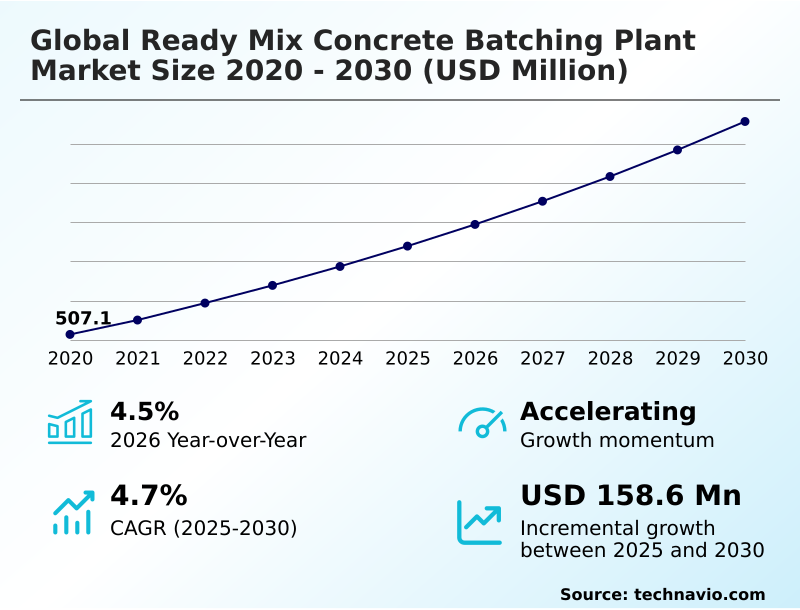
The ready mix concrete batching plant market size is valued to increase by USD 158.6 million, at a CAGR of 4.7% from 2025 to 2030. Accelerating global public expenditure on large-scale infrastructure projects will drive the ready mix concrete batching plant market.
Major Market Trends & Insights
- APAC dominated the market and accounted for a 55.1% growth during the forecast period.
- By End-user - Residential construction segment was valued at USD 326.1 million in 2024
- By Type - Dry batch concrete plant segment accounted for the largest market revenue share in 2024
Market Size & Forecast
- Market Opportunities: USD 271 million
- Market Future Opportunities: USD 158.6 million
- CAGR from 2025 to 2030 : 4.7%
Market Summary
- The Ready Mix Concrete Batching Plant sector exhibits robust operational momentum driven by rapid urbanization and the industrialization of building processes. Centralized production facilities are replacing fragmented manual mixing to ensure absolute material uniformity across massive infrastructure initiatives.
- A major driver for this market is the surge in public expenditure on transportation networks, which necessitates high-throughput automated machinery to meet continuous pouring schedules. Conversely, strict environmental mandates limiting industrial particulate emissions create a substantial challenge, forcing operators to install complex filtration and water recycling systems.
- In a practical business scenario, modern fleet operators are integrating predictive maintenance tracking within their mixing plants to monitor mechanical wear and predict motor failures before catastrophic breakdowns occur. This proactive digital management strategy has led to a 20% improvement in overall equipment effectiveness by minimizing unplanned downtime.
- Consequently, the reliance on intelligent sensors and enclosed eco-friendly designs continues to shape procurement decisions, ensuring that concrete production meets rigorous structural engineering benchmarks while aligning with mandatory decarbonization goals.
What will be the Size of the Ready Mix Concrete Batching Plant Market during the forecast period?
Get Key Insights on Market Forecast (PDF) Get Free Sample
How is the Ready Mix Concrete Batching Plant Market Segmented?
The ready mix concrete batching plant industry research report provides comprehensive data (region-wise segment analysis), with forecasts and estimates in "USD million" for the period 2026-2030, as well as historical data from 2020-2024 for the following segments.
- End-user
- Residential construction
- Non-residential construction
- Type
- Dry batch concrete plant
- Wet batch concrete plant
- Product type
- Crushed stone
- River gravel
- Slag
- Application
- Infrastructure
- Mining
- Others
- Geography
- APAC
- China
- India
- Japan
- South Korea
- Australia
- Indonesia
- Middle East and Africa
- Saudi Arabia
- UAE
- South Africa
- Egypt
- Turkey
- Europe
- Germany
- UK
- France
- Italy
- Spain
- South America
- Brazil
- Argentina
- Chile
- North America
- US
- Canada
- Mexico
- APAC
By End-user Insights
The residential construction segment is estimated to witness significant growth during the forecast period.
The residential construction segment within the Ready Mix Concrete Batching Plant domain demonstrates robust structural evolution driven by accelerated urbanization and prefabricated building methods.
Homebuilders increasingly rely on automated centralized facilities to achieve the uniform self-compacting concrete consistency required for massive housing estates. The deployment of a modular batching unit enables a compact site deployment, significantly optimizing material flow for suburban real estate corridors.
A transition toward a dry-batch configuration, paired with specialized delivery vehicles, facilitates extended delivery ranges without compromising the concrete slump. Integration of cloud-based dispatch software has improved logistical coordination, resulting in a 15% reduction in delivery delays.
Advanced admixture dosing systems and thermal process controls ensure precise formulation, allowing developers to utilize ultra-high-performance concrete and high-load bearing concrete for critical load-bearing foundations while seamlessly managing wet-mix integration directly from the aggregate hopper.
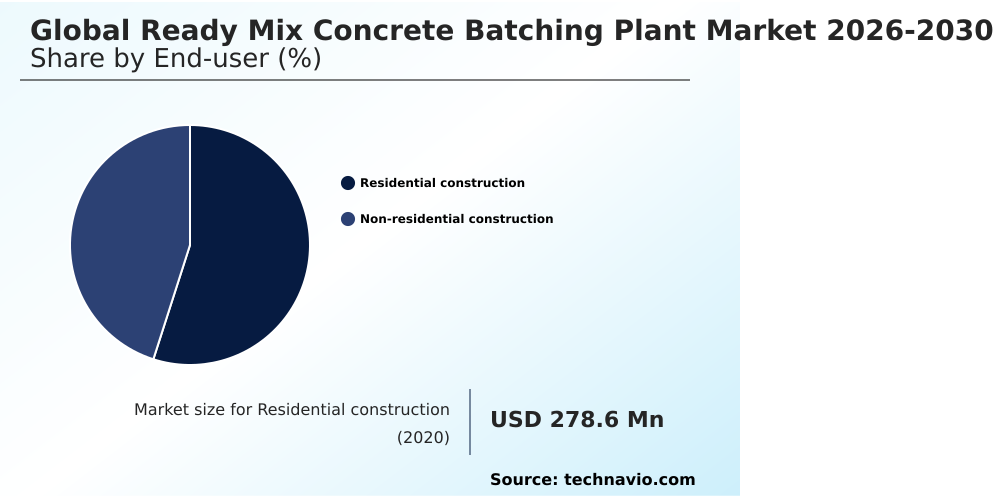
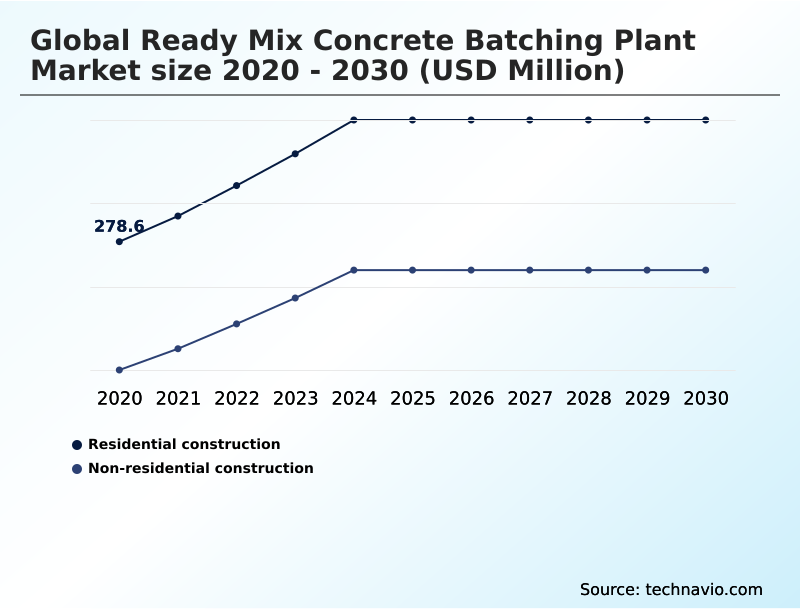
The Residential construction segment was valued at USD 326.1 million in 2024 and showed a gradual increase during the forecast period.
Regional Analysis
APAC is estimated to contribute 55.1% to the growth of the global market during the forecast period.Technavio’s analysts have elaborately explained the regional trends and drivers that shape the market during the forecast period.
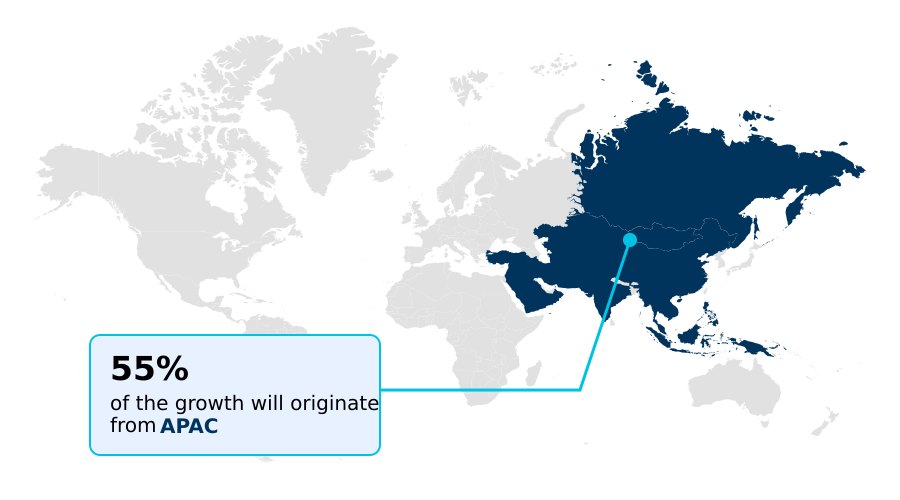
See How Ready Mix Concrete Batching Plant Market Demand is Rising in APAC Get Free Sample
The geographic distribution of the Ready Mix Concrete Batching Plant domain highlights distinct operational priorities between APAC and Europe.
APAC demonstrates aggressive volume scaling, utilizing a high-capacity stationary plant footprint equipped with robust electronic weighing sensors to support massive smart city expansions. This intense production focus has improved material precision by 14% across high-density urban corridors.
Conversely, Europe prioritizes strict ecological compliance, accelerating the adoption of low-carbon concrete formulations and advanced localized particulate mitigation technologies.
European facilities have achieved a 22% improvement in energy efficiency compared to their Asian counterparts by embedding digital material tracking to strictly monitor embodied carbon.
Furthermore, regional climatic differences force APAC operators to invest heavily in concrete workability optimization to manage tropical heat, whereas European manufacturers install complex advanced air filtration and wastewater reclamation systems to navigate dense, environmentally regulated metropolitan zones seamlessly.
Market Dynamics
Our researchers analyzed the data with 2025 as the base year, along with the key drivers, trends, and challenges. A holistic analysis of drivers will help companies refine their marketing strategies to gain a competitive advantage.
- The operational framework of the Ready Mix Concrete Batching Plant landscape is undergoing a critical digital transformation as construction stakeholders demand heightened structural consistency and resource efficiency. Modern infrastructure projects rely heavily on automated twin-shaft concrete mixer integration, which provides superior homogenization and significantly shortens the mixing cycle compared to legacy equipment.
- To combat the variability of raw material quality, operators are widely adopting a real-time aggregate moisture tracking system. This technology allows for dynamic adjustments to the water-to-cement ratio, resulting in a 15% improvement in structural yield consistency and a noticeable reduction in rejected deliveries.
- As sustainability protocols become mandatory, the capability for low-carbon supplementary cementitious material blending has transitioned from an optional feature to an absolute operational necessity. Incorporating industrial byproducts requires precise dosing mechanisms to ensure that green building certifications are seamlessly met.
- Concurrently, agile logistics strategies are fueling a rise in modular dry batch plant deployment, particularly for remote highway expansions and decentralized renewable energy infrastructure where permanent installations are not viable. To safeguard these continuous production cycles, fleet managers are leveraging predictive maintenance in batching software, allowing them to anticipate mechanical wear and schedule interventions without disrupting massive concrete pouring phases.
- This holistic integration of advanced sensors and flexible plant architecture ensures that manufacturers can navigate fluctuating raw material constraints while maintaining absolute adherence to rigorous engineering benchmarks.
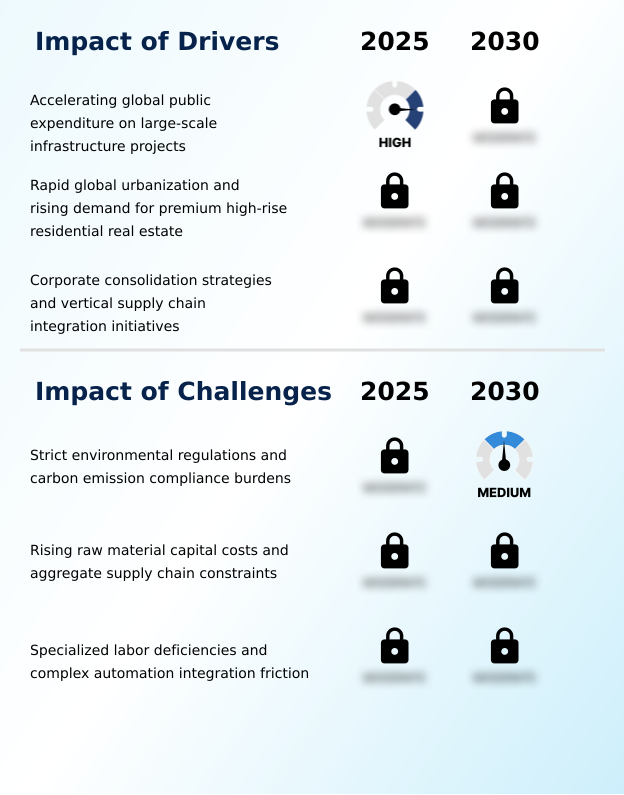
What are the key market drivers leading to the rise in the adoption of Ready Mix Concrete Batching Plant Industry?
- Accelerating global public expenditure on large-scale infrastructure projects serves as a primary driver for the expansion of the market.
- A massive surge in highly complex, government-funded urban infrastructure serves as the primary catalyst accelerating the Ready Mix Concrete Batching Plant environment.
- Structural engineering requirements now demand precise inclusion of advanced binders, such as ground granulated blast furnace slag, to guarantee long-term asset durability.
- The ability to maintain an optimal dynamic water-to-cement ratio through digital oversight enables concrete producers to successfully secure lucrative certified ecological footprint reports.
- By adopting these sophisticated systems, operators have enhanced their operational resource efficiency, lowering freshwater consumption by 35% through the implementation of closed-loop water recycling mechanisms.
- Furthermore, automated tracking empowers facilities to generate exact sustainability documentation, improving audit compliance speeds by over 20%. This technological dependency continuously drives heavy capital investment into agile, high-precision mixing machinery.
What are the market trends shaping the Ready Mix Concrete Batching Plant Industry?
- The systemic proliferation of artificial intelligence and internet of things plant monitoring represents a transformative market trend. This digital integration enables dynamic operational adjustments and real-time equipment diagnostics to enhance production efficiency.
- The accelerated transition toward intelligent automation represents a defining trend within the Ready Mix Concrete Batching Plant ecosystem, fundamentally altering how industrial materials are processed. Centralized facilities are actively migrating toward clean energy manufacturing to comply with stringent metropolitan environmental ordinances.
- This shift is accompanied by the deployment of real-time aggregate monitoring, which continuously evaluates input humidity to dynamically alter mixing parameters. Consequently, operators utilizing these advanced diagnostics have improved batch precision by 16%, virtually eliminating the incidence of sub-standard concrete rejection. Furthermore, the integration of automated raw material replenishment seamlessly coordinates silo inventory with incoming supply logistics, mitigating disruptive bottlenecks.
- By relying on high-intensity mixing logic and predictive maintenance scheduling, plant managers have successfully reduced unexpected mechanical downtime by 28%.
What challenges does the Ready Mix Concrete Batching Plant Industry face during its growth?
- Strict environmental regulations and carbon emission compliance burdens present significant operational challenges that constrain industry growth.
- Escalating regulatory frameworks and severe raw material volatility present formidable barriers within the Ready Mix Concrete Batching Plant operational landscape. Fluctuating availability of high-quality fine aggregates and essential industrial byproducts like fly ash directly compromises the consistency of daily batch outputs.
- Modifying legacy equipment to accommodate complex chemical additive integration requires significant capital expenditure, often straining the margins of independent concrete suppliers. Moreover, ensuring exact formulation tolerances requires the constant recalibration of delicate load cells and the continuous upkeep of every aggregate moisture sensor.
- When operating in extreme climates, the mandatory integration of chilled water injection adds substantial energy overhead, increasing baseline production costs by up to 14%. Equipment malfunctions within a pressurized cement silo can abruptly halt production, resulting in a 25% drop in daily dispatch efficiency.
Exclusive Technavio Analysis on Customer Landscape
The ready mix concrete batching plant market forecasting report includes the adoption lifecycle of the market, covering from the innovator’s stage to the laggard’s stage. It focuses on adoption rates in different regions based on penetration. Furthermore, the ready mix concrete batching plant market report also includes key purchase criteria and drivers of price sensitivity to help companies evaluate and develop their market growth analysis strategies.
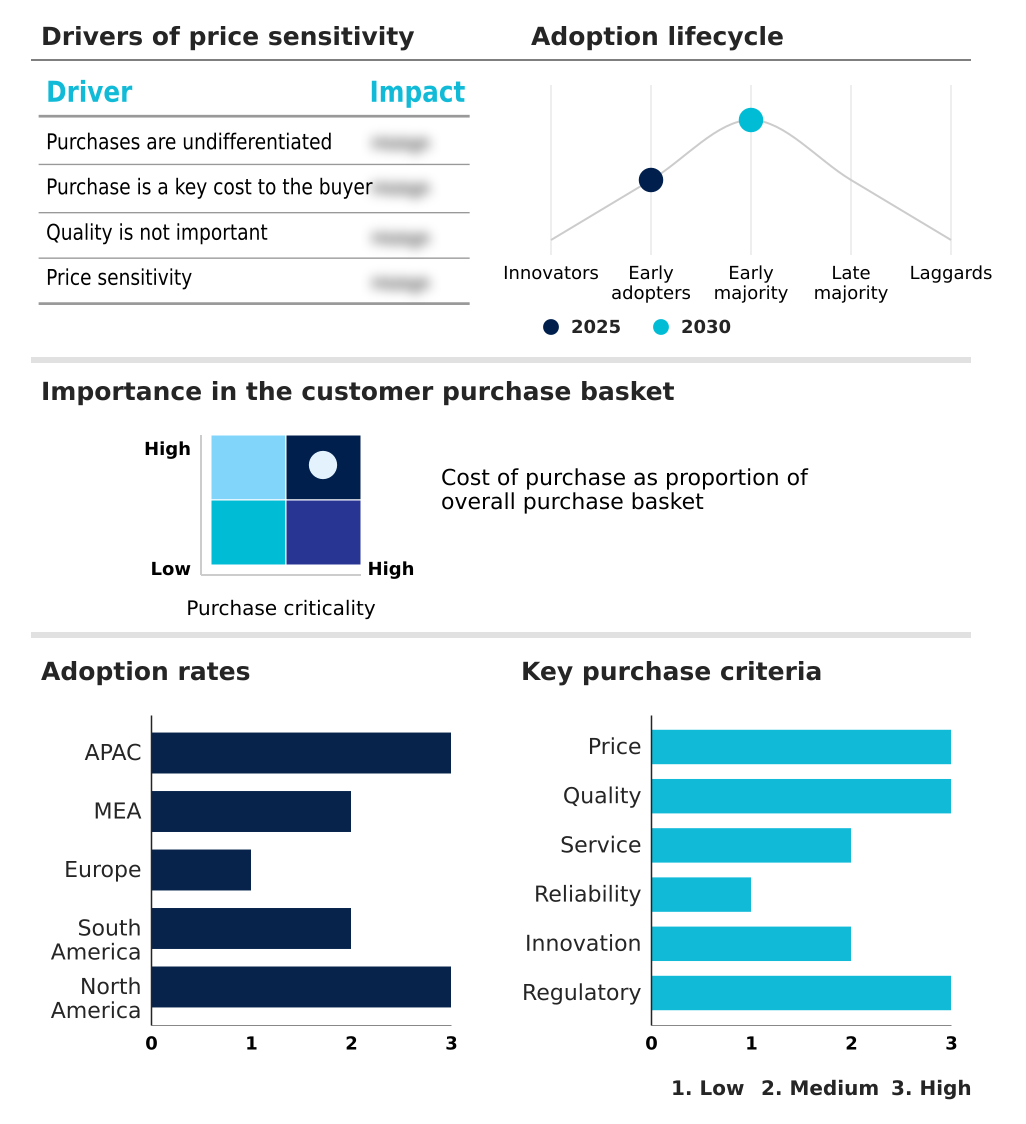
Customer Landscape of Ready Mix Concrete Batching Plant Industry
Competitive Landscape
Companies are implementing various strategies, such as strategic alliances, ready mix concrete batching plant market forecast, partnerships, mergers and acquisitions, geographical expansion, and product/service launches, to enhance their presence in the industry.
AIMIX Group - The unified product portfolio delivers highly automated ready mix concrete batching plant solutions, integrating advanced mixing equipment and precise dosing technologies to maximize operational efficiency and structural material consistency.
The industry research and growth report includes detailed analyses of the competitive landscape of the market and information about key companies, including:
- AIMIX Group
- Ammann Group
- Astec Industries Inc.
- BHS-Sonthofen GmbH
- Camelway Machinery
- CEMEX SAB de CV
- CIFA S.p.A.
- CONSTMACH
- Liebherr International AG
- Lintec and Linnhoff
- MEKA
- Nisbau GmbH
- Polygonmach
- Sany Heavy Industry Co. Ltd.
- SCHWING GmbH
- Shantui Construction Machinery
- SIMEM S.p.A.
- Stephens MFG. Co.
- Terex Corp.
- The Vince Hagan Co.
Qualitative and quantitative analysis of companies has been conducted to help clients understand the wider business environment as well as the strengths and weaknesses of key industry players. Data is qualitatively analyzed to categorize companies as pure play, category-focused, industry-focused, and diversified; it is quantitatively analyzed to categorize companies as dominant, leading, strong, tentative, and weak.
Recent Development and News in Ready mix concrete batching plant market
- In the Construction and Engineering industry, the aggressive shift toward stringent municipal green building codes and sustainable infrastructure policies has accelerated the adoption of a zero-emission production line, directly impacting Ready Mix Concrete Batching Plant demand by forcing suppliers to secure eco-conscious construction tenders through verified environmental product declarations.
- The widespread implementation of strict urban particulate emission regulations and noise dampening mandates has necessitated the integration of bag-house filtration and greywater recycling, driving the Ready Mix Concrete Batching Plant market toward enclosed operational layouts that enhance industrial dust suppression and lower localized pollution by over 40%.
- The transition toward decentralized urban infrastructure development and remote wind farm installations has expanded the requirement for mobile mixing infrastructure, boosting the procurement of a transit mixer truck and modular building technologies that optimize a rapid mobilization footprint to prevent premature material hydration.
- The rising structural complexity of deep-earth mining operations and high-speed rail corridors has established a technical imperative for specialized binder formulations, compelling the Ready Mix Concrete Batching Plant sector to adopt multi-component binder blending and carbon-captured cement to ensure structural grade concrete delivers enhanced compressive strength.
Dive into Technavio’s robust research methodology, blending expert interviews, extensive data synthesis, and validated models for unparalleled Ready Mix Concrete Batching Plant Market insights. See full methodology.
| Market Scope | |
|---|---|
| Page number | 309 |
| Base year | 2025 |
| Historic period | 2020-2024 |
| Forecast period | 2026-2030 |
| Growth momentum & CAGR | Accelerate at a CAGR of 4.7% |
| Market growth 2026-2030 | USD 158.6 million |
| Market structure | Fragmented |
| YoY growth 2025-2026(%) | 4.5% |
| Key countries | China, India, Japan, South Korea, Australia, Indonesia, Saudi Arabia, UAE, South Africa, Egypt, Turkey, Germany, UK, France, Italy, Russia, Spain, Brazil, Argentina, Chile, US, Canada and Mexico |
| Competitive landscape | Leading Companies, Market Positioning of Companies, Competitive Strategies, and Industry Risks |
Research Analyst Overview
- The continuous evolution of the Ready Mix Concrete Batching Plant sector is fundamentally reshaping how contractors approach material consistency and supply chain risk. Strategic boardroom decisions now prioritize heavy investments in intelligent production infrastructure to mitigate labor shortages and regulatory penalties. The deployment of advanced automated batching software allows centralized facilities to dynamically adjust formulations, drastically reducing human error.
- High-performance facilities increasingly utilize a planetary mixer or an intensive twin-shaft mixer to process complex, low-viscosity mixtures, ensuring superior homogenization for demanding architectural projects. A critical shift toward sustainable building has mandated the precise integration of supplementary cementitious materials, including reactive calcined clay, directly into the primary mixing logic.
- To support these eco-friendly mixtures, modern plants employ highly efficient pneumatic conveying mechanisms that handle fine powders without excessive particulate loss. By utilizing an integrated telemetry system, plant managers gain absolute visibility over fleet dispatch and material consumption, achieving a 25% reduction in overall cement waste.
What are the Key Data Covered in this Ready Mix Concrete Batching Plant Market Research and Growth Report?
-
What is the expected growth of the Ready Mix Concrete Batching Plant Market between 2026 and 2030?
-
USD 158.6 million, at a CAGR of 4.7%
-
-
What segmentation does the market report cover?
-
The report is segmented by End-user (Residential construction, and Non-residential construction), Type (Dry batch concrete plant, and Wet batch concrete plant), Product Type (Crushed stone, River gravel, and Slag), Application (Infrastructure, Mining, and Others) and Geography (APAC, Middle East and Africa, Europe, South America, North America)
-
-
Which regions are analyzed in the report?
-
APAC, Middle East and Africa, Europe, South America and North America
-
-
What are the key growth drivers and market challenges?
-
Accelerating global public expenditure on large-scale infrastructure projects, Strict environmental regulations and carbon emission compliance burdens
-
-
Who are the major players in the Ready Mix Concrete Batching Plant Market?
-
AIMIX Group, Ammann Group, Astec Industries Inc., BHS-Sonthofen GmbH, Camelway Machinery, CEMEX SAB de CV, CIFA S.p.A., CONSTMACH, Liebherr International AG, Lintec and Linnhoff, MEKA, Nisbau GmbH, Polygonmach, Sany Heavy Industry Co. Ltd., SCHWING GmbH, Shantui Construction Machinery, SIMEM S.p.A., Stephens MFG. Co., Terex Corp. and The Vince Hagan Co.
-
Market Research Insights
- The Ready Mix Concrete Batching Plant landscape is rapidly evolving to prioritize precision engineering and ecological compliance. Operators are actively substituting traditional binders with green alternative binders to successfully bid on sustainability-focused project contracts. The implementation of automated inventory management has streamlined material supply chains, yielding a 12% reduction in aggregate waste.
- Simultaneously, transitioning from reactive repairs to sensor-driven oversight has reduced heavy mechanical maintenance costs by 18%, significantly improving margin retention. These structural improvements empower concrete manufacturers to maintain continuous, high-volume production cycles while mitigating the operational risks associated with raw material volatility and strict environmental enforcement.
We can help! Our analysts can customize this ready mix concrete batching plant market research report to meet your requirements.
 RIA -
RIA - 
