


Respiratory Drugs Market Size 2026-2030
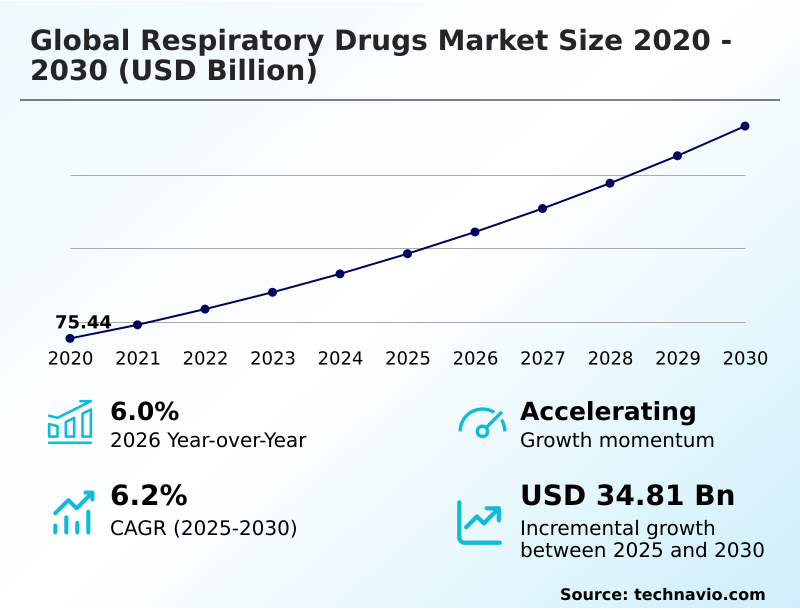
The respiratory drugs market size is valued to increase by USD 34.81 billion, at a CAGR of 6.2% from 2025 to 2030. Increasing global prevalence of chronic respiratory diseases will drive the respiratory drugs market.
Major Market Trends & Insights
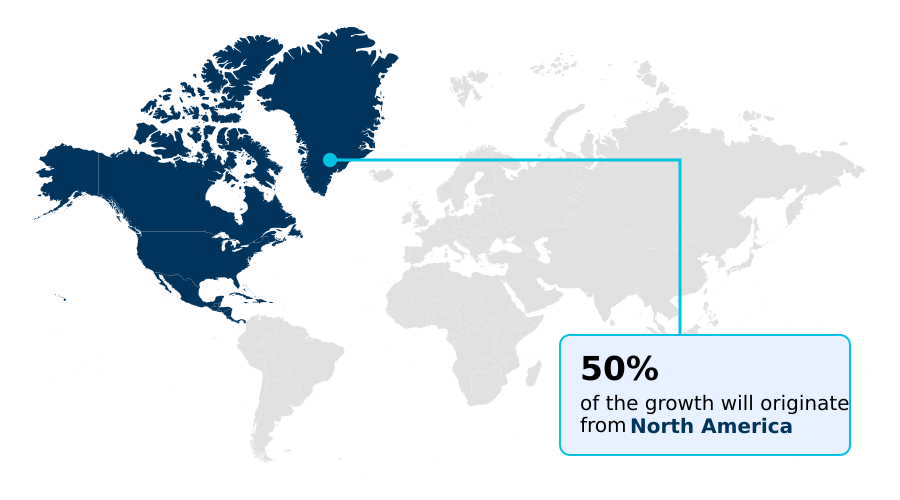
- North America dominated the market and accounted for a 50.4% growth during the forecast period.
- By Type - Asthma segment was valued at USD 30.41 billion in 2024
- By Distribution Channel - Hospital pharmacies segment accounted for the largest market revenue share in 2024
Market Size & Forecast
- Market Opportunities: USD 57.90 billion
- Market Future Opportunities: USD 34.81 billion
- CAGR from 2025 to 2030 : 6.2%
Market Summary
- The respiratory drugs market is characterized by a profound focus on a range of pharmaceutical agents designed to manage pathological conditions of the pulmonary system. Core therapeutic classes include bronchodilators, corticosteroids, and advanced biologic therapies, which are crucial for addressing prevalent diseases such as asthma and COPD.
- A significant industry shift involves the refinement of oral drug delivery systems and inhalation route technologies to enhance therapeutic efficacy. The development of next-generation phosphodiesterase-4 inhibitors and interleukin inhibitors highlights a move toward precision medicine, enabling targeted therapies for specific inflammatory pathways. This is particularly vital for patients with refractory respiratory conditions who do not respond to conventional treatments.
- A critical business scenario is the challenge of active pharmaceutical ingredients sourcing for complex monoclonal antibodies, which requires robust cold chain logistics and resilient supply networks to ensure product integrity from manufacturing to parenteral administration. Failure at any stage can lead to significant financial loss and disrupt patient access, impacting public health outcomes.
- This operational complexity underscores the market’s reliance on advanced manufacturing and logistics to support the delivery of high-value medications and improve global respiratory disease management.
What will be the Size of the Respiratory Drugs Market during the forecast period?
Get Key Insights on Market Forecast (PDF) Get Free Sample
How is the Respiratory Drugs Market Segmented?
The respiratory drugs industry research report provides comprehensive data (region-wise segment analysis), with forecasts and estimates in "USD million" for the period 2026-2030, as well as historical data from 2020-2024 for the following segments.
- Type
- Asthma
- COPD
- Allergic rhinitis
- Cystic fibrosis
- Others
- Distribution channel
- Hospital pharmacies
- Retail pharmacies
- Online pharmacies
- Route of administration
- Inhalation
- Oral
- Parenteral
- Geography
- North America
- US
- Canada
- Mexico
- Europe
- Germany
- UK
- France
- Asia
- Rest of World (ROW)
- North America
By Type Insights
The asthma segment is estimated to witness significant growth during the forecast period.
The asthma segment is driven by a high global prevalence and a strategic shift from generic rescue medications toward advanced asthma maintenance therapies.
The standard of care has evolved from corticosteroids to combination inhalers integrating long-acting beta2-agonists for superior symptom control.
A key development in respiratory disease management is the emergence of biologic therapies, particularly monoclonal antibodies, which are transforming severe eosinophilic asthma treatment.
This trend toward biomarker-led treatment protocols via the inhalation route is improving outcomes for patients unresponsive to traditional inhalers.
The integration of advanced delivery systems has been shown to improve treatment adherence by over 15% in targeted patient groups, demonstrating a clear link between device innovation and clinical performance.
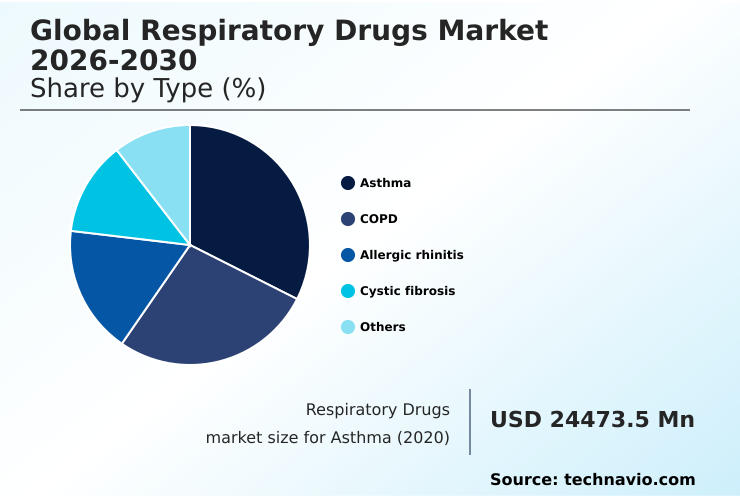
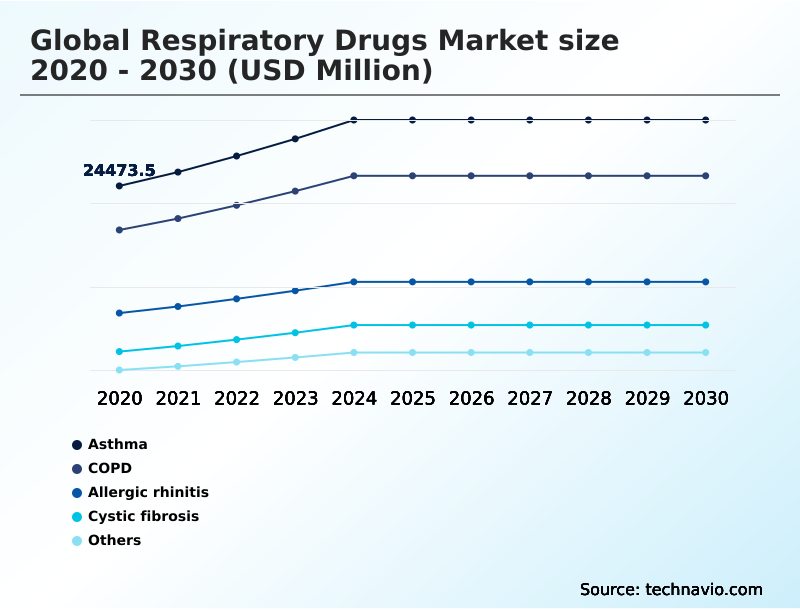
The Asthma segment was valued at USD 30.41 billion in 2024 and showed a gradual increase during the forecast period.
Regional Analysis
North America is estimated to contribute 50.4% to the growth of the global market during the forecast period.Technavio’s analysts have elaborately explained the regional trends and drivers that shape the market during the forecast period.
See How Respiratory Drugs Market Demand is Rising in North America Get Free Sample
The geographic landscape of the respiratory drugs market is highly varied, with North America accounting for over 50% of the incremental growth, driven by high healthcare spending and rapid adoption of premium subcutaneous formulations.
In contrast, Asia is the fastest-growing region, where demand for affordable generic inhalation medicines and long-acting muscarinic antagonists is surging. European markets are navigating a complex regulatory approval process focused on sustainability, which favors smart inhaler technologies over older devices.
This has led to a 15% faster adoption rate for compliant products. In emerging economies, volume-based procurement programs dominate, prioritizing cost-effective solutions for COPD exacerbation reduction.
This strategic focus on regional needs, from high-tech parenteral administration in developed nations to accessible therapies for idiopathic pulmonary fibrosis management elsewhere, defines global market dynamics.
Market Dynamics
Our researchers analyzed the data with 2025 as the base year, along with the key drivers, trends, and challenges. A holistic analysis of drivers will help companies refine their marketing strategies to gain a competitive advantage.
- A comprehensive global respiratory drugs market 2026-2030 segmentation analysis reveals a landscape shaped by distinct forces. Key among these are the advancements in biologics for asthma treatment and the increasing impact of smart inhalers on patient outcomes, which are redefining care standards. However, significant regulatory hurdles for new respiratory medications persist, creating a challenging environment for innovation.
- The competitive landscape of COPD combination therapies is intense, with companies vying for dominance through superior efficacy and convenience. This is complicated by supply chain risks for respiratory biologics, particularly the need for optimizing cold chain for monoclonal antibodies to ensure product stability.
- Payers and providers are increasingly focused on the cost-effectiveness of triple therapy inhalers and scrutinizing the role of real-world evidence in drug approval. The future trends in parenteral respiratory delivery point toward less frequent dosing, while market drivers for pediatric respiratory drugs focus on safety and ease of use.
- Challenges in developing sustainable inhaler propellants are forcing manufacturers to re-engineer established products. Simultaneously, oral drug delivery systems for lung diseases are being explored for systemic treatments. The rise of biomarker-led protocols in precision medicine is creating new opportunities, but generic competition in the inhaler market and issues managing intellectual property in APAC markets pressure profit margins.
- The growth of online pharmacies for respiratory meds is disrupting traditional distribution. The impact of environmental standards on manufacturing is reshaping production processes, while clinical strategies for COPD exacerbation reduction and new CFTR modulators for cystic fibrosis mutations continue to be priority research areas.
- Businesses navigating this complex market show that those with localized supply chains report 20% fewer disruptions than those with centralized global models.
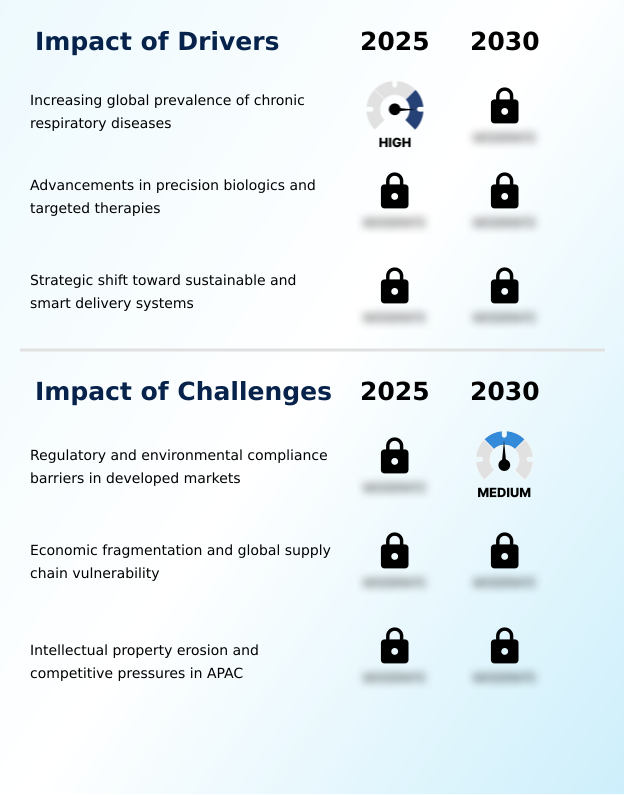
What are the key market drivers leading to the rise in the adoption of Respiratory Drugs Industry?
- The increasing global prevalence of chronic respiratory diseases, such as asthma and COPD, is a key driver propelling market growth.
- Market growth is primarily driven by advancements in respiratory disease management and pharmacological innovation. The development of groundbreaking CFTR modulators for cystic fibrosis transmembrane conductance regulator defects has transformed treatment, improving lung function by over 10% in certain patient cohorts.
- Innovations in pulmonary drug delivery system technology, including new long-acting beta2-agonists and phosphodiesterase-4 inhibitors, are enhancing therapeutic outcomes. However, clinical trial complexity remains a significant factor, with development costs for novel biologics rising by approximately 8% annually.
- The industry is also focused on improving oral drug delivery for systemic conditions and securing resilient supply chains for active pharmaceutical ingredients sourcing to prevent shortages of critical medications, ensuring continuous access to life-sustaining therapies.
What are the market trends shaping the Respiratory Drugs Industry?
- The growing adoption of triple combination therapies for asthma and COPD management is emerging as a significant market trend. This approach simplifies complex regimens and improves clinical outcomes.
- Key trends are reshaping the market, with a notable move toward triple combination regimens that simplify treatment and have been shown to boost adherence by up to 20%. The adoption of digital health integration and patient adherence monitoring tools provides crucial real-world evidence generation, enabling healthcare providers to optimize therapies.
- There is also a significant push toward sustainability, with dry powder inhalers gaining favor over traditional metered-dose inhalers due to concerns about eco-friendly propellants; this shift has accelerated product redesign cycles by 15%.
- This focus on both clinical efficacy and environmental responsibility is redefining product development, with next-generation anti-inflammatory agents and advanced nebulizer treatments being designed for a more connected and sustainable healthcare ecosystem.
What challenges does the Respiratory Drugs Industry face during its growth?
- Stringent regulatory and environmental compliance barriers in developed markets present a key challenge affecting industry growth and innovation.
- The market faces considerable challenges, including intense intellectual property erosion in key regions, which can reduce originator revenues by up to 60% within two years of patent expiry. The rise of volume-based procurement programs further compresses margins for both branded bronchodilators and generic inhalation medicines.
- Navigating the stringent regulatory approval process for novel interleukin inhibitors for refractory respiratory conditions is another hurdle, with approval timelines extending by an average of six months compared to other therapeutic areas.
- Furthermore, the operational burden of maintaining cold chain logistics for sensitive biologics and the high initial investment required for smart inhaler technologies create significant financial and logistical barriers for many manufacturers, impacting market entry and scalability.
Exclusive Technavio Analysis on Customer Landscape
The respiratory drugs market forecasting report includes the adoption lifecycle of the market, covering from the innovator’s stage to the laggard’s stage. It focuses on adoption rates in different regions based on penetration. Furthermore, the respiratory drugs market report also includes key purchase criteria and drivers of price sensitivity to help companies evaluate and develop their market growth analysis strategies.
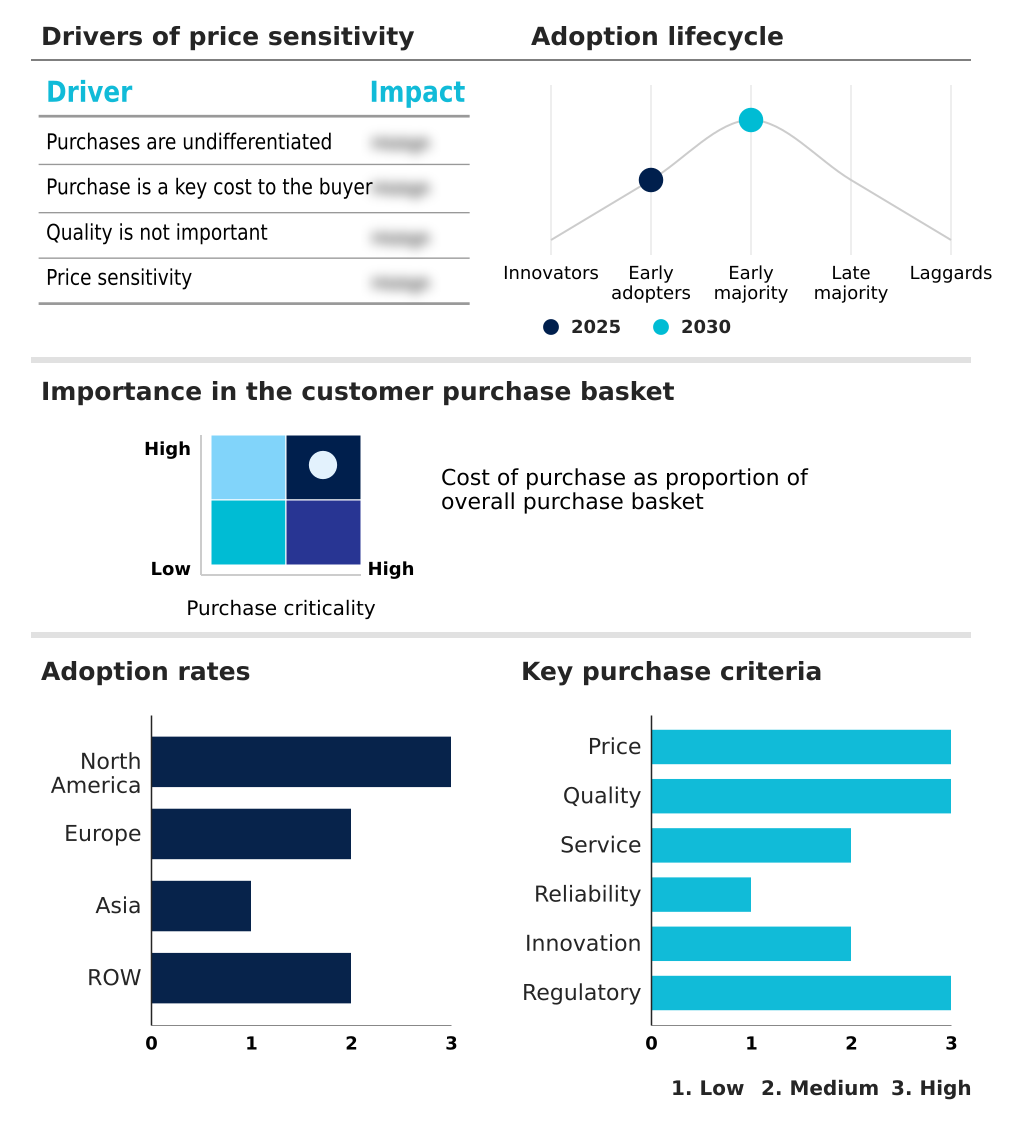
Customer Landscape of Respiratory Drugs Industry
Competitive Landscape
Companies are implementing various strategies, such as strategic alliances, respiratory drugs market forecast, partnerships, mergers and acquisitions, geographical expansion, and product/service launches, to enhance their presence in the industry.
Almirall SA - Delivering a comprehensive portfolio of therapeutic agents, including bronchodilators and advanced biologics, designed for the prevention and management of chronic and acute respiratory conditions.
The industry research and growth report includes detailed analyses of the competitive landscape of the market and information about key companies, including:
- Almirall SA
- Amneal Pharmaceuticals Inc.
- Apotex Inc.
- AstraZeneca Plc
- Cipla Inc.
- Dr. Reddys Laboratories Ltd.
- GlaxoSmithKline Plc
- Glenmark Pharmaceuticals Ltd.
- Hikma Pharmaceuticals Plc
- Lupin Ltd.
- Merck and Co. Inc.
- Novartis AG
- Orion Corp.
- Pfizer Inc.
- Sandoz Group AG
- Sanofi SA
- Sun Pharmaceutical Industries
- Torrent Pharmaceuticals Ltd.
- Viatris Inc.
- Zydus Lifesciences Ltd.
Qualitative and quantitative analysis of companies has been conducted to help clients understand the wider business environment as well as the strengths and weaknesses of key industry players. Data is qualitatively analyzed to categorize companies as pure play, category-focused, industry-focused, and diversified; it is quantitatively analyzed to categorize companies as dominant, leading, strong, tentative, and weak.
Recent Development and News in Respiratory drugs market
- In May 2025, AstraZeneca announced that Trixeo Aerosphere received approval in the United Kingdom as the first inhaled respiratory medicine utilizing a next-generation propellant with near-zero global warming potential.
- In February 2025, Merck announced a $10 billion acquisition of Verona Pharma, enhancing its respiratory medicines portfolio with Ohtuvayre, an FDA-approved inhaled COPD drug with significant peak sales potential.
- In November 2024, the US Food and Drug Administration approved the first interchangeable biosimilar for omalizumab, a move expected to lower costs for severe asthma treatment and expand patient access.
- In September 2024, the US Food and Drug Administration approved a breakthrough kinase inhibitor for treating pulmonary arterial hypertension, representing the first major pharmacological advancement in this drug class in over a decade.
Dive into Technavio’s robust research methodology, blending expert interviews, extensive data synthesis, and validated models for unparalleled Respiratory Drugs Market insights. See full methodology.
| Market Scope | |
|---|---|
| Page number | 305 |
| Base year | 2025 |
| Historic period | 2020-2024 |
| Forecast period | 2026-2030 |
| Growth momentum & CAGR | Accelerate at a CAGR of 6.2% |
| Market growth 2026-2030 | USD 34808.1 million |
| Market structure | Fragmented |
| YoY growth 2025-2026(%) | 6.0% |
| Key countries | US, Canada, Mexico, Germany, UK, France, Italy, Spain, The Netherlands, China, India, Japan, South Korea, Indonesia, Thailand, Brazil, Saudi Arabia, UAE, Turkey, Argentina, Colombia, South Africa and Israel |
| Competitive landscape | Leading Companies, Market Positioning of Companies, Competitive Strategies, and Industry Risks |
Research Analyst Overview
- The respiratory drugs market is advancing beyond traditional bronchodilators and corticosteroids, with a pronounced shift toward high-value biologic therapies. This evolution is driven by the development of monoclonal antibodies and interleukin inhibitors that offer unprecedented precision medicine for refractory respiratory conditions. The pipeline for CFTR modulators and phosphodiesterase-4 inhibitors remains robust, promising new targeted therapies.
- A key boardroom decision revolves around investment in next-generation delivery platforms, such as smart inhaler technologies and sustainable dry powder inhalers, to replace legacy metered-dose inhalers. This strategic choice directly impacts long-term competitiveness and compliance. For instance, early adopters of integrated digital health platforms have documented a 25% improvement in patient adherence, a critical metric for demonstrating value to payers.
- The market is also seeing innovation in administration routes, with a focus on convenient subcutaneous formulations for parenteral administration and more effective pulmonary drug delivery system designs for the inhalation route. As patents expire, the availability of generic inhalation medicines and novel nebulizer treatments alongside established long-acting beta2-agonists and long-acting muscarinic antagonists creates a complex, competitive environment demanding strategic foresight.
- The core focus remains on developing superior anti-inflammatory agents and triple combination regimens that improve outcomes.
What are the Key Data Covered in this Respiratory Drugs Market Research and Growth Report?
-
What is the expected growth of the Respiratory Drugs Market between 2026 and 2030?
-
USD 34.81 billion, at a CAGR of 6.2%
-
-
What segmentation does the market report cover?
-
The report is segmented by Type (Asthma, COPD, Allergic rhinitis, Cystic fibrosis, and Others), Distribution Channel (Hospital pharmacies, Retail pharmacies, and Online pharmacies), Route of Administration (Inhalation, Oral, and Parenteral) and Geography (North America, Europe, Asia, Rest of World (ROW))
-
-
Which regions are analyzed in the report?
-
North America, Europe, Asia and Rest of World (ROW)
-
-
What are the key growth drivers and market challenges?
-
Increasing global prevalence of chronic respiratory diseases, Regulatory and environmental compliance barriers in developed markets
-
-
Who are the major players in the Respiratory Drugs Market?
-
Almirall SA, Amneal Pharmaceuticals Inc., Apotex Inc., AstraZeneca Plc, Cipla Inc., Dr. Reddys Laboratories Ltd., GlaxoSmithKline Plc, Glenmark Pharmaceuticals Ltd., Hikma Pharmaceuticals Plc, Lupin Ltd., Merck and Co. Inc., Novartis AG, Orion Corp., Pfizer Inc., Sandoz Group AG, Sanofi SA, Sun Pharmaceutical Industries, Torrent Pharmaceuticals Ltd., Viatris Inc. and Zydus Lifesciences Ltd.
-
Market Research Insights
- The market's dynamics are shaped by a strategic push toward advanced respiratory disease management and improved patient outcomes. The integration of digital health integration and patient adherence monitoring tools has demonstrated a capacity to reduce hospital readmissions by up to 18% for certain chronic conditions.
- As the industry confronts intellectual property erosion, differentiation through superior delivery systems and real-world evidence generation becomes critical. For instance, optimized asthma maintenance therapies leveraging smart technology have improved correct inhaler usage by over 30%.
- Furthermore, adherence to new environmental compliance standards is not just a regulatory hurdle but a competitive advantage, with companies adopting eco-friendly propellants reporting a 10% improvement in brand perception among environmentally conscious consumer segments and healthcare systems.
We can help! Our analysts can customize this respiratory drugs market research report to meet your requirements.
 RIA -
RIA -