


Restaurant Management Software Market Size 2026-2030
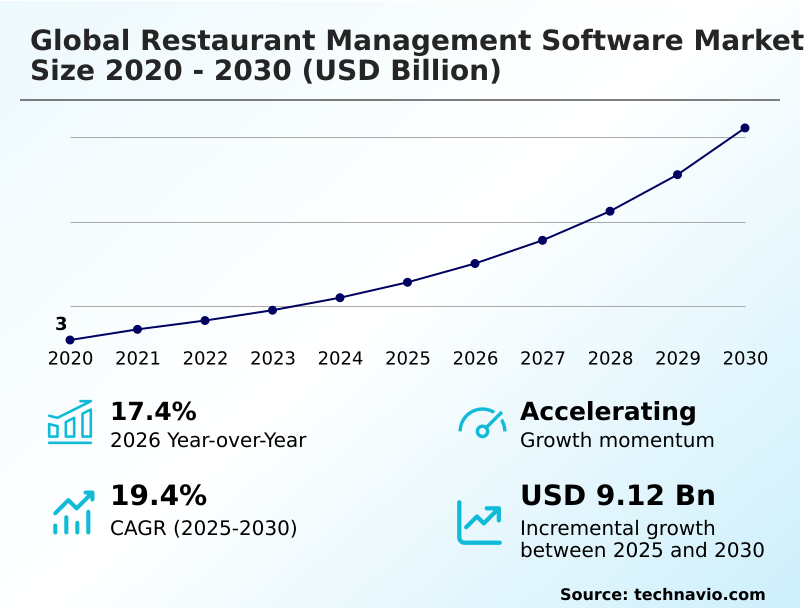
The restaurant management software market size is valued to increase by USD 9.12 billion, at a CAGR of 19.4% from 2025 to 2030. Rapid digitalization of restaurant operations and workflow automation will drive the restaurant management software market.
Major Market Trends & Insights
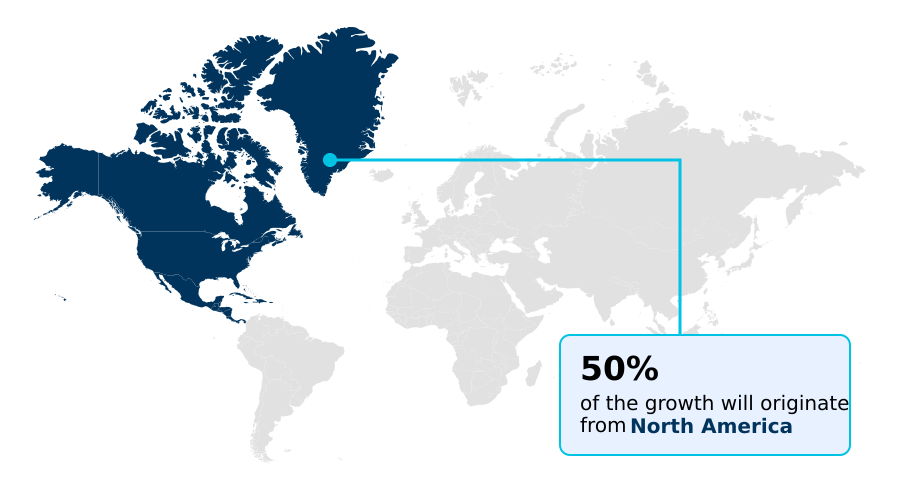
- North America dominated the market and accounted for a 49.9% growth during the forecast period.
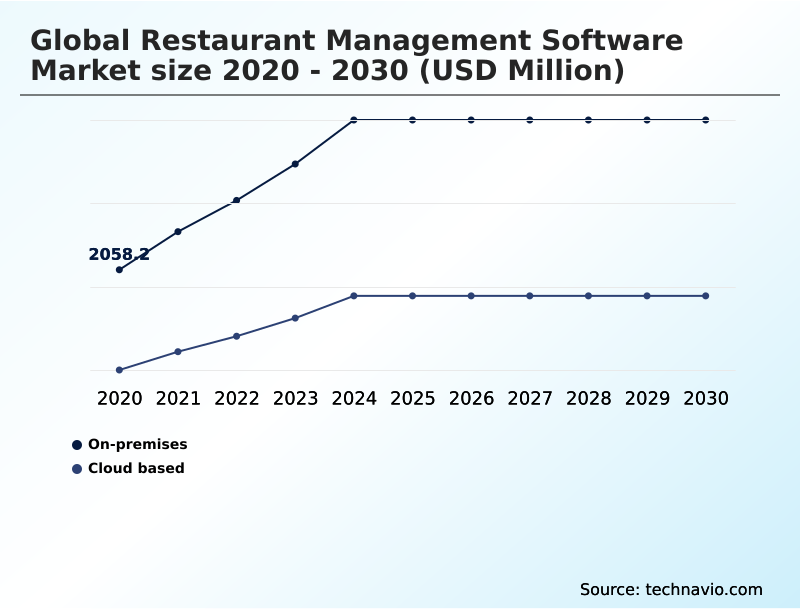
- By Deployment - On-premises segment was valued at USD 3.73 billion in 2024
- By End-user - Quick service restaurant segment accounted for the largest market revenue share in 2024
Market Size & Forecast
- Market Opportunities: USD 12.53 billion
- Market Future Opportunities: USD 9.12 billion
- CAGR from 2025 to 2030 : 19.4%
Market Summary
- The restaurant management software market is defined by a dynamic push toward digital transformation, driven by the need for enhanced operational efficiency and superior customer experiences. Key trends include the widespread adoption of cloud-based pos architecture and subscription-based software models, which offer scalability and reduce upfront capital expenditure for establishments of all sizes.
- The integration of artificial intelligence is also becoming prominent, enabling advanced capabilities like predictive demand forecasting and menu engineering analytics to optimize profitability. For instance, a multi-location restaurant chain can leverage a unified restaurant operations platform to standardize workflows, using data from its point-of-sale (pos) systems for real-time inventory tracking across all branches.
- This data-driven decision making allows for precise food cost management and reduces waste. However, challenges such as the complexity of third-party delivery integration and ensuring robust payment security compliance persist.
- As the industry evolves, the focus remains on creating seamless, integrated ecosystems that automate everything from online reservation systems to back-of-house automation, ultimately helping businesses navigate a competitive landscape marked by thin margins and high consumer expectations. Solutions that offer a comprehensive end-to-end platform are best positioned for success.
What will be the Size of the Restaurant Management Software Market during the forecast period?
Get Key Insights on Market Forecast (PDF) Get Free Sample
How is the Restaurant Management Software Market Segmented?
The restaurant management software industry research report provides comprehensive data (region-wise segment analysis), with forecasts and estimates in "USD million" for the period 2026-2030, as well as historical data from 2020-2024 for the following segments.
- Deployment
- On-premises
- Cloud based
- End-user
- Quick service restaurant
- Full-service restaurant
- Institutional
- Type
- Front end software
- Accounting and cash flow
- Purchasing and inventory management
- Others
- Geography
- North America
- US
- Canada
- Mexico
- Europe
- Germany
- UK
- France
- APAC
- China
- Japan
- India
- South America
- Brazil
- Argentina
- Middle East and Africa
- Saudi Arabia
- UAE
- South Africa
- Rest of World (ROW)
- North America
By Deployment Insights
The on-premises segment is estimated to witness significant growth during the forecast period.
The on-premises segment remains foundational for large-scale hospitality groups prioritizing direct control over their enterprise resource planning (erp) infrastructure. This deployment model involves installing software, from comprehensive restaurant accounting software to specialized inventory control software, directly onto local servers.
It ensures uninterrupted operations, maintaining a 99.9% uptime rate for crucial functions like online reservation systems even during internet outages.
Operators leverage these systems for intensive supply chain optimization, detailed ingredient-level tracking, and generating automated purchase orders through procurement management modules.
For enterprises with complex employee payroll processing or shift management software needs, on-premises solutions offer unparalleled customization, ensuring that all restaurant financial reporting is managed within a secure, self-contained environment.
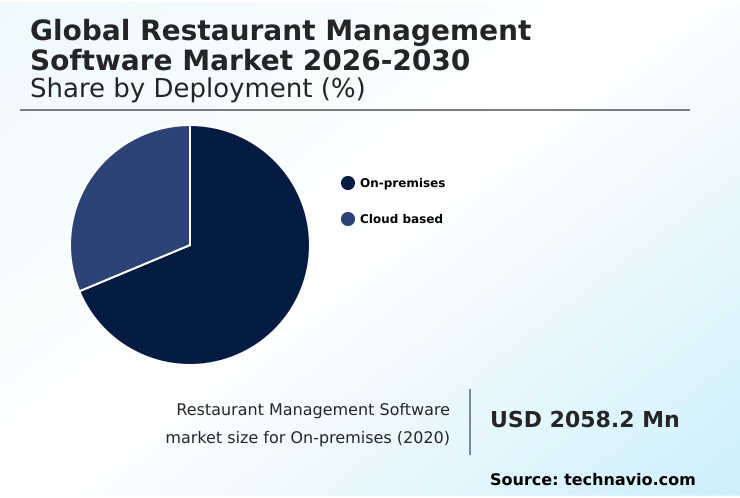
The On-premises segment was valued at USD 3.73 billion in 2024 and showed a gradual increase during the forecast period.
Regional Analysis
North America is estimated to contribute 49.9% to the growth of the global market during the forecast period.Technavio’s analysts have elaborately explained the regional trends and drivers that shape the market during the forecast period.
See How Restaurant Management Software Market Demand is Rising in North America Get Free Sample
The geographic landscape is led by North America, accounting for nearly 50% of incremental growth due to high adoption of cloud-based pos architecture.
Meanwhile, APAC is forecast to expand at a rate over 20%, fueled by mobile-first economies adopting end-to-end platform solutions. In mature markets, deployment of a unified commerce platform improves staff performance tracking and overall efficiency by up to 18%.
European operators prioritize systems with strong revenue management system features, while emerging markets focus on foundational table management software and tools for food cost management.
Advanced capabilities like predictive demand forecasting and kitchen display systems (kds) are becoming standard globally, supported by a comprehensive restaurant analytics dashboard for real-time insights.
Market Dynamics
Our researchers analyzed the data with 2025 as the base year, along with the key drivers, trends, and challenges. A holistic analysis of drivers will help companies refine their marketing strategies to gain a competitive advantage.
- The Global Restaurant Management Software Market 2026-2030 addresses a wide spectrum of operational needs, from the high-transaction environment of Global Restaurant Management Software Market 2026-2030 for quick service restaurants to the nuanced requirements of fine dining.
- A key consideration for operators is choosing a pos system for a small restaurant, where affordability and ease of use are paramount, versus selecting a cloud-based pos for multi-unit chains that offers robust scalability. The omnichannel strategy for restaurant chains has become essential, necessitating seamless processes for integrating delivery apps with pos systems.
- Technology is also pivotal in achieving internal efficiencies. For example, ai-driven inventory management for restaurants provides a direct answer to how to reduce food waste with technology, with some businesses reporting a reduction in spoilage that is double that of those using manual tracking.
- Restaurant workforce scheduling automation software and tools for managing staff payroll and tips with software address critical labor challenges. The kitchen display system benefits for efficiency are well-documented, directly improving table turnover with management software. For full-service establishments, contactless dining solutions for full-service restaurants enhance guest safety and convenience.
- Data-centric tools, including analytics for optimizing restaurant menu pricing and real-time sales analytics for restaurant owners, empower strategic decisions. Finally, customer loyalty program software for restaurants, restaurant accounting software integration with pos, and strong best practices for restaurant data security are crucial for sustainable growth, ensuring a positive return on investment of restaurant management software.
- The self-service kiosk implementation in restaurants and comprehensive restaurant supply chain management solutions round out the ecosystem.
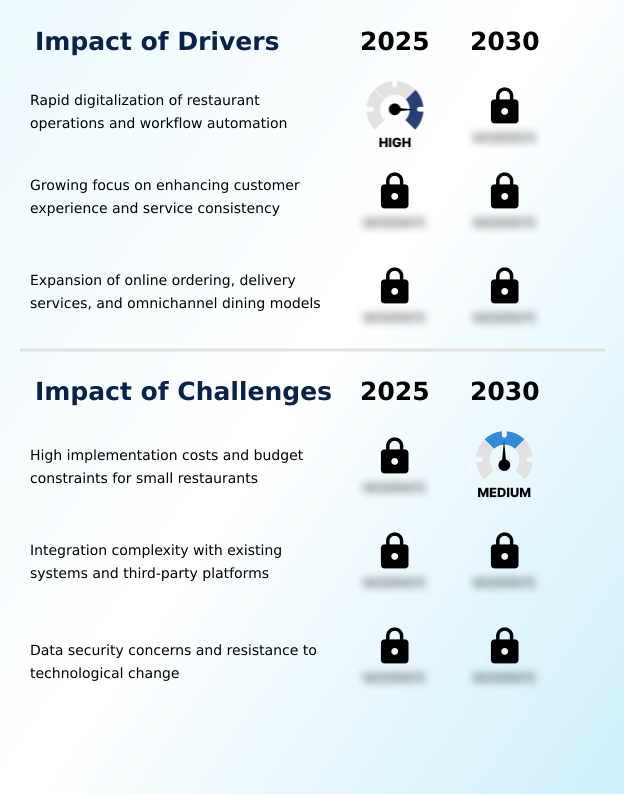
What are the key market drivers leading to the rise in the adoption of Restaurant Management Software Industry?
- The rapid digitalization of restaurant operations and the push for workflow automation are key drivers propelling market growth.
- Market growth is driven by the urgent need for operational efficiency and omnichannel dining management. A modern restaurant operations platform enables centralized order processing from in-house and third-party channels via seamless online ordering integration.
- This push for efficiency extends to back-of-house automation and kitchen workflow optimization, where kitchen order ticket (kot) automation has been shown to reduce order fulfillment times by over 25%.
- On the management side, tools for labor cost optimization, such as a workforce scheduling platform, and real-time sales reporting empower data-driven decision making.
- Furthermore, real-time inventory tracking reduces waste and improves margins, while integrated payment solutions streamline the entire transaction process.
What are the market trends shaping the Restaurant Management Software Industry?
- A significant market trend is the accelerating adoption of cloud-based and subscription-oriented software platforms, reflecting a fundamental shift in how restaurants procure and scale technology.
- Key market trends are centered on enhancing the customer journey through technology. The adoption of subscription-based software models is accelerating, allowing for continuous updates to features like digital menu management and marketing automation tools.
- This supports a rise in contactless ordering systems, including QR code menu generation and self-service kiosks, which integrate with mobile POS applications for seamless mobile payment processing. These digital storefront solutions are not just transactional; they incorporate powerful guest engagement tools and loyalty program integration.
- Back-end menu engineering analytics improve profitability by 10-15%, while detailed customer preference tracking enables personalization, improving repeat business by over 20%.
What challenges does the Restaurant Management Software Industry face during its growth?
- High implementation costs and persistent budget constraints, particularly for small restaurants, present a key challenge affecting industry-wide adoption and growth.
- Significant challenges persist, primarily around the complexity and cost of integrating disparate systems. Implementing comprehensive hospitality management solutions can be hindered by difficulties with third-party delivery integration, which often requires custom API for third-party apps and can increase initial setup costs by 20%. Achieving robust payment security compliance is another major hurdle, particularly for smaller operators.
- Even with advanced software, businesses struggle to utilize features like customer relationship management (crm) and guest feedback analytics effectively without proper training, leading to a 50% underutilization of tools designed for customer data analytics. Similarly, extracting value from waste reduction analytics or server performance metrics requires a shift in management culture toward data literacy.
Exclusive Technavio Analysis on Customer Landscape
The restaurant management software market forecasting report includes the adoption lifecycle of the market, covering from the innovator’s stage to the laggard’s stage. It focuses on adoption rates in different regions based on penetration. Furthermore, the restaurant management software market report also includes key purchase criteria and drivers of price sensitivity to help companies evaluate and develop their market growth analysis strategies.
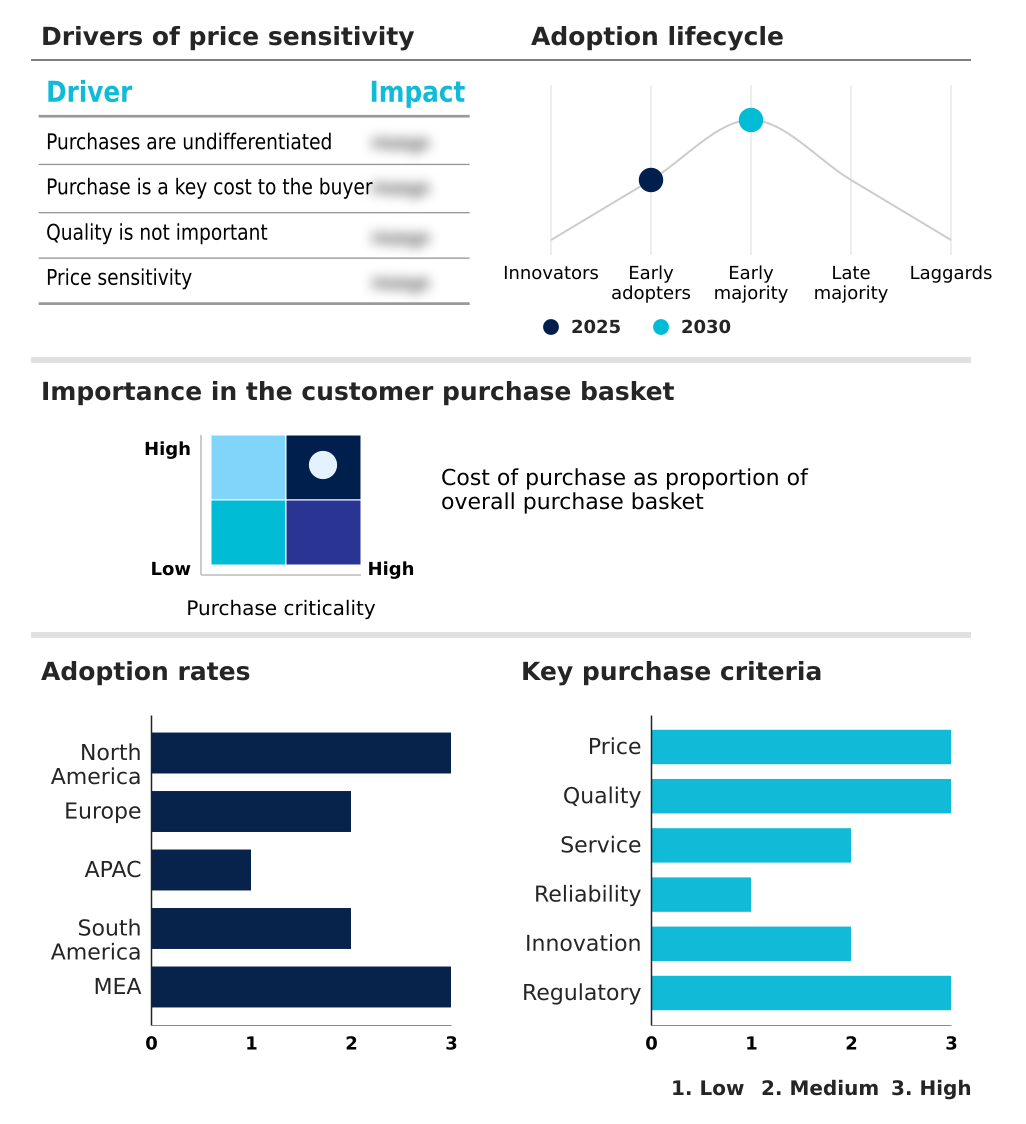
Customer Landscape of Restaurant Management Software Industry
Competitive Landscape
Companies are implementing various strategies, such as strategic alliances, restaurant management software market forecast, partnerships, mergers and acquisitions, geographical expansion, and product/service launches, to enhance their presence in the industry.
Block Inc. - Analysis shows a strategic focus on unified cloud platforms that integrate point-of-sale, payments, and operational management to enhance restaurant efficiency and guest engagement.
The industry research and growth report includes detailed analyses of the competitive landscape of the market and information about key companies, including:
- Block Inc.
- Cozy Infosystems Inc.
- Fiserv Inc.
- Fourth Enterprises LLC
- Gofrugal Technologies Ltd.
- i3 Verticals Inc.
- Jolt Software Inc.
- Lavu Inc.
- Lightspeed Commerce Inc.
- NCR Payment Solutions LLC
- OpenTable Inc.
- Oracle Corp.
- PAR Technology Corp.
- Restaurant365 LLC
- Shift4 Payments Inc.
- Technoheaven Pvt.
- Toast Inc.
- TouchBistro Inc.
Qualitative and quantitative analysis of companies has been conducted to help clients understand the wider business environment as well as the strengths and weaknesses of key industry players. Data is qualitatively analyzed to categorize companies as pure play, category-focused, industry-focused, and diversified; it is quantitatively analyzed to categorize companies as dominant, leading, strong, tentative, and weak.
Recent Development and News in Restaurant management software market
- In September 2024, Zomato launched its new POS Developer Platform, providing unified API guides and real-time testing tools to accelerate integration for point-of-sale partners and streamline restaurant operations.
- In March 2025, Block Inc. announced the launch of its next-generation Square Point of Sale App, a unified application combining commerce, payments, and operational tools into a single, streamlined interface for sellers.
- In April 2025, Lightspeed Commerce Inc. integrated wholesale ordering directly into its retail POS platform with PO Sync, allowing retailers to automate replenishment orders to suppliers with a single click.
- In May 2025, Toast, Inc. introduced ToastIQ, an AI-powered intelligence engine designed to provide data-driven prompts, personalized recommendations, and automated workflows to help restaurant operators manage daily operations more efficiently.
Dive into Technavio’s robust research methodology, blending expert interviews, extensive data synthesis, and validated models for unparalleled Restaurant Management Software Market insights. See full methodology.
| Market Scope | |
|---|---|
| Page number | 294 |
| Base year | 2025 |
| Historic period | 2020-2024 |
| Forecast period | 2026-2030 |
| Growth momentum & CAGR | Accelerate at a CAGR of 19.4% |
| Market growth 2026-2030 | USD 9117.3 million |
| Market structure | Fragmented |
| YoY growth 2025-2026(%) | 17.4% |
| Key countries | US, Canada, Mexico, Germany, UK, France, Italy, Spain, The Netherlands, China, Japan, India, South Korea, Australia, Indonesia, Brazil, Argentina, Chile, Saudi Arabia, UAE, South Africa, Israel and Turkey |
| Competitive landscape | Leading Companies, Market Positioning of Companies, Competitive Strategies, and Industry Risks |
Research Analyst Overview
- From a strategic viewpoint, the market is defined by the shift toward a unified cloud-based pos architecture. Boardroom decisions center on this migration, which integrates point-of-sale (pos) systems with tools for the complete guest journey, including online reservation systems, table management software, contactless ordering systems via qr code menu generation, and self-service kiosks.
- This approach enhances omnichannel dining management and is completed with mobile payment processing and integrated payment solutions. Operationally, this extends to back-of-house automation, connecting the kitchen display systems (kds) for superior kitchen workflow optimization.
- Core back-end functions like inventory control software, procurement management modules, supply chain optimization, and employee payroll processing are unified within a single enterprise resource planning (erp) or specialized restaurant accounting software. The power of this ecosystem lies in data-driven decision making, fueled by menu engineering analytics, real-time sales reporting, guest feedback analytics, and waste reduction analytics.
- These insights inform predictive demand forecasting and precise food cost management, while nutritional data management ensures compliance. Advanced platforms also improve server performance metrics and table turnover rate tracking. Finally, this ecosystem connects externally through digital storefront solutions, marketing automation tools, customer relationship management (crm) with loyalty program integration, and essential third-party delivery integration.
What are the Key Data Covered in this Restaurant Management Software Market Research and Growth Report?
-
What is the expected growth of the Restaurant Management Software Market between 2026 and 2030?
-
USD 9.12 billion, at a CAGR of 19.4%
-
-
What segmentation does the market report cover?
-
The report is segmented by Deployment (On-premises, and Cloud based), End-user (Quick service restaurant, Full-service restaurant, and Institutional), Type (Front end software, Accounting and cash flow, Purchasing and inventory management, and Others) and Geography (North America, Europe, APAC, South America, Middle East and Africa)
-
-
Which regions are analyzed in the report?
-
North America, Europe, APAC, South America and Middle East and Africa
-
-
What are the key growth drivers and market challenges?
-
Rapid digitalization of restaurant operations and workflow automation, High implementation costs and budget constraints for small restaurants
-
-
Who are the major players in the Restaurant Management Software Market?
-
Block Inc., Cozy Infosystems Inc., Fiserv Inc., Fourth Enterprises LLC, Gofrugal Technologies Ltd., i3 Verticals Inc., Jolt Software Inc., Lavu Inc., Lightspeed Commerce Inc., NCR Payment Solutions LLC, OpenTable Inc., Oracle Corp., PAR Technology Corp., Restaurant365 LLC, Shift4 Payments Inc., Technoheaven Pvt., Toast Inc. and TouchBistro Inc.
-
Market Research Insights
- Market dynamics are increasingly shaped by the pursuit of data-driven efficiency through integrated hospitality management solutions. The adoption of a unified commerce platform has been shown to reduce order processing errors by up to 25%, directly improving customer satisfaction.
- Furthermore, implementing real-time inventory tracking as part of a restaurant operations platform can decrease food waste by 15%, which significantly impacts bottom-line profitability. These food service technology advancements enable operators to leverage customer data analytics for targeted marketing and labor cost optimization.
- As a result, businesses are shifting from fragmented tools to holistic systems that offer a complete view of operations, from centralized order processing to restaurant financial reporting, driving a higher return on technology investment.
We can help! Our analysts can customize this restaurant management software market research report to meet your requirements.
 RIA -
RIA -