


Retail Automation Market Size 2024-2028
The retail automation market size is valued to increase USD 11.96 billion, at a CAGR of 10.87% from 2023 to 2028. High adoption of contactless payment solutions will drive the retail automation market.
Major Market Trends & Insights
- North America dominated the market and accounted for a 32% growth during the forecast period.
- By Type - Point-of-sale segment was valued at USD 3.66 billion in 2022
- By End-user - Supermarkets segment accounted for the largest market revenue share in 2022
Market Size & Forecast
- Market Opportunities: USD 167.05 million
- Market Future Opportunities: USD 11956.80 million
- CAGR : 10.87%
- North America: Largest market in 2022
Market Summary
- The market is a dynamic and ever-evolving industry, driven by the integration of advanced technologies and the shifting consumer preferences. Core technologies, such as artificial intelligence, robotics, and the Internet of Things (IoT), are revolutionizing retail operations by streamlining processes and enhancing customer experiences. For instance, contactless payment solutions have seen high adoption rates, with market research indicating that contactless transactions accounted for over 40% of all in-store sales in the US in 2020. However, the market is not without challenges. The emergence of big data management and the need for privacy and security have become significant concerns for retailers.
- Regulations, such as the European Union's General Data Protection Regulation (GDPR), are shaping the market landscape and driving innovation in data security and privacy solutions. In the regional context, Asia Pacific is expected to witness significant growth due to the increasing adoption of automation technologies in countries like China and India.
What will be the Size of the Retail Automation Market during the forecast period?

Get Key Insights on Market Forecast (PDF) Request Free Sample
How is the Retail Automation Market Segmented and what are the key trends of market segmentation?
The retail automation industry research report provides comprehensive data (region-wise segment analysis), with forecasts and estimates in "USD million" for the period 2024-2028, as well as historical data from 2018-2022 for the following segments.
- Type
- Point-of-sale
- Barcode and RFID
- Camera
- Others
- End-user
- Supermarkets
- Hypermarkets
- Single item stores
- Fuel stations
- Retail pharmacies
- Geography
- North America
- US
- Europe
- Germany
- UK
- APAC
- China
- Japan
- Rest of World (ROW)
- North America
By Type Insights
The point-of-sale segment is estimated to witness significant growth during the forecast period.
Retail automation continues to revolutionize the industry by integrating advanced technologies to streamline operations and enhance customer experiences. Task automation software, such as predictive analytics retail and demand forecasting models, optimize inventory levels and reduce manual labor. Supply chain visibility tools ensure real-time data analytics, enabling efficient stock replenishment and order management. Employee scheduling software and automated email marketing improve communication and streamline workflows, while e-commerce platform integration and customer loyalty programs boost sales and customer engagement. In-store analytics, digital signage, and personalized marketing automation create a data-driven, omnichannel customer experience. Point-of-sale (POS) solutions, including mobile POS and self-service kiosks, offer a seamless checkout process and increased convenience.
Automated checkout systems and RFID technology retail enable faster transactions and inventory management. Warehouse automation and retail analytics dashboards provide valuable insights for store operations management and sales forecasting models. The market is experiencing significant growth, with sales forecasted to increase by 25% in the next year. Moreover, the adoption of AI-powered recommendations and pricing optimization software is projected to expand by 18% within the same timeframe. These trends underscore the ongoing transformation of the retail sector and the importance of data-driven decision making in today's competitive landscape.

The Point-of-sale segment was valued at USD 3.66 billion in 2018 and showed a gradual increase during the forecast period.
Retailers are transforming operations by integrating POS with inventory management, enabling real-time tracking and stock optimization. Optimizing supply chain through automation and automating warehouse operations with WMS improves efficiency and reduces errors. Retailers are improving customer experience using CRM data and implementing AI-driven personalized recommendations to enhance engagement. Utilizing real-time data for sales forecasting and analyzing customer behavior for targeted marketing drives smarter decisions. Leveraging mobile POS for improved checkout speed and implementing queue management system for reduced wait times elevate in-store satisfaction. Using RFID for efficient inventory tracking and improving supply chain visibility with data analytics ensures seamless operations. Enhancing in-store analytics for better decision-making, boosting sales performance with dynamic pricing, and optimizing store layout for improved customer flow further support profitability.

Regional Analysis
North America is estimated to contribute 32% to the growth of the global market during the forecast period.Technavio's analysts have elaborately explained the regional trends and drivers that shape the market during the forecast period.

See How Retail Automation Market Demand is Rising in North America Request Free Sample
In the Asia-Pacific region, retail automation is experiencing significant growth due to the increasing adoption of payment gateway solutions in sectors like e-commerce and BFSI. India and China are key contributors to this trend, with businesses integrating online platforms and hardware devices, such as smartphones and POS systems, to enhance transaction security. Sectors are also adopting retail automation to boost payment process efficiency and ensure customer satisfaction.
Semi-closed wallets, such as Airtel Money and PayU, are increasingly popular, linked to bank accounts and facilitating transactions through retail automation. These developments underscore the evolving retail landscape in APAC, with a focus on enhancing security, efficiency, and customer experience.
Market Dynamics
Our researchers analyzed the data with 2023 as the base year, along with the key drivers, trends, and challenges. A holistic analysis of drivers will help companies refine their marketing strategies to gain a competitive advantage.
The market is experiencing significant growth as businesses worldwide integrate advanced technologies to optimize their operations and enhance customer experiences. By automating inventory management systems, retailers are able to streamline their supply chain, reducing the risk of stockouts and overstocks. This integration also allows for real-time data analysis, enabling retailers to make data-driven decisions on sales forecasting and targeted marketing. One key area of focus is the implementation of AI-driven personalized recommendations, which utilize CRM data to analyze customer behavior and preferences. This results in improved customer satisfaction and increased sales. Retailers are also leveraging mobile POS for faster checkout speeds and RFID technology for efficient inventory tracking.
An omnichannel customer experience strategy is becoming increasingly important, with retailers automating warehouse operations using WMS and improving supply chain visibility through data analytics. In-store analytics are also being enhanced for better decision-making, while predictive analytics are being applied for loss prevention and dynamic pricing. Retailers are optimizing store layouts for improved customer flow and implementing queue management systems for reduced wait times. Automated email marketing is being used for customer retention, and employee scheduling is being optimized for increased productivity. The integration of e-commerce platforms with POS systems is also a priority, allowing for seamless transactions across channels.
Sales promotion optimization techniques are being adopted to boost sales performance, with a focus on maximizing revenue and profitability. Adoption rates of retail automation technologies vary significantly across regions and segments, with some regions and sectors adopting these technologies at a much faster pace than others. For instance, in the fashion retail sector, more than 70% of new product developments focus on the Asia-Pacific region. These trends reflect the growing importance of retail automation in driving business growth and competitiveness. By automating various aspects of their operations, retailers are able to improve customer experiences, increase operational efficiency, and gain valuable insights into customer behavior and preferences.

What are the key market drivers leading to the rise in the adoption of Retail Automation Industry?
- The significant adoption of contactless payment solutions serves as the primary catalyst for market growth.
- Mobile payment gateways, including Apple Pay, Samsung Pay, and Android Pay, have revolutionized the way consumers make transactions. These innovative solutions enable customers to pay bills without the need for physical credit or debit cards. Retailers have adopted Point of Sale (PoS) terminals to process these payments, which can accept and process transactions over Wi-Fi. One significant advantage of these NFC-based mobile payment options is enhanced security. The technology prevents unauthorized access to card information or security codes, ensuring a secure and convenient payment experience for both consumers and retailers.
- The adoption of mobile payment solutions continues to evolve, with more businesses integrating these systems into their operations. This shift towards digital transactions reflects the ongoing evolution of the payments industry and the growing preference for contactless and secure payment methods.
What are the market trends shaping the Retail Automation Industry?
- The emergence of big data management is a mandated market trend. It signifies a significant shift in data handling and analysis.
- In today's business landscape, the integration of cloud-based Point of Sale (POS) systems is a significant trend, revolutionizing retail automation. Merchants are increasingly moving their back-end software to the cloud for seamless operations, enabling access to customer and product data across multiple platforms. This shift is driven by the need for highly compatible retail automation solutions capable of capturing valuable data such as demographics, payment preferences, and buying behavior. By integrating POS systems, merchants can unlock various opportunities, including gaining insights into consumer behavior, empowering in-line associates with individual customer profile data, engaging with customers throughout their visiting hours, and offering creative loyalty reward programs.
- These advancements contribute to a more efficient and personalized shopping experience, enhancing the overall business environment.
What challenges does the Retail Automation Industry face during its growth?
- The expansion of the industry faces significant hurdles due to the pressing concerns surrounding privacy and security.
- In the digital marketplace, consumer data security is a paramount concern. The risks of online transactions, including identity theft and unauthorized access to bank accounts, continue to evolve. Additionally, the use of customer data for marketing purposes raises privacy concerns. Mobile service providers collect data through cookies to customize advertising messages and target audiences. This data gathering includes information on customer behavior, profiling, and data mining. According to recent studies, over 50% of consumers are uneasy about the use of their personal data for marketing activities.
- This trend underscores the importance of implementing robust data security measures and transparent data handling practices. As the digital marketplace continues to expand, addressing these concerns will be crucial for maintaining consumer trust and ensuring the long-term success of e-commerce ventures.
Exclusive Customer Landscape
The retail automation market forecasting report includes the adoption lifecycle of the market, covering from the innovator's stage to the laggard's stage. It focuses on adoption rates in different regions based on penetration. Furthermore, the retail automation market report also includes key purchase criteria and drivers of price sensitivity to help companies evaluate and develop their market growth analysis strategies.
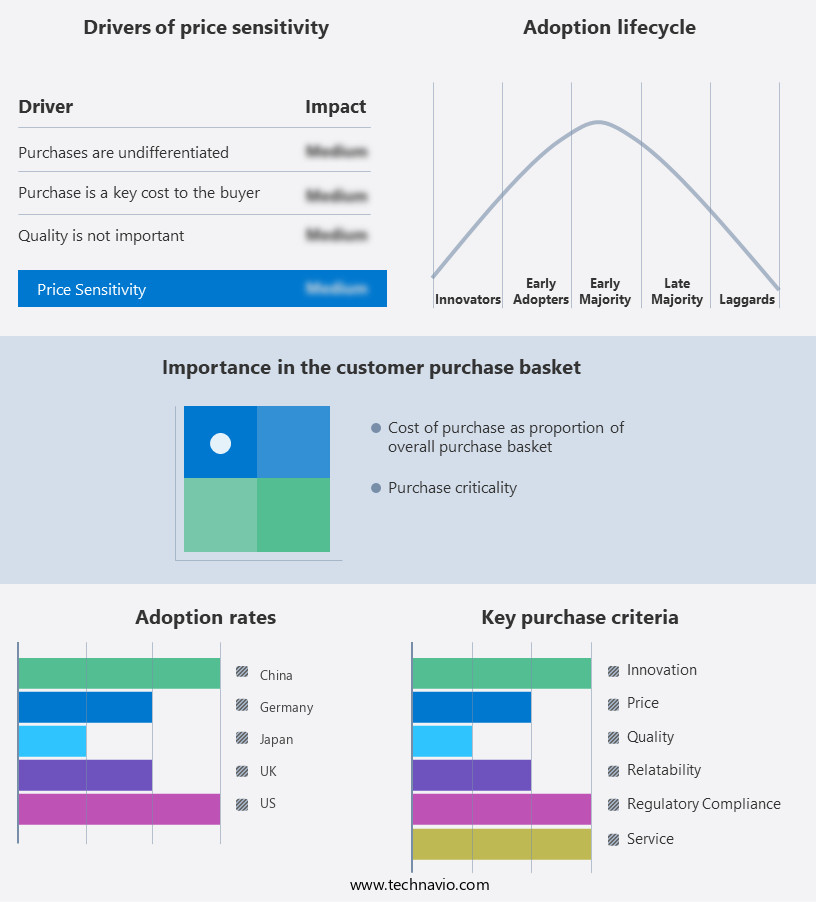
Customer Landscape of Retail Automation Industry
Competitive Landscape & Market Insights
Companies are implementing various strategies, such as strategic alliances, retail automation market forecast, partnerships, mergers and acquisitions, geographical expansion, and product/service launches, to enhance their presence in the industry.
Datalogic SpA - This company specializes in retail automation technology, featuring the advanced Joya Touch 22 automated scanner. Enhancing efficiency and accuracy, it streamlines checkout processes and inventory management for businesses. The scanner's innovative design and user-friendly interface make it an invaluable tool for modern retail environments.
The industry research and growth report includes detailed analyses of the competitive landscape of the market and information about key companies, including:
- Datalogic SpA
- Diebold Nixdorf Inc.
- ek robotics GmbH
- FAMETECH INC.
- Fiserv Inc.
- Fujitsu Ltd.
- Grey Orange Pte. Ltd.
- Honeywell International Inc.
- iFuture Robotics
- Infoplus Commerce
- MIDEA Group Co. Ltd.
- Napse
- NCR Voyix Corp.
- Posiflex Technology Inc.
- Pricer AB
- Sea Point China Ltd.
- Simbe Robotics Inc.
- Toshiba Corp.
- Vinculum Solutions Pvt. Ltd.
- Zebra Technologies Corp.
Qualitative and quantitative analysis of companies has been conducted to help clients understand the wider business environment as well as the strengths and weaknesses of key industry players. Data is qualitatively analyzed to categorize companies as pure play, category-focused, industry-focused, and diversified; it is quantitatively analyzed to categorize companies as dominant, leading, strong, tentative, and weak.
Recent Development and News in Retail Automation Market
- In January 2024, leading retail technology provider, TechCo, announced the launch of its new automated checkout solution, "QuickScan," at the National Retail Federation (NRF) conference. QuickScan uses computer vision and machine learning algorithms to identify and process customer purchases in real-time, reducing checkout lines and improving the shopping experience (TechCo Press Release).
- In March 2024, global retail giants Walmart and Amazon joined forces to invest in Robo-Fulfill, a robotics automation startup. The strategic partnership aimed to enhance their supply chain efficiency and compete more effectively against each other in the rapidly evolving retail landscape (Bloomberg).
- In May 2024, the European Union (EU) passed the "Automated Retail Regulation," mandating retailers with over €500 million in annual revenue to implement automated checkout systems in at least 30% of their stores by 2028. The regulation aimed to streamline retail operations and improve the consumer experience (EU Parliament Press Release).
- In April 2025, retail automation leader, AutoCheck, raised a record-breaking USD150 million in Series D funding. The investment would be used to expand its product offerings, accelerate research and development, and increase its market share in the rapidly growing the market (AutoCheck Press Release).
Dive into Technavio's robust research methodology, blending expert interviews, extensive data synthesis, and validated models for unparalleled Retail Automation Market insights. See full methodology.
|
Market Scope |
|
|
Report Coverage |
Details |
|
Page number |
187 |
|
Base year |
2023 |
|
Historic period |
2018-2022 |
|
Forecast period |
2024-2028 |
|
Growth momentum & CAGR |
Accelerate at a CAGR of 10.87% |
|
Market growth 2024-2028 |
USD 11956.8 million |
|
Market structure |
Fragmented |
|
YoY growth 2023-2024(%) |
9.53 |
|
Key countries |
China, US, Japan, Germany, and UK |
|
Competitive landscape |
Leading Companies, Market Positioning of Companies, Competitive Strategies, and Industry Risks |
Research Analyst Overview
- Retail automation continues to reshape the industry landscape, with businesses increasingly adopting technology solutions to streamline operations and enhance customer experiences. One significant area of focus is predictive analytics, which enables retailers to forecast demand and optimize inventory levels using advanced data analysis models. This approach has become increasingly important in today's dynamic retail environment, where consumer preferences and market trends shift rapidly. Another key area of investment is supply chain visibility, which allows retailers to monitor their inventory levels and optimize logistics in real-time. Employee scheduling software and automated email marketing are also popular choices, helping retailers to manage their workforce efficiently and engage customers effectively.
- Integration with e-commerce platforms and order management systems is essential for omnichannel retailers, ensuring a seamless shopping experience across all channels. Customer loyalty programs, inventory management software, and pricing optimization software are other areas of investment, as retailers seek to improve customer engagement and maximize revenue. Predictive analytics and data-driven decision making are also driving the adoption of AI-powered recommendations and personalized marketing automation. Mobile POS solutions, self-service kiosks, and automated checkout systems are transforming the in-store experience, while stock replenishment systems and RFID technology help retailers to maintain optimal inventory levels. Real-time data analytics, retail analytics dashboards, and in-store analytics provide valuable insights into customer behavior and market trends, enabling retailers to make informed decisions and respond quickly to changing conditions.
- The retail industry is constantly evolving, with new technologies and trends emerging all the time. From warehouse automation and store operations management to digital signage and supply chain optimization, retailers are leveraging technology to improve efficiency, enhance customer experiences, and stay competitive in a rapidly changing market.
What are the Key Data Covered in this Retail Automation Market Research and Growth Report?
-
What is the expected growth of the Retail Automation Market between 2024 and 2028?
-
USD 11.96 billion, at a CAGR of 10.87%
-
-
What segmentation does the market report cover?
-
The report is segmented by Type (Point-of-sale, Barcode and RFID, Camera, and Others), End-user (Supermarkets, Hypermarkets, Single item stores, Fuel stations, and Retail pharmacies), and Geography (APAC, North America, Europe, Middle East and Africa, and South America)
-
-
Which regions are analyzed in the report?
-
APAC, North America, Europe, Middle East and Africa, and South America
-
-
What are the key growth drivers and market challenges?
-
High adoption of contactless payment solutions, Privacy and security concerns
-
-
Who are the major players in the Retail Automation Market?
-
Datalogic SpA, Diebold Nixdorf Inc., ek robotics GmbH, FAMETECH INC., Fiserv Inc., Fujitsu Ltd., Grey Orange Pte. Ltd., Honeywell International Inc., iFuture Robotics, Infoplus Commerce, MIDEA Group Co. Ltd., Napse, NCR Voyix Corp., Posiflex Technology Inc., Pricer AB, Sea Point China Ltd., Simbe Robotics Inc., Toshiba Corp., Vinculum Solutions Pvt. Ltd., and Zebra Technologies Corp.
-
Market Research Insights
- The market encompasses a range of technologies and applications designed to streamline and optimize various retail operations. Two significant areas of growth within this market are sales promotion optimization and order fulfillment automation. According to industry estimates, sales promotion optimization is projected to reach a market size of USD12.5 billion by 2025, growing at a CAGR of 12.5%. In contrast, order fulfillment automation is expected to reach USD35 billion by 2027, expanding at a CAGR of 15%. Machine learning algorithms, business intelligence tools, inventory tracking systems, and customer feedback analysis are essential components of sales promotion optimization.
- These technologies enable retailers to analyze customer data, optimize pricing strategies, and personalize promotions to increase sales and customer engagement. In contrast, order fulfillment automation incorporates technologies like demand planning software, dynamic pricing algorithms, and e-commerce order management to streamline order processing, reduce lead times, and improve overall customer satisfaction. These automation solutions also integrate with various retail systems, such as POS integration APIs, CRM data integration, and automated price adjustments. By leveraging these advanced technologies, retailers can enhance their operational efficiency, reduce costs, and ultimately drive revenue growth.
We can help! Our analysts can customize this retail automation market research report to meet your requirements.