

Robotic Vacuum Cleaner Market Size 2026-2030
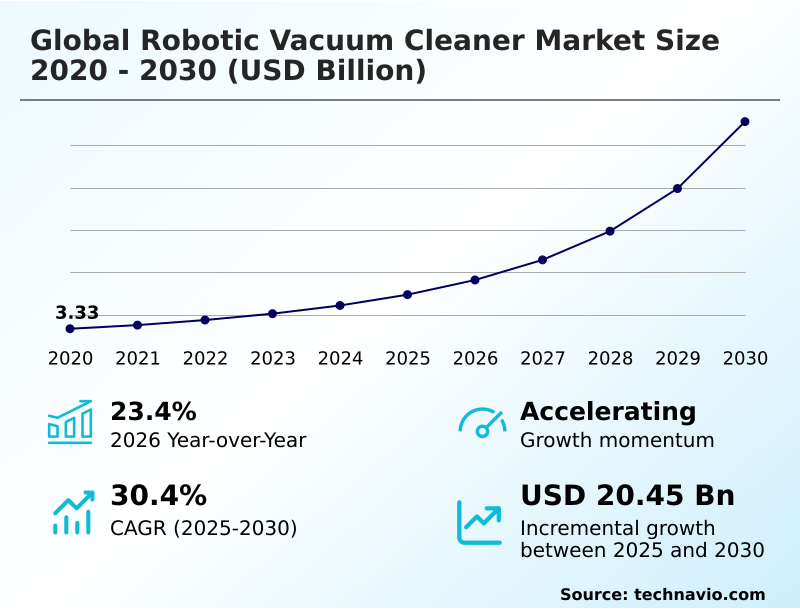
The robotic vacuum cleaner market size is valued to increase by USD 20.45 billion, at a CAGR of 30.4% from 2025 to 2030. Integration of advanced AI and spatial mapping technologies will drive the robotic vacuum cleaner market.
Major Market Trends & Insights
- APAC dominated the market and accounted for a 35.8% growth during the forecast period.
- By Application - Residential segment was valued at USD 5.34 billion in 2024
- By Distribution Channel - Offline segment accounted for the largest market revenue share in 2024
Market Size & Forecast
- Market Opportunities: USD 24.48 billion
- Market Future Opportunities: USD 20.45 billion
- CAGR from 2025 to 2030 : 30.4%
Market Summary
- The robotic vacuum cleaner market is undergoing a significant transformation, moving beyond basic automation to embody advanced intelligence and operational autonomy. This evolution is propelled by breakthroughs in spatial navigation, including sophisticated sensor fusion and machine learning algorithms that enable devices to perceive and adapt to complex home environments with remarkable precision.
- A key trend shaping the industry is the convergence of functionalities, where single platforms now offer comprehensive floor care, from deep vacuuming to pressurized mopping and even air purification. This addresses a core consumer demand for convenience and efficiency.
- As these devices become integral to smart home ecosystems, concerns around data privacy and cybersecurity present formidable challenges, forcing a strategic pivot toward localized processing and enhanced encryption.
- For example, a facility management firm can deploy a fleet of commercial-grade robots that communicate to optimize cleaning schedules in a large office building, a scenario that highlights the critical need for secure, reliable, and interoperable systems.
- The industry's trajectory is toward creating fully autonomous maintenance solutions that require minimal human intervention, reflecting a broader shift in consumer expectations for domestic technology.
What will be the Size of the Robotic Vacuum Cleaner Market during the forecast period?
Get Key Insights on Market Forecast (PDF) Get Free Sample
How is the Robotic Vacuum Cleaner Market Segmented?
The robotic vacuum cleaner industry research report provides comprehensive data (region-wise segment analysis), with forecasts and estimates in "USD million" for the period 2026-2030, as well as historical data from 2020-2024 for the following segments.
- Application
- Residential
- Commercial
- Distribution channel
- Offline
- Online
- Type
- Floor vacuum cleaners
- Pool vacuum cleaners
- Geography
- APAC
- China
- Japan
- India
- North America
- US
- Canada
- Mexico
- Europe
- Germany
- UK
- France
- Middle East and Africa
- Saudi Arabia
- UAE
- South Africa
- South America
- Brazil
- Argentina
- Rest of World (ROW)
- APAC
By Application Insights
The residential segment is estimated to witness significant growth during the forecast period.
The residential market is driven by eco-conscious consumer expectations and the right-to-repair movement, favoring devices designed for longevity. Demand is high for vision-based navigation models that provide a comprehensive multi-level cleaning solution.
Advanced units feature millimeter-level navigation and pressurized mopping systems for superior floor care. Innovations include adaptive chassis systems that adjust to different surfaces and sensory-focused features for an enhanced user experience.
As the tech-driven service sector grows, localized data processing is becoming a key differentiator, addressing privacy concerns. Manufacturers also face increasing pressure to comply with extended producer responsibility and e-waste protocols.
For instance, incorporating localized processing can mitigate data privacy compliance risks for more than 40% of hesitant consumers, boosting brand trust and market penetration.
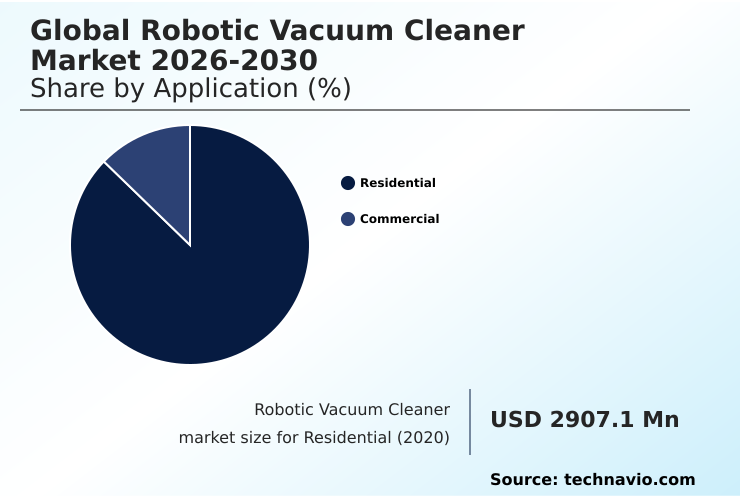
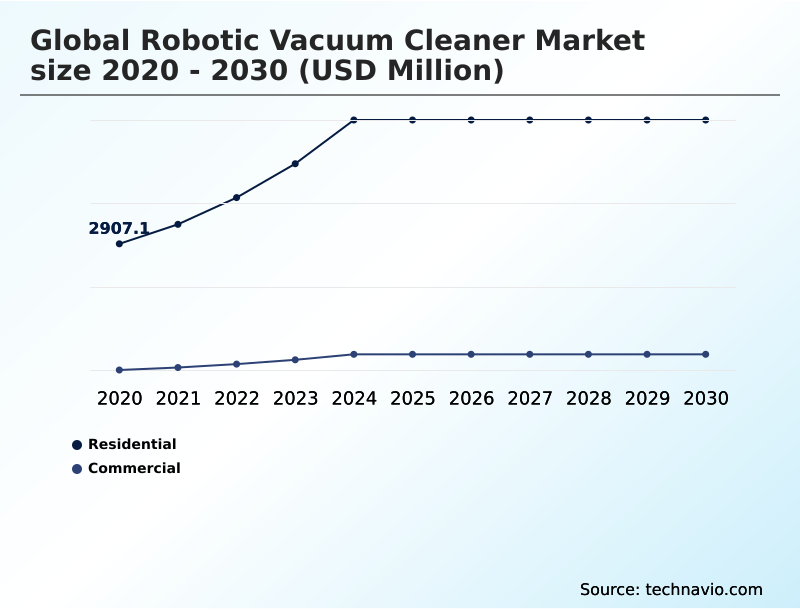
The Residential segment was valued at USD 5.34 billion in 2024 and showed a gradual increase during the forecast period.
Regional Analysis
APAC is estimated to contribute 35.8% to the growth of the global market during the forecast period.Technavio’s analysts have elaborately explained the regional trends and drivers that shape the market during the forecast period.
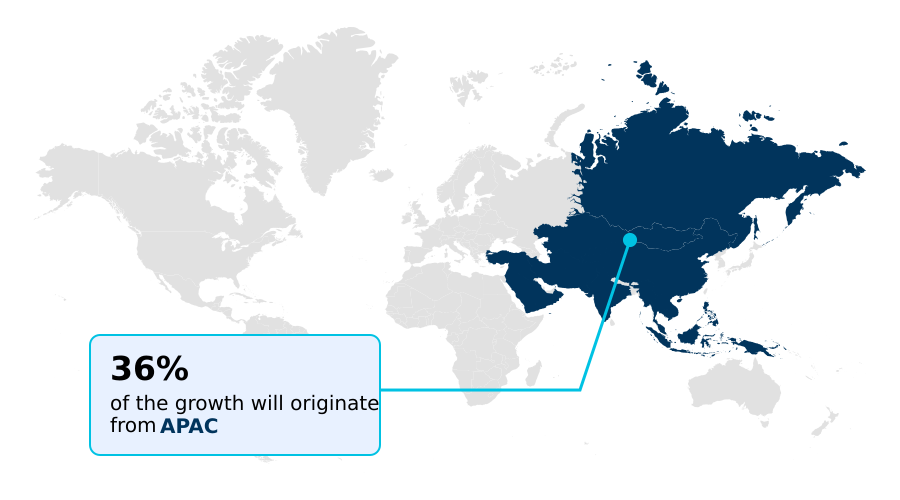
See How Robotic Vacuum Cleaner Market Demand is Rising in APAC Get Free Sample
The geographic landscape is defined by distinct regional dynamics, with APAC contributing over 35% of incremental growth, driven by manufacturing leadership and rapid adoption.
In contrast, North America, with a regional growth rate exceeding 31%, prioritizes smart home IoT interoperability and convenience-oriented home appliances. The widespread adoption of the matter connectivity standard in Western markets facilitates seamless cloud-based platform integration.
This has accelerated the demand for all-in-one docking stations and closed-loop maintenance systems. As socio-demographic pattern shifts continue, the push for embodied artificial intelligence is universal. However, concerns over domestic digital perimeter security require robust end-to-end data encryption.
Supply chain volatility impact also varies, influencing regional pricing and the availability of multi-functional docking stations and sustainable consumption models.
Market Dynamics
Our researchers analyzed the data with 2025 as the base year, along with the key drivers, trends, and challenges. A holistic analysis of drivers will help companies refine their marketing strategies to gain a competitive advantage.
- The market is advancing with highly specialized models designed for modern living. The ideal robotic vacuum for large homes now integrates multi-floor mapping robotic vacuum cleaner technology, ensuring comprehensive coverage without manual relocation. For households with animals, a robotic vacuum cleaner for pet hair featuring a robust robotic cleaner with advanced HEPA filter is essential for maintaining air quality.
- The quiet operation robotic vacuum cleaner is gaining popularity in noise-sensitive environments, while the high suction power robotic vacuum cleaner remains a top choice for deep cleaning. The best robotic vacuum for hardwood and carpet showcases versatility, a key purchasing factor.
- Innovation is prominent in features like the robotic mop with hot water washing and advanced robotic vacuum with edge cleaning technology. The d-shaped robotic vacuum laser navigation design offers superior corner cleaning.
- Leading models are also becoming smarter; the robotic vacuum supporting matter IoT standard integrates seamlessly into smart homes, while those with robotic vacuum with generative AI features offer predictive cleaning. The robotic vacuum with integrated air purification and the robotic vacuum cleaner with UV sterilization cater to health-conscious consumers.
- New hardware, like the robotic vacuum with active lift chassis, overcomes physical barriers. In fact, a robotic vacuum with stair climbing capability can increase autonomous cleaning coverage by up to 50% in multi-story homes compared to single-level units.
- Finally, the smart vacuum with auto self-emptying dock and the cordless robotic pool cleaner technology represent the peak of automated convenience, addressing robotic vacuum cleaner and data privacy concerns through secure onboard processing.
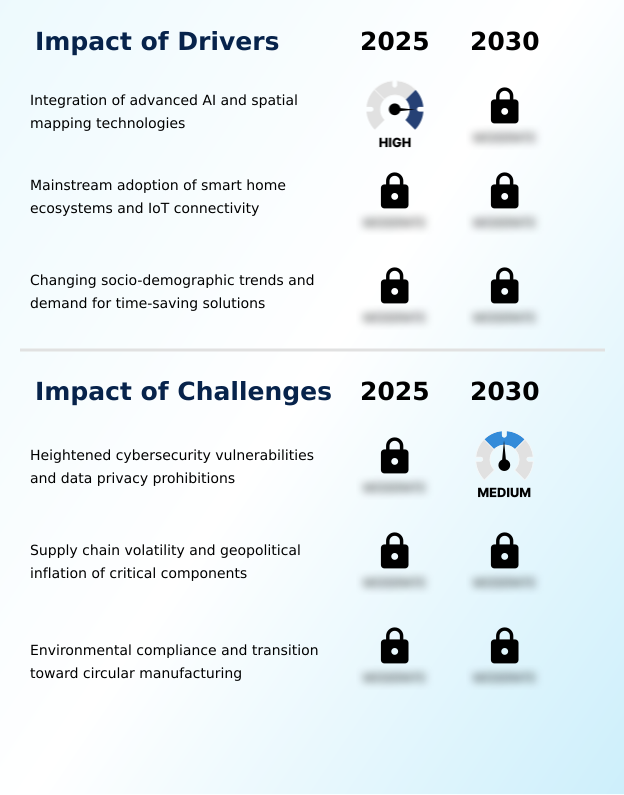
What are the key market drivers leading to the rise in the adoption of Robotic Vacuum Cleaner Industry?
- The integration of advanced AI and spatial mapping technologies serves as a primary driver, propelling the market's expansion and innovation.
- Key market drivers are reshaping product design toward convergent design in cleaning platforms with multi-surface cleaning capabilities. These high-power hybrid cleaning platforms utilize adaptive suction control and 3D structured light scanning for peak performance.
- Some premium models even feature an integrated aromatherapy system, reflecting a new focus on holistic air purification technology. A critical technological shift is toward on-device data processing, which supports data privacy and domestic security while enabling real-time health monitoring sensors.
- The development of active-lift chassis technology allows devices to navigate varied home terrains.
- However, the industry faces headwinds from geopolitical component inflation affecting the supply of solid-state lidar sensors and the move toward circular economy manufacturing, which requires investment in materials like bio-based plastic components.
What are the market trends shaping the Robotic Vacuum Cleaner Industry?
- The market is increasingly shaped by the maturation of multi-functional docking stations. These advanced, closed-loop maintenance systems are redefining the standards for autonomous cleaning.
- Market trends are coalescing around autonomous home maintenance ecosystems and advanced spatial navigation systems. The latest devices leverage lidar navigation and simultaneous localization and mapping, with some integrating binocular vision systems for enhanced depth perception. A key development is the use of generative AI object recognition, which allows robots to identify and react to obstacles with greater precision.
- On the maintenance side, multi-functional docking stations now feature hot-water mop washing and high-pressure steam drying, ensuring hygiene. This move toward professional-grade cleaning results is also seen in hardware, with retractable mop pads that protect carpets. As smart home IoT interoperability grows, these systems provide holistic environmental health monitoring.
- However, this connectivity introduces heightened cybersecurity vulnerabilities, a challenge the industry is actively addressing.
What challenges does the Robotic Vacuum Cleaner Industry face during its growth?
- Heightened cybersecurity vulnerabilities and prohibitive data privacy regulations present a significant challenge affecting industry growth and consumer adoption.
- The market faces significant challenges in balancing innovation with sustainability and security. Adherence to environmental compliance standards and digital product passport compliance is driving a shift toward materials like sodium-ion battery cells and investment in hands-free maintenance solutions. The development of advanced hardware, such as a novel wheel-leg architecture, pushes engineering limits but complicates circular manufacturing goals.
- Devices now integrate sophisticated time-of-flight sensors and hepa filtration systems for comprehensive indoor environmental management. Many models also include uv-c sterilization modules to deliver professional-grade cleaning results.
- The increasing reliance on edge computing integration and assistive domestic technologies, while beneficial, amplifies concerns about data privacy, pushing the need for secure systems that can provide holistic air purification technology without compromising user data.
Exclusive Technavio Analysis on Customer Landscape
The robotic vacuum cleaner market forecasting report includes the adoption lifecycle of the market, covering from the innovator’s stage to the laggard’s stage. It focuses on adoption rates in different regions based on penetration. Furthermore, the robotic vacuum cleaner market report also includes key purchase criteria and drivers of price sensitivity to help companies evaluate and develop their market growth analysis strategies.
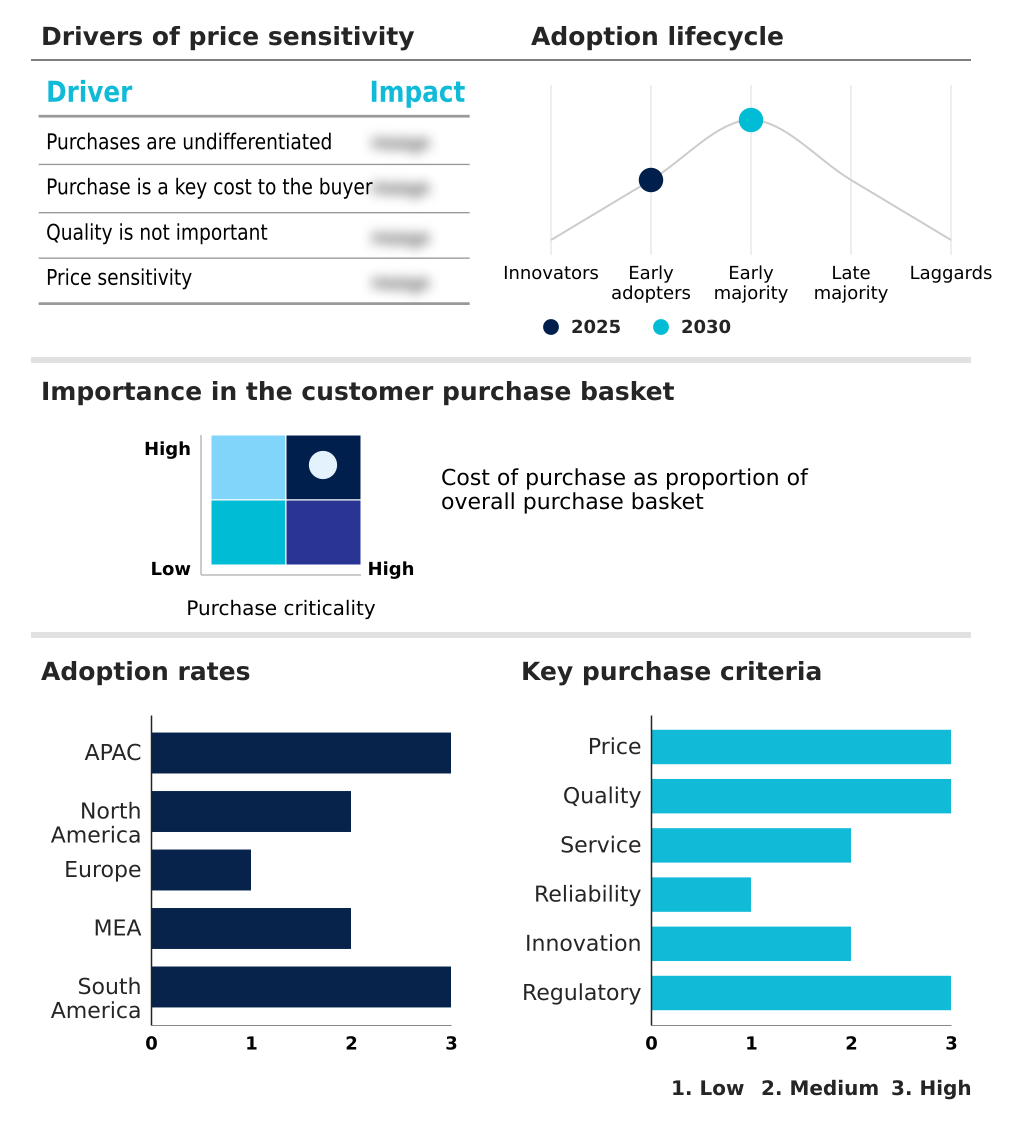
Customer Landscape of Robotic Vacuum Cleaner Industry
Competitive Landscape
Companies are implementing various strategies, such as strategic alliances, robotic vacuum cleaner market forecast, partnerships, mergers and acquisitions, geographical expansion, and product/service launches, to enhance their presence in the industry.
AirCraft Home Ltd. - Offerings are defined by advanced mapping and self-emptying features, delivering sophisticated, automated floor care solutions for modern residential environments.
The industry research and growth report includes detailed analyses of the competitive landscape of the market and information about key companies, including:
- AirCraft Home Ltd.
- Dyson Ltd.
- Electrolux Group
- Eufy
- ILIFE Innovation Ltd.
- Irobot Corp.
- Koninklijke Philips N.V.
- LG Electronics Inc.
- Milagrow Humantech
- Neato Robotics Inc.
- Panasonic Holdings Corp.
- Proscenic Technology Co. Ltd.
- Robert Bosch GmbH
- Samsung Electronics Co. Ltd.
- SharkNinja Operating LLC
- Sharp Corp.
- Taurus Group
- Vorwerk SE and Co. KG
- Xiaomi Corp.
Qualitative and quantitative analysis of companies has been conducted to help clients understand the wider business environment as well as the strengths and weaknesses of key industry players. Data is qualitatively analyzed to categorize companies as pure play, category-focused, industry-focused, and diversified; it is quantitatively analyzed to categorize companies as dominant, leading, strong, tentative, and weak.
Recent Development and News in Robotic vacuum cleaner market
- In July 2025, iRobot Corporation released the Roomba Max 705 Combo, a 2-in-1 system featuring a proprietary protective cover to shield carpets and heated mopping capabilities for stubborn stains.
- In August 2025, the Saudi Data and AI Authority announced a new initiative to promote the development of localized artificial intelligence solutions, which is expected to indirectly support the domestic robotics market.
- In March 2025, Maytronics reported unprecedented demand for residential robotic pool cleaners, prompting further industry integration of Internet of Things connectivity for remote monitoring and scheduling.
- In late 2025, SharkNinja launched a completely redesigned, consolidated web platform, which served as a primary driver for increased online traffic and cross-selling activity in its cleaning appliances division.
Dive into Technavio’s robust research methodology, blending expert interviews, extensive data synthesis, and validated models for unparalleled Robotic Vacuum Cleaner Market insights. See full methodology.
| Market Scope | |
|---|---|
| Page number | 289 |
| Base year | 2025 |
| Historic period | 2020-2024 |
| Forecast period | 2026-2030 |
| Growth momentum & CAGR | Accelerate at a CAGR of 30.4% |
| Market growth 2026-2030 | USD 20445.5 million |
| Market structure | Fragmented |
| YoY growth 2025-2026(%) | 23.4% |
| Key countries | China, Japan, India, South Korea, Australia, Indonesia, US, Canada, Mexico, Germany, UK, France, Italy, Spain, The Netherlands, Saudi Arabia, UAE, South Africa, Turkey, Israel, Brazil, Argentina and Chile |
| Competitive landscape | Leading Companies, Market Positioning of Companies, Competitive Strategies, and Industry Risks |
Research Analyst Overview
- The market's strategic landscape is dictated by a technological arms race, forcing boardroom decisions that balance innovation against compliance and supply chain risks. Leadership requires mastering a complex suite of technologies, from lidar navigation and simultaneous localization and mapping to advanced generative AI object recognition for millimeter-level navigation.
- The future is in fully autonomous platforms featuring hot-water mop washing, high-pressure steam drying, and integrated aromatherapy system capabilities, which are becoming key differentiators. Developing a proprietary wheel-leg architecture or active-lift chassis technology requires immense R&D, yet sourcing critical solid-state lidar sensors and time-of-flight sensors is subject to geopolitical volatility.
- Furthermore, adhering to digital product passport compliance and extended producer responsibility for e-waste protocols necessitates using bio-based plastic components and exploring sodium-ion battery cells. Integrating sensory-focused features, vibrating sonic mops, edge-to-edge cleaning brushes, pressurized mopping systems, and retractable mop pads into a single adaptive chassis systems, all governed by the matter connectivity standard, is the new benchmark.
- Ultimately, firms that implement on-device data processing and end-to-end data encryption alongside edge computing integration can mitigate security risks by over 60%, a crucial factor when using binocular vision systems and 3d structured light scanning.
- Success hinges on perfecting all-in-one, multi-functional docking stations that provide closed-loop maintenance systems with adaptive suction control, hepa filtration systems, and uv-c sterilization modules through seamless cloud-based platform integration.
What are the Key Data Covered in this Robotic Vacuum Cleaner Market Research and Growth Report?
-
What is the expected growth of the Robotic Vacuum Cleaner Market between 2026 and 2030?
-
USD 20.45 billion, at a CAGR of 30.4%
-
-
What segmentation does the market report cover?
-
The report is segmented by Application (Residential, and Commercial), Distribution Channel (Offline, and Online), Type (Floor vacuum cleaners, and Pool vacuum cleaners) and Geography (APAC, North America, Europe, Middle East and Africa, South America)
-
-
Which regions are analyzed in the report?
-
APAC, North America, Europe, Middle East and Africa and South America
-
-
What are the key growth drivers and market challenges?
-
Integration of advanced AI and spatial mapping technologies, Heightened cybersecurity vulnerabilities and data privacy prohibitions
-
-
Who are the major players in the Robotic Vacuum Cleaner Market?
-
AirCraft Home Ltd., Dyson Ltd., Electrolux Group, Eufy, ILIFE Innovation Ltd., Irobot Corp., Koninklijke Philips N.V., LG Electronics Inc., Milagrow Humantech, Neato Robotics Inc., Panasonic Holdings Corp., Proscenic Technology Co. Ltd., Robert Bosch GmbH, Samsung Electronics Co. Ltd., SharkNinja Operating LLC, Sharp Corp., Taurus Group, Vorwerk SE and Co. KG and Xiaomi Corp.
-
Market Research Insights
- The market is shaped by a complex interplay of consumer demands and technological capabilities, driving a shift toward sustainable consumption models and embodied artificial intelligence. While convenience-oriented home appliances are in high demand due to socio-demographic pattern shifts, a significant portion of consumers remain cautious.
- For example, heightened cybersecurity vulnerabilities cause nearly 40% of potential buyers to hesitate before purchasing vision-based navigation models. In response, a focus on domestic digital perimeter security and localized data processing is critical. Concurrently, the right-to-repair movement and eco-conscious consumer expectations are gaining traction, with over 60% of consumers now prioritizing a product's repairability score.
- This pivot pressures manufacturers to rethink design and supply chains, balancing innovation with environmental responsibility to secure long-term market viability.
We can help! Our analysts can customize this robotic vacuum cleaner market research report to meet your requirements.
 RIA -
RIA -