


Sanitizer Market Size 2026-2030
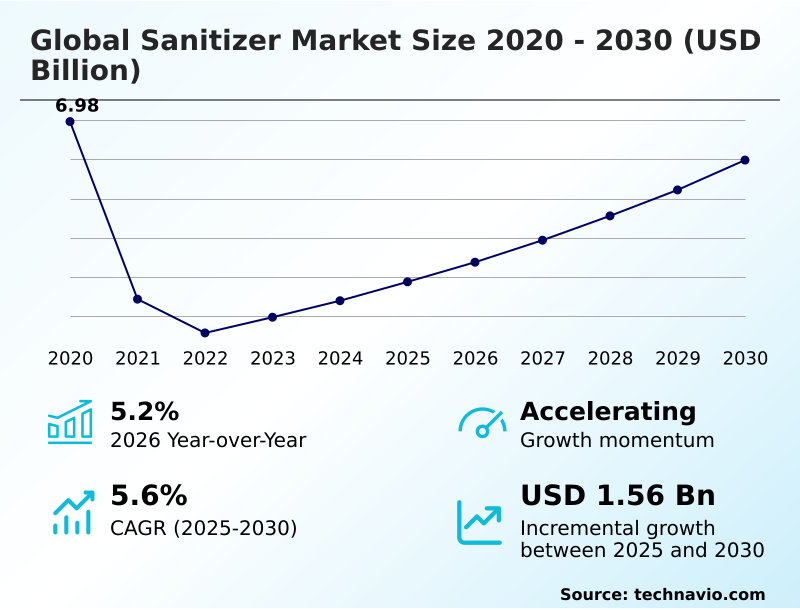
The sanitizer market size is valued to increase by USD 1.56 billion, at a CAGR of 5.6% from 2025 to 2030. Increase in hygiene consciousness will drive the sanitizer market.
Major Market Trends & Insights
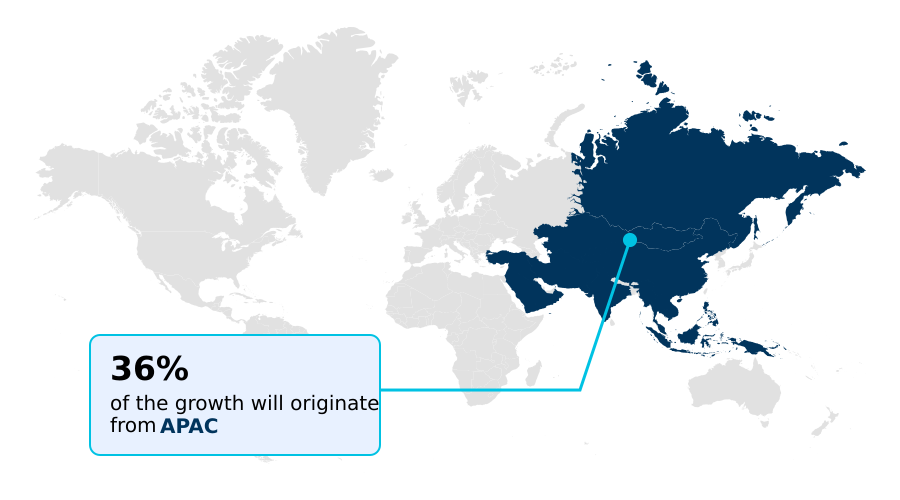
- APAC dominated the market and accounted for a 36.4% growth during the forecast period.
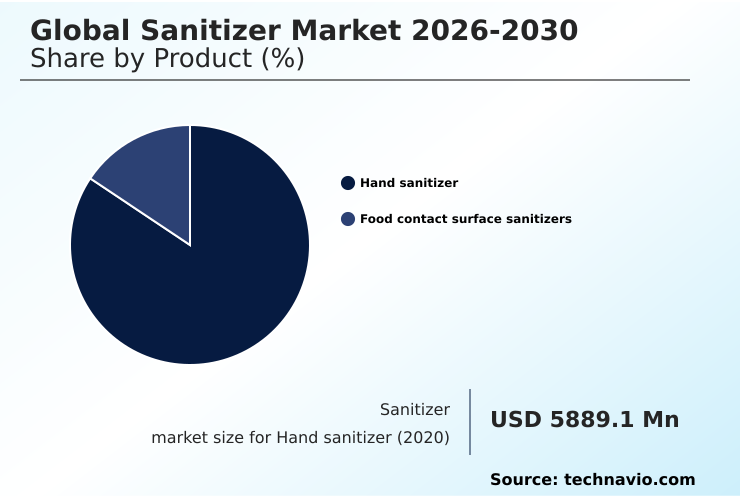
- By Product - Hand sanitizer segment was valued at USD 3.26 billion in 2024
- By Distribution Channel - Offline segment accounted for the largest market revenue share in 2024
Market Size & Forecast
- Market Opportunities: USD 489.9 million
- Market Future Opportunities: USD 1.56 billion
- CAGR from 2025 to 2030 : 5.6%
Market Summary
- The sanitizer market is undergoing a significant transformation, moving beyond a commodity-driven model to one defined by innovation, consumer sophistication, and stringent safety standards. A primary driver is the institutionalization of hygiene protocols in corporate, healthcare, and public sectors, creating a stable and recurring demand baseline.
- Concurrently, trends are shifting toward products that offer more than basic antimicrobial efficacy; consumers now seek formulations with moisturizing properties, sustainable packaging, and pleasant fragrances, pushing manufacturers toward premiumization. However, the market faces challenges related to regulatory compliance, which varies significantly across regions, and concerns over the health impacts of certain chemical ingredients.
- For instance, a multinational hospitality chain must navigate these complexities by sourcing sanitizers that not only meet diverse international efficacy standards but are also formulated with skin-friendly ingredients to enhance guest experience, all while managing a complex supply chain to ensure consistent availability across its properties.
- This scenario highlights the balance between operational efficiency, regulatory adherence, and meeting the expectations of a more discerning end-user, which now defines success in the market.
What will be the Size of the Sanitizer Market during the forecast period?
Get Key Insights on Market Forecast (PDF) Get Free Sample
How is the Sanitizer Market Segmented?
The sanitizer industry research report provides comprehensive data (region-wise segment analysis), with forecasts and estimates in "USD million" for the period 2026-2030, as well as historical data from 2020-2024 for the following segments.
- Product
- Hand sanitizer
- Food contact surface sanitizers
- Distribution channel
- Offline
- Online
- Type of packaging
- Pump bottles
- Refill packs
- Dispensing packets
- Geography
- North America
- US
- Canada
- Mexico
- Europe
- Germany
- UK
- France
- APAC
- China
- India
- Japan
- South America
- Brazil
- Argentina
- Colombia
- Middle East and Africa
- South Africa
- Saudi Arabia
- UAE
- Rest of World (ROW)
- North America
By Product Insights
The hand sanitizer segment is estimated to witness significant growth during the forecast period.
The hand sanitizer segment is shifting beyond basic utility, now defined by sophisticated consumer demands and product innovation. The market is increasingly segmented by formulations offering benefits beyond simple antimicrobial activity.
Consumers show a strong preference for premium sanitizer products that are non-sticky and feature a hypoallergenic skin sanitizer formula. This includes dermatologically tested formulation options, such as alcohol-based sanitizer that incorporates skin-conditioning sanitizers and pleasant, phthalate-free fragrance profiles.
The demand for alcohol-free alternatives utilizing ingredients like benzalkonium chloride is also a significant growth vector.
Influenced by k-beauty inspired sanitizers and dermo-cosmetic sanitizers, paraben-free formulation products now represent a key growth area, with some achieving a 36.4% greater adoption rate among target demographics.
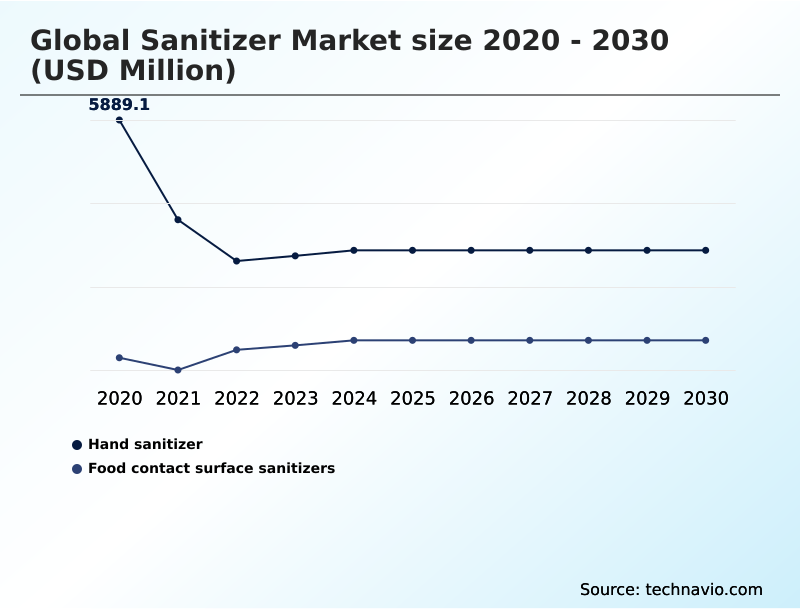
The Hand sanitizer segment was valued at USD 3.26 billion in 2024 and showed a gradual increase during the forecast period.
Regional Analysis
APAC is estimated to contribute 36.4% to the growth of the global market during the forecast period.Technavio’s analysts have elaborately explained the regional trends and drivers that shape the market during the forecast period.
See How Sanitizer Market Demand is Rising in APAC Get Free Sample
The geographic landscape of the market is diverse, with regional dynamics shaped by regulatory frameworks and institutional needs. In Europe, adherence to the biocidal products regulation (bpr) is critical, influencing the formulation of products like food contact surface sanitizer.
In North America, which accounts for 28.78% of the market opportunity, institutional hygiene protocols in healthcare settings drive demand to support nosocomial infection prevention, aligning with cdc hand hygiene recommendations.
These facilities are increasingly adopting refillable dispensing systems that reduce waste by 30% compared to single-use plastics. Across regions, there is a focus on combating foodborne pathogens using sanitizers based on quaternary ammonium compounds, in line with epa sanitizer guidelines.
The APAC region presents the largest opportunity, driven by rising workplace wellness programs and public space sanitization initiatives.
Market Dynamics
Our researchers analyzed the data with 2025 as the base year, along with the key drivers, trends, and challenges. A holistic analysis of drivers will help companies refine their marketing strategies to gain a competitive advantage.
- Strategic navigation of the global sanitizer market 2026-2030 requires a deep understanding of several interconnected factors. Success hinges on robust global sanitizer market 2026-2030 product differentiation strategies, moving beyond price to offer tangible value. A critical component is ensuring regulatory compliance for sanitizer manufacturing, as standards for marketing strategies for premium sanitizer brands vary significantly, impacting market access.
- The sustained impact of hygiene consciousness on sanitizer demand provides a stable foundation, but firms must address the growing consumer preference for skin-friendly sanitizers. This is tied to managing the health risks associated with triclosan in sanitizers. Furthermore, sustainable packaging trends in the sanitizer market are becoming a key competitive differentiator, driving the development of biodegradable sanitizer packaging.
- A pivotal area for R&D is assessing the efficacy of alcohol-free sanitizer formulations to cater to specific institutional and consumer needs. Behind the scenes, optimizing the supply chain for bio-based sanitizer ingredients is essential for companies aiming for a green positioning. The growth of private-label sanitizers in retail continues to pressure established brands.
- In the healthcare sector, the role of sanitizers in preventing nosocomial infections remains a high-volume driver, while the demand for sanitizers in the food service industry is also expanding. An investment analysis for sanitizer market entry reveals that companies focusing on technological innovation in sanitizer dispensing systems can achieve service contract values 20% higher than competitors offering basic hardware.
- Exploring market opportunities in developing regions is crucial, but it requires strategies to combat the challenges of counterfeit sanitizer products. Finally, understanding b2b procurement trends for bulk sanitizers and the impact of e-commerce on sanitizer distribution are vital for navigating cross-border sanitizer trade regulations effectively.
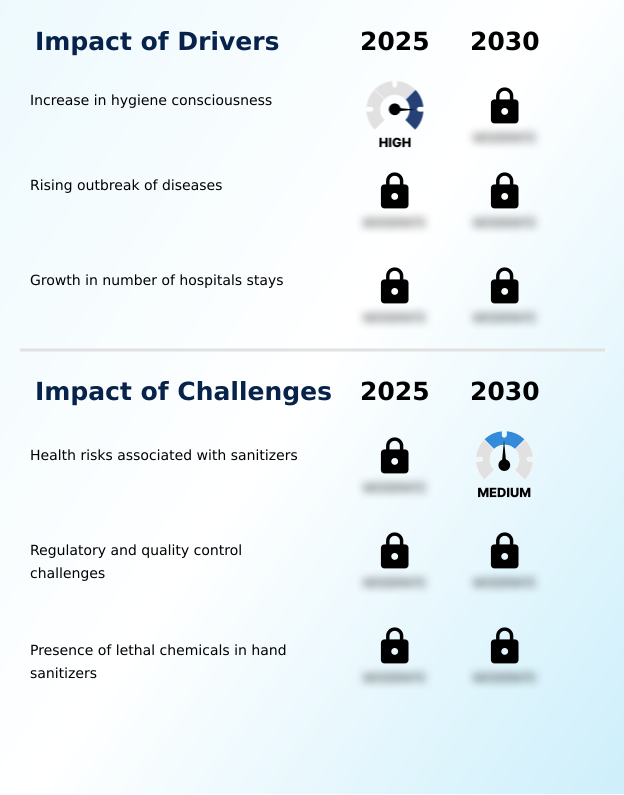
What are the key market drivers leading to the rise in the adoption of Sanitizer Industry?
- An increasing global emphasis on hygiene consciousness among both consumers and institutions serves as a primary driver for market expansion.
- Market growth is fundamentally driven by heightened hygiene awareness and its application in preventing disease transmission.
- Concerns over bacterial food contamination and viral food contamination are major drivers, particularly with the enforcement of standards like the food safety modernization act (fsma).
- This has increased demand for effective sanitizers using ethanol or isopropyl alcohol in both commercial and household surface disinfection settings.
- The rise of private-label hand sanitizer has also made products more accessible, with some retailers seeing this category grow by 30% post-pandemic.
- Furthermore, consumer interest in natural ingredient sanitizers is creating new segments, including child-safe sanitizer formula options and even ayurvedic sanitizer formulation products.
- This diverse demand, from bulk sanitizer procurement for food processing sanitation to individual purchases, underpins the market's robust expansion.
What are the market trends shaping the Sanitizer Industry?
- The market is defined by a significant trend toward the introduction of new sanitizers. These innovations are designed to meet evolving consumer preferences for specialized formulations and enhanced user experiences.
- Market trends are increasingly focused on sustainability and technological integration. A prominent trend is the adoption of eco-friendly sanitizers, where demand for products made with a bio-based ingredient like plant-based ethanol is growing. This is mirrored in packaging, with a significant shift toward sustainable sanitizer packaging, including post-consumer recycled pet containers and monomaterial packaging, which simplifies recycling.
- Some manufacturers adopting these practices report a 15% increase in consumer loyalty. Concurrently, smart packaging solutions are emerging, with iot-enabled usage monitoring and touchless dispenser technology enhancing hygiene in public spaces. In food processing, the development of virucidal-spectrum sanitizer formulations with proven biofilm eradication efficacy is addressing persistent contamination challenges, improving food safety outcomes by up to 25%.
What challenges does the Sanitizer Industry face during its growth?
- Potential health risks linked to specific ingredients in sanitizers pose a significant challenge to the industry's growth and consumer trust.
- The market faces significant challenges related to regulatory compliance and product safety. Navigating the over the counter (otc) drug classification for hand sanitizers, which varies globally, increases time-to-market by an average of six months. A primary concern is managing methanol contamination risk, which requires stringent microbial contamination control throughout the supply chain and can increase quality assurance costs by 20%.
- The development of alcohol-free hand sanitizer options is partly a response to safety and religious preferences, requiring a halal certified ingredient in some markets. However, these formulations must prove efficacy against antibiotic-resistant bacteria.
- The industry is also innovating with formats like the fast-drying sanitizer spray and gentle mist hand sanitizer, but even these face scrutiny over ingredients and disposal, especially single-use sanitizer pouches which conflict with sustainability goals.
Exclusive Technavio Analysis on Customer Landscape
The sanitizer market forecasting report includes the adoption lifecycle of the market, covering from the innovator’s stage to the laggard’s stage. It focuses on adoption rates in different regions based on penetration. Furthermore, the sanitizer market report also includes key purchase criteria and drivers of price sensitivity to help companies evaluate and develop their market growth analysis strategies.
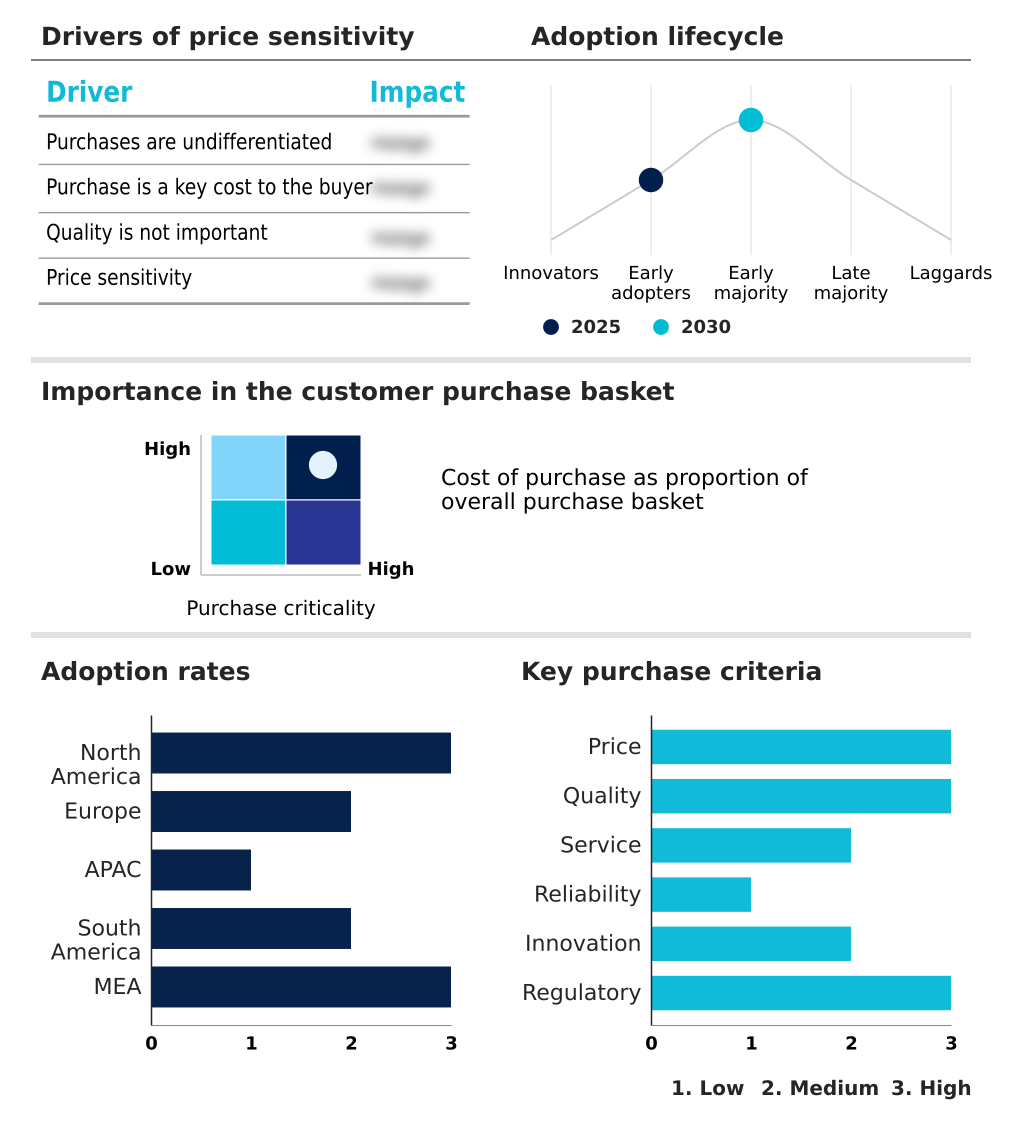
Customer Landscape of Sanitizer Industry
Competitive Landscape
Companies are implementing various strategies, such as strategic alliances, sanitizer market forecast, partnerships, mergers and acquisitions, geographical expansion, and product/service launches, to enhance their presence in the industry.
3M Co. - Provides advanced antiseptic hand rubs and skin sanitizing solutions, designed to meet the rigorous efficacy and safety standards required in clinical and healthcare environments.
The industry research and growth report includes detailed analyses of the competitive landscape of the market and information about key companies, including:
- 3M Co.
- Amway Corp.
- Bath and Body Works Direct Inc
- Boots UK Ltd.
- Dabur India Ltd.
- Ecolab Inc.
- Godrej Consumer Ltd.
- GOJO Industries Inc.
- Henkel AG and Co. KGaA
- Himalaya Global Holdings Ltd.
- Kimberly Clark Corp.
- Lion Corp.
- LOreal SA
- Procter and Gamble Co.
- PZ Cussons Plc
- S.C. Johnson and Son Inc.
- Saraya Co. Ltd.
- The Clorox Co.
- Unilever PLC
- Vi Jon LLC
Qualitative and quantitative analysis of companies has been conducted to help clients understand the wider business environment as well as the strengths and weaknesses of key industry players. Data is qualitatively analyzed to categorize companies as pure play, category-focused, industry-focused, and diversified; it is quantitatively analyzed to categorize companies as dominant, leading, strong, tentative, and weak.
Recent Development and News in Sanitizer market
- In May 2025, Church and Dwight Co. Inc. announced its acquisition of the Touchland brand for USD 700 million, expanding its personal care portfolio by integrating a popular and design-focused hand sanitizer line.
- In January 2025, Touchland launched its Gentle Mist Hand Sanitizer, formulated with 70% alcohol and enriched with skin-supporting ingredients like niacinamide to meet consumer demand for clean and effective personal care.
- In October 2024, Reckitt Benckiser announced a significant investment to transition its Dettol sanitizer pump bottle portfolio in Europe to 100% post-consumer recycled (PCR) PET by the end of 2025.
- In October 2025, PAUME, a premium hand care brand, launched its products in Ulta Beauty stores, marking a strategic retail expansion to access a broader consumer base in the U.S. beauty market.
Dive into Technavio’s robust research methodology, blending expert interviews, extensive data synthesis, and validated models for unparalleled Sanitizer Market insights. See full methodology.
| Market Scope | |
|---|---|
| Page number | 290 |
| Base year | 2025 |
| Historic period | 2020-2024 |
| Forecast period | 2026-2030 |
| Growth momentum & CAGR | Accelerate at a CAGR of 5.6% |
| Market growth 2026-2030 | USD 1555.1 million |
| Market structure | Fragmented |
| YoY growth 2025-2026(%) | 5.2% |
| Key countries | US, Canada, Mexico, Germany, UK, France, Italy, Spain, The Netherlands, China, India, Japan, South Korea, Australia, Indonesia, Brazil, Argentina, Colombia, South Africa, Saudi Arabia, UAE, Egypt and Turkey |
| Competitive landscape | Leading Companies, Market Positioning of Companies, Competitive Strategies, and Industry Risks |
Research Analyst Overview
- The sanitizer market is maturing from a crisis-response footing to a state of sustainable, value-driven growth. The key dynamic is a bifurcation of the market: a high-volume institutional segment driven by stringent hygiene protocols and a consumer segment increasingly focused on premium attributes. In the boardroom, this translates to strategic decisions around portfolio diversification.
- For instance, companies must balance investment in cost-effective formulations for large procurement contracts against R&D for differentiated products with skin-care benefits and sustainable packaging. Success is no longer measured by production volume alone but by the ability to serve these distinct segments effectively.
- Firms that optimize their supply chains for both bulk and premium production lines are reporting a 15% greater operating margin compared to those focused on a single market segment. This highlights a strategic imperative to build flexible operational models that can capture value across the entire market spectrum, from healthcare institutions to discerning individual consumers.
What are the Key Data Covered in this Sanitizer Market Research and Growth Report?
-
What is the expected growth of the Sanitizer Market between 2026 and 2030?
-
USD 1.56 billion, at a CAGR of 5.6%
-
-
What segmentation does the market report cover?
-
The report is segmented by Product (Hand sanitizer, and Food contact surface sanitizers), Distribution Channel (Offline, and Online), Type of Packaging (Pump bottles, Refill packs, and Dispensing packets) and Geography (North America, Europe, APAC, South America, Middle East and Africa)
-
-
Which regions are analyzed in the report?
-
North America, Europe, APAC, South America and Middle East and Africa
-
-
What are the key growth drivers and market challenges?
-
Increase in hygiene consciousness, Health risks associated with sanitizers
-
-
Who are the major players in the Sanitizer Market?
-
3M Co., Amway Corp., Bath and Body Works Direct Inc, Boots UK Ltd., Dabur India Ltd., Ecolab Inc., Godrej Consumer Ltd., GOJO Industries Inc., Henkel AG and Co. KGaA, Himalaya Global Holdings Ltd., Kimberly Clark Corp., Lion Corp., LOreal SA, Procter and Gamble Co., PZ Cussons Plc, S.C. Johnson and Son Inc., Saraya Co. Ltd., The Clorox Co., Unilever PLC and Vi Jon LLC
-
Market Research Insights
- Market dynamics are increasingly shaped by product differentiation and targeted applications. Demand for premium sanitizer products is rising, with brands achieving higher price points by incorporating skin-conditioning sanitizers and non-sticky sanitizer formula attributes. In the B2B sector, adoption of institutional hygiene protocols has driven a 40% increase in bulk sanitizer procurement contracts mandating eco-friendly sanitizers and refillable sanitizer dispensers.
- The influence of k-beauty inspired sanitizers has also spurred the development of dermo-cosmetic sanitizers, improving user adoption rates by over 15% in key demographics. Consumer preferences for convenience are met with travel-sized sanitizer formats and single-use sanitizer pouches, while specialized gentle mist hand sanitizer options cater to niche demands, demonstrating how targeted innovation directly impacts market penetration and profitability.
We can help! Our analysts can customize this sanitizer market research report to meet your requirements.
 RIA -
RIA -