



Scleral Lens Market Size 2024-2028
The scleral lens market size is forecast to increase by USD 1.99 billion, at a CAGR of 23.1% between 2023 and 2028.
- Scleral lenses (SLs), a type of gas permeable lens, have gained significant attention in the vision correction market due to their ability to address various ocular disorders, including keratoconus, corneal irregularities, chemical injuries, burn injuries, radial keratotomy complications, Stevens- Johnson syndrome, and graft vs. Host disease. The market for these lenses is driven by the increasing demand for non-surgical vision correction options and advancements in lens design. However, the market growth is hindered by the lack of awareness regarding scleral lenses and complexities in their fitting process. Reimbursement policies for these lenses also vary across regions and countries, posing a challenge to market expansion.
What will be the Size of the Market During the Forecast Period?
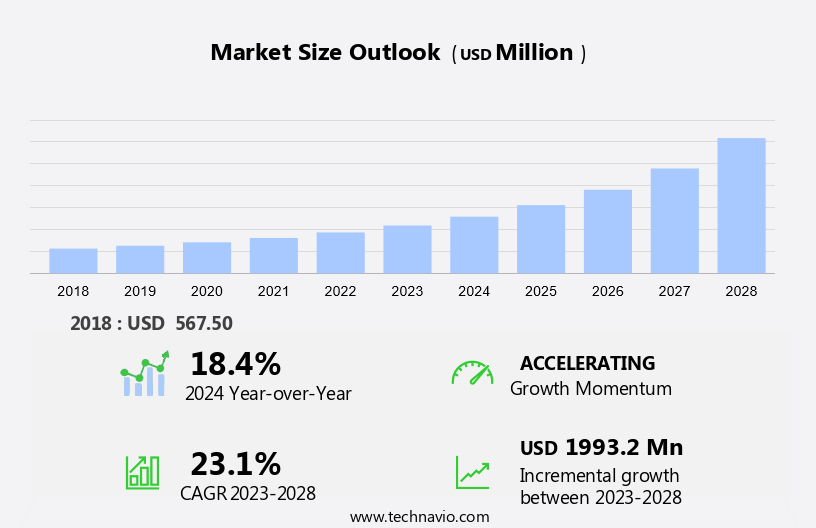
- Scleral lenses, also known as large-diameter gas permeable lenses, have emerged as a popular option for individuals with various corneal irregularities and ocular surface diseases. These lenses provide superior comfort and vision improvement compared to traditional contact lenses. Corneal irregularities, such as keratoconus, chemical injuries, burn injuries, radial keratotomy, graft vs. Host disease, Sjogren's syndrome, and neurotrophic keratitis, can significantly impact an individual's vision. Scleral lenses offer a solution to these vision challenges by providing a breathable, permeable material that sits on the sclera, the white part of the eye, instead of the cornea. The sclera's larger surface area allows for a protective fluid reservoir, which maintains a consistent amount of oxygen supply to the corneal surface. This feature is essential for individuals with ocular disorders, including refractive errors like irregular astigmatism, microphthalmia, and dry eye disease. Scleral lenses have gained popularity due to their ability to address various corneal conditions, including corneal irregularities and ocular surface diseases.
- The lenses' design provides excellent vision correction while ensuring patient comfort. Eye care professionals play a crucial role in the fitting and prescription of scleral lenses. These lenses require a precise fit to ensure optimal comfort and effectiveness. Reimbursement policies vary depending on the specific ocular disorder and insurance coverage. In conclusion, scleral lenses offer a viable solution for individuals with various corneal irregularities and ocular surface diseases. The lenses' large-diameter design, breathable materials, and protective fluid reservoir make them an effective and comfortable option for vision correction. Eye care professionals play a vital role in the fitting and prescription process, ensuring that patients receive the best possible outcome.
How is this market segmented and which is the largest segment?
The market research report provides comprehensive data (region-wise segment analysis), with forecasts and estimates in "USD billion" for the period 2024-2028, as well as historical data from 2018-2022 for the following segments.
- Type
- Corneo-scleral lenses
- Mini-scleral lenses
- Full scleral lenses
- Geography
- North America
- US
- Europe
- Germany
- UK
- France
- APAC
- China
- Middle East and Africa
- South America
- North America
By Type Insights
- The corneo-scleral lenses segment is estimated to witness significant growth during the forecast period.
Scleral lenses, also known as corneo-scleral lenses, are custom-made contact lenses that extend beyond the cornea and onto the sclera. These lenses range from 13.0mm to 15.5mm in diameter, with most being under 15mm. Unlike traditional gas-permeable (GP) lenses that completely vault the cornea, scleral lenses do not fully cover it. This design makes them more affordable and easier to fit for patients. Scleral lenses are often prescribed for individuals who require larger GP lenses for increased comfort. They are also commonly used in cases where contact lenses are necessary following Laser-assisted in situ keratomileusis (LASIK) or other corneal refractive surgeries to correct irregular astigmatism.
Additionally, scleral lenses are beneficial for those with keratoconus, corneal irregularities, chemical injuries, burn injuries, radial keratotomy, Stevens-Johnson syndrome, graft vs. Host disease, and other ocular disorders. Reimbursement policies vary, so it's essential to consult with your healthcare provider or insurance provider for coverage information. Scleral lenses offer a comfortable and effective solution for various vision correction needs. Their unique design ensures a secure fit while providing improved comfort and vision for individuals with specific eye conditions.
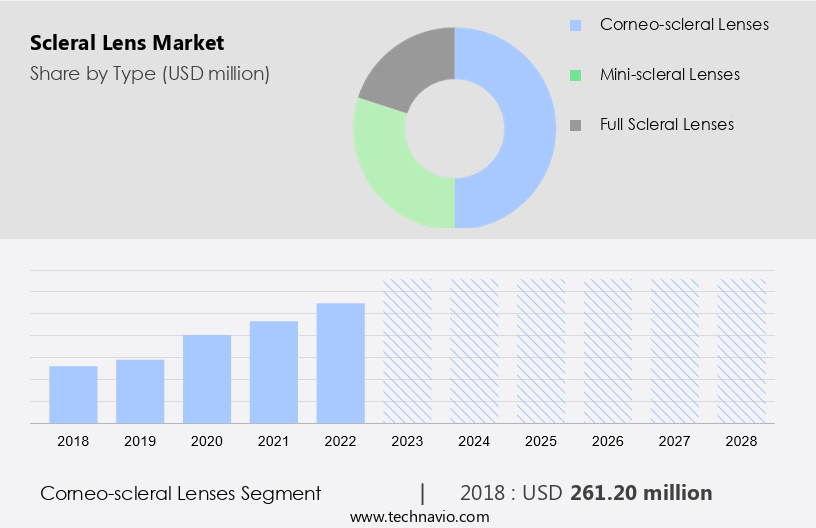
Get a glance at the market report of share of various segments Request Free Sample
The corneo-scleral lenses segment was valued at USD 261.20 million in 2018 and showed a gradual increase during the forecast period.
Regional Analysis
- North America is estimated to contribute 76% to the growth of the global market during the forecast period.
Technavio's analysts have elaborately explained the regional trends and drivers that shape the market during the forecast period.
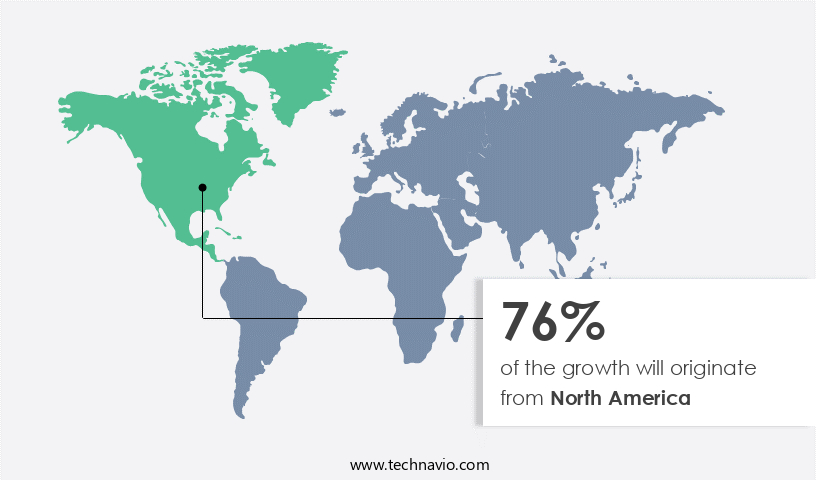
For more insights on the market share of various regions, Request Free Sample
In the United States, the ageing population is on the rise, with over 54 million adults aged 65 and above in 2023, according to the US Census Bureau. By 2050, this demographic is projected to reach 85.7 million, accounting for approximately 20% of the overall population. This demographic shift will lead to an increased demand for scleral lenses due to the higher prevalence of eye disorders among older adults. Diabetes and conditions such as cataracts, glaucoma, and macular degeneration are expected to become more common during the forecast period. Scleral lenses, which are larger than traditional contact lenses, provide a secure fit over the sclera and protect the corneal surface.
These lenses are made from breathable and permeable materials that ensure an adequate oxygen supply to the eye. They are particularly beneficial for individuals with corneal irregularities, ocular surface diseases, refractive errors, and conditions such as microphthalmia and neurotrophic keratitis. The use of scleral lenses in Penetrating Keratoplasty (PKP) and other surgical procedures is also increasing due to their ability to improve visual acuity and comfort.
Market Dynamics
Our researchers analyzed the data with 2023 as the base year, along with the key drivers, trends, and challenges. A holistic analysis of drivers will help companies refine their marketing strategies to gain a competitive advantage.
What are the key market drivers leading to the rise in the adoption of the Scleral Lens Market?
Growing demand for non-surgical vision care is the key driver of the market.
- Eye health is essential for carrying out daily tasks and maintaining an optimal quality of life. Unfortunately, modern lifestyles, including prolonged digital device use and unhealthy habits, have led to an increase in various eye complications. Common eye conditions include conjunctivitis, myopia, astigmatism, macular edema, hyperopia, retinal tears, and optic neuritis. Moreover, the rising prevalence of eye diseases such as refractive errors, cataracts, and glaucoma can result in visual impairment or blindness. Exposure to UV radiation and smoking are some of the contributing factors to these disorders. Dry eye syndrome, Pellucid marginal degeneration, and corneal scarring are among the non-surgical eye conditions that require specialized attention.
- Customized scleral lenses have emerged as a popular non-surgical solution for addressing these conditions. These lenses cater to individual patient needs, ensuring proper lens wetting and reducing lens fogging, blurred vision, and ocular redness. Insurance coverage for scleral lenses varies, and it is essential to consult with your healthcare provider or vision care professional for details. As the demand for effective, non-surgical solutions for various eye conditions grows, the market is expected to expand.
What are the market trends shaping the Scleral Lens Market?
Advancements in research and development of lens design is the upcoming trend in the market.
- Scleral lenses, a type of contact lens, have gained significant traction in the vision improvement market due to their advanced lens technology. These lenses feature a fluid reservoir that rests on the sclera, providing a non-invasive treatment option for various corneal disorders. Scleral lenses come in different sizes, including mini-scleral, semi-scleral, and full-scleral, with larger overall diameters (OADs) offering greater therapeutic benefits for persistent ocular surface illnesses.
- For instance, Prosthetic Replacement of the Ocular Surface Ecosystem (PROSE) devices, a well-known scleral lens type, boasts enormous OADs ranging from 17.5 to 23.0 mm, making them a popular choice for managing complex corneal disorders. However, it is important to note that the availability of scleral lenses with larger OADs may vary by region. In some cases, such as South Korea, only smaller OAD scleral lenses are currently accessible. Ophthalmologists worldwide focus the long-term therapeutic advantages of scleral lenses in non-invasive treatment of various corneal disorders.
What challenges does Scleral Lens Market face during the growth?
Lack of awareness regarding scleral lens is a key challenge affecting the market growth.
- Scleral lenses have gained recognition among eye care professionals for addressing ocular issues such as irregular astigmatism and ocular surface diseases, including dry eye. These lenses differ from traditional contact lenses as they rest on the sclera instead of the cornea, creating a protective fluid reservoir. This feature is particularly beneficial for individuals with corneal conditions, as it keeps the cornea hydrated and alleviates symptoms of ocular dryness and pain. Scleral lenses have proven effective in correcting vision problems caused by corneal ectasia, such as keratoconus.
- Despite the advantages scleral lenses offer, their adoption rate among ophthalmologists remains relatively low. It is crucial for eye care professionals to expand their understanding of scleral lenses and their potential role in managing various eye disorders. Mini scleral lenses, a subcategory of scleral lenses, cater to specific needs, further expanding their utility. By addressing the unique requirements of patients with corneal conditions and dry eye disease, scleral lenses contribute significantly to enhancing patient comfort and overall eye health.
Exclusive Customer Landscape
The market forecasting report includes the adoption lifecycle of the market, covering from the innovator's stage to the laggard's stage. It focuses on adoption rates in different regions based on penetration. Furthermore, the market report also includes key purchase criteria and drivers of price sensitivity to help companies evaluate and develop their market growth analysis strategies.
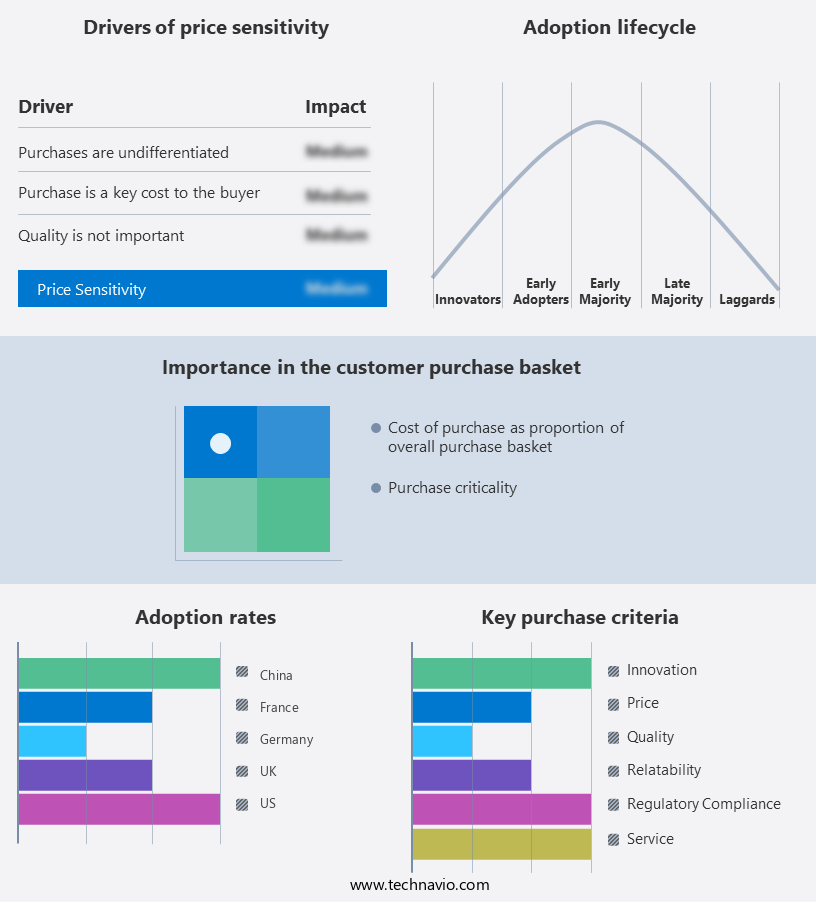
Customer Landscape
Key Companies & Market Insights
Companies are implementing various strategies, such as strategic alliances, market forecast, partnerships, mergers and acquisitions, geographical expansion, and product/service launches, to enhance their presence in the market.
The market research and growth report includes detailed analyses of the competitive landscape of the market and information about key companies, including:
- ABB Optical Group LLC
- AccuLens
- Advanced Vision Technologies
- Appenzeller Kontaktlinsen AG
- Art Optical Contact Lens Inc.
- Bausch Health Companies Inc.
- Biolens Lab
- BostonSight
- EssilorLuxottica
- Gelflex Laboratories
- HERZ submicron lathing srl
- Laboratoire LCS
- Metro Optics of Austin Inc.
- Multilens AB
- No 7 Contact Lens Laboratory Ltd.
- SynergEyes Inc.
- The Cooper Companies Inc.
- The Walman Optical Co.
- TruForm Optics Inc.
- Visionary Optics
Qualitative and quantitative analysis of companies has been conducted to help clients understand the wider business environment as well as the strengths and weaknesses of key market players. Data is qualitatively analyzed to categorize companies as pure play, category-focused, industry-focused, and diversified; it is quantitatively analyzed to categorize companies as dominant, leading, strong, tentative, and weak.
Research Analyst Overview
Scleral lenses, also known as large-diameter gas permeable lenses, have emerged as a popular vision correction method for individuals with corneal irregularities and ocular surface diseases. These lenses differ from traditional contact lenses due to their larger diameter and the use of a protective fluid reservoir that rests on the sclera, the white part of the eye. Individuals with conditions such as keratoconus, corneal irregularities, chemical injuries, burn injuries, radial keratotomy, Stevens-Johnson syndrome, graft vs host disease, Sjogren's syndrome, and various eye illnesses can benefit from scleral lenses. These lenses provide superior comfort and vision improvement for contact lens users seeking alternative treatments to eyeglasses, outpatient visits, and dry eye treatment.
Further, manufactured using breathable and permeable materials, scleral lenses ensure an adequate oxygen supply to the corneal surface, addressing concerns related to corneal irregularity, ocular surface disease, refractive error, microphthalmia, neurotrophic keratitis, dry eye syndrome, pellucid marginal degeneration, corneal scarring, and customized lens solutions for various eye disorders. Eye clinics, hospitals, independent practitioners, and ophthalmologists offer fitting procedures for scleral lenses, providing non-invasive treatment options for patients with vision care needs. Insurance coverage and reimbursement policies may vary, and poor lens wetting, lens fogging, blurred vision, ocular redness, ocular dryness, and ocular pain are common concerns addressed by eye care professionals in the fitting process.
|
Market Scope |
|
|
Report Coverage |
Details |
|
Page number |
130 |
|
Base year |
2023 |
|
Historic period |
2018-2022 |
|
Forecast period |
2024-2028 |
|
Growth momentum & CAGR |
Accelerate at a CAGR of 23.1% |
|
Market Growth 2024-2028 |
USD 1.99 billion |
|
Market structure |
Fragmented |
|
YoY growth 2023-2024(%) |
18.4 |
|
Key countries |
US, UK, Germany, China, and France |
|
Competitive landscape |
Leading Companies, Market Positioning of Companies, Competitive Strategies, and Industry Risks |
What are the Key Data Covered in this Market Research and Growth Report?
- CAGR of the market during the forecast period
- Detailed information on factors that will drive the market growth and forecasting between 2024 and 2028
- Precise estimation of the size of the market and its contribution of the market in focus to the parent market
- Accurate predictions about upcoming market growth and trends and changes in consumer behaviour
- Growth of the market across North America, Europe, APAC, Middle East and Africa, and South America
- Thorough analysis of the market's competitive landscape and detailed information about companies
- Comprehensive analysis of factors that will challenge the growth of market companies
We can help! Our analysts can customize this market research report to meet your requirements.
 RIA -
RIA - 
