


Secondary Tickets Market Size 2026-2030
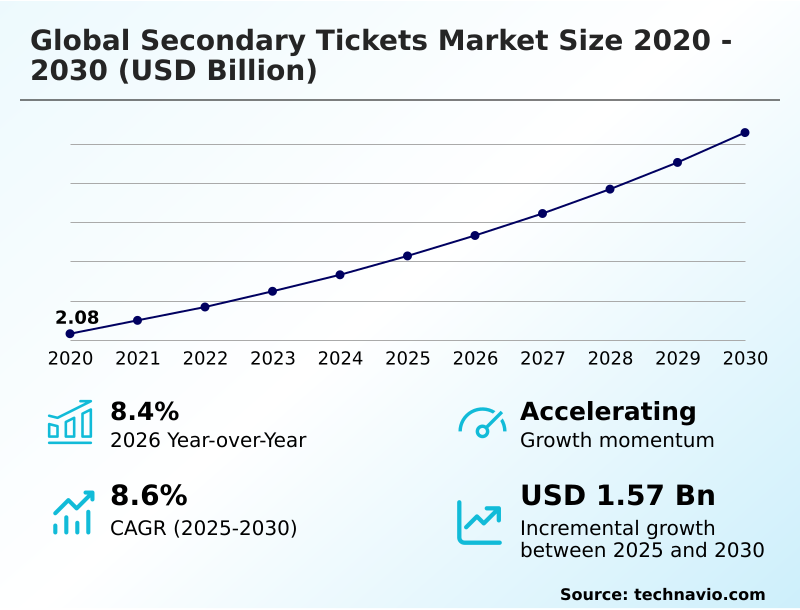
The secondary tickets market size is valued to increase by USD 172.47 billion, at a CAGR of 30.7% from 2025 to 2030. Proliferation of online and mobile ticketing platforms will drive the secondary tickets market.
Major Market Trends & Insights
- North America dominated the market and accounted for a 52.5% growth during the forecast period.
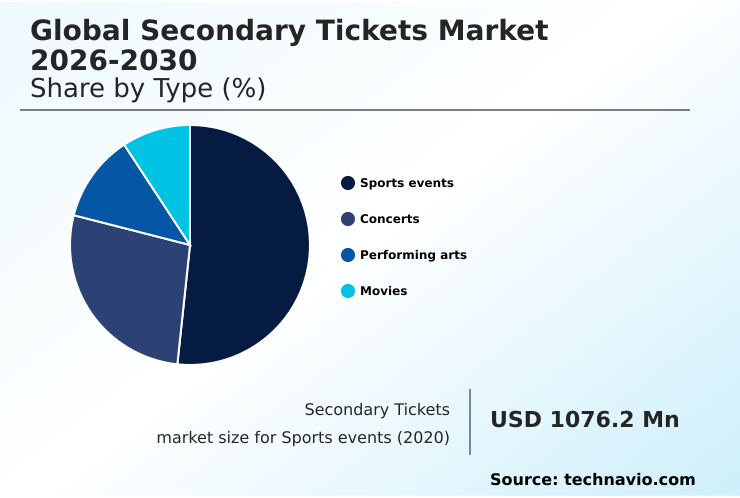
- By Type - Sports events segment was valued at USD 24.77 billion in 2024
- By Mode of Booking - Online segment accounted for the largest market revenue share in 2024
Market Size & Forecast
- Market Opportunities: USD 225.67 billion
- Market Future Opportunities: USD 172.47 billion
- CAGR from 2025 to 2030 : 30.7%
Market Summary
- The Secondary Tickets Market operates on the core principles of supply and demand, facilitated by a digital transformation that has shifted transactions to sophisticated online platforms. This evolution is driven by a strong consumer preference for experiential consumption, where access to high-demand events is paramount.
- A key trend shaping the industry is the integration of advanced technologies to enhance security and transparency. For instance, the use of blockchain ticketing and non-fungible tokens (NFTs) is gaining traction to combat counterfeit tickets and provide verifiable ticket lifecycle management. A primary challenge remains the activity of ticket-buying bots that distort the primary market.
- In a common business scenario, a platform leverages AI for ticket demand forecasting to anticipate bot activity for a major concert tour. It then deploys dynamic pricing models and real-time adjustments, while ensuring compliance with consumer protection mandates in various jurisdictions.
- This data-driven approach allows the platform to optimize inventory, maintain market efficiency, and build consumer trust in a highly competitive environment where regulatory oversight is intensifying.
What will be the Size of the Secondary Tickets Market during the forecast period?
Get Key Insights on Market Forecast (PDF) Get Free Sample
How is the Secondary Tickets Market Segmented?
The secondary tickets industry research report provides comprehensive data (region-wise segment analysis), with forecasts and estimates in "USD million" for the period 2026-2030, as well as historical data from 2020-2024 for the following segments.
- Type
- Sports events
- Concerts
- Performing arts
- Movies
- Mode of booking
- Online
- Offline
- Product type
- Reserved seating
- General admission
- VIP tickets
- Geography
- North America
- US
- Canada
- Mexico
- APAC
- China
- India
- Japan
- Europe
- UK
- Germany
- France
- South America
- Brazil
- Argentina
- Middle East and Africa
- Saudi Arabia
- UAE
- South Africa
- Rest of World (ROW)
- North America
By Type Insights
The sports events segment is estimated to witness significant growth during the forecast period.
The sports events segment thrives on high-demand events, where the value of an undifferentiated product is dictated by market variables. In this space, dynamic pricing algorithms are critical for navigating price transparency and fan fairness and transparency.
The market is defined by intense consumer passion, where over 70% of tickets for major league games are transacted in the secondary market, creating a persistent challenge with ticket scalping.
Efforts to implement consumer protection mandates, such as a resale price cap, contend with the fan desire for exclusive access.
Technologies like dynamic QR codes are being deployed to manage entry and combat unauthorized resale, balancing the principles of the primary market with the realities of the secondary market, and distinguishing from virtual reality experiences.
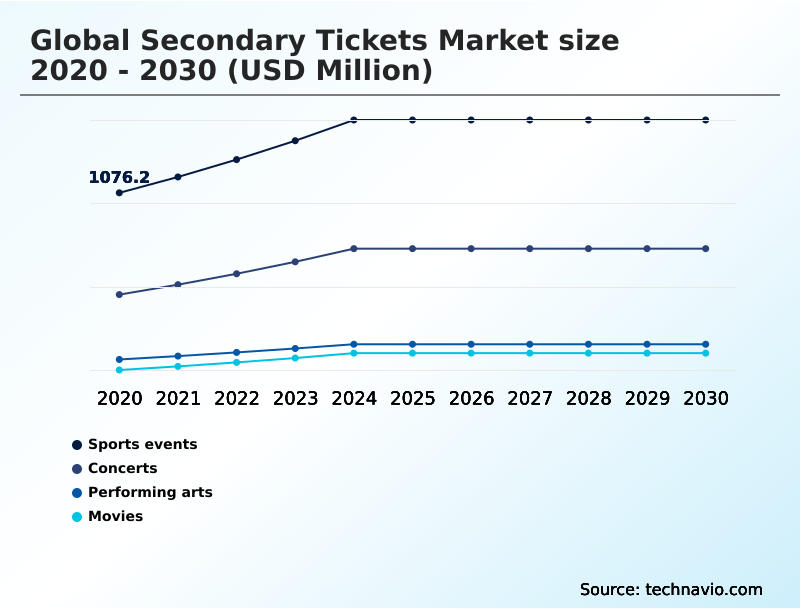
The Sports events segment was valued at USD 24.77 billion in 2024 and showed a gradual increase during the forecast period.
Regional Analysis
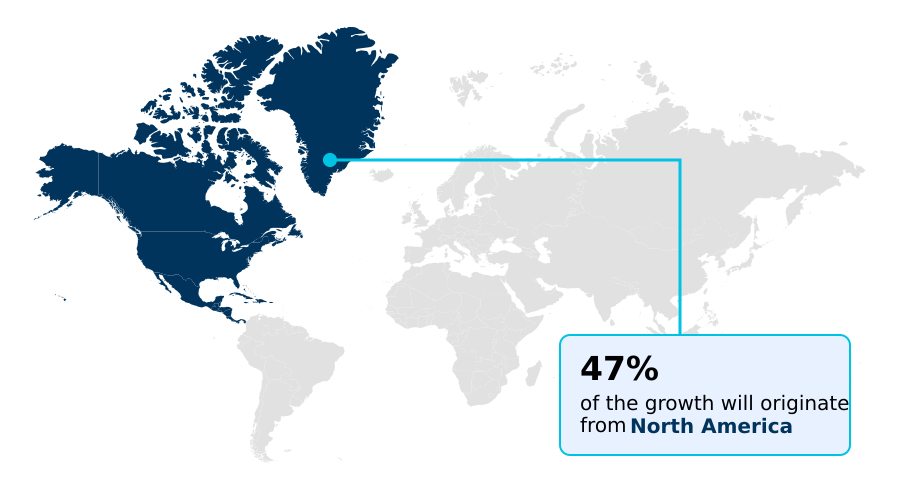
North America is estimated to contribute 52.5% to the growth of the global market during the forecast period.Technavio’s analysts have elaborately explained the regional trends and drivers that shape the market during the forecast period.
See How Secondary Tickets Market Demand is Rising in North America Get Free Sample
The geographic distribution of the market is characterized by North America's dominance, which accounts for over 52% of the incremental growth, and APAC's position as the fastest-growing region.
This expansion is fueled by event-driven tourism and a strong live event culture. In mature markets, platforms leverage network effects and verified fan programs to manage secondary market inventory for premium seating and VIP packages.
A key strategy to combat speculative ticketing is the adoption of real-name registration systems, which have reduced unauthorized listings by up to 40% in pilot programs. Concurrently, the move toward all-in pricing enhances ticket lifecycle management.
The success of fan-to-fan exchanges, which see 25% higher user satisfaction than open marketplaces, highlights a shift toward community-focused and transparent resale models.
Market Dynamics
Our researchers analyzed the data with 2025 as the base year, along with the key drivers, trends, and challenges. A holistic analysis of drivers will help companies refine their marketing strategies to gain a competitive advantage.
- The evolution of the secondary tickets market is increasingly defined by a technological arms race focused on security and transparency. The adoption of blockchain technology for ticket security is fundamental, with platforms preventing fraud with NFT tickets to create verifiable, unique assets. This is complemented by secure QR code ticket verification at venues.
- Pricing dynamics are being reshaped by the sophisticated use of dynamic pricing for live events, often leveraging AI for ticket demand forecasting and analyzing real-time social media sentiment. This data-driven approach directly conflicts with the growing trend of regulating secondary ticket resale prices, where the impact of price caps on resellers is a major concern.
- The legal framework for ticket scalping is tightening globally, with a focus on the impact of bots on ticket sales and navigating state-level BOTS Act enforcement. Fan-to-fan resale platform benefits, such as lower fees and enhanced community trust, offer a compelling alternative to traditional models.
- Firms are now managing ticket inventory with AI, a method that has proven to be 20% more efficient than manual processes. The distinction between online vs offline ticket booking is becoming starker, with the role of social media in ticket resale adding complexity.
- Furthermore, the challenges of mobile-only ticketing are being addressed by authenticating tickets with smart contracts, ensuring transparency in secondary ticket pricing and secure VIP package resale authentication, thereby improving consumer protection in ticket resale.
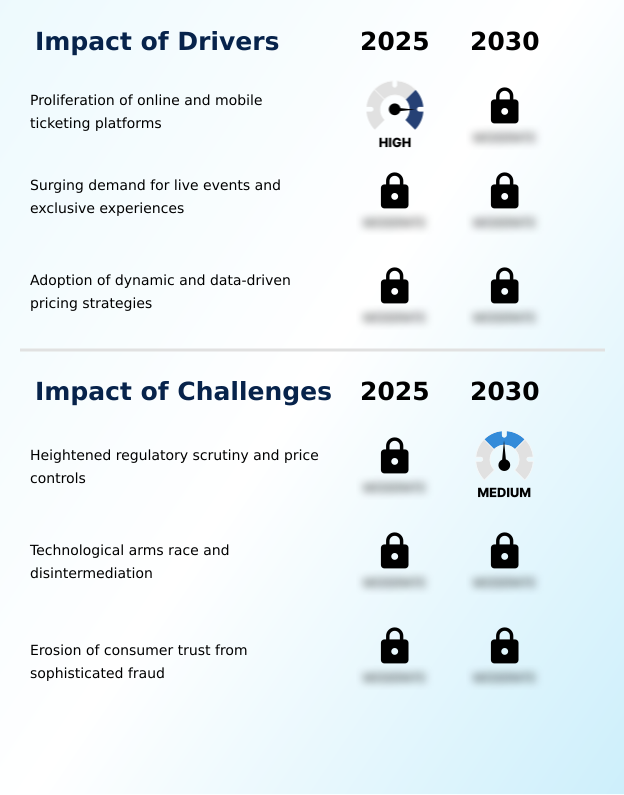
What are the key market drivers leading to the rise in the adoption of Secondary Tickets Industry?
- The proliferation of online and mobile ticketing platforms serves as a key driver, expanding market accessibility and streamlining transactions for consumers worldwide.
- Market growth is significantly driven by the proliferation of digital platforms and a cultural shift towards experiential consumption.
- The convenience of the online marketplace, featuring secure payment gateways and interactive seat maps, has dramatically improved market accessibility and the overall user experience. This digital ecosystem supports robust ticket inventory management and facilitates seamless digital ticket transfer.
- Mobile-only tickets are increasingly popular, with platforms reporting a 30% higher engagement rate on mobile compared to desktop. This is fueled by a strong live event culture and rising consumer spending on unique experiences.
- The resulting supply and demand dynamics in a global, accessible marketplace continue to propel expansion, with digital marketplaces solidifying their role as the primary channel for transactions.
What are the market trends shaping the Secondary Tickets Industry?
- The increasing integration of artificial intelligence and sophisticated dynamic pricing models is a primary trend. This is fundamentally reshaping how tickets are valued and transacted in the secondary market.
- Key market trends revolve around the adoption of advanced technologies to enhance security and market efficiency. The integration of blockchain ticketing and non-fungible tokens (NFTs) is a significant development, creating a unique digital asset for each entry that builds consumer trust. In pilot programs, this technology has reduced fraudulent ticket incidents by over 95%.
- AI-driven fraud detection systems, employing advanced algorithms, are becoming standard on authorized resale platforms, further bolstering security. Additionally, predictive pricing tools are empowering a more tech-savvy consumer base to make informed purchasing decisions, while smart contracts are enabling functionalities like automated face-value resale.
- These innovations create a more transparent environment, improving market efficiency and offering a viable alternative to less secure live streaming services.
What challenges does the Secondary Tickets Industry face during its growth?
- Heightened regulatory scrutiny and the implementation of price controls present a significant challenge, impacting the operational models and profitability of the secondary ticketing industry.
- The market faces significant challenges from heightened regulatory scrutiny and the persistent threat of fraud. Governments are increasingly targeting ticket-buying bots and implementing rules that challenge the high profit margins of resellers. These regulations, combined with the efforts of primary ticket issuers and event organizers to establish closed-loop systems, threaten to disintermediate traditional platforms.
- In response, platforms are investing heavily in buyer guarantee programs and money-back guarantees to build brand awareness and counter the risk of counterfeit tickets prevalent in informal resale channels.
- The operational costs of compliance and fraud prevention have increased by over 20% in heavily regulated regions, squeezing profitability and forcing innovation in business models to stay competitive against less secure in-person exchanges.
Exclusive Technavio Analysis on Customer Landscape
The secondary tickets market forecasting report includes the adoption lifecycle of the market, covering from the innovator’s stage to the laggard’s stage. It focuses on adoption rates in different regions based on penetration. Furthermore, the secondary tickets market report also includes key purchase criteria and drivers of price sensitivity to help companies evaluate and develop their market growth analysis strategies.
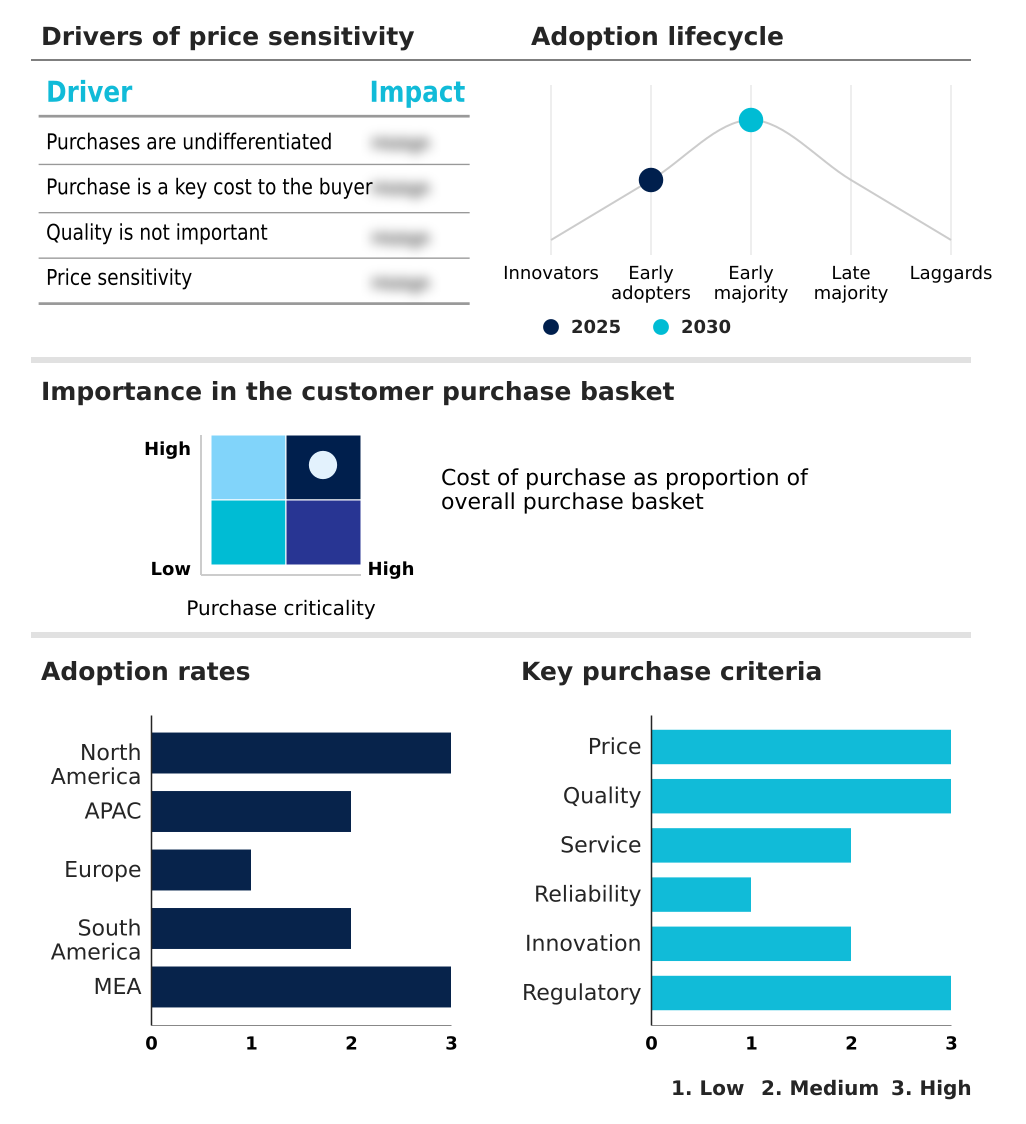
Customer Landscape of Secondary Tickets Industry
Competitive Landscape
Companies are implementing various strategies, such as strategic alliances, secondary tickets market forecast, partnerships, mergers and acquisitions, geographical expansion, and product/service launches, to enhance their presence in the industry.
Ace Ticket LLC - Provides reliable access to in-demand sports, concert, and theater events through a marketplace built on local expertise and guaranteed fulfillment.
The industry research and growth report includes detailed analyses of the competitive landscape of the market and information about key companies, including:
- Ace Ticket LLC
- AEG Worldwide
- eBay Inc.
- Eventbee Inc.
- Eventbrite Inc.
- Live Nation
- On Location Events LLC
- SeatGeek Inc.
- StubHub Holdings Inc.
- Ticket City Inc.
- TicketNetwork Inc.
- TickPick LLC
- TiqIQ LLC
- Twickets Ltd.
- Viagogo Entertainment Inc.
- Vivid Seats Inc.
Qualitative and quantitative analysis of companies has been conducted to help clients understand the wider business environment as well as the strengths and weaknesses of key industry players. Data is qualitatively analyzed to categorize companies as pure play, category-focused, industry-focused, and diversified; it is quantitatively analyzed to categorize companies as dominant, leading, strong, tentative, and weak.
Recent Development and News in Secondary tickets market
- In May, 2025, SeatGeek announced it would display all-in prices, including fees, by default for all events on its platform, a strategic shift aimed at improving price transparency for consumers.
- In April, 2025, a coalition of city officials and local venues in Washington D.C. announced the RESALE Amendment Act of 2025, proposing new limitations including price caps and registration requirements for high-volume sellers on the secondary market.
- In March, 2025, a United States Presidential Executive Order was signed directing the Federal Trade Commission to intensify its enforcement of the Better Online Ticket Sales (BOTS) Act, signaling a federal crackdown on the use of automated software to acquire tickets for resale.
- In February, 2025, lawmakers in South Korea proposed amendments to the Public Performance Act, aiming to criminalize ticket scalping for profit regardless of whether automated bots were used, expanding previous regulations.
Dive into Technavio’s robust research methodology, blending expert interviews, extensive data synthesis, and validated models for unparalleled Secondary Tickets Market insights. See full methodology.
| Market Scope | |
|---|---|
| Page number | 291 |
| Base year | 2025 |
| Historic period | 2020-2024 |
| Forecast period | 2026-2030 |
| Growth momentum & CAGR | Accelerate at a CAGR of 30.7% |
| Market growth 2026-2030 | USD 172465.5 million |
| Market structure | Fragmented |
| YoY growth 2025-2026(%) | 26.6% |
| Key countries | US, Canada, Mexico, China, India, Japan, Australia, South Korea, Indonesia, UK, Germany, France, Spain, Italy, The Netherlands, Brazil, Argentina, Chile, Saudi Arabia, UAE, South Africa, Egypt and Turkey |
| Competitive landscape | Leading Companies, Market Positioning of Companies, Competitive Strategies, and Industry Risks |
Research Analyst Overview
- The secondary tickets market is evolving from a simple transactional space into a technologically sophisticated ecosystem. The core of this transformation involves a continuous battle against ticket scalping and counterfeit tickets, addressed by integrating technologies like blockchain ticketing, identity-linked digital tickets, and holographic verification.
- The use of dynamic pricing algorithms and predictive pricing tools has become standard for ticket inventory management, allowing platforms to react to market signals for high-demand events. In a notable shift, platforms adopting all-in pricing have seen a 10% uplift in customer conversion rates, underscoring the market's demand for price transparency.
- Concurrently, heightened regulatory scrutiny is forcing a move toward greater fan fairness and transparency through consumer protection mandates and mechanisms like fan-to-fan exchanges and face-value resale options. This is compelling event organizers to re-evaluate their control over the ticket lifecycle management, balancing it against the open market facilitated by peer-to-peer resale.
- The adoption of smart contracts and real-name registration systems further aims to regulate digital ticket transfers, creating a more secure user experience within the online marketplace.
What are the Key Data Covered in this Secondary Tickets Market Research and Growth Report?
-
What is the expected growth of the Secondary Tickets Market between 2026 and 2030?
-
USD 172.47 billion, at a CAGR of 30.7%
-
-
What segmentation does the market report cover?
-
The report is segmented by Type (Sports events, Concerts, Performing arts, and Movies), Mode of Booking (Online, and Offline), Product Type (Reserved seating, General admission, and VIP tickets) and Geography (North America, APAC, Europe, South America, Middle East and Africa)
-
-
Which regions are analyzed in the report?
-
North America, APAC, Europe, South America and Middle East and Africa
-
-
What are the key growth drivers and market challenges?
-
Proliferation of online and mobile ticketing platforms, Heightened regulatory scrutiny and price controls
-
-
Who are the major players in the Secondary Tickets Market?
-
Ace Ticket LLC, AEG Worldwide, eBay Inc., Eventbee Inc., Eventbrite Inc., Live Nation, On Location Events LLC, SeatGeek Inc., StubHub Holdings Inc., Ticket City Inc., TicketNetwork Inc., TickPick LLC, TiqIQ LLC, Twickets Ltd., Viagogo Entertainment Inc. and Vivid Seats Inc.
-
Market Research Insights
- The secondary tickets market is shaped by intense supply and demand dynamics, where market accessibility and consumer trust are pivotal. The rise of digital marketplaces has been instrumental, with online channels accounting for 86% of all transactions. This digital shift supports experiential consumption by providing access to high-demand events.
- However, building brand awareness and ensuring fan fairness and transparency are crucial for sustained success. Platforms implementing comprehensive buyer guarantee programs have reported a 15% increase in repeat customer transactions. Moreover, an emphasis on price transparency, a key component of consumer protection mandates, has been shown to improve conversion rates by eliminating hidden fees.
- The market's future relies on balancing high profit margins with robust security and a positive user experience, especially as informal resale channels continue to present competition and risk.
We can help! Our analysts can customize this secondary tickets market research report to meet your requirements.
 RIA -
RIA -