



Senior Living Market Size 2026-2030
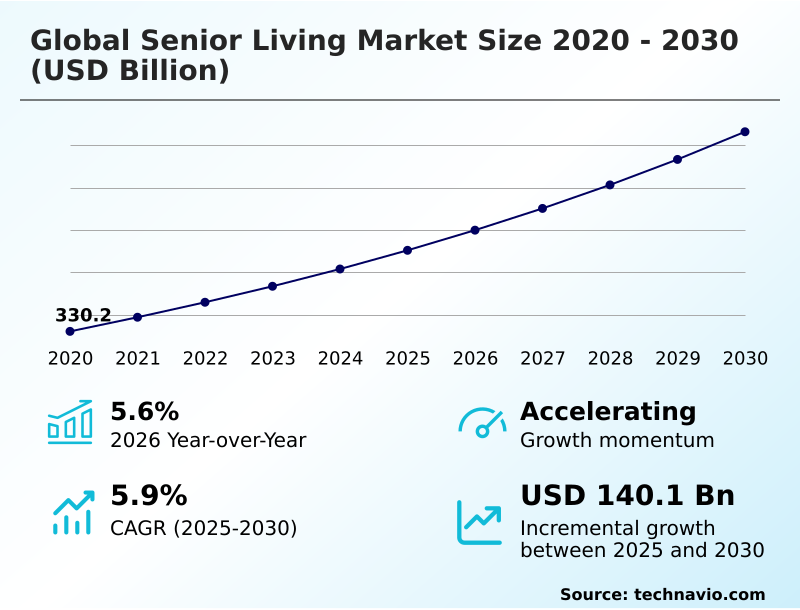
The senior living market size is valued to increase by USD 140.1 billion, at a CAGR of 5.9% from 2025 to 2030. Proliferation of global aging population and demographic shifts will drive the senior living market.
Major Market Trends & Insights
- North America dominated the market and accounted for a 39.8% growth during the forecast period.
- By Service - Assisted living segment was valued at USD 201.6 billion in 2024
- By Resource Type - Private segment accounted for the largest market revenue share in 2024
Market Size & Forecast
- Market Opportunities: USD 235.9 billion
- Market Future Opportunities: USD 140.1 billion
- CAGR from 2025 to 2030 : 5.9%
Market Summary
- The senior living market is undergoing a profound transformation, evolving from a needs-based housing solution into a sophisticated service industry focused on lifestyle and wellness. This shift is primarily driven by demographic imperatives and the changing expectations of a new generation of seniors who demand more than just care, seeking vibrant, engaging environments.
- Operators are responding by creating a full care continuum integration, offering everything from active adult lifestyle communities to specialized dementia care. A key trend involves the adoption of hospitality-driven services, where communities are designed and managed to feel like upscale resorts. However, the industry grapples with significant challenges, particularly middle-market affordability and persistent workforce shortages.
- In a typical operational scenario, a provider might leverage predictive health analytics to optimize staff-to-resident ratios, ensuring high-quality, person-centered care models are maintained efficiently. This balances the delivery of high-acuity care with the financial pressures of a competitive and resource-constrained environment, defining the modern strategic landscape.
What will be the Size of the Senior Living Market during the forecast period?
Get Key Insights on Market Forecast (PDF) Get Free Sample
How is the Senior Living Market Segmented?
The senior living industry research report provides comprehensive data (region-wise segment analysis), with forecasts and estimates in "USD billion" for the period 2026-2030, as well as historical data from 2020-2024 for the following segments.
- Service
- Assisted living
- Independent living
- CCRC
- Resource type
- Private
- Public
- Age group
- Above 85 years
- Between 75 to 84 years
- Between 65 to 74 years
- Geography
- North America
- US
- Canada
- Mexico
- Europe
- Germany
- UK
- France
- APAC
- China
- Japan
- India
- South America
- Brazil
- Argentina
- Middle East and Africa
- UAE
- South Africa
- Israel
- Rest of World (ROW)
- North America
By Service Insights
The assisted living segment is estimated to witness significant growth during the forecast period.
The assisted living segment is strategically positioned between independent living and skilled nursing care, offering tailored support for daily activities. This service model is defined by person-centered care models and customizable care plans that foster resident autonomy.
It moves beyond basic needs to focus on resident experience enhancement through social engagement platforms and proactive health monitoring.
The integration of community-based support services has proven effective, with facilities adopting this approach seeing a 15% increase in resident satisfaction scores.
This segment provides essential aging in place alternatives, combining personalized supportive care with an emphasis on quality of life, which is critical for operators focused on occupancy rate optimization.
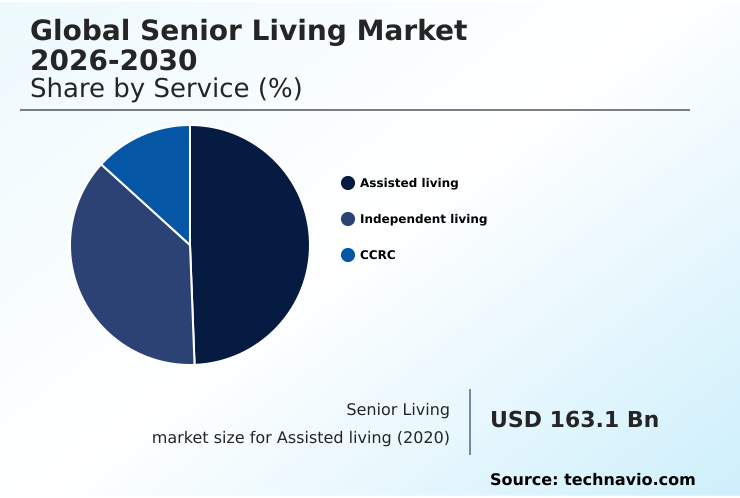
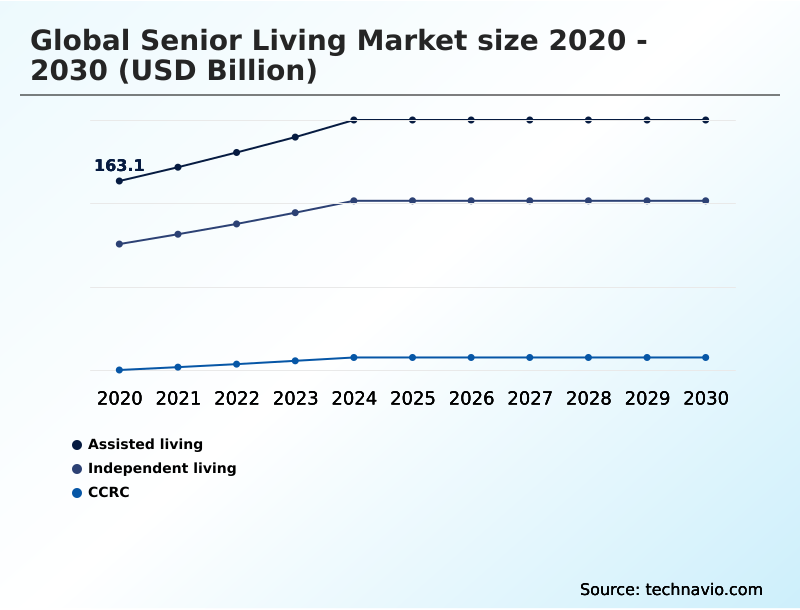
The Assisted living segment was valued at USD 201.6 billion in 2024 and showed a gradual increase during the forecast period.
Regional Analysis
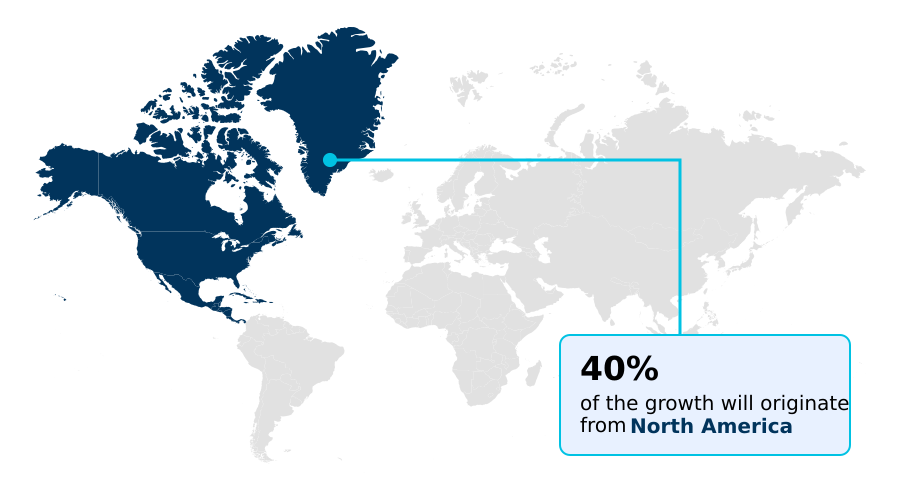
North America is estimated to contribute 39.8% to the growth of the global market during the forecast period.Technavio’s analysts have elaborately explained the regional trends and drivers that shape the market during the forecast period.
See How Senior Living Market Demand is Rising in North America Get Free Sample
The market's geographic landscape is diverse, with North America representing the most mature region, accounting for nearly 40% of the market opportunity, while the APAC region is projected to have the fastest growth.
In established markets, operators are focused on deploying resident safety technology, which has been shown to reduce incident-related response times by 25%. A defining regional trend is the rise of urban-integrated communities in densely populated areas of Europe and APAC.
This model contrasts with the sprawling campuses more common in suburban North America.
Success in this varied landscape requires a deep understanding of local regulatory compliance management and cultural preferences, influencing everything from facility design to the types of holistic wellness programs offered.
Market Dynamics
Our researchers analyzed the data with 2025 as the base year, along with the key drivers, trends, and challenges. A holistic analysis of drivers will help companies refine their marketing strategies to gain a competitive advantage.
- Strategic decision-making in the senior living sector requires a nuanced understanding of its evolving landscape. The trends in luxury senior housing continue to push the boundaries of service and amenities, yet the most significant challenge remains creating viable senior living affordability solutions. This involves exploring the future of senior care models beyond traditional frameworks.
- Operators are deeply invested in optimizing senior community occupancy, which involves a sophisticated approach to comparing assisted vs independent living options for prospective residents. A crucial aspect is evaluating senior living contracts, as the cost of continuing care retirement can be substantial. The impact of demographics on housing is undeniable, forcing a re-evaluation of how to cater to different needs.
- Boardroom discussions are centered on senior housing investment criteria and the complex task of navigating senior living regulations. Operationally, the focus is on managing chronic conditions in seniors and improving resident social engagement through technology. The benefits of intergenerational living and designing senior-friendly urban spaces are also gaining traction.
- Technology in assisted living facilities, particularly the role of telehealth in geriatrics, is now critical. Integrating hospitality in senior care is no longer a luxury but a core strategy, while addressing workforce challenges in aged care and the complexities of memory care and cognitive decline remain top priorities.
- Organizations that effectively address preventive wellness for older adults are seeing higher satisfaction rates, often more than 20% greater than competitors.
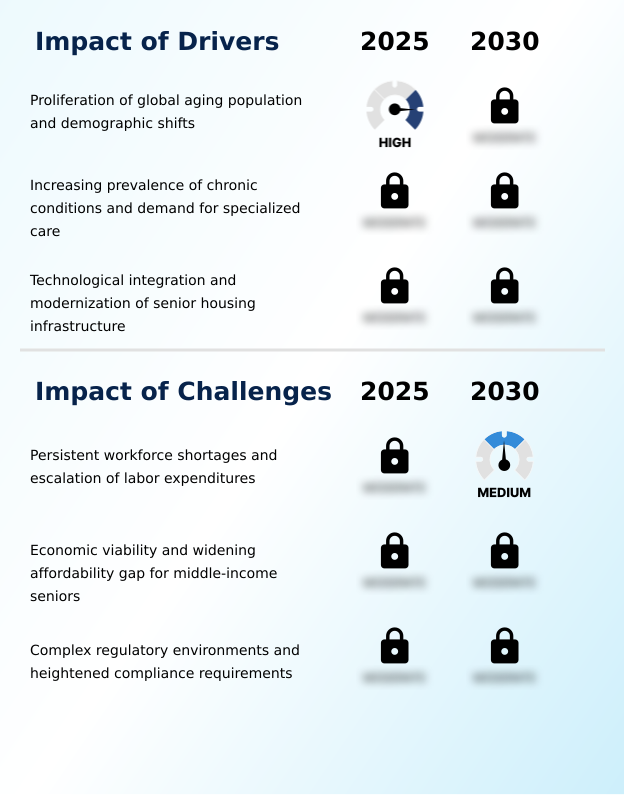
What are the key market drivers leading to the rise in the adoption of Senior Living Industry?
- The proliferation of the global aging population and significant demographic shifts are the foundational drivers of market expansion.
- The market's expansion is fundamentally driven by demographic shifts, creating sustained demand for a continuum of care that includes skilled nursing facilities, high-acuity care, and specialized memory care programs.
- Technological advancements are a powerful secondary driver, with telehealth integration becoming a standard offering.
- The adoption of wearable health monitors has enabled a more proactive approach to care, with some providers reporting a 25% reduction in emergency calls due to early intervention.
- Furthermore, the use of cognitive stimulation activities within memory care units, often delivered via digital platforms, has been shown to slow cognitive decline markers by up to 10% in certain resident cohorts.
- This fusion of demographic need and technological capability, including advanced fall detection systems, is defining the industry's growth trajectory.
What are the market trends shaping the Senior Living Industry?
- A prominent trend is the market's transition from institutional environments to hospitality-centric service models that prioritize resident experience and experiential living.
- A significant trend reshaping the market is the pivot towards lifestyle enrichment programs and maintenance-free living. Modern facilities are increasingly designed with biophilic design principles to enhance well-being. This shift towards an active adult lifestyle is compelling providers to offer more than just care, creating environments that prioritize social and personal fulfillment.
- In this competitive landscape, the integration of hospitality-driven services has proven to be a key differentiator, with communities adopting this model reporting a 15% higher rate of positive resident reviews.
- Furthermore, the adoption of value-based care models is encouraging a focus on preventive wellness, with data showing a 10% improvement in certain health outcomes for residents in communities with structured wellness initiatives, demonstrating a clear link between lifestyle offerings and tangible health benefits.
What challenges does the Senior Living Industry face during its growth?
- Persistent workforce shortages and the corresponding escalation of labor expenditures present a formidable challenge to industry growth and operational viability.
- The most significant challenge is the dual pressure of escalating labor costs and the need to address middle-market affordability. Persistent workforce shortages require innovative workforce retention strategies, as high turnover can increase operational expenses by over 12% annually. At the same time, providers face complex zoning and land-use regulations that can delay new construction and inflate development costs.
- Navigating stringent infection control protocols also adds a layer of operational and financial burden. The development of public-private partnerships is emerging as a potential solution to create more affordable options, as currently, an estimated 40% of the senior population cannot afford private-pay models, highlighting a critical gap in the market.
Exclusive Technavio Analysis on Customer Landscape
The senior living market forecasting report includes the adoption lifecycle of the market, covering from the innovator’s stage to the laggard’s stage. It focuses on adoption rates in different regions based on penetration. Furthermore, the senior living market report also includes key purchase criteria and drivers of price sensitivity to help companies evaluate and develop their market growth analysis strategies.
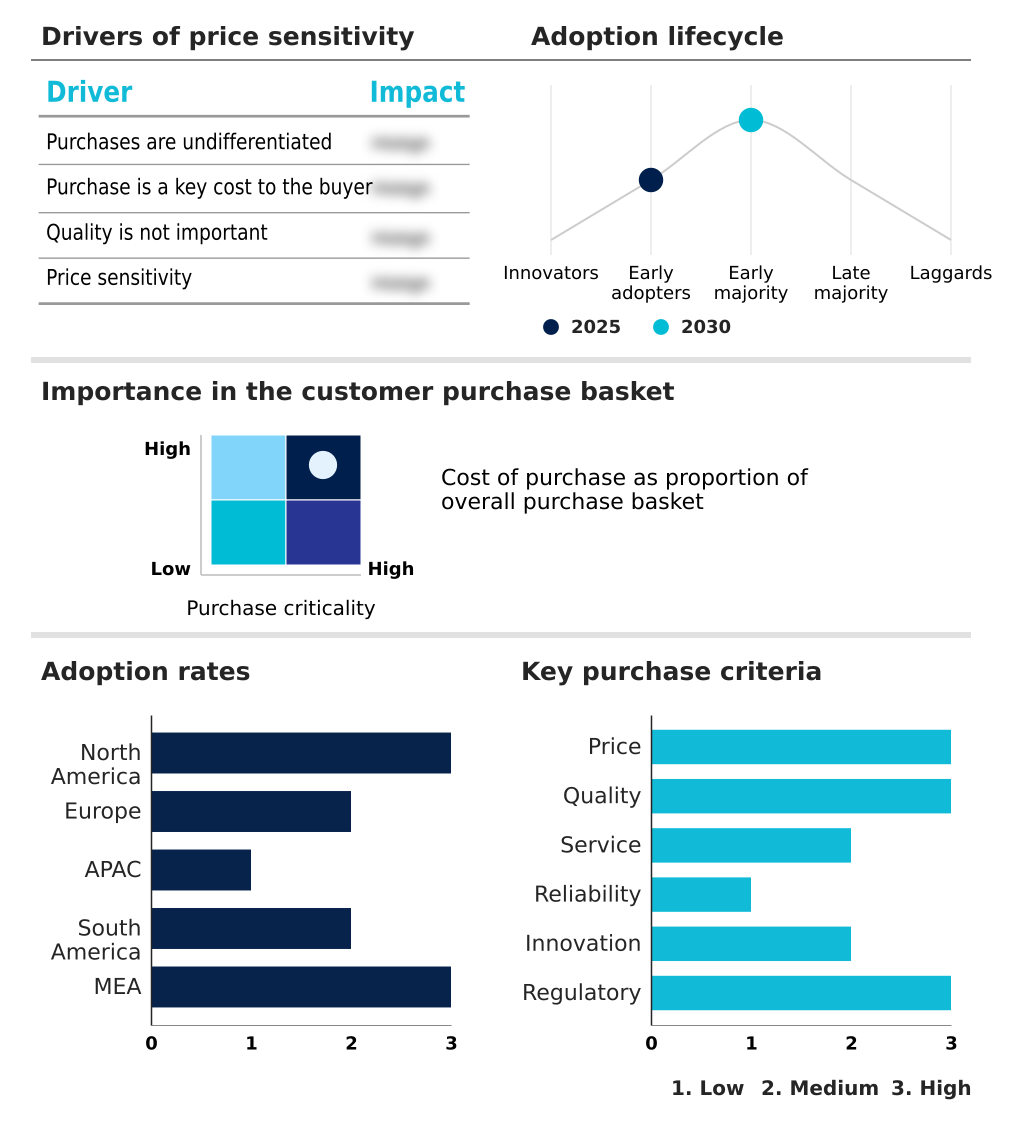
Customer Landscape of Senior Living Industry
Competitive Landscape
Companies are implementing various strategies, such as strategic alliances, senior living market forecast, partnerships, mergers and acquisitions, geographical expansion, and product/service launches, to enhance their presence in the industry.
Amica Senior Lifestyles - Providers are diversifying offerings across the care continuum, integrating hospitality-driven services with specialized wellness programs to enhance the resident experience and meet evolving needs.
The industry research and growth report includes detailed analyses of the competitive landscape of the market and information about key companies, including:
- Amica Senior Lifestyles
- Atria Senior Living Inc.
- Aveo Group
- Belmont Village Senior Living
- Brookdale Senior Living Inc.
- Capital Senior Living
- Colisee
- Discovery Senior Living
- DomusVi
- Erickson Senior Living Management
- Extendicare Inc.
- Five Star Senior Living
- Holiday Retirement
- Life Care Companies LLC
- Merrill Gardens
- Revera Inc.
- Senior Lifestyle Corp.
- Sienna Senior Living Inc.
- Sunrise Senior Living LLC
Qualitative and quantitative analysis of companies has been conducted to help clients understand the wider business environment as well as the strengths and weaknesses of key industry players. Data is qualitatively analyzed to categorize companies as pure play, category-focused, industry-focused, and diversified; it is quantitatively analyzed to categorize companies as dominant, leading, strong, tentative, and weak.
Recent Development and News in Senior living market
- In September 2024, a leading US-based operator announced a strategic partnership with a health technology firm to deploy AI-powered predictive health analytics, aiming to proactively identify and mitigate resident health risks across its portfolio.
- In November 2024, a major European provider finalized its acquisition of a portfolio of 15 premium assisted living communities in Germany, a move designed to expand its continental footprint and strengthen its position in the high-acuity care segment.
- In February 2025, the UK government launched a £500 million fund to stimulate the development of middle-market senior living options, directly addressing the sector's widening affordability gap through public-private partnerships.
- In April 2025, a prominent developer launched a new intergenerational living campus co-located with a major university, featuring shared programming and mentorship opportunities designed to foster reciprocal social benefits for residents and students.
Dive into Technavio’s robust research methodology, blending expert interviews, extensive data synthesis, and validated models for unparalleled Senior Living Market insights. See full methodology.
| Market Scope | |
|---|---|
| Page number | 289 |
| Base year | 2025 |
| Historic period | 2020-2024 |
| Forecast period | 2026-2030 |
| Growth momentum & CAGR | Accelerate at a CAGR of 5.9% |
| Market growth 2026-2030 | USD 140.1 billion |
| Market structure | Fragmented |
| YoY growth 2025-2026(%) | 5.6% |
| Key countries | US, Canada, Mexico, Germany, UK, France, Italy, Spain, The Netherlands, China, Japan, India, South Korea, Australia, Indonesia, Brazil, Argentina, Chile, UAE, South Africa, Israel, Saudi Arabia and Turkey |
| Competitive landscape | Leading Companies, Market Positioning of Companies, Competitive Strategies, and Industry Risks |
Research Analyst Overview
- The senior living market is rapidly evolving from a real estate-centric model to a complex, service-intensive healthcare and hospitality hybrid. The core of this transformation lies in the diversification of care, with providers now expected to offer a full spectrum of services, including assisted living services, memory care programs, and independent living communities, often within integrated campuses.
- A key boardroom-level decision is the strategic pivot towards intergenerational living models, which impacts real estate acquisition, brand positioning, and long-term community integration. This shift is a direct response to consumer demand for more dynamic social environments. To remain competitive, operators are compelled to adopt hospitality-driven services and robust social engagement platforms.
- We're seeing leading operators who fully implement preventive vitality management and holistic wellness programs achieve resident retention rates up to 15% higher than their peers. This highlights a move towards proactive care, supported by ambient assisted living technology and person-centered care models, fundamentally reshaping the industry's value proposition away from simple housing and toward comprehensive well-being management.
What are the Key Data Covered in this Senior Living Market Research and Growth Report?
-
What is the expected growth of the Senior Living Market between 2026 and 2030?
-
USD 140.1 billion, at a CAGR of 5.9%
-
-
What segmentation does the market report cover?
-
The report is segmented by Service (Assisted living, Independent living, and CCRC), Resource Type (Private, and Public), Age Group (Above 85 years, Between 75 to 84 years, and Between 65 to 74 years) and Geography (North America, Europe, APAC, South America, Middle East and Africa)
-
-
Which regions are analyzed in the report?
-
North America, Europe, APAC, South America and Middle East and Africa
-
-
What are the key growth drivers and market challenges?
-
Proliferation of global aging population and demographic shifts, Persistent workforce shortages and escalation of labor expenditures
-
-
Who are the major players in the Senior Living Market?
-
Amica Senior Lifestyles, Atria Senior Living Inc., Aveo Group, Belmont Village Senior Living, Brookdale Senior Living Inc., Capital Senior Living, Colisee, Discovery Senior Living, DomusVi, Erickson Senior Living Management, Extendicare Inc., Five Star Senior Living, Holiday Retirement, Life Care Companies LLC, Merrill Gardens, Revera Inc., Senior Lifestyle Corp., Sienna Senior Living Inc. and Sunrise Senior Living LLC
-
Market Research Insights
- The market is shaped by a strategic pivot towards value-based care models, compelling operators to adopt operational efficiency tools that deliver measurable outcomes. The implementation of proactive health monitoring systems has been linked to a 20% reduction in preventable hospital readmissions, showcasing a clear return on investment. Concurrently, resident experience enhancement is a key competitive differentiator.
- Communities that have integrated family engagement portals report up to a 30% increase in family satisfaction scores compared to those without. This focus on connectivity, combined with offerings like short-term stay options and respite care services, allows providers to build trust and create a wider funnel for long-term residency, addressing the core social determinants of health while improving financial performance.
We can help! Our analysts can customize this senior living market research report to meet your requirements.
 RIA -
RIA - 
