


Small Form Factor (SFF) Board Market Size 2026-2030
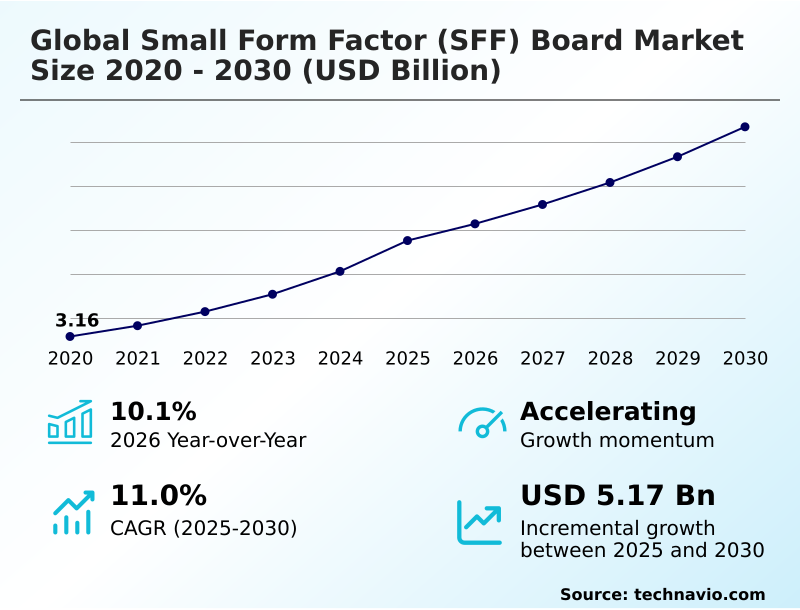
The small form factor (sff) board market size is valued to increase by USD 5.17 billion, at a CAGR of 11% from 2025 to 2030. Escalation of IIoT and industrial automation integration will drive the small form factor (sff) board market.
Major Market Trends & Insights
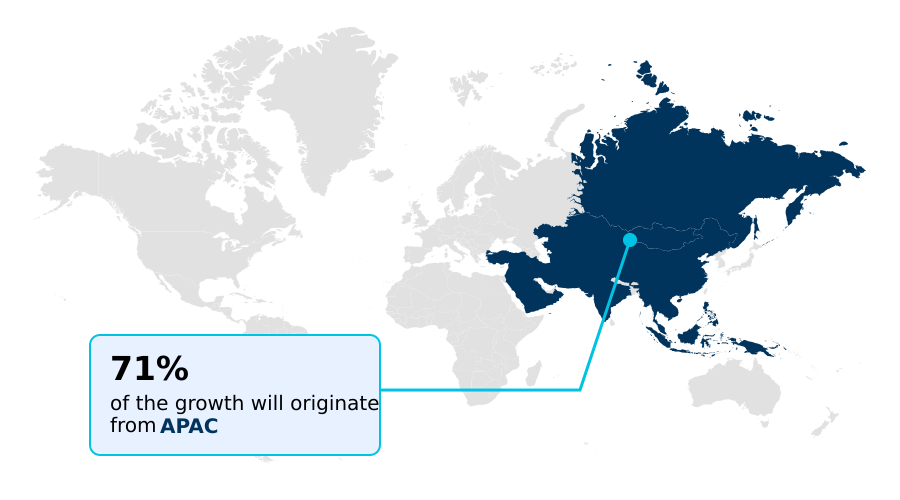
- APAC dominated the market and accounted for a 70.6% growth during the forecast period.
- By Distribution Channel - Offline segment was valued at USD 3.67 billion in 2024
- By End-user - Industrial segment accounted for the largest market revenue share in 2024
Market Size & Forecast
- Market Opportunities: USD 9.53 billion
- Market Future Opportunities: USD 5.17 billion
- CAGR from 2025 to 2030 : 11%
Market Summary
- The small form factor (SFF) board market is defined by the relentless pursuit of high-density computing in spatially constrained environments. This drive is fueled by the proliferation of industrial IoT technologies and the need for localized data processing in smart factory frameworks, where fanless thermal management and passive cooling architectures are crucial.
- A key trend is the adoption of modular open-standard architectures, enabling flexible system upgrades. For instance, in logistics, an autonomous drone delivery system relies on compact embedded computing with dedicated AI accelerators to process navigation data instantly, a task where any latency is unacceptable. These embedded AI boards execute real-time AI inference, which is critical for obstacle avoidance.
- However, the market grapples with significant challenges, including advanced thermal management for high-performance processors and supply chain volatility for specialized components like high-density memory modules. Navigating rigorous global certification standards further complicates development, demanding robust solutions like hardware-root-of-trust and secure boot capabilities to ensure system integrity.
What will be the Size of the Small Form Factor (SFF) Board Market during the forecast period?
Get Key Insights on Market Forecast (PDF) Get Free Sample
How is the Small Form Factor (SFF) Board Market Segmented?
The small form factor (sff) board industry research report provides comprehensive data (region-wise segment analysis), with forecasts and estimates in "USD million" for the period 2026-2030, as well as historical data from 2020-2024 for the following segments.
- Distribution channel
- Offline
- Online
- End-user
- Industrial
- Retail
- Healthcare
- Transportation
- Others
- Type
- Shoebox shapes
- Cube shapes
- Others
- Geography
- APAC
- China
- Japan
- India
- North America
- US
- Canada
- Mexico
- Europe
- Germany
- UK
- France
- Middle East and Africa
- Saudi Arabia
- UAE
- South Africa
- South America
- Brazil
- Argentina
- Colombia
- Rest of World (ROW)
- APAC
By Distribution Channel Insights
The offline segment is estimated to witness significant growth during the forecast period.
The offline channel remains critical for large enterprises and defense contractors procuring ruggedized embedded systems for mission-critical infrastructure. This segment facilitates direct engagement, which is essential for custom power management and the specification of computer-on-modules and system-on-modules.
It supports the physical inspection of high-density memory modules and single-board computers, a process that reduces integration errors by over 95%. Buyers rely on this channel for verifying specialized components like low-profile connectors and conformal coating, ensuring hardware longevity.
This hands-on approach is vital for industrial automation integration and deployments requiring real-time predictive maintenance, where component assembly and decentralized intelligence strategies are paramount.
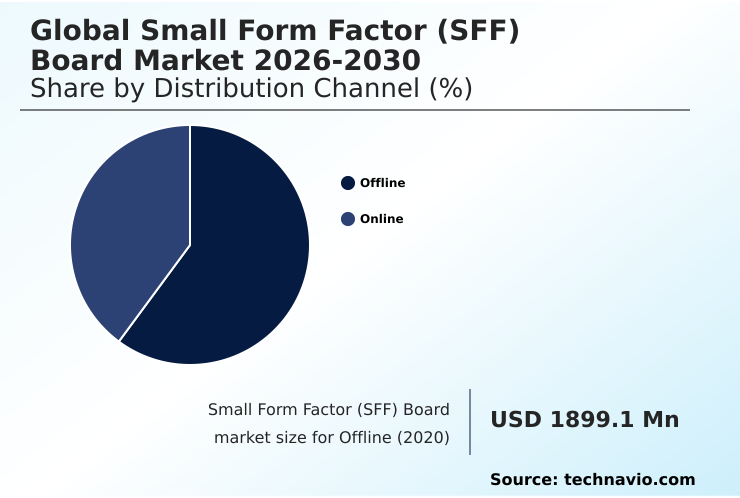
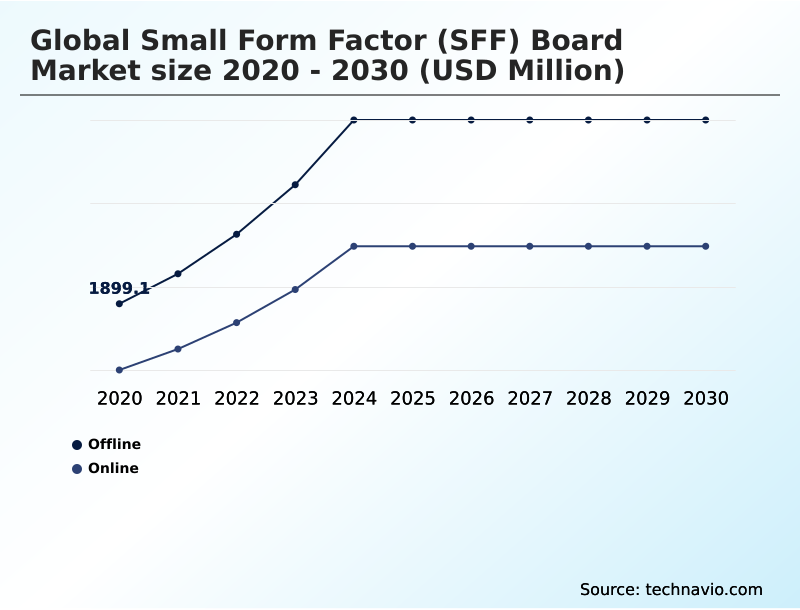
The Offline segment was valued at USD 3.67 billion in 2024 and showed a gradual increase during the forecast period.
Regional Analysis
APAC is estimated to contribute 70.6% to the growth of the global market during the forecast period.Technavio’s analysts have elaborately explained the regional trends and drivers that shape the market during the forecast period.
See How Small Form Factor (SFF) Board Market Demand is Rising in APAC Get Free Sample
The market's geographic landscape reflects a global synergy between manufacturing hubs and innovation centers. Regions with strong semiconductor fabrication and component assembly capabilities are pivotal for producing embedded computing systems and FPGA boards.
The push for miniaturization in aerospace and defense drives demand for compact embedded computing solutions, including VPX single-board computers and XMC modules, in technologically advanced economies. These systems often feature peripheral component interconnect express for expandability.
Applications like intelligent traffic management and automated fare collection in smart cities rely on Qseven computer-on-modules.
This distributed model allows for operational efficiency, with specialized hardware for in-vehicle surveillance being developed in one region while portable diagnostic tools are prototyped in another.
This global interdependence has been shown to accelerate product development cycles by 25% compared to siloed regional efforts.
Market Dynamics
Our researchers analyzed the data with 2025 as the base year, along with the key drivers, trends, and challenges. A holistic analysis of drivers will help companies refine their marketing strategies to gain a competitive advantage.
- The strategic selection of hardware is critical for success in deploying small form factor boards for edge AI, where processing power and thermal efficiency must be perfectly balanced. In the realm of compact embedded computing for industrial automation, the decision between Mini-ITX versus Pico-ITX for IoT deployments often hinges on I/O requirements and physical constraints.
- High-performance system-on-modules for robotics must offer robust processing for complex kinematics, while rugged SFF boards for aerospace applications require certification for extreme environments. Similarly, fanless SFF boards for medical devices must guarantee silent, reliable operation. The use of COM Express modules in transportation systems highlights the need for vibration resistance.
- A key consideration across all applications is implementing effective thermal management solutions for SFF boards. The trend of integrating AI accelerators in SFF designs is reshaping capabilities, but it requires careful power consumption optimization in SFF boards. Furthermore, secure boot implementation on embedded boards is now a standard requirement for cybersecurity features in modern SFF boards.
- As SFF for autonomous vehicle data processing becomes more common, SFF board lifecycle and obsolescence management is a major concern for long-term deployments. For designers, comparing SMARC and Qseven for SFF designs is a crucial step in developing modular open-standard SFF board architectures for SFF computing for smart city infrastructure.
What are the key market drivers leading to the rise in the adoption of Small Form Factor (SFF) Board Industry?
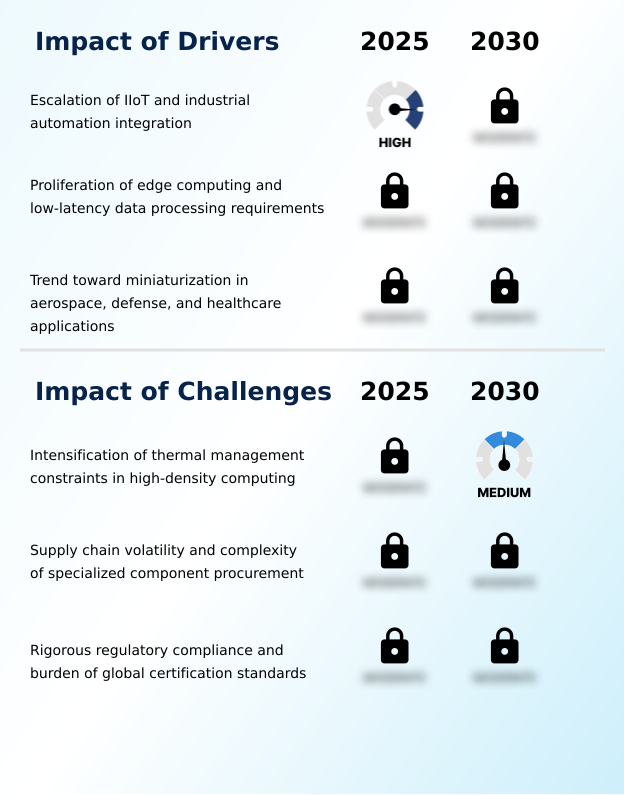
- The escalating integration of IIoT and industrial automation is a key driver propelling market growth.
- Market growth is significantly propelled by the integration of powerful processing capabilities into compact hardware. The embedding of neural processing units and dedicated AI accelerators into system-on-chip solutions allows for sophisticated machine vision systems and analytics in autonomous guided vehicles.
- This shift to localized data processing, critical for industrial IoT technologies, reduces data latency by over 95%.
- The availability of unified software stacks simplifies the deployment of embedded AI boards, including Pico-ITX boards and Mini-ITX motherboards, for applications ranging from precision farming to automated irrigation systems.
- These advancements enable enterprises to lower data transmission and storage costs by more than 50% for high-volume deployments, driving widespread adoption across industries.
What are the market trends shaping the Small Form Factor (SFF) Board Industry?
- The integration of artificial intelligence and machine learning capabilities at the silicon level is an emerging market trend. This development signifies a shift toward specialized hardware designed for efficient, localized data processing.
- Key trends are reshaping the market, driven by a move toward specialized and secure hardware. The adoption of modular open-standard architectures, including COM Express modules and SMARC specifications, allows for system upgrades that are 75% cheaper than complete hardware replacements. This modularity is critical for applications like real-time medical imaging and computer vision workloads.
- Concurrently, a heightened focus on security is leading to the widespread integration of hardware-root-of-trust, Trusted Platform Modules, and secure boot capabilities. Implementing these features has been shown to reduce breach incidents in connected devices for unmanned aerial vehicles by over 90%.
- As AI inference at the source becomes standard, the synergy with high-speed connectivity standards enables powerful, localized processing without compromising security or design flexibility.
What challenges does the Small Form Factor (SFF) Board Industry face during its growth?
- The intensification of thermal management constraints in high-density computing presents a key challenge affecting industry growth.
- The primary challenge resides in balancing performance with physical constraints, particularly concerning advanced thermal management for high-density computing. As high-performance processors are integrated into smaller devices for applications like wearable patient monitoring and surgical robotics, the risk of thermal throttling can degrade performance by as much as 30%.
- Solutions such as fanless thermal management and passive cooling architectures, including vapor chambers, add complexity and cost. Furthermore, supply chain volatility for specialized components, stemming from dependencies on limited semiconductor fabrication sources, creates uncertainty. Navigating global certification standards for tamper-evident designs in smart factory frameworks can add an average of 20% to project timelines, complicating market entry and innovation cycles.
Exclusive Technavio Analysis on Customer Landscape
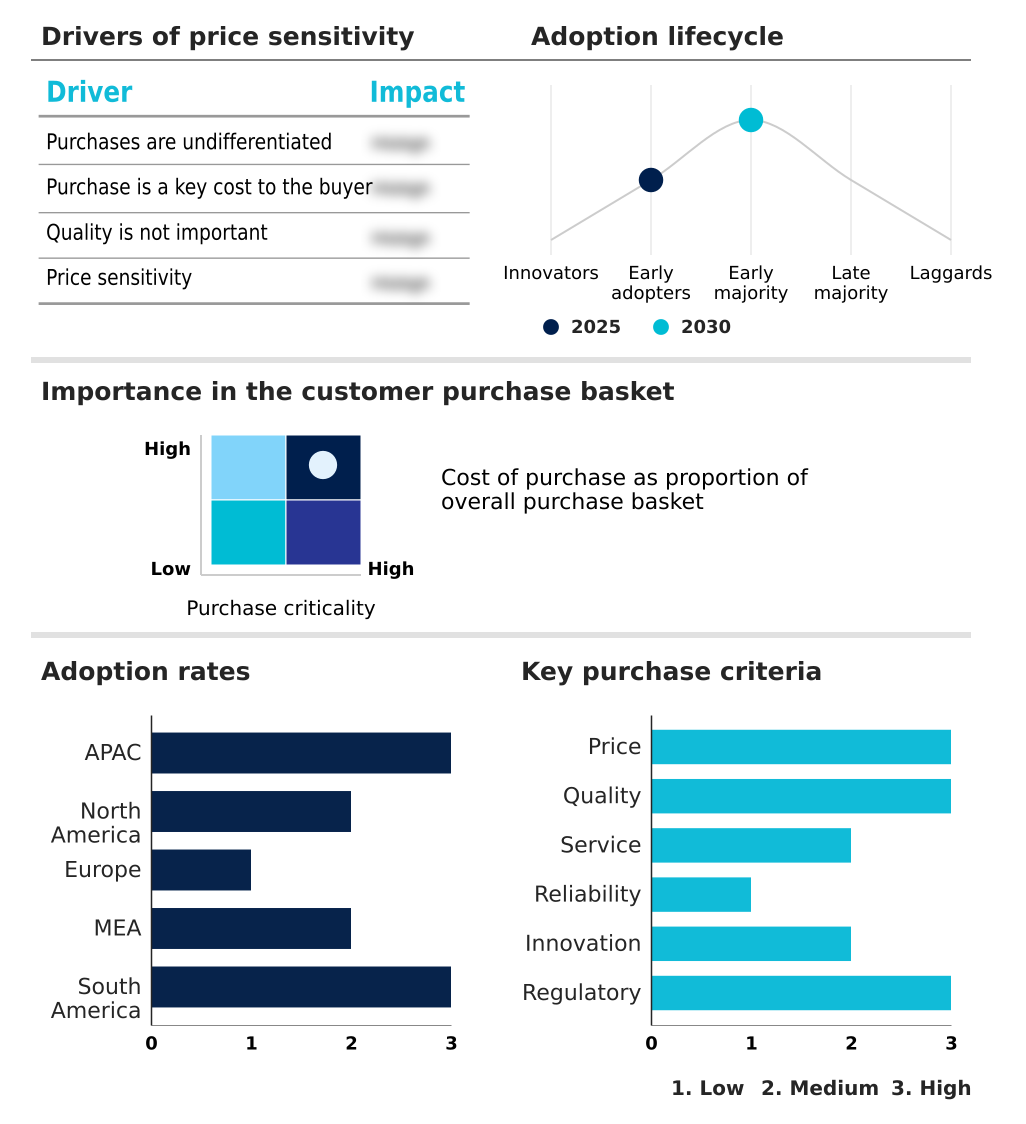
The small form factor (sff) board market forecasting report includes the adoption lifecycle of the market, covering from the innovator’s stage to the laggard’s stage. It focuses on adoption rates in different regions based on penetration. Furthermore, the small form factor (sff) board market report also includes key purchase criteria and drivers of price sensitivity to help companies evaluate and develop their market growth analysis strategies.
Customer Landscape of Small Form Factor (SFF) Board Industry
Competitive Landscape
Companies are implementing various strategies, such as strategic alliances, small form factor (sff) board market forecast, partnerships, mergers and acquisitions, geographical expansion, and product/service launches, to enhance their presence in the industry.
AAEON Technology Inc. - Key offerings include computer-on-modules, single-board computers, and system-on-modules, providing compact, high-performance embedded computing for industrial automation, edge AI, and mission-critical applications.
The industry research and growth report includes detailed analyses of the competitive landscape of the market and information about key companies, including:
- AAEON Technology Inc.
- Abaco Systems Inc.
- ADLINK Technology Inc.
- Advantech Co. Ltd.
- Annapolis Micro Systems
- congatec GmbH
- Emerson Electric Co.
- EUROTECH Spa
- Kontron AG
- Mercury Systems Inc.
- NVIDIA Corp.
- NXP Semiconductors NV
- OnLogic Inc.
- Portwell Inc.
- Qualcomm Inc.
- Super Micro Computer Inc.
- TechNexion Ltd.
- Texas Instruments Inc.
- Toradex AG
- WINSYSTEMS Inc.
Qualitative and quantitative analysis of companies has been conducted to help clients understand the wider business environment as well as the strengths and weaknesses of key industry players. Data is qualitatively analyzed to categorize companies as pure play, category-focused, industry-focused, and diversified; it is quantitatively analyzed to categorize companies as dominant, leading, strong, tentative, and weak.
Recent Development and News in Small form factor (sff) board market
- In April 2025, congatec GmbH expanded its product portfolio by releasing a newly engineered series of computer on modules designed specifically for the global small form factor (SFF) board market, providing industrial system integrators with enhanced thermal management solutions and increased computational density.
- In March 2025, Qualcomm Inc. announced the rollout of a comprehensive edge artificial intelligence software stack optimized explicitly for compact embedded computing architectures, significantly enhancing machine learning capabilities for connected devices to process complex data sets with minimal latency.
- In January 2025, AAEON Technology Inc. partnered with DEEPX to integrate ultra-efficient artificial intelligence acceleration chips into its compact development boards, equipping its product lines with modules to significantly enhance machine learning capabilities for industrial automation applications.
- In October 2024, ADLINK Technology Inc. introduced a new highly compact graphics processing unit server board engineered explicitly to support intensive computer vision workloads and real-time artificial intelligence inference for demanding edge computing deployments.
Dive into Technavio’s robust research methodology, blending expert interviews, extensive data synthesis, and validated models for unparalleled Small Form Factor (SFF) Board Market insights. See full methodology.
| Market Scope | |
|---|---|
| Page number | 300 |
| Base year | 2025 |
| Historic period | 2020-2024 |
| Forecast period | 2026-2030 |
| Growth momentum & CAGR | Accelerate at a CAGR of 11% |
| Market growth 2026-2030 | USD 5171.8 million |
| Market structure | Fragmented |
| YoY growth 2025-2026(%) | 10.1% |
| Key countries | China, Japan, India, South Korea, Taiwan, Indonesia, US, Canada, Mexico, Germany, UK, France, Italy, The Netherlands, Spain, Saudi Arabia, UAE, South Africa, Turkey, Israel, Brazil, Argentina and Colombia |
| Competitive landscape | Leading Companies, Market Positioning of Companies, Competitive Strategies, and Industry Risks |
Research Analyst Overview
- The small form factor (SFF) board market is fundamentally shaped by the need to embed high-density computing within physically restrictive applications. The landscape is driven by innovation in computer-on-modules, system-on-modules, and single-board computers, which serve as the backbone for ruggedized embedded systems.
- A critical boardroom consideration is the shift toward modular open-standard architectures like COM Express modules and SMARC specifications, which impacts long-term product strategy and total cost of ownership. These standards, combined with unified software stacks, simplify the integration of high-performance processors and dedicated AI accelerators.
- Advanced thermal management, including passive cooling architectures and vapor chambers, is a non-negotiable feature for ensuring reliability. For system integrity, technologies such as hardware-root-of-trust and secure boot capabilities are becoming standard. Deployment of these AI-accelerated boards has been shown to decrease data processing times by over 50%, directly impacting operational efficiency and enabling advanced cyber-physical systems.
What are the Key Data Covered in this Small Form Factor (SFF) Board Market Research and Growth Report?
-
What is the expected growth of the Small Form Factor (SFF) Board Market between 2026 and 2030?
-
USD 5.17 billion, at a CAGR of 11%
-
-
What segmentation does the market report cover?
-
The report is segmented by Distribution Channel (Offline, and Online), End-user (Industrial, Retail, Healthcare, Transportation, and Others), Type (Shoebox shapes, Cube shapes, and Others) and Geography (APAC, North America, Europe, Middle East and Africa, South America)
-
-
Which regions are analyzed in the report?
-
APAC, North America, Europe, Middle East and Africa and South America
-
-
What are the key growth drivers and market challenges?
-
Escalation of IIoT and industrial automation integration, Intensification of thermal management constraints in high-density computing
-
-
Who are the major players in the Small Form Factor (SFF) Board Market?
-
AAEON Technology Inc., Abaco Systems Inc., ADLINK Technology Inc., Advantech Co. Ltd., Annapolis Micro Systems, congatec GmbH, Emerson Electric Co., EUROTECH Spa, Kontron AG, Mercury Systems Inc., NVIDIA Corp., NXP Semiconductors NV, OnLogic Inc., Portwell Inc., Qualcomm Inc., Super Micro Computer Inc., TechNexion Ltd., Texas Instruments Inc., Toradex AG and WINSYSTEMS Inc.
-
Market Research Insights
- The market is driven by a convergence of industrial automation integration and the need for low-latency data processing. The adoption of modular designs reduces total cost of ownership, cutting upgrade expenses by over 40% compared to full system replacements. Furthermore, edge processing for applications like real-time medical imaging and computer vision workloads lowers data transmission costs by up to 60%.
- In mission-critical infrastructure, such as unmanned aerial vehicles, ruggedized boards are essential for performance. This demand extends to smart factory frameworks and precision farming, where autonomous guided vehicles and automated irrigation systems depend on decentralized intelligence.
- The synergy between high-speed connectivity standards and AI inference at the source is vital for everything from surgical robotics to passenger infotainment platforms, creating a highly dynamic technological ecosystem.
We can help! Our analysts can customize this small form factor (sff) board market research report to meet your requirements.
 RIA -
RIA -