


US Single-use Packaging Market Size 2026-2030
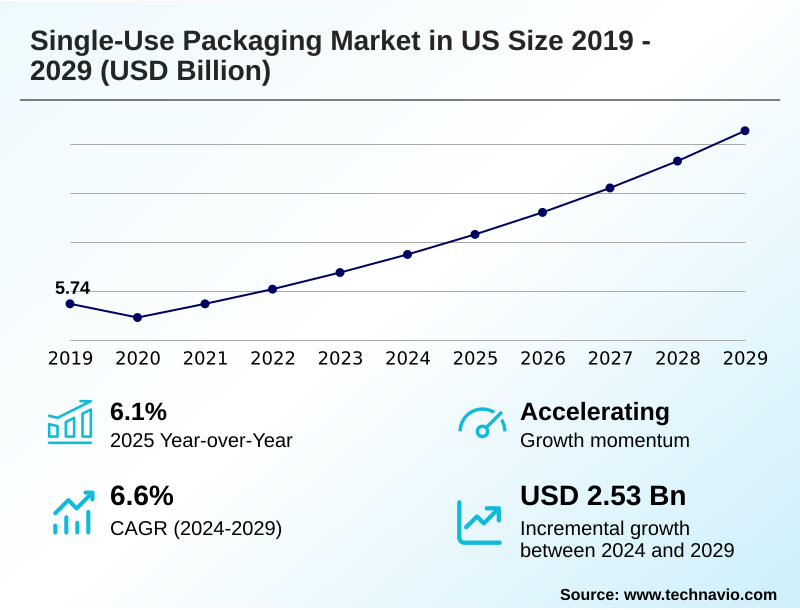
The us single-use packaging market size is valued to increase by USD 2.75 billion, at a CAGR of 6.7% from 2025 to 2030. Pervasive consumer demand for convenience and on-the-go consumption will drive the us single-use packaging market.
Major Market Trends & Insights
- By Product - Rigid packaging segment was valued at USD 4.45 billion in 2024
- By End-user - Food segment accounted for the largest market revenue share in 2024
Market Size & Forecast
- Market Opportunities: USD 4.45 billion
- Market Future Opportunities: USD 2.75 billion
- CAGR from 2025 to 2030 : 6.7%
Market Summary
- The single-use packaging market in the US is undergoing a significant transformation, balancing the deep-seated consumer demand for convenience with the urgent need for environmental stewardship. This market, essential for product safety and hygiene across food, beverage, and healthcare sectors, is driven by fast-paced lifestyles that favor portable, portion-controlled, and ready-to-use formats.
- Innovations in materials and design are constant, with modified atmosphere packaging (MAP) and aseptic carton packaging extending shelf life and ensuring product integrity. However, the industry grapples with a complex regulatory environment and intense public pressure to mitigate waste.
- For instance, a national CPG company must navigate a patchwork of state-level extended producer responsibility laws, requiring a highly agile supply chain to manage different labeling, material composition, and fee structures for retort pouch technology products sold across the country. This challenge is spurring investment in advanced recycling technologies and the development of a more circular economy.
- The proliferation of e-commerce adds another layer of complexity, demanding durable e-commerce shipping mailers and specialized cold-chain packaging solutions to protect goods during transit, pushing the boundaries of packaging innovation.
What will be the Size of the US Single-use Packaging Market during the forecast period?
Get Key Insights on Market Forecast (PDF) Get Free Sample
How is the US Single-use Packaging Market Segmented?
The us single-use packaging industry research report provides comprehensive data (region-wise segment analysis), with forecasts and estimates in "USD million" for the period 2026-2030, as well as historical data from 2020-2024 for the following segments.
- Product
- Rigid packaging
- Flexible packaging
- End-user
- Food
- Beverage
- Healthcare and pharmaceutical
- Personal care
- Others
- Material
- Plastic
- Paper and paperboard
- Metals
- Glass
- Biodegradable materials
- Geography
- North America
- US
- North America
By Product Insights
The rigid packaging segment is estimated to witness significant growth during the forecast period.
The rigid packaging segment is fundamental to the single-use packaging market in the US, defined by its structural integrity and superior product protection.
This category, which includes rigid plastic containers, jars, and ready-to-eat meal trays, serves critical end-user sectors like food, beverage, and healthcare. Market dynamics are shaped by the dual pressures of consumer convenience and sustainability mandates.
Key innovations focus on lightweighting design principles, which have reduced material use by up to 15% in certain applications, and the integration of sustainable packaging alternatives.
The segment is also exploring next-generation materials like plant-based polyethylene furanoate (PEF) and heat-resistant polymer trays to meet demands for both performance, portion-control packaging, and a reduced environmental footprint in disposable food containers.
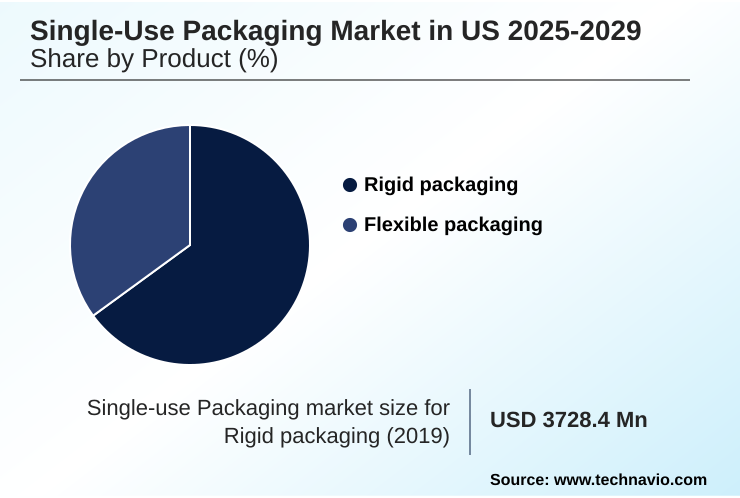
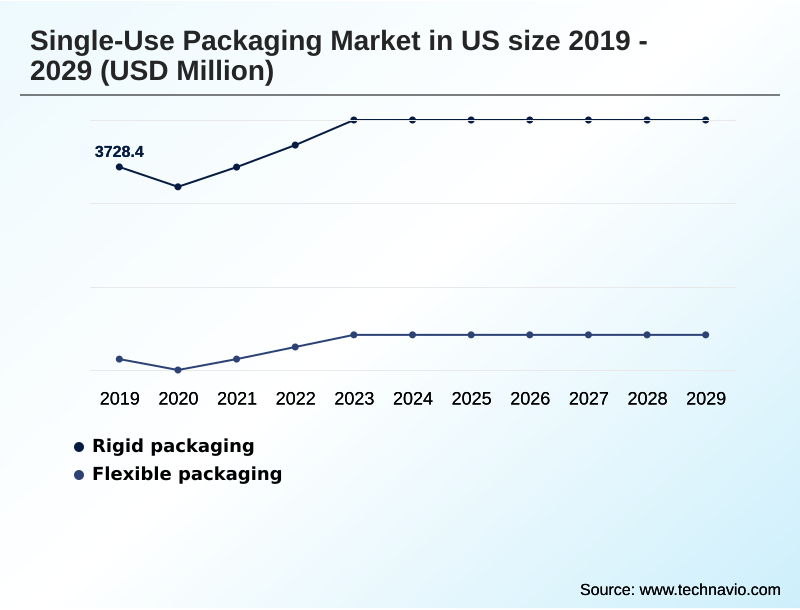
The Rigid packaging segment was valued at USD 4.45 billion in 2024 and showed a gradual increase during the forecast period.
Market Dynamics
Our researchers analyzed the data with 2025 as the base year, along with the key drivers, trends, and challenges. A holistic analysis of drivers will help companies refine their marketing strategies to gain a competitive advantage.
- The strategic landscape of the single-use packaging market in the US is increasingly defined by complex, long-tail considerations. The debate over rigid vs flexible packaging for food safety continues as both formats evolve with new barrier technologies. A significant operational challenge is the impact of EPR legislation on packaging costs, which requires sophisticated modeling to predict financial liabilities.
- These liabilities are compounded by PCR content mandates for beverage bottles, which necessitate supply chain verification systems that are over 50% more complex than just a few years prior. Advancements in chemical recycling for plastics offer a potential solution to challenges in recycling multilayer flexible films, but scalability remains a hurdle.
- Concurrently, the role of MAP in fresh produce preservation is becoming more critical for reducing food waste. Manufacturers are executing lightweighting strategies for PET containers to lower material usage and transport emissions. There is a notable consumer preference for paper-based packaging, influencing brand choices.
- The benefits of antimicrobial films in meat packaging are clear, but cost-benefit analysis of bioplastic packaging shows a mixed outlook. Smart packaging for pharmaceutical traceability and thermal insulation packaging for meal kits are creating new value.
- The industry is also focused on comparing barrier properties of PEF and PET and establishing clear design for recyclability packaging guidelines to improve end-of-life outcomes for single-use packaging in healthcare settings and beyond.
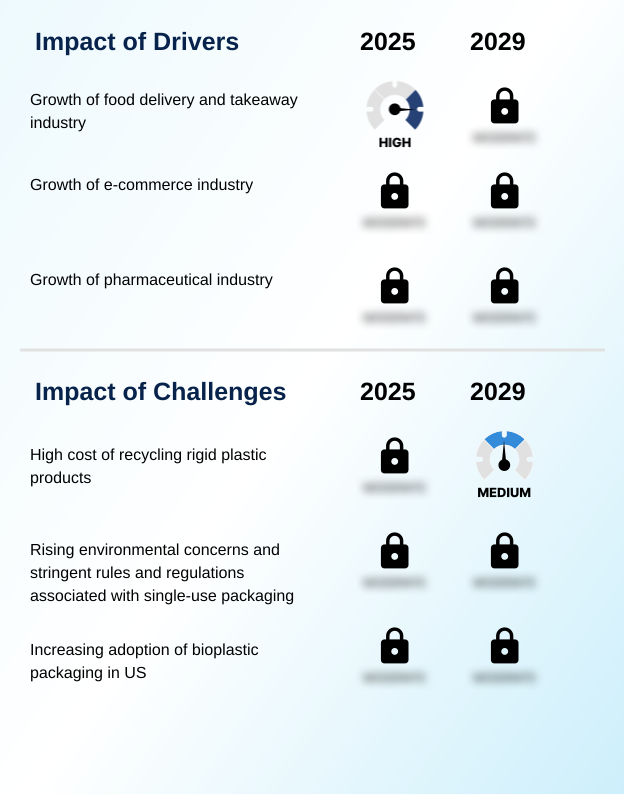
What are the key market drivers leading to the rise in the adoption of US Single-use Packaging Industry?
- A primary and enduring driver for the market is the pervasive consumer demand for convenience and products that facilitate on-the-go consumption.
- The primary drivers of the single-use packaging market are deeply rooted in modern consumer lifestyles and the expansion of digital commerce.
- The demand for convenience fuels the growth of on-the-go beverage containers and single-serving snack packaging, formats that align with increasingly mobile consumption patterns. This trend has contributed to a 10% year-over-year increase in the ready-to-eat meal category.
- In the foodservice sector, quick service restaurant (QSR) packaging solutions that prioritize speed and hygiene are essential. The proliferation of e-commerce has also become a major driver, creating significant demand for protective e-commerce shipping mailers.
- Innovations such as retort pouch technology, which extends non-refrigerated shelf-life by over 40% for certain products, and aseptic carton packaging support these trends by ensuring product safety and quality across diverse and often complex supply chains.
What are the market trends shaping the US Single-use Packaging Industry?
- A significant and rapidly advancing trend is the integration of intelligent technologies, which are transforming packaging from a passive container into an active and communicative platform.
- Key trends in the single-use packaging market are centered on creating intelligent and functional products that add value beyond simple containment. The integration of active packaging for shelf-life extension is a primary focus, with oxygen scavenger technology and moisture absorber systems being widely adopted.
- These technologies, along with antimicrobial packaging films, directly address food waste reduction packaging goals, with some applications extending product viability by up to 30%. In parallel, the rise of connected packaging QR codes has boosted consumer engagement rates by nearly 25% for some brands.
- For business-to-business applications such as pharmaceutical blister packs, smart packaging sensors are enhancing supply chain packaging efficiency and integrity. These intelligent systems have been shown to reduce tracking errors by 15%, providing a clear return on investment through improved logistics and quality assurance.
What challenges does the US Single-use Packaging Industry face during its growth?
- A formidable challenge confronting the market is the intensifying regulatory scrutiny and the fragmented legislative landscape emerging at state and municipal levels.
- The single-use packaging market faces significant challenges, primarily from regulatory pressures and infrastructural limitations in achieving a circular economy for plastics. The implementation of extended producer responsibility (EPR) programs varies by state, creating a complex compliance landscape that can increase administrative costs by up to 40% for national brands.
- Mandates for post-consumer recycled (PCR) content are increasing, yet the current supply of high-quality resin meets only about 60% of demand. This gap makes it difficult to secure materials for recyclable packaging solutions. Advanced methods like the chemical recycling process are promising but are not yet at a scale to process materials like biaxially oriented nylon films effectively.
- Furthermore, achieving true single-stream recycling compatibility remains a hurdle, limiting the viability of many compostable foodservice ware and other disposable medical device packaging items within existing waste management systems.
Exclusive Technavio Analysis on Customer Landscape
The us single-use packaging market forecasting report includes the adoption lifecycle of the market, covering from the innovator’s stage to the laggard’s stage. It focuses on adoption rates in different regions based on penetration. Furthermore, the us single-use packaging market report also includes key purchase criteria and drivers of price sensitivity to help companies evaluate and develop their market growth analysis strategies.
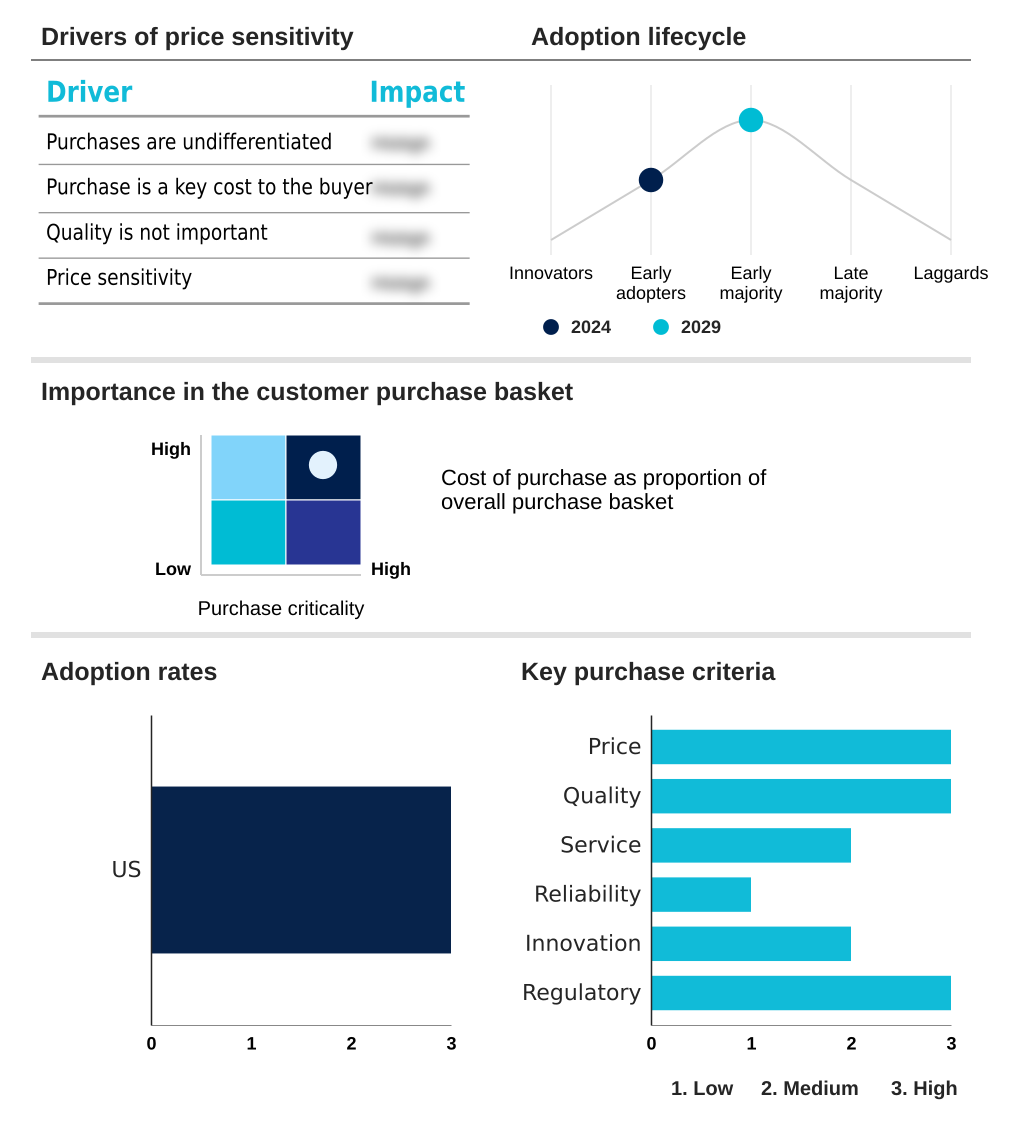
Customer Landscape of US Single-use Packaging Industry
Competitive Landscape
Companies are implementing various strategies, such as strategic alliances, us single-use packaging market forecast, partnerships, mergers and acquisitions, geographical expansion, and product/service launches, to enhance their presence in the industry.
Amcor Plc - Offerings include diverse single-use packaging such as flexible films, rigid containers, and specialized solutions for food and healthcare sectors.
The industry research and growth report includes detailed analyses of the competitive landscape of the market and information about key companies, including:
- Amcor Plc
- Ardagh Group SA
- Dart Container Corp.
- Elis Packaging Solutions Inc.
- Flex Pack
- Georgia Pacific LLC
- Graphic Packaging Holding Co.
- Liquipak Corp.
- Mattpak Inc.
- Novolex Holdings LLC
- Pactiv Evergreen Inc.
- ProAmpac Holdings Inc.
- Sealed Air Corp.
- Snapsil Corp.
- Sonic Packaging Industries
- Tetra Pak International SA
- Transcontinental Inc.
- Wilpack Packaging
- Winpak Ltd.
Qualitative and quantitative analysis of companies has been conducted to help clients understand the wider business environment as well as the strengths and weaknesses of key industry players. Data is qualitatively analyzed to categorize companies as pure play, category-focused, industry-focused, and diversified; it is quantitatively analyzed to categorize companies as dominant, leading, strong, tentative, and weak.
Recent Development and News in Us single-use packaging market
- In August, 2024, a non-profit industry coalition launched the U.S. Flexible Film Initiative, established to create a scalable, circular system for the recovery and recycling of flexible plastic packaging.
- In December, 2024, ProAmpac Holdings Inc. reinforced its commitment to sustainability by making a formal pledge to the Science Based Target initiative (SBTi) under the Net Zero Standard, aiming to accelerate the development of circular packaging.
- In February, 2025, Amcor plc announced a strategic partnership with Avantium to explore the application of plant-based polyethylene furanoate (PEF) for rigid packaging uses.
- In May, 2025, Sealed Air Corp. received regulatory approval from the FDA for a new food-grade recycled plastic material derived from an advanced chemical recycling process.
Dive into Technavio’s robust research methodology, blending expert interviews, extensive data synthesis, and validated models for unparalleled US Single-use Packaging Market insights. See full methodology.
| Market Scope | |
|---|---|
| Page number | 192 |
| Base year | 2025 |
| Historic period | 2020-2024 |
| Forecast period | 2026-2030 |
| Growth momentum & CAGR | Accelerate at a CAGR of 6.7% |
| Market growth 2026-2030 | USD 2754.1 million |
| Market structure | Fragmented |
| YoY growth 2025-2026(%) | 6.3% |
| Key countries | US |
| Competitive landscape | Leading Companies, Market Positioning of Companies, Competitive Strategies, and Industry Risks |
Research Analyst Overview
- The single-use packaging market in the US is navigating a period of fundamental change, driven by innovation in materials and intense pressure to adopt circular economy models. The development of advanced materials, including plant-based polyethylene furanoate (PEF), biaxially oriented nylon films, and high-barrier packaging films, is creating new performance possibilities.
- Companies are leveraging technologies like modified atmosphere packaging (MAP), oxygen scavenger technology, and antimicrobial packaging films to extend shelf life. However, the strategic agenda is increasingly dictated by sustainability. The industry-wide push toward integrating more post-consumer recycled (PCR) content is a boardroom-level imperative, as navigating extended producer responsibility (EPR) legislation now directly impacts long-term capital planning.
- Firms that successfully implement lightweighting design principles have demonstrated material cost reductions of up to 20%. The evolution of chemical recycling process technologies is critical for handling materials not suitable for single-stream recycling compatibility.
- The market's future hinges on balancing the functional demands for microwave-safe materials, easy-open peelable seals, and tamper-evident packaging features with the growing need for compostable packaging materials and food-grade recycled plastics.
What are the Key Data Covered in this US Single-use Packaging Market Research and Growth Report?
-
What is the expected growth of the US Single-use Packaging Market between 2026 and 2030?
-
USD 2.75 billion, at a CAGR of 6.7%
-
-
What segmentation does the market report cover?
-
The report is segmented by Product (Rigid packaging, and Flexible packaging), End-user (Food, Beverage, Healthcare and pharmaceutical, Personal care, and Others), Material (Plastic, Paper and paperboard, Metals, Glass, and Biodegradable materials) and Geography (North America)
-
-
Which regions are analyzed in the report?
-
North America
-
-
What are the key growth drivers and market challenges?
-
Pervasive consumer demand for convenience and on-the-go consumption, Intensifying regulatory scrutiny and legislative fragmentation
-
-
Who are the major players in the US Single-use Packaging Market?
-
Amcor Plc, Ardagh Group SA, Dart Container Corp., Elis Packaging Solutions Inc., Flex Pack, Georgia Pacific LLC, Graphic Packaging Holding Co., Liquipak Corp., Mattpak Inc., Novolex Holdings LLC, Pactiv Evergreen Inc., ProAmpac Holdings Inc., Sealed Air Corp., Snapsil Corp., Sonic Packaging Industries, Tetra Pak International SA, Transcontinental Inc., Wilpack Packaging and Winpak Ltd.
-
Market Research Insights
- The dynamics of the single-use packaging market are shaped by a complex interplay of consumer behavior, technological advancement, and sustainability pressures. The demand for convenience drives the expansion of disposable food containers and on-the-go beverage containers, particularly in the quick service restaurant (QSR) packaging sector.
- In response, companies are integrating active packaging for shelf-life extension, with some reporting spoilage reductions of up to 15%. This focus on food waste reduction packaging is a key value proposition. Simultaneously, the rise of e-commerce has spurred innovation in durable shipping mailers and hygienic personal care packaging.
- To meet sustainability goals, there is a strong push for recyclable packaging solutions and the development of a circular economy for plastics, with leading firms increasing their use of recycled materials by over 20% in certain product lines. This transition reflects a market adapting to both commercial and environmental imperatives.
We can help! Our analysts can customize this us single-use packaging market research report to meet your requirements.
 RIA -
RIA - 
