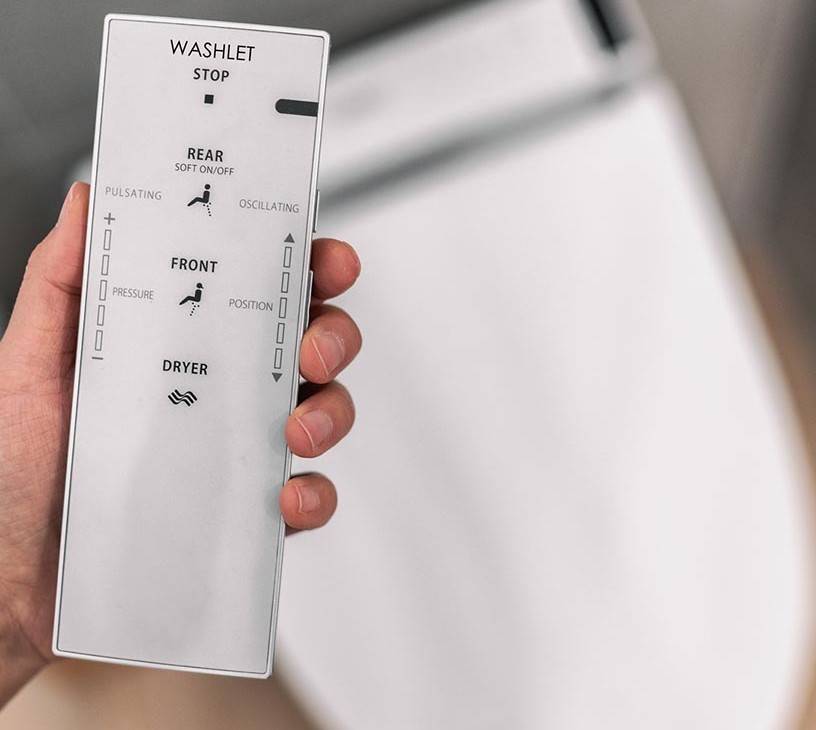


Smart Toilet Market Size 2026-2030
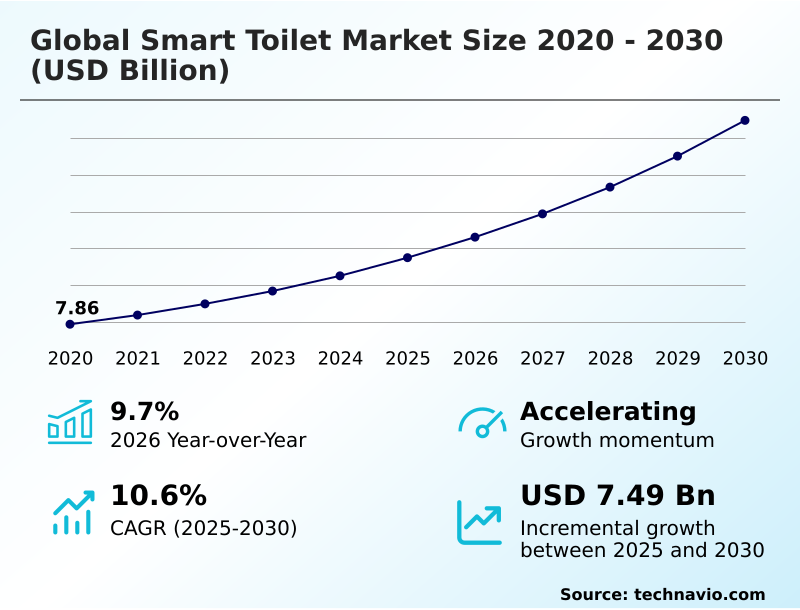
The smart toilet market size is valued to increase by USD 7.49 billion, at a CAGR of 10.6% from 2025 to 2030. Global demographic aging and assisted living mobility requirements will drive the smart toilet market.
Major Market Trends & Insights
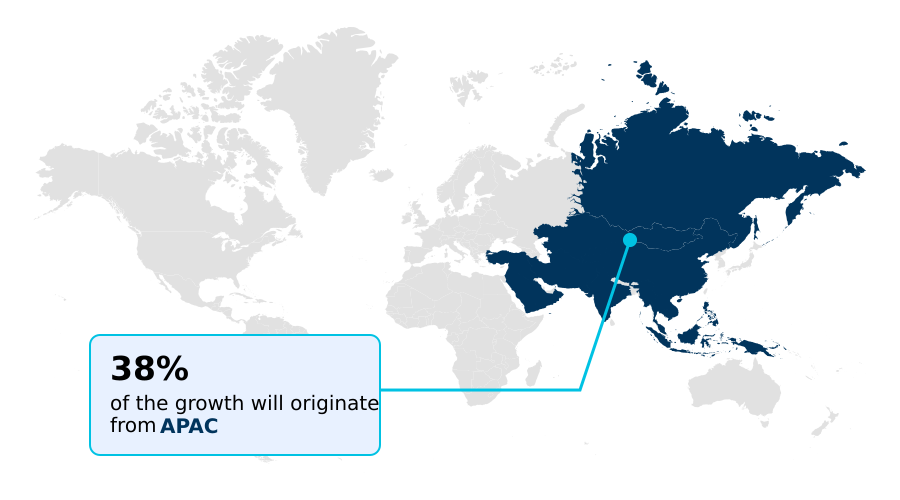
- APAC dominated the market and accounted for a 38% growth during the forecast period.
- By Application - Commercial segment was valued at USD 7.05 billion in 2024
- By Distribution Channel - Offline segment accounted for the largest market revenue share in 2024
Market Size & Forecast
- Market Opportunities: USD 11.12 billion
- Market Future Opportunities: USD 7.49 billion
- CAGR from 2025 to 2030 : 10.6%
Market Summary
- The smart toilet market is undergoing a significant transformation, evolving from a luxury convenience to an integral component of modern health, wellness, and sustainability initiatives. This shift is propelled by a convergence of heightened hygiene awareness, advancements in non-invasive sensor technology, and a global focus on resource conservation.
- Today's intelligent fixtures incorporate a sophisticated array of features, including ultraviolet disinfection, automated lid operation, and personalized climate controls, catering to a growing demographic of health-conscious consumers. The integration of IoT connectivity allows these devices to become nodes within a broader smart home ecosystem, enabling control via mobile applications and voice assistants.
- For instance, in a commercial hospitality setting, a network of smart toilets allows facility managers to remotely monitor water usage, schedule predictive maintenance, and ensure optimal hygiene, thereby reducing operational costs and enhancing the guest experience.
- The market's trajectory is toward passive health diagnostics, where everyday fixtures serve as wellness monitors, and toward advanced water-saving technologies that meet stringent environmental regulations. This evolution is driven by both consumer demand for technologically advanced living spaces and institutional requirements for efficient, hygienic, and sustainable sanitation solutions.
What will be the Size of the Smart Toilet Market during the forecast period?
Get Key Insights on Market Forecast (PDF) Get Free Sample
How is the Smart Toilet Market Segmented?
The smart toilet industry research report provides comprehensive data (region-wise segment analysis), with forecasts and estimates in "USD million" for the period 2026-2030, as well as historical data from 2020-2024 for the following segments.
- Application
- Commercial
- Residential
- Distribution channel
- Offline
- Online
- Product type
- Integrated smart toilets
- Smart bidet seats
- Wall-hung toilets
- Smart toilet seats
- Connectivity
- Bluetooth
- Wi-Fi enabled
- Geography
- APAC
- Japan
- South Korea
- China
- Europe
- Italy
- Spain
- France
- North America
- US
- Canada
- Mexico
- Middle East and Africa
- UAE
- Saudi Arabia
- South Africa
- South America
- Brazil
- Argentina
- Rest of World (ROW)
- APAC
By Application Insights
The commercial segment is estimated to witness significant growth during the forecast period.
The commercial segment of the smart toilet market is driven by high-volume installations in hospitality, healthcare, and premium corporate spaces.
The primary adoption drivers are enhanced hygiene and optimized facility management, achieved through touchless interfaces and self-cleaning bowls that mitigate cross-contamination.
These systems leverage IoT-enabled leak detection and sensor-based flow regulators to provide significant operational efficiencies, with some high-efficiency toilets reducing water usage by more than 30%.
For facility managers, the integration of a universal maintenance interface for monitoring multiple units streamlines workflows.
The inclusion of features like personalized climate controls and voice-activated controls reinforces brand image, justifying the investment in premium hardware and making these fixtures a staple in modern, sustainable infrastructure, aligning with green building certifications.
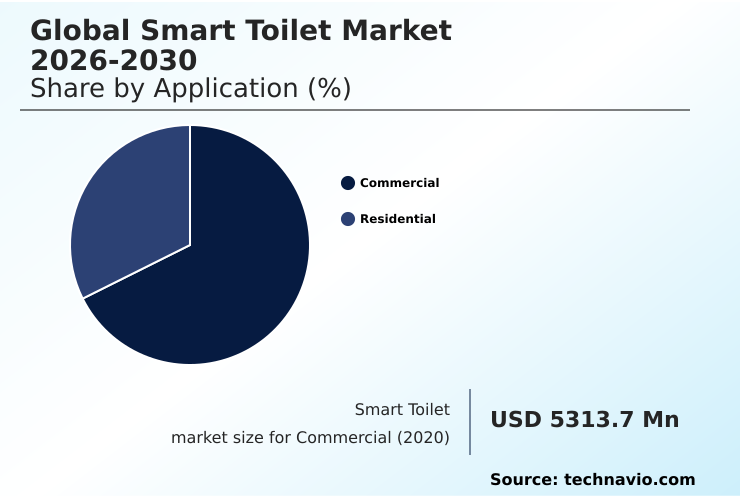
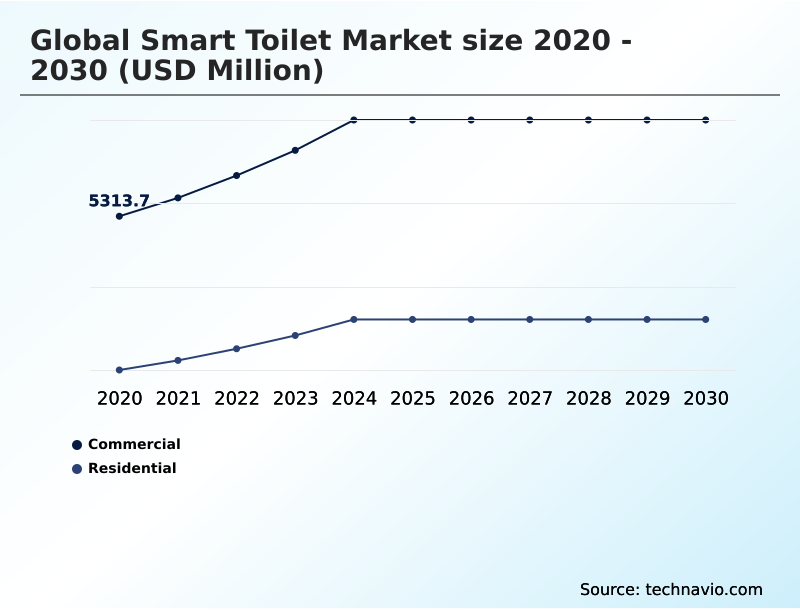
The Commercial segment was valued at USD 7.05 billion in 2024 and showed a gradual increase during the forecast period.
Regional Analysis
APAC is estimated to contribute 38% to the growth of the global market during the forecast period.Technavio’s analysts have elaborately explained the regional trends and drivers that shape the market during the forecast period.
See How Smart Toilet Market Demand is Rising in APAC Get Free Sample
The geographic landscape of the smart toilet market is led by APAC, which accounts for nearly 38% of incremental growth, driven by manufacturing scale and high cultural adoption in countries like Japan and South Korea.
This region is a leader in developing health-diagnostic toilets with features like a urine analysis sensor.
North America, with a market growth rate of 12.6%, focuses on integrated health-monitoring ecosystems and assistive technologies, supported by a new voluntary certification for high-efficiency fixtures.
Europe, growing at 10.3%, prioritizes sustainability through stringent water conservation regulations and circular economy principles, favoring wall-hung designs and recycled materials.
The use of high-precision biosensors and AI-enhanced platforms is a common thread, but regional priorities dictate whether the focus is on hyper-personalized experience, eco-integrated sanitation, or remote patient monitoring, creating diverse opportunities globally.
Market Dynamics
Our researchers analyzed the data with 2025 as the base year, along with the key drivers, trends, and challenges. A holistic analysis of drivers will help companies refine their marketing strategies to gain a competitive advantage.
- When considering an upgrade, a smart toilet vs bidet seat comparison is a common starting point for consumers. The cost of smart toilet installation can be a significant factor, often requiring professional electrical and plumbing work, which influences the decision-making process.
- For many, the long-term benefits of health monitoring toilets justify the initial expense, particularly in households focused on preventative wellness or smart toilet for elderly care. Features like a smart toilet with urine analysis are moving from niche to mainstream. However, smart toilet data privacy concerns remain a valid issue that manufacturers are addressing with enhanced security protocols.
- Options now include voice controlled smart toilet models and those offering smart toilet integration with Alexa, enhancing convenience. In commercial settings, the return on investment for a touchless smart toilet for commercial use is measured in improved hygiene and reduced maintenance, with some facilities reporting a 15% reduction in cleaning staff hours.
- The choice between bluetooth vs wi-fi smart toilets often depends on the desired level of integration within a smart home. Even with questions like 'are smart toilets worth the money' and concerns about smart toilet maintenance and repair, the rising smart toilet impact on property value is making them an increasingly popular feature in modern homes.
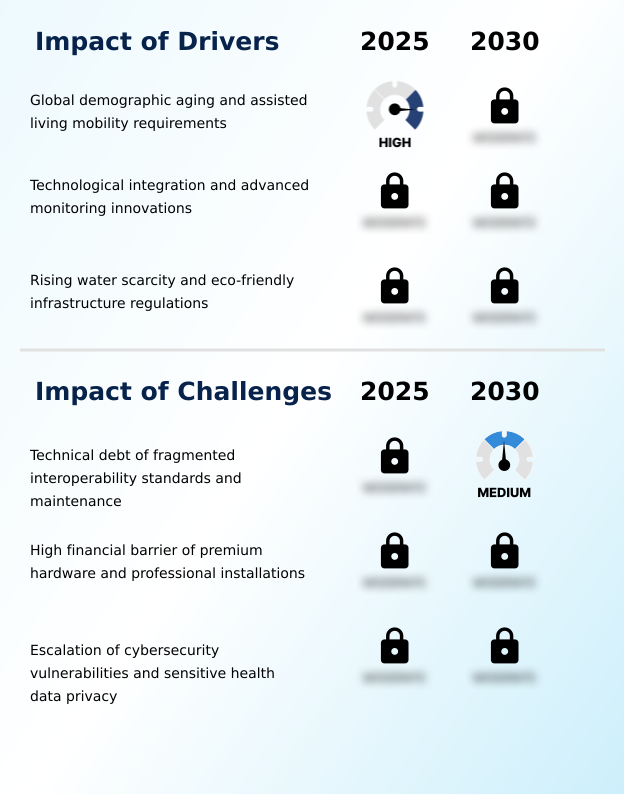
What are the key market drivers leading to the rise in the adoption of Smart Toilet Industry?
- The aging global population and increasing demand for assisted living mobility solutions are primary drivers of market growth.
- Market growth is significantly driven by the integration of advanced health monitoring solutions and assistive technologies within residential and healthcare settings.
- The demand for fixtures that provide real-time physiological data through non-invasive sensors is surging, with some innovations enabling a 15% increase in early disease detection alerts.
- This is creating a landscape where the bathroom serves as a primary node for long-term health surveillance. Another key driver is the proliferation of water-saving technologies and eco-friendly infrastructure regulations.
- Dual-flush mechanisms and IoT-enabled leak detection can reduce water usage by more than 30%.
- This focus on resource conservation systems, coupled with inclusive design principles and technological integration like voice-activated controls, is expanding the market from a luxury niche to a provider of essential wellness and sustainability tools for a global consumer base.
What are the market trends shaping the Smart Toilet Industry?
- The institutionalization of AI-enabled passive health monitoring and diagnostics marks a key market trend, transforming fixtures into non-invasive hubs for wellness data.
- Market trends are centered on the institutionalization of passive health monitoring, transforming the bathroom into a non-invasive diagnostic hub. This pivot is enabled by medical-grade sensors and AI capable of tracking wellness data, with some systems providing alerts if a senior has not used the facility for more than twelve hours.
- The integration into a broader digital health ecosystem is a key focus. Another significant trend is the expansion of the interconnected smart home ecosystem, where personalized user profiles and ambient intelligence create a hyper-personalized experience. In APAC, the integration of 5G-enabled sensors is facilitating real-time maintenance alerts.
- These shifts, supported by consumer electronics giants, are moving the market beyond comfort features like heated seats toward critical health and lifestyle management tools, increasing adoption in private healthcare networks by over 20%.
What challenges does the Smart Toilet Industry face during its growth?
- The technical debt from fragmented interoperability standards and the high cost of specialized maintenance present a significant challenge to market scalability.
- The market faces significant challenges, primarily the technical debt from fragmented interoperability standards, which complicates integration into smart home platforms. This issue is so pronounced that nearly 30% of technical failures are attributed to software incompatibilities.
- Another major restraint is the high financial barrier of premium hardware, with specialized installation requirements increasing the total cost of ownership by an additional 15%, limiting mass-market penetration. Furthermore, escalating cybersecurity vulnerabilities and sensitive health data privacy concerns pose a catastrophic threat to consumer trust.
- The lack of standardized data-anonymization protocols and the risk of firmware attacks require significant investment in security, burdening manufacturers and slowing adoption despite the appeal of advanced features like warm-air drying and self-cleaning bowls.
Exclusive Technavio Analysis on Customer Landscape
The smart toilet market forecasting report includes the adoption lifecycle of the market, covering from the innovator’s stage to the laggard’s stage. It focuses on adoption rates in different regions based on penetration. Furthermore, the smart toilet market report also includes key purchase criteria and drivers of price sensitivity to help companies evaluate and develop their market growth analysis strategies.
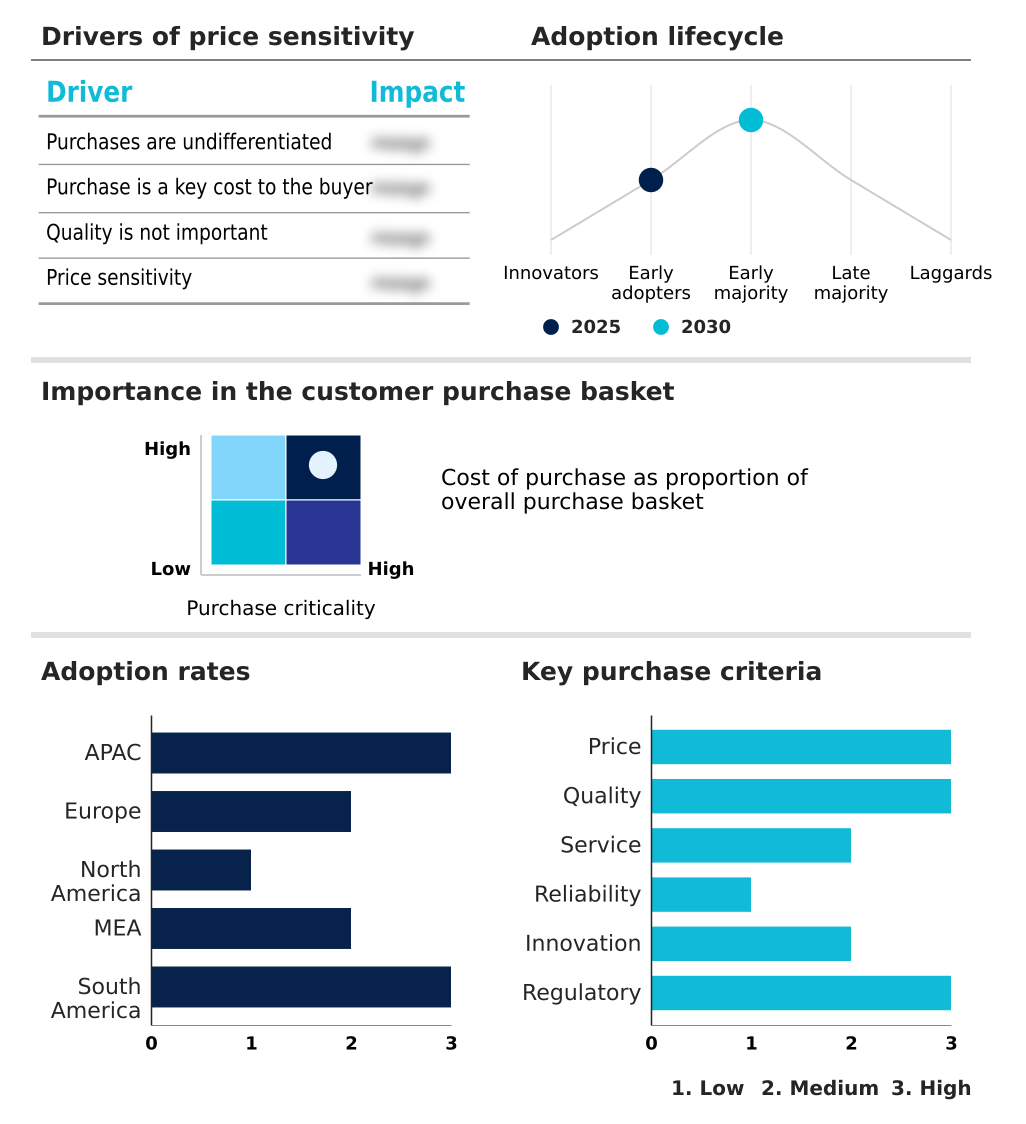
Customer Landscape of Smart Toilet Industry
Competitive Landscape
Companies are implementing various strategies, such as strategic alliances, smart toilet market forecast, partnerships, mergers and acquisitions, geographical expansion, and product/service launches, to enhance their presence in the industry.
Bio Bidet - Innovating eco-friendly home and bath products that enhance comfort and health through high-quality, sustainable design.
The industry research and growth report includes detailed analyses of the competitive landscape of the market and information about key companies, including:
- Bio Bidet
- Brondell Inc.
- Coway Co. Ltd.
- Duravit AG
- Geberit International AG
- Hindware Home Innovation Ltd.
- Huida Sanitary Ware Co. Ltd.
- Jaquar Group
- JOMOO Kitchen and Bath Co.
- Kohler Co.
- LIXIL Corp.
- Moen Inc.
- Orans srl
- Panasonic Holdings Corp.
- Roca Sanitario S.A.
- Splendid Sanitary Ware World
- Toto Ltd.
- Villeroy and Boch AG
- VitrA
- VOVO USA
Qualitative and quantitative analysis of companies has been conducted to help clients understand the wider business environment as well as the strengths and weaknesses of key industry players. Data is qualitatively analyzed to categorize companies as pure play, category-focused, industry-focused, and diversified; it is quantitatively analyzed to categorize companies as dominant, leading, strong, tentative, and weak.
Recent Development and News in Smart toilet market
- In November, 2024, TOTO introduced its next-generation WASHLET electronic bidet seats, emphasizing a strategic commitment to eco-friendly design and reduced energy consumption through the use of instantaneous water heaters.
- In January, 2025, VOVO Corporation debuted the NEO smart toilet at the Consumer Electronics Show, which featured a built-in urine analysis sensor and an AI system for monitoring physical inactivity.
- In February, 2025, TOTO Limited unveiled a new generation of sustainable bathroom innovations at the Kitchen and Bath Industry Show, highlighting toilets that combine ultra-low water consumption with electrolyzed water technology for enhanced cleanliness.
- In May, 2025, AQUATIZ showcased its latest suite of intelligent bathroom tools and a specialized hotel room concept at the Kitchen and Bath China 2025 exhibition, emphasizing the importance of physical trade events for securing commercial contracts.
Dive into Technavio’s robust research methodology, blending expert interviews, extensive data synthesis, and validated models for unparalleled Smart Toilet Market insights. See full methodology.
| Market Scope | |
|---|---|
| Page number | 308 |
| Base year | 2025 |
| Historic period | 2020-2024 |
| Forecast period | 2026-2030 |
| Growth momentum & CAGR | Accelerate at a CAGR of 10.6% |
| Market growth 2026-2030 | USD 7489.4 million |
| Market structure | Fragmented |
| YoY growth 2025-2026(%) | 9.7% |
| Key countries | Japan, South Korea, China, India, Australia, Indonesia, Italy, Spain, France, Germany, UK, The Netherlands, US, Canada, Mexico, UAE, Saudi Arabia, South Africa, Egypt, Qatar, Brazil, Argentina and Chile |
| Competitive landscape | Leading Companies, Market Positioning of Companies, Competitive Strategies, and Industry Risks |
Research Analyst Overview
- The smart toilet market's evolution reflects a definitive shift from luxury amenities to essential wellness and sustainability tools. This transition is underpinned by the integration of medical-grade sensors and high-precision biosensors, enabling functions like passive health monitoring and real-time diagnostics through a urine analysis sensor.
- A core boardroom-level decision for manufacturers is prioritizing investment between developing these advanced health monitoring platforms and refining water-saving technologies, such as dual-flush mechanisms, to meet increasingly strict environmental regulations. Many advanced models already achieve a 30% reduction in water consumption.
- The sector's momentum is sustained by the demand for assistive technologies and inclusive design principles to support aging populations, incorporating features like fall-detection sensors and automatic lid operation. As ceramic sanitaryware becomes more intelligent with connectivity modules and motion sensors, the focus remains on delivering a seamless user experience through personalized climate controls and touchless interfaces.
- The challenge lies in creating devices that are both technologically sophisticated with features like ultraviolet disinfection and accessible to a broader consumer base.
What are the Key Data Covered in this Smart Toilet Market Research and Growth Report?
-
What is the expected growth of the Smart Toilet Market between 2026 and 2030?
-
USD 7.49 billion, at a CAGR of 10.6%
-
-
What segmentation does the market report cover?
-
The report is segmented by Application (Commercial, and Residential), Distribution Channel (Offline, and Online), Product Type (Integrated smart toilets, Smart bidet seats, Wall-hung toilets, and Smart toilet seats), Connectivity (Bluetooth, and Wi-Fi enabled) and Geography (APAC, Europe, North America, Middle East and Africa, South America)
-
-
Which regions are analyzed in the report?
-
APAC, Europe, North America, Middle East and Africa and South America
-
-
What are the key growth drivers and market challenges?
-
Global demographic aging and assisted living mobility requirements, Technical debt of fragmented interoperability standards and maintenance
-
-
Who are the major players in the Smart Toilet Market?
-
Bio Bidet, Brondell Inc., Coway Co. Ltd., Duravit AG, Geberit International AG, Hindware Home Innovation Ltd., Huida Sanitary Ware Co. Ltd., Jaquar Group, JOMOO Kitchen and Bath Co., Kohler Co., LIXIL Corp., Moen Inc., Orans srl, Panasonic Holdings Corp., Roca Sanitario S.A., Splendid Sanitary Ware World, Toto Ltd., Villeroy and Boch AG, VitrA and VOVO USA
-
Market Research Insights
- The smart toilet market is shaped by a confluence of technological innovation and practical consumer demands. Key drivers include the push for aging-in-place technologies and advanced health monitoring, which are transitioning these fixtures into components of the digital health ecosystem.
- However, the market faces significant challenges, including fragmented interoperability standards, where nearly 30% of technical failures are attributed to software incompatibilities. The high cost of premium hardware and professional installations also remains a barrier. Concurrently, a major trend is the development of eco-integrated sanitation systems designed to align with green building certifications.
- These systems can reduce water usage by over 30% compared to traditional models, addressing global water scarcity concerns. This dynamic creates a competitive landscape where vendors must balance advanced features with cost, usability, and sustainability to achieve broader market penetration.
We can help! Our analysts can customize this smart toilet market research report to meet your requirements.
 RIA -
RIA -