


Soil Monitoring Market Size 2025-2029
The soil monitoring market size is forecast to increase by USD 708.4 million at a CAGR of 14.6% between 2024 and 2029.
- The market is experiencing significant growth, driven primarily by the increasing adoption of precision agriculture. Farmers and agricultural organizations are recognizing the value of real-time soil data to optimize crop yields and improve sustainability. This trend is further fueled by the introduction of innovative soil monitoring solutions, such as sensor technology and satellite imaging. However, the market also faces challenges. One major obstacle is the high initial investment costs associated with implementing these advanced technologies. This can be a significant barrier for smaller farming operations and developing countries.
- Despite this hurdle, companies can capitalize on the market opportunities by offering affordable financing options, partnerships, and scalable solutions to help mitigate the upfront costs. By addressing this challenge, businesses can expand their reach and contribute to the overall growth of the market.
What will be the Size of the Soil Monitoring Market during the forecast period?
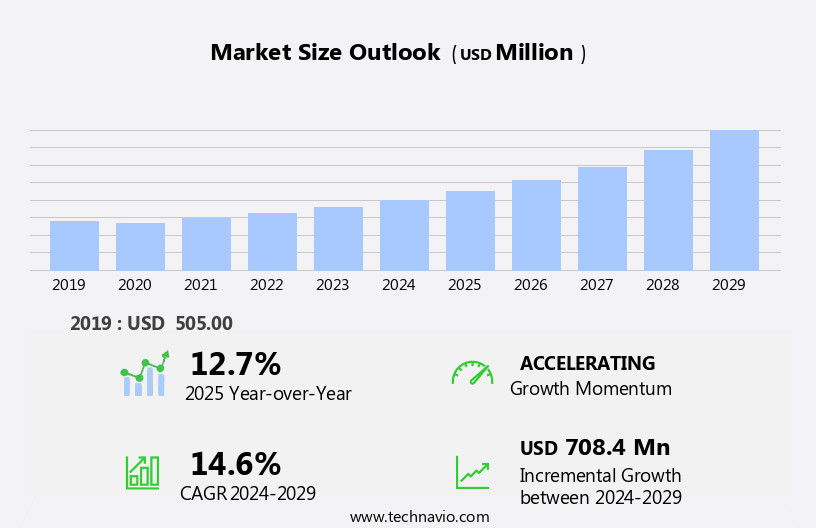
- The market is a dynamic and evolving landscape, shaped by advancements in technology and the growing demand for sustainable agricultural practices. Soil carbon, a critical component of carbon sequestration, is increasingly being monitored in real-time using machine learning algorithms and sensor networks. Real-time monitoring of soil erosion and soil temperature is facilitated by the Internet of Things and data processing in the cloud. Soil science is being revolutionized by geospatial analysis and remote sensing, providing valuable insights into soil health and crop production. Machine learning and data processing play a pivotal role in interpreting the vast amounts of data generated by soil sensors, enabling farmers to optimize irrigation management and fertilizer application.
- Soil data, including nutrient levels, pH, and salinity, are analyzed to ensure sustainable farm management and water conservation. The integration of data visualization tools and wireless communication enables farmers to access real-time information on soil conditions, enabling them to make informed decisions. The ongoing development of agriculture technology continues to expand the applications of soil monitoring, from environmental protection and soil restoration to carbon sequestration and greenhouse gas emissions reduction. The market for soil monitoring is a continuous unfolding of activities, with new patterns emerging as technology advances and the importance of soil health becomes increasingly recognized. The integration of data analytics, smart agriculture, and precision agriculture is transforming the way we manage our land, ensuring optimal crop yield and sustainable agricultural practices.
How is this Soil Monitoring Industry segmented?
The soil monitoring industry research report provides comprehensive data (region-wise segment analysis), with forecasts and estimates in "USD million" for the period 2025-2029, as well as historical data from 2019-2023 for the following segments.
- Component
- Hardware
- Software
- Services
- Application
- Agriculture
- Non-agriculture
- Solution
- Ground-based sensing
- Sensing and imagery
- Robotics and telematics
- Technology Specificity
- IoT-Based
- Remote Sensing
- Data Analytics
- Geography
- North America
- US
- Mexico
- Europe
- France
- Germany
- Italy
- Spain
- UK
- Middle East and Africa
- UAE
- APAC
- Australia
- China
- India
- Japan
- South Korea
- South America
- Brazil
- Rest of World (ROW)
- North America
By Component Insights
The hardware segment is estimated to witness significant growth during the forecast period.
The market encompasses various entities, including soil degradation, water quality monitoring, soil management, soil health, soil testing, environmental protection, soil nutrients, soil compaction, soil analysis, data analytics, smart agriculture, wireless communication, field data, big data, fertilizer management, precision agriculture, soil ph, land management, sensor networks, water conservation, soil salinity, farm management, soil conservation, data interpretation, soil moisture, remote sensing, sustainable agriculture, groundwater monitoring, soil carbon, real-time monitoring, soil erosion, soil science, machine learning, data processing, cloud computing, data visualization, internet of things, soil temperature, crop production, irrigation management, geospatial analysis, crop yield, environmental monitoring, data logging, soil organic matter, soil data, soil restoration, soil mapping, carbon sequestration, crop health, soil remediation, soil sensors, agriculture technology, greenhouse gas emissions, and artificial intelligence.
Soil sensors, a significant component of the hardware segment, are instrumental in measuring soil parameters such as moisture, temperature, pH, salinity, and nutrient levels. These sensors utilize advanced technologies like capacitance, resistance, and volumetric water content sensors to provide accurate readings. Moisture sensors are crucial for irrigation management, while temperature sensors impact seed germination and plant growth. Data analytics and machine learning techniques facilitate data processing and interpretation, enhancing the overall efficiency of soil monitoring systems. Wireless communication and the internet of things enable real-time monitoring and data transfer, allowing farmers to make informed decisions regarding crop production and irrigation management.
Smart agriculture and precision agriculture practices employ these technologies to optimize soil management and conserve water resources. Incorporating data visualization tools and cloud computing further streamlines the process, providing easy access to valuable insights for farmers and researchers. Soil health and sustainability are essential aspects of modern agriculture, necessitating continuous monitoring and management. By integrating various soil monitoring technologies, farmers can maintain optimal soil conditions, improve crop yield, and minimize environmental impact. This approach not only enhances agricultural productivity but also contributes to environmental protection and carbon sequestration efforts.
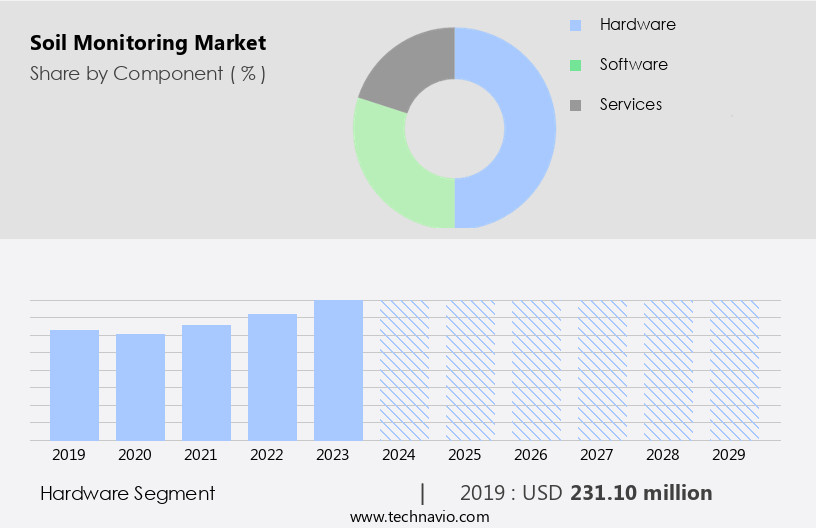
The Hardware segment was valued at USD 231.10 million in 2019 and showed a gradual increase during the forecast period.
Regional Analysis
North America is estimated to contribute 35% to the growth of the global market during the forecast period.Technavio's analysts have elaborately explained the regional trends and drivers that shape the market during the forecast period.

The North American the market is experiencing significant growth due to the adoption of advanced agricultural practices, a focus on sustainable farming, and the integration of technology. Key markets in this region include the US, Canada, and Mexico, each contributing unique dynamics. In the US, the agricultural industry's significance as the largest producer of crops like corn, wheat, and soybeans necessitates maintaining soil health for optimal productivity. This concern drives the demand for soil monitoring technologies. Machine learning, data processing, and cloud computing facilitate data analysis for precision agriculture, irrigation management, and geospatial analysis. Real-time monitoring of soil moisture, temperature, erosion, and salinity is crucial for efficient crop production and water conservation.
Sensor networks, wireless communication, and big data enable farmers to make informed decisions regarding fertilizer management, soil ph, and crop yield. The integration of sustainable agriculture practices, such as soil carbon sequestration and soil restoration, further bolsters market growth. The market's evolution is shaped by the convergence of agriculture technology, environmental monitoring, and data visualization, all aimed at enhancing crop health and minimizing greenhouse gas emissions.
Market Dynamics
Our researchers analyzed the data with 2024 as the base year, along with the key drivers, trends, and challenges. A holistic analysis of drivers will help companies refine their marketing strategies to gain a competitive advantage.
What are the key market drivers leading to the rise in the adoption of Soil Monitoring Industry?
- The significant expansion of precision agriculture, characterized by the implementation of advanced technologies such as satellite imagery, drones, and sensor systems for optimizing farm productivity and reducing resource consumption, serves as the primary catalyst for market growth.
- The market is experiencing significant growth due to the increasing adoption of advanced farming techniques, specifically precision agriculture and connected farming. Soil monitoring systems play a crucial role in optimizing resource usage and improving crop yields by providing real-time data on soil conditions. This data enables farmers to make informed decisions regarding irrigation, fertilization, and crop management, leading to increased productivity and sustainable agricultural practices. The integration of technologies such as data analytics, wireless communication, and smart agriculture is further enhancing the capabilities of soil monitoring systems.
- For instance, the Indian government's recent USD720 million investment in AI-driven smart and precision farming is a testament to the growing importance of these technologies in agriculture. By leveraging precise soil data, farmers can reduce waste, minimize environmental impact, and promote sustainable farming practices.
What are the market trends shaping the Soil Monitoring Industry?
- The introduction of new products is a current market trend that reflects innovation and progress in various industries. Companies continually strive to meet consumer demands and stay competitive by launching new offerings.
- The market is experiencing significant growth due to the development and implementation of advanced technologies in fertilizer management and land management. Precision agriculture, a key trend in modern farming, relies heavily on soil monitoring to optimize crop yields and reduce input costs. Soil monitoring solutions, such as sensor networks, enable farmers to monitor soil ph, moisture, salinity, and other vital parameters in real-time, facilitating data-driven farm management decisions. Remote sensing technologies, including satellite imagery and drones, are increasingly being used for large-scale soil monitoring applications, providing valuable insights into soil health and water conservation.
- Sustainable agriculture practices, including soil conservation and groundwater monitoring, are also driving demand for accurate and reliable soil monitoring systems. The USGA's recent introduction of the USGA Moisture Meter is a testament to the market's potential. This precision soil monitoring solution, integrated with the DEACON technology platform, provides golf course managers with accurate data on soil moisture, salinity, and temperature, enabling efficient water management and improved course playability. The sensor's advanced CDX technology ensures precise readings with minimal maintenance, underscoring the importance of technology in enhancing the precision and efficiency of soil monitoring practices.
What challenges does the Soil Monitoring Industry face during its growth?
- The high initial investment costs represent a significant challenge impeding the growth of the industry.
- The market faces a substantial hurdle due to the high initial investment needed for sophisticated monitoring systems. This financial barrier impedes adoption, particularly among smaller farming operations. Advanced soil monitoring systems, which incorporate sensors, data loggers, and cloud-based platforms, can be costly, making affordability a concern in economically constrained areas. For example, IoT-enabled soil moisture sensors can cost between USD300 and USD1,500 per unit, depending on features like wireless connectivity, data transmission range, and precision. Complex systems designed for larger agricultural fields with multiple sensors can incur substantial expenses. For instance, the Sentek Drill and Drop Probe, a comprehensive soil moisture profiling tool, can cost around USD1,200 to USD2,000 per unit.
- Machine learning, data processing, geospatial analysis, real-time monitoring, and data visualization technologies are integral to these systems, enhancing their capabilities for soil carbon tracking, irrigation management, and crop production optimization. Cloud computing facilitates data accessibility and analysis, while the Internet of Things (IoT) enables remote monitoring and automated responses. Soil temperature, erosion, and moisture levels are critical factors in crop yield, making accurate and timely monitoring essential for efficient farming operations.
Exclusive Customer Landscape
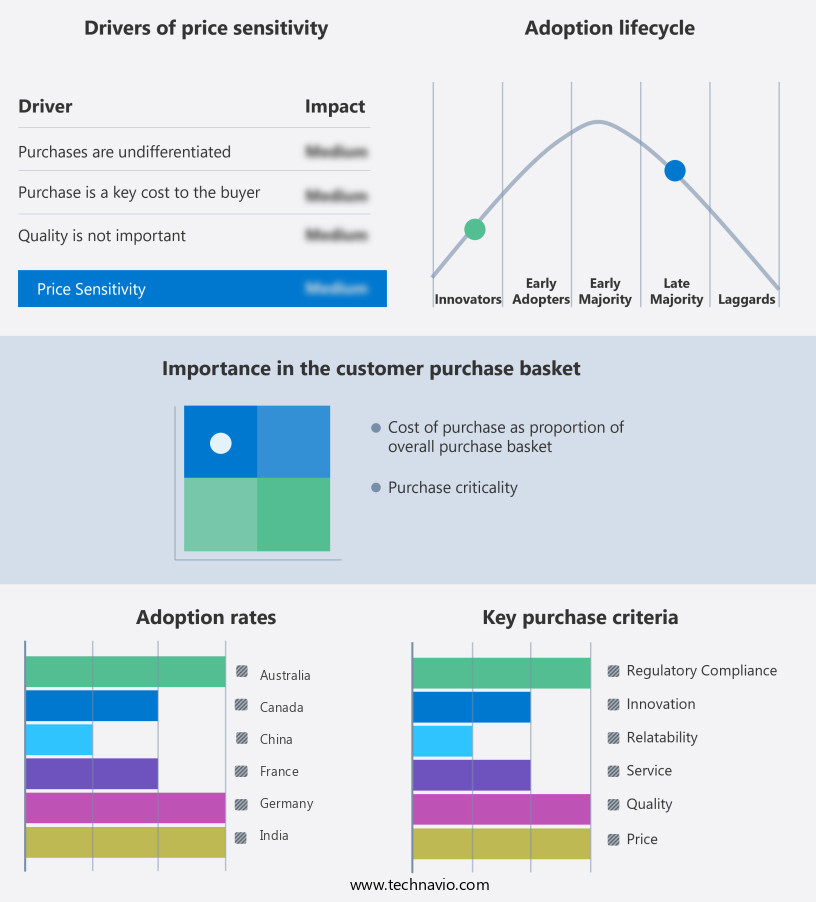
The soil monitoring market forecasting report includes the adoption lifecycle of the market, covering from the innovator's stage to the laggard's stage. It focuses on adoption rates in different regions based on penetration. Furthermore, the soil monitoring market report also includes key purchase criteria and drivers of price sensitivity to help companies evaluate and develop their market growth analysis strategies.
Customer Landscape
Key Companies & Market Insights
Companies are implementing various strategies, such as strategic alliances, soil monitoring market forecast, partnerships, mergers and acquisitions, geographical expansion, and product/service launches, to enhance their presence in the industry.
Campbell Scientific - The company specializes in advanced soil monitoring technologies, providing innovative solutions for enhanced subsurface exploration. Our offerings encompass cutting-edge tools such as SP imaging systems like the SuperSting and PowerSting series, as well as EarthImager software for precise 2D and 3D modeling. These solutions enable clients to optimize resource management, improve project efficiency, and ensure environmental sustainability. By integrating state-of-the-art geophysical techniques, we deliver accurate, actionable insights to inform informed decision-making.
The industry research and growth report includes detailed analyses of the competitive landscape of the market and information about key companies, including:
- Campbell Scientific
- Decagon Devices
- Sentek Technologies
- Stevens Water Monitoring
- Irrometer Company
- Delta-T Devices
- METER Group
- Toro Company
- Acclima
- Soil Scout
- CropX
- AgriHouse
- Teralytic
- Arable
- GroPoint
- UpTake Ag
- Hortau
- Aquaspy
- Netafim
- Rain Bird
Qualitative and quantitative analysis of companies has been conducted to help clients understand the wider business environment as well as the strengths and weaknesses of key industry players. Data is qualitatively analyzed to categorize companies as pure play, category-focused, industry-focused, and diversified; it is quantitatively analyzed to categorize companies as dominant, leading, strong, tentative, and weak.
Recent Development and News in Soil Monitoring Market
- In January 2023, Trimble, a leading technology provider, announced the launch of its new Soil Moisture and Salinity Sensor, expanding its AgSense portfolio. This innovative sensor aims to help farmers optimize irrigation and improve crop yields (Trimble Press Release).
- In March 2024, Bosch and Sensirion, two global technology leaders, entered into a strategic partnership to develop advanced soil moisture sensors. Their collaboration is expected to result in more accurate and efficient soil monitoring systems for agriculture and environmental applications (Bosch Press Release).
- In July 2024, Sensotec, a leading soil sensor manufacturer, secured a significant funding round of â¬15 million. This investment will support the company's expansion into new markets and the development of advanced soil monitoring solutions (Sensotec Press Release).
- In October 2025, the European Union passed the Soil Strategy, which includes initiatives to improve soil health and monitoring. This policy change is expected to boost the demand for soil monitoring technologies in Europe (European Commission Press Release).
Research Analyst Overview
The market is witnessing significant activity as farmers and agricultural businesses prioritize sustainable land management practices. Nutrient use efficiency and soil infiltration are key focus areas, with soil amendments, cover cropping, and soil fungi playing crucial roles. Pest control, soil enzymes, and soil permeability are also essential for farm efficiency, while no-till farming and water use efficiency are vital for reducing inputs and increasing profitability. Crop rotation, crop yield prediction, disease management, and soil health indicators are essential for maintaining soil structure and promoting ecosystem services. Soil aeration, drought resistance, and soil nutrient availability are critical for optimal plant growth, while precision irrigation and climate change adaptation are necessary for long-term sustainability.
Soil bacteria, soil texture, and soil nematodes contribute to soil health, and soil density is a critical factor in land use planning. Urban agriculture and sustainable land management practices are gaining popularity, with plant growth regulators, variable rate application, green infrastructure, and sustainable farming techniques becoming increasingly important. Farmers are also focusing on soil carbon sequestration, soil microbe activity, soil conductivity, and flood control to mitigate the impacts of climate change and enhance overall soil health. By implementing these practices, businesses can improve their bottom line while ensuring long-term sustainability and environmental stewardship.
Dive into Technavio's robust research methodology, blending expert interviews, extensive data synthesis, and validated models for unparalleled Soil Monitoring Market insights. See full methodology.
|
Market Scope |
|
|
Report Coverage |
Details |
|
Page number |
215 |
|
Base year |
2024 |
|
Historic period |
2019-2023 |
|
Forecast period |
2025-2029 |
|
Growth momentum & CAGR |
Accelerate at a CAGR of 14.6% |
|
Market growth 2025-2029 |
USD 708.4 million |
|
Market structure |
Fragmented |
|
YoY growth 2024-2025(%) |
12.7 |
|
Key countries |
US, China, Germany, Japan, UK, Australia, India, France, Brazil, UAE, Rest of World (ROW), Saudi Arabia, France, South Korea, Mexico, Italy, and Spain |
|
Competitive landscape |
Leading Companies, Market Positioning of Companies, Competitive Strategies, and Industry Risks |
What are the Key Data Covered in this Soil Monitoring Market Research and Growth Report?
- CAGR of the Soil Monitoring industry during the forecast period
- Detailed information on factors that will drive the growth and forecasting between 2025 and 2029
- Precise estimation of the size of the market and its contribution of the industry in focus to the parent market
- Accurate predictions about upcoming growth and trends and changes in consumer behaviour
- Growth of the market across North America, Europe, APAC, South America, and Middle East and Africa
- Thorough analysis of the market's competitive landscape and detailed information about companies
- Comprehensive analysis of factors that will challenge the soil monitoring market growth of industry companies
We can help! Our analysts can customize this soil monitoring market research report to meet your requirements.