


Sporting Events Market Size 2026-2030
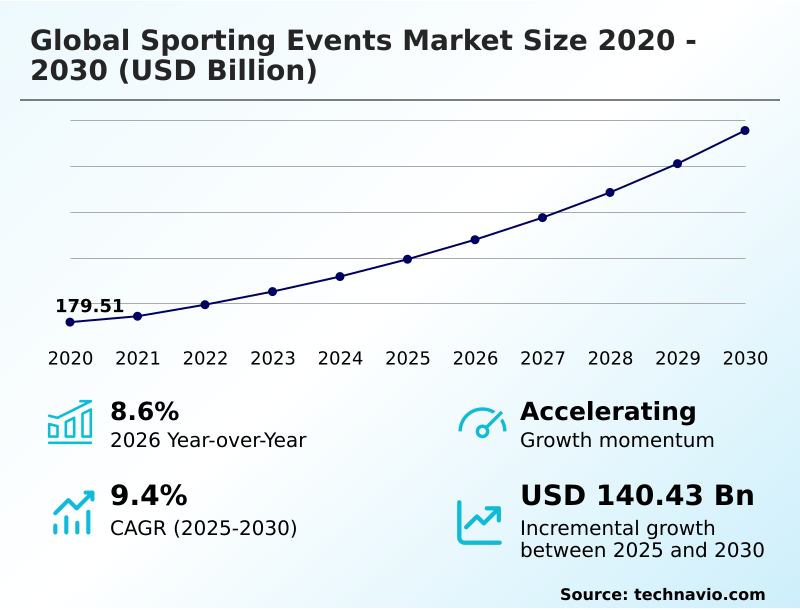
The sporting events market size is valued to increase by USD 140.43 billion, at a CAGR of 9.4% from 2025 to 2030. Increasing sports sponsorship spending will drive the sporting events market.
Major Market Trends & Insights
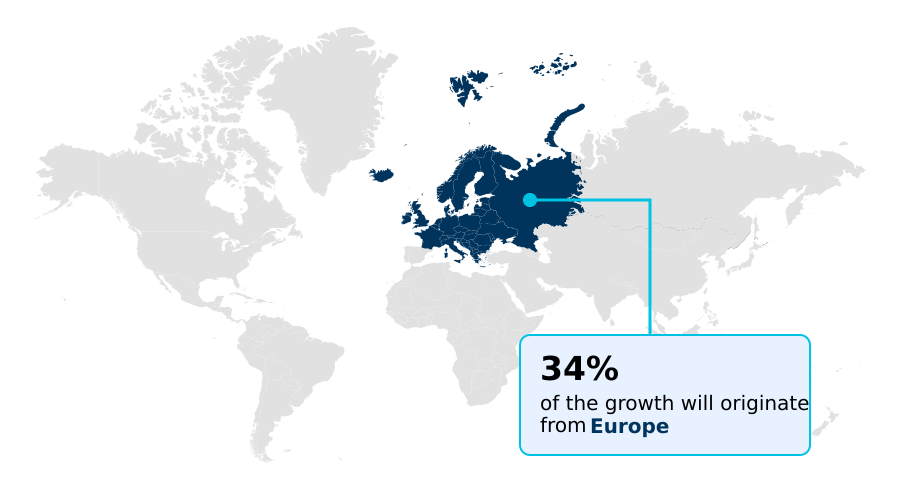
- Europe dominated the market and accounted for a 34.2% growth during the forecast period.
- By Revenue Stream - Sponsorships segment was valued at USD 75.96 billion in 2024
- By Event Type - Soccer segment accounted for the largest market revenue share in 2024
Market Size & Forecast
- Market Opportunities: USD 209.03 billion
- Market Future Opportunities: USD 140.43 billion
- CAGR from 2025 to 2030 : 9.4%
Market Summary
- The sporting events market is undergoing a significant transformation, driven by digital innovation and evolving consumer expectations. Revenue generation is increasingly diversified beyond traditional ticket sales, with media rights negotiation and strategic sponsorship activation platforms becoming central to financial success.
- The integration of advanced technologies like high-definition live streaming, mobile entry systems, and contactless payment systems is enhancing the spectator experience and improving operational efficiency. A key trend is the use of fan data analytics to inform personalized marketing campaigns and dynamic pricing models, maximizing attendance and engagement.
- For instance, a major league can leverage real-time crowd analytics to optimize venue operations, managing staffing and inventory to reduce wait times and increase per-capita spending. However, the industry faces challenges, including the need for robust venue security systems and the constant battle against fraudulent ticket resale markets.
- Success in this competitive landscape requires a focus on immersive viewing experiences and building direct-to-consumer relationships through fan loyalty programs and interactive content creation.
What will be the Size of the Sporting Events Market during the forecast period?
Get Key Insights on Market Forecast (PDF) Get Free Sample
How is the Sporting Events Market Segmented?
The sporting events industry research report provides comprehensive data (region-wise segment analysis), with forecasts and estimates in "USD million" for the period 2026-2030, as well as historical data from 2020-2024 for the following segments.
- Revenue stream
- Sponsorships
- Tickets
- Broadcasting and media rights
- Merchandising
- Event type
- Soccer
- Cricket
- Tennis
- Others
- Type
- Digital ticket
- Online printable tickets
- Paper tickets
- Geography
- Europe
- Germany
- UK
- France
- APAC
- China
- Japan
- India
- North America
- US
- Canada
- Mexico
- Middle East and Africa
- Saudi Arabia
- UAE
- South Africa
- South America
- Brazil
- Argentina
- Rest of World (ROW)
- Europe
By Revenue Stream Insights
The sponsorships segment is estimated to witness significant growth during the forecast period.
The sponsorships segment is fundamental to the financial architecture of the sporting events market. Businesses leverage partnerships with professional esports leagues and traditional sports properties to achieve brand visibility and customer engagement on a massive scale.
The evolution from static advertising to dynamic sponsorship activation platforms allows for deeper integration of marketing messages. Modern strategies include influencer marketing partnerships, interactive content creation, and digital advertising models to connect with global audiences.
Organizations utilizing data-driven sports analytics platforms to measure campaign effectiveness report up to a 15% greater ROI on sponsorship.
This shift is driven by the need for measurable outcomes, leveraging fan data analytics and personalized marketing campaigns to maximize commercial value and strengthen brand loyalty.
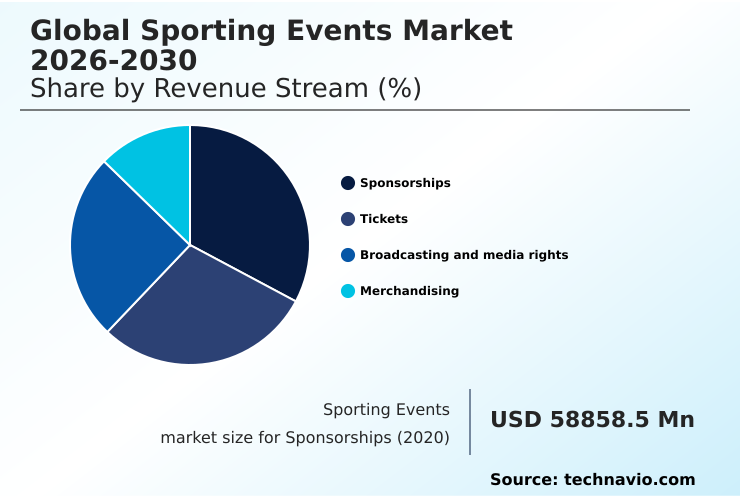
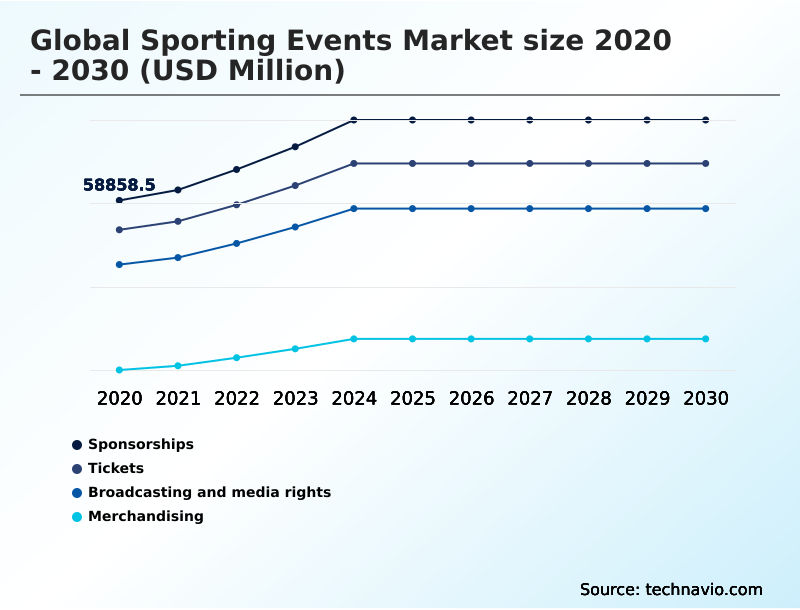
The Sponsorships segment was valued at USD 75.96 billion in 2024 and showed a gradual increase during the forecast period.
Regional Analysis
Europe is estimated to contribute 34.2% to the growth of the global market during the forecast period.Technavio’s analysts have elaborately explained the regional trends and drivers that shape the market during the forecast period.
See How Sporting Events Market Demand is Rising in Europe Get Free Sample
The geographic landscape of the sporting events market is characterized by mature, high-revenue regions and rapidly emerging growth centers.
Europe remains a dominant force, contributing over 34% of the market's incremental growth, driven by its established professional leagues and sophisticated smart stadium infrastructure.
In contrast, the APAC region is expanding quickly, fueled by rising disposable incomes and government investment in sports development programs. North America maintains a strong position with its highly commercialized leagues that excel in e-commerce merchandising and sports event management.
Across all regions, the adoption of digital ticketing platforms has streamlined operations, with some venues reporting a 20% increase in entry processing speed.
This digital shift, supported by tailored sports marketing agencies, is crucial for engaging diverse global fan bases through professional athlete contracts and monetizing sports content effectively.
Market Dynamics
Our researchers analyzed the data with 2025 as the base year, along with the key drivers, trends, and challenges. A holistic analysis of drivers will help companies refine their marketing strategies to gain a competitive advantage.
- The modern sporting events market is defined by a complex interplay of digital innovation and evolving consumer behaviors. Strategic success now hinges on mastering a diverse set of operational and technological domains. A key focus is leveraging AI for fan engagement and personalizing the fan journey digitally, which are crucial for retention in a crowded entertainment market.
- Concurrently, organizations are optimizing stadium revenue with analytics and improving venue operations with IoT to enhance efficiency and profitability. The impact of 5G on live sports broadcasting is unlocking new immersive possibilities, while blockchain for secure sports ticketing addresses long-standing fraud issues.
- The role of social media in sports marketing cannot be overstated, serving as a primary channel for marketing strategies for sporting events and fan communication. Effective strategies for monetizing sports content are essential, as is navigating sports media rights landscape for long-term financial health.
- Furthermore, organizations must focus on managing cybersecurity risks in sports events to protect data and maintain trust. The industry is also shaped by macro trends such as the significant growth of women's professional sports, the meteoric rise of esports and virtual sports, and the increasing importance of sustainability practices in sporting events.
- From data analytics for athlete performance to digital transformation of sports merchandising, the entire value chain is being re-imagined. The effective use of a mobile application for fan interaction is a clear differentiator, with some leagues seeing engagement rates more than double compared to traditional web portals.
- Mastering these elements, including AR applications in fan experience, integrating sports betting into media, building direct-to-consumer sports platforms, understanding the commercial value of sports sponsorships, and enhancing sports tourism experiences, is paramount for market leadership.
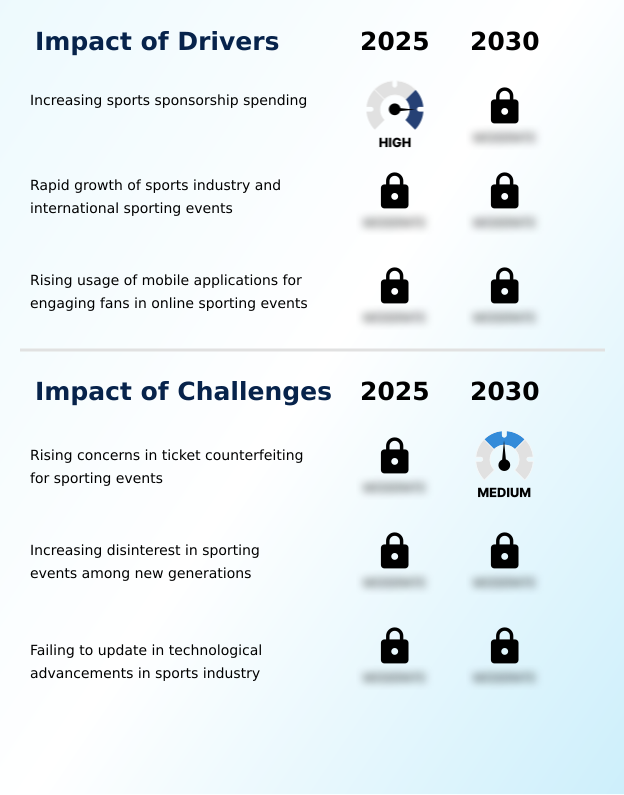
What are the key market drivers leading to the rise in the adoption of Sporting Events Industry?
- Increasing sports sponsorship spending is a key driver propelling the growth of the global sporting events market.
- The sporting events market's growth is propelled by increasing commercialization and digital fan engagement. A primary driver is the rapid expansion of sports sponsorship activation platforms and media rights negotiation, which provide essential funding for event organizers.
- The growth of the sports industry, with a notable increase in international tournaments and the rise of esports and virtual sports, broadens the audience base.
- Concurrently, the rising usage of mobile applications for fan interaction, incorporating features like high-definition live streaming and interactive content creation, is deepening engagement.
- Leagues that have successfully deployed personalized marketing campaigns via mobile apps report a 30% higher rate of regular interaction compared to those relying on traditional media.
- This digital-first approach, supported by robust broadcasting technology solutions and sports data providers, is creating a more interactive and monetizable ecosystem.
What are the market trends shaping the Sporting Events Industry?
- The high utilization of social media for branding and collaborative marketing initiatives is a prominent trend shaping the market. It is transforming fan engagement and creating new revenue streams for event organizers.
- Key trends reshaping the sporting events market center on digital engagement and operational intelligence. The high utilization of social media engagement tools and event security services has become standard, with targeted campaigns improving fan acquisition by over 20%. The integration of analytics with online ticketing platforms, including daily fantasy sports and dynamic pricing models, is optimizing revenue streams.
- Event organizers using such systems have seen a 10-15% increase in yield from ticket sales. Furthermore, the increasing number of low-cost airlines is fueling sports tourism management and sports content monetization, making international events more accessible.
- This convergence of digital interaction, data-driven decision-making, and enhanced accessibility through sports analytics platforms is setting a new competitive benchmark for over-the-top (OTT) streaming and fan loyalty programs across the industry.
What challenges does the Sporting Events Industry face during its growth?
- Rising concerns over ticket counterfeiting for sporting events represent a significant challenge that could impede industry growth and consumer trust.
- The sporting events market faces significant challenges related to security, audience retention, and technological adaptation. The rising concern of ticket counterfeiting necessitates the adoption of secure technologies like blockchain ticket verification and biometric fan identification, as current systems see fraud rates as high as 5% for major events.
- A critical challenge is the increasing disinterest among younger generations, who often prefer automated highlights generation over passive viewing. This requires a strategic shift towards interactive streaming features and social media integration, along with influencer marketing partnerships, to capture their attention.
- Furthermore, failing to update technological infrastructure, such as broadcasting infrastructure and smart stadium infrastructure, poses a risk of becoming obsolete. Organizations that lag in technology adoption report a 10% lower fan satisfaction score, underscoring the importance of continuous innovation and sustainable event management to remain competitive.
Exclusive Technavio Analysis on Customer Landscape
The sporting events market forecasting report includes the adoption lifecycle of the market, covering from the innovator’s stage to the laggard’s stage. It focuses on adoption rates in different regions based on penetration. Furthermore, the sporting events market report also includes key purchase criteria and drivers of price sensitivity to help companies evaluate and develop their market growth analysis strategies.
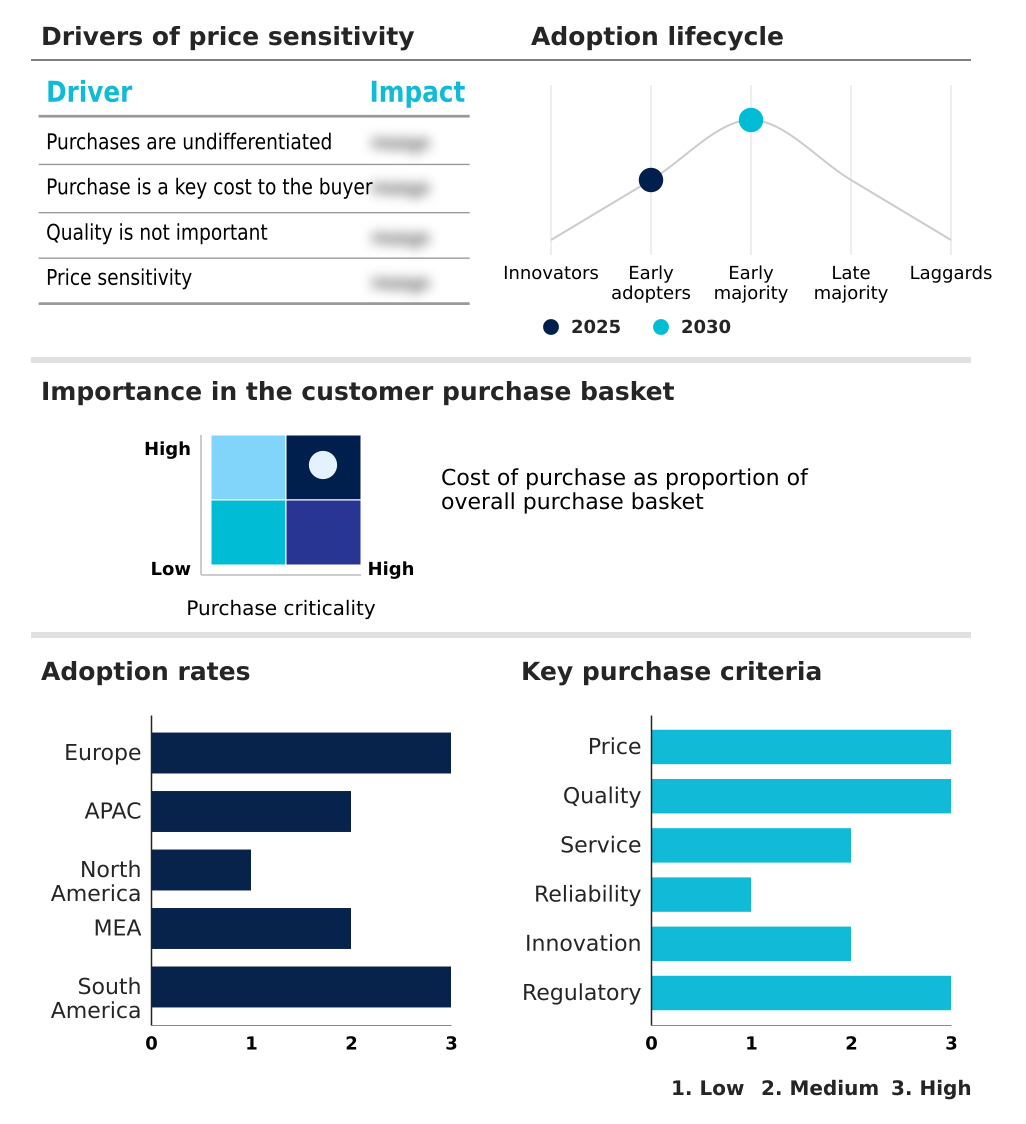
Customer Landscape of Sporting Events Industry
Competitive Landscape
Companies are implementing various strategies, such as strategic alliances, sporting events market forecast, partnerships, mergers and acquisitions, geographical expansion, and product/service launches, to enhance their presence in the industry.
AEG Worldwide - Analysis reveals a focus on integrated live entertainment, including event promotion, sports event hosting, and management of premier global venues.
The industry research and growth report includes detailed analyses of the competitive landscape of the market and information about key companies, including:
- AEG Worldwide
- ATP Tour Inc
- Bellator MMA
- E1 Series Ltd
- Extreme E Ltd
- GLORY Sports International
- IMG Worldwide LLC
- IndyCar Series LLC
- Infront Sports and Media AG
- Lagardere SA
- LIV Golf Investments
- Live Nation Entertainment Inc.
- Major League Baseball
- NASCAR Inc
- Octagon Inc
- Tough Mudder Inc
- UFC LLC
- Wasserman Media Group LLC
- World Surf League
- WTA TOUR INC.
Qualitative and quantitative analysis of companies has been conducted to help clients understand the wider business environment as well as the strengths and weaknesses of key industry players. Data is qualitatively analyzed to categorize companies as pure play, category-focused, industry-focused, and diversified; it is quantitatively analyzed to categorize companies as dominant, leading, strong, tentative, and weak.
Recent Development and News in Sporting events market
- In September 2024, IMG Worldwide LLC announced a strategic partnership with a major technology firm to co-develop an AI-powered fan engagement platform, aiming to personalize content delivery for over 50 million users across its event portfolio.
- In November 2024, Live Nation Entertainment Inc. completed the acquisition of a regional ticketing and event management company in Southeast Asia for an estimated $150 million, expanding its footprint in the rapidly growing APAC market.
- In January 2025, Extreme E Ltd launched its new hydro-powered off-road racing series, featuring a five-race global calendar focused on promoting sustainability and highlighting climate change-impacted locations.
- In April 2025, the World Surf League implemented a blockchain-based verification system for its judging and scoring, a first for a major global sports league, to enhance transparency and integrity in its competitions.
Dive into Technavio’s robust research methodology, blending expert interviews, extensive data synthesis, and validated models for unparalleled Sporting Events Market insights. See full methodology.
| Market Scope | |
|---|---|
| Page number | 306 |
| Base year | 2025 |
| Historic period | 2020-2024 |
| Forecast period | 2026-2030 |
| Growth momentum & CAGR | Accelerate at a CAGR of 9.4% |
| Market growth 2026-2030 | USD 140427.0 million |
| Market structure | Fragmented |
| YoY growth 2025-2026(%) | 8.6% |
| Key countries | Germany, UK, France, Italy, Spain, The Netherlands, China, Japan, India, South Korea, Australia, Indonesia, US, Canada, Mexico, Saudi Arabia, UAE, South Africa, Israel, Turkey, Brazil, Argentina and Chile |
| Competitive landscape | Leading Companies, Market Positioning of Companies, Competitive Strategies, and Industry Risks |
Research Analyst Overview
- The sporting events market is navigating a paradigm shift, moving beyond traditional event promotion to a highly integrated digital ecosystem. Success is now defined by the seamless execution of digital ticketing platforms, secure mobile ticketing, and frictionless cashless payment integration.
- The fan experience is being reimagined through virtual reality viewing, augmented reality fan apps, and high-definition live streaming, all personalized via AI-powered content personalization. Boardroom decisions increasingly center on investments in smart stadium infrastructure and real-time crowd analytics to enhance safety and optimize operations.
- The adoption of blockchain ticket verification and biometric fan identification is becoming a critical component of risk management. Behind the scenes, the industry relies on sophisticated venue security systems, athlete performance tracking, and comprehensive talent representation services. Revenue models are evolving with dynamic pricing models, e-commerce merchandising, and interactive streaming features, supported by robust fan data analytics.
- The rise of professional esports leagues and daily fantasy sports, coupled with multi-camera angle broadcasting, illustrates the diversification of content. Organizations that master personalized fan communication and automated content generation see a significant competitive advantage, with some achieving a 10% uplift in fan loyalty program retention.
- This complex environment demands expertise in league governance models, sports development programs, and effective behind-the-scenes content delivery. The use of online printable tickets is fading in favor of more advanced mobile entry systems and contactless payment systems.
What are the Key Data Covered in this Sporting Events Market Research and Growth Report?
-
What is the expected growth of the Sporting Events Market between 2026 and 2030?
-
USD 140.43 billion, at a CAGR of 9.4%
-
-
What segmentation does the market report cover?
-
The report is segmented by Revenue Stream (Sponsorships, Tickets, Broadcasting and media rights, and Merchandising), Event Type (Soccer, Cricket, Tennis, and Others), Type (Digital ticket, Online printable tickets, and Paper tickets) and Geography (Europe, APAC, North America, Middle East and Africa, South America)
-
-
Which regions are analyzed in the report?
-
Europe, APAC, North America, Middle East and Africa and South America
-
-
What are the key growth drivers and market challenges?
-
Increasing sports sponsorship spending, Rising concerns in ticket counterfeiting for sporting events
-
-
Who are the major players in the Sporting Events Market?
-
AEG Worldwide, ATP Tour Inc, Bellator MMA, E1 Series Ltd, Extreme E Ltd, GLORY Sports International, IMG Worldwide LLC, IndyCar Series LLC, Infront Sports and Media AG, Lagardere SA, LIV Golf Investments, Live Nation Entertainment Inc., Major League Baseball, NASCAR Inc, Octagon Inc, Tough Mudder Inc, UFC LLC, Wasserman Media Group LLC, World Surf League and WTA TOUR INC.
-
Market Research Insights
- The dynamics of the sporting events market are increasingly shaped by digital transformation and data-driven strategies. Effective sports event management now relies heavily on sports analytics platforms to inform decisions, with organizations that leverage fan data reporting a 15% higher engagement rate on their digital media distribution channels.
- The commercial landscape is bolstered by robust sports marketing agencies that secure high-value brand licensing agreements and athlete endorsement deals. As the industry pivots, there is a notable shift toward subscription-based streaming, which offers a more predictable revenue stream compared to traditional advertising.
- Moreover, the integration of sports betting has proven to increase viewership by up to 25% for certain broadcasts, creating a new layer of fan interaction and monetization through influencer marketing partnerships and specialized fan community platforms.
We can help! Our analysts can customize this sporting events market research report to meet your requirements.
 RIA -
RIA -