


Submarine Telecom Cable Market Size 2025-2029
The submarine telecom cable market size is forecast to increase by USD 1.26 billion, at a CAGR of 6.8% between 2024 and 2029.
- The market is experiencing significant growth, driven by the increasing demand for high-speed internet and data services. With the digital transformation and the rise of remote work and online learning, the need for reliable and fast communication infrastructure is more critical than ever. This trend is further emphasized by the adoption of smart cable solutions, which offer enhanced capacity, efficiency, and flexibility. However, the market also faces challenges that require careful attention. The risk of damage and service disruption is a persistent concern, as submarine cables are vulnerable to various threats such as natural disasters, human activities, and technical faults.
- These disruptions can lead to significant financial losses and reputational damage for telecom companies, making it essential to invest in robust maintenance and repair strategies. Additionally, the high cost of laying and maintaining submarine cables remains a significant barrier to entry for new players, requiring substantial capital investments and operational expertise. Companies seeking to capitalize on market opportunities and navigate challenges effectively must stay informed of the latest trends and developments in the market.
What will be the Size of the Submarine Telecom Cable Market during the forecast period?

The market is a dynamic and ever-evolving sector, characterized by continuous innovation and adaptation to meet the insatiable demand for faster, more reliable network connectivity. Cable landing stations serve as crucial touchpoints for international data transfer, while cable trenching and marine survey ensure the optimal routing and protection of undersea cables. Signal attenuation and cable repair vessels are essential components of cable maintenance and network resilience. Intercontinental connectivity is a primary application of submarine cable systems, enabling high-capacity transmission of data for telephony services, internet access, and cloud computing. Telecommunications infrastructure relies heavily on the performance monitoring and cable technology of submarine cables to minimize network latency and ensure data security.
Cable laying and fiber optic splicing are critical processes in the cable industry, requiring precise planning and execution to ensure optimal cable capacity and route optimization. Environmental impact assessments and submarine cable protection are essential considerations to minimize the environmental footprint of cable installation. Telecommunications regulation plays a vital role in the cable industry, with consortiums and investments driving cable ownership and deployment. Capacity management and cable burial are ongoing concerns for cable operators, requiring continuous innovation and adaptation to meet the evolving needs of the telecommunications sector. Optical transponders, optical amplifiers, and fiber optic cable are key technologies driving the submarine cable market, enabling cable fault detection and cable repair.
The ongoing development of cable technology and cable innovation continues to push the boundaries of what is possible in undersea cable systems, ensuring their continued relevance in an increasingly interconnected world.
How is this Submarine Telecom Cable Industry segmented?
The submarine telecom cable industry research report provides comprehensive data (region-wise segment analysis), with forecasts and estimates in "USD million" for the period 2025-2029, as well as historical data from 2019-2023 for the following segments.
- Type
- Fiber optic
- Coaxial
- Ownership
- Private enterprises
- Consortia
- Government and development banks
- Geography
- North America
- US
- Europe
- France
- Germany
- UK
- APAC
- Australia
- China
- India
- Japan
- Singapore
- South Korea
- Rest of World (ROW)
- North America
By Type Insights
The fiber optic segment is estimated to witness significant growth during the forecast period.
Fiber optic cables dominate the market, offering superior performance, high capacity, and unwavering reliability for long-distance communication. Utilizing light signals transmitted through glass or plastic fibers, these cables significantly enhance data speed and bandwidth, surpassing traditional copper cables. The ability to manage vast data volumes with minimal latency and signal degradation over extended distances makes fiber optics the preferred choice for global communication infrastructure. Fiber optics play a pivotal role in delivering ultra-fast internet connections, addressing the burgeoning demand for high-speed data transmission across sectors like cloud computing, data centers, streaming services, and telecommunications. Submarine cable systems, consisting of fiber optic cables, are meticulously installed and maintained to ensure network connectivity and resilience.
These systems undergo rigorous testing, including subsea cable routing, cable repair, and signal attenuation monitoring, to maintain optimal performance. Cable capacity expansion is a continuous priority, with innovation driving the development of advanced technologies such as optical transponders, fiber optic splicing, and optical amplifiers. Telecommunications regulation and environmental impact assessments are essential considerations in the submarine cable market, ensuring data security, network resilience, and minimal environmental disruption. Submarine cable consortiums collaborate on cable investment, ownership, and capacity management, fostering intercontinental connectivity and global network expansion. Cable laying and installation involve intricate planning, including seabed surveys, cable trenching, and cable landing stations, to ensure efficient and reliable international data transfer.
The submarine cable market is a dynamic and evolving landscape, with a focus on cable technology, capacity management, and route optimization to meet the ever-increasing demand for data bandwidth and data center connectivity.

The Fiber optic segment was valued at USD 1.82 billion in 2019 and showed a gradual increase during the forecast period.
Regional Analysis
APAC is estimated to contribute 59% to the growth of the global market during the forecast period.Technavio’s analysts have elaborately explained the regional trends and drivers that shape the market during the forecast period.
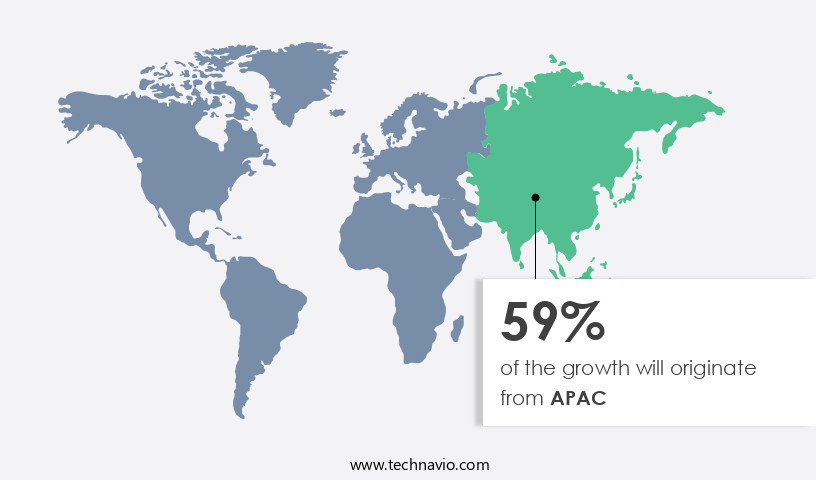
The market in the Asia-Pacific (APAC) region is experiencing significant growth due to increasing internet penetration, rapid digitization, and the rising demand for high-speed connectivity. Key markets within the region, including China, Japan, South Korea, and India, are investing heavily in new submarine cable systems to support the expanding needs of cloud services, online streaming, and e-commerce. On November 9, 2022, a consortium of telecommunication companies, led by China Telecom Global (CTG) and Singapore Telecommunications Limited (Singtel), announced a USD300 million investment in the Asia Link Cable (ALC) project. This 6,000-kilometer undersea cable will connect Hong Kong, Singapore, the Philippines, Brunei, and Hainan, China, with the objective of enhancing data capacity and improving regional network connectivity.
The ALC project is one of many initiatives aimed at addressing the growing demand for reliable and high-capacity transmission, as well as network resilience and performance monitoring. Submarine cable systems, which utilize optical fiber for high-capacity transmission, are essential components of the global telecommunications infrastructure, enabling international data transfer and intercontinental connectivity. These systems undergo rigorous testing, including subsea cable routing, fiber optic splicing, and optical amplifier installation, to ensure optimal cable performance and minimize signal attenuation. Telecommunications regulation plays a crucial role in the market, with regulatory bodies overseeing cable licensing, cable maintenance, and cable repair. Additionally, cable protection measures, such as cable burial and cable deployment, are implemented to minimize environmental impact and ensure data security.
The submarine cable industry continues to innovate, with advancements in cable technology, such as cable fault detection and route optimization, contributing to increased capacity management and network efficiency.
Market Dynamics
Our researchers analyzed the data with 2024 as the base year, along with the key drivers, trends, and challenges. A holistic analysis of drivers will help companies refine their marketing strategies to gain a competitive advantage.
What are the key market drivers leading to the rise in the adoption of Submarine Telecom Cable Industry?
- The escalating need for swift high-speed internet and comprehensive data services serves as the primary catalyst for market growth.
- The market is experiencing significant growth due to the increasing demand for high-speed internet access. With the proliferation of digital technologies, cloud computing, video streaming, 5G networks, and IoT devices, the need for reliable and high-capacity data transmission infrastructure has become crucial. Submarine telecom cables carry approximately 99% of the intercontinental data traffic worldwide, making them essential for meeting the growing demand. The shift to remote work, e-learning, and telemedicine during the COVID-19 pandemic has further amplified the need for high-speed data services. Enterprises increasingly rely on cloud-based applications, while consumers demand seamless video conferencing, online gaming, and ultra-high-definition (UHD) content streaming.
- Submarine cable systems are continuously evolving with innovations such as optical transponder technology, subsea cable routing, and network resilience. Seabed surveys, environmental impact assessments, and submarine cable installation are crucial aspects of maintaining and upgrading these systems. Cable repair and maintenance are also essential to ensure uninterrupted connectivity and minimize downtime. Fiber optic cables are the backbone of submarine telecom cable systems, providing the high-speed and long-distance transmission capabilities required for intercontinental data traffic. The market for submarine telecom cables is expected to continue growing as the demand for high-speed internet access continues to increase.
What are the market trends shaping the Submarine Telecom Cable Industry?
- The emphasis on smart cable solutions is currently shaping the market trend. As a professional and knowledgeable virtual assistant, I can help you explore the benefits and possibilities of these advanced technologies.
- The market is witnessing significant advancements in technology, with a focus on developing smart cable solutions. These innovative systems integrate telecommunications infrastructure with real-time environmental monitoring capabilities, providing enhanced connectivity and valuable data for scientific research and disaster preparedness. Recently, Alcatel Submarine Networks (ASN) announced a strategic collaboration with Nanometrics and RBR to enhance its SMART Cable solution. This partnership combines ASN's expertise in subsea telecom infrastructure, Nanometrics' seismic sensor technology, and RBR's environmental monitoring capabilities. The result is a sophisticated subsea cable system capable of collecting real-time environmental data, including seismic activity, tsunamis, and other critical events. This collaboration underscores the importance of intercontinental connectivity and data security in the telecommunications industry.
- The global network relies on advanced cable technology, cable laying, and cable repair vessels for maintaining data bandwidth and ensuring data center operations run smoothly. Marine surveys and cable trenching are essential processes in the deployment of submarine telecom cables, while signal attenuation and data security remain key challenges. Despite these challenges, the market continues to evolve, driven by the increasing demand for high-speed data transfer and the need for reliable global connectivity.
What challenges does the Submarine Telecom Cable Industry face during its growth?
- The risk of damage and service disruption poses a significant challenge to the industry's growth, necessitating vigilant efforts to mitigate potential harm and ensure uninterrupted service delivery.
- The market is essential for ensuring seamless data transmission between continents. However, these underwater cables face significant challenges due to their vulnerability to external impacts, leading to disruptions and connectivity issues. For instance, on February 8, 2025, Rostelecom reported damage to an underwater cable in the Baltic Sea, attributing the cause to external factors. This incident is part of a broader trend of disruptions affecting subsea telecom cables in the region. In another instance, the Silver Dania vessel was detained by Norwegian authorities on January 30, 2025, on suspicion of damaging a fiber-optic cable linking Latvia and Sweden.
- To mitigate these risks, advancements in technology are playing a crucial role. For example, route optimization using advanced algorithms helps minimize the distance traveled by signals, reducing the risk of damage. Fiber optic splicing and optical amplifiers enhance cable performance and reliability. Cable fault detection systems enable quick identification and resolution of issues, minimizing downtime. Telecommunications regulation plays a vital role in ensuring the security and integrity of subsea cables. Cloud computing and data center connectivity require high-capacity, low-latency connectivity, making submarine cables indispensable. Cable investment continues to grow as cable ownership shifts from traditional telecom companies to consortia and private investors.
- Capacity management is essential to ensure optimal utilization of cable resources. Cable burial and deployment techniques have evolved to minimize the risk of damage from external factors.
Exclusive Customer Landscape
The submarine telecom cable market forecasting report includes the adoption lifecycle of the market, covering from the innovator’s stage to the laggard’s stage. It focuses on adoption rates in different regions based on penetration. Furthermore, the submarine telecom cable market report also includes key purchase criteria and drivers of price sensitivity to help companies evaluate and develop their market growth analysis strategies.

Customer Landscape
Key Companies & Market Insights
Companies are implementing various strategies, such as strategic alliances, submarine telecom cable market forecast, partnerships, mergers and acquisitions, geographical expansion, and product/service launches, to enhance their presence in the industry.
Alcatel Submarine Networks - Submarine telecom cable networks from our company deliver superior performance-to-cost ratios, catering to diverse protection and armoring requirements. Engineered for versatility, these networks adapt to various installation environments and sea floor conditions. Our advanced solutions ensure uninterrupted connectivity and data transfer, making them the preferred choice for businesses seeking reliable and cost-effective underwater communication infrastructure.
The industry research and growth report includes detailed analyses of the competitive landscape of the market and information about key companies, including:
- Alcatel Submarine Networks
- Cable Solutions Worldwide
- Eland Cables
- Fujitsu Ltd.
- Hengtong Group Co. Ltd.
- NEC Corp.
- Nexans SA
- Prysmian S.p.A
- PT COMMUNICATION CABLE SYSTEMS INDONESIA Tbk
- SAB Brockskes GmbH and Co. KG
- Teledyne Marine Technologies Inc.
- Tratos Cavi S.p.A.
Qualitative and quantitative analysis of companies has been conducted to help clients understand the wider business environment as well as the strengths and weaknesses of key industry players. Data is qualitatively analyzed to categorize companies as pure play, category-focused, industry-focused, and diversified; it is quantitatively analyzed to categorize companies as dominant, leading, strong, tentative, and weak.
Recent Development and News in Submarine Telecom Cable Market
- In February 2023, Alcatel Submarine Networks, a leading player in the market, announced the successful deployment of the MAREA 2 cable, extending the transatlantic fiber optic system between the US and Spain. This expansion increases the total capacity of the MAREA system to over 160 Tbit/s, making it the highest capacity transatlantic cable system in the world (Alcatel Submarine Networks press release, 2023).
- In November 2024, TE SubCom, another significant player, unveiled the INDIGO Atlantic-1 cable system, a new subsea cable linking Europe, South America, and the US, with an investment of USD300 million. This project marks the entry of TE SubCom into the South American market, expanding its global footprint (TE SubCom press release, 2024).
- In March 2025, Nokia and Google announced a strategic partnership to develop and manufacture the Dunant subsea cable, the first cable to use Google's advanced undersea repeater technology. This collaboration is expected to significantly reduce latency and improve connectivity between the US and Europe (Nokia press release, 2025).
- In July 2025, the European Union approved the EU-AfricConnect3 project, a â¬350 million initiative to deploy a high-capacity submarine cable system connecting Europe and Africa. This investment aims to enhance digital connectivity between the two continents and promote economic growth (European Commission press release, 2025).
Research Analyst Overview
- The market is characterized by a complex ecosystem of cable standards, material selection, and manufacturing processes. Cable resistance and insulation play crucial roles in ensuring cable reliability and sustainability. Cable certification and testing are essential for maintaining cable capacity and bandwidth, while cable termination and monitoring help prevent cable fault localization and ensure cable signal quality. Cable governance and regulations are increasingly important as cable vulnerability and security concerns rise. Cable armor and protection systems are critical for safeguarding cables against external threats. Cable life cycle management, including replacement and upgrade, is essential for minimizing cable downtime and maximizing cable durability.
- Cable design and construction must consider cable strength, cable latency, and cable recovery to meet the evolving demands of data-intensive applications. Cable sustainability and environmental impact are also becoming key considerations, with a focus on reducing cable manufacturing's carbon footprint and minimizing cable environmental impact. Cable cable capacity, bandwidth, and cable cable signal quality are critical factors driving market growth. Cable cable routing and cable cable governance are also essential for ensuring cable reliability and cable cable recovery in the event of disruptions. Cable cable resistance, cable cable insulation, and cable cable testing are ongoing concerns for cable cable maintenance and risk assessment.
Dive into Technavio’s robust research methodology, blending expert interviews, extensive data synthesis, and validated models for unparalleled Submarine Telecom Cable Market insights. See full methodology.
|
Market Scope |
|
|
Report Coverage |
Details |
|
Page number |
193 |
|
Base year |
2024 |
|
Historic period |
2019-2023 |
|
Forecast period |
2025-2029 |
|
Growth momentum & CAGR |
Accelerate at a CAGR of 6.8% |
|
Market growth 2025-2029 |
USD 1261.4 million |
|
Market structure |
Concentrated |
|
YoY growth 2024-2025(%) |
5.5 |
|
Key countries |
US, China, Japan, India, UK, Germany, Australia, Singapore, France, and South Korea |
|
Competitive landscape |
Leading Companies, Market Positioning of Companies, Competitive Strategies, and Industry Risks |
What are the Key Data Covered in this Submarine Telecom Cable Market Research and Growth Report?
- CAGR of the Submarine Telecom Cable industry during the forecast period
- Detailed information on factors that will drive the growth and forecasting between 2025 and 2029
- Precise estimation of the size of the market and its contribution of the industry in focus to the parent market
- Accurate predictions about upcoming growth and trends and changes in consumer behaviour
- Growth of the market across APAC, Europe, North America, Middle East and Africa, and South America
- Thorough analysis of the market’s competitive landscape and detailed information about companies
- Comprehensive analysis of factors that will challenge the submarine telecom cable market growth of industry companies
We can help! Our analysts can customize this submarine telecom cable market research report to meet your requirements.