



System Infrastructure Software Market Size 2025-2029
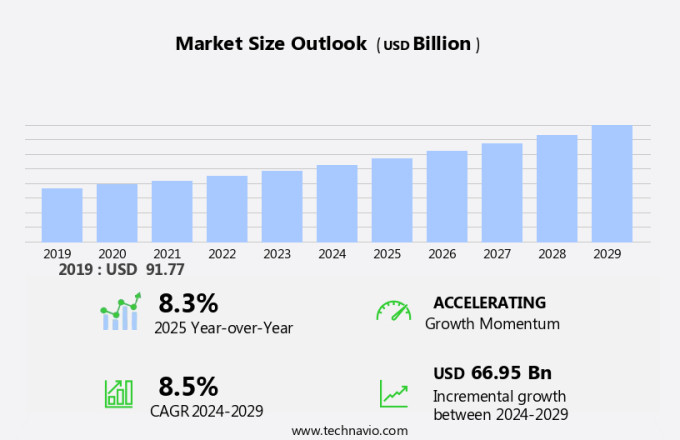
The system infrastructure software market size is forecast to increase by USD 66.95 billion at a CAGR of 8.5% between 2024 and 2029.
- The market is experiencing significant growth due to the increasing demand for IT software performance optimization and workforce support. One of the primary drivers is the adoption of cloud technologies, which enable businesses to scale their operations efficiently and reduce costs. Companies are responding to this trend by launching new solutions to help organizations manage their cloud environments more effectively. Another key trend is the complexity of integration, as businesses seek to connect various systems and applications to improve communication and collaboration. This has led to increased demand for system software, including building management systems and network integration tools. Network security software is also a critical concern, as businesses look to protect their data and systems from cyber threats. Storage software is another area of focus, as organizations deal with the growing volume and complexity of data. The market analysis report provides an in-depth analysis of these trends and the challenges they present to the system infrastructure software market. By understanding these factors, businesses can make informed decisions about their technology investments and stay ahead of the competition.
What will be the Size of the Market During the Forecast Period?
- The market in North America is witnessing significant growth due to the increasing adoption of advanced technologies such as cloud-based solutions, virtualization, automation, and data centers. These technologies are essential for businesses to streamline their IT operations, improve workforce support, and ensure IT performance. Cloud-based technologies are gaining popularity as they offer flexibility, scalability, and cost savings. Cloud integration is enabling businesses to move their workloads to the cloud, reducing the need for on-premises hardware and infrastructure. Cloud services, including cloud storage and cloud security, are essential components of cloud-based solutions, ensuring business transactions are secure and data is protected. Hybrid computing is another trend driving the market. Hybrid computing combines the benefits of on-premises and cloud-based systems, providing businesses with the flexibility to choose the best environment for their workloads. This approach offers improved IT performance, cost savings, and enhanced security. The Internet of Things (IoT) is also contributing to the growth of the market. IoT devices generate vast amounts of data, and businesses need software programs to manage and analyze this data effectively.
- ML and AI technologies are being integrated into system infrastructure software to enable predictive analytics and automate processes. Data centers are a critical component of IT infrastructure, and system infrastructure software plays a vital role in managing them. Data storage software ensures data is securely stored and easily accessible, while security software protects against cybersecurity threats. Blockchain technology is also being integrated into data center infrastructure to enhance security and transparency. Smart buildings are another area where system infrastructure software is making a significant impact. Building automation systems use software to manage HVAC, lighting, and security systems, improving energy efficiency and reducing operational costs. In conclusion, the market in North America is witnessing growth due to the increasing adoption of cloud-based solutions, virtualization, automation, and data centers. These technologies are essential for businesses to improve IT performance, ensure workforce support, and enhance security.
How is this market segmented and which is the largest segment?
The market research report provides comprehensive data (region-wise segment analysis), with forecasts and estimates in "USD billion" for the period 2025-2029, as well as historical data from 2019-2023 for the following segments.
- Application
- Server management
- Cloud infrastructure management
- Network management
- Storage management
- Others
- End-user
- IT and telecommunications
- BFSI
- Retail
- Manufacturing
- Others
- Geography
- North America
- Canada
- Mexico
- US
- Europe
- Germany
- UK
- France
- Italy
- APAC
- China
- India
- Japan
- Middle East and Africa
- South America
- North America
By Application Insights
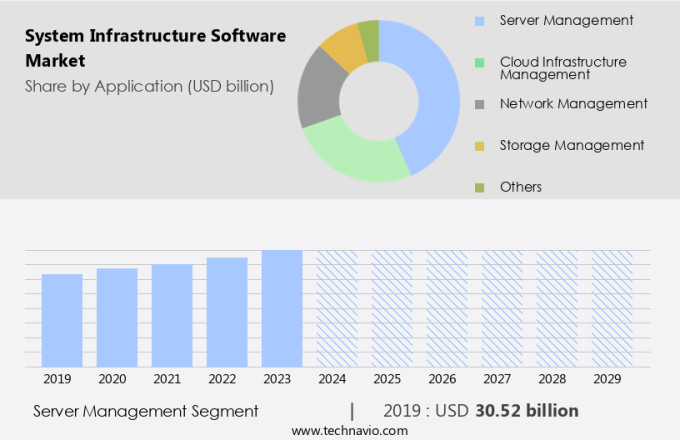
- The server management segment is estimated to witness significant growth during the forecast period.
Server management is an essential component of system infrastructure software, focusing on enhancing functionality, maintaining stability, and ensuring the optimal performance of servers. This domain encompasses various tasks, such as installing and configuring servers and operating systems, managing patches, monitoring performance, and securing and enhancing server efficiency within data centers or enterprise settings. Effective server management solutions are vital for minimizing downtime, facilitating smooth updates, and boosting overall server productivity. In the realm of enterprise IT, server management tools are indispensable for managing both physical and virtual servers. These tools automate routine tasks and offer a unified platform for managing multiple systems, enabling IT professionals to maintain control over their server environments with ease.
Moreover, the integration of advanced technologies like Machine Learning (ML), Internet of Things (IoT), Blockchain, High-performance Computing (HPC), Data virtualization, and Smart buildings into server management solutions has significantly transformed the landscape. ML algorithms enable predictive maintenance and proactive issue resolution, while IoT sensors provide real-time data for performance monitoring and optimization. Blockchain ensures secure data sharing and access, and HPC enhances computational power for complex workloads. Data virtualization simplifies data management, and Smart buildings optimize energy usage and improve overall operational efficiency. In conclusion, server management plays a vital role in system infrastructure software, enabling organizations to maintain control over their server environments and maximize their potential through the integration of advanced technologies like ML, IoT, Blockchain, HPC, Data virtualization, and Smart buildings.
Get a glance at the market report of share of various segments Request Free Sample
The server management segment was valued at USD 30.52 billion in 2019 and showed a gradual increase during the forecast period.
Regional Analysis
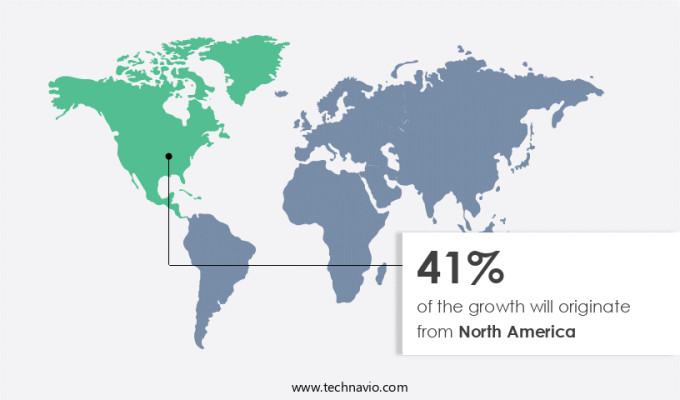
- North America is estimated to contribute 41% to the growth of the global market during the forecast period.
Technavio's analysts have elaborately explained the regional trends and drivers that shape the market during the forecast period.
For more insights on the market share of various regions Request Free Sample
The North American market is witnessing significant growth due to the increasing adoption of cloud-based solutions by businesses for managing their IT infrastructure. This shift towards cloud services is necessitating the need for advanced tools that ensure secure and efficient management of complex IT environments. These tools facilitate automation, virtualization, and cybersecurity, enabling businesses to streamline operations, enhance scalability, and reduce costs. Notably, IBM's recent announcement on April 8, 2024, about the launch of a new Cloud Multizone Region (MZR) in Montreal, Quebec, underscores this trend. This initiative caters to Canadian enterprises' regulatory requirements and offers access to advanced technologies like Generative AI, further bolstering the market's growth.
Market Dynamics
Our researchers analyzed the data with 2024 as the base year, along with the key drivers, trends, and challenges. A holistic analysis of drivers will help companies refine their marketing strategies to gain a competitive advantage.
What are the key market drivers leading to the rise in adoption of System Infrastructure Software Market ?
The adoption of cloud computing is the key driver of the market.
- The market has witnessed significant expansion in 2024, with revenues approximating USD1 trillion. This growth is fueled by the increasing need for agile, productive, and economical digital solutions in businesses. Key factors propelling this trend include the growing prevalence of work-from-home arrangements, the escalating digital transformation initiatives, and the escalating adoption of Internet of Things (IoT) devices. In 2024, over 94% of US enterprises have integrated cloud services into their operations, with nearly 70% planning to expand their cloud presence. Network management, data security, and robotics process automation are the primary areas where system infrastructure software plays a crucial role.
- Intellectual property protection and data center infrastructure are other significant sectors driving market growth. Security concerns remain a top priority for businesses, leading to increased investment in system infrastructure software solutions. Enterprise software, including system infrastructure software, is a critical component of digital transformation, enabling businesses to streamline processes, enhance productivity, and reduce costs.
What are the market trends shaping the System Infrastructure Software Market?
New solution launches by vendors is the upcoming trend in the market.
- The market in the United States is experiencing significant advancements as companies continue to introduce new solutions. These innovations aim to improve system functionality, security, and productivity for industries such as telecommunications and IT, transportation and logistics, and oil and gas. For instance, on April 8, 2024, IBM unveiled IntelliMagic Vision for z/OS, marking its first product launch following the acquisition of IntelliMagic. This solution utilizes advanced analytics to optimize z/OS system performance, ensuring reliability, minimizing costs, and averting disruptions. Given IBM mainframes process around 70% of global transaction value, IntelliMagic Vision for z/OS is essential for managing essential workloads and empowering next-generation operations teams in maximizing hardware, software, and workload efficiency.
- In the dynamic business landscape, system infrastructure software plays a pivotal role in enabling organizations to adapt to evolving requirements. By implementing these solutions, enterprises can enhance their operational efficiency, mitigate risks, and maintain a competitive edge. As the market continues to evolve, it is crucial for businesses to stay informed about the latest trends and developments to make informed decisions and leverage the benefits of these innovative offerings.
What challenges does System Infrastructure Software Market face during the growth?
The complexity of integration is a key challenge affecting the market growth.
- Integrating system infrastructure software into an IT environment comes with complexities due to the diversity of legacy systems, varying technology stacks, and distinct organizational needs. Many businesses employ a blend of legacy systems and contemporary solutions, leading to compatibility issues during integration. For instance, enterprises shifting to hybrid cloud structures encounter challenges in merging cloud-based infrastructure software with on-premises systems. Middleware solutions such as Apache Kafka or IBM WebSphere are often utilized to bridge this divide, but configuring them to manage data synchronization, security policies, and latency can be both labor-intensive and costly. In the healthcare sector, organizations utilizing specialized software for electronic health records (EHR) face challenges when integrating new system infrastructure software with existing platforms like Epic or Cerner.
- Workforce support and IT performance are crucial considerations during such integrations. Cloud technologies, security software, storage software, system software, building management systems, and integrated communication are essential components of system infrastructure software that necessitate seamless integration. Ensuring smooth communication between these systems is vital for optimizing business processes and enhancing operational efficiency.
Exclusive Customer Landscape
The market forecasting report includes the adoption lifecycle of the market, covering from the innovator's stage to the laggard's stage. It focuses on adoption rates in different regions based on penetration. Furthermore, the market report also includes key purchase criteria and drivers of price sensitivity to help companies evaluate and develop their market growth analysis strategies.

Customer Landscape
Key Companies & Market Insights
Companies are implementing various strategies, such as strategic alliances, market forecast, partnerships, mergers and acquisitions, geographical expansion, and product/service launches, to enhance their presence in the market.
The market research and growth report includes detailed analyses of the competitive landscape of the market and information about key companies, including:
- Amazon Web Services Inc
- Arma Partners LLP
- AVEVA Group Plc
- BMC Software Inc
- Broadcom Inc
- Cisco Systems Inc
- Hewlett Packard Enterprise Co
- Houlihan Lokey Inc
- International Business Machines Corp.
- Liqid Inc
- Microsoft Corp
- Nexion Networks Pty Ltd
- Oracle Corp
- RavenTek
- Tano Digital Solutions
Qualitative and quantitative analysis of companies has been conducted to help clients understand the wider business environment as well as the strengths and weaknesses of key market players. Data is qualitatively analyzed to categorize companies as pure play, category-focused, industry-focused, and diversified; it is quantitatively analyzed to categorize companies as dominant, leading, strong, tentative, and weak.
Research Analyst Overview
The market is experiencing significant growth due to the increasing adoption of digital tools and cloud-based technologies in various industries. With the rise of cybersecurity threats, there is a growing demand for security infrastructure software that can protect against DDoS attacks, ransomware, payment fraud, and other malicious activities. Hybrid computing and high-performance computing are also driving the market, as businesses seek to integrate cloud services with their existing IT infrastructure. Artificial intelligence and machine learning are becoming essential components of system infrastructure software, enabling automation, data analysis, and improved IT performance. The Internet of Things (IoT) and blockchain are also transforming the market, with data virtualization and data center infrastructure becoming critical areas of focus.
Further, smart buildings and data centers are increasingly relying on system infrastructure software for building management system (BMS) integration, network management, and security compliance. The IT and telecom sector, as well as transportation and logistics, oil and gas, and digital banking, are some of the key industries driving the growth of the system infrastructure software market. Cloud integration, network-as-a-service (Naas), and robotics process automation are some of the key trends in the market, with 5G connectivity and edge computing set to play a significant role in the future. Data security, intellectual property protection, and workforce management are also key concerns for businesses, making security software and storage software essential components of the system infrastructure software market.
|
Market Scope |
|
|
Report Coverage |
Details |
|
Page number |
230 |
|
Base year |
2024 |
|
Historic period |
2019-2023 |
|
Forecast period |
2025-2029 |
|
Growth momentum & CAGR |
Accelerate at a CAGR of 8.5% |
|
Market growth 2025-2029 |
USD 66.95 billion |
|
Market structure |
Fragmented |
|
YoY growth 2024-2025(%) |
8.3 |
|
Key countries |
US, China, Germany, UK, Canada, India, France, Japan, Mexico, and Italy |
|
Competitive landscape |
Leading Companies, Market Positioning of Companies, Competitive Strategies, and Industry Risks |
What are the Key Data Covered in this Market Research and Growth Report?
- CAGR of the market during the forecast period
- Detailed information on factors that will drive the market growth and forecasting between 2025 and 2029
- Precise estimation of the size of the market and its contribution of the market in focus to the parent market
- Accurate predictions about upcoming market growth and trends and changes in consumer behaviour
- Growth of the market across North America, Europe, APAC, Middle East and Africa, and South America
- Thorough analysis of the market's competitive landscape and detailed information about companies
- Comprehensive analysis of factors that will challenge the growth of market companies
We can help! Our analysts can customize this market research report to meet your requirements. Get in touch