


Talent Acquisition Management Software Market Analysis, Size, and Forecast 2024-2028: North America (US and Canada), Europe (France, Germany, Italy, and UK), Middle East and Africa (Egypt, KSA, Oman, and UAE), APAC (China, India, and Japan), South America (Argentina and Brazil), and Rest of World (ROW)

Talent Acquisition Management Software Market Analysis, Size, and Forecast 2024-2028:
North America (US and Canada), Europe (France, Germany, Italy, and UK), Middle East and Africa (Egypt, KSA, Oman, and UAE), APAC (China, India, and Japan), South America (Argentina and Brazil), and Rest of World (ROW)

Published: Feb 2024 170 Pages SKU: IRTNTR77507

Market Overview at a Glance

$2.59 B
Market Opportunity
10.31%
CAGR
9.37
YoY growth 2023-2024(%)

Talent Acquisition Management Software Market Size 2024-2028

The talent acquisition management software market size is forecast to increase by USD 2.59 billion, at a CAGR of 10.31% between 2023 and 2028.

  • The market is experiencing significant growth, driven by the increasing trend towards web-based applications and digitization. Companies are increasingly adopting cloud-based talent acquisition software to streamline their recruitment processes and improve efficiency. However, data security remains a major concern, as sensitive information is stored in cloud storage services. These issues necessitate robust security measures and compliance with data protection regulations.
  • To capitalize on the market opportunities and navigate challenges effectively, companies must prioritize data security and privacy in their talent acquisition software selection and implementation processes.

What will be the Size of the Talent Acquisition Management Software Market during the forecast period?
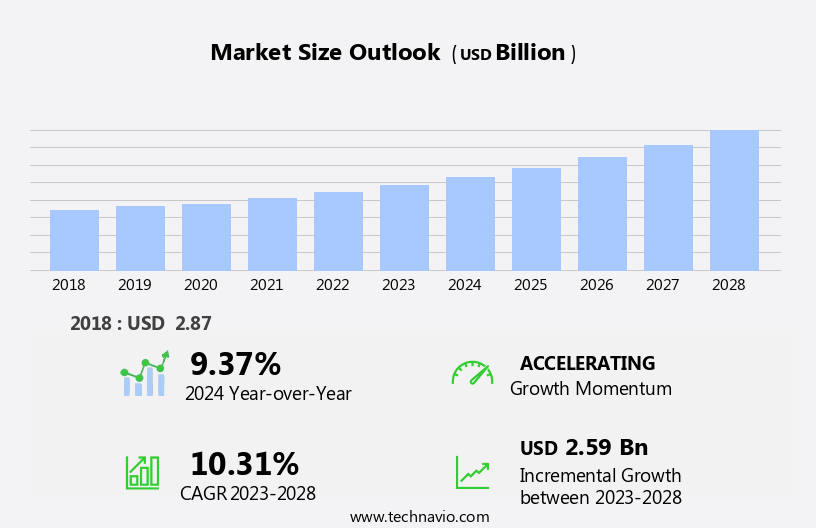
Talent Acquisition Management Software Market Size

Explore in-depth regional segment analysis with market size data - historical 2018-2022 and forecasts 2024-2028 - in the full report.  
Request Free Sample

The market continues to evolve, with dynamic market dynamics shaping its applications across various sectors. Recruitment marketing, Hris integration, and recruitment process optimization are seamlessly integrated into the fabric of this ever-changing landscape. Behavioral interviewing, data analytics, reporting and analytics, real-time reporting, automated workflows, and candidate communication are all critical components, continually unfolding to optimize the candidate experience. Employer branding and remote onboarding have gained prominence in the wake of the remote work revolution. Talent acquisition strategy is a key focus, with virtual assistants and talent pipelines streamlining sourcing strategies. Cloud-based solutions enable mobile accessibility, offering flexibility and convenience.

Performance management, offer management, succession planning, and drug testing are essential functions, all of which are increasingly being addressed through advanced technology. Predictive analytics and customizable dashboards provide valuable insights, while interview scheduling and reference checks ensure a thorough hiring process. Security features, payroll integration, recruitment crm, and retention rates are crucial elements, with data security and compensation and benefits playing significant roles in attracting and retaining top talent. Machine learning algorithms, social media recruiting, learning and development, api integrations, and training programs are all integral to the ongoing evolution of this market.

How is this Talent Acquisition Management Software Industry segmented?

The talent acquisition management software industry research report provides comprehensive data (region-wise segment analysis), with forecasts and estimates in "USD billion" for the period 2024-2028, as well as historical data from 2018-2022 for the following segments.

  • Deployment
    • On-premises
    • Cloud based
  • End-user
    • Large enterprise
    • SMEs enterprise
  • Functionality
    • Applicant Tracking System (ATS)
    • Candidate Relationship Management (CRM)
    • Job Posting & Distribution
    • Interview Scheduling
    • Onboarding
  • Industry Vertical
    • IT & Telecom
    • Healthcare
    • Manufacturing
    • Retail
    • Financial Services
  • Geography
    • North America
      • US
      • Canada
    • Europe
      • France
      • Germany
      • Italy
      • UK
    • Middle East and Africa
      • Egypt
      • KSA
      • Oman
      • UAE
    • APAC
      • China
      • India
      • Japan
    • South America
      • Argentina
      • Brazil
    • Rest of World (ROW)

    By Deployment Insights

    The on-premises segment is estimated to witness significant growth during the forecast period.

    In the market, organizations prioritize enhancing the candidate experience, performance management, and optimizing recruitment processes. Cloud-based solutions are increasingly popular due to their flexibility, enabling remote work and real-time reporting. On-premises software, however, remains an option for larger businesses seeking greater control and data security. Performance management tools integrate with HRIS systems for streamlined processes, while predictive analytics and machine learning algorithms aid in talent acquisition strategy. Customizable dashboards and automated workflows improve efficiency, and interview scheduling, virtual assistants, and recruitment marketing enhance the candidate experience. Diversity and inclusion initiatives are emphasized through software features, and background checks ensure security.

    Succession planning, skills assessments, and competency-based interviews are essential components of talent development. Offer management, onboarding software, and contract management streamline the hiring process, while video interviewing and reference checks ensure thorough candidate evaluation. Social media recruiting and learning and development programs further expand the talent pool. Data security, compensation and benefits, and payroll integration are crucial features for data-driven organizations. AI-powered recruitment, behavioral interviewing, and data analytics provide valuable insights for recruiters, while customizable reporting and analytics offer actionable insights. Performance reviews, career development, and employee referrals contribute to employee retention. The market continues to evolve with the integration of various tools and features to cater to the dynamic needs of businesses.
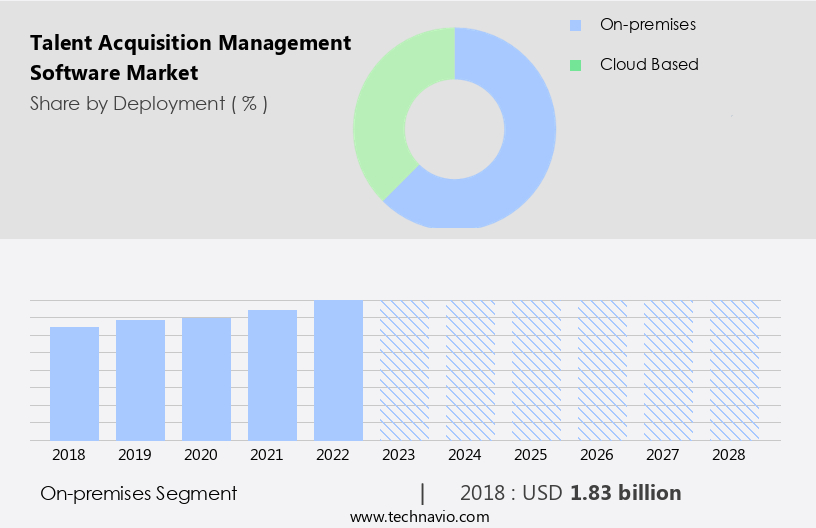
    Talent Acquisition Management Software Market Size

    Request Free Sample

    The On-premises segment was valued at USD 1.83 billion in 2018 and showed a gradual increase during the forecast period.

    Regional Analysis

    North America is estimated to contribute 32% to the growth of the global market during the forecast period.Technavio's analysts have elaborately explained the regional trends and drivers that shape the market during the forecast period.
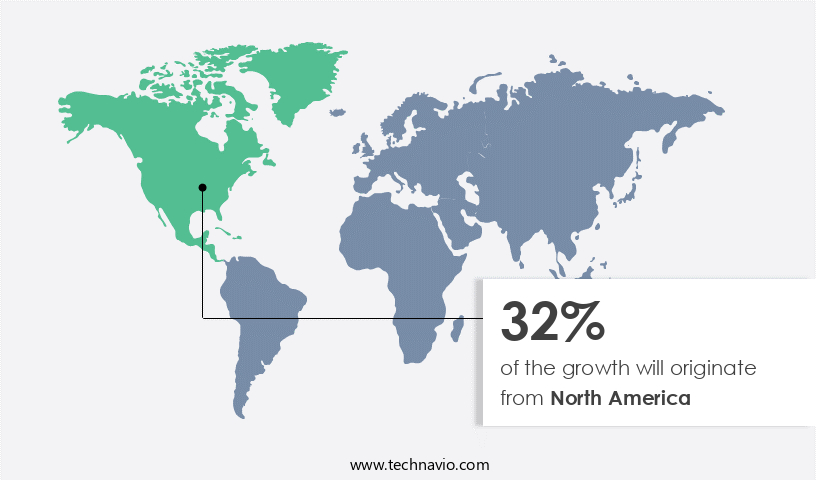
    Talent Acquisition Management Software Market Share by Geography

     Request Free Sample

    The market in North America is currently leading the global landscape, driven by the region's rapid digitalization and increasing adoption of advanced technologies. IT services, healthcare, banking, and retail industries are primary contributors to the market's growth due to their significant workforce requirements. companies like Oracle Corp., based in North America, are at the forefront of this market. Additionally, numerous small, medium, and large enterprises, headquartered or operating in the US, are leveraging talent acquisition software solutions. These solutions cater to various aspects of the recruitment process, including candidate experience, performance management, sourcing strategies, onboarding software, cloud-based solutions, employee turnover, offer management, succession planning, drug testing, diversity and inclusion, predictive analytics, customizable dashboards, interview scheduling, recruitment marketing, hris integration, recruitment process optimization, behavioral interviewing, data analytics, reporting and analytics, real-time reporting, automated workflows, candidate communication, employer branding, remote onboarding, talent acquisition strategy, virtual assistants, talent pipelines, job boards, mobile accessibility, reference checks, skills assessments, ai-powered recruitment, contract management, video interviewing, career development, performance reviews, background checks, employee referrals, security features, payroll integration, recruitment crm, retention rates, data security, compensation and benefits, machine learning algorithms, social media recruiting, learning and development, api integrations, training programs, and competency-based interviews.

    The market trends reflect a strong focus on improving candidate experience, optimizing recruitment processes, and ensuring data security. Cloud-based solutions and mobile accessibility are becoming increasingly popular due to their flexibility and convenience. Predictive analytics and machine learning algorithms are also gaining traction for their ability to streamline talent acquisition and enhance decision-making. Employers are increasingly investing in onboarding software to improve new hire engagement and reduce turnover. Additionally, there is a growing emphasis on diversity and inclusion, as well as compliance with regulations related to drug testing and background checks. In summary, the market in North America is thriving due to the region's digital transformation and the increasing demand for advanced recruitment solutions.

    The market caters to various aspects of the recruitment process, with a focus on improving candidate experience, optimizing processes, and ensuring data security. Cloud-based solutions, predictive analytics, and machine learning algorithms are key trends driving market growth.

    Market Dynamics

    The global talent acquisition management software market is rapidly expanding, with the construction industry increasingly adopting specialized solutions. The market's growth, reflected in the rising talent acquisition management software market size and significant talent acquisition software market trends, is driven by the urgent need for recruitment process optimization in a competitive labor landscape. Essential tools like applicant tracking system (ATS) and candidate relationship management (CRM) software are streamlining operations. Furthermore, recruitment marketing platforms and onboarding software are enhancing the candidate experience enhancement and boosting hiring efficiency. The growing demand for specialized talent necessitates strategic talent sourcing and attraction, improved employer branding, and dedicated efforts towards diversity, equity, and inclusion (DEI) recruitment. This transformation is fueled by talent acquisition market growth drivers such as AI in talent acquisition, the prevalence of cloud-based talent acquisition software (SaaS), and widespread automation in recruitment, all delivered through robust hiring platforms and comprehensive talent acquisition suites.

    Our researchers analyzed the data with 2023 as the base year, along with the key drivers, trends, and challenges. A holistic analysis of drivers will help companies refine their marketing strategies to gain a competitive advantage.

    What are the key market drivers leading to the rise in the adoption of Talent Acquisition Management Software Industry?

    • The market's primary catalyst is the swift transition towards web-based applications and digitization. 
    • The market is experiencing significant growth due to the increasing adoption of cloud-based solutions in organizations. With the ongoing digital transformation and the rise of remote work arrangements, there is a surging demand for web-based talent acquisition software. This shift offers numerous benefits, including accessibility from anywhere with an internet connection, scalability to meet business needs, and seamless integration with HR and business systems. Cloud-based talent acquisition software streamlines recruitment processes, enhances collaboration among hiring teams, and improves candidate experiences. Additionally, it enables data-driven insights and automation capabilities to optimize recruitment outcomes. Performance management, sourcing strategies, onboarding software, offer management, succession planning, drug testing, diversity and inclusion, predictive analytics, and customizable dashboards are integral features of talent acquisition management software.
    • These features help organizations make informed hiring decisions, reduce employee turnover, and maintain a harmonious work environment. Overall, the adoption of talent acquisition management software is a strategic investment for businesses seeking to optimize their recruitment processes and enhance their workforce.

    What are the market trends shaping the Talent Acquisition Management Software Industry?

    • The adoption of cloud-based talent acquisition software is a current market trend, gaining increasing popularity among businesses. This technology streamlines the recruitment process, offering advantages such as remote access, real-time data, and cost savings.
    • Cloud-based Talent Acquisition Management Software (TAMS) is gaining significant traction in the business world due to its numerous advantages. The flexibility and cost savings offered by cloud computing have made it an attractive option for Small and Medium Enterprises (SMEs) and large organizations alike. By adopting cloud solutions, businesses can eliminate the need for expensive hardware and data centers, reducing their overall capital expenditure (CAPEX) and operational expenditure (OPEX). Cloud-based TAMS offers several benefits for recruitment marketing, including real-time reporting, automated workflows, and candidate communication. HR Information System (HRIS) integration enables seamless data transfer and streamlines the recruitment process.
    • Behavioral interviewing and data analytics provide valuable insights into candidate suitability, enhancing recruitment process optimization. Moreover, cloud-based TAMS supports remote onboarding, enabling organizations to onboard new hires efficiently from anywhere. Employer branding can be easily managed through these platforms, enhancing the candidate experience. Virtual assistants and chatbots offer additional support, improving candidate engagement and reducing the workload on HR teams. Reporting and analytics provide valuable insights into recruitment metrics, enabling businesses to make data-driven decisions. With automated workflows and real-time reporting, organizations can optimize their recruitment strategy and improve overall efficiency. Cloud-based TAMS is the future of talent acquisition, offering cost savings, flexibility, and advanced features to help businesses attract, engage, and retain top talent.

    What challenges does the Talent Acquisition Management Software Industry face during its growth?

    • The growth of the industry is significantly impacted by the complex data privacy and security challenges inherent in cloud-based products and services. These issues, which are of paramount importance, necessitate robust solutions to safeguard sensitive information and maintain consumer trust. 
    • Talent Acquisition Management Software (TAS) is a vital tool for organizations to streamline their recruitment processes and build talent pipelines. Cloud-based TAS solutions have gained popularity due to their affordability, scalability, and ease of use. However, the use of cloud services raises concerns regarding data security. In a shared public cloud architecture, resources are accessed by multiple organizations and users, and the data is hosted by a third-party provider. Data breaches have become a significant issue, leading to potential privacy concerns. Unauthorized access to information can result in dissemination, deletion, or corruption of data. Additionally, TAS software offers various features such as job boards, mobile accessibility, reference checks, skills assessments, AI-powered recruitment, contract management, video interviewing, career development, performance reviews, background checks, employee referrals, and security features.
    • These features help organizations to improve their recruitment processes, enhance candidate experience, and ensure compliance with regulations. Despite the benefits, it is crucial for organizations to evaluate the security measures implemented by their TAS providers to mitigate potential risks.

    Exclusive Customer Landscape

    The talent acquisition management software market forecasting report includes the adoption lifecycle of the market, covering from the innovator's stage to the laggard's stage. It focuses on adoption rates in different regions based on penetration. Furthermore, the talent acquisition management software market report also includes key purchase criteria and drivers of price sensitivity to help companies evaluate and develop their market growth analysis strategies.
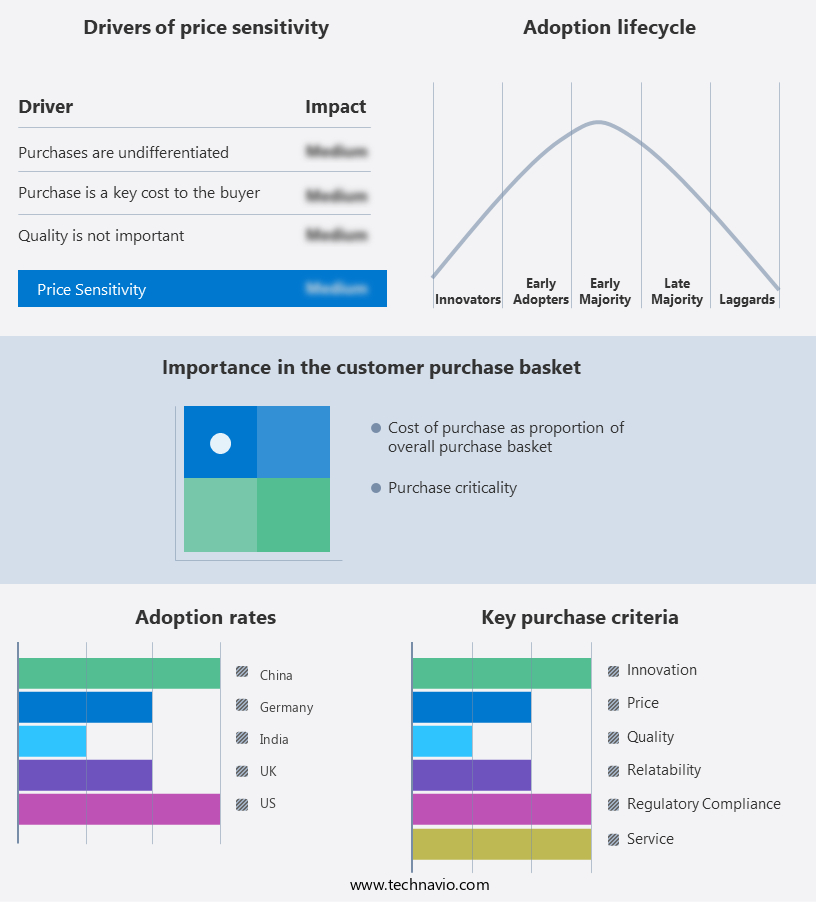
    Talent Acquisition Management Software Market Share by Geography

     Customer Landscape

    Key Companies & Market Insights

    Companies are implementing various strategies, such as strategic alliances, talent acquisition management software market forecast, partnerships, mergers and acquisitions, geographical expansion, and product/service launches, to enhance their presence in the industry.

    Automatic Data Processing Inc. - This company specializes in talent acquisition management solutions, with a focus on ADP Recruiting Management software. By streamlining and enhancing the recruitment process, businesses can effectively source and hire top talent. The software simplifies workflows, improving efficiency and reducing time-to-hire. It's a valuable investment for organizations seeking to optimize their talent acquisition strategies.

    The industry research and growth report includes detailed analyses of the competitive landscape of the market and information about key companies, including:

    • Automatic Data Processing Inc.
    • Avalture Ltd.
    • Bamboo HR LLC
    • Be Applied Ltd.
    • BETTERPLACE SAFETY SOLUTIONS Pvt. Ltd.
    • Cegid SA
    • Cornerstone
    • Eightfold AI
    • Employ Inc.
    • iCIMS Inc.
    • iMocha
    • International Business Machines Corp.
    • Koch Industries Inc.
    • Manatal
    • Marsh and McLennan Companies Inc.
    • Oracle Corp.
    • Paycom Software Inc.
    • Recruitee.com
    • Sage Group Plc
    • Sanka
    • SAP SE
    • Workday Inc.
    • Yello
    • YVI
    • SmartRecruiters Inc.

    Qualitative and quantitative analysis of companies has been conducted to help clients understand the wider business environment as well as the strengths and weaknesses of key industry players. Data is qualitatively analyzed to categorize companies as pure play, category-focused, industry-focused, and diversified; it is quantitatively analyzed to categorize companies as dominant, leading, strong, tentative, and weak.

    Recent Development and News in Talent Acquisition Management Software Market

    • In January 2024, iCIMS, a leading talent acquisition software provider, announced the launch of their new AI-powered product, "iCIMS Talent Cloud," designed to streamline the entire recruitment process for mid-market and enterprise businesses. This solution integrates applicant tracking, onboarding, and analytics into a single platform (iCIMS press release).
    • In March 2024, Workday and IBM signed a strategic partnership to integrate Workday's Human Capital Management (HCM) solutions with IBM's Watson AI technology. This collaboration aimed to enhance Workday's recruitment capabilities by incorporating AI-driven insights for candidate selection and personalized communication (Workday press release).
    • In May 2025, SAP SuccessFactors, a leading talent management software company, completed the acquisition of AlmaMater, a European talent acquisition software provider. This acquisition expanded SAP SuccessFactors' presence in the European market and added AlmaMater's innovative recruitment marketing and employer branding solutions to their portfolio (SAP press release).
    • In the same month, LinkedIn Talent Solutions, a division of LinkedIn, announced a significant investment of USD100 million in its Talent Insights product. This investment aimed to enhance the product's predictive analytics capabilities and expand its reach to more industries and markets (LinkedIn press release).

    Research Analyst Overview

    • The market is witnessing significant advancements, with a focus on optimizing the entire talent acquisition lifecycle. HR analytics and recruitment metrics play a crucial role in measuring the effectiveness of interview techniques and selection processes. Leadership development and career paths are essential for employee engagement and retention, driving the adoption of HR software solutions. Talent mobility and remote work solutions are becoming increasingly important as companies embrace strategic workforce planning and global talent acquisition. HR technology, such as applicant tracking systems and assessment tools, streamline the recruitment process and improve compliance with regulations. Performance improvement and employee feedback are integral to talent management solutions, which also include compensation surveys, inclusion programs, and diversity initiatives.
    • Workflow automation and digital recruitment are transforming the onboarding process, while candidate screening and background check services ensure a thorough selection process. HR technology continues to evolve, with a focus on performance appraisal, recruitment best practices, and benefit administration. Talent analytics and recruitment technology enable data-driven decision-making and help organizations stay competitive in the war for talent.

    Dive into Technavio's robust research methodology, blending expert interviews, extensive data synthesis, and validated models for unparalleled Talent Acquisition Management Software Market insights. See full methodology.

    Market Scope

    Report Coverage

    Details

    Page number

    170

    Base year

    2023

    Historic period

    2018-2022

    Forecast period

    2024-2028

    Growth momentum & CAGR

    Accelerate at a CAGR of 10.31%

    Market growth 2024-2028

    USD 2.59 billion

    Market structure

    Fragmented

    YoY growth 2023-2024(%)

    9.37

    Key countries

    US, China, India, UK, and Germany

    Competitive landscape

    Leading Companies, Market Positioning of Companies, Competitive Strategies, and Industry Risks

    Request Free Sample

    What are the Key Data Covered in this Talent Acquisition Management Software Market Research and Growth Report?

    • CAGR of the Talent Acquisition Management Software industry during the forecast period
    • Detailed information on factors that will drive the growth and forecasting between 2024 and 2028
    • Precise estimation of the size of the market and its contribution of the industry in focus to the parent market
    • Accurate predictions about upcoming growth and trends and changes in consumer behaviour
    • Growth of the market across North America, Europe, APAC, Middle East and Africa, and South America
    • Thorough analysis of the market's competitive landscape and detailed information about companies
    • Comprehensive analysis of factors that will challenge the talent acquisition management software market growth of industry companies

    We can help! Our analysts can customize this talent acquisition management software market research report to meet your requirements.

    Get in touch

    1 Executive Summary

    • 1.1 Market overview
      • Exhibit 01: Executive Summary – Chart on Market Overview
      • Exhibit 02: Executive Summary – Data Table on Market Overview
      • Exhibit 03: Executive Summary – Chart on Global Market Characteristics
      • Exhibit 04: Executive Summary – Chart on Market by Geography
      • Exhibit 05: Executive Summary – Chart on Market Segmentation by Deployment
      • Exhibit 06: Executive Summary – Chart on Market Segmentation by End-user
      • Exhibit 07: Executive Summary – Chart on Incremental Growth
      • Exhibit 08: Executive Summary – Data Table on Incremental Growth
      • Exhibit 09: Executive Summary – Chart on Vendor Market Positioning

    2 Market Landscape

    • 2.1 Market ecosystem
      • Exhibit 10: Parent market
      • Exhibit 11: Market Characteristics

    3 Market Sizing

    • 3.1 Market definition
      • Exhibit 12: Offerings of vendors included in the market definition
    • 3.2 Market segment analysis
      • Exhibit 13: Market segments
    • 3.3 Market size 2023
      • 3.4 Market outlook: Forecast for 2023-2028
        • Exhibit 14: Chart on Global - Market size and forecast 2023-2028 ($ million)
        • Exhibit 15: Data Table on Global - Market size and forecast 2023-2028 ($ million)
        • Exhibit 16: Chart on Global Market: Year-over-year growth 2023-2028 (%)
        • Exhibit 17: Data Table on Global Market: Year-over-year growth 2023-2028 (%)

      4 Historic Market Size

      • 4.1 Global talent acquisition management software market 2018 - 2022
        • Exhibit 18: Historic Market Size – Data Table on global talent acquisition management software market 2018 - 2022 ($ million)
      • 4.2 Deployment Segment Analysis 2018 - 2022
        • Exhibit 19: Historic Market Size – Deployment Segment 2018 - 2022 ($ million)
      • 4.3 End-user Segment Analysis 2018 - 2022
        • Exhibit 20: Historic Market Size – End-user Segment 2018 - 2022 ($ million)
      • 4.4 Geography Segment Analysis 2018 - 2022
        • Exhibit 21: Historic Market Size – Geography Segment 2018 - 2022 ($ million)
      • 4.5 Country Segment Analysis 2018 - 2022
        • Exhibit 22: Historic Market Size – Country Segment 2018 - 2022 ($ million)

      5 Five Forces Analysis

      • 5.1 Five forces summary
        • Exhibit 23: Five forces analysis - Comparison between 2023 and 2028
      • 5.2 Bargaining power of buyers
        • Exhibit 24: Chart on Bargaining power of buyers – Impact of key factors 2023 and 2028
      • 5.3 Bargaining power of suppliers
        • Exhibit 25: Bargaining power of suppliers – Impact of key factors in 2023 and 2028
      • 5.4 Threat of new entrants
        • Exhibit 26: Threat of new entrants – Impact of key factors in 2023 and 2028
      • 5.5 Threat of substitutes
        • Exhibit 27: Threat of substitutes – Impact of key factors in 2023 and 2028
      • 5.6 Threat of rivalry
        • Exhibit 28: Threat of rivalry – Impact of key factors in 2023 and 2028
      • 5.7 Market condition
        • Exhibit 29: Chart on Market condition - Five forces 2023 and 2028

      6 Market Segmentation by Deployment

      • 6.1 Market segments
        • Chart on Deployment - Market share (2023-2028) (%)
        • Data Table on Deployment - Market share (2023-2028) (%)
      • 6.2 Comparison by Deployment
        • Chart on Comparison by Deployment
        • Data Table on Comparison by Deployment
      • 6.3 On-premises - Market size and forecast (2023-2028)
        • Chart on On-premises - Market size and forecast (2023-2028) ($ million)
        • Data Table on On-premises - Market size and forecast (2023-2028) ($ million)
        • Chart on On-premises - Year-over-year growth (2023-2028) (%)
        • Data Table on On-premises - Year-over-year growth (2023-2028) (%)
      • 6.4 Cloud based - Market size and forecast (2023-2028)
        • Chart on Cloud based - Market size and forecast (2023-2028) ($ million)
        • Data Table on Cloud based - Market size and forecast (2023-2028) ($ million)
        • Chart on Cloud based - Year-over-year growth (2023-2028) (%)
        • Data Table on Cloud based - Year-over-year growth (2023-2028) (%)
      • 6.5 Market opportunity by Deployment
        • Market opportunity by Deployment ($ million)
        • Data Table on Market opportunity by Deployment ($ million)

      7 Market Segmentation by End-user

      • 7.1 Market segments
        • Chart on End-user - Market share (2023-2028) (%)
        • Data Table on End-user - Market share (2023-2028) (%)
      • 7.2 Comparison by End-user
        • Chart on Comparison by End-user
        • Data Table on Comparison by End-user
      • 7.3 Large enterprise - Market size and forecast (2023-2028)
        • Chart on Large enterprise - Market size and forecast (2023-2028) ($ million)
        • Data Table on Large enterprise - Market size and forecast (2023-2028) ($ million)
        • Chart on Large enterprise - Year-over-year growth (2023-2028) (%)
        • Data Table on Large enterprise - Year-over-year growth (2023-2028) (%)
      • 7.4 SMEs enterprise - Market size and forecast (2023-2028)
        • Chart on SMEs enterprise - Market size and forecast (2023-2028) ($ million)
        • Data Table on SMEs enterprise - Market size and forecast (2023-2028) ($ million)
        • Chart on SMEs enterprise - Year-over-year growth (2023-2028) (%)
        • Data Table on SMEs enterprise - Year-over-year growth (2023-2028) (%)
      • 7.5 Market opportunity by End-user
        • Market opportunity by End-user ($ million)
        • Data Table on Market opportunity by End-user ($ million)

      8 Market Segmentation by Functionality

      • 8.1 Market segments
        • Chart on Functionality - Market share (2023-2028) (%)
        • Data Table on Functionality - Market share (2023-2028) (%)
      • 8.2 Comparison by Functionality
        • Chart on Comparison by Functionality
        • Data Table on Comparison by Functionality
      • 8.3 Applicant Tracking System (ATS) - Market size and forecast (2023-2028)
        • Chart on Applicant Tracking System (ATS) - Market size and forecast (2023-2028) ($ million)
        • Data Table on Applicant Tracking System (ATS) - Market size and forecast (2023-2028) ($ million)
        • Chart on Applicant Tracking System (ATS) - Year-over-year growth (2023-2028) (%)
        • Data Table on Applicant Tracking System (ATS) - Year-over-year growth (2023-2028) (%)
      • 8.4 Candidate Relationship Management (CRM) - Market size and forecast (2023-2028)
        • Chart on Candidate Relationship Management (CRM) - Market size and forecast (2023-2028) ($ million)
        • Data Table on Candidate Relationship Management (CRM) - Market size and forecast (2023-2028) ($ million)
        • Chart on Candidate Relationship Management (CRM) - Year-over-year growth (2023-2028) (%)
        • Data Table on Candidate Relationship Management (CRM) - Year-over-year growth (2023-2028) (%)
      • 8.5 Job Posting & Distribution - Market size and forecast (2023-2028)
        • Chart on Job Posting & Distribution - Market size and forecast (2023-2028) ($ million)
        • Data Table on Job Posting & Distribution - Market size and forecast (2023-2028) ($ million)
        • Chart on Job Posting & Distribution - Year-over-year growth (2023-2028) (%)
        • Data Table on Job Posting & Distribution - Year-over-year growth (2023-2028) (%)
      • 8.6 Interview Scheduling - Market size and forecast (2023-2028)
        • Chart on Interview Scheduling - Market size and forecast (2023-2028) ($ million)
        • Data Table on Interview Scheduling - Market size and forecast (2023-2028) ($ million)
        • Chart on Interview Scheduling - Year-over-year growth (2023-2028) (%)
        • Data Table on Interview Scheduling - Year-over-year growth (2023-2028) (%)
      • 8.7 Onboarding - Market size and forecast (2023-2028)
        • Chart on Onboarding - Market size and forecast (2023-2028) ($ million)
        • Data Table on Onboarding - Market size and forecast (2023-2028) ($ million)
        • Chart on Onboarding - Year-over-year growth (2023-2028) (%)
        • Data Table on Onboarding - Year-over-year growth (2023-2028) (%)
      • 8.8 Market opportunity by Functionality
        • Market opportunity by Functionality ($ million)
        • Data Table on Market opportunity by Functionality ($ million)

      9 Market Segmentation by Industry Vertical

      • 9.1 Market segments
        • Chart on Industry Vertical - Market share (2023-2028) (%)
        • Data Table on Industry Vertical - Market share (2023-2028) (%)
      • 9.2 Comparison by Industry Vertical
        • Chart on Comparison by Industry Vertical
        • Data Table on Comparison by Industry Vertical
      • 9.3 IT & Telecom - Market size and forecast (2023-2028)
        • Chart on IT & Telecom - Market size and forecast (2023-2028) ($ million)
        • Data Table on IT & Telecom - Market size and forecast (2023-2028) ($ million)
        • Chart on IT & Telecom - Year-over-year growth (2023-2028) (%)
        • Data Table on IT & Telecom - Year-over-year growth (2023-2028) (%)
      • 9.4 Healthcare - Market size and forecast (2023-2028)
        • Chart on Healthcare - Market size and forecast (2023-2028) ($ million)
        • Data Table on Healthcare - Market size and forecast (2023-2028) ($ million)
        • Chart on Healthcare - Year-over-year growth (2023-2028) (%)
        • Data Table on Healthcare - Year-over-year growth (2023-2028) (%)
      • 9.5 Manufacturing - Market size and forecast (2023-2028)
        • Chart on Manufacturing - Market size and forecast (2023-2028) ($ million)
        • Data Table on Manufacturing - Market size and forecast (2023-2028) ($ million)
        • Chart on Manufacturing - Year-over-year growth (2023-2028) (%)
        • Data Table on Manufacturing - Year-over-year growth (2023-2028) (%)
      • 9.6 Retail - Market size and forecast (2023-2028)
        • Chart on Retail - Market size and forecast (2023-2028) ($ million)
        • Data Table on Retail - Market size and forecast (2023-2028) ($ million)
        • Chart on Retail - Year-over-year growth (2023-2028) (%)
        • Data Table on Retail - Year-over-year growth (2023-2028) (%)
      • 9.7 Financial Services - Market size and forecast (2023-2028)
        • Chart on Financial Services - Market size and forecast (2023-2028) ($ million)
        • Data Table on Financial Services - Market size and forecast (2023-2028) ($ million)
        • Chart on Financial Services - Year-over-year growth (2023-2028) (%)
        • Data Table on Financial Services - Year-over-year growth (2023-2028) (%)
      • 9.8 Market opportunity by Industry Vertical
        • Market opportunity by Industry Vertical ($ million)
        • Data Table on Market opportunity by Industry Vertical ($ million)

      8 Customer Landscape

      • 8.1 Customer landscape overview
        • Exhibit 58: Analysis of price sensitivity, lifecycle, customer purchase basket, adoption rates, and purchase criteria

      9 Geographic Landscape

      • 9.1 Geographic segmentation
        • Exhibit 59: Chart on Market share by geography 2023-2028 (%)
        • Exhibit 60: Data Table on Market share by geography 2023-2028 (%)
      • 9.2 Geographic comparison
        • Exhibit 61: Chart on Geographic comparison
        • Exhibit 62: Data Table on Geographic comparison
      • 9.3 North America - Market size and forecast 2023-2028
        • Exhibit 63: Chart on North America - Market size and forecast 2023-2028 ($ million)
        • Exhibit 64: Data Table on North America - Market size and forecast 2023-2028 ($ million)
        • Exhibit 65: Chart on North America - Year-over-year growth 2023-2028 (%)
        • Exhibit 66: Data Table on North America - Year-over-year growth 2023-2028 (%)
      • 9.4 Europe - Market size and forecast 2023-2028
        • Exhibit 67: Chart on Europe - Market size and forecast 2023-2028 ($ million)
        • Exhibit 68: Data Table on Europe - Market size and forecast 2023-2028 ($ million)
        • Exhibit 69: Chart on Europe - Year-over-year growth 2023-2028 (%)
        • Exhibit 70: Data Table on Europe - Year-over-year growth 2023-2028 (%)
      • 9.5 APAC - Market size and forecast 2023-2028
        • Exhibit 71: Chart on APAC - Market size and forecast 2023-2028 ($ million)
        • Exhibit 72: Data Table on APAC - Market size and forecast 2023-2028 ($ million)
        • Exhibit 73: Chart on APAC - Year-over-year growth 2023-2028 (%)
        • Exhibit 74: Data Table on APAC - Year-over-year growth 2023-2028 (%)
      • 9.6 Middle East and Africa - Market size and forecast 2023-2028
        • Exhibit 75: Chart on Middle East and Africa - Market size and forecast 2023-2028 ($ million)
        • Exhibit 76: Data Table on Middle East and Africa - Market size and forecast 2023-2028 ($ million)
        • Exhibit 77: Chart on Middle East and Africa - Year-over-year growth 2023-2028 (%)
        • Exhibit 78: Data Table on Middle East and Africa - Year-over-year growth 2023-2028 (%)
      • 9.7 South America - Market size and forecast 2023-2028
        • Exhibit 79: Chart on South America - Market size and forecast 2023-2028 ($ million)
        • Exhibit 80: Data Table on South America - Market size and forecast 2023-2028 ($ million)
        • Exhibit 81: Chart on South America - Year-over-year growth 2023-2028 (%)
        • Exhibit 82: Data Table on South America - Year-over-year growth 2023-2028 (%)
      • 9.8 US - Market size and forecast 2023-2028
        • Exhibit 83: Chart on US - Market size and forecast 2023-2028 ($ million)
        • Exhibit 84: Data Table on US - Market size and forecast 2023-2028 ($ million)
        • Exhibit 85: Chart on US - Year-over-year growth 2023-2028 (%)
        • Exhibit 86: Data Table on US - Year-over-year growth 2023-2028 (%)
      • 9.9 UK - Market size and forecast 2023-2028
        • Exhibit 87: Chart on UK - Market size and forecast 2023-2028 ($ million)
        • Exhibit 88: Data Table on UK - Market size and forecast 2023-2028 ($ million)
        • Exhibit 89: Chart on UK - Year-over-year growth 2023-2028 (%)
        • Exhibit 90: Data Table on UK - Year-over-year growth 2023-2028 (%)
      • 9.10 Germany - Market size and forecast 2023-2028
        • Exhibit 91: Chart on Germany - Market size and forecast 2023-2028 ($ million)
        • Exhibit 92: Data Table on Germany - Market size and forecast 2023-2028 ($ million)
        • Exhibit 93: Chart on Germany - Year-over-year growth 2023-2028 (%)
        • Exhibit 94: Data Table on Germany - Year-over-year growth 2023-2028 (%)
      • 9.11 China - Market size and forecast 2023-2028
        • Exhibit 95: Chart on China - Market size and forecast 2023-2028 ($ million)
        • Exhibit 96: Data Table on China - Market size and forecast 2023-2028 ($ million)
        • Exhibit 97: Chart on China - Year-over-year growth 2023-2028 (%)
        • Exhibit 98: Data Table on China - Year-over-year growth 2023-2028 (%)
      • 9.12 India - Market size and forecast 2023-2028
        • Exhibit 99: Chart on India - Market size and forecast 2023-2028 ($ million)
        • Exhibit 100: Data Table on India - Market size and forecast 2023-2028 ($ million)
        • Exhibit 101: Chart on India - Year-over-year growth 2023-2028 (%)
        • Exhibit 102: Data Table on India - Year-over-year growth 2023-2028 (%)
      • 9.13 Market opportunity by geography
        • Exhibit 103: Market opportunity by geography ($ million)
        • Exhibit 104: Data Tables on Market opportunity by geography ($ million)
      • 11.14 Canada - Market size and forecast (2023-2028)
        • Chart on Canada - Market size and forecast (2023-2028) ($ million)
        • Data Table on Canada - Market size and forecast (2023-2028) ($ million)
        • Chart on Canada - Year-over-year growth (2023-2028) (%)
        • Data Table on Canada - Year-over-year growth (2023-2028) (%)
      • 11.15 Italy - Market size and forecast (2023-2028)
        • Chart on Italy - Market size and forecast (2023-2028) ($ million)
        • Data Table on Italy - Market size and forecast (2023-2028) ($ million)
        • Chart on Italy - Year-over-year growth (2023-2028) (%)
        • Data Table on Italy - Year-over-year growth (2023-2028) (%)
      • 11.16 France - Market size and forecast (2023-2028)
        • Chart on France - Market size and forecast (2023-2028) ($ million)
        • Data Table on France - Market size and forecast (2023-2028) ($ million)
        • Chart on France - Year-over-year growth (2023-2028) (%)
        • Data Table on France - Year-over-year growth (2023-2028) (%)
      • 11.17 Japan - Market size and forecast (2023-2028)
        • Chart on Japan - Market size and forecast (2023-2028) ($ million)
        • Data Table on Japan - Market size and forecast (2023-2028) ($ million)
        • Chart on Japan - Year-over-year growth (2023-2028) (%)
        • Data Table on Japan - Year-over-year growth (2023-2028) (%)
      • 11.18 Brazil - Market size and forecast (2023-2028)
        • Chart on Brazil - Market size and forecast (2023-2028) ($ million)
        • Data Table on Brazil - Market size and forecast (2023-2028) ($ million)
        • Chart on Brazil - Year-over-year growth (2023-2028) (%)
        • Data Table on Brazil - Year-over-year growth (2023-2028) (%)
      • 11.19 Egypt - Market size and forecast (2023-2028)
        • Chart on Egypt - Market size and forecast (2023-2028) ($ million)
        • Data Table on Egypt - Market size and forecast (2023-2028) ($ million)
        • Chart on Egypt - Year-over-year growth (2023-2028) (%)
        • Data Table on Egypt - Year-over-year growth (2023-2028) (%)
      • 11.20 UAE - Market size and forecast (2023-2028)
        • Chart on UAE - Market size and forecast (2023-2028) ($ million)
        • Data Table on UAE - Market size and forecast (2023-2028) ($ million)
        • Chart on UAE - Year-over-year growth (2023-2028) (%)
        • Data Table on UAE - Year-over-year growth (2023-2028) (%)
      • 11.21 Oman - Market size and forecast (2023-2028)
        • Chart on Oman - Market size and forecast (2023-2028) ($ million)
        • Data Table on Oman - Market size and forecast (2023-2028) ($ million)
        • Chart on Oman - Year-over-year growth (2023-2028) (%)
        • Data Table on Oman - Year-over-year growth (2023-2028) (%)
      • 11.22 Argentina - Market size and forecast (2023-2028)
        • Chart on Argentina - Market size and forecast (2023-2028) ($ million)
        • Data Table on Argentina - Market size and forecast (2023-2028) ($ million)
        • Chart on Argentina - Year-over-year growth (2023-2028) (%)
        • Data Table on Argentina - Year-over-year growth (2023-2028) (%)
      • 11.23 KSA - Market size and forecast (2023-2028)
        • Chart on KSA - Market size and forecast (2023-2028) ($ million)
        • Data Table on KSA - Market size and forecast (2023-2028) ($ million)
        • Chart on KSA - Year-over-year growth (2023-2028) (%)
        • Data Table on KSA - Year-over-year growth (2023-2028) (%)
      • 11.24 Rest of World (ROW) - Market size and forecast (2023-2028)
        • Chart on Rest of World (ROW) - Market size and forecast (2023-2028) ($ million)
        • Data Table on Rest of World (ROW) - Market size and forecast (2023-2028) ($ million)
        • Chart on Rest of World (ROW) - Year-over-year growth (2023-2028) (%)
        • Data Table on Rest of World (ROW) - Year-over-year growth (2023-2028) (%)

      10 Drivers, Challenges, and Trends

      • 10.1 Market drivers
        • 10.2 Market challenges
          • 10.3 Impact of drivers and challenges
            • Exhibit 105: Impact of drivers and challenges in 2023 and 2028
          • 10.4 Market trends

            11 Vendor Landscape

            • 11.1 Overview
              • 11.2 Vendor landscape
                • Exhibit 106: Overview on Criticality of inputs and Factors of differentiation
              • 11.3 Landscape disruption
                • Exhibit 107: Overview on factors of disruption
              • 11.4 Industry risks
                • Exhibit 108: Impact of key risks on business

              12 Vendor Analysis

              • 12.1 Vendors covered
                • Exhibit 109: Vendors covered
              • 12.2 Market positioning of vendors
                • Exhibit 110: Matrix on vendor position and classification
              • 12.3 Automatic Data Processing Inc.
                • Exhibit 111: Automatic Data Processing Inc. - Overview
                • Exhibit 112: Automatic Data Processing Inc. - Business segments
                • Exhibit 113: Automatic Data Processing Inc. - Key news
                • Exhibit 114: Automatic Data Processing Inc. - Key offerings
                • Exhibit 115: Automatic Data Processing Inc. - Segment focus
              • 12.4 Bamboo HR LLC
                • Exhibit 116: Bamboo HR LLC - Overview
                • Exhibit 117: Bamboo HR LLC - Product / Service
                • Exhibit 118: Bamboo HR LLC - Key offerings
              • 12.5 Be Applied Ltd.
                • Exhibit 119: Be Applied Ltd. - Overview
                • Exhibit 120: Be Applied Ltd. - Product / Service
                • Exhibit 121: Be Applied Ltd. - Key offerings
              • 12.6 Cegid SA
                • Exhibit 122: Cegid SA - Overview
                • Exhibit 123: Cegid SA - Product / Service
                • Exhibit 124: Cegid SA - Key offerings
              • 12.7 Cornerstone
                • Exhibit 125: Cornerstone - Overview
                • Exhibit 126: Cornerstone - Product / Service
                • Exhibit 127: Cornerstone - Key offerings
              • 12.8 iCIMS Inc.
                • Exhibit 128: iCIMS Inc. - Overview
                • Exhibit 129: iCIMS Inc. - Product / Service
                • Exhibit 130: iCIMS Inc. - Key offerings
              • 12.9 International Business Machines Corp.
                • Exhibit 131: International Business Machines Corp. - Overview
                • Exhibit 132: International Business Machines Corp. - Business segments
                • Exhibit 133: International Business Machines Corp. - Key news
                • Exhibit 134: International Business Machines Corp. - Key offerings
                • Exhibit 135: International Business Machines Corp. - Segment focus
              • 12.10 Koch Industries Inc.
                • Exhibit 136: Koch Industries Inc. - Overview
                • Exhibit 137: Koch Industries Inc. - Product / Service
                • Exhibit 138: Koch Industries Inc. - Key offerings
              • 12.11 Manatal
                • Exhibit 139: Manatal - Overview
                • Exhibit 140: Manatal - Product / Service
                • Exhibit 141: Manatal - Key offerings
              • 12.12 Marsh and McLennan Companies Inc.
                • Exhibit 142: Marsh and McLennan Companies Inc. - Overview
                • Exhibit 143: Marsh and McLennan Companies Inc. - Business segments
                • Exhibit 144: Marsh and McLennan Companies Inc. - Key offerings
                • Exhibit 145: Marsh and McLennan Companies Inc. - Segment focus
              • 12.13 Oracle Corp.
                • Exhibit 146: Oracle Corp. - Overview
                • Exhibit 147: Oracle Corp. - Business segments
                • Exhibit 148: Oracle Corp. - Key news
                • Exhibit 149: Oracle Corp. - Key offerings
                • Exhibit 150: Oracle Corp. - Segment focus
              • 12.14 Sage Group Plc
                • Exhibit 151: Sage Group Plc - Overview
                • Exhibit 152: Sage Group Plc - Business segments
                • Exhibit 153: Sage Group Plc - Key offerings
                • Exhibit 154: Sage Group Plc - Segment focus
              • 12.15 Sanka
                • Exhibit 155: Sanka - Overview
                • Exhibit 156: Sanka - Product / Service
                • Exhibit 157: Sanka - Key offerings
              • 12.16 SAP SE
                • Exhibit 158: SAP SE - Overview
                • Exhibit 159: SAP SE - Business segments
                • Exhibit 160: SAP SE - Key news
                • Exhibit 161: SAP SE - Key offerings
                • Exhibit 162: SAP SE - Segment focus
              • 12.17 Workday Inc.
                • Exhibit 163: Workday Inc. - Overview
                • Exhibit 164: Workday Inc. - Product / Service
                • Exhibit 165: Workday Inc. - Key news
                • Exhibit 166: Workday Inc. - Key offerings

              13 Appendix

              • 13.1 Scope of the report
                • 13.2 Inclusions and exclusions checklist
                  • Exhibit 167: Inclusions checklist
                  • Exhibit 168: Exclusions checklist
                • 13.3 Currency conversion rates for US$
                  • Exhibit 169: Currency conversion rates for US$
                • 13.4 Research methodology
                  • Exhibit 170: Research methodology
                  • Exhibit 171: Validation techniques employed for market sizing
                  • Exhibit 172: Information sources
                • 13.5 List of abbreviations
                  • Exhibit 173: List of abbreviations

                Research Methodology

                Technavio presents a detailed picture of the market by way of study, synthesis, and summation of data from multiple sources. The analysts have presented the various facets of the market with a particular focus on identifying the key industry influencers. The data thus presented is comprehensive, reliable, and the result of extensive research, both primary and secondary.

                INFORMATION SOURCES

                Primary sources

                • Manufacturers and suppliers
                • Channel partners
                • Industry experts
                • Strategic decision makers

                Secondary sources

                • Industry journals and periodicals
                • Government data
                • Financial reports of key industry players
                • Historical data
                • Press releases

                DATA ANALYSIS

                Data Synthesis

                • Collation of data
                • Estimation of key figures
                • Analysis of derived insights

                Data Validation

                • Triangulation with data models
                • Reference against proprietary databases
                • Corroboration with industry experts

                REPORT WRITING

                Qualitative

                • Market drivers
                • Market challenges
                • Market trends
                • Five forces analysis

                Quantitative

                • Market size and forecast
                • Market segmentation
                • Geographical insights
                • Competitive landscape

                Interested in this report?

                Get your sample now to see our research methodology and insights!

                Download Now

                Frequently Asked Questions

                Talent Acquisition Management Software market growth will increase by $ 2.59 bn during 2024-2028 .

                The Talent Acquisition Management Software market is expected to grow at a CAGR of 10.31% during 2024-2028 .

                Talent Acquisition Management Software market is segmented by Deployment( On-premises, Cloud based) End-user( Large enterprise, SMEs enterprise)

                Automatic Data Processing Inc., Avalture Ltd., Bamboo HR LLC, Be Applied Ltd., BETTERPLACE SAFETY SOLUTIONS Pvt. Ltd., Cegid SA, Cornerstone, Eightfold AI, Employ Inc., iCIMS Inc., iMocha, International Business Machines Corp., Koch Industries Inc., Manatal, Marsh and McLennan Companies Inc., Oracle Corp., Paycom Software Inc., Recruitee.com, Sage Group Plc, Sanka, SAP SE, Workday Inc., Yello, YVI, SmartRecruiters Inc. are a few of the key vendors in the Talent Acquisition Management Software market.

                North America will register the highest growth rate of 32% among the other regions. Therefore, the Talent Acquisition Management Software market in North America is expected to garner significant business opportunities for the vendors during the forecast period.

                US, Canada, Germany, UK, Italy, France, China, India, Japan, Brazil, Egypt, UAE, Oman, Argentina, KSA, UAE, Brazil, Rest of World (ROW)

                • Rapid shift toward web-based applications and digitizationThe rapid shift towards web-based applications and digitization is a key driver behind the growth of the global talent acquisition management software market. As organizations embrace digital transformation initiatives and prioritize remote work arrangements is the driving factor this market.
                • the demand for cloud-based talent acquisition management software solutions has surged. Web-based talent acquisition management software offers various advantages is the driving factor this market.
                • such as accessibility from any location with an internet connection is the driving factor this market.
                • scalability to accommodate evolving business needs is the driving factor this market.
                • and seamless integration with other HR and business systems. This shift towards web-based applications enables organizations to streamline recruitment processes is the driving factor this market.
                • improve collaboration among hiring teams is the driving factor this market.
                • and enhance candidate experiences. The digitization of talent acquisition processes enables organizations to leverage data-driven insights and automation capabilities to optimize recruitment outcomes. With web-based talent acquisition management software is the driving factor this market.
                • organizations can collect is the driving factor this market.
                • analyze is the driving factor this market.
                • and utilize vast amounts of recruitment data to gain valuable insights into hiring trends is the driving factor this market.
                • candidate behaviors is the driving factor this market.
                • and recruitment performance metrics. This data-driven approach allows organizations to identify recruitment bottlenecks is the driving factor this market.
                • streamline workflows is the driving factor this market.
                • and make informed decisions to attract and retain top talent effectively. Additionally is the driving factor this market.
                • automation features within web-based talent acquisition management software is the driving factor this market.
                • such as resume parsing is the driving factor this market.
                • candidate screening is the driving factor this market.
                • and interview scheduling is the driving factor this market.
                • help organizations save time is the driving factor this market.
                • reduce administrative burdens is the driving factor this market.
                • and improve overall efficiency in the recruitment process. The rapid adoption of web-based talent acquisition management software is driven by the increasing need for flexibility and agility in talent acquisition practices. As organizations adapt to changing market dynamics is the driving factor this market.
                • workforce trends is the driving factor this market.
                • and regulatory requirements is the driving factor this market.
                • they require recruitment solutions that can quickly adapt to evolving business needs. Web-based talent acquisition management software offers the flexibility to customize workflows is the driving factor this market.
                • configure recruitment pipelines is the driving factor this market.
                • and scale recruitment efforts as needed is the driving factor this market.
                • empowering organizations to stay agile and responsive in a dynamic talent market. Additionally is the driving factor this market.
                • the accessibility and collaboration features of web-based talent acquisition management software facilitate remote hiring processes is the driving factor this market.
                • enabling organizations to attract and engage talent from anywhere in the world. Therefore is the driving factor this market.
                • the rapid shift towards web-based applications and digitization will drive the growth of the global talent acquisition management software market during the forecast period. is the driving factor this market.

                The Talent Acquisition Management Software market vendors should focus on grabbing business opportunities from the On-premises segment as it accounted for the largest market share in the base year.
