
Coronavirus Test Kits Market Analysis APAC - Size and Forecast 2024-2028

Coronavirus Test Kits Market Analysis APAC - Size and Forecast 2024-2028

Published: Sep 2024 162 Pages SKU: IRTNTR43239

Market Overview at a Glance

$2.88 B
Market Opportunity
-72.2%
CAGR
-88.9
YoY growth 2023-2024(%)

APAC Coronavirus Test Kits Market Size 2024-2028 

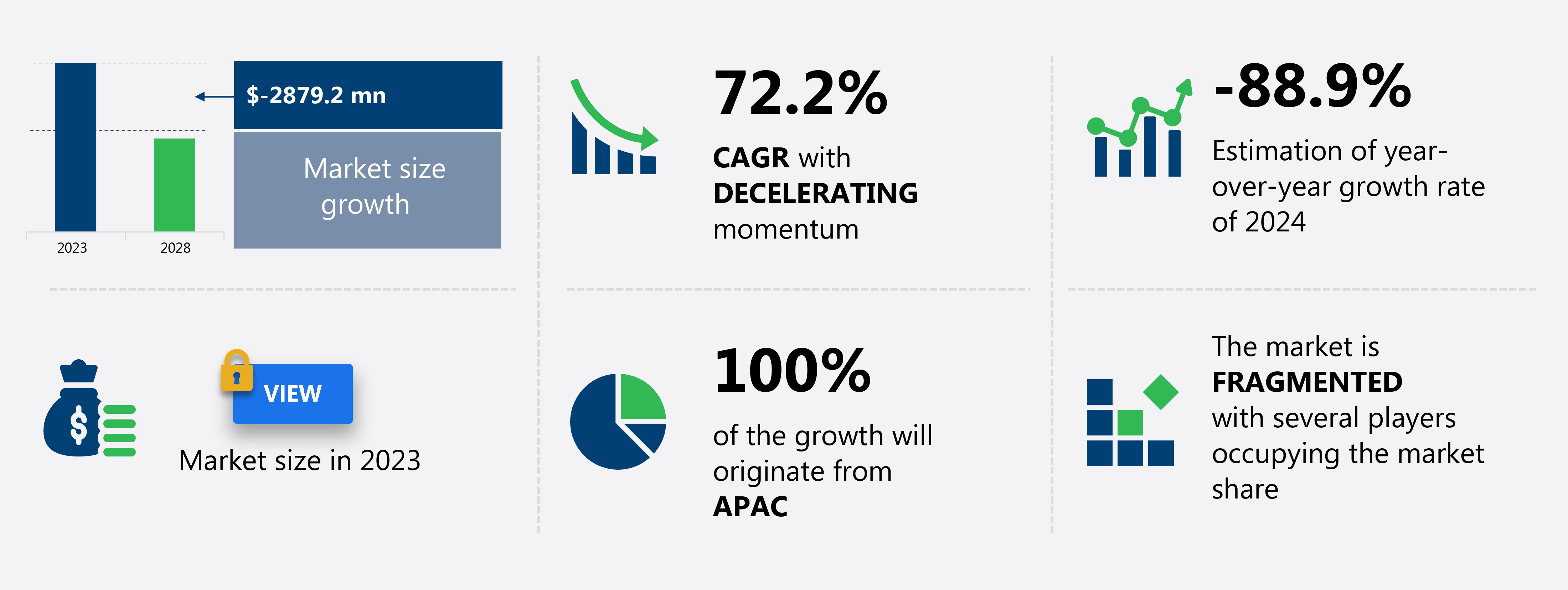
The Asia-Pacific (APAC) - Coronavirus test kits market size is estimated to decrease by USD 2.88 billion and decline at a CAGR of 72.2% between 2023 and 2028. The coronavirus test kits market is experiencing significant growth due to several key factors. In the Asia-Pacific region, the rise in the availability of various types of test kits is driving market expansion. Advanced technology is also playing a crucial role in the development of rapid and accurate test kits, which is a major trend in the market. However, challenges persist, including the shortage of testing kits and lack of laboratory infrastructure in developing countries, which hinder market growth. Despite these challenges, the market is expected to continue its upward trajectory as the demand for coronavirus tests remains high. The need for efficient and reliable testing solutions to contain the spread of the virus is a pressing requirement, making the coronavirus test kits market an essential sector to watch.

APAC Coronavirus Test Kits Market Overview
Test Kits Market in APAC Size

To know more about APAC Coronavirus Test Kits Market size Download Report Sample

Market Dynamics

The coronavirus test kits market has experienced significant growth due to the ongoing global health crisis. Antigen rapid tests have gained popularity for their quick results, making them essential tools in breaking the infection chain. From a public health perspective, regular testing frequency is crucial in reducing the effective reproduction number and ultimately, the number of deaths and intensive care unit (ICU) admissions. From a health economics standpoint, the health benefits of early diagnosis through coronavirus test kits outweigh the testing costs. False negatives and positives are important considerations, with sensitivity analysis used to assess test accuracy. Risk factors, such as age and underlying health conditions, influence the infection fatality rates and the importance of testing from a consumer perspective. Epidemiological data plays a vital role in determining testing strategies, with mass testing essential for controlling outbreaks. Personal protective measures should always be employed during specimen collection to minimize the risk of infection. Serological tests, which detect antibodies, provide valuable information on past infections and immunity. Incorporating health benefits and infection fatality rates into quality-adjusted life year (QALY) analysis can help inform decision-making in the use of coronavirus test kits. Vaccination, while a crucial long-term solution, does not replace the importance of accurate and timely testing.

Key Market Driver

The rise in the availability of various types of test kits in APAC is notably driving market growth. The coronavirus test kits market in the APAC region has experienced substantial growth, with an array of test types becoming increasingly accessible. Among these, RT-PCR test kits have gained significant popularity due to their ability to detect the presence of the virus by amplifying its genetic material. This gold standard diagnostic method is extensively used in the region, particularly in countries like South Korea and Singapore, which have successfully employed mass testing to identify and isolate infected individuals, thereby controlling the infection chain. From a public health perspective, the effectiveness of testing is measured by the infection fatality rate, the number of deaths per infection, and the effective reproduction number, which represents the average number of secondary infections caused by a single infected person. False negatives and positives are significant concerns in testing, and the sensitivity analysis of various test types plays a crucial role in determining their accuracy. Besides RT-PCR tests, antigen rapid tests and serological tests, which detect the presence of antigens and antibodies, respectively, are also gaining traction in the market. Swab tests and blood tests are the most common sample types for these tests.

Further, the regulatory framework for coronavirus test kits is stringent, ensuring their quality and reliability. The healthcare organizations and hospitals rely on these tests to make informed decisions regarding clinical events, such as admissions to intensive care units, and the implementation of personal protective measures. The health economics of testing, including testing frequency, costs, and health benefits, are essential considerations for both public health authorities and consumers. Molecular testing, such as RT-PCR, and serological testing offer distinct advantages and challenges, and the choice of test type depends on various factors, including the stage of the epidemic, the availability of resources, and the specific clinical scenario. Epidemiological data is essential to inform testing strategies and policies, and ongoing research continues to improve the accuracy and accessibility of coronavirus test kits. Thus, such factors are driving the growth of the market during the forecast period.

Significant Market Trends

The advancements in technology to develop rapid and accurate test kits is the key trend in the market. The coronavirus test kits market in the Asia Pacific (APAC) region has experienced substantial technological advancements, particularly in the production of swift and precise test kits for the identification of the coronavirus. These innovations have significantly transformed the coronavirus test kits industry in APAC, offering enhanced efficiency and accuracy in diagnosing the virus. One of the significant technological breakthroughs in the coronavirus test kits market in APAC is the emergence of rapid antigen test kits. These test kits identify specific proteins on the coronavirus surface and can be used with nasal or throat swab samples, delivering results in a matter of minutes.

In contrast, traditional molecular tests, such as PCR, necessitate laboratory processing and take longer to yield results. The utilization of these test kits from a consumer perspective is crucial in interrupting the infection chain, reducing the number of deaths and intensive care unit admissions, and contributing to public health. The effectiveness of testing frequency in controlling the spread of the virus is contingent upon the sensitivity and specificity of the test kits, which is where the role of quality-adjusted life years (QALYs) and health economics comes into play. The inaccuracy of test results, including false negatives and positives, necessitates the implementation of personal protective measures and mass testing. Epidemiological data, infection fatality rates, clinical events, and diagnosis are all factors that influence the health benefits and testing costs. Sensitivity analysis is essential to evaluate the impact of various test types, such as molecular testing and serological testing, and sample types, including swab tests and blood tests, on the overall market dynamics. The regulatory frameworks for the approval and distribution of coronavirus test kits vary among countries in the APAC region, and healthcare organizations play a crucial role in ensuring the availability and accessibility of these test kits. Thus, such trends will shape the growth of the market during the forecast period.

Major Market Challenge

The shortage of testing kits and lack of laboratory infrastructure in developing countries is the major challenge that affects the growth of the market. The ongoing coronavirus pandemic has led to a growth in demand for COVID-19 testing kits, particularly in APAC countries experiencing a peak in infection rates. India, Australia, and Japan are among the nations grappling with testing kit shortages due to an increase in positive cases and the fear of community transmission. Diagnostic companies are struggling to meet the demand, exacerbated by travel restrictions and import bans on test kits from abroad. From a public health perspective, timely and accurate diagnosis is crucial in breaking the infection chain and reducing the effective reproduction number. The use of antigen rapid tests and molecular testing, including swab tests and blood tests, plays a significant role in diagnosis.

However, the accuracy of these tests, including false negatives and positives, must be considered in the context of healthcare economics and the potential health benefits and costs. Quality-adjusted life years, infection fatality rates, clinical events, and sensitivity analysis are essential factors in evaluating the health benefits of testing. The regulatory framework for coronavirus test kits is also critical in ensuring their effectiveness and safety. Consumer perspective, testing frequency, and personal protective measures are also essential considerations in the mass testing strategy. Serological tests, which detect antibodies, can provide valuable epidemiological data and complement molecular testing in understanding the spread of the virus. Ultimately, the use of various test types and sample types, along with effective public health measures, can help mitigate the impact of the pandemic. Hence, the above factors will impede the growth of the market during the forecast period.

Market Segment

End-user

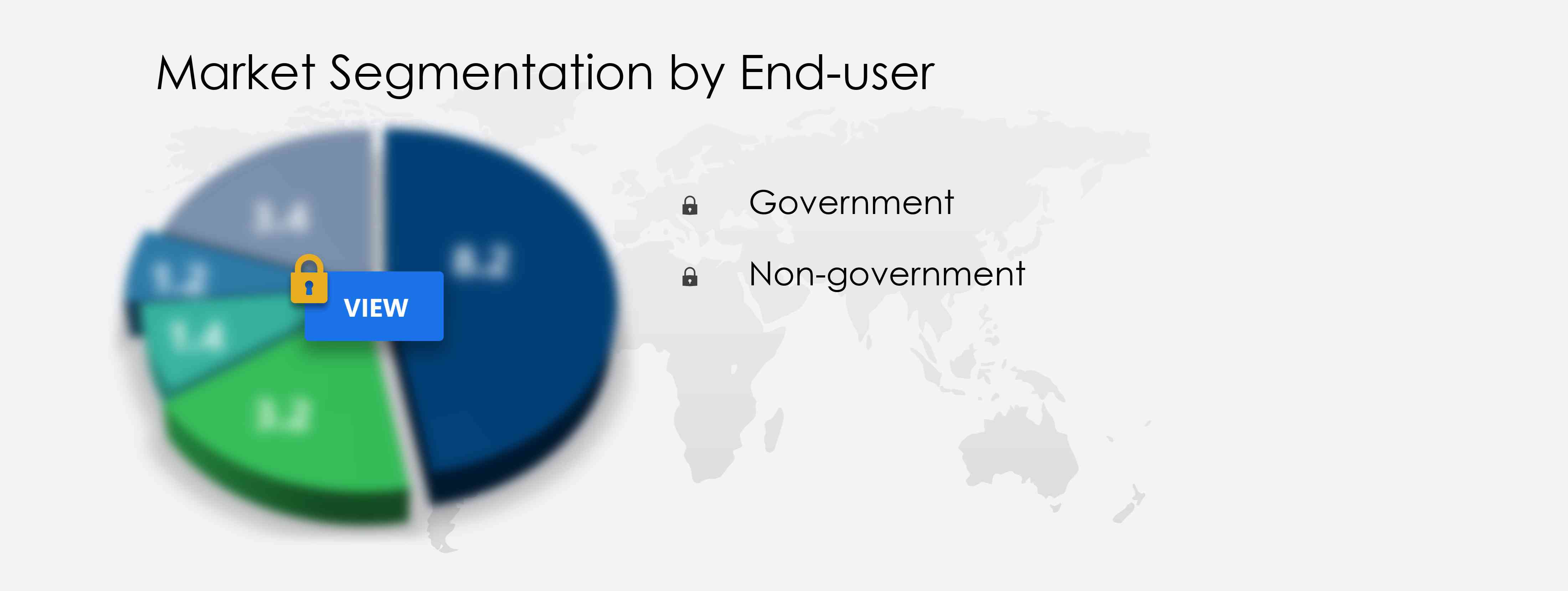
The government segment is estimated to witness significant growth during the forecast period. The Coronavirus Test Kits Market in the Asia-Pacific (APAC) region is significantly influenced by the government segment, which holds the largest revenue share. This is primarily due to the increased investments by government organizations in the development of new Antigen rapid tests and the acceleration of COVID-19 testing initiatives. The unmet testing needs in APAC countries, such as Singapore, China, South Korea, and India, are being addressed through government support. Regulatory authorities in the region have eased compliance by granting provisional authorization for new launches, enabling the rapid entry of improved testing kits.
Test Kits Market in APAC Share

Get a glance at the market segment contribution  View the PDF Sample

From a public health perspective, effective diagnosis is crucial in managing the infection chain, reducing the number of deaths, and minimizing the need for intensive care unit (ICU) treatment. The consumer perspective focuses the importance of testing frequency, accuracy, and health benefits, which are influenced by factors such as infection fatality rates, clinical events, and sensitivity analysis. The testing costs, false negatives/positives, and personal protective measures also impact the market dynamics. The availability of various test types, including molecular testing and serological testing, and sample types, such as swab tests and blood tests, cater to diverse healthcare organization requirements. The regulatory framework and inaccuracy issues, including false-positives and false-negatives, are key challenges for market growth. Health economics, including vaccination and health benefits, are also significant factors influencing the market. Epidemiological data plays a vital role in understanding the infection spread and informing testing strategies. Overall, the Coronavirus Test Kits Market in APAC is driven by the need for effective and timely diagnosis, regulatory support, and the evolving healthcare landscape.

Who are the Major APAC Coronavirus Test Kits Market Companies?

Companies are implementing various strategies, such as strategic alliances, partnerships, mergers and acquisitions, geographical expansion, and product/service launches, to enhance their presence in the market.

  • 3D Biomedicine Science and Technology Co. Ltd.: The company offers coronavirus test kits such as ANDiS SARS -Cov-2 RT-qPCR Detection Kit, ANDiS SARS -Cov-2 and Influenza A B RT-qPCR Detection Kit, and ANDis 350 automated nucleic acid extraction system.

The research report also includes detailed analyses of the competitive landscape of the market and information about 20 market companies, including:

  • Abbott Laboratories
  • altona Diagnostics GmbH
  • BGI Group
  • Bio Rad Laboratories Inc.
  • CAMTECH DIAGNOSTICS
  • Co Diagnostics Inc.
  • Danaher Corp.
  • Denka Co. Ltd.
  • Edinburgh Genetics Ltd.
  • F. Hoffmann La Roche Ltd.
  • Genes2Me Pvt. Ltd.
  • Guangzhou Wondfo Biotech Co. Ltd.
  • Hologic Inc.
  • JN Medsys Pte. Ltd.
  • KogeneBiotech
  • Kurabo Industries Ltd.
  • Maccura Biotechnology Co. Ltd.
  • Mylab Discovery Solutions Pvt Ltd.
  • QIAGEN NV
  • Sd Biosensor Inc.
  • Seegene Inc.
  • SolGent Co. Ltd.
  • Sysmex Corp.
  • Tata Sons Pvt. Ltd.
  • Thermo Fisher Scientific Inc.

Qualitative and quantitative analysis of companies has been conducted to help clients understand the wider business environment as well as the strengths and weaknesses of key market players. Data is qualitatively analyzed to categorize companies as pure play, category-focused, industry-focused, and diversified; it is quantitatively analyzed to categorize companies as dominant, leading, strong, tentative, and weak.

Segment Overview

The market research report provides comprehensive data (region wise segment analysis), with forecasts and estimates in "USD Billion" for the period 2024 to 2028  for the following segments

  • End-user Outlook
    • Government
    • Non-government
  • Type Outlook
    • Rapid test kit
    • RT-PCR
    • Others

Market Analyst Overview

The coronavirus test kits market is witnessing significant growth due to the ongoing global health crisis. Antigen rapid tests have gained popularity for their quick results, making mass testing a viable solution to break the infection chain. From a public health perspective, effective testing frequency is crucial in reducing the effective reproduction number and minimizing the spread of the virus. The health benefits of timely diagnosis extend beyond individual health, as it also contributes to reducing the burden on healthcare organizations, particularly in terms of intensive care unit (ICU) admissions and deaths. However, health economics plays a vital role in determining testing costs and the consumer perspective. False negatives and positives are concerns that require sensitivity analysis to ensure accurate clinical events and infection fatality rates. Regulatory frameworks are essential in ensuring the quality of coronavirus test kits, with both molecular testing and serological testing having their unique advantages and challenges. Specimen collection methods, such as swab tests and blood tests, also impact the accuracy of test results. The use of personal protective measures is crucial during specimen collection and testing processes. Vaccination and ongoing research for better treatments continue to be critical components in managing the pandemic. Epidemiological data and infection chain analysis remain essential in guiding testing strategies and informing public health policies. The market dynamics of coronavirus test kits are influenced by various factors, including testing costs, regulatory frameworks, and the ongoing development of new test types.

Market Scope

Report Coverage

Details

Page number

162

Base year

2023

Forecast period

2024-2028

Growth momentum & CAGR

Decelerate at a CAGR of -72.2%

Market growth 2024-2028

USD -2.88 billion

Market structure

Fragmented

YoY growth 2023-2024(%)

-88.9

Competitive landscape

Leading Companies, Market Positioning of Companies, Competitive Strategies, and Industry Risks

Key companies profiled

3D Biomedicine Science and Technology Co. Ltd., Abbott Laboratories, altona Diagnostics GmbH, BGI Group, Bio Rad Laboratories Inc., CAMTECH DIAGNOSTICS, Co Diagnostics Inc, Danaher Corp., Denka Co. Ltd., Edinburgh Genetics Ltd., F. Hoffmann La Roche Ltd., Genes2Me Pvt. Ltd., Guangzhou Wondfo Biotech Co. Ltd., Hologic Inc., JN Medsys Pte. Ltd., KogeneBiotech, Kurabo Industries Ltd., Maccura Biotechnology Co. Ltd, Mylab Discovery Solutions Pvt Ltd., QIAGEN N.V., Sd Biosensor Inc., Seegene Inc., SolGent Co. Ltd., Sysmex Corp., Tata Sons Pvt. Ltd., and Thermo Fisher Scientific Inc.

Market dynamics

Parent market analysis, market forecasting, Market growth inducers and obstacles, Fast-growing and slow-growing segment analysis, Market growth and Forecasting, COVID 19 impact and recovery analysis and future consumer dynamics, Market condition analysis for market forecast period

Customization purview

If our market report has not included the data that you are looking for, you can reach out to our analysts and get segments customized.

View PDF Sample

What are the Key Data Covered in this APAC Coronavirus Test Kits Market Research Report?

  • CAGR of the market during the forecast period
  • Detailed information on factors that will drive the market growth and forecasting of the market between 2024 and 2028
  • Precise estimation of the market size and its contribution to the parent market
  • Accurate predictions about upcoming market trends and analysis and changes in consumer behavior
  • Growth of the market across APAC
  • Thorough market growth analysis of the market's competitive landscape and detailed information about companies
  • Comprehensive market analysis and report on the factors that will challenge the market research and growth of market companies

We can help! Our analysts can customize this market research report to meet your requirements. 

Get in touch

1 Executive Summary

  • 1.1 Market overview
    • Executive Summary - Chart on Market Overview
    • Executive Summary - Data Table on Market Overview
    • Executive Summary - Chart on Country Market Characteristics
    • Executive Summary - Chart on Market by Geography
    • Executive Summary - Chart on Market Segmentation by End-user
    • Executive Summary - Chart on Market Segmentation by Type
    • Executive Summary - Chart on Incremental Growth
    • Executive Summary - Data Table on Incremental Growth
    • Executive Summary - Chart on Company Market Positioning

2 Market Landscape

  • 2.1 Market ecosystem
    • Parent Market
    • Data Table on - Parent Market
  • 2.2 Market characteristics
    • Market characteristics analysis
  • 2.3 Value chain analysis
    • Value Chain Analysis

3 Market Sizing

  • 3.1 Market definition
    • Offerings of companies included in the market definition
  • 3.2 Market segment analysis
    • Market segments
  • 3.3 Market size 2023
    • 3.4 Market outlook: Forecast for 2023-2028
      • Chart on APAC - Market size and forecast 2023-2028 ($ million)
      • Data Table on Regional - Market size and forecast 2023-2028 ($ million)
      • Chart on APAC: Year-over-year growth 2023-2028 (%)
      • Data Table on Regional - Market size and forecast 2023-2028 ($ million)

    4 Additional Value/Volume Data

    • 4.1 Coronavirus test kits market in APAC by Region 2020 - 2022 ($ million)
      • Market Size (value) - Data Table on Coronavirus test kits market in APAC by Region 2020 - 2022 ($ million)
    • 4.2 Coronavirus test kits market in APAC by End-user 2020 - 2022 ($ million)
      • Market Size (value) - Data Table on Coronavirus test kits market in APAC by End-user 2020 - 2022 ($ million)
    • 4.3 Coronavirus test kits market in APAC by Type 2020 - 2022 ($ million)
      • Market Size (value) - Data Table on Coronavirus test kits market in APAC by Type 2020 - 2022 ($ million)
    • 4.4 Coronavirus test kits market in APAC by country 2020 - 2022 ($ million)
      • Market Size (value) - Data Table on Coronavirus test kits market in APAC by Country 2020 - 2022 ($ million)

    5 Five Forces Analysis

    • 5.1 Five forces summary
      • Five forces analysis - Comparison between 2023 and 2028
    • 5.2 Bargaining power of buyers
      • Bargaining power of buyers - Impact of key factors 2023 and 2028
    • 5.3 Bargaining power of suppliers
      • Bargaining power of suppliers - Impact of key factors in 2023 and 2028
    • 5.4 Threat of new entrants
      • Threat of new entrants - Impact of key factors in 2023 and 2028
    • 5.5 Threat of substitutes
      • Threat of substitutes - Impact of key factors in 2023 and 2028
    • 5.6 Threat of rivalry
      • Threat of rivalry - Impact of key factors in 2023 and 2028
    • 5.7 Market condition
      • Chart on Market condition - Five forces 2023 and 2028

    6 Market Segmentation by End-user

    • 6.1 Market segments
      • Chart on End-user - Market share 2023-2028 (%)
      • Data Table on End-user - Market share 2023-2028 (%)
    • 6.2 Comparison by End-user
      • Chart on Comparison by End-user
      • Data Table on Comparison by End-user
    • 6.3 Government - Market size and forecast 2023-2028
      • Chart on Government - Market size and forecast 2023-2028 ($ million)
      • Data Table on Government - Market size and forecast 2023-2028 ($ million)
      • Chart on Government - Year-over-year growth 2023-2028 (%)
      • Data Table on Government - Year-over-year growth 2023-2028 (%)
    • 6.4 Non-government - Market size and forecast 2023-2028
      • Chart on Non-government - Market size and forecast 2023-2028 ($ million)
      • Data Table on Non-government - Market size and forecast 2023-2028 ($ million)
      • Chart on Non-government - Year-over-year growth 2023-2028 (%)
      • Data Table on Non-government - Year-over-year growth 2023-2028 (%)
    • 6.5 Market opportunity by End-user
      • Market opportunity by End-user ($ million)
      • Data Table on Market opportunity by End-user ($ million)

    7 Market Segmentation by Type

    • 7.1 Market segments
      • Chart on Type - Market share 2023-2028 (%)
      • Data Table on Type - Market share 2023-2028 (%)
    • 7.2 Comparison by Type
      • Chart on Comparison by Type
      • Data Table on Comparison by Type
    • 7.3 Rapid test kit - Market size and forecast 2023-2028
      • Chart on Rapid test kit - Market size and forecast 2023-2028 ($ million)
      • Data Table on Rapid test kit - Market size and forecast 2023-2028 ($ million)
      • Chart on Rapid test kit - Year-over-year growth 2023-2028 (%)
      • Data Table on Rapid test kit - Year-over-year growth 2023-2028 (%)
    • 7.4 RT-PCR - Market size and forecast 2023-2028
      • Chart on RT-PCR - Market size and forecast 2023-2028 ($ million)
      • Data Table on RT-PCR - Market size and forecast 2023-2028 ($ million)
      • Chart on RT-PCR - Year-over-year growth 2023-2028 (%)
      • Data Table on RT-PCR - Year-over-year growth 2023-2028 (%)
    • 7.5 Others - Market size and forecast 2023-2028
      • Chart on Others - Market size and forecast 2023-2028 ($ million)
      • Data Table on Others - Market size and forecast 2023-2028 ($ million)
      • Chart on Others - Year-over-year growth 2023-2028 (%)
      • Data Table on Others - Year-over-year growth 2023-2028 (%)
    • 7.6 Market opportunity by Type
      • Market opportunity by Type ($ million)
      • Data Table on Market opportunity by Type ($ million)

    8 Customer Landscape

    • 8.1 Customer landscape overview
      • Analysis of price sensitivity, lifecycle, customer purchase basket, adoption rates, and purchase criteria

    9 Geographic Landscape

    • 9.1 Geographic segmentation
      • Chart on Market share by geography - 2023-2028 (%)
      • Data Table on Market share by geography - 2023-2028 (%)
    • 9.2 Geographic comparison
      • Chart on Geographic comparison
      • Data Table on Geographic comparison
    • 9.3 India - Market size and forecast 2023-2028
      • Chart on India - Market size and forecast 2023-2028 ($ million)
      • Data Table on India - Market size and forecast 2023-2028 ($ million)
      • Chart on India - Year-over-year growth 2023-2028 (%)
      • Data Table on India - Year-over-year growth 2023-2028 (%)
    • 9.4 China - Market size and forecast 2023-2028
      • Chart on China - Market size and forecast 2023-2028 ($ million)
      • Data Table on China - Market size and forecast 2023-2028 ($ million)
      • Chart on China - Year-over-year growth 2023-2028 (%)
      • Data Table on China - Year-over-year growth 2023-2028 (%)
    • 9.5 Japan - Market size and forecast 2023-2028
      • Chart on Japan - Market size and forecast 2023-2028 ($ million)
      • Data Table on Japan - Market size and forecast 2023-2028 ($ million)
      • Chart on Japan - Year-over-year growth 2023-2028 (%)
      • Data Table on Japan - Year-over-year growth 2023-2028 (%)
    • 9.6 South Korea - Market size and forecast 2023-2028
      • Chart on South Korea - Market size and forecast 2023-2028 ($ million)
      • Data Table on South Korea - Market size and forecast 2023-2028 ($ million)
      • Chart on South Korea - Year-over-year growth 2023-2028 (%)
      • Data Table on South Korea - Year-over-year growth 2023-2028 (%)
    • 9.7 Rest of APAC - Market size and forecast 2023-2028
      • Chart on Rest of APAC - Market size and forecast 2023-2028 ($ million)
      • Data Table on Rest of APAC - Market size and forecast 2023-2028 ($ million)
      • Chart on Rest of APAC - Year-over-year growth 2023-2028 (%)
      • Data Table on Rest of APAC - Year-over-year growth 2023-2028 (%)
    • 9.8 Market opportunity by geography
      • Market opportunity by geography ($ million)
      • Data Table on Market opportunity by geography ($ million)

    10 Drivers, Challenges, and Opportunity/Restraints

    • 10.1 Market drivers
      • 10.2 Market challenges
        • 10.3 Impact of drivers and challenges
          • Impact of drivers and challenges in 2023 and 2028
        • 10.4 Market opportunities/restraints

          11 Competitive Landscape

          • 11.1 Overview
            • 11.2 Competitive Landscape
              • Overview on criticality of inputs and factors of differentiation
            • 11.3 Landscape disruption
              • Overview on factors of disruption
            • 11.4 Industry risks
              • Impact of key risks on business

            12 Competitive Analysis

            • 12.1 Companies profiled
              • Companies covered
            • 12.2 Market positioning of companies
              • Matrix on companies position and classification
            • 3D Biomedicine Science and Technology Co. Ltd.
              • 3D Biomedicine Science and Technology Co. Ltd. - Overview
              • 3D Biomedicine Science and Technology Co. Ltd. - Product / Service
              • 3D Biomedicine Science and Technology Co. Ltd. - Key offerings
            • 12.4 Abbott Laboratories
              • Abbott Laboratories - Overview
              • Abbott Laboratories - Business segments
              • Abbott Laboratories - Key news
              • Abbott Laboratories - Key offerings
              • Abbott Laboratories - Segment focus
            • 12.5 altona Diagnostics GmbH
              • altona Diagnostics GmbH - Overview
              • altona Diagnostics GmbH - Product / Service
              • altona Diagnostics GmbH - Key offerings
            • 12.6 BGI Group
              • BGI Group - Overview
              • BGI Group - Product / Service
              • BGI Group - Key offerings
            • 12.7 Bio Rad Laboratories Inc.
              • Bio Rad Laboratories Inc. - Overview
              • Bio Rad Laboratories Inc. - Business segments
              • Bio Rad Laboratories Inc. - Key news
              • Bio Rad Laboratories Inc. - Key offerings
              • Bio Rad Laboratories Inc. - Segment focus
            • 12.8 Co Diagnostics Inc
              • Co Diagnostics Inc - Overview
              • Co Diagnostics Inc - Product / Service
              • Co Diagnostics Inc - Key offerings
            • 12.9 Denka Co. Ltd.
              • Denka Co. Ltd. - Overview
              • Denka Co. Ltd. - Business segments
              • Denka Co. Ltd. - Key offerings
              • Denka Co. Ltd. - Segment focus
            • 12.10 Edinburgh Genetics Ltd.
              • Edinburgh Genetics Ltd. - Overview
              • Edinburgh Genetics Ltd. - Product / Service
              • Edinburgh Genetics Ltd. - Key offerings
            • 12.11 F. Hoffmann La Roche Ltd.
              • F. Hoffmann La Roche Ltd. - Overview
              • F. Hoffmann La Roche Ltd. - Business segments
              • F. Hoffmann La Roche Ltd. - Key news
              • F. Hoffmann La Roche Ltd. - Key offerings
              • F. Hoffmann La Roche Ltd. - Segment focus
            • 12.12 Guangzhou Wondfo Biotech Co. Ltd.
              • Guangzhou Wondfo Biotech Co. Ltd. - Overview
              • Guangzhou Wondfo Biotech Co. Ltd. - Product / Service
              • Guangzhou Wondfo Biotech Co. Ltd. - Key offerings
            • 12.13 Hologic Inc.
              • Hologic Inc. - Overview
              • Hologic Inc. - Business segments
              • Hologic Inc. - Key news
              • Hologic Inc. - Key offerings
              • Hologic Inc. - Segment focus
            • 12.14 Maccura Biotechnology Co. Ltd
              • Maccura Biotechnology Co. Ltd - Overview
              • Maccura Biotechnology Co. Ltd - Product / Service
              • Maccura Biotechnology Co. Ltd - Key offerings
            • 12.15 Mylab Discovery Solutions Pvt Ltd.
              • Mylab Discovery Solutions Pvt Ltd. - Overview
              • Mylab Discovery Solutions Pvt Ltd. - Product / Service
              • Mylab Discovery Solutions Pvt Ltd. - Key offerings
            • 12.16 QIAGEN NV
              • QIAGEN NV - Overview
              • QIAGEN NV - Product / Service
              • QIAGEN NV - Key news
              • QIAGEN NV - Key offerings
            • 12.17 Thermo Fisher Scientific Inc.
              • Thermo Fisher Scientific Inc. - Overview
              • Thermo Fisher Scientific Inc. - Business segments
              • Thermo Fisher Scientific Inc. - Key news
              • Thermo Fisher Scientific Inc. - Key offerings
              • Thermo Fisher Scientific Inc. - Segment focus

            13 Appendix

            • 13.1 Scope of the report
              • 13.2 Inclusions and exclusions checklist
                • Inclusions checklist
                • Exclusions checklist
              • 13.3 Currency conversion rates for US$
                • Currency conversion rates for US$
              • 13.4 Research methodology
                • Research methodology
              • 13.5 Data procurement
                • Information sources
              • 13.6 Data validation
                • Data validation
              • 13.7 Validation techniques employed for market sizing
                • Validation techniques employed for market sizing
              • 13.8 Data synthesis
                • Data synthesis
              • 13.9 360 degree market analysis
                • 360 degree market analysis
              • 13.10 List of abbreviations
                • List of abbreviations

              Research Methodology

              Technavio presents a detailed picture of the market by way of study, synthesis, and summation of data from multiple sources. The analysts have presented the various facets of the market with a particular focus on identifying the key industry influencers. The data thus presented is comprehensive, reliable, and the result of extensive research, both primary and secondary.

              INFORMATION SOURCES

              Primary sources

              • Manufacturers and suppliers
              • Channel partners
              • Industry experts
              • Strategic decision makers

              Secondary sources

              • Industry journals and periodicals
              • Government data
              • Financial reports of key industry players
              • Historical data
              • Press releases

              DATA ANALYSIS

              Data Synthesis

              • Collation of data
              • Estimation of key figures
              • Analysis of derived insights

              Data Validation

              • Triangulation with data models
              • Reference against proprietary databases
              • Corroboration with industry experts

              REPORT WRITING

              Qualitative

              • Market drivers
              • Market challenges
              • Market trends
              • Five forces analysis

              Quantitative

              • Market size and forecast
              • Market segmentation
              • Geographical insights
              • Competitive landscape

              Interested in this report?

              Get your sample now to see our research methodology and insights!

              Download Now

              Frequently Asked Questions

              Coronavirus Test Kitsin APAC market growth will increase by $ -2879.2 mn during 2024-2028.

              The Coronavirus Test Kitsin APAC market is expected to grow at a CAGR of -72.2% during 2024-2028.

              Coronavirus Test Kitsin APAC market is segmented by End-user( Government, Non-government) Type( Rapid test kit, RT-PCR, Others, South Korea (Republic of Korea), Rest of APAC)

              3D Biomedicine Science and Technology Co. Ltd., Abbott Laboratories, altona Diagnostics GmbH, BGI Group, Bio Rad Laboratories Inc., CAMTECH DIAGNOSTICS, Co Diagnostics Inc, Danaher Corp., Denka Co. Ltd., Edinburgh Genetics Ltd., F. Hoffmann La Roche Ltd., Genes2Me Pvt. Ltd., Guangzhou Wondfo Biotech Co. Ltd., Hologic Inc., JN Medsys Pte. Ltd., KogeneBiotech, Kurabo Industries Ltd., Maccura Biotechnology Co. Ltd, Mylab Discovery Solutions Pvt Ltd., QIAGEN N.V., Sd Biosensor Inc., Seegene Inc., SolGent Co. Ltd., Sysmex Corp., Tata Sons Pvt. Ltd., Thermo Fisher Scientific Inc. are a few of the key vendors in the Coronavirus Test Kitsin APAC market.

              APAC will register the highest growth rate of 100% among the other regions. Therefore, the Coronavirus Test Kitsin APAC market in APAC is expected to garner significant business opportunities for the vendors during the forecast period.

              India, China, Japan, South Korea, Rest of APAC

              • Rise in availability of various types of test kits in APACThe APAC region has witnessed a significant rise in the availability of various types of test kits in the market for diagnosing the coronavirus. This increase in availability has been crucial in facilitating widespread testing and controlling the spread of the virus.RT-PCR test kits have become widely accessible in the coronavirus test kits market in APAC. These kits detect the presence of the virus by amplifying its genetic material through a PCR. This type of test is considered the gold standard for diagnosing COVID-19 and is being widely used across the region. For instance is the driving factor this market.
              • countries such as South Korea and Singapore have successfully implemented widespread testing using RT-PCR test kits is the driving factor this market.
              • allowing these countries to identify and isolate infected individuals promptly. Similarly is the driving factor this market.
              • antigen test kits have also gained popularity due to their rapid results and relatively lower cost. These kits detect specific proteins from the virus and provide results within minutes. They are particularly useful in areas where immediate results are required is the driving factor this market.
              • such as airports is the driving factor this market.
              • schools is the driving factor this market.
              • and workplaces. For example is the driving factor this market.
              • in India is the driving factor this market.
              • antigen test kits have been deployed at airports to screen incoming passengers and detect potential carriers of the virus.Another type of test kit that has seen an increase in availability is the antibody serology test. These kits detect the presence of antibodies is the driving factor this market.
              • which indicate past infection with the virus. These are useful in determining the prevalence of the virus in a population and identifying individuals who may have developed immunity. Countries such as Japan have utilized antibody serology test kits to assess the extent of community transmission and make informed decisions regarding public health measures.The coronavirus test kits market in APAC has witnessed the emergence of innovative technologies such as rapid molecular test kits. These kits combine the advantages of both RT-PCR and antigen tests is the driving factor this market.
              • providing accurate results within a shorter timeframe. They are portable is the driving factor this market.
              • easy to use is the driving factor this market.
              • and can be deployed in remote areas where access to laboratory facilities is limited. A notable example is the GeneXpert system part of the Cepheid subsidiary of Danaher Corp (Danaher) is the driving factor this market.
              • which has been utilized in countries such as Australia and Thailand to enhance testing capabilities.  Thus is the driving factor this market.
              • rise in availability of various types of test kits in APAC will drive the coronavirus test kits market in APAC during the forecast period. is the driving factor this market.

              The Coronavirus Test Kitsin APAC market vendors should focus on grabbing business opportunities from the Government segment as it accounted for the largest market share in the base year.