
Textile Pretreatment Chemicals Market Analysis APAC, North America, Europe, South America, Middle East and Africa - US, China, India, Japan, Germany - Size and Forecast 2024-2028

Textile Pretreatment Chemicals Market Analysis APAC, North America, Europe, South America, Middle East and Africa - US, China, India, Japan, Germany - Size and Forecast 2024-2028

Published: Feb 2024 174 Pages SKU: IRTNTR77591

Market Overview at a Glance

$1.76 B
Market Opportunity
4.9%
CAGR
4.19
YoY growth 2023-2024(%)

Textile Pretreatment Chemicals Market Size 2024-2028

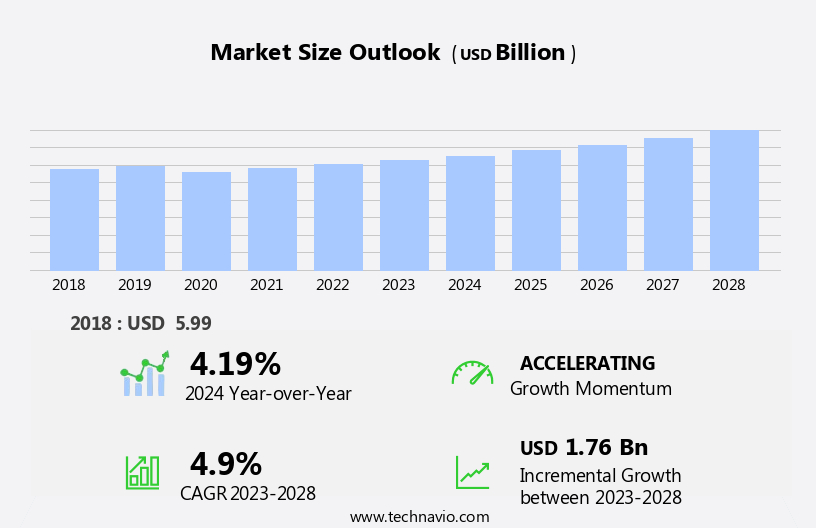
The textile pretreatment chemicals market size is forecast to increase by USD 1.76 billion at a CAGR of 4.9% between 2023 and 2028.

  • The market is experiencing significant growth due to several key factors. The expanding textile industry in developing economies is driving market demand, as these countries increase their production capacity to meet global demand. Additionally, there is a growing trend toward eco-friendly and sustainable chemicals in textile industries, as consumers become more conscious of the environmental impact of their purchases. Strict environmental regulations related to the use of textile chemicals are also pushing companies to adopt more sustainable practices. These regulations ensure that textile manufacturers comply with standards that limit the use of harmful chemicals in textile production processes. This market analysis report provides a comprehensive study of these growth factors and the challenges they present to market participants.
  • What will be the Size of the Textile Pretreatment Chemicals Market During the Forecast Period?
    Textile Pretreatment Chemicals Market Size

     Request Free Sample

  • The market encompasses a wide range of substances used In the production of apparel, technical textiles, and home textiles. These chemicals play a crucial role in enhancing the performance and quality of textile products by facilitating construction processes such as waterproofing, fire resistance, and softening. The market's growth is driven by increasing production capacities in various sectors, including the real estate sector for furnishing and home décor, and the fashion industry for clothes and technical textiles. Population growth and evolving consumer preferences towards sustainable and eco-friendly textiles have led to an uptick in demand for bio-chemicals like rapeseed oil, beeswax, and wicking agents.
  • Pre-pandemic levels of production have resumed, with key applications including deaerators, defoamers, and coating processes. The textile magazine reports on the latest trends, including historical data and forecasts, for this dynamic market. Textile pretreatment chemicals are essential for the production of textile fabrics and textile products, and their application scope continues to expand with advancements in technology and consumer preferences.
  • How is this Textile Pretreatment Chemicals Industry segmented and which is the largest segment?

    The textile pretreatment chemicals industry research report provides comprehensive data (region-wise segment analysis), with forecasts and estimates in "USD billion" for the period 2024-2028, as well as historical data from 2018-2022 for the following segments.

    • Application
      • Apparel
      • Home textile
      • Technical textile
    • Product Type
      • Scouring agents
      • Desizing agents
      • Bleaching agents
      • Mercerizing agents
      • Others
    • Geography
      • APAC
        • China
        • India
        • Japan
      • North America
        • US
      • Europe
        • Germany
      • South America
        • Middle East and Africa

        By Application Insights

        • The apparel segment is estimated to witness significant growth during the forecast period.

        Pretreatment chemicals play a crucial role In the textile industry, particularly In the production of apparel, technical textiles, and home textiles. These chemicals prepare textiles for various processes, including dyeing, printing, and finishing, ensuring the final product meets consumer preferences. In the apparel sector, textiles undergo several pretreatment processes, such as desizing, scouring, bleaching, and mercerizing. Desizing agents remove sizing materials from yarns, enabling weaving but necessitating elimination before further processing. Scouring agents clean and prepare textiles for dyeing, while bleaching agents lighten the color of textiles. Mercerizing agents improve fabric quality by enhancing color vibrancy and softness. Other pretreatment chemicals include softeners, beeswax, deaerators, defoamers, and various bio-chemicals.

        These agents contribute to the production of textile products, including denim, geotextiles, outdoor wear, and aerospace applications. Consumer trends, such as disposable incomes, millennial and Gen Z population, social media, and fashion icons, influence the demand for textile products, driving the need for advanced pretreatment chemicals. Applications of pretreatment chemicals extend to construction, real estate, and various industries, including medtech, buildtech, and protech. Key players In the industry include the American Chemistry Council, which advocates for the use of sustainable and innovative pretreatment chemicals. Online dashboards and historical data provide insights into volume consumption, production capacities, and regional opportunities. Forecasts indicate continued growth In the market, driven by the latest trends and advancements In the coating process, waterproofing, fire resistance, stain repellence, and denim finishing agents.
        Textile Pretreatment Chemicals Market Size

        Get a glance at the  Textile Pretreatment Chemicals Industry report of share of various segments Request Free Sample

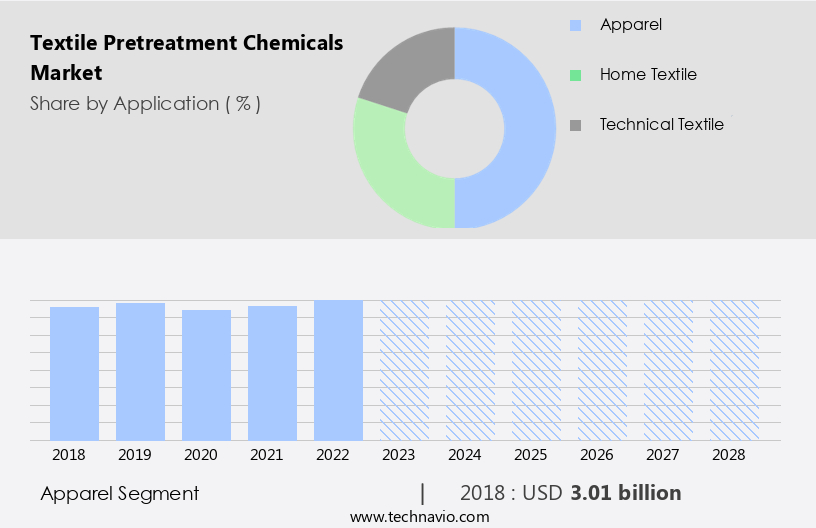
        The Apparel segment was valued at USD 3.01 billion in 2018 and showed a gradual increase during the forecast period.

        Regional Analysis

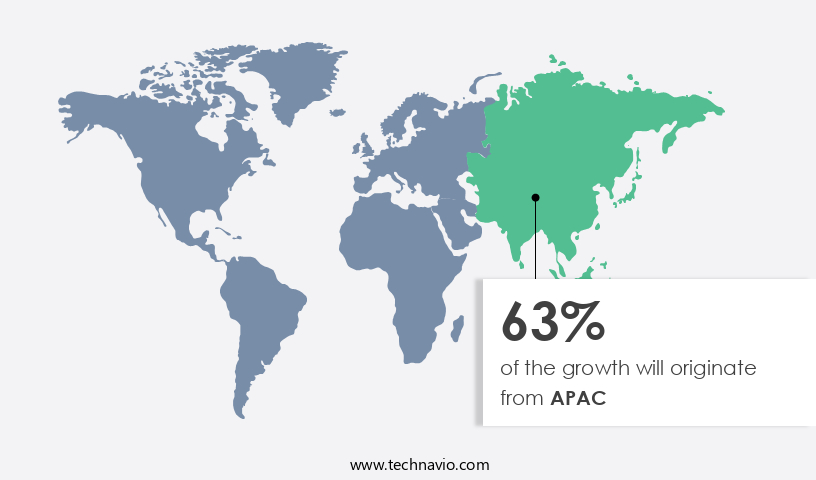
        • APAC is estimated to contribute 63% to the growth of the global market during the forecast period.

        Technavio’s analysts have elaborately explained the regional trends and drivers that shape the market during the forecast period.
        Textile Pretreatment Chemicals Market Share by Geography

        For more insights on the market share of various regions, Request Free Sample

        The APAC region is the leading contributor to The market, driven by its extensive textile manufacturing industry and large consumer base. Key countries, including China, India, Bangladesh, and Vietnam, play a significant role as both producers and consumers of textile products. This dual position is supported by their abundant labor force, cost-effective production capacities, and expanding middle class, which collectively drive demand for various textile goods. China and India, in particular, are crucial players In the APAC the market due to their vast production capabilities and growing domestic markets. The textile industry's dynamic growth In the region is fueled by increasing production volumes, application scope in various sectors like apparel, technical textiles, and home textiles, and consumer preferences for textile products with enhanced properties such as waterproofing, fire resistance, and stain repellence.

        Key application areas include denim finishing agents, enzymes, anti-back staining agents, and bleaching agents. The market is expected to continue its growth trajectory, with potential opportunities in construction, real estate, fashion trends, home décor, furnishing, and various industrial applications. Bio-chemicals, such as deaerators, defoamers, and wicking agents, are gaining popularity due to their eco-friendly nature and improved performance. Key factors influencing the market include population growth, disposable incomes, and the influence of fashion trends and fashion icons on consumer preferences.

        Market Dynamics

        Our  researchers analyzed the data with 2023 as the base year, along with the key drivers, trends, and challenges. A holistic analysis of drivers will help companies refine their marketing strategies to gain a competitive advantage.

        What are the key market drivers leading to the rise In the adoption of Textile Pretreatment Chemicals Industry?

        Growing textile industry in developing economies is the key driver of the market.

      • The market encompasses a wide range of applications In the textile industry, including apparel, technical textiles, and home textiles. The market's growth is influenced by several factors, such as population growth, increasing disposable incomes, and shifting consumer preferences. In the US, the textile industry is witnessing significant advancements in production capacities and application scope. For instance, the use of textile pretreatment chemicals in denim finishing agents, mercerizing agents, and hydrophilic finishing agents is gaining popularity. The American Chemistry Council (ACC) reports that volume consumption of textile pretreatment chemicals In the US reached 1.2 million metric tons in 2020. The construction sector, real estate, and fashion industries are significant consumers of textile pretreatment chemicals In the US.
      • In the construction sector, these chemicals are used for waterproofing, fire resistance, and stain repellence in textile fabrics. In the fashion industry, wicking agents, softeners, beeswax, deaerators, defoamer, and rapeseed oil are widely used In the coating process. The market is also witnessing the latest trends, such as the use of bio-chemicals, dextrin, wheat starch, corn starch, gelatin, polyvinyl alcohol, acrylates, modified starch, dyes, pigments, singeing, padding, printing, finishing, oil-repellent, water-repellent, flame-retardant, antistatic, and apparel applications. The market is expected to grow further due to the increasing demand for textile products in various sectors, including medical textiles (Medtech), building textiles (Buildtech), and protective textiles (Protech).
      • The market is also influenced by consumer preferences for sustainable and eco-friendly products. Therefore, the use of natural and renewable resources In the production of textile pretreatment chemicals is becoming increasingly popular. The online dashboard provided by Textile Magazine offers historical data and forecasts for the market, providing valuable insights for industry stakeholders. The regional opportunities for the market are vast, with Asia Pacific being a significant contributor due to its large population and growing textile industry. In conclusion, the market is a dynamic and growing industry, driven by various factors, including population growth, economic development, technological advancements, and shifting consumer preferences.
      • The market's application scope is vast, with significant opportunities in various sectors, including apparel, technical textiles, home textiles, construction, real estate, fashion, and various protective textiles applications. The use of sustainable and eco-friendly textile pretreatment chemicals is becoming increasingly important, and the industry is expected to continue growing In the coming years.
      • What are the market trends shaping the Textile Pretreatment Chemicals Industry?

        Growing shift toward eco-friendly and sustainable chemicals in textile industries is the upcoming market trend.

      • The market is witnessing significant growth due to the increasing production capacities of apparel, technical textiles, and home textiles. The American Chemistry Council reports a rise in volume consumption of textile pretreatment chemicals in various applications such as construction, fashion trends, home décor, furnishing, and application scope. Consumer preferences for eco-friendly and sustainable chemicals are driving innovation, with companies exploring bio-chemicals like enzymes, Dextrin, wheat starch, corn starch, gelatin, and Polyvinyl alcohol. These alternatives offer water-repellent, flame-retardant, antistatic, and stain-repellent properties, among others, in apparel applications. The real estate sector, geotextiles, outdoor wear, aerospace applications, and medtech, buildtech, and protech industries also contribute to the market's expansion.
      • Key trends include the use of wicking agents, softeners, beeswax, deaerators, defoamer, rapeseed oil, and online dashboards for historical data and forecasts. Regional opportunities and the latest trends in textile pretreatment chemicals are continually evolving, with online platforms providing valuable insights. The coating process, waterproofing, fire resistance, mercerizing, hydrophilic, and various finishing processes further expand the market's application scope.
      • What challenges does the Textile Pretreatment Chemicals Industry face during its growth?

        Stringent environmental regulations related to use of textile chemicals is a key challenge affecting the industry growth.

      • The market encompasses a wide range of chemicals used In the production of apparel, technical textiles, and home textiles. These chemicals facilitate various processes such as mercerizing, hydrophilic finishing, denim finishing, and coating for waterproofing, fire resistance, and stain repellence. The market scope includes application areas In the real estate sector for construction textiles, home décor and furnishing, fashion trends, and various industrial applications in medtech, buildtech, and protech. Population growth, particularly among the millennial and Gen Z demographics with increasing disposable incomes, fuels the demand for textile products. Consumer preferences for eco-friendly and sustainable textiles drive the adoption of bio-chemicals such as beeswax, deaerators, defoamer, rapeseed oil, and modified starches.
      • Environmental regulations significantly impact the market dynamics, with stringent rules aimed at minimizing the environmental footprint of textile processing. For instance, the European Union's REACH regulation imposes guidelines on the use of chemicals, including those used in textile pretreatment, to ensure they do not pose a risk to human health or the environment. This regulation influences the development and use of pretreatment chemicals, necessitating companies to register chemicals and provide safety information before marketing In the EU. Historical data and forecasts indicate a steady growth trend for the market, with regional opportunities in Asia Pacific, Europe, and North America.
      • Latest trends include the use of online dashboards for real-time monitoring of production capacities, and the integration of digital technologies In the coating process for improved efficiency and quality. Key application areas include apparel, where pretreatment chemicals enhance the look, feel, and functionality of clothes, and technical textiles, which require specific treatments for enhanced performance in various industries. Other sectors include home textiles, construction, and aerospace applications. The market is characterized by a diverse range of products, including wicking agents, softeners, singeing agents, padding, printing, and finishing chemicals. These chemicals facilitate various processes such as mercerizing, hydrophilic finishing, denim finishing, and coating for waterproofing, fire resistance, and stain repellence.
      • Some common chemicals used in textile pretreatment include bleaching agents, enzymes, anti-back staining agents, and dispersants. These chemicals play a crucial role In the production of textile fabrics and textile products, ensuring their quality, durability, and functionality. In summary, the market is a dynamic and evolving industry, driven by consumer preferences, environmental regulations, and technological advancements. Companies must navigate the regulatory landscape and adapt to changing consumer demands to remain competitive in this market.
      • Exclusive Customer Landscape

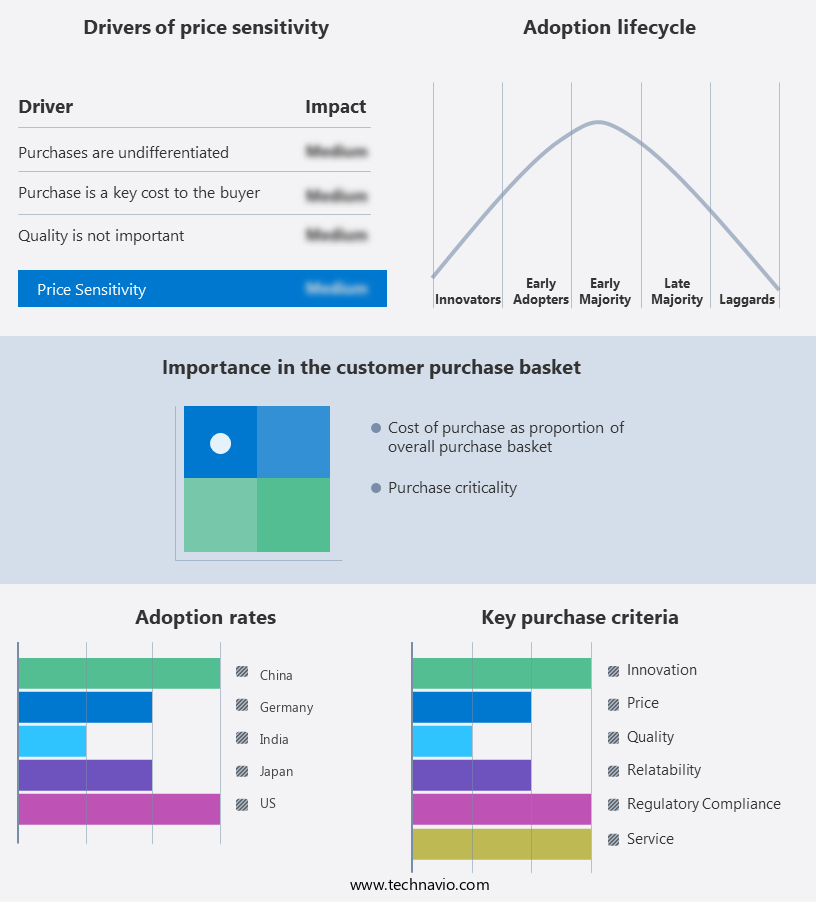
        The textile pretreatment chemicals market forecasting report includes the adoption lifecycle of the market, covering from the innovator’s stage to the laggard’s stage. It focuses on adoption rates in different regions based on penetration. Furthermore, the textile pretreatment chemicals market report also includes key purchase criteria and drivers of price sensitivity to help companies evaluate and develop their market growth analysis strategies.
        Textile Pretreatment Chemicals Market Share by Geography

         Customer Landscape

        Key Companies & Market Insights

        Companies are implementing various strategies, such as strategic alliances, textile pretreatment chemicals market forecast, partnerships, mergers and acquisitions, geographical expansion, and product/service launches, to enhance their presence In the industry.

        ABH Biochem Pvt. Ltd. - Textile pretreatment chemicals play a crucial role In the textile industry, enhancing the quality and performance of various fabrics. These chemicals include soaping agents and wetting agents, which facilitate effective cleaning, improved dyeability, and enhanced softness in towels and textiles. Soaping agents, also known as builders, remove dirt and impurities by forming complexes with calcium and magnesium ions present in hard water. Wetting agents, on the other hand, reduce the surface tension of water, ensuring even distribution and penetration during the washing process. By utilizing these and other specialized textile pretreatment chemicals, manufacturers ensure superior product quality and consumer satisfaction.

        The industry research and growth report includes detailed analyses of the competitive landscape of the market and information about key companies, including:

        • ABH Biochem Pvt. Ltd.
        • APL
        • Belle Laboratories Pvt. Ltd. 
        • BHATIA COLOUR CHEM LTD.
        • CHT Germany GmbH
        • Dow Chemical Co.
        • Dye Cells India
        • Embassy silicones
        • HT Fine Chemical Co. Ltd.
        • Matangi Industries
        • Mirachem Industries
        • OSAM SPECIALITY CHEMICALS PVT. LTD.
        • Pacific Texchem Pvt. Ltd.
        • Pink Rose Pigments Pvt. Ltd.
        • Pon Pure Chemicals Group
        • Prakash Chemicals Agencies Pvt. Ltd.
        • Sarex
        • Sigmachemie Speciality Pvt. Ltd.
        • Suman Chemical Industries
        • Thurs Organics Pvt. Ltd.

        Qualitative and quantitative analysis of companies has been conducted to help clients understand the wider business environment as well as the strengths and weaknesses of key industry players. Data is qualitatively analyzed to categorize companies as pure play, category-focused, industry-focused, and diversified; it is quantitatively analyzed to categorize companies as dominant, leading, strong, tentative, and weak.

        Research Analyst Overview

        The market encompasses a broad range of substances used to prepare textiles for various applications. These chemicals play a crucial role in enhancing the functionality and appearance of textiles, making them suitable for diverse industries such as apparel, technical textiles, and home textiles. Textile pretreatment chemicals serve multiple purposes In the textile manufacturing process. They help improve the dyeability of fabrics, enhance their durability, and provide desirable textures and finishes. The application scope of these chemicals is vast, extending to various sectors, including construction, real estate, and various industries with specific textile requirements. The market exhibits dynamic market trends, driven by evolving consumer preferences and technological advancements.

        One significant trend is the increasing demand for eco-friendly and sustainable textile treatments. Bio-chemicals, derived from renewable resources, are gaining popularity due to their reduced environmental impact and improved performance. Wicking agents, softeners, and deaerators are among the commonly used bio-chemicals in textile pretreatment. Another trend is the growing application of textile pretreatment chemicals in high-performance textiles. These chemicals contribute to the production of textiles with advanced properties such as waterproofing, fire resistance, and stain repellence. Denim finishing agents, enzymes, anti-back staining agents, and bleaching agents are some of the essential chemicals used in denim finishing and other high-performance textile applications.

        The market is influenced by various factors, including production capacities, consumer preferences, and technological advancements. The market has seen significant growth in recent years due to the increasing demand for textiles with enhanced functionality and improved performance. The market is expected to continue its upward trajectory, driven by the growing demand for technical textiles and the expanding application scope of textile pretreatment chemicals in various industries. Textile pretreatment chemicals are used in various textile manufacturing processes, including mercerizing, hydrophilic treatment, and coating processes. Mercerizing is a process that improves the brightness and colorfastness of textiles, while hydrophilic treatment enhances the fabric's water-absorbing capacity.

        Coating processes involve applying a thin layer of chemicals to the fabric's surface to improve its performance and appearance. Textile pretreatment chemicals are used in various applications, including apparel, technical textiles, and home textiles. In apparel applications, these chemicals are used to improve the fabric's texture, color, and durability. In technical textiles, they contribute to the production of high-performance textiles used in industries such as aerospace, automotive, and construction. In home textiles, textile pretreatment chemicals are used to enhance the fabric's appearance, texture, and durability, making them suitable for various home décor and furnishing applications. The market is expected to offer significant opportunities in various regions, driven by the growing demand for textiles with advanced properties and the expanding application scope of textile pretreatment chemicals in various industries.

        The market is expected to witness significant growth in regions with a large population and a growing middle class, as disposable incomes increase and consumer preferences shift towards high-performance textiles. In conclusion, the market is a dynamic and growing industry, driven by evolving consumer preferences and technological advancements. These chemicals play a crucial role in enhancing the functionality and appearance of textiles, making them suitable for various applications in diverse industries. The market is expected to continue its upward trajectory, driven by the growing demand for high-performance textiles and the expanding application scope of textile pretreatment chemicals.

        Market Scope

        Report Coverage

        Details

        Page number

        174

        Base year

        2023

        Historic period

        2018-2022

        Forecast period

        2024-2028

        Growth momentum & CAGR

        Accelerate at a CAGR of 4.9%

        Market growth 2024-2028

        USD 1.76 billion

        Market structure

        Fragmented

        YoY growth 2023-2024(%)

        4.19

        Key countries

        US, China, India, Japan, and Germany

        Competitive landscape

        Leading Companies, Market Positioning of Companies, Competitive Strategies, and Industry Risks

        Request Free Sample

        What are the Key Data Covered in this Textile Pretreatment Chemicals Market Research and Growth Report?

        • CAGR of the Textile Pretreatment Chemicals industry during the forecast period
        • Detailed information on factors that will drive the growth and forecasting between 2024 and 2028
        • Precise estimation of the size of the market and its contribution of the industry in focus to the parent market
        • Accurate predictions about upcoming growth and trends and changes in consumer behaviour
        • Growth of the market across APAC, North America, Europe, South America, and Middle East and Africa
        • Thorough analysis of the market’s competitive landscape and detailed information about companies
        • Comprehensive analysis of factors that will challenge the textile pretreatment chemicals market growth of industry companies

        We can help! Our analysts can customize this textile pretreatment chemicals market research report to meet your requirements.

        Get in touch


        Table of Contents not available.

        Research Methodology

        Technavio presents a detailed picture of the market by way of study, synthesis, and summation of data from multiple sources. The analysts have presented the various facets of the market with a particular focus on identifying the key industry influencers. The data thus presented is comprehensive, reliable, and the result of extensive research, both primary and secondary.

        INFORMATION SOURCES

        Primary sources

        • Manufacturers and suppliers
        • Channel partners
        • Industry experts
        • Strategic decision makers

        Secondary sources

        • Industry journals and periodicals
        • Government data
        • Financial reports of key industry players
        • Historical data
        • Press releases

        DATA ANALYSIS

        Data Synthesis

        • Collation of data
        • Estimation of key figures
        • Analysis of derived insights

        Data Validation

        • Triangulation with data models
        • Reference against proprietary databases
        • Corroboration with industry experts

        REPORT WRITING

        Qualitative

        • Market drivers
        • Market challenges
        • Market trends
        • Five forces analysis

        Quantitative

        • Market size and forecast
        • Market segmentation
        • Geographical insights
        • Competitive landscape

        Interested in this report?

        Get your sample now to see our research methodology and insights!

        Download Now

        Frequently Asked Questions

        Textile Pretreatment Chemicals market growth will increase by $ 1.76 bn during 2024-2028.

        The Textile Pretreatment Chemicals market is expected to grow at a CAGR of 4.9% during 2024-2028.

        Textile Pretreatment Chemicals market is segmented by Application( Apparel, Home textile, Technical textile) Product Type( Scouring agents, Desizing agents, Bleaching agents, Mercerizing agents, Others)

        ABH Biochem Pvt. Ltd., APL, Belle Laboratories Pvt. Ltd. , BHATIA COLOUR CHEM LTD., CHT Germany GmbH, Dow Chemical Co., Dye Cells India, Embassy silicones, HT Fine Chemical Co. Ltd., Matangi Industries, Mirachem Industries, OSAM SPECIALITY CHEMICALS PVT. LTD., Pacific Texchem Pvt. Ltd., Pink Rose Pigments Pvt. Ltd., Pon Pure Chemicals Group, Prakash Chemicals Agencies Pvt. Ltd., Sarex, Sigmachemie Speciality Pvt. Ltd., Suman Chemical Industries, Thurs Organics Pvt. Ltd. are a few of the key vendors in the Textile Pretreatment Chemicals market.

        APAC will register the highest growth rate of 63% among the other regions. Therefore, the Textile Pretreatment Chemicals market in APAC is expected to garner significant business opportunities for the vendors during the forecast period.

        US, China, India, Japan, Germany

        • Growing textile industry in developing economiesThe global textile industry is experiencing robust growth is the driving factor this market.
        • driven by various factors is the driving factor this market.
        • such as economic development is the driving factor this market.
        • technological advancements is the driving factor this market.
        • and shifting fashion trends. This growth is particularly pronounced in major countries that have traditionally been powerhouses in textile production and consumption. China is the driving factor this market.
        • for instance is the driving factor this market.
        • stands as the worlds leading textile producer is the driving factor this market.
        • leveraging its extensive manufacturing infrastructure is the driving factor this market.
        • skilled labor force is the driving factor this market.
        • and technological innovation to dominate the global textile pretreatment chemicals market. The countrys vast textile sector benefits from government support and a strong export orientation is the driving factor this market.
        • making it a critical player in the international textile arena. The China National Textile and Apparel Council (CNTAC) is the driving factor this market.
        • which oversees the textile and apparel industry in China is the driving factor this market.
        • in its 14th five-year plan is the driving factor this market.
        • outlines the sectors development goals is the driving factor this market.
        • strategies for expansion is the driving factor this market.
        • and key priorities for the period from 2021 to 2025. India is another key player is the driving factor this market.
        • known for its rich heritage in textile production is the driving factor this market.
        • ranging from cotton to silk. The Indian textile industry is witnessing significant growth is the driving factor this market.
        • fueled by both domestic consumption and exports. Government initiatives is the driving factor this market.
        • such as the Technology Upgradation Fund Scheme (TUFS) and Integrated Textile Parks is the driving factor this market.
        • aim to modernize the textile industry and enhance competitiveness. Similarly is the driving factor this market.
        • Bangladesh is the driving factor this market.
        • primarily known for its garment manufacturing is the driving factor this market.
        • has seen its textile sector expand rapidly due to the growing exports of textiles to Western countries. During the fiscal year 2020-21 is the driving factor this market.
        • Bangladesh witnessed a 12.55 percent increase in its Ready-Made Garment (RMG) exports is the driving factor this market.
        • reaching $31.46 billion is the driving factor this market.
        • which constituted a significant portion of its total exports is the driving factor this market.
        • amounting to $38.76 billion. This growth occurred as the primary markets in Europe and North America started to rebound from the demand downturn caused by the COVID-19 pandemic. Thus is the driving factor this market.
        • the expanding textile industry in developing economies is expected to drive the growth of the global textile pretreatment chemicals market during the forecast period. is the driving factor this market.

        The Textile Pretreatment Chemicals market vendors should focus on grabbing business opportunities from the Apparel segment as it accounted for the largest market share in the base year.