
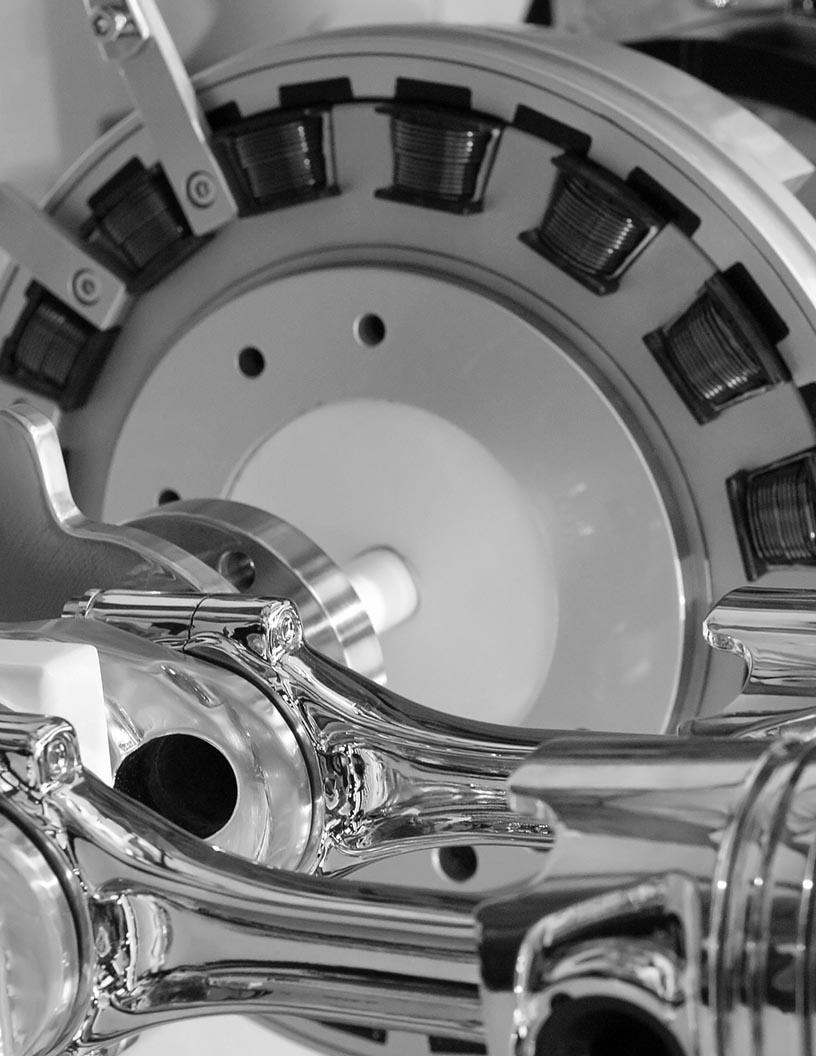


Torque Motor Market Size 2025-2029
The torque motor market size is forecast to increase by USD 351.9 million at a CAGR of 8.4% between 2024 and 2029.
- The market is driven by the high operational efficiency of torque motors, making them an attractive choice for various industries. This efficiency translates to cost savings and improved performance, which is a significant factor in the market's growth. Another key trend is the increasing popularity of constant torque motor technology, offering consistent power output and better control in various applications. This market encompasses various types of motors, including AC and DC torque motors, such as brushless DC motors and rare-earth permanent magnet motors. However, the market faces challenges due to the volatility in raw material prices. This price instability can impact the cost structure of torque motor manufacturers and potentially disrupt supply chains.
- Companies in the market must navigate these challenges by implementing effective supply chain strategies and exploring alternative materials to mitigate the impact of raw material price fluctuations. To capitalize on market opportunities, manufacturers can focus on innovation, such as developing more efficient and cost-effective torque motor designs, and expanding their product offerings to cater to diverse industries. These motors are integral to diverse industries, including machine tool, robotics and semiconductor, food beverage & tobacco, flat panel display, and machine tools. This factor will help in continued market expansion.
What will be the Size of the Torque Motor Market during the forecast period?
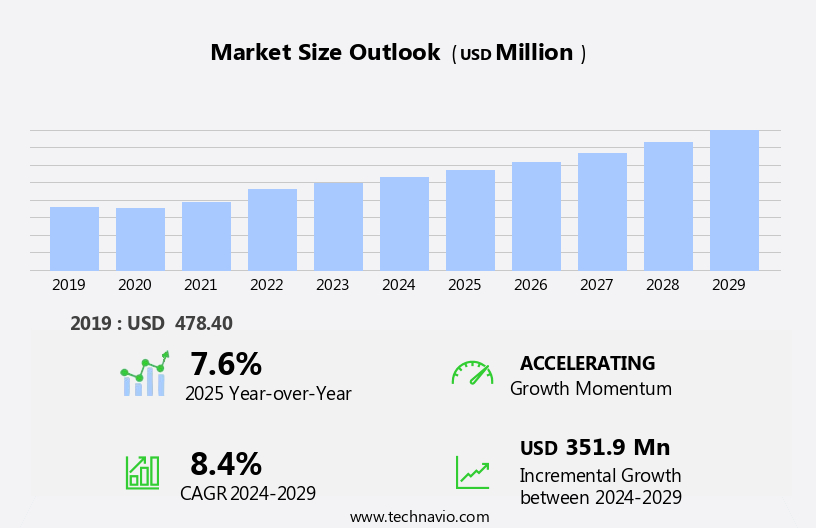
Explore in-depth regional segment analysis with market size data - historical 2019-2023 and forecasts 2025-2029 - in the full report.
Request Free Sample
- The market is experiencing significant advancements, driven by the integration of motor encoders and vector control for enhanced motor customization and precision. Magnetic flux and motor life cycle management are crucial factors in motor development, with IP rating and motor cooling playing essential roles in ensuring durability and reliability. Direct drive motors and motor innovation continue to gain traction, while motor noise and vibration remain key challenges for manufacturers. Motor controller ICs and field oriented control enable efficient PWM control, reducing back emf and improving thermal management. Motor cost and motor lubrication are also critical considerations, with reduction gears and power electronics playing a vital role in optimizing motor performance.
- Motor research and development are ongoing, focusing on efficiency class, motor feedback, and motor integration to meet the evolving demands of US businesses. Hall effect sensors and torque sensors provide valuable data for motor optimization, while motor innovation continues to prioritize minimal motor noise and efficient thermal management.
How is this Torque Motor Industry segmented?
The torque motor industry research report provides comprehensive data (region-wise segment analysis), with forecasts and estimates in "USD million" for the period 2025-2029, as well as historical data from 2019-2023 for the following segments.
- Type
- DC torque motors
- AC torque motors
- End-user
- Robotics and semiconductor
- Food and packaging
- Automotive
- Others
- Material
- Neodymium
- Ferrite
- Samarium cobalt
- Geography
- North America
- US
- Canada
- Europe
- France
- Germany
- UK
- APAC
- Australia
- China
- India
- Japan
- South Korea
- Rest of World (ROW)
- North America
By Type Insights
The DC torque motors segment is estimated to witness significant growth during the forecast period. Brushless DC motors (BLDCM) and motor drivers are integral components in various industries, including material handling, industrial automation, machine tools, and renewable energy. BLDCMs, in contrast to Brushed DC motors (BDCMs), operate without brushes and commutators. The motor stator in BLDCMs generates a stationary magnetic field, while the rotor consists of coils arranged in a fixed magnetic field. The electrical current passed through these coils generates a magnetic field, propelling the coil assembly to rotate. Motor maintenance, temperature control, and certification are crucial aspects of motor usage. Motor efficiency, torque control, and speed control are essential for process control in industries.
Motor winding, modeling, and testing are integral to motor manufacturing. Motor reliability, durability, and power are key considerations for motor applications in consumer products and electric vehicles. Motor protection, commutation, and optimization are essential for motor control systems. Linear motors, servo motors, and synchronous motors offer specific advantages in various applications. Motor design, bearings, and housing are crucial factors in motor performance. Motor voltage, RPM, and current are essential parameters for motor operation. Motor replacement and repair are important aspects of motor maintenance. Motor standards ensure interoperability and safety in various industries, including oil and gas, medical devices, and power generation.
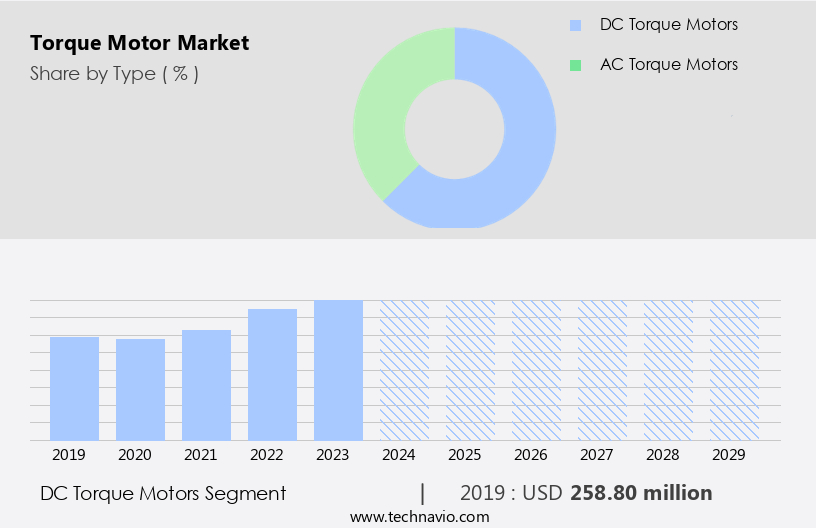
The DC torque motors segment was valued at USD 258.80 million in 2019 and showed a gradual increase during the forecast period.
Regional Analysis
APAC is estimated to contribute 43% to the growth of the global market during the forecast period. Technavio's analysts have elaborately explained the regional trends and drivers that shape the market during the forecast period.
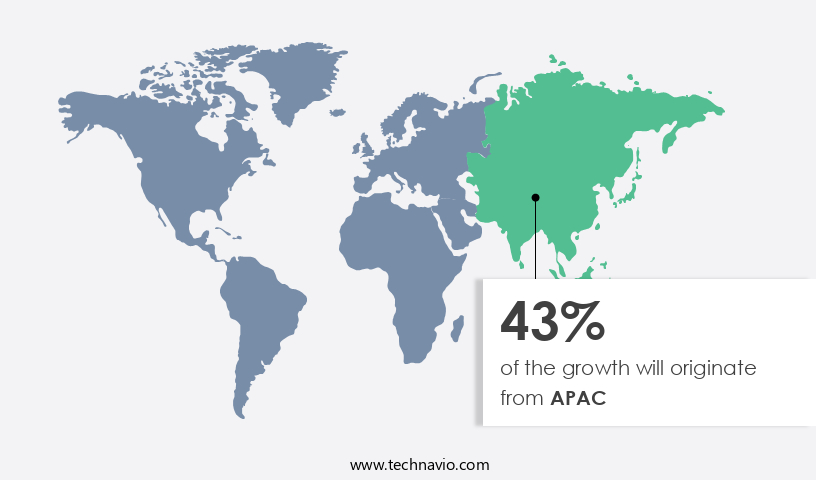
The market is witnessing significant growth, particularly in the Asia Pacific (APAC) region. This expansion is primarily driven by the increasing adoption of machine tools that utilize torque motors for heightened productivity in countries like China, Japan, India, Taiwan, and South Korea. The robust manufacturing industries in these nations, particularly China, are fueling the demand for machine tools, thereby boosting the market. The number of manufacturing facilities being established in APAC is expected to surpass those in developed regions, such as North America and Europe, during the forecast period. Torque motors find extensive applications in various industries, including material handling, industrial automation, oil and gas, renewable energy, and consumer products.
In material handling, torque motors are employed for conveyor systems, cranes, and hoists to move heavy loads. In industrial automation, they are used for process control, motor torque control, and motor speed control. In the oil and gas industry, torque motors are utilized in drilling applications, while in renewable energy, they are employed in wind turbines and hydroelectric power generation. Motor manufacturing involves processes such as motor design, motor modeling, motor temperature management, motor bearings, motor winding, motor testing, and motor certification. Motor efficiency, motor power, and motor voltage are crucial factors in motor manufacturing.
Motor maintenance, motor protection, and motor repair are essential aspects of motor usage to ensure their longevity. Motor standards, such as motor certification and motor housing, are implemented to ensure safety and reliability. Electric motors, including brushless DC motors, induction motors, servo motors, and synchronous motors, are integral to the market. Motor commutation, motor current, motor rpm, and motor braking are essential motor characteristics. Motor replacement, motor control systems, and motor controllers are critical components of motor usage. Motor optimization and motor assembly are essential processes in motor manufacturing. The market's evolution is influenced by various factors, including motor design, motor manufacturing, motor applications, and motor standards. The integration of torque motors in various industries, such as material handling, industrial automation, oil and gas, renewable energy, and consumer products, is driving market growth.
Market Dynamics
Our researchers analyzed the data with 2024 as the base year, along with the key drivers, trends, and challenges. A holistic analysis of drivers will help companies refine their marketing strategies to gain a competitive advantage.
What are the Torque Motor market drivers leading to the rise in the adoption of Industry?
- The high operational efficiency of torque motors serves as a primary driving factor for the market's growth. Torque motors are essential components in various industries, including robotics, packaging, defense, and machine tools, due to their high operational efficiency. These motors, which include brushless DC motors and induction motors, are available in different sizes, enabling easy integration into diverse applications. The limited air gap and use of magnets facilitate the integration of cooling tubes, cables, or other equipment through a large hollow shaft or bore. Furthermore, the ring-like configuration of torque motors minimizes the mounting volume and offers machinery designers increased flexibility. Motor maintenance is crucial for maintaining optimal performance. Motor standards, such as NEMA, IEC, and IP ratings, ensure compatibility and safety.
- Motor protection, including thermal and overload protection, safeguards the motor from damage. Motor efficiency is a significant factor in reducing energy consumption and costs. Motor torque control and speed control are essential for process control in various applications. Material handling applications, for instance, require precise torque control to move heavy loads smoothly. Motor winding and insulation materials are critical factors in motor efficiency and longevity. Electric motors, including torque motors, are subject to various market dynamics. Motor drivers, which convert electrical energy into mechanical energy, are essential components in motor control systems. Motor efficiency, motor torque control, motor speed control, and motor protection are key factors driving the market growth. The increasing demand for automation and robotics in various industries, such as manufacturing, logistics, and healthcare, is expected to fuel the market growth. Additionally, the development of advanced motor technologies, such as permanent magnet motors and switched reluctance motors, is expected to further boost the market growth.
What are the Torque Motor market trends shaping the Industry?
- The increasing preference for constant torque motor technology is a notable market trend. This advanced technology is gaining significant traction in various industries. Constant torque motors, a type of high-efficiency brushless DC motor, are programmable through 24-V signals for various applications. These motors are designed to provide consistent torque but can be adapted for uses where constant torque is not necessary. Equipment manufacturers customize the motor's programming based on the required torque for specific applications, setting speed taps, up to five, to regulate airflow for cooling, heating, or continuous fan operation. Motor testing and modeling are crucial in motor manufacturing to ensure reliability, particularly in applications involving motor temperature and bearing performance. Servo motors and linear motors are other types of motors that offer precise control and are widely used in consumer products and machine tools.
- Motor power and motor design play significant roles in motor applications, with motor temperature management being a critical factor in motor performance and longevity. Motor bearings also impact motor reliability and require regular maintenance to ensure optimal operation.
How does Torque Motor market face challenges during its growth?
- The volatility in raw material prices poses a significant challenge to the industry's growth trajectory. In order to maintain profitability and competitiveness, businesses must closely monitor and adapt to fluctuations in the cost of essential inputs. This market instability can hinder long-term planning and strategic decision-making, making it a critical issue for industry professionals to address. Torque motors, which include stepper motors, permanent magnet motors, synchronous motors, dc motors, and motor control systems, are essential components in various industries, including electric vehicles and industrial automation. The production of these motors involves the use of raw materials such as steel, cast iron, and other alloys, which are globally traded commodities and subject to price fluctuations. This instability in raw material prices can negatively impact motor manufacturers, particularly smaller companies, as it may lead to higher production costs and ultimately, higher motor prices. To mitigate this risk, larger companies often enter into long-term contracts with suppliers to secure consistent pricing.
- Motor voltage, motor rpm, motor current, motor commutation, and motor durability are critical factors that influence the selection and design of torque motors for specific applications. Understanding these factors and their impact on motor performance is crucial for motor replacement and motor control system selection in various industries.
Exclusive Customer Landscape
The torque motor market forecasting report includes the adoption lifecycle of the market, covering from the innovator's stage to the laggard's stage. It focuses on adoption rates in different regions based on penetration. Furthermore, the torque motor market report also includes key purchase criteria and drivers of price sensitivity to help companies evaluate and develop their market growth analysis strategies.
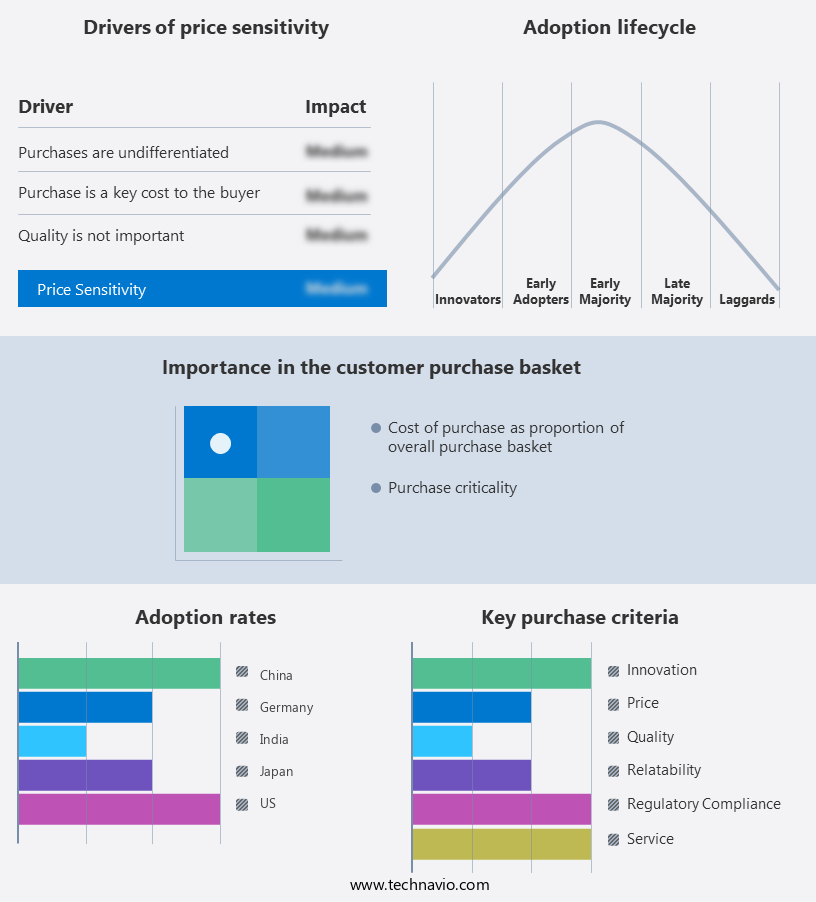
Customer Landscape
Key Companies & Market Insights
Companies are implementing various strategies, such as strategic alliances, torque motor market forecast, partnerships, mergers and acquisitions, geographical expansion, and product/service launches, to enhance their presence in the industry.
ATE Antriebstechnik and Entwicklungs GmbH and Co. KG - The company specializes in the production of advanced torque motors, including the TMB, TMK, TML, and TMM series.
The industry research and growth report includes detailed analyses of the competitive landscape of the market and information about key companies, including:
- ATE Antriebstechnik and Entwicklungs GmbH and Co. KG
- B. Kettere Sohne GmBH and Co. KG
- ETEL SA
- Fischer Elektromotoren GmbH
- Franz Kessler GmbH
- Hiwin Technologies Corp.
- Kollmorgen Corp.
- Lafert Spa
- Moog Inc.
- NUM AG
- Oriental Motor Co. Ltd.
- Oswald Elektromotoren GmbH
- Parker Hannifin Corp.
- Phase Motion Control Spa
- Regal Rexnord Corp.
- Schaeffler AG
- Siemens AG
- Technai Team Spa
- Tecnotion BV
- ZOLLERN GmbH and Co. KG
Qualitative and quantitative analysis of companies has been conducted to help clients understand the wider business environment as well as the strengths and weaknesses of key industry players. Data is qualitatively analyzed to categorize companies as pure play, category-focused, industry-focused, and diversified; it is quantitatively analyzed to categorize companies as dominant, leading, strong, tentative, and weak.
Recent Development and News in Torque Motor Market
- In February 2024, Tesla, a leading electric vehicle manufacturer, announced the launch of its new Torque Motor Model X, featuring an advanced and efficient torque motor system. This development signifies Tesla's commitment to improving electric vehicle performance and reducing dependence on traditional internal combustion engines (Tesla Press Release, 2024).
- In May 2024, Volkswagen Group and CATL, a leading global supplier of lithium-ion batteries, formed a strategic partnership to collaborate on the development and production of advanced torque motors for electric vehicles. This collaboration aims to enhance the performance and efficiency of electric vehicles, while reducing production costs (Reuters, 2024).
- In October 2024, QuantumScape, a solid-state battery manufacturer, raised USD700 million in a Series C funding round. This significant investment will enable the company to accelerate the development and commercialization of its solid-state torque motor technology, which promises increased energy density, longer range, and faster charging times for electric vehicles (Bloomberg, 2024).
- In January 2025, the European Union announced a new policy initiative, the "Green Deal," which includes a commitment to invest â¬30 billion in battery cell production and electric vehicle charging infrastructure. This initiative will create new opportunities for torque motor manufacturers and suppliers in Europe, as the demand for electric vehicles is expected to increase significantly (European Commission, 2025).
Research Analyst Overview
The market continues to evolve, driven by advancements in motor technology and their applications across various sectors. Motor regeneration and testing play crucial roles in ensuring motor reliability and efficiency. Servo motors, with their precise torque control capabilities, have gained popularity in process control applications. Linear motors offer unique advantages in material handling and machine tools. Motor manufacturing processes, from motor modeling to assembly, are continually refined to improve motor power, temperature management, and motor design. Motor bearings and motor voltage management are essential components in maintaining motor durability and efficiency. Consumer products, from electric vehicles to medical devices, rely on motor technology for optimal performance.
Motor efficiency, motor speed control, and motor protection are critical considerations in these applications. Motor replacement and motor repair are ongoing concerns in industries such as oil and gas, renewable energy, and industrial automation. Motor optimization and motor control systems are essential for maximizing motor performance and minimizing energy consumption. Motor commutation and synchronization technologies continue to advance, enabling motor applications in power generation and electric vehicles. The market dynamics of motor technology are ever-changing, with ongoing research and development in motor winding, motor voltage, motor RPM, motor current, and motor certification. The integration of motor technology in various industries continues to unfold, shaping the future of motor applications and driving innovation.
Dive into Technavio's robust research methodology, blending expert interviews, extensive data synthesis, and validated models for unparalleled Torque Motor Market insights. See full methodology.
|
Market Scope |
|
|
Report Coverage |
Details |
|
Page number |
222 |
|
Base year |
2024 |
|
Historic period |
2019-2023 |
|
Forecast period |
2025-2029 |
|
Growth momentum & CAGR |
Accelerate at a CAGR of 8.4% |
|
Market growth 2025-2029 |
USD 351.9 million |
|
Market structure |
Fragmented |
|
YoY growth 2024-2025(%) |
7.6 |
|
Key countries |
China, US, Japan, India, South Korea, Canada, Australia, France, Germany, and UK |
|
Competitive landscape |
Leading Companies, Market Positioning of Companies, Competitive Strategies, and Industry Risks |
What are the Key Data Covered in this Torque Motor Market Research and Growth Report?
- CAGR of the Torque Motor industry during the forecast period
- Detailed information on factors that will drive the growth and forecasting between 2025 and 2029
- Precise estimation of the size of the market and its contribution of the industry in focus to the parent market
- Accurate predictions about upcoming growth and trends and changes in consumer behaviour
- Growth of the market across APAC, North America, Europe, Middle East and Africa, and South America
- Thorough analysis of the market's competitive landscape and detailed information about companies
- Comprehensive analysis of factors that will challenge the torque motor market growth of industry companies
We can help! Our analysts can customize this torque motor market research report to meet your requirements.
 RIA -
RIA - 
