



Turkey Freight And Logistics Market Size 2026-2030
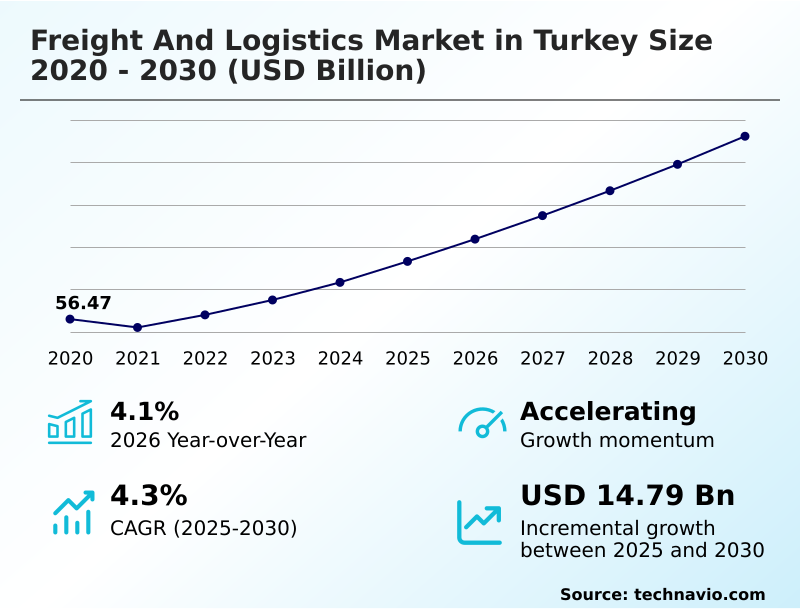
The turkey freight and logistics market size is valued to increase by USD 14.79 billion, at a CAGR of 4.3% from 2025 to 2030. Middle corridor and institutionalization of multimodal trans-caspian trade will drive the turkey freight and logistics market.
Major Market Trends & Insights
- By Delivery Mode - Road segment was valued at USD 40.98 billion in 2024
- By Service - Transportation segment accounted for the largest market revenue share in 2024
Market Size & Forecast
- Market Opportunities: USD 21.61 billion
- Market Future Opportunities: USD 14.79 billion
- CAGR from 2025 to 2030 : 4.3%
Market Summary
- The freight and logistics market in Turkey is undergoing a significant transformation, capitalizing on its unique geographical position to become a central node in global trade. This evolution is driven by a concerted push toward multimodal integration, where road, rail, and maritime transport are seamlessly connected to enhance efficiency and resilience.
- Key initiatives are focused on modernizing infrastructure to support burgeoning transcontinental trade flows, particularly along the vital Middle Corridor. The industry is also contending with the need for technological adoption, with firms increasingly investing in AI-driven route optimization and digital transit monitoring to manage complex supply chains.
- For instance, a major automotive manufacturer could leverage a third-party logistics (3PL) provider's digital supply chain twins to simulate and de-risk its inbound flow of components, ensuring just-in-time delivery to its assembly plants and avoiding costly production delays.
- This strategic pivot towards digitalization and integrated logistics, including the development of automated last-mile fulfillment networks and cold chain infrastructure, is crucial for maintaining a competitive edge in a dynamic global environment.
What will be the Size of the Turkey Freight And Logistics Market during the forecast period?
Get Key Insights on Market Forecast (PDF) Get Free Sample
How is the Turkey Freight And Logistics Market Segmented?
The turkey freight and logistics industry research report provides comprehensive data (region-wise segment analysis), with forecasts and estimates in "USD million" for the period 2026-2030, as well as historical data from 2020-2024 for the following segments.
- Delivery mode
- Road
- Maritime
- Rail
- Air
- Service
- Transportation
- Warehousing and distribution
- Value-added services
- End-user
- Manufacturing
- Automotive
- Consumer goods
- Food and beverage
- Others
- Geography
- Middle East and Africa
- Turkey
- Middle East and Africa
By Delivery Mode Insights
The road segment is estimated to witness significant growth during the forecast period.
The road segment is the cornerstone of the freight and logistics market in Turkey, handling the majority of domestic cargo. This dominance is sustained by a modern highway network facilitating efficient door-to-door delivery.
The rise of e-commerce has spurred demand for less-than-truckload services and express delivery services, compelling operators to adopt advanced digital transit monitoring and fleet telematics. The integration of intelligent transportation systems enables real-time fleet tracking, enhancing operational oversight.
Leading firms are now deploying digital supply chain twins to model and optimize networks, while navigating the complexities of customs clearance for international haulage.
As a result, road transport commands over 75% of the domestic volume, with technology driving further efficiencies in automated last-mile fulfillment.
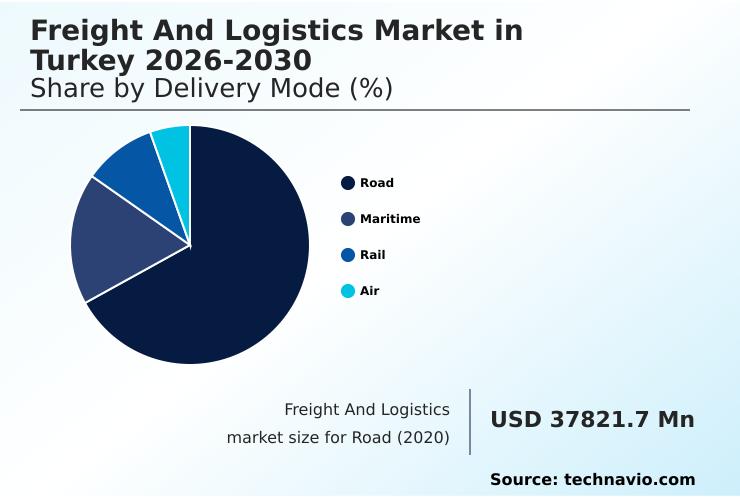
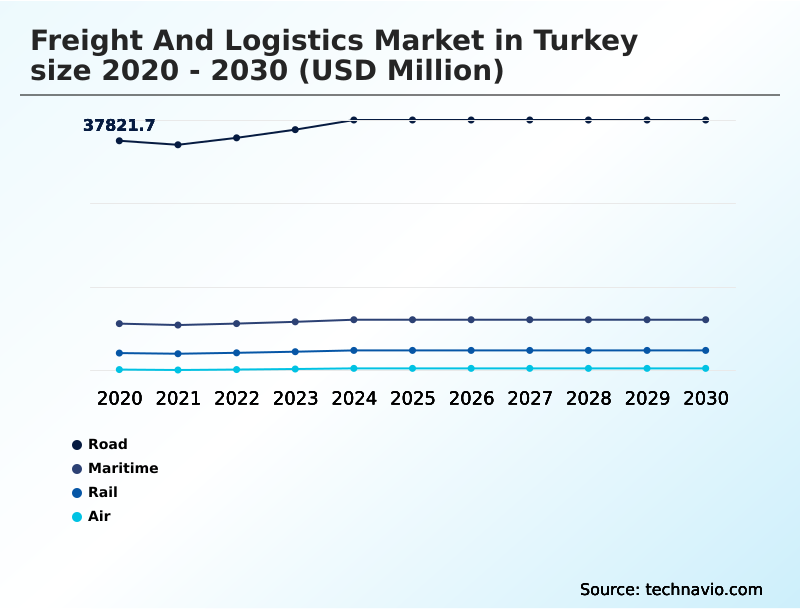
The Road segment was valued at USD 40.98 billion in 2024 and showed a gradual increase during the forecast period.
Market Dynamics
Our researchers analyzed the data with 2025 as the base year, along with the key drivers, trends, and challenges. A holistic analysis of drivers will help companies refine their marketing strategies to gain a competitive advantage.
- The freight and logistics market in Turkey is navigating a complex landscape defined by the strategic imperative to improve supply chain resilience through multimodal transport. The impact of middle corridor on transit times is a central theme, as stakeholders focus on optimizing this route to create a competitive advantage over traditional sea and northern rail corridors.
- A key area of investment involves implementing robust decarbonization frameworks for freight forwarding, driven by stringent international regulations and corporate sustainability goals. The cost analysis of road vs rail freight is increasingly favoring rail for long-haul cargo, especially as fuel volatility persists.
- Technology adoption in cold chain logistics is accelerating to support the export of high-value perishables, while the role of AI in warehouse automation is becoming critical for managing inventory and labor costs. Firms are also addressing the challenges of last-mile fulfillment networks through innovative delivery models.
- The nearshoring impact on logistics real estate has led to a surge in demand for modern warehousing, with rental rates in prime locations increasing more than 20% faster than in secondary markets. Customs harmonization in trans-caspian trade remains a priority to reduce administrative bottlenecks.
- Key strategies include investment in sustainable logistics infrastructure, optimizing transcontinental trade flows with AI, and managing economic volatility in freight operations.
- Companies are also focused on fleet modernization for euro-6 compliance, integrating digital twins in supply chain planning, strategies for reducing scope 3 emissions, automating inventory with warehouse management systems, enhancing fleet telematics for efficiency, the 3PL provider role in supply chain optimization, and improving door-to-door delivery with real-time tracking.
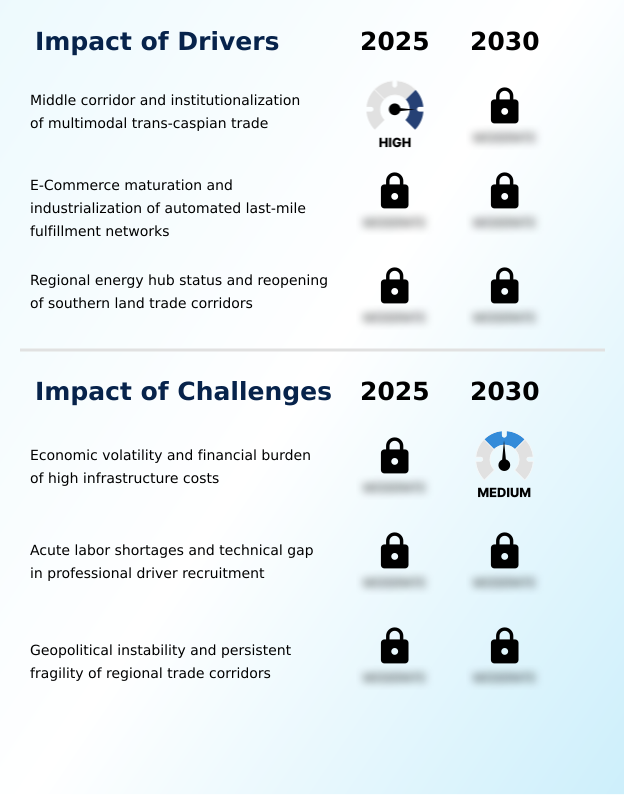
What are the key market drivers leading to the rise in the adoption of Turkey Freight And Logistics Industry?
- The market's primary driver is the institutionalization of multimodal trans-caspian trade and the maturation of the Middle Corridor as a strategic logistics route.
- Market expansion is fueled by the strategic maturation of the Trans-Caspian International Transport Route, an overland transport route that provides a critical alternative to northern passages.
- This has accelerated multimodal integration, combining rail, sea, and road transport to optimize the Eurasian supply chain. Investments in infrastructure, such as the modernization of the Baku-Tbilisi-Kars railway and the development of new intermodal terminals, are central to this driver.
- The increased frequency of container block trains has reduced transit times by up to 40% on key corridors.
- Furthermore, initiatives like the Zangezur Corridor and the Development Road initiative are set to enhance high-speed rail connectivity, solidifying the region's role as a pivotal logistics hub.
What are the market trends shaping the Turkey Freight And Logistics Industry?
- The strategic integration of green logistics and decarbonization frameworks is an emerging trend. This shift is reshaping operational standards and investment priorities across the industry.
- A fundamental trend is the institutionalization of green logistics frameworks and carbon-neutral operations. This shift is driven by the need to align with the European Union Green Deal and its Carbon Border Adjustment Mechanism.
- In response, logistics providers are investing in low-emission vehicle procurement and enhancing sustainable mobility, which has been shown to improve brand reputation for over 60% of shippers. This focus on reducing scope 3 emissions is also influencing infrastructure, with developments like the Cargo City at Istanbul Airport incorporating eco-friendly designs.
- The market is also seeing advancements in specialized services like cold chain infrastructure and pharmaceutical logistics to meet high-value goods requirements.
What challenges does the Turkey Freight And Logistics Industry face during its growth?
- A key challenge for the industry is the economic volatility and significant financial burden associated with high infrastructure development and maintenance costs.
- Significant challenges stem from economic volatility, which affects the extensive road freight sub-segment. High capital costs create barriers to electric fleet transitions and the adoption of autonomous vehicle technologies, which are becoming standard elsewhere. Firms struggle to maintain just-in-time delivery schedules while managing operational overheads, with inflation impacting fleet maintenance costs by over 25%.
- The necessity of upgrading to meet Euro-6 emission standards for European access adds financial pressure. Furthermore, maintaining specialized infrastructure like the Northern Marmara Highway and the Eurasia Tunnel strains public and private budgets. This environment makes it difficult to invest in automated inventory management and modern bonded warehousing facilities.
Exclusive Technavio Analysis on Customer Landscape
The turkey freight and logistics market forecasting report includes the adoption lifecycle of the market, covering from the innovator’s stage to the laggard’s stage. It focuses on adoption rates in different regions based on penetration. Furthermore, the turkey freight and logistics market report also includes key purchase criteria and drivers of price sensitivity to help companies evaluate and develop their market growth analysis strategies.
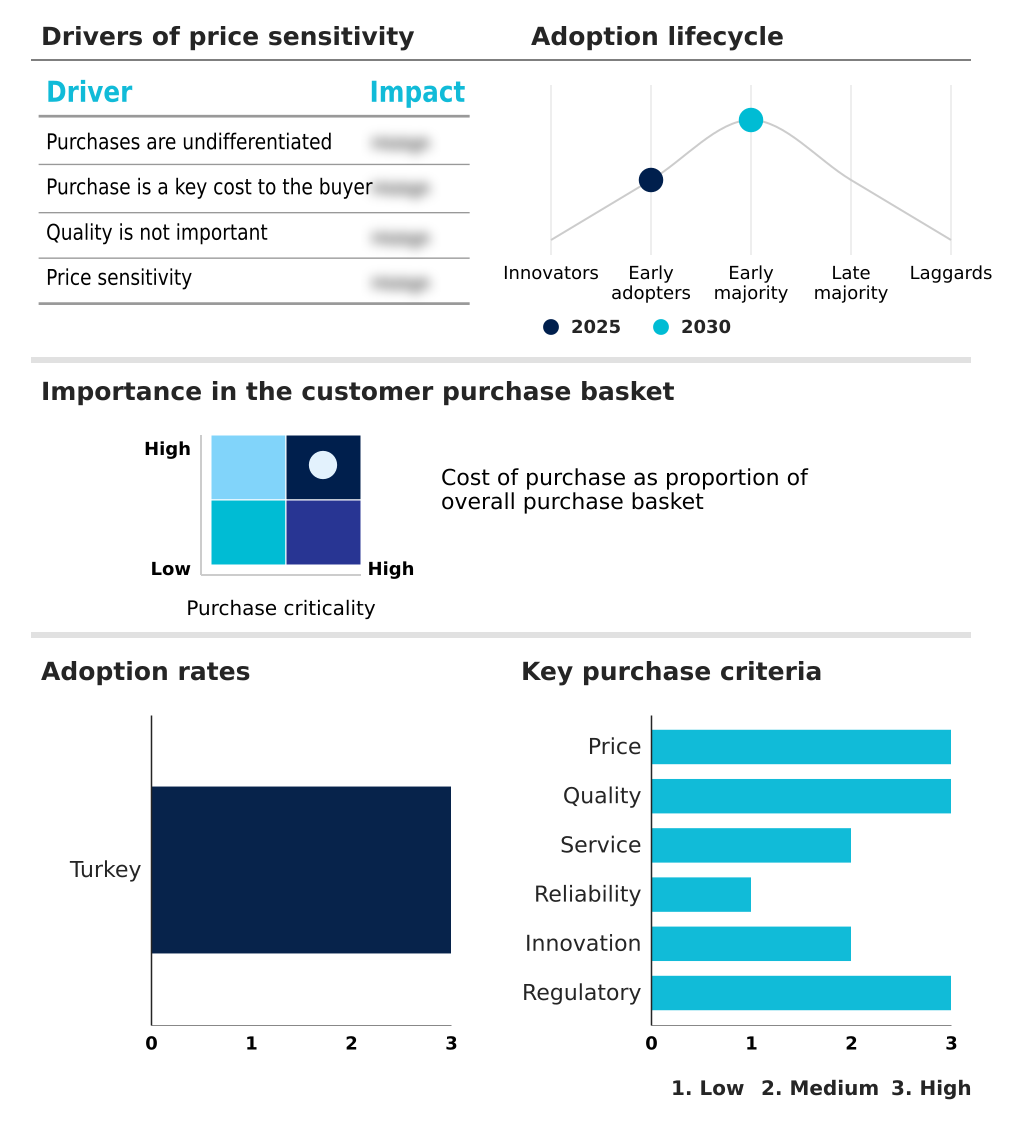
Customer Landscape of Turkey Freight And Logistics Industry
Competitive Landscape
Companies are implementing various strategies, such as strategic alliances, turkey freight and logistics market forecast, partnerships, mergers and acquisitions, geographical expansion, and product/service launches, to enhance their presence in the industry.
AP Moller Maersk AS - The company provides integrated freight and logistics services, including ocean shipping, intermodal transport, and comprehensive supply chain solutions with a strong Turkish port presence.
The industry research and growth report includes detailed analyses of the competitive landscape of the market and information about key companies, including:
- AP Moller Maersk AS
- Bollore Logistics
- C H Robinson Worldwide Inc.
- CEVA Logistics SA
- DHL International GmbH
- DSV AS
- Ekol Lojistik AS
- FedEx Corp.
- GEODIS
- Hellmann Worldwide Logistics
- Kuehne Nagel Management AG
- Nippon Express Holdings Inc.
- Omsan Lojistik AS
- Schenker AG
- United Parcel Service Inc.
- Yusen Logistics Co. Ltd.
Qualitative and quantitative analysis of companies has been conducted to help clients understand the wider business environment as well as the strengths and weaknesses of key industry players. Data is qualitatively analyzed to categorize companies as pure play, category-focused, industry-focused, and diversified; it is quantitatively analyzed to categorize companies as dominant, leading, strong, tentative, and weak.
Recent Development and News in Turkey freight and logistics market
- In March, 2025, the Government of Turkey published its Twelfth Development Plan, detailing a $4.34 billion investment in forty-four transport projects while highlighting the fiscal challenges of maintaining key infrastructure.
- In November, 2025, CEVA Logistics finalized its acquisition of Borusan Lojistik for $383 million, significantly expanding its footprint by integrating one million square meters of warehouse space and a large domestic road transport network.
- In January, 2026, DHL Turkey was recognized for advancing its sustainable mobility initiatives by accelerating the adoption of clean-energy solutions across its transportation operations, reflecting a strategic shift toward environmental performance.
- In February, 2026, Turkish Cargo reported a robust start to the year, with cargo and mail volumes increasing by nearly 19% year-over-year, a development supported by the ongoing expansion of its SmartIST facility at Istanbul Airport.
Dive into Technavio’s robust research methodology, blending expert interviews, extensive data synthesis, and validated models for unparalleled Turkey Freight And Logistics Market insights. See full methodology.
| Market Scope | |
|---|---|
| Page number | 187 |
| Base year | 2025 |
| Historic period | 2020-2024 |
| Forecast period | 2026-2030 |
| Growth momentum & CAGR | Accelerate at a CAGR of 4.3% |
| Market growth 2026-2030 | USD 14787.8 million |
| Market structure | Fragmented |
| YoY growth 2025-2026(%) | 4.1% |
| Key countries | Turkey |
| Competitive landscape | Leading Companies, Market Positioning of Companies, Competitive Strategies, and Industry Risks |
Research Analyst Overview
- The freight and logistics market in Turkey is at a strategic inflection point, driven by the convergence of geopolitical shifts and technological innovation. The industry is rapidly moving beyond traditional transport to embrace comprehensive multimodal integration, creating a resilient overland transport route that connects continents.
- A primary focus is on expanding capacity through high-speed rail connectivity and advanced intermodal terminals, which are essential for handling increasing transcontinental trade flows. At a boardroom level, key decisions revolve around capital allocation for electric fleet transitions to meet sustainability mandates and investment in AI-driven route optimization to combat rising operational costs.
- Companies that successfully deploy digital supply chain twins for predictive modeling have demonstrated an ability to reduce planning cycle times by over 30%. The development of specialized capabilities, such as temperature-controlled warehousing for pharmaceutical logistics and automated last-mile fulfillment for e-commerce, is differentiating market leaders.
- Success hinges on mastering customs clearance complexities, leveraging digital transit monitoring, and achieving seamless door-to-door delivery. The evolution toward carbon-neutral operations, spurred by green logistics frameworks and nearshoring-led demand, is reshaping logistics real estate and the road freight sub-segment, while pushing adoption of autonomous vehicle technologies and automated inventory management.
What are the Key Data Covered in this Turkey Freight And Logistics Market Research and Growth Report?
-
What is the expected growth of the Turkey Freight And Logistics Market between 2026 and 2030?
-
USD 14.79 billion, at a CAGR of 4.3%
-
-
What segmentation does the market report cover?
-
The report is segmented by Delivery Mode (Road, Maritime, Rail, and Air), Service (Transportation, Warehousing and distribution, and Value-added services), End-user (Manufacturing, Automotive, Consumer goods, Food and beverage, and Others) and Geography (Middle East and Africa)
-
-
Which regions are analyzed in the report?
-
Middle East and Africa
-
-
What are the key growth drivers and market challenges?
-
Middle corridor and institutionalization of multimodal trans-caspian trade, Economic volatility and financial burden of high infrastructure costs
-
-
Who are the major players in the Turkey Freight And Logistics Market?
-
AP Moller Maersk AS, Bollore Logistics, C H Robinson Worldwide Inc., CEVA Logistics SA, DHL International GmbH, DSV AS, Ekol Lojistik AS, FedEx Corp., GEODIS, Hellmann Worldwide Logistics, Kuehne Nagel Management AG, Nippon Express Holdings Inc., Omsan Lojistik AS, Schenker AG, United Parcel Service Inc. and Yusen Logistics Co. Ltd.
-
Market Research Insights
- The market's dynamics are shaped by a strategic pivot toward high-efficiency logistics and integrated supply chains. The maturation of the Trans-Caspian International Transport Route is a key factor, enabling a pivot away from congested northern routes.
- Firms are enhancing supply chain optimization by leveraging the modernized Baku-Tbilisi-Kars railway, which has been shown to reduce transit times between Asia and Europe by up to 15% compared to sea freight. Concurrently, alignment with the European Union Green Deal is compelling investments in low-emission fleets to comply with the Carbon Border Adjustment Mechanism.
- Adoption of advanced warehouse management systems (WMS) has improved inventory accuracy by over 98% for leading third-party logistics (3PL) providers. These shifts reflect an industry-wide focus on resilience, sustainability, and technological integration.
We can help! Our analysts can customize this turkey freight and logistics market research report to meet your requirements.
 RIA -
RIA - 
