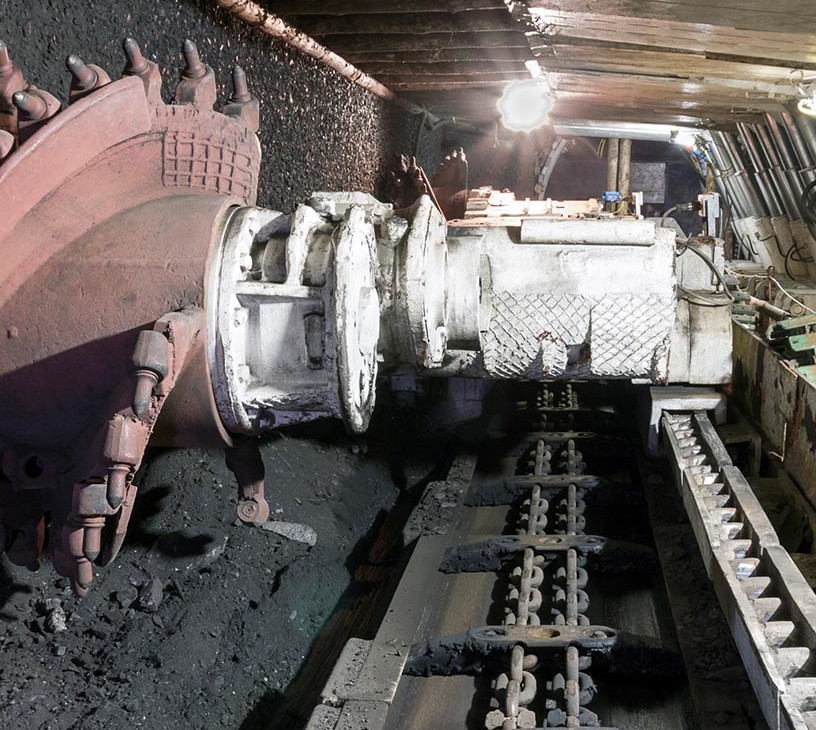


Underground Mining Equipment Market Size 2026-2030
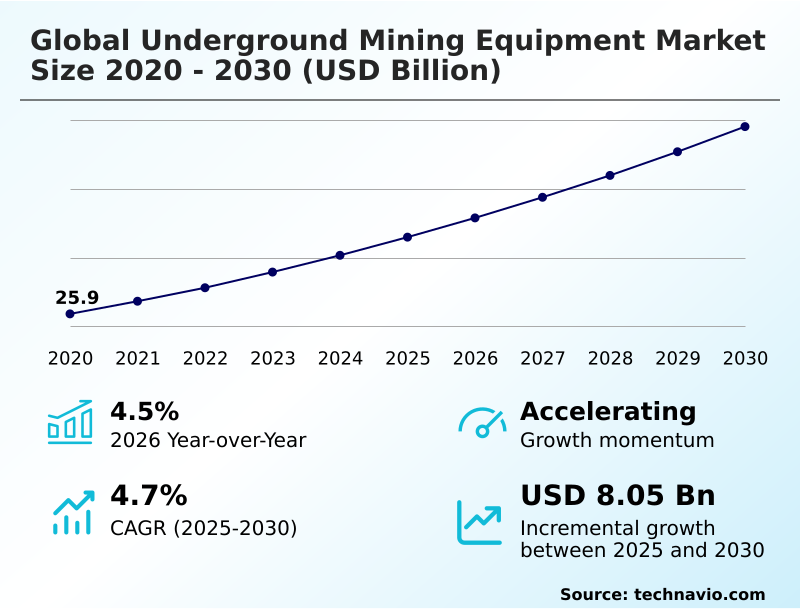
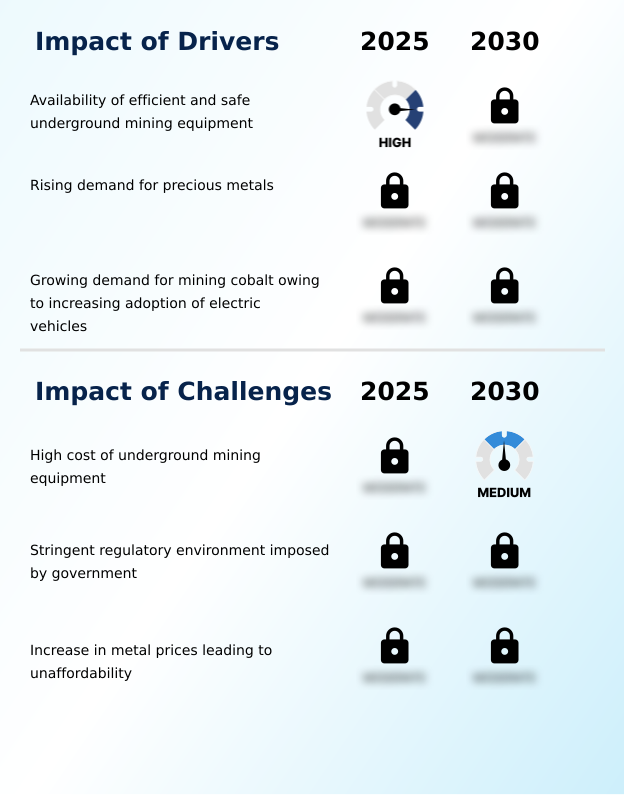
The underground mining equipment market size is valued to increase by USD 8.05 billion, at a CAGR of 4.7% from 2025 to 2030. Availability of efficient and safe underground mining equipment will drive the underground mining equipment market.
Major Market Trends & Insights
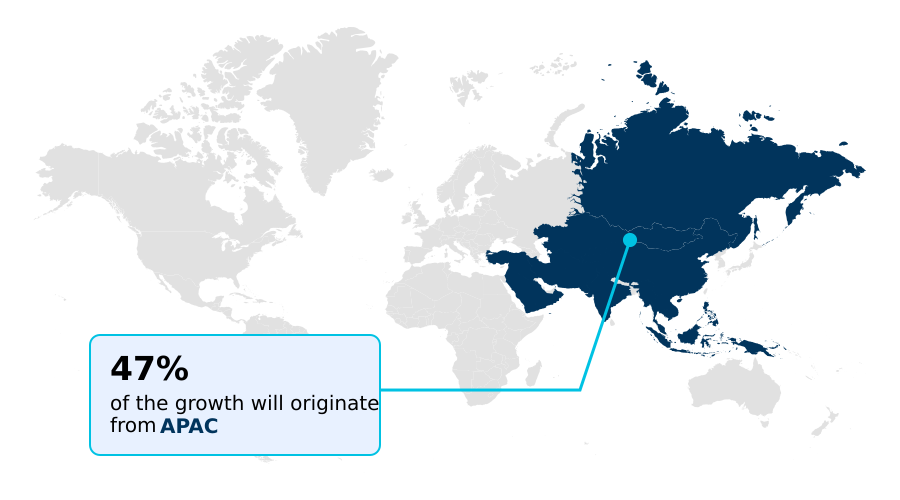
- APAC dominated the market and accounted for a 46.8% growth during the forecast period.
- By Application - Room and pillar mining segment was valued at USD 9.87 billion in 2024
- By Product Type - Loaders segment accounted for the largest market revenue share in 2024
Market Size & Forecast
- Market Opportunities: USD 13.62 billion
- Market Future Opportunities: USD 8.05 billion
- CAGR from 2025 to 2030 : 4.7%
Market Summary
- The underground mining equipment market is defined by a consistent push toward greater operational efficiency and enhanced safety protocols. This sector is characterized by the deployment of specialized machinery designed to function in harsh, confined environments, driving a continuous cycle of innovation.
- Key drivers include the rising global demand for minerals and the need to access deeper, more complex ore bodies. As a result, there is a significant trend toward electrification and automation to mitigate risks and reduce environmental impact.
- For instance, a mining operation can leverage predictive analytics, a core component of ai-integrated fleet management, to monitor the health of its load-haul-dump loaders and continuous miners, scheduling maintenance before failures occur. This proactive approach minimizes costly downtime and extends asset life.
- However, the high capital investment required for autonomous and battery-electric vehicles, coupled with stringent regulatory standards, continues to pose significant challenges for operators, influencing purchasing decisions and technology adoption rates across the industry.
What will be the Size of the Underground Mining Equipment Market during the forecast period?
Get Key Insights on Market Forecast (PDF) Get Free Sample
How is the Underground Mining Equipment Market Segmented?
The underground mining equipment industry research report provides comprehensive data (region-wise segment analysis), with forecasts and estimates in "USD million" for the period 2026-2030, as well as historical data from 2020-2024 for the following segments.
- Application
- Room and pillar mining
- Longwall mining
- Borehole mining
- Others
- Product type
- Loaders
- Trucks
- Drills
- Bolters
- Others
- Technology
- Conventional equipment
- Electric equipment
- Autonomous equipment
- Geography
- APAC
- China
- Australia
- India
- North America
- US
- Canada
- Mexico
- Europe
- Germany
- UK
- France
- South America
- Brazil
- Argentina
- Middle East and Africa
- South Africa
- Saudi Arabia
- UAE
- Rest of World (ROW)
- APAC
By Application Insights
The room and pillar mining segment is estimated to witness significant growth during the forecast period.
The room and pillar mining method remains a foundational extraction technique, valued for its flexibility in navigating varied geological conditions. This segment is evolving beyond its traditional application, incorporating advanced software-defined machinery and predictive analytics to optimize operations.
Equipment features a low-profile design and center-articulated steering for maneuverability, with remote-controlled units enhancing worker safety.
The integration of advanced roof bolting systems, supported by real-time atmospheric monitoring and ground stability analysis, has improved ground support installation times by over 15%.
Even in scenarios resembling cut and fill mining, the use of a continuous miner and robust rock bolt monitoring ensures structural integrity, making this method a versatile component of the underground mining equipment market.
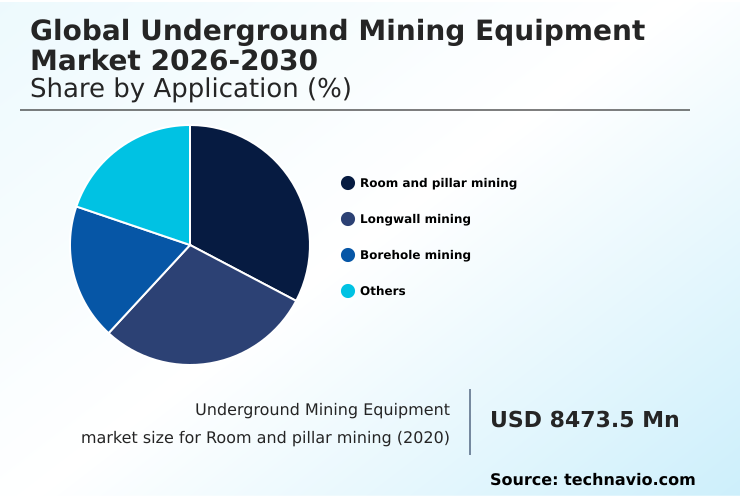
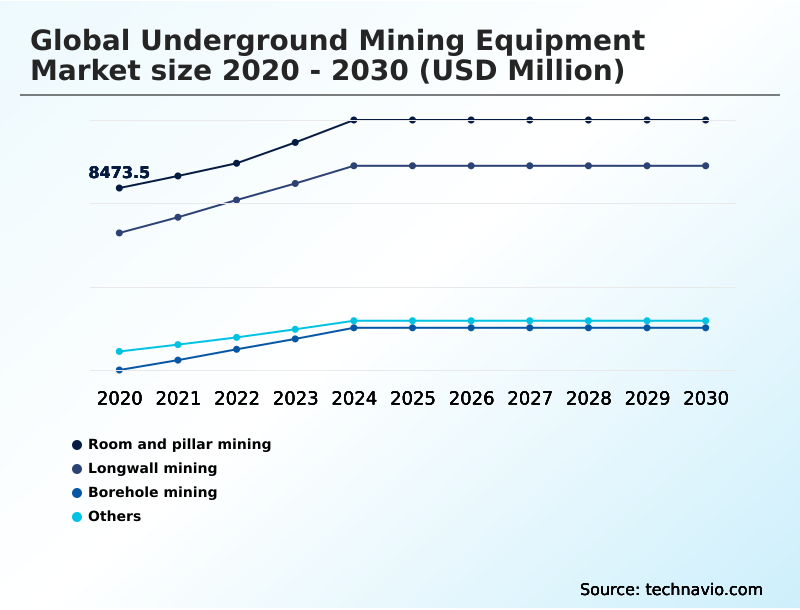
The Room and pillar mining segment was valued at USD 9.87 billion in 2024 and showed a gradual increase during the forecast period.
Regional Analysis
APAC is estimated to contribute 46.8% to the growth of the global market during the forecast period.Technavio’s analysts have elaborately explained the regional trends and drivers that shape the market during the forecast period.
See How Underground Mining Equipment Market Demand is Rising in APAC Get Free Sample
The geographic landscape is dominated by regions with significant mineral reserves, where a focus on efficiency and safety is paramount. In APAC, countries like China and Australia are leading the charge in adopting advanced technologies.
The use of ai-integrated fleet management and remote-controlled drilling rigs is becoming widespread, supported by robust underground communication infrastructure. These technologies, including low-emission underground loaders and zero-emission underground fleets, are crucial for meeting stringent environmental regulations.
The adoption of collision avoidance systems has reduced vehicle-related incidents by over 25% in certain deep-level mines.
As operations go deeper, the reliance on high-fidelity ventilation, predictive maintenance models, and remote emergency stop capabilities becomes critical for maintaining productivity and ensuring worker safety in a competitive global market.
Market Dynamics
Our researchers analyzed the data with 2025 as the base year, along with the key drivers, trends, and challenges. A holistic analysis of drivers will help companies refine their marketing strategies to gain a competitive advantage.
- Strategic decision-making in the underground mining equipment market requires a comprehensive understanding of interconnected factors. The impact of AI on mining equipment is no longer a futuristic concept but a present-day reality influencing the total cost of ownership. Companies are evaluating various underground mining automation solutions to determine the best fit for their specific geological and operational contexts.
- A primary consideration is the battery electric vehicle adoption in mining, which promises lower emissions but demands significant infrastructure investment. The safety features in modern mining equipment are a critical purchasing criterion, directly impacting insurance costs and regulatory standing.
- While the cost of autonomous mining technology remains a barrier for some, the potential for improving operational efficiency in mining is a powerful incentive. Firms that successfully navigate the challenges in deep underground mining often do so by optimizing haulage in underground mines and leveraging advanced sensor technology for mining.
- The role of digital twins in mining is expanding from a design tool to an operational management system. Firms adopting predictive maintenance for mining fleets report uptime improvements that are nearly double those of companies relying on reactive repairs, showcasing a clear ROI.
- Concurrently, addressing the environmental impact of underground mining and ensuring cybersecurity for connected mine operations are becoming boardroom-level priorities.
What are the key market drivers leading to the rise in the adoption of Underground Mining Equipment Industry?
- The availability of efficient and safe underground mining equipment serves as a primary driver for the expansion of subsurface extraction projects and overall market growth.
- Market growth is significantly driven by advancements in equipment efficiency and the rising demand for critical minerals. The development of high-capacity battery technologies and lithium-ion batteries is enabling the broader adoption of battery electric loaders and other self-driving machinery.
- This shift helps mining companies reduce their carbon footprint and lower ventilation costs, which can account for up to 30% of a deep mine's energy consumption.
- The demand for resources essential for battery production is, in turn, fueling investment in technologies for narrow vein mining and block caving methods. Innovations like the high-performance load-haul-dump loader and continuous haulage conveyors are improving productivity.
- The use of high-fidelity sensors and functional safety hardware has also enhanced equipment reliability, contributing to a 10% increase in overall equipment effectiveness in certified installations.
What are the market trends shaping the Underground Mining Equipment Industry?
- Technological advances in underground mining equipment are fundamentally reshaping the industry's operational paradigms, driven by the integration of high-speed connectivity and modular automation.
- Key trends are centered on digitalization and automation, transforming operational capabilities. The use of digital twin monitoring and proactive maintenance protocols allows for the real-time optimization of machinery, with some operations reporting a 15% reduction in unplanned downtime. The deployment of semi-autonomous units, supported by robust wireless mesh networking, is expanding, enabling tele-remote operation and enhancing worker safety.
- Furthermore, the integration of deep learning algorithms and modular equipment design is creating more adaptable and intelligent systems. The adoption of battery electric powertrains has also accelerated, with some fleets achieving up to a 20% improvement in energy efficiency compared to legacy diesel models.
- These advancements, from automated handling systems to feeder breakers, signify a move toward smarter, more efficient, and safer mining environments.
What challenges does the Underground Mining Equipment Industry face during its growth?
- The high initial capital expenditure and total cost of ownership for specialized underground mining equipment present a significant challenge to market-wide modernization and adoption.
- Primary challenges stem from high capital costs and stringent regulations, which can temper the pace of technological adoption. The upfront investment for advanced equipment, such as units with automated drilling capabilities or a complete armored face conveyor system with hydraulic roof supports, is substantial. The price of high-precision semiconductors and other essential components continues to rise, impacting manufacturing costs.
- For example, the expense of a mechanical shearer has increased by over 10% due to material costs alone. Furthermore, navigating the complex web of global regulations, which mandate features like automated proximity detection and specialized fire suppression, adds to design and compliance overhead.
- Relying on older, manually-operated machinery or diesel-powered machinery may seem cost-effective initially but often leads to higher long-term operational expenses and safety risks.
Exclusive Technavio Analysis on Customer Landscape
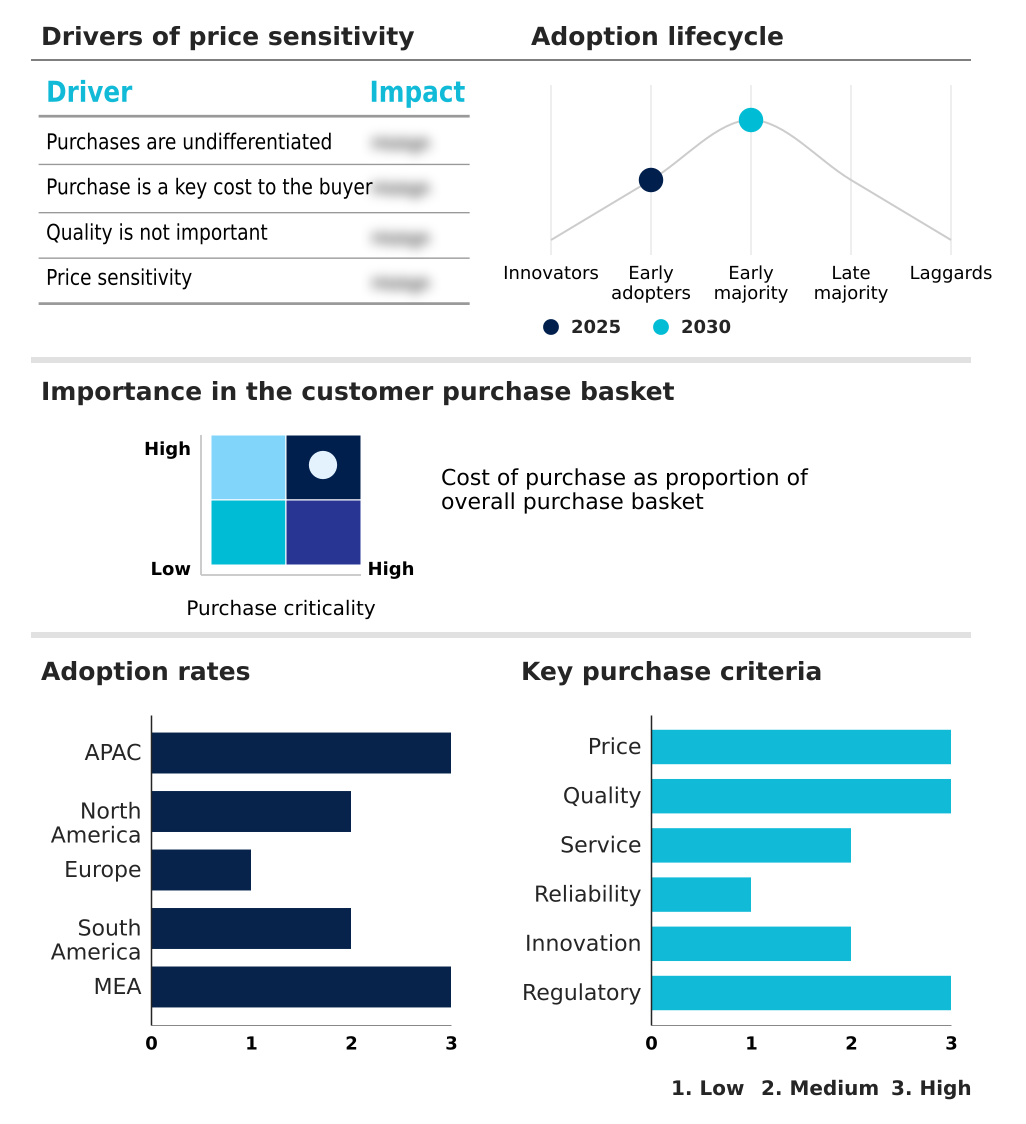
The underground mining equipment market forecasting report includes the adoption lifecycle of the market, covering from the innovator’s stage to the laggard’s stage. It focuses on adoption rates in different regions based on penetration. Furthermore, the underground mining equipment market report also includes key purchase criteria and drivers of price sensitivity to help companies evaluate and develop their market growth analysis strategies.
Customer Landscape of Underground Mining Equipment Industry
Competitive Landscape
Companies are implementing various strategies, such as strategic alliances, underground mining equipment market forecast, partnerships, mergers and acquisitions, geographical expansion, and product/service launches, to enhance their presence in the industry.
Aramine - Specialized equipment for narrow vein mining, including compact loaders and drilling rigs, enhances extraction in constrained underground environments.
The industry research and growth report includes detailed analyses of the competitive landscape of the market and information about key companies, including:
- Aramine
- Astec Industries Inc.
- Boart Longyear Ltd.
- Caterpillar Inc.
- DUX Machinery Corp.
- Epiroc AB
- Fambition Heavy Machinery Co.
- Getman Corp.
- J.H. Fletcher and Co.
- Komatsu Ltd.
- Kovatera Inc.
- MacLean Engineering
- Marcotte Mining Machinery Inc.
- McLanahan Corp.
- Normet Group Oy
- Resemin S.A.
- Rokion
- Sandvik AB
- Sany Heavy Industry Co. Ltd.
- Xuzhou Construction Machinery
Qualitative and quantitative analysis of companies has been conducted to help clients understand the wider business environment as well as the strengths and weaknesses of key industry players. Data is qualitatively analyzed to categorize companies as pure play, category-focused, industry-focused, and diversified; it is quantitatively analyzed to categorize companies as dominant, leading, strong, tentative, and weak.
Recent Development and News in Underground mining equipment market
- In August 2025, Sandvik AB announced the successful trial of its new fully electric mining truck, which achieved a 30% reduction in total energy consumption compared to its diesel equivalent during high-intensity testing.
- In September 2025, Komatsu Ltd. introduced a groundbreaking AI-integrated fleet management system that utilizes deep learning algorithms to automatically optimize the routes of autonomous haulers based on real-time traffic conditions underground.
- In July 2025, Epiroc AB officially launched its newest series of smart drill rigs that feature integrated wireless mesh networking and automated rod handling systems designed for remote and challenging environments.
- In May 2025, Caterpillar Inc. finalized a multi-year agreement with a leading gold producer to supply a complete fleet of specialized narrow-vein mining machines for a new ultra-deep project in South Africa.
Dive into Technavio’s robust research methodology, blending expert interviews, extensive data synthesis, and validated models for unparalleled Underground Mining Equipment Market insights. See full methodology.
| Market Scope | |
|---|---|
| Page number | 310 |
| Base year | 2025 |
| Historic period | 2020-2024 |
| Forecast period | 2026-2030 |
| Growth momentum & CAGR | Accelerate at a CAGR of 4.7% |
| Market growth 2026-2030 | USD 8046.5 million |
| Market structure | Fragmented |
| YoY growth 2025-2026(%) | 4.5% |
| Key countries | China, Australia, India, Indonesia, Japan, South Korea, US, Canada, Mexico, Germany, UK, France, Italy, Spain, The Netherlands, Brazil, Chile, Argentina, South Africa, Saudi Arabia, UAE, Turkey and Israel |
| Competitive landscape | Leading Companies, Market Positioning of Companies, Competitive Strategies, and Industry Risks |
Research Analyst Overview
- The underground mining equipment market is undergoing a significant transformation, driven by the convergence of operational necessity and technological possibility. The industry is moving beyond incremental improvements toward systemic change, with software-defined machinery and proactive maintenance protocols becoming standard.
- The strategic decision to invest in high-capacity battery technologies for zero-emission underground fleets directly impacts capital expenditure planning and a company's ability to meet ESG mandates. Widespread adoption of digital twin monitoring and predictive analytics enables a shift from reactive repairs to proactive asset management.
- For example, the implementation of ai-integrated fleet management has been shown to improve haulage cycle times by up to 15%. This evolution is supported by hardware advancements such as high-frequency rock drills, automated handling systems, and continuous haulage conveyors, which collectively redefine productivity benchmarks.
- The integration of deep learning algorithms and computer vision technology into equipment like the load-haul-dump loader is making autonomous operations more reliable and efficient, reshaping the future of mineral extraction.
What are the Key Data Covered in this Underground Mining Equipment Market Research and Growth Report?
-
What is the expected growth of the Underground Mining Equipment Market between 2026 and 2030?
-
USD 8.05 billion, at a CAGR of 4.7%
-
-
What segmentation does the market report cover?
-
The report is segmented by Application (Room and pillar mining, Longwall mining, Borehole mining, and Others), Product Type (Loaders, Trucks, Drills, Bolters, and Others), Technology (Conventional equipment, Electric equipment, and Autonomous equipment) and Geography (APAC, North America, Europe, South America, Middle East and Africa)
-
-
Which regions are analyzed in the report?
-
APAC, North America, Europe, South America and Middle East and Africa
-
-
What are the key growth drivers and market challenges?
-
Availability of efficient and safe underground mining equipment, High cost of underground mining equipment
-
-
Who are the major players in the Underground Mining Equipment Market?
-
Aramine, Astec Industries Inc., Boart Longyear Ltd., Caterpillar Inc., DUX Machinery Corp., Epiroc AB, Fambition Heavy Machinery Co., Getman Corp., J.H. Fletcher and Co., Komatsu Ltd., Kovatera Inc., MacLean Engineering, Marcotte Mining Machinery Inc., McLanahan Corp., Normet Group Oy, Resemin S.A., Rokion, Sandvik AB, Sany Heavy Industry Co. Ltd. and Xuzhou Construction Machinery
-
Market Research Insights
- Market dynamics are increasingly shaped by the pursuit of operational excellence and enhanced safety. The adoption of tele-remote operation has led to a 20% increase in operator productivity in certain applications, while advanced collision avoidance systems have reduced safety incidents by over 40%. The integration of functional safety hardware and high-fidelity sensors is becoming standard.
- Furthermore, the strategic implementation of underground communication infrastructure supports the deployment of self-driving machinery, with facilities using such systems reporting a 15% improvement in haulage consistency. As the industry pivots toward smart mines, the ability to leverage geotechnical data analysis and predictive maintenance models is a key differentiator, creating a more resilient and efficient operational environment.
We can help! Our analysts can customize this underground mining equipment market research report to meet your requirements.
 RIA -
RIA -