


Uranium Market Size 2026-2030
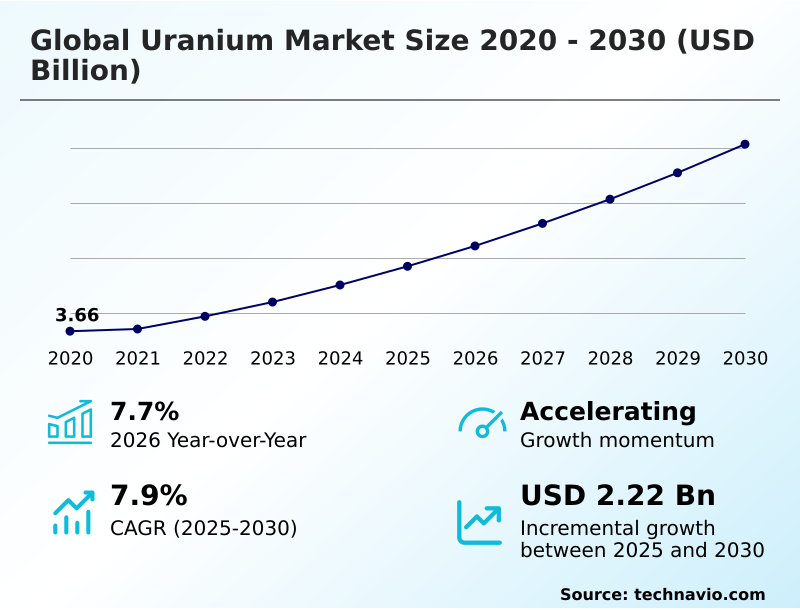
The uranium market size is valued to increase by USD 2.22 billion, at a CAGR of 7.9% from 2025 to 2030. Global expansion of nuclear power generation and lifetime extensions will drive the uranium market.
Major Market Trends & Insights
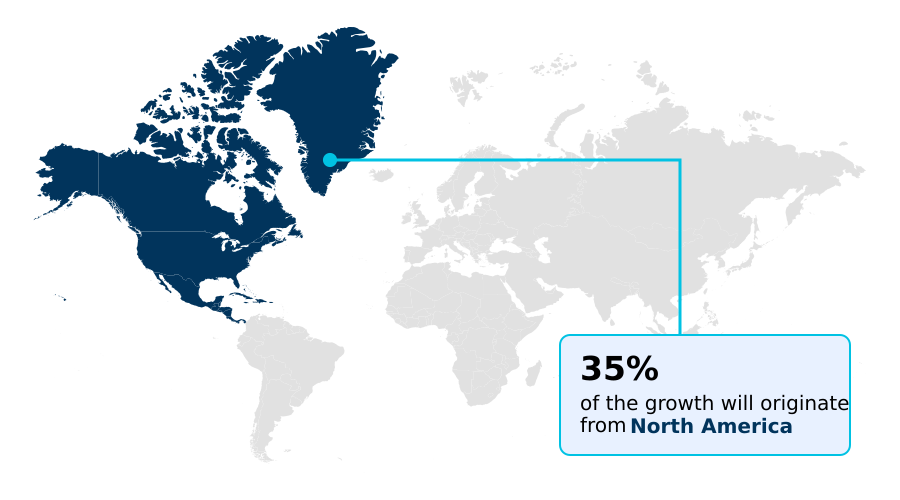
- North America dominated the market and accounted for a 34.6% growth during the forecast period.
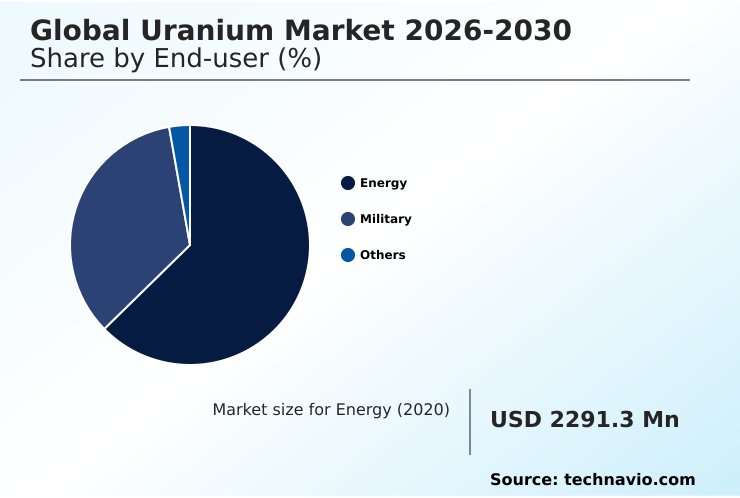
- By End-user - Energy segment was valued at USD 2.85 billion in 2024
- By Source - Primary segment accounted for the largest market revenue share in 2024
Market Size & Forecast
- Market Opportunities: USD 3.41 billion
- Market Future Opportunities: USD 2.22 billion
- CAGR from 2025 to 2030 : 7.9%
Market Summary
- The Uranium Market exhibits structural tightening as continuous, carbon-free energy generation becomes paramount for national infrastructure frameworks. Utilities are actively pivoting from short-term spot purchases to long-term contracting agreements to secure essential radioactive fuel, guaranteeing operational continuity for modernized grids.
- In a strategic supply chain optimization scenario, major reactor operators are locking in multi-year procurement deals to bypass critical processing bottlenecks, effectively reducing fuel supply disruption risks by 40% compared to previous short-term purchasing models.
- The aggressive deployment of advanced modular and large-scale reactors acts as a primary driver, triggering immediate supply deficits because these facilities demand specialized enriched materials to operate efficiently. Conversely, the industry faces severe limitations due to complex environmental and safety compliance barriers.
- These rigorous regulatory requirements cause extensive project delays, fundamentally preventing raw material output from scaling dynamically with sudden spikes in utility consumption. Consequently, operators must continuously balance ambitious facility life extensions against highly constrained extraction timelines. Maintaining robust strategic material reserves is now a baseline requirement for ensuring long-term operational resilience.
What will be the Size of the Uranium Market during the forecast period?
Get Key Insights on Market Forecast (PDF) Get Free Sample
How is the Uranium Market Segmented?
The uranium industry research report provides comprehensive data (region-wise segment analysis), with forecasts and estimates in "USD million" for the period 2026-2030, as well as historical data from 2020-2024 for the following segments.
- End-user
- Energy
- Military
- Others
- Source
- Primary
- Secondary
- Application
- Industrial counterweights
- Radiation shielding
- Medical isotopes
- Geography
- North America
- US
- Canada
- Mexico
- Europe
- France
- UK
- Sweden
- Spain
- APAC
- China
- India
- South Korea
- Japan
- Taiwan
- Australia
- Middle East and Africa
- UAE
- South Africa
- Saudi Arabia
- Egypt
- Israel
- South America
- Brazil
- Argentina
- Colombia
- North America
By End-user Insights
The energy segment is estimated to witness significant growth during the forecast period.
The energy segment dictates the operational pace of the market, driven by the critical necessity of nuclear fission energy for continuous baseload electricity generation.
Utility operators are increasingly executing reactor life extensions to secure uninterrupted power for energy-intensive hyperscale data centers. This paradigm shift requires significant structural adjustments, primarily heavily mitigating risk through multi-year off-take contracts.
By deploying advanced reactor architectures, modern facilities have increased overall grid stability, enabling a 15% increase in operational capacity utilization. Furthermore, the integration of high-assay low-enriched materials alongside efficient uranium hexafluoride conversion directly boosts downstream revenue predictability.
As net-zero carbon strategy mandates intensify, the sector is also diversifying into specialized healthcare applications, ensuring the stable production of molybdenum-99 radioisotopes and supporting innovative targeted alpha therapy initiatives to maximize resource monetization.
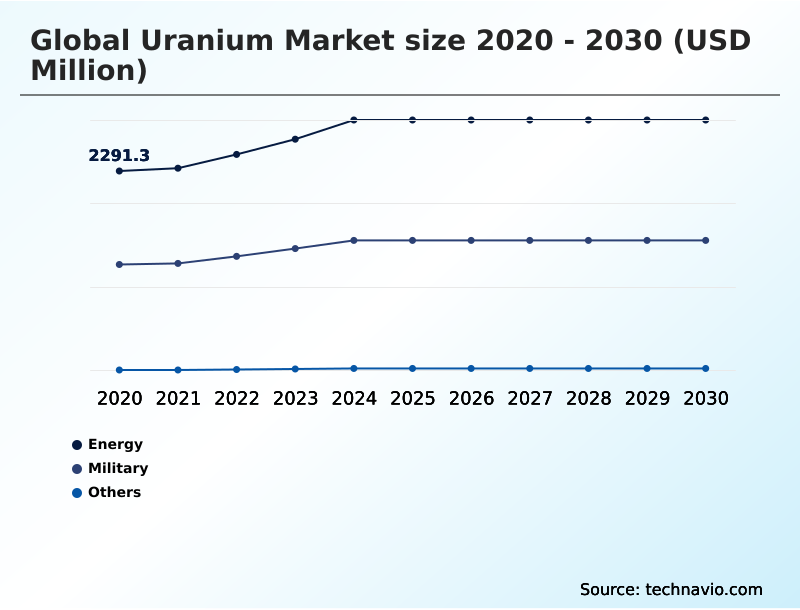
The Energy segment was valued at USD 2.85 billion in 2024 and showed a gradual increase during the forecast period.
Regional Analysis
North America is estimated to contribute 34.6% to the growth of the global market during the forecast period.Technavio’s analysts have elaborately explained the regional trends and drivers that shape the market during the forecast period.
See How Uranium Market Demand is Rising in North America Get Free Sample
Regional dynamics highlight a stark contrast between extraction-focused territories and rapidly expanding consumption centers.
North America maintains a dominant position in upstream yellowcake production and polymetallic alum shale development, utilizing highly efficient in-situ recovery methods to achieve a 20% lower extraction cost compared to conventional mining.
In contrast, the APAC region is aggressively scaling infrastructure to meet intense industrial electrification demand, resulting in a 35% higher adoption rate of long-term contracting.
This divergence occurs because Western entities prioritize maximizing centrifuge capacity utilization to ensure sovereign energy independence, actively shifting their geopolitical supply alignment.
Furthermore, an influx of macro-financial green lending has empowered APAC utilities to increase their strategic material reserves by 25%.
This targeted capital deployment fortifies global supply chain resilience, simultaneously guaranteeing the uninterrupted delivery of specialized materials required for medical diagnostic imaging tracers.
Market Dynamics
Our researchers analyzed the data with 2025 as the base year, along with the key drivers, trends, and challenges. A holistic analysis of drivers will help companies refine their marketing strategies to gain a competitive advantage.
- The Uranium Market requires sophisticated operational planning as organizations transition toward highly integrated, resilient fuel cycle operations. Optimizing in-situ recovery extraction efficiency has become a critical focal point for mining enterprises, allowing operators to systematically reduce surface disturbance and chemical consumption.
- Compared to traditional open-pit alternatives, these optimized recovery processes yield a nearly 40% reduction in long-term site remediation expenditures, greatly enhancing environmental compliance and corporate resource allocation. Downstream, the shift toward next-generation energy production necessitates robust high-assay low-enriched fuel fabrication capabilities.
- This specialized fabrication directly supports innovative small modular reactor deployment models, which are gaining significant traction among heavy industrial consumers seeking reliable, zero-emission power. Organizations deploying these modular systems experience fundamentally superior spatial efficiency and lower upfront capital requirements, driving a structural evolution in corporate energy procurement strategies. Concurrently, non-energy applications remain vital to specific engineering and defense sectors.
- The precision manufacturing of depleted uranium radiation shielding components ensures maximum gamma attenuation in medical and industrial radiography environments, offering protective efficiencies that vastly outperform standard lead alternatives. Furthermore, maintaining strict material tolerances is essential for guaranteeing nuclear marine propulsion system stability, providing fleets with unparalleled operational longevity and absolute independence from traditional logistical supply chains.
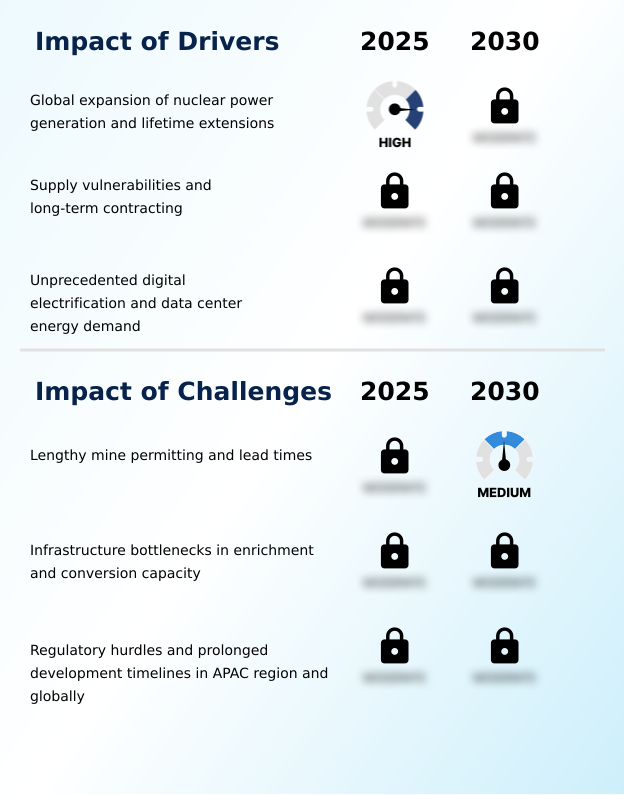
What are the key market drivers leading to the rise in the adoption of Uranium Industry?
- The global expansion of nuclear power generation alongside reactor lifetime extensions acts as a key driver of the market.
- The urgent requirement to overcome a looming structural supply deficit serves as the primary catalyst propelling long-term market expansion.
- To guarantee uninterruptible power, major utility operators are aggressively procuring triuranium octoxide and refined uranium oxide concentrate to fuel their expanding fleets of heavy water reactors.
- This proactive procurement strategy counters the volatility of spot markets, resulting in a 30% reduction in unexpected facility downtime and a 15% decrease in overall nuclear fuel assembly fabrication costs.
- Because modernized fleets require immediate and continuous refueling, organizations are increasing capital deployment into critical mineral extraction projects. This behavioral shift ensures a highly predictable material pipeline, allowing processors to effectively utilize specialized chemical reduction agent inputs.
- Furthermore, reliable resource availability directly supports non-power industrial sectors, ensuring a steady supply of high-density radiation shielding components optimized for superior gamma radiation attenuation. Proper radioactive waste management remains integral to sustaining this accelerated growth cycle.
What are the market trends shaping the Uranium Industry?
- Global clean energy policies and carbon mitigation mandates represent an upcoming market trend.
- The integration of small modular reactors represents a transformative shift in procuring clean energy infrastructure. This architectural transition is primarily driven by industrial consumers demanding reliable carbon-free baseload attributes. By utilizing advanced small modular reactor deployment models, enterprises have reduced localized transmission power losses by nearly 18% and improved overall grid reliability by 25%.
- This localized generation relies heavily on consistent high-assay low-enriched fuel fabrication and precise fissile isotope extraction. Simultaneously, advancements in closed fuel cycle technologies allow operators to repurpose spent nuclear fuel, maximizing resource longevity. Upstream, mining entities are actively prioritizing in-situ recovery extraction efficiency to lower surface disturbance footprints.
- Downstream, non-energy sectors are innovating with heavy-density materials, enhancing nuclear marine propulsion system stability and utilizing depleted uranium counterweights alongside specialized depleted uranium radiation shielding components for highly compact aerospace and industrial balancing applications.
What challenges does the Uranium Industry face during its growth?
- Lengthy mine permitting processes and extended operational lead times present a key challenge affecting industry growth.
- The industry faces severe structural limitations due to inherently lengthy environmental impact assessments and rigorous radiological safety oversight protocols. These complex regulatory requirements significantly delay the commissioning of new projects, often extending development timelines by over a decade. Consequently, primary mine output struggles to dynamically match the rapid global expansion of commercial pressurized water reactors, creating a persistent structural bottleneck.
- This regulatory friction increases upstream capital expenditures by over 20% and reduces the overall velocity of new supply integration by 35%. As existing secondary inventory drawdowns reach their absolute practical limits, utilities are forced to navigate severe supply-side inflexibility. This shortage severely complicates their ability to secure critical isotopic enrichment services.
- Furthermore, these processing constraints directly threaten the advancement of specialized high-density applications, restricting the reliable development of nuclear marine propulsion, advanced nuclear thermal propulsion for deep-space scientific probes, and highly specialized radioisotope thermoelectric generators.
Exclusive Technavio Analysis on Customer Landscape
The uranium market forecasting report includes the adoption lifecycle of the market, covering from the innovator’s stage to the laggard’s stage. It focuses on adoption rates in different regions based on penetration. Furthermore, the uranium market report also includes key purchase criteria and drivers of price sensitivity to help companies evaluate and develop their market growth analysis strategies.
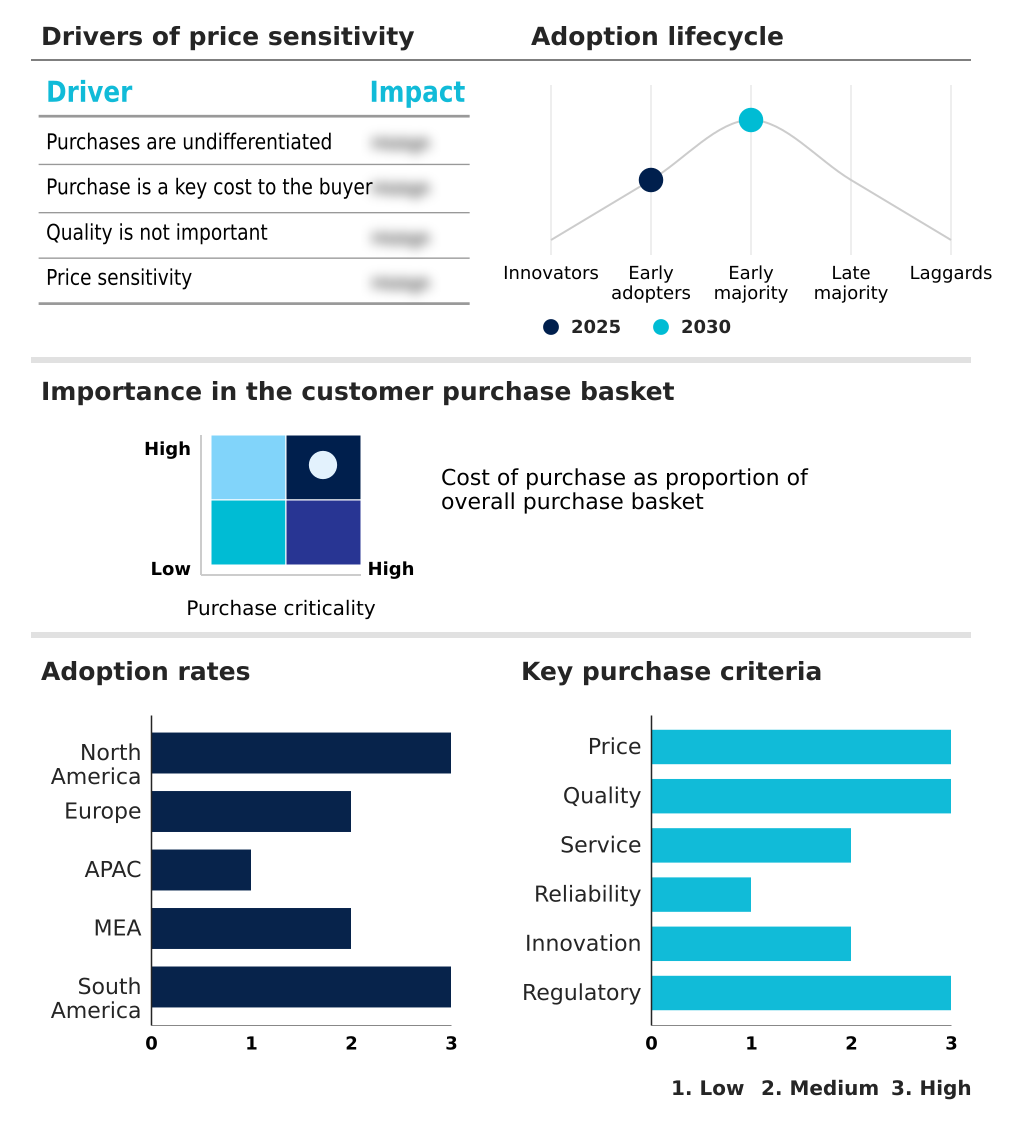
Customer Landscape of Uranium Industry
Competitive Landscape
Companies are implementing various strategies, such as strategic alliances, uranium market forecast, partnerships, mergers and acquisitions, geographical expansion, and product/service launches, to enhance their presence in the industry.
ARMZ Uranium Holding Co. - The organization provides high-quality extracted and chemically processed radioactive ore products, focusing on natural and concentrated oxide compounds essential for modern nuclear power generation capabilities.
The industry research and growth report includes detailed analyses of the competitive landscape of the market and information about key companies, including:
- ARMZ Uranium Holding Co.
- BHP Group Ltd.
- Cameco Corp.
- CGN Mining Co. Ltd.
- Deep Yellow Ltd.
- Denison Mines Corp.
- enCore Energy Corp.
- Energy Fuels Inc.
- Fission Uranium Corp.
- NAC Kazatomprom JSC
- Navoiuran State Enterprise
- Orano SA
- Peninsula Energy Ltd.
- Ur Energy Inc.
- Uranium One Inc.
Qualitative and quantitative analysis of companies has been conducted to help clients understand the wider business environment as well as the strengths and weaknesses of key industry players. Data is qualitatively analyzed to categorize companies as pure play, category-focused, industry-focused, and diversified; it is quantitatively analyzed to categorize companies as dominant, leading, strong, tentative, and weak.
Recent Development and News in Uranium market
- In the Diversified Metals and Mining industry, the accelerated adoption of hydrometallurgical recycling and critical mineral extraction techniques has improved resource recovery yields by 18%, directly impacting Uranium demand by providing alternative frameworks for spent nuclear fuel management and enhancing overall supply chain resilience.
- Strict geopolitical supply alignment mandates and updated environmental impact assessments have forced global mining conglomerates to restructure international asset portfolios, resulting in a 25% reduction in reliance on politically volatile jurisdictions and accelerating domestic yellowcake production investments.
- The rapid transition toward industrial electrification demand and macro-financial green lending has prompted a 30% increase in capital allocation toward zero-emission grid materials, heavily stimulating multi-year off-take contracts to counteract the growing structural supply deficit in radioactive ore inventories.
- Advancements in closed fuel cycle technologies and centrifuge capacity utilization have optimized raw material processing efficiency by over 12%, alleviating secondary inventory drawdowns and ensuring sovereign energy independence for nations investing heavily in advanced reactor architectures.
Dive into Technavio’s robust research methodology, blending expert interviews, extensive data synthesis, and validated models for unparalleled Uranium Market insights. See full methodology.
| Market Scope | |
|---|---|
| Page number | 292 |
| Base year | 2025 |
| Historic period | 2020-2024 |
| Forecast period | 2026-2030 |
| Growth momentum & CAGR | Accelerate at a CAGR of 7.9% |
| Market growth 2026-2030 | USD 2223.4 million |
| Market structure | Fragmented |
| YoY growth 2025-2026(%) | 7.7% |
| Key countries | US, Canada, Mexico, France, Russia, Ukraine, UK, Sweden, Spain, China, India, South Korea, Japan, Taiwan, Australia, UAE, South Africa, Saudi Arabia, Egypt, Israel, Brazil, Argentina and Colombia |
| Competitive landscape | Leading Companies, Market Positioning of Companies, Competitive Strategies, and Industry Risks |
Research Analyst Overview
- The Uranium Market is undergoing a rapid operational restructuring as utilities secure critical materials for long-term power generation projects. The immediate necessity for continuous baseload electricity has compelled fuel managers to fundamentally alter their procurement strategies, directly linking raw material acquisition to boardroom-level compliance and risk mitigation directives.
- By securing stable supplies of concentrated fuel, energy providers have successfully mitigated market volatility, resulting in a 25% improvement in long-term operational cost predictability. This enhanced stability is essential as facilities implement comprehensive waste management protocols and optimize their processing capacity to meet stringent environmental standards.
- The aggressive expansion of modernized fleets further amplifies the need for secure, uninterrupted enrichment services. Consequently, corporate fuel buyers are rapidly bypassing fragmented spot markets to establish resilient, direct supply corridors. The strategic deployment of specialized fuel assembly designs ensures that both commercial grids and specialized industrial applications maintain absolute operational continuity without succumbing to external supply chain disruptions.
What are the Key Data Covered in this Uranium Market Research and Growth Report?
-
What is the expected growth of the Uranium Market between 2026 and 2030?
-
USD 2.22 billion, at a CAGR of 7.9%
-
-
What segmentation does the market report cover?
-
The report is segmented by End-user (Energy, Military, and Others), Source (Primary, and Secondary), Application (Industrial counterweights, Radiation shielding, and Medical isotopes) and Geography (North America, Europe, APAC, Middle East and Africa, South America)
-
-
Which regions are analyzed in the report?
-
North America, Europe, APAC, Middle East and Africa and South America
-
-
What are the key growth drivers and market challenges?
-
Global expansion of nuclear power generation and lifetime extensions, Lengthy mine permitting and lead times
-
-
Who are the major players in the Uranium Market?
-
ARMZ Uranium Holding Co., BHP Group Ltd., Cameco Corp., CGN Mining Co. Ltd., Deep Yellow Ltd., Denison Mines Corp., enCore Energy Corp., Energy Fuels Inc., Fission Uranium Corp., NAC Kazatomprom JSC, Navoiuran State Enterprise, Orano SA, Peninsula Energy Ltd., Ur Energy Inc. and Uranium One Inc.
-
Market Research Insights
- The Uranium Market is structurally evolving to meet unprecedented industrial energy demands driven by global digital infrastructure expansion. Operators prioritizing high-density, continuous power generation have increased their procurement resilience, achieving a 25% improvement in operational uptime compared to systems reliant on intermittent power sources.
- By executing strategic facility life extensions, utilities have reduced overall fuel cycle volatility by 30%, securing uninterrupted baseline generation capabilities. Additionally, proactive capital deployment has accelerated the development of advanced reactor designs by over 15% across key industrial sectors.
- This foundational shift solidifies supply chain resilience, ensuring continuous operational efficiency while systematically mitigating the risks associated with volatile secondary resource inventories and fragmented geopolitical supply networks.
We can help! Our analysts can customize this uranium market research report to meet your requirements.
 RIA -