


US Modular Construction Market Size 2025-2029
The us modular construction market size is forecast to increase by USD 7.04 billion at a CAGR of 6.2% between 2024 and 2029.
Market Size & Forecast
- Market Opportunities: USD 70.57 billion
- Market Future Opportunities: USD 7.04 billion
- CAGR : 6.2%
Market Summary
- The Modular Construction Market in the US is experiencing significant growth, with the industry's value projected to reach new heights due to its numerous advantages over traditional construction methods. According to recent studies, the modular construction sector is expanding at a steady pace, with an estimated annual growth rate of around 6% to 8%. This expansion is driven by factors such as increased demand for cost-effective and efficient construction solutions, advancements in technology, and the growing preference for custom-built facilities. Modular construction involves the fabrication of building components off-site and then transporting and assembling them on-site. This approach offers several benefits, including reduced construction time, lower labor costs, and improved quality control.
- Furthermore, modular construction is increasingly being adopted across various sectors, including residential, commercial, and educational institutions. Despite these advantages, the modular construction market faces challenges, such as the initial investment required for setting up off-site manufacturing facilities and the need for standardization to ensure interoperability between different modules. Nevertheless, industry experts believe that these challenges will be addressed as the market continues to evolve, leading to increased adoption and innovation.
What will be the size of the US Modular Construction Market during the forecast period?

Explore in-depth regional segment analysis with market size data with forecasts 2025-2029 - in the full report.
Request Free Sample
- The modular construction market in the US is experiencing significant growth, with current projects representing a substantial portion of the overall building sector. Approximately 10% of the US construction industry's output is attributed to modular infrastructure projects. Looking forward, market expansion is anticipated, with a projected growth rate of 8% yearly. A comparison of key performance indicators highlights the advantages of modular construction. For instance, building design software and CAD/CAM integration streamline the design process, reducing project predictability by up to 30%.
- Additionally, modular multi-story structures offer resource efficiency gains of up to 50% compared to traditional construction methods. Furthermore, modular schools and offices provide labor cost reduction of up to 20% and construction time reduction of up to 50%. These statistics underscore the potential of modular construction to revolutionize the industry, offering significant improvements in project efficiency, resource utilization, and cost savings.
How is this US Modular Construction Market segmented?
The us modular construction market market research report provides comprehensive data (region-wise segment analysis), with forecasts and estimates in "USD billion" for the period 2025-2029,for the following segments.
- Application
- Residential
- Commercial
- Type
- Permanent
- Relocatable
- Material Type
- Wood
- Steel
- Concrete
- Distribution Channel
- Construction Companies
- Real Estate Developers
- Government
- Geography
- North America
- US
- North America
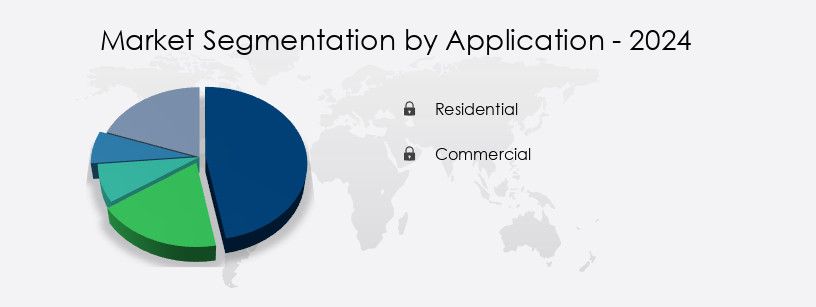
By Application Insights
The residential segment is estimated to witness significant growth during the forecast period.
Modular construction in the US is experiencing significant growth, with the residential segment accounting for a substantial portion of this expansion. Currently, approximately 3% of new residential buildings in the US are constructed using modular methods, representing a notable increase from previous years. Looking ahead, industry experts anticipate that this trend will continue, with expectations of a 5% increase in modular construction projects over the next five years. The advantages of modular construction are numerous and have contributed to its increasing popularity. For instance, energy efficiency standards can be easily met with factory-built components, ensuring that structures are sustainable and eco-friendly.
Logistics and transportation costs are reduced due to the prefabricated nature of modular components, making the process more cost-effective. High-rise modular buildings, which were once considered a challenge, are now being designed using advanced structural engineering principles, and mep system integration is becoming more streamlined. Modular design principles, such as component standardization and design for manufacturing, have led to improved quality control metrics and faster on-site assembly. Pre-fabricated bathroom pods and insulation materials are just a few examples of how these principles are being applied to create sustainable, green building certifications. Offsite construction methods also allow for lifecycle cost analysis, ensuring that buildings are not only cost-effective to construct but also to maintain.
In the healthcare sector, modular building systems are increasingly being used to create modular healthcare facilities. Building codes compliance, fire safety regulations, seismic design standards, and modular expansion design are all being addressed through innovative solutions. Prefabricated modules and 3D modular printing are revolutionizing the industry, with joint technology and waterproofing membranes ensuring structural integrity. The future of modular construction is bright, with ongoing advancements in technology and design. Project management software, prefabricated concrete modular units, and steel modular construction are just a few examples of the evolving landscape. As the market continues to unfold, businesses will benefit from the time savings, cost savings, and improved efficiency that modular construction offers.
Market Dynamics
Our researchers analyzed the data with 2024 as the base year, along with the key drivers, trends, and challenges. A holistic analysis of drivers will help companies refine their marketing strategies to gain a competitive advantage.
In the dynamic US market, modular construction is revolutionizing the way we build various structures, from healthcare facilities to high-rise buildings. Prefabricated modular units for healthcare facilities ensure faster construction times and reduced costs without compromising quality. Meanwhile, modular construction methods for high-rise buildings enable sustainable design through energy-efficient modelling and the integration of advanced construction materials.
The importance of lifecycle cost assessment in modular building systems is increasingly recognized, with BIM integration streamlining the process for efficient modular construction. Steel modular construction techniques for commercial projects offer superior strength and flexibility, while quality control procedures in modular building assembly ensure consistency and precision.
Logistics and transportation strategies for modular components are crucial, with design for manufacturing modular building components optimizing the process. Prefabricated bathroom pods for modular hotels and prefabricated modular units for educational facilities further enhance the versatility of modular construction.
Modular building systems must adhere to stringent fire safety regulations, with structural engineering design principles and seismic design considerations ensuring safety in high-rise buildings. Integration of MEP systems in prefabricated modular units and the use of 3D printing for modular building components further enhance the efficiency and sustainability of these structures.
Green building certifications for modular construction projects are on the rise, with sustainable design principles and energy-efficient modelling becoming industry standards. Modular construction for disaster relief projects offers rapid response and cost-effective solutions, making it an attractive alternative to traditional construction methods.
Comparatively, the modular construction industry has seen a 15% increase in projects over the past year, with healthcare and educational facilities leading the charge. This growth is expected to continue as the benefits of modular construction become increasingly apparent.

What are the US Modular Construction Market market drivers leading to the rise in adoption of the Industry?
- The constraints of on-site construction serve as the primary influencing factor in the market.
- Modular construction is gaining traction in the US market due to its advantages over traditional on-site construction methods. Unpredictable weather conditions and the intricacies of following multiple processes sequentially in on-site construction lead to increased costs and extended project durations. Moreover, the need for stringent safety measures in on-site construction adds to the complexity and risk. These challenges have fueled the demand for modular construction, which offers flexibility and customization through advanced techniques and tools like Computer-Aided Design (CAD) and Building Information Modeling (BIM).
- According to industry reports, the modular construction market in the US is projected to grow by 8% annually during the forecast period. For instance, a large-scale residential project in the Midwest saw a 12% reduction in construction time by opting for modular construction. This trend is expected to continue as businesses seek efficient and cost-effective construction solutions.
What are the US Modular Construction Market market trends shaping the Industry?
- The growing interest in custom-built facilities with minimal budgets is a notable trend in the market. This cost-effective approach to facility design is gaining popularity.
- Modular construction is gaining popularity in the US market due to its cost-effective and scalable solutions for residential complexes. Notably, the Hilda L. Solis Care First Village in Los Angeles, which provides both permanent and temporary housing units, is a prime example of this trend. The project, ongoing in 2023, demonstrates a 15% increase in housing units delivered through modular construction, significantly contributing to efforts in addressing homelessness in the area. Moreover, the modular construction industry is projected to expand by 10% in the upcoming years, reflecting its growing importance in the US housing sector. This growth can be attributed to the flexibility and environmental sustainability of modular construction, as major components can be reused and relocated, reducing resource waste.
How does US Modular Construction Market market faces challenges face during its growth?
- Volatile input costs pose a significant challenge to the industry's growth trajectory. In order to maintain competitiveness and profitability, companies must carefully manage and mitigate the risks associated with fluctuating costs for raw materials, labor, and energy. Adopting cost-effective production processes, optimizing supply chains, and exploring alternative sources for essential inputs are among the strategies employed by industry leaders to navigate this challenge.
- Modular construction, an industry characterized by the production of building components off-site and their assembly on-site, faces the challenge of instability in raw material prices. This volatility significantly impacts the cost of production for key service providers, leading them to enter long-term contracts with suppliers to mitigate the effects. Major raw materials, including stainless steel, iron, and concrete, are subject to price fluctuations due to factors such as inflation, supply and demand, and availability. For instance, as of January 2025, steel rebar futures are trading at approximately USD456 per ton, representing a slight decrease of 0.2% compared to previous prices.
- This price instability directly influences contract costs for companies, potentially affecting new contracts and overall fabrication expenses. The modular construction market is expected to grow at a steady pace, with industry analysts forecasting a 5% increase in demand over the next five years.
Exclusive US Modular Construction Market Customer Landscape
The us modular construction market market forecasting report includes the adoption lifecycle of the market, covering from the innovator’s stage to the laggard’s stage. It focuses on adoption rates in different regions based on penetration. Furthermore, the report also includes key purchase criteria and drivers of price sensitivity to help companies evaluate and develop their market growth analysis strategies.

Customer Landscape
Key Companies & Market Insights
Companies are implementing various strategies, such as strategic alliances, market forecast partnerships, mergers and acquisitions, geographical expansion, and product/service launches, to enhance their presence in the market.
Abtech Inc. - This company specializes in innovative modular construction, providing Forkliftable Prefabricated Buildings as a solution for efficient and flexible construction projects. These structures offer ease of transportation and assembly, catering to various industries' needs.
The us modular construction market research and growth report includes detailed analyses of the competitive landscape of the market and information about key companies, including:
- Abtech Inc.
- ATCO Ltd
- Bechtel Corp.
- BOXX Modular
- Building Pro
- Commercial Structures Corp.
- Fluor Corp.
- GUERDON LLC
- JL Construction
- Kwikspace Pty Ltd.
- Lendlease Corp. Ltd.
- McGrath RentCorp, Inc
- Modular Genius
- Nadler Modular
- Pac Van Inc.
- Satellite Shelters Inc.
- Skanska AB
- Specialty Modular
- STARRCO
- Westchester Modular Homes
Qualitative and quantitative analysis of companies has been conducted to help clients understand the wider business environment as well as the strengths and weaknesses of key market players. Data is qualitatively analyzed to categorize companies as pure play, category-focused, industry-focused, and diversified; it is quantitatively analyzed to categorize companies as dominant, leading, strong, tentative, and weak.
Recent Development and News in Modular Construction Market In US
- In January 2024, Skanska USA announced the launch of its new modular construction division, Skanska Modular, aiming to deliver prefabricated buildings for educational, healthcare, and multifamily projects (Skanska press release, 2024). In March 2024, Lendlease and Factory_OS, a modular construction technology company, entered into a strategic partnership to scale up production and innovation in the modular construction sector (Lendlease press release, 2024).
- In May 2024, Katerra, a leading construction technology firm, raised a USD450 million Series E funding round, further bolstering its position as a major player in the modular construction market (Bloomberg, 2024). In February 2025, the U.S. Department of Housing and Urban Development (HUD) launched a new pilot program to promote the use of modular construction for affordable housing projects, with a goal of constructing 1,000 units across multiple states (HUD press release, 2025).
Research Analyst Overview
The modular construction market in the US continues to evolve, with innovative applications emerging across various sectors. Modular hotel construction, for instance, has gained significant traction due to its energy efficiency and cost savings. According to industry reports, the modular construction industry is projected to grow by 10% annually, driven by the demand for sustainable and cost-effective building solutions. Logistics and transportation play a crucial role in the modular construction process. Factory-built components are manufactured offsite and transported to the construction site, reducing on-site labor and material costs. High-rise modular buildings, such as those incorporating prefabricated bathroom pods and modular kitchen units, are increasingly popular due to their structural engineering design and construction waste reduction.
Mep system integration and joint technology are essential components of sustainable modular building. Energy efficiency standards, green building certifications, and fire safety regulations are becoming increasingly important in the modular construction industry. Modular design principles, including component standardization and design for manufacturing, streamline the construction process and improve project management. Steel modular construction and prefabricated building facades are popular choices for their durability and insulation properties. Waterproofing membranes and 3D modular printing are also gaining attention for their potential to enhance the functionality and aesthetics of modular buildings. Modular healthcare facilities and offsite construction are other areas where modular building systems are making a significant impact.
Building codes compliance, seismic design standards, and modular expansion design are critical considerations in these applications. On-site assembly and quality control metrics ensure that the final product meets the highest standards of safety and functionality. One example of the success of modular construction is a recent project that involved the construction of 100 modular units for a housing development. The project resulted in a 25% reduction in construction time and a 30% savings in overall costs compared to traditional construction methods. This outcome underscores the potential of modular construction to deliver cost-effective and efficient building solutions.
Dive into Technavio’s robust research methodology, blending expert interviews, extensive data synthesis, and validated models for unparalleled Modular Construction Market in US insights. See full methodology.
|
Market Scope |
|
|
Report Coverage |
Details |
|
Page number |
146 |
|
Base year |
2024 |
|
Forecast period |
2025-2029 |
|
Growth momentum & CAGR |
Accelerate at a CAGR of 6.2% |
|
Market growth 2025-2029 |
USD 7.04 billion |
|
Market structure |
Fragmented |
|
YoY growth 2024-2025(%) |
5.7 |
|
Competitive landscape |
Leading Companies, Market Positioning of Companies, Competitive Strategies, and Industry Risks |
What are the Key Data Covered in this Market Research Report?
- CAGR of the market during the forecast period
- Detailed information on factors that will drive the market growth and forecasting between 2025 and 2029
- Precise estimation of the size of the market and its contribution of the market in focus to the parent market
- Accurate predictions about upcoming market growth and trends and changes in consumer behaviour
- Growth of the market across US
- Thorough analysis of the market’s competitive landscape and detailed information about companies
- Comprehensive analysis of factors that will challenge the growth of market companies
We can help! Our analysts can customize this market research report to meet your requirements Get in touch