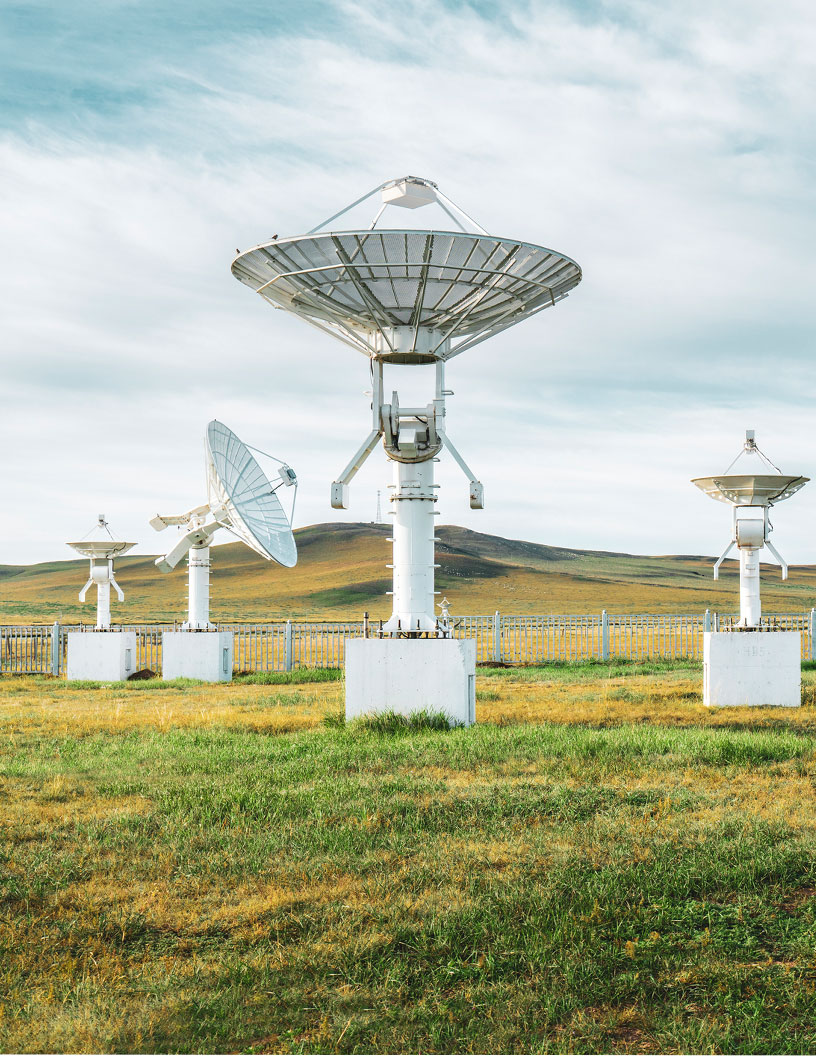


Very Small Aperture Terminal Market Size 2024-2028
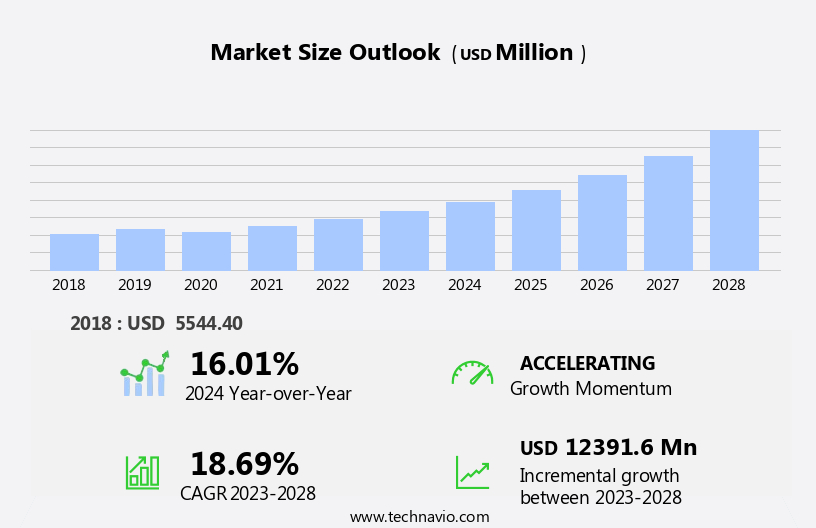
The very small aperture terminal market size is forecast to increase by USD 12.39 billion at a CAGR of 18.69% between 2023 and 2028.
- The Very Small Aperture Terminal (VSAT) market is experiencing significant growth due to the increasing adoption of satellite services for cross-vertical applications. The emergence of cloud-based big data services is another key trend driving market expansion. However, the high installation cost of VSAT equipment remains a significant challenge. This report provides a comprehensive analysis of these market trends and growth factors, offering insights into the future direction of the VSAT market. By understanding the current landscape and future developments, businesses can make informed decisions and capitalize on opportunities in this dynamic market. The VSAT market is poised for growth as the demand for reliable, high-speed connectivity continues to increase across various industries.
What will be the Size of the Very Small Aperture Terminal Market During the Forecast Period?
- The Very Small Aperture Terminal (VSAT) market In the US continues to expand, driven by the growing demand for reliable internet connectivity in remote areas, including hilly mountain regions, ocean and sea regions, and rural areas. VSATs, consisting of a transceiver, earth station, and transponder, provide an alternative to traditional terrestrial infrastructure for delivering high-speed data, voice, and multimedia services to workstations and vehicles In these regions. VSATs utilize star topology, enabling multiple users to connect to a central hub in space, providing flexibility and scalability. The market is witnessing significant growth in sectors such as audio and video broadcasting, private earth stations, and mobile access, particularly in industries requiring real-time data transfer and communication, such as disaster response and maritime operations.
- The increasing prevalence of natural calamities like earthquakes and cyclones necessitates the deployment of low-cost VSAT architectures to ensure uninterrupted communication and access to critical information in remote locations. VSATs are increasingly being used in trucks, ships, and coastal regions to provide mobile access to the internet and other communication services.
How is this Very Small Aperture Terminal Industry segmented and which is the largest segment?
The very small aperture terminal industry research report provides comprehensive data (region-wise segment analysis), with forecasts and estimates in "USD million" for the period 2024-2028, as well as historical data from 2017-2022 for the following segments.
- Solution
- Services
- Products
- Platform
- Land VSAT
- Maritime VSAT
- Airborne VSAT
- Geography
- APAC
- China
- Japan
- Europe
- Germany
- UK
- North America
- US
- South America
- Middle East and Africa
- APAC
By Solution Insights
- The services segment is estimated to witness significant growth during the forecast period.
Satellite broadband services, including Very Small Aperture Terminals (VSATs), have become essential for maintaining uninterrupted communications and data exchange in various sectors, particularly in healthcare and civil protection. In Europe, over 60% of public organizations have adopted satellite-based services to enhance their network capabilities. These services enable healthcare providers to communicate directly with patients during emergencies, ensuring timely and effective response. Furthermore, satellite broadband services support government agencies in analyzing and managing factors that cause manmade disasters, facilitating preventive measures and coordinated humanitarian efforts. With the increasing reliance on technology and data exchange, VSATs and satellite broadband services are becoming indispensable tools for organizations involved in critical operations.
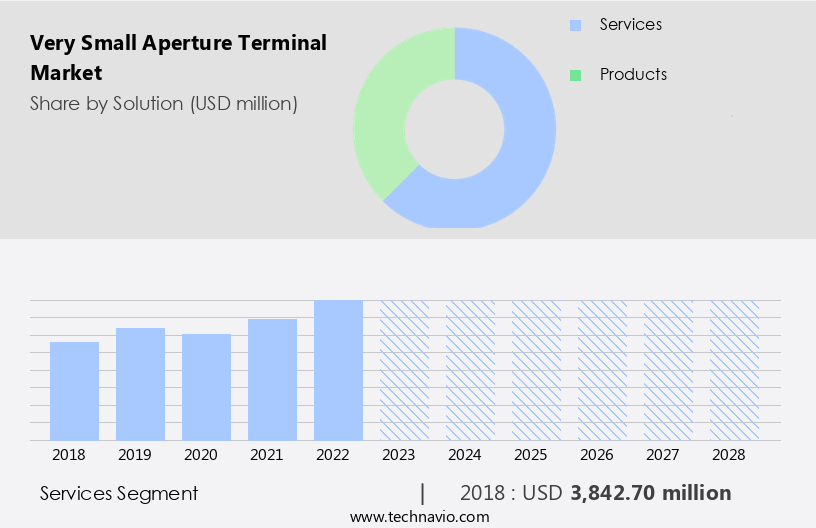
Get a glance at the Very Small Aperture Terminal Industry report of share of various segments Request Free Sample
The Services segment was valued at USD 0.00 billion in 2017 and showed a gradual increase during the forecast period.
Regional Analysis
- APAC is estimated to contribute 30% to the growth of the global market during the forecast period.
Technavio’s analysts have elaborately explained the regional trends and drivers that shape the market during the forecast period.
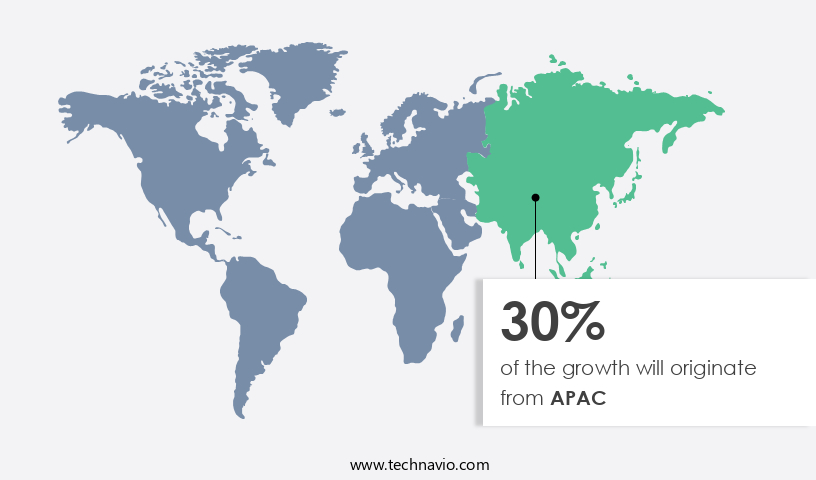
For more insights on the market share of various regions, Request Free Sample
In the Asia Pacific (APAC) region, Very Small Aperture Terminals (VSATs) play a crucial role in providing reliable internet access, particularly in remote locations and rural areas, where traditional wired connections are unavailable. VSATs are essential for disaster management in APAC, which is a disaster-prone region, enabling the collection and analysis of extensive Geographic Information System (GIS) data for managing hazardous activities, such as mining, and monitoring terrorist activities. The APAC market for VSATs is projected to experience substantial growth during the forecast period due to its applications in climate monitoring, earthquake site monitoring and mapping, and coastal zone studies.
These applications will significantly contribute to the expansion of the VSAT market In the region.
Market Dynamics
Our very small aperture terminal market researchers analyzed the data with 2023 as the base year, along with the key drivers, trends, and challenges. A holistic analysis of drivers will help companies refine their marketing strategies to gain a competitive advantage.
What are the key market drivers leading to the rise in adoption of Very Small Aperture Terminal Industry?
Increased use of satellite services for cross-vertical applications is the key driver of the market.
- Very Small Aperture Terminals (VSATs) are essential for facilitating connectivity in various application sectors, particularly in remote areas and regions with challenging environmental conditions, such as hilly mountain regions, ocean and sea areas, and rural locations. VSATs play a crucial role in enabling telecommunications for public safety operations, telemedicine, and other critical applications. Telemedicine, a growing sector In the consumer broadband industry, relies on VSATs for two-way communication via audio, video, and data. This technology enables doctors to provide healthcare services to patients in remote locations, including ships in coastal regions and mobile vehicles, despite natural calamities like earthquakes and cyclones.
- VSATs use satellites in geosynchronous orbit to establish a Star Topology network, ensuring digital information transfer with minimal delay. VSAT Terminals consist of a transceiver, antenna, and transponder housed in a box. The antenna size varies depending on the application requirements. VSATs operate in specific frequency bands, requiring a clear view of the southern sky for optimal signal strength. However, VSATs have some disadvantages, such as potential signal loss due to environmental conditions and the need for line-of-sight connectivity. Despite these challenges, VSATs remain a valuable solution for providing Internet access in challenging locations where traditional wired connections are unfeasible.
What are the market trends shaping the Very Small Aperture Terminal Industry?
Emergence of cloud-based big data services is the upcoming market trend.
- The Very Small Aperture Terminal (VSAT) market is experiencing significant growth due to the increasing demand for Internet connectivity in remote areas, including hilly mountain regions, ocean and sea regions, and rural locations. VSAT terminals, which consist of an antenna, transceiver, transponder, and Earth Station, are essential for establishing a WAN link in areas where terrestrial infrastructure is unavailable or insufficient. VSATs are particularly useful in industries such as oil and gas, construction, and agriculture, where aerial photography is extensively used for monitoring and analysis. Satellites generate vast amounts of data, primarily In the form of images, which can be challenging to analyze.
- To address this challenge, companies In the VSAT market are expanding their offerings to include data analytics services. Big data cloud services enable automatic processing and analysis of raw aerial images, providing reliable and actionable data for industries in need of real-time insights. However, VSATs have some disadvantages, such as delay due to the use of geosynchronous orbit and signal strength issues caused by environmental conditions and the southern sky. Despite these challenges, VSATs remain a popular choice for providing Internet access in remote locations, including ships in coastal regions and mobile vehicles such as trucks and vans, especially during natural calamities like earthquakes and cyclones.
- The consumer broadband industry is also adopting VSAT technology for mobility applications, making it an essential component of the digital information infrastructure. The market for VSAT terminals is expected to continue growing, driven by the need for low-cost architecture and the increasing demand for reliable and high-speed Internet access in remote locations.
What challenges does Very Small Aperture Terminal Industry face during the growth?
High installation cost of very small aperture terminal equipment is a key challenge affecting the industry growth.
- Very Small Aperture Terminals (VSATs) are essential for establishing Internet connectivity in remote areas, including hilly mountain regions, ocean and sea regions, and rural locations. VSATs enable two-way communication via audio, video, and data, making them ideal for applications in public safety operations, telemedicine, and mobile access. VSAT Terminals consist of a Private Earth Station, Earth Station, satellites, antenna, transceiver, transponder, and hardware. The Star Topology network design allows for easy expansion and connectivity for workstation groups. VSATs have become increasingly important in industries such as consumer broadband and the maritime sector, providing Internet access for vehicles like trucks and vans, ships in coastal regions, and even mobility on the go.
- However, VSATs have some disadvantages, including delay due to their position in Geosynchronous orbit and the impact of environmental conditions on signal strength and frequency band. Clear view of the Southern sky and minimal obstruction are necessary for optimal performance. VSATs have become a cost-effective solution for digital information exchange in areas where traditional wired connections are unavailable or impractical. In conclusion, VSATs play a crucial role in providing Internet access and communication services in various industries, particularly in remote locations and applications where wired connections are not feasible. Despite some challenges, VSATs offer a reliable and cost-effective solution for digital information exchange, making them an essential component of modern communication infrastructure.
Exclusive Customer Landscape
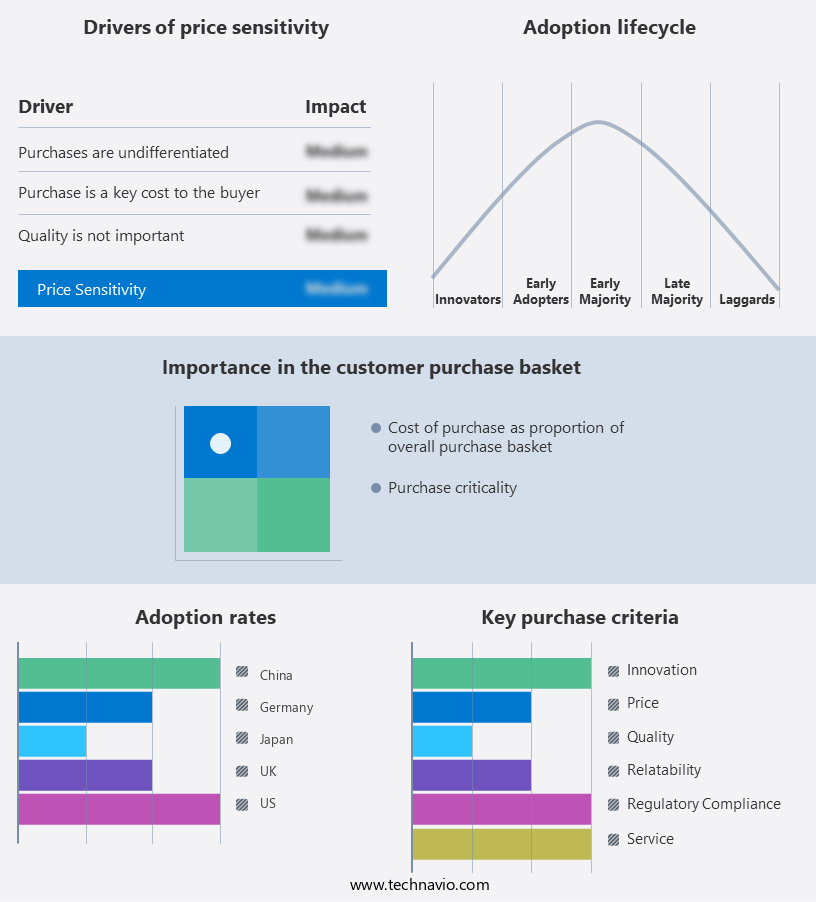
The very small aperture terminal market forecasting report includes the adoption lifecycle of the market, covering from the innovator’s stage to the laggard’s stage. It focuses on adoption rates in different regions based on penetration. Furthermore, the very small aperture terminal market report also includes key purchase criteria and drivers of price sensitivity to help companies evaluate and develop their market growth analysis strategies.
Customer Landscape
Key Companies & Market Insights
Companies are implementing various strategies, such as strategic alliances, very small aperture terminal market forecast, partnerships, mergers and acquisitions, geographical expansion, and product/service launches, to enhance their presence In the industry.
America Movil SAB de CV - Embratel, a leading company, provides Very Small Aperture Terminal (VSAT) solutions In the United States. VSAT is a satellite communication technology that delivers high-speed data transmission with small, outdoor antennas. Embratel's VSAT offering ensures reliable connectivity for businesses and organizations requiring remote communication, particularly in areas with limited terrestrial infrastructure. Our VSAT services offer flexibility, scalability, and customizable solutions to meet diverse communication needs. Embratel's commitment to innovation and quality makes us the go-to partner for businesses seeking efficient and effective satellite communication solutions.
The industry research and growth report includes detailed analyses of the competitive landscape of the market and information about key companies, including:
- America Movil SAB de CV
- Atos SE
- CITIC Ltd.
- Cobham Ltd.
- Comtech
- EchoStar Corp.
- Gilat Satellite Networks Ltd.
- Inmarsat Global Ltd.
- KVH Industries Inc.
- L3Harris Technologies Inc.
- Marlink SAS
- ND SatCom GmbH
- Nisshinbo Holdings Inc.
- Orbit Communications Systems Ltd.
- Singapore Technologies Engineering Ltd.
- Singapore Telecommunications Ltd.
- Telefonica SA
- Thales Group
- Viasat Inc.
- Vizocom
Qualitative and quantitative analysis of companies has been conducted to help clients understand the wider business environment as well as the strengths and weaknesses of key industry players. Data is qualitatively analyzed to categorize companies as pure play, category-focused, industry-focused, and diversified; it is quantitatively analyzed to categorize companies as dominant, leading, strong, tentative, and weak.
Research Analyst Overview
The Very Small Aperture Terminal (VSAT) market caters to the demand for reliable internet connectivity in regions that are geographically challenging or inaccessible through terrestrial means. VSATs have gained significant traction in remote areas, including hilly mountain regions and oceanic areas, where establishing traditional infrastructure is a daunting task. VSATs are essential for workstation groups in various industries, such as audio and video production, that require constant connectivity to transmit and receive digital information. These terminals have become indispensable in enabling seamless communication and collaboration among team members, regardless of their physical location. VSATs operate by transmitting and receiving signals through satellites in geostationary orbit.
The antenna, which is a critical component of a VSAT system, can vary in size, with some being as small as a meter in diameter. The transceiver, which includes the antenna and the transponder, is the primary hardware component responsible for transmitting and receiving data. VSATs are also being increasingly used in mobility applications, such as vehicles, trucks, and vans, to provide internet access on the go. This mobility feature is particularly valuable in industries like transportation, logistics, and emergency services, where real-time data transfer is crucial. VSATs have proven to be a boon for consumers in remote locations, including rural areas and coastal regions, where traditional broadband infrastructure is either non-existent or inadequate.
These terminals provide a reliable WAN link, enabling users to access the internet and digital services that were previously unavailable. Despite their numerous benefits, VSATs do have some disadvantages. One of the most significant challenges is the delay in data transmission due to the distance between the earth station and the satellite in geosynchronous orbit. Additionally, environmental conditions, such as heavy rain or extreme temperatures, can impact signal strength and frequency band performance. VSATs have become a vital component of the consumer broadband industry, providing internet access to remote locations that were previously inaccessible. However, the cost of implementing a VSAT system can be high, leading to the development of low-cost architectures to make these systems more affordable for consumers.
VSATs have proven to be an effective solution for providing internet access in regions affected by natural calamities, such as earthquakes and cyclones, where traditional infrastructure may be damaged or destroyed. These terminals can be easily deployed and provide temporary connectivity until permanent infrastructure can be restored. In conclusion, the VSAT market plays a crucial role in providing internet connectivity to remote areas, including hilly mountain regions, oceanic areas, and rural locations, where traditional infrastructure is inadequate or non-existent. These terminals have become an essential tool for various industries, enabling seamless communication and collaboration, and providing consumers with reliable internet access.
Despite some challenges, the benefits of VSATs far outweigh the disadvantages, making them an indispensable component of the modern communication landscape.
|
Very Small Aperture Terminal Market Scope |
|
|
Report Coverage |
Details |
|
Page number |
167 |
|
Base year |
2023 |
|
Historic period |
2017-2022 |
|
Forecast period |
2024-2028 |
|
Growth momentum & CAGR |
Accelerate at a CAGR of 18.69% |
|
Market growth 2024-2028 |
USD 12391.6 million |
|
Market structure |
Fragmented |
|
YoY growth 2023-2024(%) |
16.01 |
|
Key countries |
US, China, Germany, Japan, and UK |
|
Competitive landscape |
Leading Companies, Market Positioning of Companies, Competitive Strategies, and Industry Risks |
What are the Key Data Covered in this Very Small Aperture Terminal Market Research and Growth Report?
- CAGR of the Very Small Aperture Terminal industry during the forecast period
- Detailed information on factors that will drive the Very Small Aperture Terminal growth and forecasting between 2024 and 2028
- Precise estimation of the size of the market and its contribution of the industry in focus to the parent market
- Accurate predictions about upcoming growth and trends and changes in consumer behaviour
- Growth of the market across APAC, Europe, North America, South America, and Middle East and Africa
- Thorough analysis of the market’s competitive landscape and detailed information about companies
- Comprehensive analysis of factors that will challenge the very small aperture terminal market growth of industry companies
We can help! Our analysts can customize this very small aperture terminal market research report to meet your requirements.
 RIA -
RIA -