

Wind Turbine Bearing Market Size 2025-2029
The wind turbine bearing market size is forecast to increase by USD 13.2 billion, at a CAGR of 12.4% between 2024 and 2029.
- The market is witnessing strong growth due to the decreasing cost of wind energy and the increasing demand for wind power, while facing competition from alternative energy sources and the need for reliable and durable bearings. This trend is further fueled by the rising demand for wind turbine bearings with the increasing onshore wind power installations worldwide. Additionally, advanced materials, such as improved polymers and ceramic coatings, are being used to enhance wind turbine equipment's durability and performance. However, the market faces challenges from alternative sources of energy, such as solar and hydropower, which also offer renewable energy solutions. Additionally, the high replacement costs of wind turbine bearings and the complex maintenance requirements pose significant challenges for market participants. Manufacturers of large wind turbine bearings, such as SKF, Schaeffler, and NSK, must navigate these challenges by focusing on innovation and cost reduction to maintain their competitive edge.
- The market's strategic landscape is shaped by the need for high-performance, reliable, and cost-effective wind turbine bearings to meet the growing demand for renewable energy solutions. Companies that can address these challenges and offer solutions that increase efficiency, reduce maintenance costs, and ensure long-term reliability will be well-positioned to capitalize on the opportunities in the market. Wind energy's cost-effectiveness and the increasing focus on renewable energy sources are expected to continue fueling market growth.
What will be the Size of the Wind Turbine Bearing Market during the forecast period?
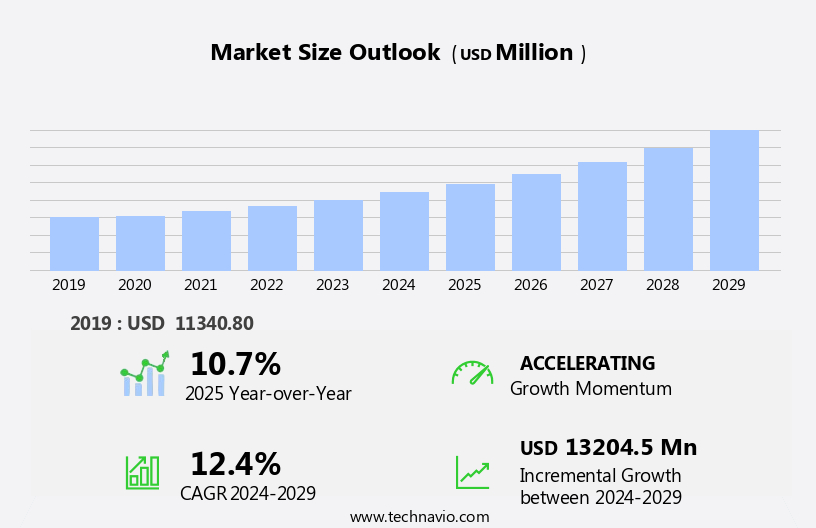
Explore in-depth regional segment analysis with market size data - historical 2019-2023 and forecasts 2025-2029 - in the full report.
Request Free Sample
- The market encompasses various types of bearings used in wind energy systems, including thrust bearings, spherical bearings, tapered roller bearings, ball bearings, cylindrical roller bearings, and roller bearings. These bearings face numerous challenges, such as bearing corrosion, pitting, cavitation, wear, spalling, and fretting, which necessitate regular bearing lubrication, disassembly, and maintenance. Bearing mounting and shaft alignment play crucial roles in ensuring optimal performance and longevity. Oil lubrication and grease lubrication are common methods for maintaining bearing health, while dry lubrication is an alternative for specific applications. Heavy-duty bearings, such as hybrid bearings, are increasingly utilized in wind turbines due to their ability to handle high loads and speeds.
- Precision bearings and angular contact bearings are also essential components, contributing to the overall efficiency and reliability of wind turbine systems. Bearing contamination can significantly impact bearing life, necessitating rigorous cleaning procedures and filtration systems. Market trends include the development of advanced bearing materials and coatings to mitigate bearing fatigue and improve resistance to pitting and cavitation. Digitization, remote monitoring, and predictive maintenance capabilities are essential to improving operational efficiency and reducing downtime.In the realm of wind turbine bearings, ongoing research and innovation are critical to addressing the unique challenges of this industry and ensuring the long-term sustainability of renewable energy solutions.
How is this Wind Turbine Bearing Industry segmented?
The wind turbine bearing industry research report provides comprehensive data (region-wise segment analysis), with forecasts and estimates in "USD million" for the period 2025-2029, as well as historical data from 2019-2023 for the following segments.
- Application
- Onshore
- Offshore
- Product
- GBMB
- BBYBGB
- Material
- Steel
- Bronze and composites
- Ceramic
- Geography
- North America
- US
- Canada
- Europe
- France
- Germany
- UK
- APAC
- Australia
- China
- India
- Japan
- South Korea
- Rest of World (ROW)
- North America
By Application Insights
The onshore segment is estimated to witness significant growth during the forecast period. The onshore market experiences significant growth due to the declining levelized cost of electricity (LCOE) for wind power worldwide. For instance, in Poland, wind and solar auctions totaling 2.2 GW were sold, with onshore wind accounting for USD 4.25 billion and 2.2 GW. Bids ranged from USD 43.02/MWh to USD 61.49/MWh. Innovations in technology have boosted the commercialization of onshore wind generation, with a record 109 GW of onshore wind capacity installed globally in 2024, according to the Global Wind Energy Council (GWEC). Wind turbine reliability is crucial in this sector, with bearing alignment, monitoring, and maintenance essential for optimal wind turbine performance.
Rolling element bearings and fluid film bearings are commonly used in wind turbine gearboxes and rotors. Composite materials and advanced bearing designs enhance bearing stiffness, capacity, and efficiency. Certification, inspection, and condition monitoring ensure bearing compliance with industry standards, such as ANSI, DIN, and ISO. Wind turbine availability is crucial for green energy production, with bearing installation, repair, and replacement impacting wind farm productivity. Renewable energy sources, including wind power, require sustainable practices, with bearing manufacturers focusing on reducing noise, vibration, and friction. Bearing suppliers provide essential services, from installation to removal and repair, ensuring wind turbine operation remains efficient and effective.
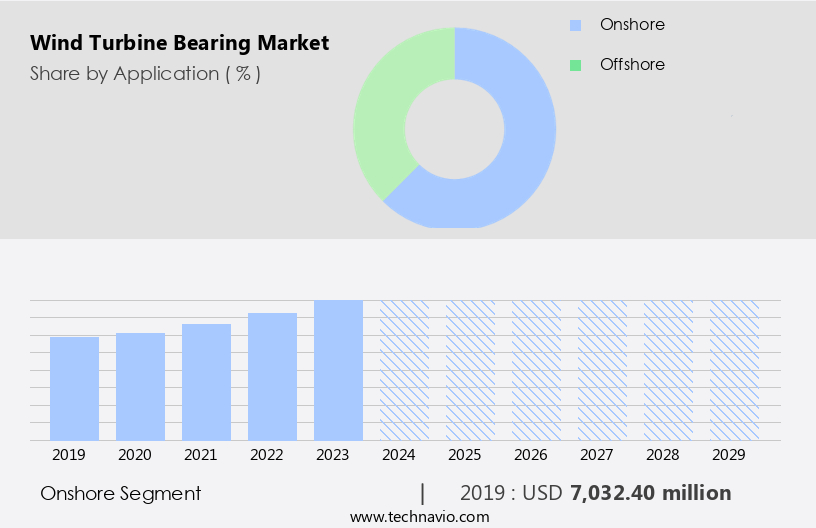
The Onshore segment was valued at USD 7.03 billion in 2019 and showed a gradual increase during the forecast period.
Regional Analysis
APAC is estimated to contribute 60% to the growth of the global market during the forecast period. Technavio's analysts have elaborately explained the regional trends and drivers that shape the market during the forecast period.
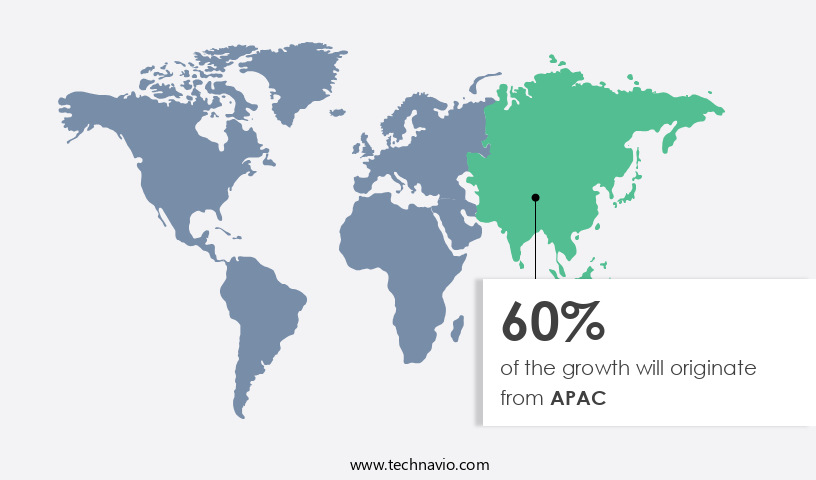
The market in APAC is experiencing significant growth due to the increasing focus on renewable energy sources and the rising energy demands in the region. With a growing population and improved standard of living, there is a pressing need to reduce reliance on fossil fuels and decrease greenhouse gas (GHG) emissions. This shift towards clean energy has led to an increase in wind turbine installations, particularly in countries like China and India, which have high GHG emissions and large energy demands. The market is a crucial component of the wind energy sector, as bearings play a vital role in ensuring wind turbine reliability and performance.
Bearing alignment, monitoring, and maintenance are essential for optimal wind turbine operation and efficiency. The market for wind turbine bearings includes distributors, manufacturers, and suppliers of various types of bearings, such as rolling element bearings and fluid film bearings. Bearing materials, coatings, and designs are continually evolving to meet the demands of wind turbine applications. Composite materials and advanced bearing technologies, such as magnetic bearings and condition monitoring systems, are increasingly being used to improve bearing performance and reduce maintenance requirements. Wind turbine foundations, towers, and gearboxes also rely on bearings for smooth operation and longevity. Wind turbine decommissioning and bearing replacement are important aspects of the market, as wind turbines have a finite lifespan.
Market Dynamics
Our researchers analyzed the data with 2024 as the base year, along with the key drivers, trends, and challenges. A holistic analysis of drivers will help companies refine their marketing strategies to gain a competitive advantage.
What are the Wind Turbine Bearing market drivers leading to the rise in the adoption of Industry?
- The market is driven by the decreasing levelized cost of electricity of wind energy, making it a cost-competitive source of power. This cost reduction, a key industry trend, makes wind energy increasingly competitive with traditional energy sources, thereby increasing its adoption and market share. Wind energy has become a cost-effective alternative for new electricity generation, driven by technological advancements in wind turbine technology. The increasing hub height of wind turbines leads to larger swept areas, reducing the overall installation costs. According to the International Renewable Energy Agency (IRENA), the global weighted average levelized cost of electricity (LCOE) for newly commissioned offshore and onshore wind projects decreased by 7% and more than one-third, respectively, between 2022 and 2023. Currently, the cost of generating onshore wind power is comparable to that of generating power from fossil fuels in various parts of the world.
- These cost reductions have significantly contributed to the growth of the global wind turbine market. The advancements in wind energy technology continue to make it a competitive and viable energy source in the global energy landscape.
What are the Wind Turbine Bearing market trends shaping the Industry?
- The increasing installation of onshore wind power is driving up the demand for wind turbine bearings, representing a notable market trend. Wind power projects continue to expand, necessitating the use of advanced bearing technologies to ensure optimal performance and longevity. The market is experiencing notable growth due to the expanding renewable energy sector, driven by favorable environmental policies and increasing global electricity demand. According to the Global Wind Energy Council (GWEC), wind power accounted for 10-15% of the global electricity demand in 2024, with expectations to surpass 20% by the end of 2030. Several countries, such as India, Brazil, Sweden, and Canada, have been expanding their onshore wind turbine capacity. For instance, India added 3.4 gigawatts (GW) of wind energy capacity in 2024, marking a 21% increase from the previous year. This growth can be attributed to installations in Gujarat, Karnataka, and Tamil Nadu, which collectively accounted for 98% of the new capacity.
- Wind turbine reliability is a crucial factor in the market's growth, with bearing life and alignment being significant considerations. Proper bearing installation and monitoring are essential to ensure wind turbine performance and availability. Bearing distributors play a vital role in providing certified bearings that meet the industry's stringent standards. Bearing stiffness is another essential factor, as it influences the turbine's overall efficiency and longevity. Sustainable energy initiatives and the shift towards green energy sources are further driving market growth. Bearing certification is also a critical aspect, ensuring that bearings meet the necessary safety and performance requirements. Overall, the market is poised for significant growth, driven by the increasing demand for renewable energy and the need for reliable and efficient wind turbine components.
How does Wind Turbine Bearing market face challenges during its growth?
- The expansion of the renewable energy sector poses a significant challenge to the growth of the traditional energy industry, requiring continuous adaptation and innovation to remain competitive. The renewable energy sector's reliability and longevity are crucial for meeting household electricity requirements, reducing carbon dioxide emissions, and contributing to power generation and environmental goals. The global wind power market is driven by the increasing demand for renewable energy sources to reduce reliance on fossil fuels. Wind turbines are a significant component of wind energy generation, and they require robust bearings to ensure efficient operation. Rolling element bearings, such as ball bearings and roller bearings, are commonly used in wind turbine rotors due to their ability to handle high loads and speeds. Fluid film bearings are also used in some applications due to their ability to handle large loads and provide a smoother operation. Wind farm construction involves the installation of wind turbines on wind turbine towers, which can reach up to 100 meters in height.
- The wind turbine foundation plays a crucial role in supporting the wind turbine tower and ensuring its stability. Bearing diagnostics are essential to monitor the health of these bearings and prevent downtime. Composite materials are increasingly being used in wind turbine blades and towers due to their lightweight and high strength properties. Bearing manufacturers are investing in research and development to improve the performance and durability of bearings used in wind turbines. Bearing standards, such as ISO and DIN, ensure that bearings meet specific requirements for wind turbine applications. Proper bearing clearance and maintenance are essential to ensure the longevity of the wind turbine and minimize bearing noise. Despite the challenges, the wind power market is expected to continue growing due to advancements in technology and the increasing demand for renewable energy sources. The market dynamics include the high cost of wind turbine installation, the intermittent nature of wind power, and the competition from other energy sources. However, the benefits of wind power, such as its clean and renewable nature, make it an attractive alternative to traditional energy sources.
Exclusive Customer Landscape
The wind turbine bearing market forecasting report includes the adoption lifecycle of the market, covering from the innovator's stage to the laggard's stage. It focuses on adoption rates in different regions based on penetration. Furthermore, the wind turbine bearing market report also includes key purchase criteria and drivers of price sensitivity to help companies evaluate and develop their market growth analysis strategies.
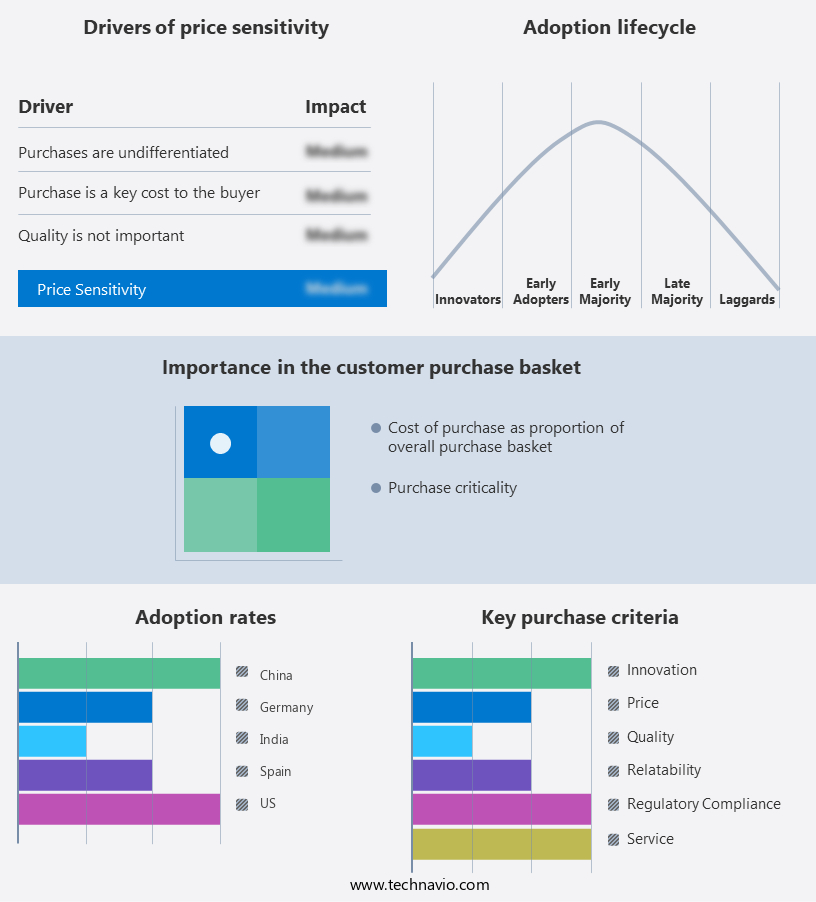
Customer Landscape
Key Companies & Market Insights
Companies are implementing various strategies, such as strategic alliances, wind turbine bearing market forecast, partnerships, mergers and acquisitions, geographical expansion, and product/service launches, to enhance their presence in the industry.
AB SKF - The company specializes in providing advanced wind turbine bearings, including SKF spherical roller bearings, for main shaft applications.
The industry research and growth report includes detailed analyses of the competitive landscape of the market and information about key companies, including:
- AB SKF
- Dalian Metallurgical Bearing Co. Ltd.
- Defontaine SAS
- Fersa Bearings SA
- Groupe Legris Industries
- ILJIN Co. Ltd.
- IMO Holding GmbH
- JTEKT Corp.
- Liebherr International AG
- LYC Bearing Corp.
- NRB Bearings Ltd.
- NSK Ltd.
- NTN Corp.
- Schaeffler AG
- Scheerer Bearing Corp.
- TFL BEARINGS Co. Ltd.
- The Timken Co.
- thyssenkrupp AG
- Wafangdian Guangda Bearing Manufacturing Co. Ltd
- Zhejiang Tianma Bearing Group Co. Ltd
Qualitative and quantitative analysis of companies has been conducted to help clients understand the wider business environment as well as the strengths and weaknesses of key industry players. Data is qualitatively analyzed to categorize companies as pure play, category-focused, industry-focused, and diversified; it is quantitatively analyzed to categorize companies as dominant, leading, strong, tentative, and weak.
Recent Development and News in Wind Turbine Bearing Market
- In March 2023, Siemens Gamesa Renewable Energy, a leading wind turbine manufacturer, announced the launch of its new 6 MW offshore wind turbine, SG 6.0-154, featuring a larger rotor diameter and advanced bearing technology to enhance efficiency and reduce maintenance costs (Siemens Gamesa Renewable Energy press release, 2023).
- In June 2024, Vestas Wind Systems, another major player in the wind industry, formed a strategic partnership with SKF, a leading bearing manufacturer, to collaborate on the development and supply of advanced bearing solutions for wind turbines, aiming to improve reliability and reduce downtime (Vestas Wind Systems press release, 2024).
- In October 2024, LM Wind Power, a subsidiary of Siemens Gamesa Renewable Energy, secured a significant contract from Ãrsted, a global leader in offshore wind energy, to supply 150 wind turbine blades for the Hornsea Three offshore wind farm project, further expanding its presence in the offshore wind market (Ãrsted press release, 2024).
- In February 2025, ABB, a leading technology provider, unveiled its latest innovation, the Onshore Wind Condition Monitoring System, which utilizes advanced bearing monitoring technology to optimize wind turbine performance, reduce maintenance costs, and increase energy production (ABB press release, 2025).
Research Analyst Overview
The market is characterized by continuous evolution and dynamic market activities. Rolling element bearings, a crucial component in wind turbine rotors, undergo rigorous testing and development to enhance their performance and extend their life in the harsh operating conditions of wind farms. Wind turbine foundations and towers also rely on bearings for stability and support, necessitating the use of advanced bearing materials and designs. Bearing diagnostics and monitoring systems are increasingly being adopted to ensure wind turbine availability and performance. Fluid film bearings and magnetic bearings offer improved efficiency and reduced maintenance requirements. Composite materials are being explored for their potential in reducing bearing weight and enhancing their strength.
The Wind Turbine Bearing Market is crucial for ensuring high wind turbine efficiency and reliability. Bearings support the wind turbine rotor, wind turbine gearbox, and wind turbine generator, optimizing performance. Key factors include bearing capacity, bearing preload, and bearing friction, which affect longevity. Proper bearing maintenance, bearing condition monitoring, and bearing repair help prevent bearing failure analysis issues. Engineers focus on bearing design, incorporating bearing seals to minimize wear and protect against contaminants. Vibration levels are monitored to address bearing vibration and bearing torque concerns. Regulated by ISO standards, DIN standards, and ANSI standards, bearings undergo careful bearing removal processes to ensure safety. The expanding wind turbine construction industry highlights the need for innovative solutions to enhance durability and efficiency in renewable energy applications.
The Wind Turbine Bearing Market plays a vital role in ensuring efficient energy production. Highspeed bearings and lowspeed bearings support different turbine components, optimizing performance. Radial bearings and needle roller bearings enhance load distribution, improving durability. A well-designed bearing housing protects against environmental damage, while proper bearing disassembly ensures safe maintenance. Bearing lubricant analysis helps detect potential issues, preventing bearing wear, bearing cavitation, and bearing spallingâcommon failures in extreme conditions.
Wind power, a key contributor to renewable energy, is driving the demand for advanced wind turbine bearings. Wind turbine installation and construction processes require precise bearing alignment and installation techniques to ensure optimal wind turbine operation. Bearing manufacturers are investing in research and development to meet the evolving demands of the wind energy sector. Bearing standards, such as ANSI, DIN, and ISO, play a crucial role in ensuring bearing quality and interoperability. Bearing inspection, maintenance, and repair are essential to ensure wind turbine reliability and availability. Wind turbine decommissioning and bearing replacement are also significant market activities.
Bearing noise and vibration are critical factors affecting wind turbine performance and neighboring communities. Bearing manufacturers are developing innovative solutions to address these challenges, including advanced bearing coatings and lubrication systems. Wind turbine gearboxes and wind turbine blades also require specialized bearings to ensure optimal performance. The market is driven by the growing demand for renewable energy and the need for sustainable energy solutions.
Dive into Technavio's strong research methodology, blending expert interviews, extensive data synthesis, and validated models for unparalleled Wind Turbine Bearing Market insights. See full methodology.
|
Market Scope |
|
|
Report Coverage |
Details |
|
Page number |
214 |
|
Base year |
2024 |
|
Historic period |
2019-2023 |
|
Forecast period |
2025-2029 |
|
Growth momentum & CAGR |
Accelerate at a CAGR of 12.4% |
|
Market growth 2025-2029 |
USD 13.2 billion |
|
Market structure |
Fragmented |
|
YoY growth 2024-2025(%) |
10.7 |
|
Key countries |
China, US, India, Japan, Germany, UK, Canada, France, South Korea, and Australia |
|
Competitive landscape |
Leading Companies, Market Positioning of Companies, Competitive Strategies, and Industry Risks |
What are the Key Data Covered in this Wind Turbine Bearing Market Research and Growth Report?
- CAGR of the Wind Turbine Bearing industry during the forecast period
- Detailed information on factors that will drive the growth and forecasting between 2025 and 2029
- Precise estimation of the size of the market and its contribution of the industry in focus to the parent market
- Accurate predictions about upcoming growth and trends and changes in consumer behaviour
- Growth of the market across APAC, Europe, North America, South America, and Middle East and Africa
- Thorough analysis of the market's competitive landscape and detailed information about companies
- Comprehensive analysis of factors that will challenge the wind turbine bearing market growth of industry companies
We can help! Our analysts can customize this wind turbine bearing market research report to meet your requirements.
 RIA -
RIA -