
Woodworking Machines Market Analysis, Size, and Forecast 2026-2030: Europe (Germany, Italy, and France), APAC (China, Japan, and India), North America (US, Canada, and Mexico), Middle East and Africa (Saudi Arabia, UAE, and South Africa), South America (Brazil, Argentina, and Chile), and Rest of World (ROW)

Woodworking Machines Market Analysis, Size, and Forecast 2026-2030:
Europe (Germany, Italy, and France), APAC (China, Japan, and India), North America (US, Canada, and Mexico), Middle East and Africa (Saudi Arabia, UAE, and South Africa), South America (Brazil, Argentina, and Chile), and Rest of World (ROW)

Published: Oct 2026 287 Pages SKU: IRTNTR44493

Market Overview at a Glance

$1.54 B
Market Opportunity
4.5%
CAGR 2025 - 2030
40%
Europe Growth
$3.43 B
Furniture segment 2024

Woodworking Machines Market Size 2026-2030

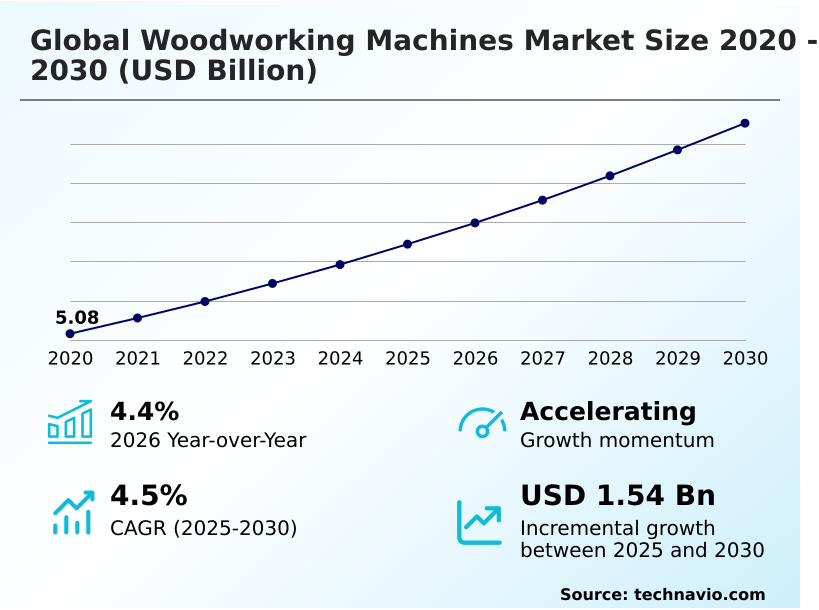
The woodworking machines market size is valued to increase by USD 1.54 billion, at a CAGR of 4.5% from 2025 to 2030. Accelerating automation and industry 4.0 integration will drive the woodworking machines market.

Major Market Trends & Insights

  • Europe dominated the market and accounted for a 40% growth during the forecast period.
  • By Application - Furniture segment was valued at USD 3.43 billion in 2024
  • By Distribution Channel - Offline segment accounted for the largest market revenue share in 2024

Market Size & Forecast

  • Market Opportunities: USD 2.69 billion
  • Market Future Opportunities: USD 1.54 billion
  • CAGR from 2025 to 2030 : 4.5%

Market Summary

  • The Woodworking Machines Market demonstrates accelerated technological modernization driven by the necessity for high-precision timber processing. Manufacturing facilities are rapidly adopting smart factory ecosystems to optimize supply chain workflows and minimize raw material waste during high-volume cabinetry production.
  • For instance, integrating automated panel processing lines enables furniture fabricators to reduce expensive solid wood scrap by 18%, significantly improving overall operational margins compared to legacy mechanical setups. Accelerating automation acts as a principal market driver, as mounting labor shortages compel industrial operators to replace manual craftsmanship with multi axis machining centers that ensure strict production repeatability.
  • Conversely, the high capital expenditure required for next-generation equipment presents a substantial structural challenge, frequently forcing resource-constrained workshops to delay vital infrastructure upgrades. Predictive maintenance protocols leverage real-time diagnostic data to prevent catastrophic equipment failures and extend capital asset longevity.
  • The continuous expansion of modular construction methodologies further cements the demand for heavy-duty machinery capable of executing complex cutting commands with sub-millimeter precision.

What will be the Size of the Woodworking Machines Market during the forecast period?
Get Key Insights on Market Forecast (PDF) Get Free Sample

How is the Woodworking Machines Market Segmented?

The woodworking machines industry research report provides comprehensive data (region-wise segment analysis), with forecasts and estimates in "USD million" for the period 2026-2030, as well as historical data from 2020-2024 for the following segments.

  • Application
    • Furniture
    • Construction
    • Shipbuilding
  • Distribution channel
    • Offline
    • Online
  • Type
    • Electrical
    • Mechanical
  • Geography
    • Europe
      • Germany
      • Italy
      • France
      • UK
      • Spain
    • APAC
      • China
      • Japan
      • India
      • South Korea
      • Australia
      • Indonesia
    • North America
      • US
      • Canada
      • Mexico
    • Middle East and Africa
      • Saudi Arabia
      • UAE
      • South Africa
      • Egypt
      • Nigeria
    • South America
      • Brazil
      • Argentina
      • Chile

By Application Insights

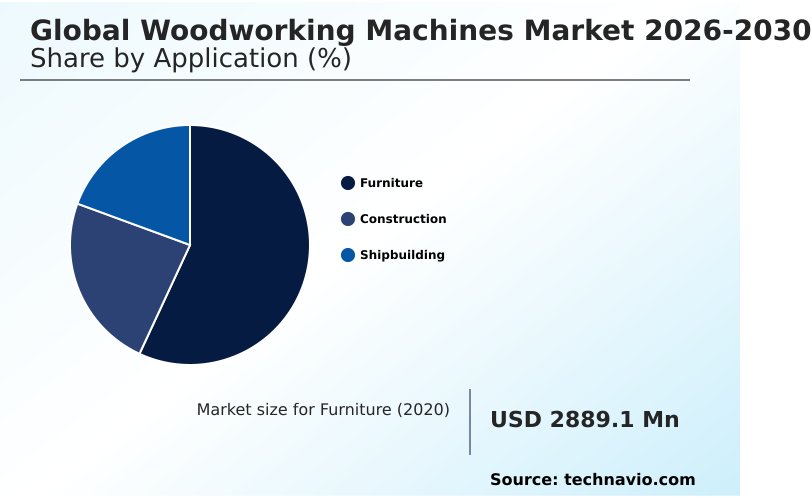
The furniture segment is estimated to witness significant growth during the forecast period.

The furniture segment drives the Woodworking Machines industry through the high-volume production of residential and commercial pieces. Surging consumer demand for customized modular furniture compels manufacturers to transition from manual tools to highly automated systems.

Facilities increasingly deploy computer numerical control routers and automated edgebanders to ensure precise cutting and seamless finishes, which directly reduces raw material waste by 15%.

This integration of robotic loading arms and multi axis machining centers accelerates production cycles by allowing rapid design adjustments without prolonged idle times.

The adoption of smart factory integration facilitates real time diagnostic analytics, enabling predictive maintenance that minimizes unexpected mechanical failures.

Consequently, implementing industrial cybersecurity software protects proprietary three dimensional design files, ensuring uninterrupted operational workflows while manufacturers meet stringent dimensional tolerances for mass-produced cabinetry.
Get Free Sample

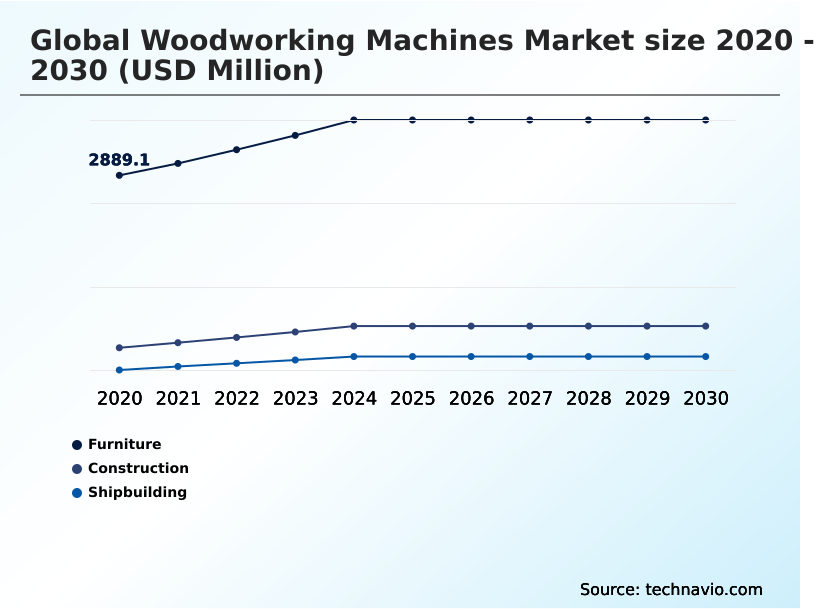
The Furniture segment was valued at USD 3.43 billion in 2024 and showed a gradual increase during the forecast period.
Get Free Sample

Regional Analysis

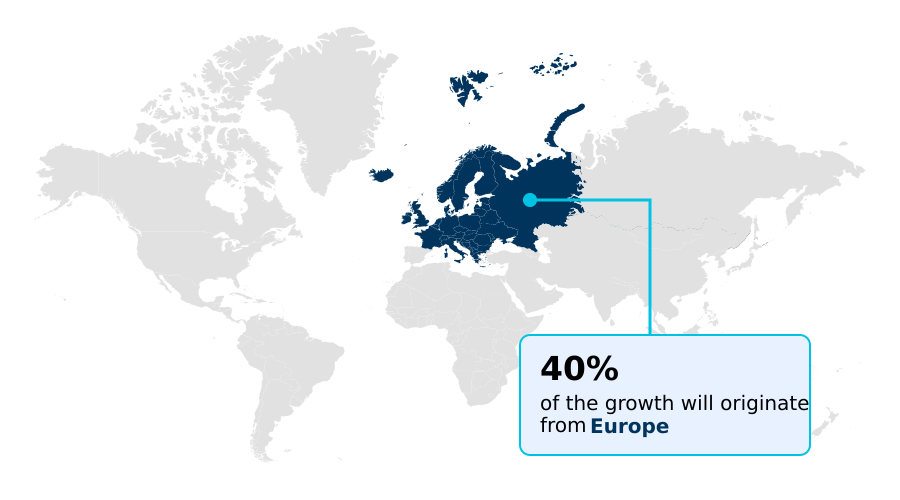
Europe is estimated to contribute 40% to the growth of the global market during the forecast period.Technavio’s analysts have elaborately explained the regional trends and drivers that shape the market during the forecast period.
See How Woodworking Machines Market Demand is Rising in Europe Get Free Sample

Europe dominates the Woodworking Machines industry landscape, prioritizing complete digital connectivity and the rapid expansion of mass timber building systems.

European manufacturers exhibit a 25% higher adoption rate of cross laminated timber processing equipment compared to North America, driven by stringent environmental mandates and sustainable architectural initiatives.

This regional focus on intelligent material utilization leverages automated nesting algorithms, which improve raw material yield by 16% in premium furniture fabrication.

Conversely, the market in North America heavily invests in automated tool changeovers to counteract severe skilled labor shortages, boosting factory throughput efficiency by 12%.

Both regions increasingly depend on laser guided measuring devices that interface directly with three dimensional design files to minimize structural defects.

Consequently, regional supply chains are adapting to deliver specialized heavy-duty machinery that supports large-scale prefabricated housing projects while ensuring strict compliance with operational safety standards.

Market Dynamics

Our researchers analyzed the data with 2025 as the base year, along with the key drivers, trends, and challenges. A holistic analysis of drivers will help companies refine their marketing strategies to gain a competitive advantage.

  • The modern timber fabrication industry relies heavily on sophisticated processing technology to balance high-volume output with strict environmental compliance. To accommodate the surging demand for space-saving residential interiors, manufacturers are extensively deploying automated edgebanders for modular furniture, which significantly accelerates production cycles while ensuring flawless exterior finishes.
  • The broader construction sector's shift toward sustainable load-bearing structures has simultaneously elevated the requirement for specialized cross laminated timber processing equipment. By utilizing these heavy-duty industrial systems, structural wood processors can execute complex architectural cuts with unparalleled precision, reducing costly on-site structural adjustments by a comparative 20% against traditional concrete framing methods.
  • This operational shift mandates enhanced multi axis machining centers efficiency to handle dense engineered wood substrates without incurring excessive tool wear. Furthermore, the implementation of smart factory integration for woodworking enables facility managers to synchronize digital design schematics directly with programmable cutting units, eliminating calculation errors and minimizing solid wood scrap.
  • To protect these capital-intensive assets, operators rely on data-driven predictive maintenance schedules for machinery, optimizing maintenance workflows and extending the operational longevity of critical mechanical components. These technological adaptations empower enterprise-level processors to navigate volatile raw material supply chains, stabilize operational budgets, and maintain robust competitiveness in an increasingly automated industrial manufacturing landscape.
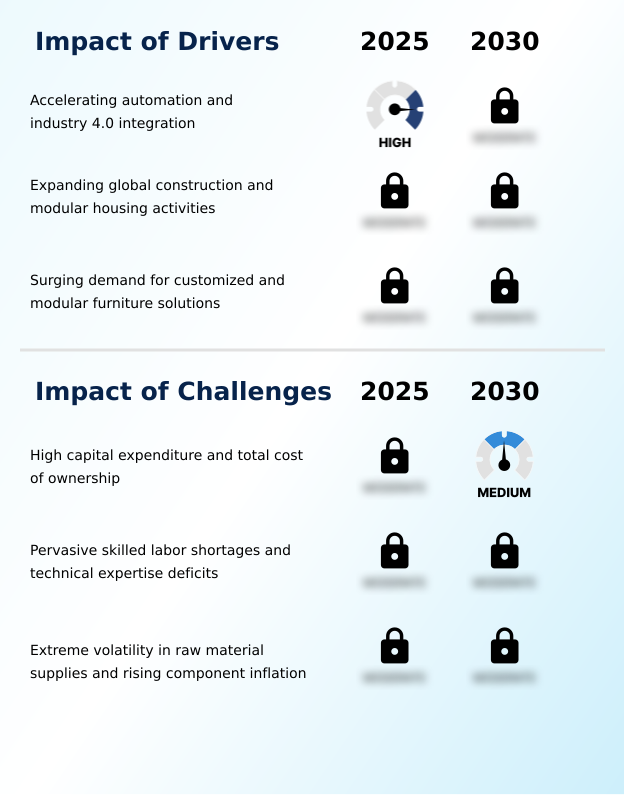
What are the key market drivers leading to the rise in the adoption of Woodworking Machines Industry?

  • Accelerating automation and Industry 4.0 integration serves as a primary driver propelling widespread operational modernization across manufacturing facilities.

  • The escalating commercial preference for sustainable building methodologies acts as a powerful catalyst for the Woodworking Machines industry. Modern construction projects increasingly utilize structural wood solutions, which drives intense demand for heavy-duty cross laminated timber processing systems.
  • This shift supports the rapid expansion of off site modular construction, enabling contractors to compress building timelines by 25% through precise prefabricated component assembly.
  • To execute these massive structural cuts accurately, fabricators depend on multi axis machining centers equipped with automated nesting algorithms, which successfully reduce high-cost timber waste by 16%.
  • The integration of predictive maintenance schedules further prevents mechanical overheating during continuous heavy industrial processing, lowering long-term maintenance expenditures by 14%. These technological deployments empower manufacturers to satisfy rigorous architectural safety standards while maximizing operational profitability.

What are the market trends shaping the Woodworking Machines Industry?

  • The proliferation of connected digital ecosystems and cybersecurity integration represents a definitive trend shaping the industry landscape. This structural shift necessitates the implementation of advanced data protection protocols alongside standard mechanical controls.

  • The transition toward fully connected digital ecosystems defines the current operational trajectory of the Woodworking Machines industry. Industrial manufacturing facilities are increasingly abandoning isolated equipment configurations in favor of smart factory integration, utilizing cloud-linked computer numerical control routers and automated edgebanders.
  • This connectivity enables real time diagnostic analytics, which successfully reduces unexpected machine downtime by 24% and improves predictive maintenance accuracy by 18%. Because continuous production lines depend heavily on seamless data sharing, the integration of industrial cybersecurity software has become an essential safeguard against external digital threats.
  • By pairing these secure networks with robotic loading arms, wood processors eliminate hazardous manual material handling and increase batch processing speeds by 15%. This modernization allows facilities to optimize automated tool changeovers dynamically, ensuring maximum capital asset utilization while meeting the escalating consumer demand for highly customized, precision-crafted timber products.

What challenges does the Woodworking Machines Industry face during its growth?

  • High capital expenditure and elevated total cost of ownership present critical challenges that restrict widespread technological adoption among smaller enterprises.

  • Acute skilled labor shortages and exceptional capital expenditure requirements heavily constrain the operational scalability of the Woodworking Machines industry. Transitioning to flexible manufacturing systems equipped with advanced laser guided measuring devices demands substantial upfront investment, frequently increasing initial infrastructure costs by 35% for small-to-medium enterprises.
  • Furthermore, the modern workforce lacks the technical programming expertise required to safely operate heavy duty hydraulic tensioners and precision wide belt sanders. This human capital deficit increases the risk of severe programming errors, which can inadvertently spike raw material waste by up to 20% during complex fabrication cycles.
  • While intelligent material optimization software is essential for executing mass timber building systems, the extensive training required to master these digital interfaces forces resource-constrained workshops to delay vital technological upgrades indefinitely.

Exclusive Technavio Analysis on Customer Landscape

The woodworking machines market forecasting report includes the adoption lifecycle of the market, covering from the innovator’s stage to the laggard’s stage. It focuses on adoption rates in different regions based on penetration. Furthermore, the woodworking machines market report also includes key purchase criteria and drivers of price sensitivity to help companies evaluate and develop their market growth analysis strategies.
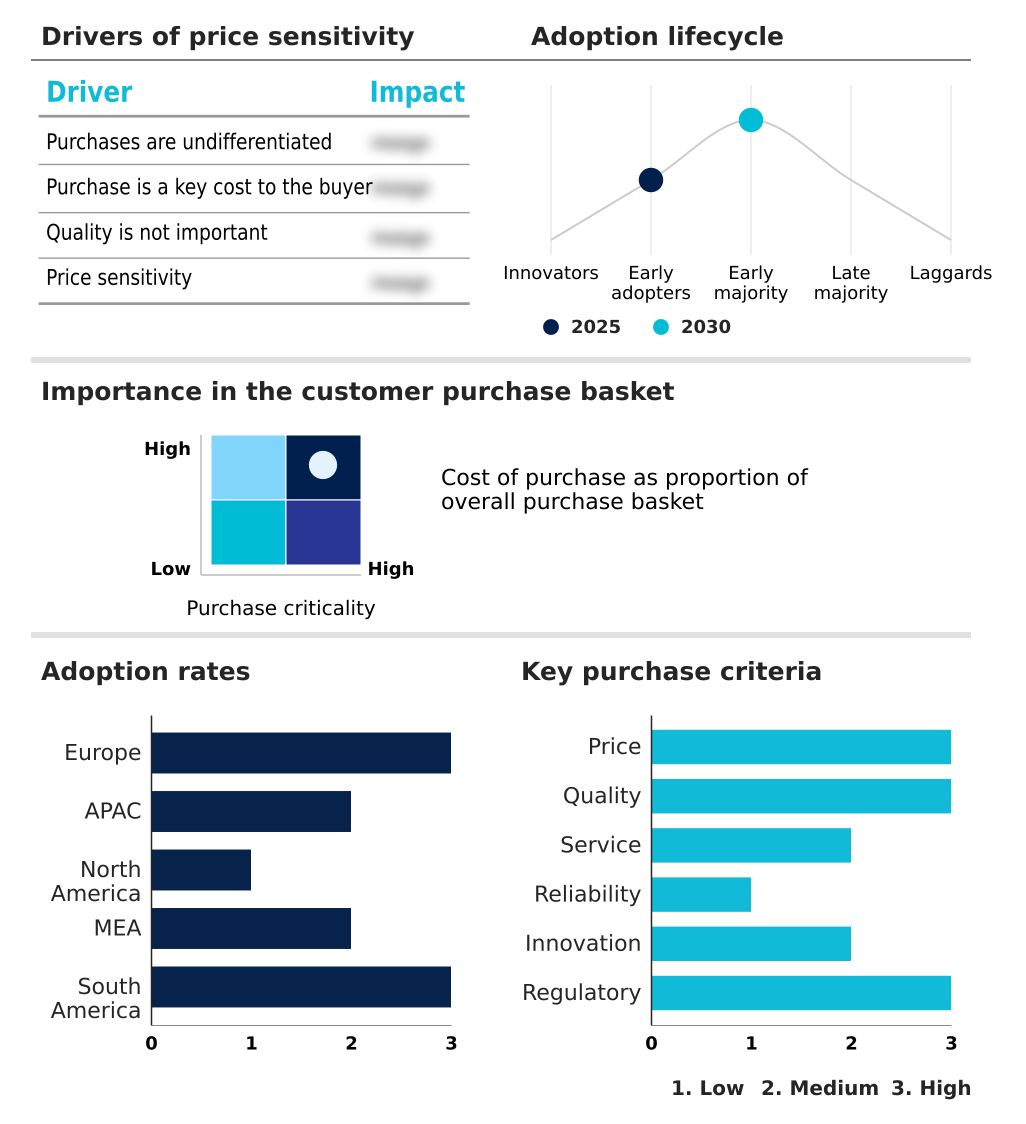
Customer Landscape of Woodworking Machines Industry

Competitive Landscape

Companies are implementing various strategies, such as strategic alliances, woodworking machines market forecast, partnerships, mergers and acquisitions, geographical expansion, and product/service launches, to enhance their presence in the industry.

Altendorf Group GmbH - Delivers precision sliding table saws and advanced panel processing equipment engineered to enhance cutting accuracy and streamline manufacturing operations for high-volume timber fabrication.

The industry research and growth report includes detailed analyses of the competitive landscape of the market and information about key companies, including:

  • Altendorf Group GmbH
  • Biesse Group
  • Casadei Busellato S.p.A.
  • Grizzly Industrial Inc.
  • Hans Hundegger AG
  • Harvey Industries International
  • IMA Schelling Group GmbH
  • JPW Industries Inc.
  • KDT Machinery Co. Ltd.
  • Laguna Tools Inc.
  • Michael Weinig AG
  • OAV Equipment and Tools Inc.
  • Oliver Machinery Co.
  • Otto Martin Maschinenbau GmbH
  • Paolino Bacci S.r.l.
  • Powermatic
  • Robland NV
  • SCM GROUP Spa
  • Timesavers LLC
  • WINTERSTEIGER AG
  • Wood Mizer

Qualitative and quantitative analysis of companies has been conducted to help clients understand the wider business environment as well as the strengths and weaknesses of key industry players. Data is qualitatively analyzed to categorize companies as pure play, category-focused, industry-focused, and diversified; it is quantitatively analyzed to categorize companies as dominant, leading, strong, tentative, and weak.

Recent Development and News in Woodworking machines market

  • In the Industrial Machinery and Supplies and Components industry, the integration of advanced programmable logic controllers has accelerated production line automation, directly impacting Woodworking Machines demand by reducing mechanical downtime by 20%.
  • Strict enforcement of the ISO 14001 environmental management standards has compelled equipment manufacturers to adopt high-efficiency variable frequency drives, subsequently increasing the adoption of energy-optimized primary processing machinery across Europe.
  • The rapid expansion of off site modular construction methodologies has shifted supply chain requirements toward heavy duty hydraulic tensioners, boosting procurement of high capacity linear profiling setups capable of processing structural timber frameworks.
  • Rising structural steel costs have disrupted component procurement strategies for heavy equipment fabricators, directly increasing the total cost of ownership for automated timber architecture processing units by 12% across North America.

Dive into Technavio’s robust research methodology, blending expert interviews, extensive data synthesis, and validated models for unparalleled Woodworking Machines Market insights. See full methodology.

Market Scope
Page number 287
Base year 2025
Historic period 2020-2024
Forecast period 2026-2030
Growth momentum & CAGR Accelerate at a CAGR of 4.5%
Market growth 2026-2030 USD 1543.1 million
Market structure Fragmented
YoY growth 2025-2026(%) 4.4%
Key countries Germany, Italy, France, UK, Spain, Russia, China, Japan, India, South Korea, Australia, Indonesia, US, Canada, Mexico, Saudi Arabia, UAE, South Africa, Egypt, Nigeria, Brazil, Argentina and Chile
Competitive landscape Leading Companies, Market Positioning of Companies, Competitive Strategies, and Industry Risks

Request Free Sample

Research Analyst Overview

  • The Woodworking Machines industry is undergoing a structural transformation propelled by the rapid integration of advanced automation and intelligent resource optimization. Manufacturing facilities are overhauling legacy mechanical setups to deploy high capacity linear profiling systems, enabling processors to increase volumetric output by 28% while minimizing expensive material waste.
  • The transition toward automated timber architecture necessitates robust processing hardware equipped with industrial internet of things sensors that stream continuous diagnostic telemetry to central operating networks. This digital connectivity ensures that complex architectural components meet stringent international building tolerances.
  • Furthermore, premium furniture fabricators are heavily investing in precision wide belt sanders and computerized spray coating lines to achieve flawless surface finishes required by the luxury hospitality sector. Integrating synchronized linear profiling lines streamlines complex fabrication workflows, drastically reducing manual handling hazards.
  • These technological advancements empower industrial managers to mitigate acute skilled labor shortages, standardize operational quality, and adapt agile production strategies that align seamlessly with evolving commercial construction frameworks and dynamic consumer interior design preferences.

What are the Key Data Covered in this Woodworking Machines Market Research and Growth Report?

  • What is the expected growth of the Woodworking Machines Market between 2026 and 2030?

    • USD 1.54 billion, at a CAGR of 4.5%

  • What segmentation does the market report cover?

    • The report is segmented by Application (Furniture, Construction, and Shipbuilding), Distribution Channel (Offline, and Online), Type (Electrical, and Mechanical) and Geography (Europe, APAC, North America, Middle East and Africa, South America)

  • Which regions are analyzed in the report?

    • Europe, APAC, North America, Middle East and Africa and South America

  • What are the key growth drivers and market challenges?

    • Accelerating automation and industry 4.0 integration, High capital expenditure and total cost of ownership

  • Who are the major players in the Woodworking Machines Market?

    • Altendorf Group GmbH, Biesse Group, Casadei Busellato S.p.A., Grizzly Industrial Inc., Hans Hundegger AG, Harvey Industries International, IMA Schelling Group GmbH, JPW Industries Inc., KDT Machinery Co. Ltd., Laguna Tools Inc., Michael Weinig AG, OAV Equipment and Tools Inc., Oliver Machinery Co., Otto Martin Maschinenbau GmbH, Paolino Bacci S.r.l., Powermatic, Robland NV, SCM GROUP Spa, Timesavers LLC, WINTERSTEIGER AG and Wood Mizer

Market Research Insights

  • The Woodworking Machines Market is evolving through the widespread implementation of flexible manufacturing systems designed to meet rigorous industrial production demands. Facilities utilizing predictive maintenance schedules have successfully reduced unexpected operational downtime by 22%, directly improving overall equipment effectiveness.
  • The accelerating transition toward structural wood solutions in commercial real estate drives the integration of intelligent material optimization, which lowers high-cost timber waste by 14% during complex fabrication cycles. Furthermore, the expansion of off site modular construction increases the reliance on robust processing equipment that improves component assembly precision by 18%.
  • These technological integrations allow industrial operators to mitigate skilled labor shortages while maintaining strict compliance with international manufacturing quality standards.

We can help! Our analysts can customize this woodworking machines market research report to meet your requirements.

Get in touch

1. Executive Summary

1.1 Market overview

Executive Summary - Chart on Market Overview
Executive Summary - Data Table on Market Overview
Executive Summary - Chart on Global Market Characteristics
Executive Summary - Chart on Market by Geography
Executive Summary - Chart on Market Segmentation by Application
Executive Summary - Chart on Market Segmentation by Distribution Channel
Executive Summary - Chart on Market Segmentation by Type
Executive Summary - Chart on Incremental Growth
Executive Summary - Data Table on Incremental Growth
Executive Summary - Chart on Company Market Positioning

2. Technavio Analysis

2.1 Analysis of price sensitivity, lifecycle, customer purchase basket, adoption rates, and purchase criteria

2.2 Criticality of inputs and Factors of differentiation

Chart on Overview on criticality of inputs and factors of differentiation

2.3 Factors of disruption

Chart on Overview on factors of disruption

2.4 Impact of drivers and challenges

Chart on Impact of drivers and challenges in 2025 and 2030

3. Market Landscape

3.1 Market ecosystem

Chart on Parent Market
Data Table on - Parent Market

3.2 Market characteristics

Chart on Market characteristics analysis

3.3 Value chain analysis

Chart on Value chain analysis

4. Market Sizing

4.1 Market definition

Data Table on Offerings of companies included in the market definition

4.2 Market segment analysis

Market segments

4.3 Market size 2025

4.4 Market outlook: Forecast for 2025-2030

Chart on Global - Market size and forecast 2025-2030 ($ million)
Data Table on Global - Market size and forecast 2025-2030 ($ million)
Chart on Global Market: Year-over-year growth 2025-2030 (%)
Data Table on Global Market: Year-over-year growth 2025-2030 (%)

5. Historic Market Size

5.1 Global Woodworking Machines Market 2020 - 2024

Historic Market Size - Data Table on Global Woodworking Machines Market 2020 - 2024 ($ million)

5.2 Application segment analysis 2020 - 2024

Historic Market Size - Application Segment 2020 - 2024 ($ million)

5.3 Distribution Channel segment analysis 2020 - 2024

Historic Market Size - Distribution Channel Segment 2020 - 2024 ($ million)

5.4 Type segment analysis 2020 - 2024

Historic Market Size - Type Segment 2020 - 2024 ($ million)

5.5 Geography segment analysis 2020 - 2024

Historic Market Size - Geography Segment 2020 - 2024 ($ million)

5.6 Country segment analysis 2020 - 2024

Historic Market Size - Country Segment 2020 - 2024 ($ million)

6. Qualitative Analysis

6.1 Impact of AI on global woodworking machines market

6.2 Impact of geopolitical conflicts on global woodworking machines market

7. Five Forces Analysis

7.1 Five forces summary

Five forces analysis - Comparison between 2025 and 2030

7.2 Bargaining power of buyers

Bargaining power of buyers - Impact of key factors 2025 and 2030

7.3 Bargaining power of suppliers

Bargaining power of suppliers - Impact of key factors in 2025 and 2030

7.4 Threat of new entrants

Threat of new entrants - Impact of key factors in 2025 and 2030

7.5 Threat of substitutes

Threat of substitutes - Impact of key factors in 2025 and 2030

7.6 Threat of rivalry

Threat of rivalry - Impact of key factors in 2025 and 2030

7.7 Market condition

Chart on Market condition - Five forces 2025 and 2030

8. Market Segmentation by Application

8.1 Market segments

Chart on Application - Market share 2025-2030 (%)
Data Table on Application - Market share 2025-2030 (%)

8.2 Comparison by Application

Chart on Comparison by Application
Data Table on Comparison by Application

8.3 Furniture - Market size and forecast 2025-2030

Chart on Furniture - Market size and forecast 2025-2030 ($ million)
Data Table on Furniture - Market size and forecast 2025-2030 ($ million)
Chart on Furniture - Year-over-year growth 2025-2030 (%)
Data Table on Furniture - Year-over-year growth 2025-2030 (%)

8.4 Construction - Market size and forecast 2025-2030

Chart on Construction - Market size and forecast 2025-2030 ($ million)
Data Table on Construction - Market size and forecast 2025-2030 ($ million)
Chart on Construction - Year-over-year growth 2025-2030 (%)
Data Table on Construction - Year-over-year growth 2025-2030 (%)

8.5 Shipbuilding - Market size and forecast 2025-2030

Chart on Shipbuilding - Market size and forecast 2025-2030 ($ million)
Data Table on Shipbuilding - Market size and forecast 2025-2030 ($ million)
Chart on Shipbuilding - Year-over-year growth 2025-2030 (%)
Data Table on Shipbuilding - Year-over-year growth 2025-2030 (%)

8.6 Market opportunity by Application

Market opportunity by Application ($ million)
Data Table on Market opportunity by Application ($ million)

9. Market Segmentation by Distribution Channel

9.1 Market segments

Chart on Distribution Channel - Market share 2025-2030 (%)
Data Table on Distribution Channel - Market share 2025-2030 (%)

9.2 Comparison by Distribution Channel

Chart on Comparison by Distribution Channel
Data Table on Comparison by Distribution Channel

9.3 Offline - Market size and forecast 2025-2030

Chart on Offline - Market size and forecast 2025-2030 ($ million)
Data Table on Offline - Market size and forecast 2025-2030 ($ million)
Chart on Offline - Year-over-year growth 2025-2030 (%)
Data Table on Offline - Year-over-year growth 2025-2030 (%)

9.4 Online - Market size and forecast 2025-2030

Chart on Online - Market size and forecast 2025-2030 ($ million)
Data Table on Online - Market size and forecast 2025-2030 ($ million)
Chart on Online - Year-over-year growth 2025-2030 (%)
Data Table on Online - Year-over-year growth 2025-2030 (%)

9.5 Market opportunity by Distribution Channel

Market opportunity by Distribution Channel ($ million)
Data Table on Market opportunity by Distribution Channel ($ million)

10. Market Segmentation by Type

10.1 Market segments

Chart on Type - Market share 2025-2030 (%)
Data Table on Type - Market share 2025-2030 (%)

10.2 Comparison by Type

Chart on Comparison by Type
Data Table on Comparison by Type

10.3 Electrical - Market size and forecast 2025-2030

Chart on Electrical - Market size and forecast 2025-2030 ($ million)
Data Table on Electrical - Market size and forecast 2025-2030 ($ million)
Chart on Electrical - Year-over-year growth 2025-2030 (%)
Data Table on Electrical - Year-over-year growth 2025-2030 (%)

10.4 Mechanical - Market size and forecast 2025-2030

Chart on Mechanical - Market size and forecast 2025-2030 ($ million)
Data Table on Mechanical - Market size and forecast 2025-2030 ($ million)
Chart on Mechanical - Year-over-year growth 2025-2030 (%)
Data Table on Mechanical - Year-over-year growth 2025-2030 (%)

10.5 Market opportunity by Type

Market opportunity by Type ($ million)
Data Table on Market opportunity by Type ($ million)

11. Customer Landscape

11.1 Customer landscape overview

Analysis of price sensitivity, lifecycle, customer purchase basket, adoption rates, and purchase criteria

12. Geographic Landscape

12.1 Geographic segmentation

Chart on Market share by geography 2025-2030 (%)
Data Table on Market share by geography 2025-2030 (%)

12.2 Geographic comparison

Chart on Geographic comparison
Data Table on Geographic comparison

12.3 Europe - Market size and forecast 2025-2030

Chart on Europe - Market size and forecast 2025-2030 ($ million)
Data Table on Europe - Market size and forecast 2025-2030 ($ million)
Chart on Europe - Year-over-year growth 2025-2030 (%)
Data Table on Europe - Year-over-year growth 2025-2030 (%)
Chart on Regional Comparison - Europe
Data Table on Regional Comparison - Europe

12.3.1 Germany - Market size and forecast 2025-2030

Chart on Germany - Market size and forecast 2025-2030 ($ million)
Data Table on Germany - Market size and forecast 2025-2030 ($ million)
Chart on Germany - Year-over-year growth 2025-2030 (%)
Data Table on Germany - Year-over-year growth 2025-2030 (%)

12.3.2 Italy - Market size and forecast 2025-2030

Chart on Italy - Market size and forecast 2025-2030 ($ million)
Data Table on Italy - Market size and forecast 2025-2030 ($ million)
Chart on Italy - Year-over-year growth 2025-2030 (%)
Data Table on Italy - Year-over-year growth 2025-2030 (%)

12.3.3 France - Market size and forecast 2025-2030

Chart on France - Market size and forecast 2025-2030 ($ million)
Data Table on France - Market size and forecast 2025-2030 ($ million)
Chart on France - Year-over-year growth 2025-2030 (%)
Data Table on France - Year-over-year growth 2025-2030 (%)

12.3.4 UK - Market size and forecast 2025-2030

Chart on UK - Market size and forecast 2025-2030 ($ million)
Data Table on UK - Market size and forecast 2025-2030 ($ million)
Chart on UK - Year-over-year growth 2025-2030 (%)
Data Table on UK - Year-over-year growth 2025-2030 (%)

12.3.5 Spain - Market size and forecast 2025-2030

Chart on Spain - Market size and forecast 2025-2030 ($ million)
Data Table on Spain - Market size and forecast 2025-2030 ($ million)
Chart on Spain - Year-over-year growth 2025-2030 (%)
Data Table on Spain - Year-over-year growth 2025-2030 (%)

12.3.6 Russia - Market size and forecast 2025-2030

Chart on Russia - Market size and forecast 2025-2030 ($ million)
Data Table on Russia - Market size and forecast 2025-2030 ($ million)
Chart on Russia - Year-over-year growth 2025-2030 (%)
Data Table on Russia - Year-over-year growth 2025-2030 (%)

12.4 APAC - Market size and forecast 2025-2030

Chart on APAC - Market size and forecast 2025-2030 ($ million)
Data Table on APAC - Market size and forecast 2025-2030 ($ million)
Chart on APAC - Year-over-year growth 2025-2030 (%)
Data Table on APAC - Year-over-year growth 2025-2030 (%)
Chart on Regional Comparison - APAC
Data Table on Regional Comparison - APAC

12.4.1 China - Market size and forecast 2025-2030

Chart on China - Market size and forecast 2025-2030 ($ million)
Data Table on China - Market size and forecast 2025-2030 ($ million)
Chart on China - Year-over-year growth 2025-2030 (%)
Data Table on China - Year-over-year growth 2025-2030 (%)

12.4.2 Japan - Market size and forecast 2025-2030

Chart on Japan - Market size and forecast 2025-2030 ($ million)
Data Table on Japan - Market size and forecast 2025-2030 ($ million)
Chart on Japan - Year-over-year growth 2025-2030 (%)
Data Table on Japan - Year-over-year growth 2025-2030 (%)

12.4.3 India - Market size and forecast 2025-2030

Chart on India - Market size and forecast 2025-2030 ($ million)
Data Table on India - Market size and forecast 2025-2030 ($ million)
Chart on India - Year-over-year growth 2025-2030 (%)
Data Table on India - Year-over-year growth 2025-2030 (%)

12.4.4 South Korea - Market size and forecast 2025-2030

Chart on South Korea - Market size and forecast 2025-2030 ($ million)
Data Table on South Korea - Market size and forecast 2025-2030 ($ million)
Chart on South Korea - Year-over-year growth 2025-2030 (%)
Data Table on South Korea - Year-over-year growth 2025-2030 (%)

12.4.5 Australia - Market size and forecast 2025-2030

Chart on Australia - Market size and forecast 2025-2030 ($ million)
Data Table on Australia - Market size and forecast 2025-2030 ($ million)
Chart on Australia - Year-over-year growth 2025-2030 (%)
Data Table on Australia - Year-over-year growth 2025-2030 (%)

12.4.6 Indonesia - Market size and forecast 2025-2030

Chart on Indonesia - Market size and forecast 2025-2030 ($ million)
Data Table on Indonesia - Market size and forecast 2025-2030 ($ million)
Chart on Indonesia - Year-over-year growth 2025-2030 (%)
Data Table on Indonesia - Year-over-year growth 2025-2030 (%)

12.5 North America - Market size and forecast 2025-2030

Chart on North America - Market size and forecast 2025-2030 ($ million)
Data Table on North America - Market size and forecast 2025-2030 ($ million)
Chart on North America - Year-over-year growth 2025-2030 (%)
Data Table on North America - Year-over-year growth 2025-2030 (%)
Chart on Regional Comparison - North America
Data Table on Regional Comparison - North America

12.5.1 US - Market size and forecast 2025-2030

Chart on US - Market size and forecast 2025-2030 ($ million)
Data Table on US - Market size and forecast 2025-2030 ($ million)
Chart on US - Year-over-year growth 2025-2030 (%)
Data Table on US - Year-over-year growth 2025-2030 (%)

12.5.2 Canada - Market size and forecast 2025-2030

Chart on Canada - Market size and forecast 2025-2030 ($ million)
Data Table on Canada - Market size and forecast 2025-2030 ($ million)
Chart on Canada - Year-over-year growth 2025-2030 (%)
Data Table on Canada - Year-over-year growth 2025-2030 (%)

12.5.3 Mexico - Market size and forecast 2025-2030

Chart on Mexico - Market size and forecast 2025-2030 ($ million)
Data Table on Mexico - Market size and forecast 2025-2030 ($ million)
Chart on Mexico - Year-over-year growth 2025-2030 (%)
Data Table on Mexico - Year-over-year growth 2025-2030 (%)

12.6 Middle East and Africa - Market size and forecast 2025-2030

Chart on Middle East and Africa - Market size and forecast 2025-2030 ($ million)
Data Table on Middle East and Africa - Market size and forecast 2025-2030 ($ million)
Chart on Middle East and Africa - Year-over-year growth 2025-2030 (%)
Data Table on Middle East and Africa - Year-over-year growth 2025-2030 (%)
Chart on Regional Comparison - Middle East and Africa
Data Table on Regional Comparison - Middle East and Africa

12.6.1 Saudi Arabia - Market size and forecast 2025-2030

Chart on Saudi Arabia - Market size and forecast 2025-2030 ($ million)
Data Table on Saudi Arabia - Market size and forecast 2025-2030 ($ million)
Chart on Saudi Arabia - Year-over-year growth 2025-2030 (%)
Data Table on Saudi Arabia - Year-over-year growth 2025-2030 (%)

12.6.2 UAE - Market size and forecast 2025-2030

Chart on UAE - Market size and forecast 2025-2030 ($ million)
Data Table on UAE - Market size and forecast 2025-2030 ($ million)
Chart on UAE - Year-over-year growth 2025-2030 (%)
Data Table on UAE - Year-over-year growth 2025-2030 (%)

12.6.3 South Africa - Market size and forecast 2025-2030

Chart on South Africa - Market size and forecast 2025-2030 ($ million)
Data Table on South Africa - Market size and forecast 2025-2030 ($ million)
Chart on South Africa - Year-over-year growth 2025-2030 (%)
Data Table on South Africa - Year-over-year growth 2025-2030 (%)

12.6.4 Egypt - Market size and forecast 2025-2030

Chart on Egypt - Market size and forecast 2025-2030 ($ million)
Data Table on Egypt - Market size and forecast 2025-2030 ($ million)
Chart on Egypt - Year-over-year growth 2025-2030 (%)
Data Table on Egypt - Year-over-year growth 2025-2030 (%)

12.6.5 Nigeria - Market size and forecast 2025-2030

Chart on Nigeria - Market size and forecast 2025-2030 ($ million)
Data Table on Nigeria - Market size and forecast 2025-2030 ($ million)
Chart on Nigeria - Year-over-year growth 2025-2030 (%)
Data Table on Nigeria - Year-over-year growth 2025-2030 (%)

12.7 South America - Market size and forecast 2025-2030

Chart on South America - Market size and forecast 2025-2030 ($ million)
Data Table on South America - Market size and forecast 2025-2030 ($ million)
Chart on South America - Year-over-year growth 2025-2030 (%)
Data Table on South America - Year-over-year growth 2025-2030 (%)
Chart on Regional Comparison - South America
Data Table on Regional Comparison - South America

12.7.1 Brazil - Market size and forecast 2025-2030

Chart on Brazil - Market size and forecast 2025-2030 ($ million)
Data Table on Brazil - Market size and forecast 2025-2030 ($ million)
Chart on Brazil - Year-over-year growth 2025-2030 (%)
Data Table on Brazil - Year-over-year growth 2025-2030 (%)

12.7.2 Argentina - Market size and forecast 2025-2030

Chart on Argentina - Market size and forecast 2025-2030 ($ million)
Data Table on Argentina - Market size and forecast 2025-2030 ($ million)
Chart on Argentina - Year-over-year growth 2025-2030 (%)
Data Table on Argentina - Year-over-year growth 2025-2030 (%)

12.7.3 Chile - Market size and forecast 2025-2030

Chart on Chile - Market size and forecast 2025-2030 ($ million)
Data Table on Chile - Market size and forecast 2025-2030 ($ million)
Chart on Chile - Year-over-year growth 2025-2030 (%)
Data Table on Chile - Year-over-year growth 2025-2030 (%)

12.8 Market opportunity by geography

Market opportunity by geography ($ million)
Data Tables on Market opportunity by geography ($ million)

13. Drivers, Challenges, and Opportunity

13.1 Market drivers

Accelerating automation and industry 4.0 integration
Expanding global construction and modular housing activities
Surging demand for customized and modular furniture solutions

13.2 Market challenges

High capital expenditure and total cost of ownership
Pervasive skilled labor shortages and technical expertise deficits
Extreme volatility in raw material supplies and rising component inflation

13.3 Impact of drivers and challenges

Impact of drivers and challenges in 2025 and 2030

13.4 Market opportunities

Proliferation of connected digital ecosystems and cybersecurity integration
Growing adoption of automated timber architecture and off-site modular construction systems
Intense engineering focus on advanced nesting algorithms and intelligent material optimization

14. Competitive Landscape

14.1 Overview

14.2

Overview on criticality of inputs and factors of differentiation

14.3 Landscape disruption

Overview on factors of disruption

14.4 Industry risks

Impact of key risks on business

15. Competitive Analysis

15.1 Companies profiled

Companies covered

15.2 Company ranking index

15.3 Market positioning of companies

Matrix on companies position and classification

15.4 Altendorf Group GmbH

Altendorf Group GmbH - Overview
Altendorf Group GmbH - Product / Service
Altendorf Group GmbH - Key offerings
SWOT

15.5 Biesse Group

Biesse Group - Overview
Biesse Group - Product / Service
Biesse Group - Key offerings
SWOT

15.6 Grizzly Industrial Inc.

Grizzly Industrial Inc. - Overview
Grizzly Industrial Inc. - Product / Service
Grizzly Industrial Inc. - Key offerings
SWOT

15.7 Hans Hundegger AG

Hans Hundegger AG - Overview
Hans Hundegger AG - Product / Service
Hans Hundegger AG - Key offerings
SWOT

15.8 Harvey Industries International

Harvey Industries International - Overview
Harvey Industries International - Product / Service
Harvey Industries International - Key offerings
SWOT

15.9 IMA Schelling Group GmbH

IMA Schelling Group GmbH - Overview
IMA Schelling Group GmbH - Product / Service
IMA Schelling Group GmbH - Key offerings
SWOT

15.10 JPW Industries Inc.

JPW Industries Inc. - Overview
JPW Industries Inc. - Product / Service
JPW Industries Inc. - Key offerings
SWOT

15.11 KDT Machinery Co. Ltd.

KDT Machinery Co. Ltd. - Overview
KDT Machinery Co. Ltd. - Product / Service
KDT Machinery Co. Ltd. - Key offerings
SWOT

15.12 Laguna Tools Inc.

Laguna Tools Inc. - Overview
Laguna Tools Inc. - Product / Service
Laguna Tools Inc. - Key offerings
SWOT

15.13 Michael Weinig AG

Michael Weinig AG - Overview
Michael Weinig AG - Product / Service
Michael Weinig AG - Key offerings
SWOT

15.14 Paolino Bacci S.r.l.

Paolino Bacci S.r.l. - Overview
Paolino Bacci S.r.l. - Product / Service
Paolino Bacci S.r.l. - Key offerings
SWOT

15.15 Powermatic

Powermatic - Overview
Powermatic - Product / Service
Powermatic - Key offerings
SWOT

15.16 SCM GROUP Spa

SCM GROUP Spa - Overview
SCM GROUP Spa - Product / Service
SCM GROUP Spa - Key offerings
SWOT

15.17 Timesavers LLC

Timesavers LLC - Overview
Timesavers LLC - Product / Service
Timesavers LLC - Key offerings
SWOT

15.18 WINTERSTEIGER AG

WINTERSTEIGER AG - Overview
WINTERSTEIGER AG - Product / Service
WINTERSTEIGER AG - Key offerings
SWOT

16. Appendix

16.1 Scope of the report

Market definition
Objectives
Notes and caveats

16.2 Inclusions and exclusions checklist

Inclusions checklist
Exclusions checklist

16.3 Currency conversion rates for US$

16.4 Research methodology

16.5 Data procurement

Information sources

16.6 Data validation

16.7 Validation techniques employed for market sizing

16.8 Data synthesis

16.9 360 degree market analysis

16.10 List of abbreviations

Research Methodology

Technavio presents a detailed picture of the market by way of study, synthesis, and summation of data from multiple sources. The analysts have presented the various facets of the market with a particular focus on identifying the key industry influencers. The data thus presented is comprehensive, reliable, and the result of extensive research, both primary and secondary.

INFORMATION SOURCES

Primary sources

  • Manufacturers and suppliers
  • Channel partners
  • Industry experts
  • Strategic decision makers

Secondary sources

  • Industry journals and periodicals
  • Government data
  • Financial reports of key industry players
  • Historical data
  • Press releases

DATA ANALYSIS

Data Synthesis

  • Collation of data
  • Estimation of key figures
  • Analysis of derived insights

Data Validation

  • Triangulation with data models
  • Reference against proprietary databases
  • Corroboration with industry experts

REPORT WRITING

Qualitative

  • Market drivers
  • Market challenges
  • Market trends
  • Five forces analysis

Quantitative

  • Market size and forecast
  • Market segmentation
  • Geographical insights
  • Competitive landscape

Interested in this report?

Get your sample now to see our research methodology and insights!

Download Now

Frequently Asked Questions

Woodworking Machines market growth will increase by USD 1543.1 million during 2026-2030.

The Woodworking Machines market is expected to grow at a CAGR of 4.5% during 2026-2030.

Woodworking Machines market is segmented by Application (Furniture, Construction, Shipbuilding) Distribution channel (Offline, Online) Type (Electrical, Mechanical)

Altendorf Group GmbH, Biesse Group, Casadei Busellato S.p.A., Grizzly Industrial Inc., Hans Hundegger AG, Harvey Industries International, IMA Schelling Group GmbH, JPW Industries Inc., KDT Machinery Co. Ltd., Laguna Tools Inc., Michael Weinig AG, OAV Equipment and Tools Inc., Oliver Machinery Co., Otto Martin Maschinenbau GmbH, Paolino Bacci S.r.l., Powermatic, Robland NV, SCM GROUP Spa, Timesavers LLC, WINTERSTEIGER AG, Wood Mizer are a few of the key vendors in the Woodworking Machines market.

Europe will register the highest growth rate of 40% among the other regions. Therefore, the Woodworking Machines market in Europe is expected to garner significant business opportunities for the vendors during the forecast period.

Germany, Italy, France, UK, Spain, Russia, China, Japan, India, South Korea, Australia, Indonesia, US, Canada, Mexico, Saudi Arabia, UAE, South Africa, Egypt, Nigeria, Brazil, Argentina, Chile

  • Accelerating automation and industry 4.0 integration is the driving factor this market.

The Woodworking Machines market vendors should focus on grabbing business opportunities from the Application segment as it accounted for the largest market share in the base year.
RIA - Research AI Assistant
Ask RIA