

Wound Debridement Market Size 2024-2028
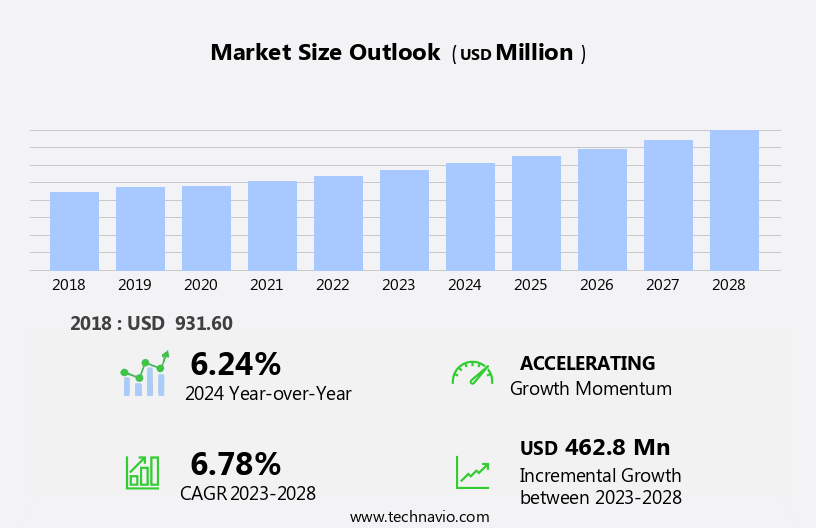
The wound debridement market size is forecast to increase by USD 462.8 million at a CAGR of 6.78% between 2023 and 2028.
- The market is experiencing significant growth, driven by technological advancements in wound debridement products. Innovations such as negative pressure wound therapy, hydrogel-based dressings, and enzymatic debridement agents offer improved efficacy and patient comfort, leading to increased adoption. Furthermore, the integration of telemedicine in wound care treatments is a notable trend, enabling remote monitoring and timely intervention, thereby reducing healthcare costs and improving patient outcomes. However, the high cost of wound treatments and debridement products poses a challenge for market growth, particularly in underserved populations and low-income regions. Companies seeking to capitalize on market opportunities must focus on developing cost-effective solutions while maintaining product quality and efficacy.
- Additionally, collaborations and partnerships with healthcare providers, insurers, and government organizations can help expand market reach and ensure accessibility to a broader patient base. Overall, the market presents significant growth potential, with technological innovations and telemedicine driving demand, while cost remains a key challenge to address. Companies that effectively navigate these dynamics will be well-positioned to capitalize on market opportunities and deliver superior patient care.
What will be the Size of the Wound Debridement Market during the forecast period?
- The market in the US is experiencing significant growth due to the increasing prevalence of chronic conditions such as diabetes, pressure ulcers, and arterial ulcers. According to the International Diabetes Federation, approximately 34.2 million Americans have diabetes, leading to a high incidence of diabetic foot ulcers. Burns, including road accidents and trauma events, also contribute to the market's growth. Wound debridement products, including enzymatic, ultrasonic, autolytic, and mechanical, are in high demand for the treatment of various types of wounds, including chronic wounds, infectious wounds, and acute wounds.
- The aging population is another significant factor driving market growth, as older adults are more susceptible to wounds due to frailty and chronic conditions. Reimbursement policies and advances in technology are also contributing to the market's expansion. The market for wound care products is expected to continue growing, with a focus on target wounds such as burn cases and radiation wounds.
How is this Wound Debridement Industry segmented?
The wound debridement industry research report provides comprehensive data (region-wise segment analysis), with forecasts and estimates in "USD million" for the period 2024-2028, as well as historical data from 2018-2022 for the following segments.
- End-user
- Hospitals
- Clinics
- Others
- Product
- Autolytic
- Surgical
- Mechanical
- Enzymatic
- Others
- Geography
- North America
- US
- Europe
- Germany
- UK
- Asia
- China
- Japan
- Rest of World (ROW)
- North America
By End-user Insights
The hospitals segment is estimated to witness significant growth during the forecast period.
The market is primarily driven by the larger share of hospitals and clinics as end-users. The increasing prevalence of acute and chronic wounds, the rising number of surgical procedures, and the growing awareness about advanced wound debridement products are key factors contributing to market growth. Additionally, favorable reimbursement scenarios in several countries, including Germany, Switzerland, Sweden, Slovakia, the Netherlands, and the US, facilitate the adoption of capital-intensive devices such as negative pressure wound therapy (NPWT) and hyperbaric oxygen therapy (HBOT). Hospitals are focusing on reducing healthcare costs by decreasing length of stays and infection risks.
Wound debridement products, including enzymatic, ultrasonic, mechanical, and autolytic, cater to various types of wounds, such as diabetic foot ulcers, pressure ulcers, arterial ulcers, burns, and traumatic wounds. The aging population, obesity, and increasing prevalence of chronic conditions, sports injuries, and trauma events further expand the market scope. Medical supplies, such as debridement pads, ointments, gels, and surgical debridement devices, play a crucial role in the wound healing process. The infrastructure for wound care, including supply chain and home healthcare, is also witnessing significant growth.
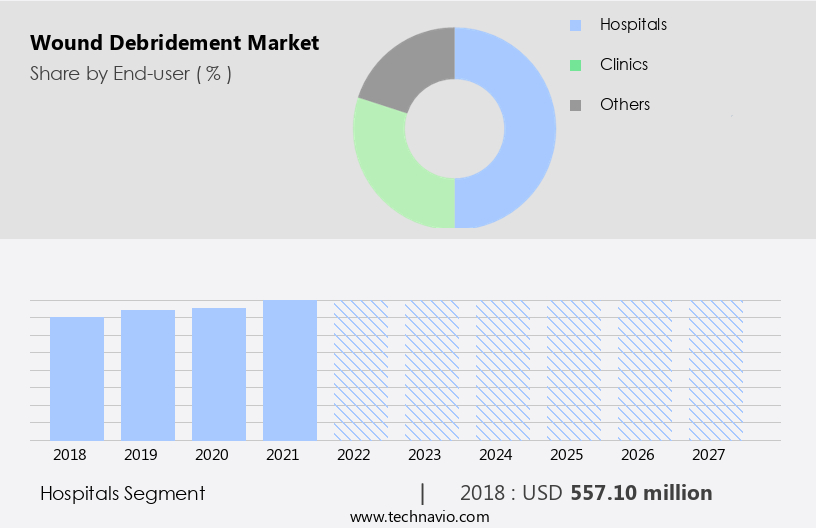
Get a glance at the market report of share of various segments Request Free Sample
The Hospitals segment was valued at USD 557.10 million in 2018 and showed a gradual increase during the forecast period.
Regional Analysis
North America is estimated to contribute 34% to the growth of the global market during the forecast period.Technavio’s analysts have elaborately explained the regional trends and drivers that shape the market during the forecast period.
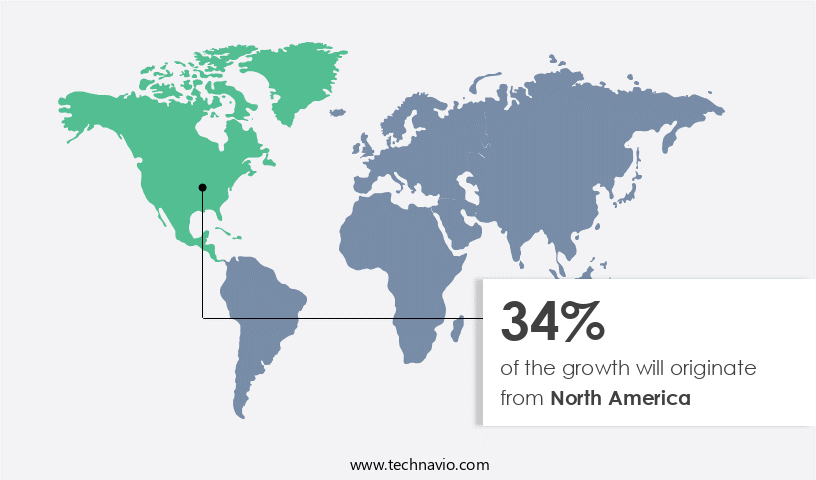
For more insights on the market size of various regions, Request Free Sample
The market encompasses various techniques for removing damaged or dead tissue from wounds to enhance their healing potential. Enzymatic and ultrasonic debridement are prominent methods used in wound care, particularly for Diabetic foot ulcers related to Diabetes and Burns. The aging population, chronic conditions such as pressure ulcers, arterial ulcers, and infectious wounds, as well as trauma from accidents and sports injuries, contribute significantly to the market's growth. Geographic growth is driven by the increasing prevalence of chronic wounds, the rising number of hospitalizations, and the expanding home healthcare sector. Infrastructure development, increased healthcare expenditure, and the presence of prominent players offering advanced surgical devices and wound care products, including ointments, gels, and debridement pads, further fuel market expansion.
Despite these growth factors, challenges such as the lack of trained debridement specialists, declining burn cases due to decreasing accidents, and intense competition among companies hinder market progression. Notable market participants include Gunze Limited and Advancis Medical. The market is segmented into the Burns segment for burn cases, Acute wounds, and Chronic conditions, including pressure ulcers. The market's dynamics are influenced by the increasing obesity rate, the bariatric population, and the growing number of trauma events. Additionally, the market caters to various wound types, such as radiation wounds, and targets specific applications, such as homecare settings, clinics, and hospitals. Reimbursement policies and supply chain considerations also impact market growth.
Market Dynamics
Our researchers analyzed the data with 2023 as the base year, along with the key drivers, trends, and challenges. A holistic analysis of drivers will help companies refine their marketing strategies to gain a competitive advantage.
What are the key market drivers leading to the rise in the adoption of Wound Debridement Industry?
- Technological advancements in wound debridement products is the key driver of the market.
- Wound debridement, a crucial aspect of advanced wound care, has witnessed substantial advancements due to intensive clinical and preclinical research. These developments have significantly enhanced patient care, leading to enhanced survival rates and reduced hospital stays. Notable innovations include the introduction of long-lasting wound dressings, revised pain medication prescription practices, early surgical excision of dead tissue, and the establishment of outpatient wound centers.
- These advancements have resulted in substantial cost savings for patients and healthcare providers. Novel graft and coverage options, inflammation control methods, optimized dietary requirements, and unique pharmacological interventions are some of the key areas that have seen significant progress. These improvements have been instrumental in revolutionizing the approach to wound treatment and enhancing patient outcomes.
What are the market trends shaping the Wound Debridement Industry?
- Increasing use of telemedicine in wound debridement treatments is the upcoming market trend.
- Wound debridement, a critical aspect of clinical telemedicine, is experiencing notable growth. Telemedicine's adoption for wound debridement treatment is increasing due to several reasons. Patients appreciate the convenience of receiving treatment at home or clinics, reducing hospital stays. Telemedicine ensures higher effectiveness and easier access to wound debridement specialists, especially for full-thickness wounds like burns. Immediate assessment of burn depth and wound healing is crucial, making telemedicine an essential tool in the post-injury hours.
- This approach results in substantial cost savings and enhances the quality of life for patients dealing with chronic wounds, all while maintaining high standards of wound debridement. Telemedicine's benefits extend beyond geographical limitations, making it a valuable solution for patients seeking expert care.
What challenges does the Wound Debridement Industry face during its growth?
- High cost of wound treatments and wound debridement products is a key challenge affecting the industry growth.
- The market is driven by the high cost of advanced care products. Advanced wound dressings, such as foam, alginate, hydrogel, hydrocolloid, and wound contact materials, are essential for effective wound healing. However, their cost can be prohibitive. For instance, the material cost per change for Smith and Nephew's ALLEVYN foam dressing is approximately USD9.83, and the nursing cost per dressing change is approximately USD9.18. Similarly, AxioBio's MaxioCel Wound debridement dressing for ulcers costs USD50 (USD). Frequent dressing changes are also required for optimal healing, with alginate dressings needing to be changed every two to three days, foam dressings every three to four days, hydrogel dressings every one to two days, hydrocolloid dressings every three to four days, and wound contact materials every four to seven days.
- These factors contribute to the significant expenses associated with wound care, potentially limiting market growth.
Exclusive Customer Landscape
The wound debridement market forecasting report includes the adoption lifecycle of the market, covering from the innovator’s stage to the laggard’s stage. It focuses on adoption rates in different regions based on penetration. Furthermore, the wound debridement market report also includes key purchase criteria and drivers of price sensitivity to help companies evaluate and develop their market growth analysis strategies.
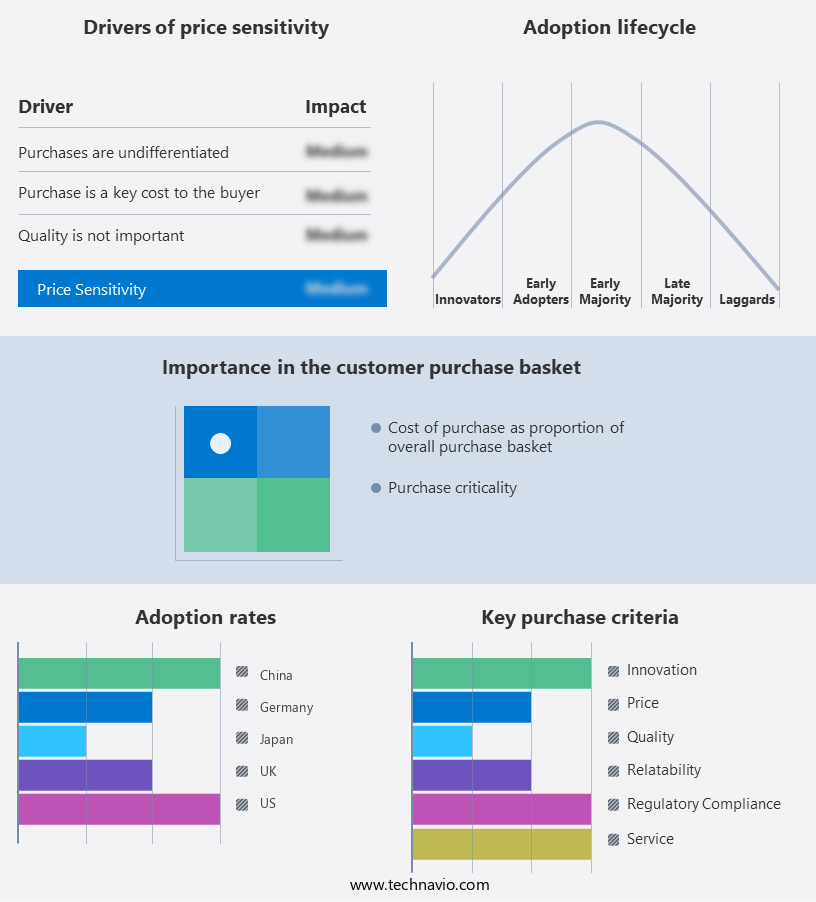
Customer Landscape
Key Companies & Market Insights
Companies are implementing various strategies, such as strategic alliances, wound debridement market forecast, partnerships, mergers and acquisitions, geographical expansion, and product/service launches, to enhance their presence in the industry.
Arobella Medical LLC - The company specializes in advanced wound care solutions, featuring innovative products like the AdvaFORMS line of debridement dressings, including AdvaZORB Foam. These dressings effectively manage and promote the natural healing process of various types of wounds, enhancing patient outcomes. AdvaFORMS dressings are designed with cutting-edge technology to provide optimal absorption capacity, ensuring efficient removal of debris and exudate, while minimizing trauma to the wound bed. This dedicated approach to wound care sets the company apart, delivering superior results for healthcare professionals and their patients.
The industry research and growth report includes detailed analyses of the competitive landscape of the market and information about key companies, including:
- Arobella Medical LLC
- B.Braun SE
- BioMonde Ltd.
- Bioventus LLC
- Brightwake Ltd.
- Coloplast AS
- ConvaTec Group Plc
- DeRoyal Industries Inc.
- EZ Debride
- Integra Lifesciences Corp.
- Labomar S.p.A
- Lohmann and Rauscher GmbH and Co. KG
- Medaxis AG
- Mediwound Ltd.
- Medline Industries LP
- Molnlycke Health Care AB
- Pulsecare Medical LLC
- RLS Global
- Smith and Nephew plc
- Zimmer Biomet Holdings Inc.
Qualitative and quantitative analysis of companies has been conducted to help clients understand the wider business environment as well as the strengths and weaknesses of key industry players. Data is qualitatively analyzed to categorize companies as pure play, category-focused, industry-focused, and diversified; it is quantitatively analyzed to categorize companies as dominant, leading, strong, tentative, and weak.
Research Analyst Overview
The market encompasses a range of products and techniques used to remove dead, damaged, or infected tissue from wounds. This process is essential for promoting the healing potential of chronic and acute wounds. Diabetic foot ulcers, a common complication of diabetes, represent a significant portion of the market. The aging population and the increasing prevalence of chronic conditions, such as diabetes, obesity, and trauma events, contribute to the growing demand for effective wound care solutions. Enzymatic debridement, which utilizes enzymes to break down necrotic tissue, is a prominent method in the market. This technique offers several advantages, including minimal trauma to surrounding healthy tissue and the ability to selectively debride specific areas.
Ultrasonic debridement, another technique, uses high-frequency sound waves to remove debris and bacteria from wounds. Surgical procedures, such as surgical debridement and the use of surgical devices, are also employed in more severe cases. The market for wound care products is diverse, including ointments, creams, gels, and tissue debridement pads. These products cater to various wound types, such as chronic wounds, pressure ulcers, arterial ulcers, and burns. The burn segment, in particular, requires specialized care due to the extensive tissue damage often associated with burn cases. The infrastructure of the healthcare industry plays a crucial role in the supply chain of wound care products.
Hospitalizations and homecare settings are the primary channels for the distribution of these products. Hospitals, clinics, and rehabilitation centers are key customers for surgical debridement devices and advanced wound care products. In homecare settings, ointments, creams, and gels are commonly used for the treatment of pressure ulcers and other chronic wounds. The geographic growth of the market is influenced by several factors, including the increasing prevalence of chronic conditions, the aging population, and the rising number of trauma events. The international diabetes federation reports that over 460 million people worldwide have diabetes, and this number is projected to increase.
Obesity, another significant factor, affects over 650 million people globally. Road accidents and other trauma events also contribute to the high demand for effective wound care solutions. The prominent players in the market include Gunze Limited, Advancis Medical Technology AG, and other leading manufacturers of wound care products and surgical devices. These companies invest in research and development to innovate new products and improve existing ones to meet the evolving needs of the healthcare industry. In summary, the market is driven by the increasing prevalence of chronic conditions, the aging population, and the rising number of trauma events.
Enzymatic debridement, ultrasonic debridement, and surgical procedures are the primary methods used to remove damaged tissue from wounds. The market offers a diverse range of products, including ointments, creams, gels, and tissue debridement pads, catering to various wound types. The healthcare infrastructure, including hospitals, clinics, and homecare settings, plays a crucial role in the supply chain of these products. The market is expected to continue growing due to the increasing burden of chronic conditions and the aging population.
|
Market Scope |
|
|
Report Coverage |
Details |
|
Page number |
165 |
|
Base year |
2023 |
|
Historic period |
2018-2022 |
|
Forecast period |
2024-2028 |
|
Growth momentum & CAGR |
Accelerate at a CAGR of 6.78% |
|
Market growth 2024-2028 |
USD 462.8 million |
|
Market structure |
Fragmented |
|
YoY growth 2023-2024(%) |
6.24 |
|
Key countries |
US, Germany, China, UK, and Japan |
|
Competitive landscape |
Leading Companies, Market Positioning of Companies, Competitive Strategies, and Industry Risks |
What are the Key Data Covered in this Wound Debridement Market Research and Growth Report?
- CAGR of the Wound Debridement industry during the forecast period
- Detailed information on factors that will drive the growth and forecasting between 2024 and 2028
- Precise estimation of the size of the market and its contribution of the industry in focus to the parent market
- Accurate predictions about upcoming growth and trends and changes in consumer behaviour
- Growth of the market across North America, Europe, Asia, and Rest of World (ROW)
- Thorough analysis of the market’s competitive landscape and detailed information about companies
- Comprehensive analysis of factors that will challenge the wound debridement market growth of industry companies
We can help! Our analysts can customize this wound debridement market research report to meet your requirements.
 RIA -
RIA -